
Note: This article contains affiliate links. If you click on these links and make a purchase, we may earn a small commission at no extra cost to you. This helps support our research and content. Read our full affiliate disclosure here.
When winter makes a garage unusable, the right kerosene heater for garages restores a comfortable, workable space quickly. You need reliable heat delivery, clear safety controls, and a unit sized for your garage volume. This guide highlights the top shortlisted kerosene heaters selected for garage use and explains the tradeoffs that matter for workshop comfort, ventilation, and run time. Below you will find the top picks and a breakdown of the features that influenced our choices, including heat output, fuel capacity and run time, safety systems, and ease of maintenance.
Top Picks at a Glance
| Best Overall The best all-around choice for most situations | DEWALT 80,000 BTU Kerosene Heater |  |
| Best Quality Built to a higher standard if you want something more solid | Sunfire SF80 Radiant Heater |  |
| Best Value The sweet spot between price and what you get | Dyna-Glo WK95C8 Kerosene Heater |  |
| Best Budget The cheapest option that still gets the job done reliably | Titunjian Portable Kerosene Heater |  |
| Top Rated A top-rated pick with lots of positive feedback | HeatMate HMN-110 Kerosene Heater |  |
| Most Popular A crowd favorite that many people choose with confidence | Mr. Heater Forced Air Kerosene Heater F270385 |  |
DEWALT 80,000 BTU Kerosene Heater

| Heat Output | 80,000 BTU |
|---|---|
| Heating Coverage | 2000 sq ft |
| Fuel Type | Kerosene (works with diesel) |
| Voltage | 110 volts |
| Tank Capacity | 6 Gallons |
The DEWALT 80,000 BTU forced-air kerosene heater is built for contractors and garage users who need rapid, high-output spot heating in ventilated spaces. It runs on kerosene or diesel, features a 6-gallon tank for extended run time, and offers glove-friendly controls plus a factory-installed thermostat on similar models for temperature control. The pedestal design and large handle make it reasonably portable for moving around a shop or jobsite, and the heater is sized to warm up to about 2,000 sq ft with a strong CFM airflow for quick distribution. Practical benefits include long run times between refuels and a robust build tuned for heavy use. Important limitations are that it must be used only in well-ventilated areas due to combustion exhaust, it is noisy compared with electric heaters, and it requires fuel storage and periodic maintenance. For garage heating tasks that need fast, powerful output rather than quiet, continuous indoor comfort, this heater performs well.
Best for: Buyers who need fast, powerful spot heating for garages, workshops, or well-ventilated job sites and prioritize high output and run time over quiet operation.
Less Ideal for: People seeking a quiet, fully indoor safe space heater or those unable to provide adequate ventilation and fuel storage should choose a different heating solution.
- High 80,000 BTU output suitable for large garages and workshops
- Runs on kerosene or diesel for flexible fuel options
- 6-gallon tank supports long run times between refuels
- Pedestal form and large handle make it reasonably portable for jobsite use
- Produces combustion exhaust so requires good ventilation and outdoor or well-ventilated use
- Louder operation compared with electric or radiant indoor heaters
Verdict: If you need fast, high-output spot heat for a garage or workshop, this DEWALT kerosene heater delivers powerful, long-running performance.
Sunfire SF80 Radiant Heater

| Heat Output | 80,000 BTU |
|---|---|
| Heating Coverage | 1900 sq. ft. |
| Fuel Type | diesel, kerosene, #2 fuel oil |
| Run Time | 10 hours (6 gal tank) |
The Sunfire SF80 is a fuel-powered radiant heater built for garages, workshops, and job sites where direct, breeze-free heat is preferred to forced-air units. It produces 80,000 BTU of infrared-style heat that warms people and objects rather than just moving hot air, and its 6-gallon tank delivers roughly 10 hours of runtime at the stated fuel consumption rates. Notable features include a quiet, low-odor combustion design, an automatic tip-over shutoff and flame-sensor safety that triggers a post-purge, and compatibility with diesel, kerosene, and #2 fuel oil. In practice it is easy to position on the floor, provides steady spot heating across large open areas up to about 1,900 sq ft, and is serviceable for owners comfortable with basic maintenance. The trade-offs are that it is heavy and bulky to move, requires fuel storage and safe ventilation practices for indoor use, and lacks electric convenience features like an integrated thermostat controller or cordless mobility.
Best for: Hands-on buyers who need strong, quiet, direct heat for large garages or workshops and are comfortable managing fuel and routine maintenance to get reliable, long runtime performance.
Less Ideal for: People who want a plug-and-play electric heater, need frequent portable repositioning, or prefer a low-maintenance, fuel-free option for small enclosed rooms.
- High 80,000 BTU output suitable for large garages and workspaces
- Quiet, low-odor radiant combustion for indoor use compared with forced-air torpedoes
- Long runtime from the 6-gallon tank—about 10 hours per fill under typical consumption
- Built-in safety with tip-over shutoff and flame-sensor automatic shutdown
- Manufactured in the USA with available phone support and a 2-year limited warranty
- Heavy and bulky, making frequent repositioning difficult
- Requires storing and handling liquid fuel and following ventilation and safety procedures
- No integrated electric thermostat or cordless power options
Verdict: Choose the SF80 when you need high-output, quiet radiant heat that runs for long periods in large garages and job sites and you can handle fuel and basic servicing.
Dyna-Glo WK95C8 Kerosene Heater

| Heat Output | 23800 BTU |
|---|---|
| Heating Coverage | 1000 square_feet |
| Power Source | kerosene |
| Heating Method | Convection |
The Dyna-Glo WK95C8 is a floor-mounted indoor kerosene convection heater built for supplemental and emergency heating in garages and similar spaces. It runs on 1-K kerosene with a 1.9-gallon tank that the listing says delivers roughly 8 to 12 hours per fill, and it offers pushbutton ignition and a one-touch extinguish for straightforward operation. The unit produces about 23,800 BTU, intended to warm areas up to 1,000 square feet by circulating warm air rather than relying on a fan, and safety features include a tip-over shutoff, safety grille, and a cool-top design. Practical touches like a fuel gauge, included siphon pump, and battery-powered ignition make refueling and startup easier in a garage setting. Limitations to consider are that it requires kerosene fuel and safe ventilation practices indoors, and it is not legal for sale in some states, so confirm local rules before buying.
Best for: Buyers who want a no-electricity backup or primary heater for a garage or workshop and prioritize long run times and high BTU output for open, uninsulated spaces.
Less Ideal for: People who cannot store or handle liquid fuel safely, need instant forced-air heat for quick warm-up, or who live where kerosene indoor heaters are restricted by regulation.
- High heat output (23,800 BTU) suitable for large garages or workshops
- Runs without electricity, providing reliable emergency heat during outages
- Long run time per tank (about 8–12 hours from a 1.9-gallon tank) for low-maintenance operation
- Safety features like tip-over shutoff, safety grille, and cool-top design
- Includes practical accessories: siphon pump, fuel gauge, and battery-powered ignition
- Requires kerosene fuel and proper ventilation, which adds handling and storage work
- Not compliant for sale in some states, so availability and legality may vary
- Convection-only output means slower warm-up compared with fan-forced models
Verdict: A high-BTU, non-electric kerosene heater built for dependable, long-run heating of garages and workshops when grid power is unavailable.
Titunjian Portable Kerosene Heater

| Heat Output | 9000 BTU |
|---|---|
| Fuel Type | Kerosene |
| Tank Capacity | 4.6 L / 1.22 Gal |
| Continuous Burn | 15-17 Hours |
| Heating Coverage | 107.64-161.46 ft² |
This compact kerosene heater is built for no-electricity warmth in garages, campsites, and emergency situations. It delivers up to 9000 BTU and is rated to heat roughly 108–161 sq ft, using a 4.6 L (1.22 gal) tank that the manufacturer says runs 15–17 hours per fill at normal consumption. The unit is freestanding with an adjustable-height design and a carrying handle for portability, and the body is made from galvanized sheet with enameling for rust resistance. Controls are simple: a single knob for heat adjustment and a visible fuel gauge plus a large refueling port for easier top-ups. Practical benefits include long continuous burn time, straightforward operation during outages, and a protective mesh and stable base to reduce tipping risk. Important limitations are that it requires kerosene fuel and ventilation when used indoors, and it lacks built-in electronic safety features such as automatic shutoff sensors or thermostatic temperature control common on electric heaters.
Best for: Buyers on a tight budget who need a straightforward, long-burning heater for garages, workshops, or emergency backup and prioritize runtime and portability over electronic controls.
Less Ideal for: Users who need a fully automatic, thermostatic heater or who cannot provide adequate ventilation for fuel-burning appliances should consider electric or ventilated alternatives.
- High peak output up to 9000 BTU suitable for small garages and work areas
- Large 4.6 L (1.22 gal) tank providing long 15–17 hour continuous run time
- Simple, portable design with carrying handle and adjustable height for flexible placement
- Durable galvanized construction with enameling for corrosion resistance
- Visible fuel gauge and large refueling port make fueling and monitoring easier
- Requires kerosene fuel and proper ventilation for safe indoor use
- No electronic thermostat or automatic safety shutdown features
Verdict: A low-cost, portable kerosene heater that delivers long unattended runtime and strong heat output for garages and emergency heating needs.
HeatMate HMN-110 Kerosene Heater

| Heat Output | 10,000 BTU |
|---|---|
| Heating Coverage | 380 sq ft |
| Fuel Type | Kerosene |
| Tank Capacity | 1.2 gallon |
| Run Time | Up to 14 hours |
The HeatMate HMN-110 is a pedestal-style portable kerosene heater built for straightforward, long-duration heating in garages and other poorly insulated spaces. It uses a 1.2 gallon kerosene tank to deliver about 10,000 BTU, producing a mix of convection, radiant and infrared heat that warms a roughly 380–400 sq ft area. Setup is simple: push-button ignition starts the unit without matches or electricity, and an EZ flame adjuster lets you dial heat up or down. Safety features include a tip-over switch, protective grills and an automatic shut-off for peace of mind during unattended runs. In practical use the heater provides steady, long burn times—up to about 14 hours—so it is useful for overnight or all-day garage heating without frequent refills. Trade-offs are typical of kerosene units: it requires fuel storage and periodic refueling and ventilation considerations for indoor use, and it is heavier and bulkier than small electric space heaters. For reliability-focused heating in a garage the HMN-110 is a durable, no-frills option that emphasizes run time and safety features over smart controls or plug-in convenience.
Best for: Buyers who prioritize a dependable, long-running heat source for garages or other poorly insulated workspaces and want a simple, mechanically reliable heater rather than smart or electric-only options.
Less Ideal for: People who need plug-and-play electric heating, want a lightweight portable heater for frequent relocation, or cannot store or use liquid fuel safely indoors.
- Long single-fill run time up to about 14 hours from a 1.2 gallon tank
- Push-button ignition for easy startup without matches or mains power
- Multiple heating methods (convection, radiant and infrared) for effective garage warming
- Built-in safety features including tip-over switch, protective grills and automatic shut-off
- Requires kerosene fuel and safe storage/ventilation practices
- Larger and heavier than compact electric heaters so less convenient to move frequently
Verdict: A rugged, safety-minded kerosene heater that reliably delivers long burn times and steady heat for garage use.
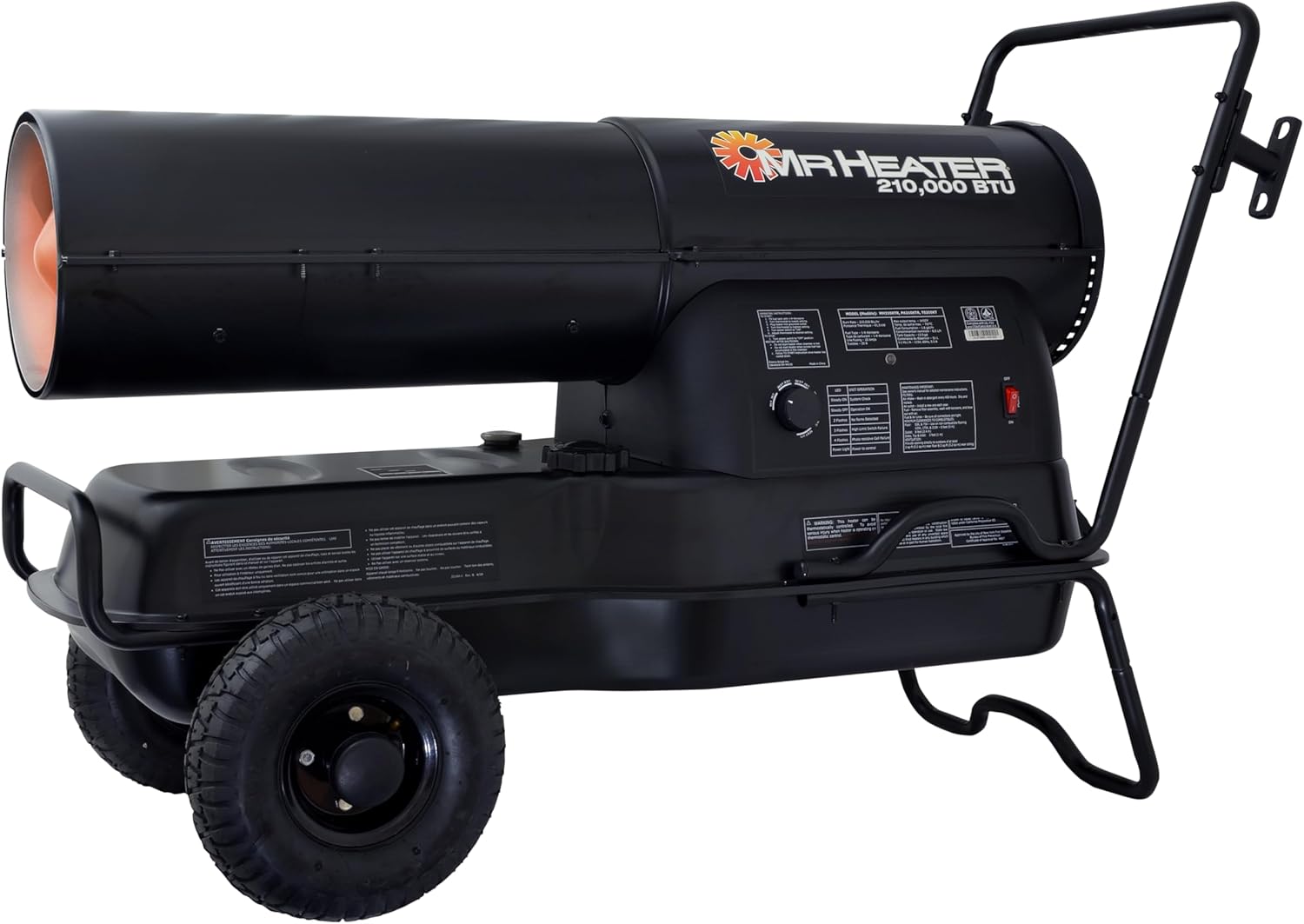
Mr. Heater Forced Air Kerosene Heater F270385
| Heat Output | 210,000 BTU |
|---|---|
| Heating Coverage | Up to 5,250 sq ft |
| Fuel Type | Kerosene, diesel, fuel oil, JP-8 |
| Fuel Tank Capacity | 13.4 gallons |
| Voltage | 115 volts |
The Mr. Heater F270385 is a high-output, portable forced-air kerosene heater built to warm large, well-ventilated spaces such as garages, workshops, and construction sites. It produces 210,000 BTU and is rated to heat up to about 5,250 sq ft while running on kerosene, filtered diesel, fuel oil, or JP-8, which gives fuel flexibility on job sites. Practical features include a built-in thermostat, LED diagnostic indicators, a 13.4-gallon tank for long run times (up to roughly 8.5 hours), pneumatic tires and side lift handles for mobility, and safety systems like a high-temperature shutoff and photo cell flame sensor. The heater is designed for easy maintenance with a split upper shell and includes an electric outlet and illuminated controls. Trade-offs are its large footprint and weight, the need for proper ventilation when used indoors, and reliance on liquid fuels that require safe storage and handling. For anyone needing fast, powerful heat in a garage or jobsite, this model gives dependable, long-running performance when used with appropriate safety precautions.
Best for: Buyers who need powerful, fast heat for large, ventilated garages or workshop spaces and prioritize proven safety features and long run times for jobsite use.
Less Ideal for: People looking for a lightweight, plug-in garage heater for occasional spot warming or for use in small, poorly ventilated rooms should consider smaller electric options instead.
- Very high heat output suitable for large garages and workshops
- Runs on multiple fuel types including kerosene and diesel for on-site flexibility
- Large 13.4-gallon tank supports extended run time up to about 8.5 hours
- Built-in thermostat, LED diagnostics, and safety shutoff features improve control and reliability
- Wheeled design and lift handles make it reasonably portable for a unit this size
- Requires good ventilation and proper fuel handling for safe indoor use
- Large and heavy compared with small portable heaters, limiting tight-space placement
- Not intended for continuous use in occupied, poorly ventilated living spaces
Verdict: If you need reliable, high-capacity heat for a large garage or jobsite with the option to run multiple fuel types, this Mr. Heater delivers long run time and robust safety features.
Choosing the Right Kerosene Heater for Garages: Key Factors to Consider
Heat Output and Coverage
Heat output determines how quickly and effectively a kerosene heater warms a garage. Pay attention to the rated BTU or kilowatt output and the manufacturer's suggested coverage area. In a garage, heat loss is often higher because of minimal insulation and frequent door opening, so choose a heater with higher output than you would for a finished room.
A unit that seems adequate for a small bedroom may struggle in a two-car garage. Consider how you use the space: spot heating for workbenches demands different coverage than warming the whole bay. Also factor in ceiling height and whether the heater will be placed centrally or directed toward a specific area.
Fuel Capacity and Run Time
Fuel capacity affects how often you must refuel the heater during work sessions. Larger tanks reduce interruption but increase weight and footprint. For garage use, longer run times are advantageous when projects run for multiple hours or overnight.
Estimate run time using the heater's burn rate and your expected duty cycle. If you plan to run a heater for long periods, choose models with clear tank-level indicators and simple, spill-resistant fill ports to make refilling safer and faster in a workshop setting.
Safety Systems and Certifications
Safety is critical with kerosene heaters. Look for tip-over protection, automatic shutoff for overheating, and secure fuel tank designs. Heaters intended for garage use should have durable guards around hot surfaces to reduce accidental burns near tools or flammable materials.
Also consider any listed safety certifications or third-party testing that indicate the heater has been evaluated for safe operation. Good design reduces the chance of spillage, wick flashback, and uncontrolled fuel feed, all of which matter when operating in a cluttered garage environment.
Ventilation and Indoor Air Quality
Kerosene combustion produces fumes that must be managed. Even in a garage, you need adequate ventilation to avoid buildup of exhaust and to maintain safe oxygen levels. Consider how you will provide fresh air while retaining heat: cracked windows, slightly open doors, or dedicated vents can help.
If you spend long hours in the garage, plan for intermittent airing and monitor for odors. Good placement away from work areas minimizes direct fumes, and choosing a heater with cleaner-burning designs or easier wick adjustments can improve indoor air comfort.
Ease of Maintenance and Parts Availability
Heaters that are simple to maintain reduce downtime. Access to the wick, clear instructions for trimming or replacement, and user-replaceable parts matter when a unit sees seasonal heavy use. A design that allows routine cleaning of fuel lines and burners will last longer and run more reliably.
Check how straightforward the maintenance tasks are and whether common consumables like wicks are generally available. For garage owners who prefer to do their own upkeep, a serviceable design is preferable to a sealed or complex assembly.
Portability and Physical Size
Portability matters because garage layout and tasks change. Lighter units with sturdy handles and compact footprints are easier to move between bays or to store when not in use. However, very compact heaters may trade off fuel capacity or heat output.
Balance the need to reposition the heater with the requirement to heat the intended area. Consider clearance requirements around the heater and whether its base will fit safely in your workspace without creating tripping or fire hazards.
Sizing a Heater to Your Garage
Calculate the cubic footage of your garage and compare it to a heater's rated coverage rather than relying on room-type labels. Garages typically need more power per square foot than insulated living spaces because of greater heat loss.
When in doubt, pick the next size up. It is easier to throttle heat back with a control than to try to boost an undersized unit. Also think about where you will place the heater. Lower placement helps with occupants and workbenches, while elevated placement can improve whole-space circulation.
- Measure length × width × height to get cubic feet.
- Account for open doors or frequent use when estimating required output.
- Consider temporary insulation like paneling or door seals to reduce required BTUs.
Safe Placement and Clearance
Position the heater on a level, noncombustible surface away from flammable liquids, rags, or solvents commonly found in garages. Maintain the manufacturer's recommended clearances on all sides to minimize fire risk and allow airflow.
Avoid placing the heater directly under shelving or near ceiling-hung items. Keep the unit where it will not be knocked over by tools, vehicles, or high-traffic paths. If you need to move the heater while hot, use designated carry handles only when the design allows it.
- Keep combustibles at least the recommended distance from the heater.
- Do not use the heater in enclosed or poorly ventilated areas.
- Use a stable base and avoid uneven flooring when possible.
Fuel Handling and Safe Refueling
Store kerosene in approved, labeled containers and keep them outside living spaces. When refueling, let the heater cool and never overfill the tank. Wipe up any spills immediately and dispose of contaminated rags safely.
Use a funnel or pump designed for kerosene to reduce spills. In garage environments where you refuel frequently, a safe and consistent refueling routine reduces risk and mess.
- Refuel only when the heater is cool and in a ventilated area.
- Use approved containers and keep them sealed and labeled.
- Keep a fire extinguisher rated for flammable liquids nearby and know how to use it.
Maintaining Clean Combustion
Regular wick inspection and replacement help maintain efficient, low-smoke operation. A sooty flame or persistent odor signals a wick or burner issue that should be addressed promptly.
Clean the combustion chamber and check fuel filters if applicable. Proper maintenance improves heat output and reduces poor smells that can be unpleasant in a workspace.
- Inspect and replace the wick according to usage patterns.
- Clean soot and debris from the burner area periodically.
- Use good quality kerosene to reduce deposits and extend service intervals.
Integrating Heaters with Workshop Activities
Think about how heating will interact with typical garage activities. For instance, drying paint, curing adhesives, or working with solvents requires good ventilation and distance from heat sources. Avoid placing the heater where sparks or open-flame work can reach it.
If you need spot heat for short tasks, choose a placement and control strategy that allows quick warm-up and cool-down without affecting the rest of the space.
- Keep the heater separate from active workstations that generate sparks or dust.
- Use directional placement to warm a bench without overheating the whole bay.
- Monitor temperature-sensitive materials when using the heater nearby.
How We Chose the Best Kerosene Heater for Garages
We focused on attributes that directly affect safety and day-to-day performance in garage environments. Primary evaluation criteria included heat output and coverage to ensure a unit can raise ambient temperatures for typical garage sizes. Fuel capacity and run time were tested conceptually to favor heaters that reduce refilling frequency during long projects. Safety systems such as tip-over shutoff, automatic shutoff for overheating, and reliable wick protection were required for inclusion. Ease of maintenance and access to replacement wicks and parts was considered because workshop heaters see heavy seasonal use. Portability and footprint were also important so heaters can be moved and stored without blocking the workspace. We excluded units intended only for indoor living spaces without robust venting options or those lacking basic safety interlocks. We did not consider decorative or very low-output models that cannot maintain garage temperatures. Our selections prioritize practical, serviceable kerosene heaters with clear safety features and useful run times.
Our full evaluation process is outlined in our review methodology.
FAQ
Can I run a kerosene heater in an attached garage?
You can use a kerosene heater in an attached garage if you ensure adequate ventilation and observe safety clearances. Monitor for fumes and avoid running the heater with doors to the house closed for long periods.
How often should I refill the tank during winter use?
Refill frequency depends on tank size and burn rate. Heavier use or higher heat settings will require more frequent refills, so plan refueling breaks for longer projects and estimate run time from the heater's specified burn rate.
What maintenance keeps a kerosene heater running cleanly?
Regular wick inspection and replacement, cleaning soot from the combustion area, and using clean kerosene are key maintenance tasks. Address persistent smoke or odor promptly to avoid buildup and efficiency loss.
Is ventilation always necessary when using a kerosene heater?
Yes. Kerosene heaters produce combustion byproducts that need dilution with fresh air. Even in a garage, provide intermittent ventilation by cracking a door or window to maintain air quality.
Are tip-over switches reliable safety features?
Tip-over switches are common and provide an important layer of protection but are not infallible. Combine tip-over protection with stable placement, proper clearances, and good housekeeping to minimize risks.
Final Verdict
Choose a kerosene heater for garages by prioritizing adequate heat output and robust safety systems, then balance tank size and portability for your routine. Strong ventilation and straightforward maintenance are essential to keep the unit operating cleanly and safely. Focus on the factors most relevant to how you work in the garage, and pick a heater whose coverage, run time, and safeguards match your use patterns for reliable seasonal warmth.