
Note: This article contains affiliate links. If you click on these links and make a purchase, we may earn a small commission at no extra cost to you. This helps support our research and content. Read our full affiliate disclosure here.
Outdoor gatherings and chilly patios demand reliable heat that turns a cold evening into a comfortable one. Choosing an infrared heater for outdoor use matters because these units warm people and surfaces directly, using less energy than some alternatives and producing near-instant warmth. The right unit will balance heat output, mounting or placement options, and weather resistance so you get steady, usable warmth without frequent maintenance. This guide shortlists the top choices across common outdoor scenarios and evaluates them on practical criteria like heat output, durability, and ease of installation. Read on to see which types of outdoor infrared heaters fit common spaces and setups before the product summary list.
Top Picks at a Glance
| Best Overall The best all-around choice for most situations | Briza Infrared Patio Heater IT-HEQQ-1831 |  |
| Best Quality Built to a higher standard if you want something more solid | Bromic Tungsten Smart Heat 4000W |  |
| Best Value The sweet spot between price and what you get | SereneLife Outdoor Infrared Heater SLOHT52 |  |
| Best Budget The cheapest option that still gets the job done reliably | AEROZY Infrared Patio Heater SH03 |  |
| Top Rated A top-rated pick with lots of positive feedback | Danluke SHP-1500B-BL 1500W Patio Heater |  |
| Most Popular A crowd favorite that many people choose with confidence | DR. Infrared Heater DR-968 |  |
| Best Seller A high-volume bestseller chosen again and again | DR. INFRARED HEATER DR-238 |  |
Briza Infrared Patio Heater IT-HEQQ-1831
| Heating Method | infrared heating |
|---|---|
| Heat Output | 1500 watts |
| Number of Speeds | 3 |
| Voltage | 120 volts |
| Indoor Outdoor Usage | Indoor |
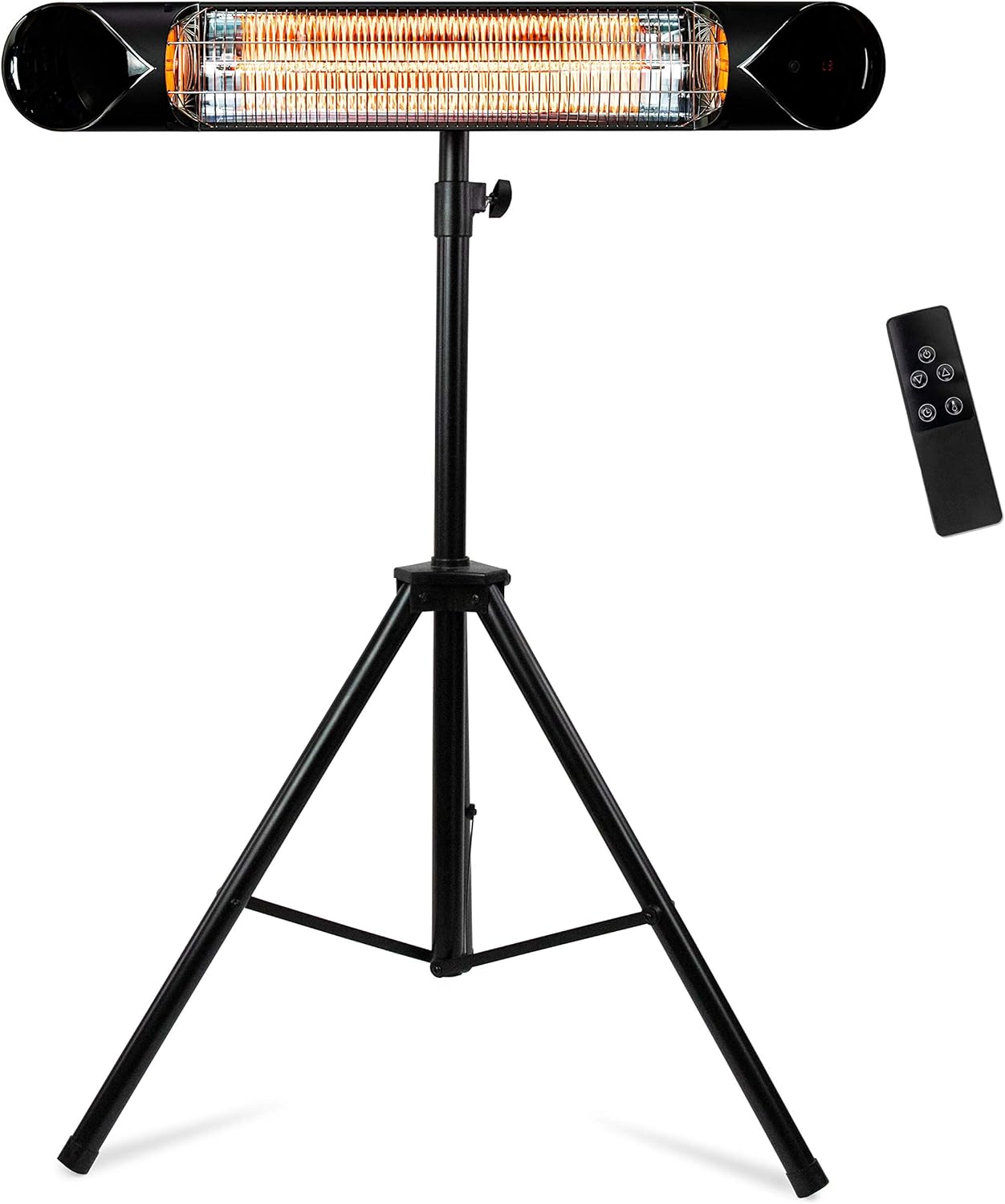
The Briza infrared patio heater is a versatile 1500W radiant heater designed for patios, garages, and other semi-outdoor spaces where you need targeted warmth. It can be mounted to a wall or ceiling using included hardware or placed on the adjustable tripod stand for portable use, and it offers three power levels (900W, 1200W, 1500W) so you can scale output to the conditions. Carbon infrared heating warms surfaces and people directly rather than trying to heat all the air, which makes it effective for spot heating on chilly evenings. The unit includes a remote with a 1-9 hour timer and an automatic tip-over shutoff for safety, and its IP55 rating means the housing resists rain, dust, and snow for year-round outdoor use. Trade-offs are typical of infrared spot heaters: it performs best when aimed at people or surfaces rather than warming large open-air spaces, and it requires a nearby 120V outlet and safe mounting or stable placement to be effective.
Best for: Buyers who want a flexible outdoor infrared heater they can mount or move between locations and who prioritize direct, efficient radiant warmth for patios, garages, or covered outdoor seating.
Less Ideal for: People needing to heat large, fully open outdoor areas or who prefer a convection-style heater that raises overall air temperature.
- Dual mounting options include hardware for wall/ceiling installation plus an adjustable tripod stand for portability
- Three power settings (900W, 1200W, 1500W) let you control heat intensity and energy use
- Carbon infrared element provides direct radiant warmth that quickly heats people and surfaces
- IP55 weather rating protects the unit from rain, snow, dust, and sand for outdoor durability
- Remote control with 1–9 hour timer adds convenience and lets you change settings from a distance
- Best for spot heating rather than raising ambient temperature of large open outdoor areas
- Requires a nearby 120V outlet and appropriate mounting or stable tripod placement
Verdict: A weather-resistant, mountable infrared heater that delivers adjustable, direct radiant warmth for patios and covered outdoor spaces.
Bromic Tungsten Smart Heat 4000W

| Heat Output | 3999.99 watts |
|---|---|
| Heating Coverage | 130 Sq Ft |
| Voltage | 240 volts |
| Amperage | 16.6 A |
| Max Temperature Setting | 130 °F |
The Bromic Tungsten Smart Heat 4000W is a hard‑working electric infrared patio heater built to deliver directional, people-focused warmth for patios and commercial outdoor seating. It uses two quartz radiant elements and a spectral reflector to concentrate heat while reducing visible glare, and the brushed stainless housing with high‑temperature coating is designed for outdoor durability. Mounting brackets let you install it on a wall or ceiling and angle the unit to target a specific seating area; each element accepts simple on/off switching, dimmers, or smart controls for nuanced output. In practice it heats an area of roughly 120 to 130 sq ft quickly and keeps occupants comfortable in breezy conditions because radiant heat warms people and objects rather than the air. Expect straightforward electrical installation to a 230–240V circuit and limited light emission compared with bare-tube fixtures. The unit requires high-voltage wiring and fixed mounting, so it is not portable and demands professional installation for safe operation in many locations.
Best for: Buyers who prioritize powerful, focused outdoor heating for patios or commercial seating and value a durable, professionally mounted infrared solution that warms people directly.
Less Ideal for: If you need a portable or plug-and-play heater for occasional use or small indoor spaces, this hardwired, permanently mounted unit is not a good fit.
- High 4000W output with dual quartz elements for strong, directional radiant heat
- Spectral reflector reduces glare while increasing effective heat delivery to people
- Durable stainless steel construction with high‑temperature protective coating for outdoor use
- Adjustable mounting brackets allow precise aiming for targeted comfort
- Compatible with on/off, dimmer, or smart control systems for flexible heat management
- Requires 230–240V hardwired connection and professional installation
- Fixed wall or ceiling mounting means it is not a portable heating solution
Verdict: Choose this heater when you need strong, commercial-grade infrared warmth aimed at people in outdoor seating areas and are prepared to install a hardwired, mounted unit.
SereneLife Outdoor Infrared Heater SLOHT52

| Heat Output | 900 watts |
|---|---|
| Heating Method | Infrared |
| Indoor Outdoor Usage | Indoor, Outdoor |
| IP Rating | IP65 |
| Heating Coverage | 15 sq. ft. |
This SereneLife tower heater uses a 900-watt carbon fiber infrared element to deliver fast, odorless warmth for small outdoor zones. It is meant to stand on the floor and is commonly used on patios, small gazebos, or near seating to warm an area up to about 15 sq. ft.; operation is simple with three power settings and a remote control for on/off and mode changes. The aluminum alloy housing and IP65 rating make it suitable for exposed outdoor use, while tip-over and overheat protection plus a mesh guard provide basic safety around people and pets. At 900 watts it is energy efficient compared with larger electric patio heaters, but its effective coverage is limited to a small footprint so you may need multiple units for wider patios. Assembly appears straightforward and the unit is light enough to move, though the lower power means it will not replace a high-output propane or 1500W electric heater in colder conditions.
Best for: Buyers who want a compact, energy-conscious outdoor heater to provide targeted, immediate warmth for a small seating area and value weather resistance and basic safety features.
Less Ideal for: Homes or venues needing to heat large, exposed patios, open decks, or very cold outdoor spaces where higher-wattage or fuel-based heaters are required.
- IP65-rated aluminum alloy housing for outdoor durability and corrosion resistance
- Carbon fiber infrared element with 900W output for quick, odorless radiant heat
- Remote control and three power settings for convenient, adjustable operation
- Built-in safety features including tip-over switch, overheat protection, and mesh guard
- Lightweight and portable tower form factor for easy placement and storage
- Effective heating area is small (about 15 sq. ft.), so not suitable for larger patios
- 900W output may be insufficient in cold, windy conditions compared with higher-wattage heaters
Verdict: A weatherproof, energy-efficient 900W infrared tower heater that delivers quick, targeted warmth for small outdoor seating areas.
AEROZY Infrared Patio Heater SH03

| Heat Output | 1500 watts |
|---|---|
| Heating Method | Radiant |
| Number of Speeds | 9 |
| Indoor Outdoor Usage | Outdoor |
| Form Factor | Tower |
The AEROZY SH03 is a portable 1500W infrared tower heater made to warm outdoor patios and similar open spaces. It delivers direct radiant heat with a 60-degree oscillation to spread warmth across seating areas, and offers nine heat settings plus a nine-hour timer so you can fine-tune runtime and output. Controls can be adjusted at the unit or with the included remote, and safety features such as tip-over protection, overheating shut-off, and a child lock add practical peace of mind for families. Setup is simple since it is a floor-mounted plug-in unit and its quiet operation makes it suitable for low-noise outdoor gatherings. The main compromises are typical for compact infrared towers: it is best for spot heating rather than warming large, fully open yards, and being electric it requires a nearby outdoor-rated outlet and does not provide the broad convective warmth of gas patio heaters. For homeowners who want focused, adjustable radiant heat without combustion, this unit is a sensible budget option.
Best for: Buyers wanting an affordable, easy-to-use electric infrared heater to add focused warmth to patios, covered porches, or garage seating areas without combustion.
Less Ideal for: People who need to heat very large or fully open outdoor areas or who prefer gas-powered heaters for broader convective warmth should consider other options.
- 1500W infrared radiant output for direct, efficient spot heating
- 60-degree oscillation spreads heat over a wider area
- Nine heat settings and a 9-hour timer for precise control
- Includes remote control and safety features like tip-over and overheat shut-off
- Best suited for spot heating rather than large, fully open outdoor spaces
- Requires a nearby outdoor-rated AC outlet, limiting placement flexibility
Verdict: AEROZY SH03 is a cost-conscious electric infrared tower that delivers adjustable, focused warmth for patios and covered outdoor spaces.
Danluke SHP-1500B-BL 1500W Patio Heater

| Heat Output | 1500 watts |
|---|---|
| Heating Method | Radiant (far-infrared) |
| Power Source | 120 volts AC |
| Amperage | 12.5 A |
The Danluke SHP-1500B-BL is a ceiling-mounted electric infrared heater designed to provide fast, focused warmth for covered patios, balconies, garages, and similar outdoor areas. It uses a carbon fiber heating tube to emit far-infrared heat that warms people and objects directly rather than heating the air, which makes it useful for open or drafty spaces. Installation is typical for a ceiling fixture and it runs on standard 120V power, so no special wiring is required in most homes. Controls are simple: a single-speed pull cord for quick on/off operation. The unit is built with a waterproof design for outdoor durability and a compact footprint that keeps it out of the way above seating areas. Expect reliable, immediate warmth for small to medium outdoor zones, though the single-speed control and fixed 1500W output limit fine-tuned temperature control and range compared with multi-setting or higher-watt models.
Best for: Buyers who want a dependable, no-frills outdoor heater that provides direct, immediate warmth and is built to withstand outdoor conditions.
Less Ideal for: People who need precise temperature control, variable heat levels, or a heater for very large open areas should consider models with higher wattage or multiple settings.
- Targeted far-infrared heating for efficient, direct warmth
- Standard 120V power so it installs without a special circuit
- Waterproof construction suitable for outdoor use
- Compact ceiling-mount design keeps floor space clear
- Simple pull-cord control for easy on/off operation
- Single-speed operation limits temperature control
- Ceiling mount requires secure installation and appropriate support
Verdict: Choose this ceiling-mounted infrared heater if you want a reliable, weatherproof unit that delivers straightforward, instant warmth for small to medium outdoor areas.
DR. Infrared Heater DR-968

| Wattage | 1500 Watts |
|---|---|
| Heating Coverage | 576 square feet |
| Heat Output | 5200 |
| Voltage | 120 |
| Amperage | 12.5 A |
The DR. Infrared Heater DR-968 is a freestanding 1500-watt infrared space heater that pairs a quartz infrared tube with a PTC element to speed warmth and improve heat transfer across a room. It is designed for spot and whole-room heating indoors using an electronic thermostat (50 to 85°F), three power settings including an Auto energy-saving mode that cycles between high and low, and a 12-hour timer. The unit ships with caster wheels and a remote for convenient repositioning and control, and a high-pressure low-noise blower keeps operating sound around the claimed 39 dB. Built-in safety features include tip-over protection and automatic overheat shutoff, and the heater is UL certified. Practical limits: the DR-968 is intended for indoor use only and is not weatherproof, so it should not be used outdoors, on patios, or in wet environments; its heat coverage and claims are optimized for conditioned indoor spaces rather than open-air outdoor heating. For indoor rooms it delivers fast, evenly distributed radiant warmth, but outdoor use is not appropriate without weather-rated equipment.
Best for: Buyers who prioritize proven safety and reliable indoor performance and want a heater that delivers fast, evenly distributed warmth with remote convenience and energy-saving controls.
Less Ideal for: Anyone seeking a heater for outdoor patios, covered porches, or damp locations should choose a weatherproof outdoor-rated patio heater instead.
- Dual heating system (infrared quartz + PTC) for faster, efficient heat transfer indoors
- Electronic thermostat with Auto mode and timer for temperature control and energy savings
- Remote control and caster wheels for easy placement and hands-free adjustments
- UL certification plus tip-over and overheat protection for safer continuous use
- Not rated or sealed for outdoor or wet-area use, so it cannot replace a weatherproof patio heater
- Weighs around 19 pounds and requires a power outlet, limiting portability compared with battery or propane outdoor heaters
Verdict: A safe, efficient indoor infrared heater that heats rooms quickly and reliably, but it is not suitable for outdoor use.
DR. INFRARED HEATER DR-238

| Power settings | 900W/1200W/1500W |
|---|---|
| Voltage | 120 volts |
| Mounting type | Wall Mount, Ceiling Mount |
| Indoor outdoor usage | Indoor |
| Number of speeds | 3 |
The DR-238 is a corded electric carbon infrared heater built for patios, garages, and covered outdoor spaces where targeted, instant warmth is needed. It mounts to a wall or ceiling and offers three heat settings (900W, 1200W, 1500W) so you can step power up or down depending on conditions, and it includes a remote for hands-off control. The heater is ETL listed and IP55-rated for indoor and outdoor use, and the anodized aluminum housing plus a high-reflectivity mirror reflector are intended to improve durability and heating efficiency outdoors. Typical use is spot-warming seating areas, workbenches, or small covered patios rather than heating large open-air spaces; the infrared element provides quick radiant heat felt directly on people and surfaces. Installation requires secure mounting and a standard 120V supply, and while the unit is weather resistant it performs best in sheltered outdoor locations. For buyers focused on safety and reliable, direct heat in semi-exposed outdoor areas, this model is a practical, no-frills option.
Best for: Buyers who want a reliable, safety‑focused mounted infrared heater to provide quick, targeted warmth on covered patios, garages, or restaurant outdoor seating where shelter and consistent performance matter.
Less Ideal for: People who need to heat large open-air spaces or uncovered patios should look for higher-output or multiple-unit solutions instead.
- Three power settings (900W, 1200W, 1500W) for adjustable radiant output
- IP55 rating and anodized aluminum housing for weather resistance in sheltered outdoor spaces
- Includes wall and ceiling mounting brackets and remote control for convenient installation and operation
- ETL listed for safety and built to deliver instant, targeted infrared warmth
- Designed for spot heating rather than warming large, fully open outdoor areas
Verdict: A straightforward, ETL-listed mounted infrared heater that gives safe, adjustable spot warmth for sheltered outdoor and garage spaces.
Choosing the Right Infrared Heater for Outdoor Use: Key Factors to Consider
Heat Output and Effective Coverage
Heat output determines how quickly an infrared heater will raise perceived temperature in an outdoor space. Look for clear wattage or BTU ratings and manufacturer guidance on square footage or seating-radius coverage so you can match a unit to your patio size.
Because infrared heat warms objects and people rather than air, placement and orientation matter as much as raw output. A higher-rated unit gives more usable warmth at greater distances, but multiple lower-output fixtures can sometimes produce more even coverage for wide patios.
Weather Resistance and Corrosion Protection
Outdoor heaters face moisture, wind-driven dust, and temperature swings that can degrade components over time. Choose units with IP ratings, stainless-steel elements, or powder-coated housings to reduce the risk of rust and failure.
Look for models with sealed electrical compartments and weather-rated plugs if you plan to use them in semi-exposed locations. Even with rated protection, sheltered placement under a canopy or awning will extend service life.
Mounting, Placement, and Installation Options
How you mount a heater determines both performance and safety. Common options include tabletop, free-standing, wall-mounted, or ceiling-suspended units. Consider the clearances required, ease of wiring or plug access, and whether permanent mounting is feasible in your space.
If you need portability, choose freestanding designs with stable bases. For permanent installations, verify that mounting hardware and clearances meet local codes and that the unit supports the intended mounting orientation.
Energy Source, Efficiency, and Controls
Infrared outdoor heaters are available in electric and fuel-fired variants, and each has tradeoffs. Electric units are typically more controllable and lower maintenance, while gas models can deliver higher peak output without heavy wiring.
Controls matter for running cost and comfort. Thermostats, variable heat settings, and timers let you maintain consistent warmth without wasting energy. Also check how quickly the heater responds to setting changes, since radiant systems generally produce near-instant heat.
Safety Features and Local Code Considerations
Safety features influence where and how you can use an outdoor heater. Look for overheat protection, sturdy guards around heating elements, automatic shutoff for tip-over, and clear manufacturer guidance on minimum clearances from combustibles.
Local building or fire codes may restrict permanent outdoor gas installations or require licensed installation. Always confirm local requirements before choosing a hardwired or gas-fired option.
Maintenance, Replacement Parts, and Serviceability
Regular maintenance prolongs service life and maintains safety. Choose heaters with accessible elements or bulbs, simple cleaning procedures, and widely available replacement parts.
Ease of maintenance also includes how simple it is to inspect electrical connections, replace covers, or remove debris from fins and reflectors. Models with modular components reduce service time and simplify repairs.
Best Placement Strategies for Outdoor Infrared Heaters
Placement and beam angle define how effectively an infrared heater warms people sitting or standing in a patio area. Mount heaters so the beam illuminates the main seating zones rather than open pathways, and avoid pointing units at reflective glass at close range which can redirect heat away from occupants.
- Mount ceiling or wall units at the manufacturer-recommended height to maximize coverage and maintain required clearances.
- Use multiple low-angle units for broad patios instead of a single high-mounted heater to reduce cold spots.
- Position portable or tabletop units centrally among small groups for even warmth.
Electric Vs Fuel Options: Choosing the Right Energy Source
Electric infrared heaters are straightforward to install when a suitable circuit and outlet exist, and they offer precise controls and lower upkeep. Fuel-fired options deliver strong instantaneous output and can be advantageous where high heat or long run times are needed without heavy wiring.
Both types work as radiant sources, but consider ongoing fuel availability, ventilation needs for combustion models, and ease of connecting to existing power when making a decision.
- Electric units: easier controls and cleaner operation.
- Fuel units: higher peak output and independence from electrical circuits.
- Check ventilation and clearances for combustion models.
Sizing a Heater for Different Outdoor Scenarios
Small balcony or bistro spaces need less output than an open restaurant terrace. For compact areas, a single low-to-medium output unit or a tabletop heater is usually sufficient. Wider, partially sheltered patios often require higher-output or multiple units to avoid chilled zones.
When in doubt, measure the primary seating area and prioritize directional coverage. If you plan to use the heater in multiple configurations, choose a unit with adjustable mounting or portable options.
- Estimate the seating zone area rather than total property square footage.
- Factor in wind exposure which reduces perceived warmth and may require higher output.
- Consider modular setups where several mid-size heaters are staged rather than one oversized unit.
Installation and Ongoing Care Tips
Follow manufacturer clearance recommendations and fasten mounts to structural supports for permanent installations. For hardwired units, use a qualified electrician to ensure safe, code-compliant wiring. Portable units should have power cords routed to avoid tripping hazards and should be turned off when not in use.
Keep reflectors and elements free of dust and spider webs, and inspect seals or gaskets annually. Store portable units under cover when not in season to limit weather exposure and prolong lifespan.
- Tighten mounting hardware after the first weeks of use to account for vibration.
- Clean reflectors with a soft cloth and manufacturer-approved cleaner.
- Inspect weather seals and cord insulation yearly.
How We Chose the Best Infrared Heater for Outdoor Use
We focused on real-world effectiveness and durability for outdoor infrared heating. Selection prioritized units that deliver consistent radiant heat across typical patio distances, with clear published heat output and coverage estimates. Weather resistance was a key filter, so we included only heaters with appropriate ingress protection or corrosion-resistant finishes suited to open-air use. We also evaluated installation flexibility, preferring models that support multiple mounting options and straightforward outdoor wiring or plug-in setups. Energy efficiency and control options were important: we favored units with adjustable heat settings, reliable thermostats, and responsive controls for managing fuel or electric usage. Safety features such as tip-over protection, cool-touch housings, and overheat cutoffs were another required criterion. We excluded indoor-only fixtures, items without any outdoor rating, and units lacking clear technical specifications. Final selections balanced sustained performance in outdoor conditions, ease of maintenance, and installation versatility to suit patios, decks, and semi-sheltered commercial spaces.
Our full evaluation process is outlined in our review methodology.
FAQ
Can I use an infrared heater outdoors in light rain?
It depends on the heater's weather rating. Some outdoor-rated units tolerate light rain if their elements and electrical components are sealed. Check the product's ingress protection or weather-resistance statements and avoid direct exposure unless specified safe.
How far away should I mount an infrared heater from the seating area?
Mounting distance depends on the heater's output and beam angle. Many units perform best when placed 6 to 10 feet above seating for ceiling mounts, while tabletop or standing units are positioned closer to occupants. Refer to manufacturer guidance on effective coverage to choose height and distance.
Do infrared heaters warm the air or just people?
Infrared heaters primarily warm surfaces and people directly rather than heating the ambient air. That means you feel warmth quickly, even on windy evenings, but the air temperature may not rise substantially.
Are electric infrared heaters more efficient than gas units outdoors?
Efficiency depends on the context. Electric units convert nearly all input energy to radiant heat and are easy to control, while gas models can produce higher instantaneous output per unit but incur fuel losses. The right choice depends on available power, desired output, and operating patterns.
What maintenance do outdoor infrared heaters need?
Regular maintenance usually includes cleaning reflectors and element guards, checking fasteners and mounts, inspecting seals and cords, and replacing bulbs or emitters per the manufacturer's interval. Simple seasonal care extends life and maintains safety.
Final Verdict
Prioritize the combination of heat output, weather resistance, and mounting flexibility when selecting an infrared heater for outdoor use. Tradeoffs are common: higher-output or gas-fired units deliver more warmth at distance but may require special installation and ventilation, while electric models offer easier control and lower maintenance. Decide first where and how you will use the heater, then match a unit with adequate coverage, a suitable weather rating, and the mounting options you need. That approach will give you comfortable, reliable outdoor warmth with minimal surprises.