
Note: This article contains affiliate links. If you click on these links and make a purchase, we may earn a small commission at no extra cost to you. This helps support our research and content. Read our full affiliate disclosure here.
When outdoor temperatures drop, a kerosene heater for indoor use can deliver steady, long-lasting heat without relying on the electrical grid. Choosing the right indoor kerosene heater matters because burn efficiency, safe operation, and proper room sizing determine comfort and air quality. This guide presents six carefully shortlisted options that balance sustained heat output with built-in safety features and practical usability. Below you will find concise evaluations based on heat performance, safety technology, fuel efficiency, and daily maintenance needs to help you pick the best indoor kerosene heater for your space.
Top Picks at a Glance
| Best Overall The best all-around choice for most situations | Dyna-Glo Indoor Kerosene Convection Heater WK95C8 |  |
| Best Quality Built to a higher standard if you want something more solid | Comfort Glow Convection Kerosene Heater |  |
| Best Value The sweet spot between price and what you get | Kero World 10,000 BTU Kerosene Heater |  |
| Best Budget The cheapest option that still gets the job done reliably | sxvbdway Kerosene Heater 9000 BTU |  |
| Top Rated A top-rated pick with lots of positive feedback | Generic Kerosene Heater 9000 BTU |  |
| Most Popular A crowd favorite that many people choose with confidence | Sengoku HeatMate HMN-110 |  |
Dyna-Glo Indoor Kerosene Convection Heater WK95C8

| Heat Output | 23800 BTU |
|---|---|
| Heating Coverage | 1000 square_feet |
| Power Source | kerosene |
| Heating Method | Convection |
| Special Features | Tip-Over Protection |
The Dyna-Glo WK95C8 is a pedestal kerosene convection heater built for zone heating and emergency use where electricity is unavailable. It burns 1-K kerosene and produces up to 23,800 BTU, which the manufacturer rates as capable of heating roughly 1,000 square feet; a 1.9-gallon tank delivers about 8 to 12 hours of run time per fill. The unit includes pushbutton ignition, a fuel gauge, safety grille, cool-top design, and tip-over shutoff, and it ships with a siphon pump and batteries for startup. Because it uses convection and radiant heat, it works best in open or semi-open rooms where warm air can circulate rather than tiny sealed spaces. Notable limits are that it requires regular fuel handling and proper ventilation for indoor kerosene use, and it is not permitted for sale in some jurisdictions. For homeowners seeking a reliable, no-electricity backup heater, this model balances runtime, output, and basic safety features.
Best for: Buyers who want a dependable, high-output supplemental or emergency heater that runs without electricity and can warm larger rooms or cabins.
Less Ideal for: People who prefer fully electric heaters, those unwilling to store or handle liquid fuel, or users in locations where indoor kerosene heaters are restricted.
- High heat output up to 23,800 BTU suitable for heating large rooms or workshops
- Runs on 1-K kerosene and provides long run times (8–12 hours per 1.9-gallon tank)
- Does not require electricity, making it useful for power outages and off-grid situations
- Built-in safety features including tip-over shutoff, safety grille, and cool-top design
- Requires handling and storage of kerosene and proper indoor ventilation
- Not legal for sale in certain states, limiting availability for some buyers
Verdict: Choose this Dyna-Glo model if you need a powerful, no-electricity indoor kerosene heater for dependable zone or emergency heating.
Comfort Glow Convection Kerosene Heater

| Heat Output | 23,800 BTU |
|---|---|
| Heating Coverage | 1,000 square_feet |
| Fuel Type | Kerosene |
| Fuel Tank | 1.9 gallon |
| Operating Time | Up to 12 hours |
This Comfort Glow convection kerosene heater is designed for high-output indoor heating and emergency backup. It produces 23,800 BTU and uses a convection heating method to circulate warm air across large, open spaces such as living rooms, garages, or workshops. Practical features include a no-lift burner system to reduce startup odor, a built-in fuel gauge, battery-powered ignition for easy lighting, and a pin-style wick for straightforward servicing. The 1.9 gallon tank provides up to about 12 hours of runtime per fill, so it can run through long evenings without refueling. Safety items include a tip-over automatic shutoff and protective grill, and the freestanding pedestal form with a carry handle makes it portable between rooms. The main compromises are the need to store and handle kerosene and the lack of variable fan speeds or digital controls, so heat output is less adjustable than electric models. For someone prioritizing powerful, off-grid heat and long runtimes, this heater delivers dependable performance.
Best for: Buyers who need a powerful, portable heat source that works without electricity and can warm large or unheated spaces reliably during outages or in off-grid settings.
Less Ideal for: People seeking quiet, low-maintenance electric heaters with precise digital thermostats or those unwilling to store and handle liquid fuel should consider other options.
- High heat output at 23,800 BTU suitable for up to 1,000 sq ft
- Long run time from a 1.9 gallon tank—about 12 hours per fill
- Battery-powered ignition and no-lift burner reduce startup hassle and odors
- Tip-over shutoff and protective grill improve indoor safety
- Pin-style wick system simplifies maintenance and wick changes
- Requires kerosene fuel storage and handling, which adds maintenance and odor risk
- No variable heat settings or digital thermostat for fine temperature control
- Heavier, fuel-burning unit may not be ideal for small bedrooms or continuous indoor use
Verdict: Choose this heater when you need high, reliable off-grid heat and long runtime to warm large indoor spaces or during power outages.
Kero World 10,000 BTU Kerosene Heater

| Heat Output | 10000 british thermal units |
|---|---|
| Heating Method | Radiant |
| Fuel Type | Kerosene |
| Heating Coverage | 450 Sq. Ft. |
| Run Time | Up to 14 hours |
The Kero World 10,000 BTU kerosene heater is a compact, all-metal portable heater built for spot and emergency indoor heating. It uses a glass burner and a pin-style wick with battery-powered matchless ignition to deliver quick radiant heat, and its 1.0 gallon lift-out tank runs up to about 12 to 14 hours depending on usage. Practical features include a steel protective cage, tip-over shutoff, a rear reflector to focus heat, and a removable tank for easier refilling. Typical use is supplemental warmth in a shop, garage, basement, cabin, or during power outages where electric heat is not available. Trade-offs are its radiant-only design, which favors targeted heating rather than whole-house convection, and the need to store and handle kerosene safely. Assembly is minimal but buyers should plan for battery replacement for ignition and periodic wick maintenance. For someone prioritizing reliable, no-electric backup heat and long run time per fill, this heater is a straightforward, workmanlike option.
Best for: Buyers who want a no-electric backup heater that delivers quick, focused warmth for workshops, garages, cabins, or emergency use and value long run time per fill and simple, durable construction.
Less Ideal for: Those seeking an electric or convection-style heater for whole-room, evenly distributed heating or who prefer to avoid handling liquid fuel should consider other options.
- Produces 10,000 BTU of radiant heat for fast, targeted warming
- 1.0 gallon lift-out tank runs roughly 12 to 14 hours per fill
- Battery-powered matchless ignition for use without electricity
- Built-in safety features including tip-over shutoff and protective cage
- Radiant heating is best for spot heating and is less effective for whole-room circulation
- Requires safe storage and handling of kerosene and periodic wick maintenance
Verdict: Choose this heater if you need a rugged, no-electric kerosene unit that delivers fast, long-lasting radiant heat for targeted indoor or emergency use.
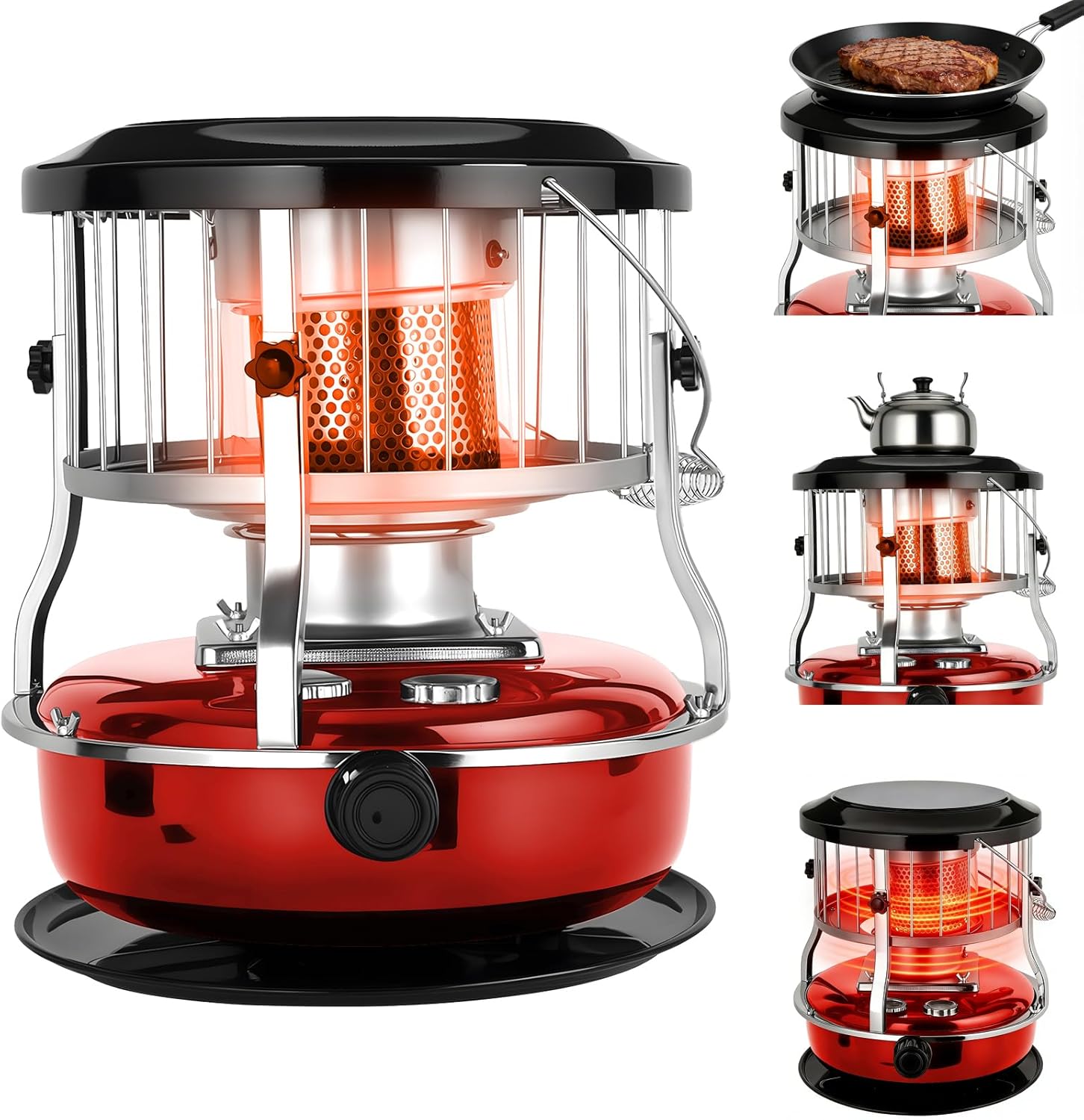
sxvbdway Kerosene Heater 9000 BTU
| Heat Output | 9000 BTU |
|---|---|
| Fuel Capacity | 4.5L |
| Heating Coverage | 15 square meters |
| Burn Time | 16–21 Hours |
| Heating Method | Radiant |
This freestanding kerosene heater is a simple, budget-friendly option for adding heat where electricity is unavailable or during power outages. It runs on kerosene, delivers roughly 9000 BTU of radiant heat, and is sized to warm areas up to about 15 square meters; the top surface can also be used for basic cooking or boiling water. Practical details include a 4.5 L fuel tank with a claimed 16–21 hour burn time, a carry handle for portability, an oil gauge and filler, and an adjustable guardrail and height for placement. Because it is non-electric there are no fans or thermostatic controls, so heat is direct and steady but requires manual refueling and attentive placement for safety. The unit is lightweight and straightforward to operate, making it useful for camping, garages, or emergency indoor use, though users should follow ventilation and fuel-storage precautions typical for indoor kerosene heaters.
Best for: Buyers on a tight budget who need a simple, portable heater for emergency indoor use, camping, or occasional garage/worksite heating and who prioritize runtime and no-electric operation over automatic controls.
Less Ideal for: People seeking precise temperature control, whisper-quiet room heating, or a fully sealed, low-ventilation indoor solution should consider other heater types.
- Non-electric operation works during power outages and off-grid situations
- Long run time per fill with 4.5 L tank and advertised 16–21 hour burn
- Portable design with handle and relatively light weight for easy placement
- Top surface usable for basic cooking or boiling water
- No thermostat or fan means heat distribution is purely radiant and manual
- Indoor use requires careful ventilation and safe fuel handling
Verdict: A no-frills, low-cost kerosene heater that delivers long run times and portable, non-electric radiant heat for emergency and off-grid indoor use.
Generic Kerosene Heater 9000 BTU

| Heat Output | 9000 british thermal units |
|---|---|
| Heating Coverage | 157.46 sq ft |
| Fuel Type | Kerosene |
| Power Source | fuel_powered |
This kerosene heater provides basic, no-frills indoor heating and can double as a cooking stove during the day. It runs on kerosene and uses radiant heat to warm spaces up to about 157 sq ft, making it suited to bedrooms, living rooms, cabins, or garages where electricity may be unreliable. The 4.5 L tank supports long run times of roughly 16 to 21 hours between refills, and the unit includes a handle and adjustable height for easier placement and transport. Practical controls let you adjust the flame for heating or cooking and the pedestal design keeps the heating surface elevated for safer tabletop use. Limitations include the need to store and handle fuel safely, no electric controls or safety interlocks listed, and potential indoor ventilation requirements from combustion products. Expect straightforward, fuel-powered performance rather than modern electronic conveniences.
Best for: Buyers who prioritize a dependable, fuel-based backup heater for indoor spaces during outages or cold-weather use and want long run time and simple mechanical controls.
Less Ideal for: People who want electric plug-in heaters with modern safety electronics, smell-free operation, or those unwilling to store and handle liquid fuel indoors.
- 9000 BTU radiant heat suitable for single-room warming
- Large 4.5 L fuel tank supports lengthy 16–21 hour run times
- Portable pedestal design with handle and height adjustment for easy placement
- Can function as a cooking stove as well as a heater for added versatility
- Requires kerosene fuel and proper ventilation when used indoors
- No listed electronic safety features or automatic shutoff
Verdict: Choose this kerosene heater if you need a straightforward, long-burning indoor backup heater that delivers reliable radiant warmth without relying on electricity.
Sengoku HeatMate HMN-110

| Heat Output | 10000 BTU |
|---|---|
| Heating Coverage | 380 sq ft |
| Power Source | Kerosene |
| Tank Capacity | 1.2 gal |
The Sengoku HeatMate HMN-110 is a compact, portable kerosene heater intended to warm poorly insulated rooms, garages, or small indoor spaces up to roughly 380 to 400 sq ft. It runs on kerosene from a 1.2 gallon tank and can burn for as long as 14 hours between refills, using a push-button ignition so no matches or external power are required. Heat output is radiant plus convection, delivering a steady 10,000 BTU that warms nearby people and surfaces quickly while also raising ambient air. Built-in safety features include automatic shut-off, a tip-over switch, an EZ flame adjuster, and protective grills, which make it more suitable for indoor use than many generic outdoor-only units. The unit is reasonably portable and designed as a floor-mounted pedestal, but it does require proper ventilation and routine fuel handling; kerosene smell, fuel storage, and flame-based operation remain inherent considerations. For users who need cordless, long-running heat in spaces where electric heaters struggle, this model is a practical option with sensible safety controls.
Best for: Buyers who prioritize reliable, cordless heat for poorly insulated rooms or garages and want a heater with demonstrated safety features and long runtime rather than relying on electric power.
Less Ideal for: People seeking a purely odorless, maintenance-free electric heater or those who cannot provide safe fuel storage and ventilation for a combustion heater.
- 10,000 BTU output suitable for warming spaces around 380–400 sq ft
- 1.2 gallon tank provides up to about 14 hours of continuous burn time
- Push-button start requires no matches or external power
- Multiple built-in safety features including automatic shut-off, tip-over switch, and protective grills
- Portable pedestal design for easy placement in garages, workshops, or rooms
- Uses kerosene so it needs fuel storage and room ventilation
- Not as fast to reposition as very small electric space heaters due to pedestal form
Verdict: Choose the Sengoku HeatMate HMN-110 if you need cordless, long-running kerosene heat for small to medium indoor spaces with built-in safety features.
Choosing the Right Kerosene Heater for Indoor Use: Key Factors to Consider
Heat Output and Room Size
Heat output determines how well a kerosene heater will warm a particular room. Look for stated heat output or recommended square-foot coverage and match it to the rooms you plan to heat. An undersized heater will struggle and cycle excessively; an oversized unit can create hot spots and use more fuel than necessary.
Consider the layout and insulation of the space. Open-plan areas need more continuous output than small, well-insulated bedrooms. Think about ceiling height, draft sources, and whether you will heat multiple adjoining rooms; these factors change effective coverage more than the raw output number.
Safety Features and Indoor Operation
Because these units burn fuel indoors, safety features are a top priority. Seek heaters with automatic shutoff on tip-over, sturdy guards around the flame, and reliable wick designs that resist flashback. Low-oxygen or CO indicators are useful in enclosed spaces, as are clear instructions on safe placement away from flammable materials.
Also evaluate fuel tank design and spill containment. A leak-resistant tank and a secure filler cap reduce the risk during refills. Finally, check for visible maintenance access so you can inspect the wick and combustion chamber regularly for soot buildup that can impact indoor air quality.
Fuel Efficiency and Burn Cleanliness
Fuel efficiency affects how often you need to refill and your overall running time during a cold spell. More efficient burners deliver longer run times per liter or gallon of kerosene and often produce fewer odorous emissions. Look for units that advertise steady, low-smoke combustion and specify run time at a given tank capacity.
Burn cleanliness also affects indoor air. Models designed to minimize soot and smoke help maintain better air quality and reduce the frequency of cleaning. Consider the type of wick material and whether the unit supports easy wick trimming or replacement to maintain efficient combustion.
Ease of Use and Maintenance
Daily convenience makes some kerosene heaters easier to live with. Important aspects include simple tank filling, accessible wicks for trimming or replacement, and intuitive controls for adjusting heat output. Clear indicators for fuel level and straightforward starter mechanisms cut frustration during cold conditions.
Maintenance tasks like cleaning ash, clearing soot, and replacing the wick should be manageable without special tools. If you plan to move the heater between rooms, look for integrated handles or a stable, lightweight profile to make relocation safe when the unit is cool.
Ventilation Needs and Indoor Air Quality
Using a kerosene heater indoors requires attention to ventilation to manage moisture and combustion byproducts. Passive ventilation, such as a slightly open window or door crack, helps keep oxygen levels adequate and reduces condensation. Some households may prefer a heater with lower emissions or one that pairs with a CO monitor to track indoor safety.
Think about occupants with respiratory sensitivities. Even clean-burning models can introduce odors or particulates; understanding how much fresh air you can provide during operation will influence which heater is appropriate for your household.
Durability and Long-Term Support
A well-built kerosene heater stands up to repeated seasonal use. Check for robust materials in the fuel tank, housing, and guards. Corrosion-resistant finishes and replaceable consumables like wicks extend service life and reduce long-term ownership costs.
Also consider availability of common replacement parts and the clarity of maintenance instructions. A heater that is easy to service will remain safe and efficient for years, while obscure parts or complicated procedures can shorten practical lifespan.
Preparing Your Home for Indoor Kerosene Heat
Before operating a kerosene heater indoors, create a safe setup by clearing a minimum radius of space free from curtains, furniture, and other combustibles. Place the unit on a stable, noncombustible surface and avoid high-traffic zones where it might be bumped.
Plan for basic ventilation. Even if the heater is marketed for indoor use, a small vent or partially opened window helps maintain oxygen levels and reduces moisture buildup. Keep a functioning carbon monoxide detector in the same room and check batteries regularly.
- Keep at least 3 feet of clearance on all sides
- Use a level, stable surface away from doorways
- Ventilate slightly to control air quality and moisture
- Store kerosene in approved containers away from living spaces
Safe Refilling and Fuel Storage
Refill outdoors or in a well-ventilated area whenever possible and allow the heater to cool completely before handling the tank. Use only clean, recommended kerosene grade and avoid contaminated fuel that can increase smoke and odors.
Store kerosene in clearly labeled, tightly sealed containers in a cool, dry area away from living rooms and ignition sources. Avoid storing large quantities indoors to reduce fire risk and potential fumes.
- Cool the unit fully before refilling
- Use spill-resistant filler accessories
- Label and date fuel containers to avoid stale fuel
Maintenance Tasks That Keep Burn Quality High
Regular maintenance preserves burner efficiency and reduces soot. Inspect and trim or replace the wick according to the manufacturer guidance, and clean the combustion chamber and protective grills periodically to remove soot buildup.
Check seals, fuel lines, and filler caps for signs of wear or leaks, and replace any parts that look degraded. Routine attention reduces unexpected odors and maintains safer indoor operation over time.
- Trim or replace wicks when flame becomes irregular
- Clean soot with a soft brush and vacuum where appropriate
- Inspect tank seals and caps each season
Placement Strategies for Even Heating
For consistent indoor warmth, position the heater centrally in the area you want to heat and use interior doors or fans to encourage air circulation. Placing the unit near a hallway or open-plan center helps spread heat to adjacent rooms without blocking egress or airflow.
Avoid narrow corners or behind furniture where heat will pool and circulation is poor. If you need to heat multiple rooms, consider moving the heater periodically rather than relying on one fixed placement that may leave cold pockets.
- Center placement improves overall distribution
- Use small fans to circulate warm air if safe to do so
- Avoid blocking vents, doorways, or exits
When Kerosene Heat Is the Right Choice
Kerosene heaters are especially useful in situations where electrical heat is unavailable or when you need long unattended runtime. They provide steady heat during outages and are easy to refuel for extended operation.
They are less ideal for tight urban apartments without ventilation or for households with severe respiratory concerns. Evaluate home layout, ventilation options, and occupant sensitivity before selecting a heater for indoor use.
- Well-suited for backup heat during outages
- Good for large open rooms with ventilation
- Not recommended for very small, sealed spaces without airflow
How We Chose the Best Kerosene Heater for Indoor Use
We prioritized core attributes that matter for using kerosene heaters inside the home. First, combustion safety features were essential: models had to include reliable flame-stabilizing design, spill-resistant tanks, and clear shutoff behavior. Second, we evaluated heat output and run time, focusing on heaters that provide predictable British thermal unit equivalents and long continuous operation on a single fill. Third, fuel efficiency and burn cleanliness were assessed to reduce odors and indoor particulates. Fourth, ease of use and maintenance—tank refill design, wick access, and cleaning requirements—were considered because they affect everyday ownership. Finally, construction quality and indoor ventilation guidance were important for long-term reliability and safe indoor use. We excluded outdoor-only or unvented units not intended for enclosed residential spaces, models lacking documented safety controls, and specialty commercial units designed for garages or workshops. The final list favors units that balance practical household operation with safety and consistent warmth.
Our full evaluation process is outlined in our review methodology.
FAQ
Is it safe to use a kerosene heater inside my home?
When used as directed with appropriate ventilation and safety features, indoor kerosene heaters can be safe. Ensure the unit has tip-over protection, stable placement, and you monitor oxygen levels with a CO detector. Regular maintenance and following refill guidelines also reduce risk.
How often do I need to refill a kerosene heater?
Refill frequency depends on tank capacity and heat setting. Typical run times range from several hours to more than a day per fill. Check the manufacturer run time estimates and match them to your expected daily usage to plan refills.
Will a kerosene heater increase indoor odors or soot?
Some odor and soot are possible, especially with lower-quality fuel or a dirty wick. Choosing clean fuel, maintaining the wick, and ensuring proper ventilation minimizes odors and soot accumulation.
Do I need a special grade of kerosene for indoor use?
Use the grade recommended for indoor kerosene heaters, often labeled for portable heaters. Using contaminated or improper fuel can increase smoke and reduce burn efficiency. Store fuel properly and avoid old or mixed fuels.
Can I run a kerosene heater overnight while I sleep?
Many indoor kerosene heaters are designed for unattended operation, but running any combustion device overnight carries added risk. If you choose to run overnight, ensure proper ventilation, a functioning CO detector, and that the heater has reliable safety shutoffs.
Final Verdict
Choose an indoor kerosene heater that matches your typical room size and prioritize units with robust safety features and clear ventilation guidance. Weigh the tradeoff between higher heat output and fuel consumption, opting for efficient burners that minimize soot and odor for better indoor air quality. Overall, focus on safety features, run time, and ease of maintenance when deciding. Selecting a unit that aligns with your household ventilation and usage patterns will deliver reliable, practical heat when you need it most.