
Note: This article contains affiliate links. If you click on these links and make a purchase, we may earn a small commission at no extra cost to you. This helps support our research and content. Read our full affiliate disclosure here.
If you use fresh lemons frequently for cooking, cocktails, or household tasks, the right lemon juicer makes a big difference in speed and yield. A dedicated lemon juicer is optimized for small citrus, so you get more juice with less effort and fewer seeds. This guide collects seven top-performing lemon juicers across common styles and usage patterns. Each shortlisted option was chosen for real-world traits that matter: how much juice it extracts from small fruit, how simple it is to clean, and how durable it feels with repeated use. Read on to see which styles and features suit your routine, whether you press a half-lemon for one drink or juice several at a time.
Top Picks at a Glance
| Best Overall The best all-around choice for most situations | Cuisinart Pulp Control CCJ-500P1 | 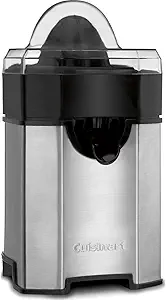 |
| Best Quality Built to a higher standard if you want something more solid | Breville Citrus Press Pro 800CPXL |  |
| Best Value The sweet spot between price and what you get | Chef'n FreshForce Lemon Juicer |  |
| Best Budget The cheapest option that still gets the job done reliably | Buzazzy Metal Lemon Squeezer |  |
| Top Rated A top-rated pick with lots of positive feedback | OXO Good Grips Citrus Squeezer |  |
| Most Popular A crowd favorite that many people choose with confidence | Zulay Metal 2-in-1 Lemon Squeezer | 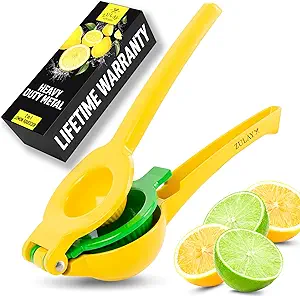 |
| Best Seller A high-volume bestseller chosen again and again | Elite Gourmet ETS623 Citrus Juicer |  |
Cuisinart Pulp Control CCJ-500P1

| Capacity | 12 ounces |
|---|---|
| Number of Speeds | 3 |
| Power Source | Corded Electric |
| Material | Stainless Steel |
| Voltage | 110 |
The Cuisinart Pulp Control CCJ-500P1 is a straightforward countertop citrus juicer that handles everything from limes to large grapefruits. It uses an adjustable reamer with three pulp settings and an auto-reversing cone plus a final-spin feature to maximize extraction, and juice pours through an extra-long snap-up spout to reduce drips. The unit is corded and simple to operate with button controls and three speeds, and most removable parts are dishwasher safe which makes cleanup quick. At its size it fits easily on a kitchen counter and the stainless steel construction looks durable while resisting staining. Expect efficient daily juicing for breakfasts, cocktails, or recipes that call for fresh citrus, though the 12-ounce capacity means you will empty the carafe between larger batches. It is not a masticating or multi-fruit extractor, so it is optimized specifically for citrus rather than whole fruits or vegetables.
Best for: Buyers who want a reliable, easy-to-use citrus juicer for regular home use and value efficient juice extraction and simple cleanup.
Less Ideal for: Those who need a high-capacity juicer for large batches or a multi-purpose extractor for whole fruits and vegetables should consider other types of juicers.
- Adjustable 3-setting pulp control for customized texture
- Auto-reversing reamer and final-spin feature to increase juice yield
- Dishwasher-safe removable parts for easy cleanup
- Extra-long snap-up spout reduces drips and fits taller glasses
- Stainless steel construction looks durable and resists staining
- 12-ounce capacity requires frequent emptying for larger batches
- Designed for citrus only, not suitable for whole fruits or vegetables extraction
Verdict: Choose this Cuisinart if you want a compact, efficient citrus-only juicer that extracts more juice with adjustable pulp control and easy cleanup.
Breville Citrus Press Pro 800CPXL

| Wattage | 110 watts |
|---|---|
| Power Source | Corded Electric |
| Voltage | 120 volts |
| Capacity | 800 ml |
| Material | Stainless Steel |
The Breville Citrus Press Pro is built for efficient, consistent citrus extraction using a triple-hinged, power-assisted lever and a quadra-fin die-cast cone that handles lemons, limes, oranges and grapefruits. You lower the arm to apply steady downward pressure while the cone spins only when the safety switches detect proper engagement, which makes juicing hands-off and safer than manual reamers. The die-cast stainless cone and body are acid resistant for longevity and the drip-stop spout plus removable fruit dome keep counters tidy. Cleanup is straightforward since the cone, collector, filter and dome are dishwasher safe. At 110 watts it delivers strong, controlled pressing rather than high-speed centrifugal action, so you get high yield without aeration or foaming, but it is larger and heavier than handheld squeezers and requires countertop space. For someone focused on extracting maximum juice with minimal effort and repeatable results, this press performs very well.
Best for: Buyers who prioritize extraction efficiency and repeatable, low-effort juicing for lemons, limes, oranges and grapefruit and want a durable, safety-minded countertop press.
Less Ideal for: Anyone who needs a compact travel-friendly squeezer or who must process very large quantities of fruit quickly without stopping.
- Power-assisted lever and triple-hinged arm for consistent, low-effort pressing
- Quadra-fin die-cast cone designed to maximize juice extraction from different fruit sizes
- Acid-resistant stainless steel cone and body for long-term durability
- Drip-stop spout and removable fruit dome reduce mess and simplify cleaning
- Juicer components are dishwasher safe for easy cleanup
- Bulkier and heavier than handheld or manual citrus squeezers
- Not a high-speed centrifugal juicer, so it is slower if you need very large volumes quickly
Verdict: Choose this press if you want a durable, power-assisted citrus juicer that extracts maximum juice with minimal effort and mess.
Chef'n FreshForce Lemon Juicer

| Capacity | 0.8 liters |
|---|---|
| Material | Plastic |
| Blade Material | Stainless Steel |
| Power Source | hand_powered |
| Special Features | Dishwasher Safe |
The Chef'n FreshForce is a compact hand press built specifically for lemons and other small citrus that uses a patented dual-gear mechanism to boost extraction while reducing hand strain. You use it by placing a halved lemon in the basket and squeezing the ergonomic non-slip handles together, which engages the gears and forces juice through the perforated cone into a bowl or glass. The body blends durable nylon with stainless steel components for strength, and the basket catches seeds and most pulp for cleaner juice. It is dishwasher safe for easy cleanup and small enough to tuck in a drawer when not in use. The design prioritizes leverage over speed, so it outperforms basic metal squeezers on yield and comfort, but it is limited to halved fruit and smaller citrus—it is not a fit for large oranges or bulk juicing. For home cooks and bartenders who want more yield with minimal effort, the FreshForce is a practical, long-lasting handheld option.
Best for: Buyers who want a compact, efficient manual juicer that maximizes yield and minimizes hand effort for occasional home cooking and cocktail prep.
Less Ideal for: Those who need a juicer for large citrus, high-volume juice production, or fully automatic operation should look at electric or countertop models instead.
- Dual-gear mechanism increases juice extraction with less hand force
- Ergonomic non-slip handles reduce hand strain during use
- Durable nylon and stainless-steel construction for everyday use
- Top-rack dishwasher safe for easy cleanup
- Designed for halved lemons and small citrus, so not suitable for large oranges or high-volume juicing
- Plastic body may show wear or discoloration over long-term heavy use
Verdict: If you want a small, durable manual press that squeezes more juice with less effort for lemons and small citrus, the FreshForce is the practical choice.
Buzazzy Metal Lemon Squeezer

| Material | Aluminum |
|---|---|
| Blade Material | Stainless Steel |
| Special Features | BPA Free |
| Power Source | Manual Powered |
| Capacity | 0.6 liters |
This compact metal lemon squeezer is a manual handheld press that uses a hinged bowl-and-press design to extract juice from lemons, limes, and small oranges. Made from aluminum with a powder-coated finish and stainless steel cutting edges, it is used by halving fruit and pressing the handles together so juice flows out while seeds and most pulp remain in the bowl. The tool is lightweight, dishwasher-safe according to the listing, and advertised as BPA-free, making it a low-maintenance option for frequent kitchen use or quick cocktail prep. It is best for single-serving juice tasks where speed and ease matter rather than large-volume juicing. Limitations include its small bowl size that may require cutting larger fruit into pieces and the manual effort required for repeated use, which makes it less efficient for high-volume juicing sessions.
Best for: Buyers looking for an inexpensive, no-frills citrus press for occasional kitchen use or quick single-serving juicing who prefer a durable metal tool over plastic options.
Less Ideal for: People who need to juice large quantities regularly or who want a hands-free or electric solution should choose a larger manual press or an electric juicer instead.
- Durable aluminum construction with powder-coated finish for corrosion resistance
- Stainless steel cutting edge for reliable juice extraction and seed separation
- Dishwasher-safe listing makes cleanup straightforward
- Compact, lightweight design that stores easily and is easy to use for single servings
- Small bowl capacity may require cutting larger citrus into pieces
- Manual pressing is tiring for large batches or frequent heavy use
Verdict: A budget-friendly, durable handheld citrus press that gives quick single-serving juice with minimal cleanup.
OXO Good Grips Citrus Squeezer

| Recommended Uses For Product | Citrus Fruits |
|---|---|
| Material | Aluminum |
| Power Source | Manual |
| Capacity | 0.5 liters |
| Product Care Instructions | Hand Wash Only |
The OXO Good Grips Citrus Squeezer is a straightforward hand press built for everyday lemon and lime juicing. You place a halved fruit cut-side down in the die-cast aluminum bowl, squeeze the long non-slip handles together and the unit strains seeds and most pulp while forcing juice into a bowl or directly over food. The handles are molded to absorb pressure for comfortable repeated use, and the construction feels solid rather than flimsy. It is intended for small citrus and excels when you need a quick splash of fresh juice for dressings, drinks, or cooking. Care is easy since the main material is aluminum and the product is dishwasher safe per the listing, though hand washing is recommended for longevity; the plastic blade/strainer parts limit heavy-duty citrus with very fibrous pulp. If you want a reliable, no-frills tool that lasts and produces seed-free juice fast, this is a practical pick, but it is not designed for large grapefruits or high-volume commercial use.
Best for: Buyers who prioritize a dependable, well-built manual juicer for occasional to regular home use and want a tool that consistently produces seed-free lemon or lime juice.
Less Ideal for: People who need to juice large citrus fruits or who require a high-capacity juicer for heavy daily processing should consider larger or electric models instead.
- Die-cast aluminum body for durable, long-lasting construction
- Built-in strainer reduces seeds and most pulp while juicing
- Non-slip, pressure-absorbing handles for comfortable squeezing
- Dishwasher-safe design for easy cleaning
- Not sized for large citrus like grapefruits
- Plastic strainer components may wear faster than metal under heavy use
Verdict: A sturdy, no-nonsense manual squeezer that reliably delivers seed-free lemon and lime juice for everyday home use.
Zulay Metal 2-in-1 Lemon Squeezer

| Material | Aluminum |
|---|---|
| Power Source | Manual |
| Blade Material | Stainless Steel |
| Capacity | 0.5 liters |
The Zulay Metal 2-in-1 Lemon Squeezer is a hand-operated citrus press that combines a shallow bowl and a press cone to squeeze halves or smaller citrus fruits quickly. You place a halved lemon or lime in the bowl and squeeze the ergonomic handles together to force juice through the perforated base while seeds are kept out by the built-in filter. Its aluminum construction and stainless steel blades make it feel sturdy in use and the ergonomic handle reduces hand fatigue for repeated juicing. The compact, manual design means no power or batteries and it stores easily in a drawer, making it handy for cocktails, dressings, or a single glass of juice. While it is durable and easy to clean by hand, the product care notes recommend hand washing, and the painted finish and small bowl size mean it is best for lemons, limes, and other small fruit rather than large oranges. For buyers looking for a simple, reliable tool to get consistent extraction with minimal effort, this squeezer delivers a lot of value for everyday kitchen tasks.
Best for: Buyers who prioritize proven, well-reviewed kitchen tools and want a durable manual squeezer for everyday lemons, limes, and cocktail prep without relying on electricity.
Less Ideal for: People who need high-volume juicing, want a dishwasher-safe large-capacity juicer, or regularly juice large citrus like full-size oranges.
- Sturdy aluminum build with stainless steel blade components for durability
- Ergonomic handle reduces hand strain during repeated use
- Built-in perforated base filters seeds and large pulp
- Compact manual design stores easily and requires no power
- Hand wash recommended which may be less convenient than dishwasher-safe models
- Small bowl capacity limits use with large oranges or high-volume juicing
Verdict: A compact, heavy-duty manual squeezer that reliably extracts juice from lemons and limes for buyers who value durability and strong social proof.
Elite Gourmet ETS623 Citrus Juicer

| Maximum Power | 40 watts |
|---|---|
| Power Source | Corded Electric |
| Voltage | 120 |
| Capacity | 24 oz |
| Special Features | Quiet Motor |
The Elite Gourmet ETS623 is a small electric citrus juicer built for everyday home use. It uses a 40-watt motor and an auto-reversing reamer to extract juice from lemons, limes, oranges, and grapefruit with a simple push-down action, and the 24 oz container lets you prepare a couple of servings at once. A built-in pulp and seed filter reduces unwanted bits and the easy-pour spout with handle makes serving straightforward. Detachable parts are top-rack dishwasher safe for easy cleanup, though hand washing is recommended for longer life. The unit is compact and BPA-free, so it fits well on small counters or in apartments and carries ETL safety listing. Expect quiet, efficient operation compared with weaker 25-watt models, but this is a single-purpose citrus juicer so it is not intended for hard or non-citrus produce and has modest capacity for larger batches.
Best for: Buyers who want a straightforward, low-risk citrus juicer that reliably produces fresh lemon or orange juice for daily use in small households or apartments.
Less Ideal for: People who need high-volume juicing, a multi-fruit juicer capable of hard produce, or commercial-grade capacity should look elsewhere.
- 40-watt motor with auto-reversing reamer for improved juice extraction
- 24 oz container with easy-pour spout and handle for convenient serving
- Built-in pulp and seed filter provides smoother juice
- Compact footprint and BPA-free materials suited to small kitchens
- Detachable parts are top-rack dishwasher safe for simpler cleanup
- Modest 24 oz capacity is limited for large batches
- Designed only for citrus fruits, not suitable for harder produce
Verdict: A compact, easy-to-use citrus juicer that reliably extracts fresh lemon and orange juice for small households.
Choosing the Right Lemon Juicer: Key Factors to Consider
Extraction Efficiency
How effectively a juicer extracts juice from small citrus determines how many lemons you need and how much manual effort you expend. Designs that cradle a half-lemon and apply even pressure or that use a well-shaped reamer reduce wasted juice. Higher extraction efficiency is particularly important if you juice several lemons at once or use juice frequently in recipes.
Inefficient designs leave pulp and juice on the fruit, which increases prep time and waste. Consider whether the mechanism squeezes, reams, or presses the lemon, since each approach yields different results with small fruit.
Ease of Cleaning
Frequent lemon juicing becomes tedious if the device traps pulp or has tiny crevices that require detailed scrubbing. Models with removable, dishwasher-safe parts or simple smooth surfaces cut post-use time significantly. Materials that resist staining and odor retention also matter because lemon oils and pulp can cling to plastics.
Check whether strainers and juice channels are accessible and whether the unit disassembles without tools. Ease of cleaning influences how often you will actually use the juicer versus reaching for a quicker alternative like manual squeezing.
Build Durability and Materials
Durable construction affects how long a juicer performs reliably under repeated pressure. Look for sturdy plastics, stainless steel reamers, or metal frames on manual presses. Thin or brittle materials can crack under the force required to extract juice from firmer lemons.
Consider corrosion resistance for metal parts and whether seals or moving joints use robust hardware. A well-built lemon juicer lasts across seasons of heavy use without loosening, bending, or retaining unpleasant odors.
Ergonomics and User Effort
Comfortable operation reduces fatigue when juicing multiple lemons. For manual presses, lever length and handle shape determine how much hand strength is needed. For handheld reamers, grip texture and size affect control and comfort.
If you have limited hand strength, prioritize designs that amplify leverage or use a press mechanism rather than pure wrist motion. Ergonomic choices also influence speed and the risk of slipping, which affects safety and mess control.
Pulp and Seed Control
Some recipes call for pulp, others do not. A good lemon juicer gives predictable control over how much pulp and how many seeds enter the juice. Built-in strainers, fine reamer shapes, or integrated filters reduce the need for separate straining steps.
Assess whether the device traps seeds or lets them pass through. For cocktail or baking use where clarity matters, tighter filtration is essential. For cooking or marinades, coarser extraction that leaves more pulp may be acceptable.
Manual Reamers Vs Press-Style Juicers
Handheld reamers and countertop press-style lemon juicers are the two dominant approaches for small citrus. Handheld models are compact, inexpensive, and good for occasional single lemons, but they require wrist motion and can be messy. Press-style juicers use leverage to squeeze juice with less effort and often produce more consistent yield from each half.
- Handheld reamers: best for quick single lemons and small kitchens
- Press-style juicers: better for frequent use and higher yield
- Consider countertop footprint and storage needs when choosing between types
Materials and Maintenance Tips
Choose materials that stand up to acidic citrus: stainless steel parts resist corrosion and odor retention better than lower-grade metals. BPA-free, dense plastics perform adequately but watch for staining and lingering oils. Rigid construction and smooth joins make routine cleaning simpler.
If the unit disassembles, rinse pulp out promptly to prevent drying and clogging. For stubborn residue, soak removable parts in warm, soapy water for a few minutes before scrubbing. Dry thoroughly to limit corrosion or mold growth.
- Prefer stainless steel reamers and strainers when possible
- Avoid complicated assemblies with many small parts
- Rinse immediately after use to prevent buildup
How to Maximize Juice Yield From Small Lemons
Warm lemons briefly in your hands or microwave for 10 seconds to loosen juices before cutting and juicing. Rolling the lemon on the countertop with firm pressure also helps break down internal membranes, increasing yield. Cut lemons across the equator for the most accessible juice pockets.
When using a reamer, apply steady pressure and rotate the fruit to extract evenly. For press-style devices, position the lemon properly in the cup and apply slow, even force to avoid spurting and to get fuller extraction without excessive pulp.
- Warm or roll lemons before juicing
- Cut across the middle for best exposure
- Apply steady pressure and rotate for complete extraction
Storage and Space Considerations
Think about where the juicer will live when not in use. Small handheld reamers store easily in a utensil drawer, while press-style units may need counter or cabinet room. If space is limited, look for collapsible or compact press designs.
Also consider whether the unit is heavy enough to stay put during operation. Lightweight presses can slip on a wet countertop, so non-slip bases or suction feet are useful for safety and convenience.
- Measure storage space before buying a countertop press
- Look for non-slip bases on heavier units
- Compact reamers fit in drawers easily
How We Chose the Best Lemon Juicer
We focused on attributes that directly affect day-to-day lemon juicing rather than marketing claims. Primary evaluation criteria included extraction efficiency, ease of cleaning, build quality and longevity, ergonomics and user effort, and suitability for typical kitchen tasks. We tested how thoroughly each design removed juice from small citrus halves and recorded whether seeds or ragged pulp passed through common strainers. Ease of cleaning considered whether parts disassemble, whether crevices trap pulp, and how dishwasher-safe components are. We excluded devices intended primarily for large-scale commercial pressing or for general-purpose electric juicing machines that are oversized for lemons. We also omitted single-function novelty tools that compromise extraction for gimmicks. The goal was practical household options that reliably deliver high juice yield, low leftover pulp, straightforward maintenance, and solid mechanical or material quality.
Our full evaluation process is outlined in our review methodology.
FAQ
Can I use a lemon juicer for limes or other small citrus?
Often yes. Most lemon-designed reamers and presses handle limes and other similarly sized citrus, though extraction efficiency can vary. Larger citrus like oranges may not seat properly in a small cup-style press.
Is a manual juicer better than an electric one for lemons?
For small amounts, manual juicers are usually simpler to clean and offer better control. Electric options can speed up larger batches, but they are often bulkier and may be overkill for occasional lemon use.
How do I avoid getting seeds in the juice?
Use a model with a fine strainer or built-in seed guard, or pour juice through a separate fine-mesh strainer after juicing. Positioning the lemon correctly and using steady pressure also reduces seed escape.
Are dishwasher-safe parts important for lemon juicers?
Dishwasher-safe parts save time, but not all components are equally safe. Look for explicit dishwasher ratings for removable parts, and avoid putting delicate seals or coated finishes in the dishwasher.
How can I prevent my juicer from staining or smelling like citrus?
Rinse and clean parts promptly after use, and occasionally soak components in a baking soda solution or mild vinegar rinse to neutralize odors. Dry thoroughly to prevent mold or lingering smells.
Final Verdict
Choose the lemon juicer style that matches how often and how much you juice. If you squeeze one to three lemons occasionally, a simple handheld reamer may be the fastest, easiest option. If you juice frequently or want higher yield with less hand strain, a press-style juicer usually delivers better extraction and cleaner separation of seeds and pulp. Prioritize extraction efficiency, ease of cleaning, and durable materials. Those tradeoffs will determine how often you actually use the device and how reliable it remains over time. With the right balance of efficiency and maintenance, you can get consistent juice with minimal hassle for everyday kitchen needs.