
Note: This article contains affiliate links. If you click on these links and make a purchase, we may earn a small commission at no extra cost to you. This helps support our research and content. Read our full affiliate disclosure here.
If you have low-clearance furniture, baseboards, or narrow gaps, a standard robot vacuum may miss large swaths of floor. Low-profile robot vacuums are built specifically to slip under sofas, beds, and cabinets so you get more consistent cleaning without moving heavy furniture. In this guide we shortlist the top low-profile robot vacuums that balance slim height with good suction, runtime, and navigation. Below you will find our top picks and the practical reasons each model made the cut, plus the evaluation criteria we used to judge suction, mapping, and upkeep. Use this guide to match a slim robot vacuum to the clearance and floor types in your home.
Top Picks at a Glance
| Best Quality Built to a higher standard if you want something more solid | roborock Qrevo Edge 2 |  |
| Best Value The sweet spot between price and what you get | ROPVACNIC S1 Robot Vacuum |  |
| Best Budget The cheapest option that still gets the job done reliably | ILIFE V2 Robot Vacuum |  |
| Top Rated A top-rated pick with lots of positive feedback | Bagotte G6 Robot Vacuum |  |
| Most Popular A crowd favorite that many people choose with confidence | Lefant M210 Robot Vacuum |  |
| Best Seller A high-volume bestseller chosen again and again | eufy 11S Max Robot Vacuum |  |
roborock Qrevo Edge 2

| Suction | 25,000 Pa |
|---|---|
| Profile height | 3.14 in |
| Battery life | 188 minutes |
| Dock features | Hot-water mop washing, warm-air drying, auto dust emptying |
| Obstacle recognition | Reactive AI (280+ objects) |
The roborock Qrevo Edge 2 is a purpose-built low-profile robot vacuum and mop that targets deep cleaning under furniture while handling pet hair and varied floor types. Its 3.14-inch slim chassis and RetractSense navigation let it slip under beds and sofas, while the 25,000 Pa HyperForce suction and dual anti-tangle system lift embedded debris and keep brushes moving around hair. The upgraded mopping system applies 8N downward pressure and limits leftover moisture, and the dock adds hands-free maintenance with 176°F hot-water mop washing, warm-air drying, and automatic dust emptying. Reactive AI obstacle recognition and an LDS navigation array help avoid collisions and adapt cleaning intensity for dirty spots, and the app-driven SmartPlan automates room-aware routines and re-washes. Trade-offs include a relatively high noise level at 64 dB and a sizable dock footprint and system complexity that require some setup and occasional maintenance. For buyers focused on performance in low-clearance spaces, the Qrevo Edge 2 delivers powerful suction and a comprehensive docking system that reduces hands-on chores.
Best for: Buyers who prioritize real cleaning power and the ability to clean tight, low-clearance spaces with minimal daily intervention and strong pet-hair performance.
Less Ideal for: People who need an ultra-quiet overnight cleaner or who prefer a simple plug-and-play robot without an advanced dock and app-driven features.
- Very low 3.14 in profile for cleaning under beds and low furniture
- Strong 25,000 Pa suction with dual zero-tangle system for pet hair and embedded dirt
- Dock offers hot-water mop washing plus warm-air drying and 65-day auto dust emptying
- Reactive AI obstacle recognition adjusts cleaning and avoids collisions
- Long battery life rated at 188 minutes for extended cleaning runs
- Measured noise around 64 dB can be noticeable during operation
- Advanced dock and AI systems add setup complexity and require occasional maintenance
Verdict: If you want a high-performance, ultra-slim robot that cleans under low furniture and handles pet hair with a hands-free dock, the Qrevo Edge 2 is a top choice.
ROPVACNIC S1 Robot Vacuum
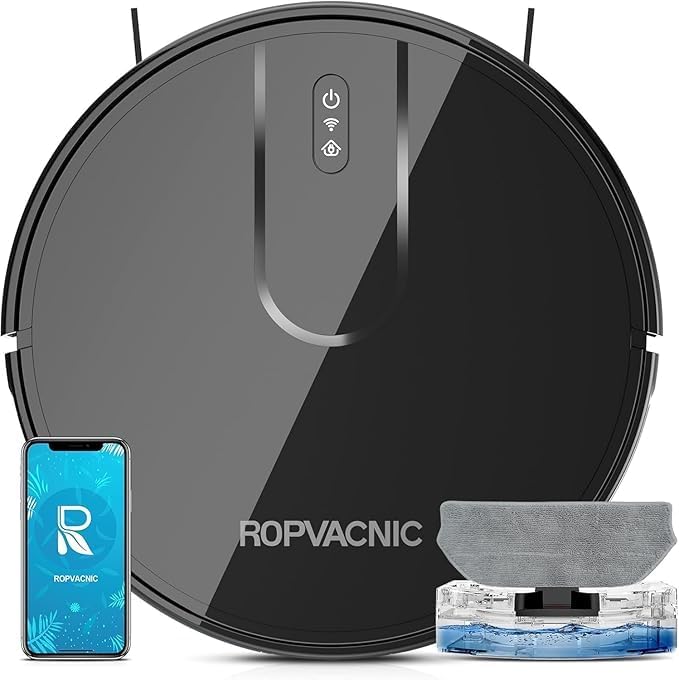
| Suction | 5200Pa |
|---|---|
| Battery Life | 120 minutes |
| Filter Type | Multi-layer Optimized High-Efficiency Filtration |
| Controller Type | App, Remote, Touchpad, Voice |
The ROPVACNIC S1 is a compact robot vacuum that pairs 5200Pa suction with an electronically controlled mopping system to handle everyday dirt and light stains on hard floors and low-pile carpet. At just under 3 inches tall it slips under low furniture and its multi-sensor obstacle avoidance plus automatic docking make set-and-forget cleaning simple. The app and voice integration let you schedule runs, pick cleaning modes, and adjust one of four mopping intensity levels, while the included remote and touchpad give extra control without the phone. For pet homes the no-entanglement design, side brushes, and a spare HEPA filter help manage fur and allergens. Practical buyers will appreciate the 4400mAh battery that supports up to 120 minutes of runtime and the roomy dustbin and water tank for longer coverage between maintenance. Downsides are typical for combo machines: electrically controlled mopping is best for light damp cleaning rather than heavy scrubbing, and full performance depends on occasional filter and brush upkeep.
Best for: Buyers who want a compact, low-profile robot that reliably vacuums and performs light mopping with convenient app and voice controls and long runtimes for larger rooms.
Less Ideal for: People who need heavy-duty wet cleaning or deep scrubbing of stubborn stains should consider a dedicated mop system instead.
- Low-profile 2.99" height clears under most low furniture
- Strong 5200Pa suction for picking up dust, crumbs, and pet hair
- Electronically controlled water tank with four mopping intensity levels
- App, remote, touchpad, and voice control for flexible scheduling and commands
- Long 120-minute runtime from a 4400mAh battery for larger coverage
- Mopping function is for light damp cleaning and not a replacement for manual scrubbing
- Performance and run time require periodic filter and brush maintenance
Verdict: A slim, practical robot that combines strong suction and adjustable electronic mopping for hands-off, low-profile cleaning in larger homes.
ILIFE V2 Robot Vacuum

| Battery Life | 120 minutes |
|---|---|
| Capacity | 300 ml |
| Filter Type | Sponge |
| Control Method | Remote |
| Noise Level | 69 db |
The ILIFE V2 is an entry-level robot vacuum built to keep hardwood and other hard floors tidy without a lot of fuss. Its 2.99-inch slim body fits under low furniture while a tangle-free suction port and sponge filter make it practical for homes with pet hair. You can run scheduled cleanings, switch between auto, spot and edge modes, or start jobs with the included remote control or the single-button on the unit. A 300 ml dustbin and up to 120 minutes of runtime let it cover medium rooms on one charge, and it will automatically return to the dock when the battery is low. Noise is noticeable at 69 dB and there is only one power level, so it lacks adjustable suction or app-based controls, but for straightforward floor maintenance on hardwood and low-pile carpet the V2 delivers solid value at an affordable price.
Best for: Buyers who want an affordable, no-frills robot to maintain hardwood and low-pile carpet cleanliness with simple controls and scheduled runs.
Less Ideal for: Those who need strong adjustable suction, smart app control, or advanced mapping for large or complex homes should consider higher-end models.
- Slim 2.99-inch profile cleans under low furniture
- Tangle-free suction port suited for pet hair
- 120 minutes runtime with automatic return-to-dock
- Multiple cleaning modes (auto, spot, edge) and simple remote control
- Single power level limits suction control for heavier debris
- No smartphone app or advanced navigation features
Verdict: A low-cost, slim robot vacuum that reliably maintains hardwood floors and handles pet hair for budget-focused buyers.
Bagotte G6 Robot Vacuum

| Maximum Suction | 6000 picometer |
|---|---|
| Battery Life | 120 minutes |
| Filter Type | H13 |
| Capacity | 300 ml |
| Control Method | App, Remote, Voice |
The Bagotte G6 is a round, low-profile robot vacuum that combines vacuuming and mopping with LiDAR-based mapping for room-aware navigation. It scans your home to build maps, supports virtual no-go zones, and plans efficient routes, which helps it avoid repeat passes and reduces cleaning time. In daily use you control it via the app, remote, or voice assistants and can switch between sweeping, vacuuming and mopping with the included 2-in-1 dust and water tank. The unit claims up to 6000Pa suction and an H13 filter for handling pet hair, dust and embedded dirt, and the 120-minute battery life is long enough for most medium-to-large cleaning sessions before auto-recharging. Practical limitations include a modest 300 ml water tank for mopping, which will need frequent refills on larger homes, and the round form factor can miss tight corner edges compared with dedicated edge-cleaning designs. For a low-profile, map-aware machine that combines strong suction and mopping, the G6 is a solid, reliable option for everyday floor care.
Best for: Buyers who prioritize reliable, map-based navigation and strong suction in a low-profile vacuum for regular whole-home cleaning sessions.
Less Ideal for: If you need extended unattended mopping on very large homes or specialized corner/edge cleaning, a larger tank or an edge-focused model would be a better fit.
- LiDAR 360° mapping for accurate room maps and efficient cleaning routes
- High claimed suction (6000Pa) for picking up pet hair and embedded dirt
- Multi-mode cleaning: sweeping, vacuuming and mopping with a 2-in-1 tank
- Long runtime (up to 120 minutes) with auto-recharge for extended coverage
- H13 filter for finer particle capture
- Small 300 ml water tank requires frequent refills for large-area mopping
- Round design may not clean very close to corners or deep edges
Verdict: For a low-profile robot that reliably maps your home and delivers strong suction plus mopping, the Bagotte G6 is a practical everyday cleaner.
Lefant M210 Robot Vacuum

| Battery Life | 120 minutes |
|---|---|
| Capacity | 500 cubic centimeters |
| Filter Type | Cartridge |
| Compatible Devices | Amazon Echo, Google Home, Smartphones |
| Other Special Features of the Product | Anti-Fall, Auto-Docking, Obstacle Avoidance, Pet Hair Pick Up, Scheduling |
The Lefant M210 is a small, app-controlled robot vacuum aimed at regular upkeep on hardwood and other hard floors. Its low 3-inch profile slips under furniture, and a brushless suction port helps pick up pet hair without brush tangles. You can run scheduled cleans, pick from six modes including edge and spot, and control the unit via the Lefant app or Alexa/Google voice commands. The listed 120-minute runtime (quiet mode) covers mid-size rooms on a single charge, and the 500ml dustbin reduces how often you empty it. Navigation relies on infrared anti-collision and anti-drop sensors rather than LIDAR, so it follows zigzag or randomized patterns rather than tightly mapped routes; that makes coverage fine for open hardwood areas but less precise in cluttered rooms. Noise is moderate at about 52 dB and suction is tuned for surface dirt rather than deep carpet extraction. For buyers wanting a straightforward, affordable hardwood-focused cleaner, the M210 delivers solid basic performance, but expect simpler navigation and fewer advanced mapping features than higher-end models.
Best for: Buyers on a tight budget who need a dependable, easy-to-use robot for regular hardwood and low-pile cleaning and value app/voice scheduling over advanced mapping.
Less Ideal for: Homes that require precise room mapping, systematic multi-room navigation, or deep-cleaning on high-pile carpets should consider more advanced models.
- Slim profile fits under low furniture for hidden-dirt pickup
- Brushless suction port reduces hair tangles for pet owners
- App scheduling plus Alexa and Google voice control for hands-free operation
- 500ml dustbin and up to 120 minutes runtime support longer cleaning cycles
- Navigation uses infrared sensors and randomized or zigzag patterns rather than LIDAR mapping, so room coverage can be less efficient in cluttered spaces
- Suction and cleaning are optimized for hard floors and low-pile carpet, not deep-cleaning thick carpet
Verdict: If you want an affordable, compact robot that handles daily hardwood and pet hair cleaning with app and voice scheduling, the Lefant M210 is a practical pick.
eufy 11S Max Robot Vacuum
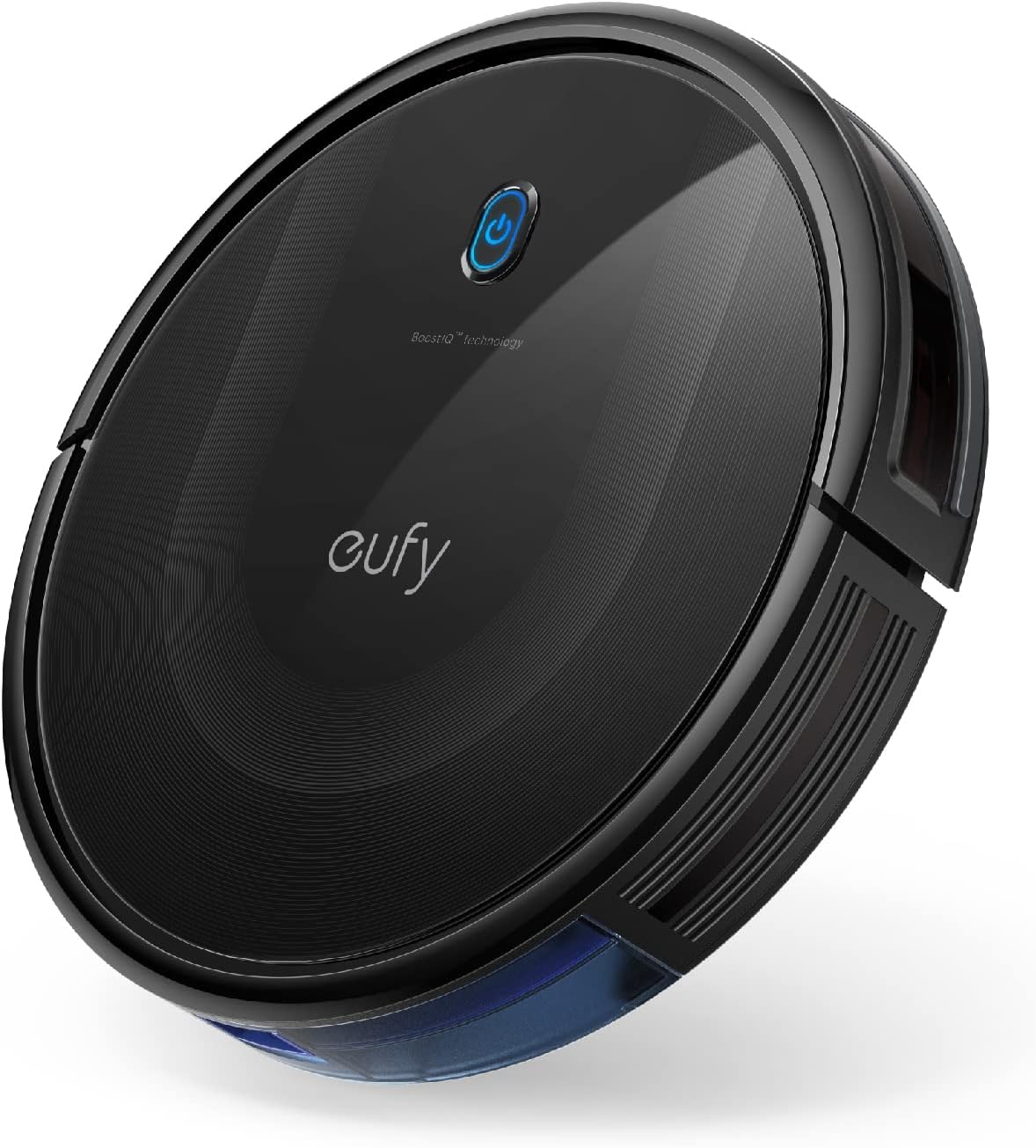
| Surface Recommendation | Hard Floor & Tile & Medium carpet |
|---|---|
| Battery Life | 100 minutes |
| Suction Power | 2000 Pa |
| Capacity | 600 ml |
| Noise Level | 55 db |
The eufy 11S Max is a low-profile robot vacuum built to clean hard floors and medium-pile carpets without drawing attention. Its 2.85-inch slim body lets it slide under low furniture while 2000Pa suction and a 12.8-inch cleaning path pick up dust, crumbs, and pet hair. It runs up to 100 minutes on hardwood at a reported low 55 dB, and automatic return-to-base means it tops off battery without user intervention. Controls are simple: the included remote and onboard buttons let you start, stop, and switch modes quickly, though there is no Wi-Fi or app control. Practical touches include washable filters, drop-sensing and anti-collision sensors, and a 600 ml dust capacity that reduces how often you empty the bin. The trade-offs are straightforward: navigation is basic rather than lidar or map-based, so room coverage is more random and may miss tight corners, and the single-side-brush design can be less thorough along edges compared with dual-brush models. For routine, quiet cleaning of hardwood, the 11S Max balances strong suction and a slim profile in a simple, reliable package.
Best for: Buyers who prioritize a quiet, no-frills robot that cleans hardwood reliably and fits under low furniture will appreciate this model for regular maintenance cleaning.
Less Ideal for: If you want mapped cleaning, smartphone scheduling, or the most thorough edge-cleaning for complex floorplans, choose a model with advanced navigation and app control instead.
- Slim 2.85" profile reaches under low furniture
- Up to 100 minutes runtime for extended cleaning sessions
- Powerful 2000Pa suction for effective pickup on hard floors
- Quiet operation at about 55 dB suitable for daytime or evening use
- Large 600 ml dust capacity and washable filter lower maintenance frequency
- Random navigation rather than mapping can lead to uneven coverage
- No Wi‑Fi or smartphone app means limited scheduling and remote control options
Verdict: A slim, quiet robot with strong suction made for routine hardwood maintenance when you want reliable, no-frills cleaning.
Choosing the Right Low-Profile Robot Vacuum: Key Factors to Consider
Device Height and Actual Clearance
Low-profile is the central requirement for this category because measurements on packaging do not always reflect real-world fit. Measure the smallest clearance in your home, such as the gap beneath a couch or bed frame, then compare that to the robot's listed height. A few millimeters can be the difference between success and repeated hang-ups.
Look for designs with flat tops and low ground clearance around wheels and bumpers rather than protruding sensors or raised brush housings. Also consider whether the docking station or charging pins create a taller footprint during charge cycles because some tall docks prevent the robot from docking in tight furniture alcoves.
Suction Strength and Brush Design
Slim robots often have less vertical space for large motors and long bristle paths, which can reduce pickup if design is poor. Check stated suction figures as a starting point but focus on brush geometry and airflow path. Wide side brushes and low-profile main brushes that sit close to the floor help agitate and channel debris into the suction inlet.
If your home has both carpets and hard floors, choose a model with adaptable brush heads or good brushless suction performance. For pet hair, low-profile rollers that resist wrapping and easily removable brush modules are particularly valuable because you will be cleaning them more often.
Navigation Accuracy and Obstacle Handling
Because low-profile robots spend more time beneath furniture, they need reliable sensing to avoid getting stuck on chair legs or tangled on rugs. Look for mapping systems that create predictable routes and boundary features, or reactive navigation that can recover from tight squeezes.
Consider whether the robot uses physical bump sensing, laser-based mapping, or camera systems. Each has tradeoffs in low-light or cluttered under-furniture areas. Good corner and edge handling matter because debris tends to collect at baseboards and chair feet.
Battery Life Relative to Home Size
Slim chassis can limit battery capacity, so runtime is a critical tradeoff. Estimate the square footage you need to cover on a single charge and check the robot's claimed runtime against that need. Also look for intelligent recharge-and-resume features so the device can finish larger jobs without manual intervention.
For multi-room coverage, efficient navigation can be as important as raw battery numbers. A robot that maps and plans routes will typically cover more ground per charge than one that cleans randomly.
Maintenance and Access to Consumables
Because low-profile robots are often used daily, ease of emptying the dustbin and replacing filters or clearance-prone brushes affects long-term satisfaction. Prefer dustbins that are easy to remove without awkward maneuvers and filters that are accessible for quick swaps.
Also check how easy it is to clear hair from rollers and side brushes. Low-profile designs that require disassembling the underside for routine cleaning will add friction to ownership and reduce the likelihood you will perform needed maintenance.
Docking Compatibility and Placement Flexibility
The robot's docking behavior determines where you can place the station relative to furniture. A slim robot that cannot dock in tight alcoves because the dock is tall or requires extra clearance defeats the point of having a low-profile cleaner.
Evaluate if the docking base fits under any low furniture you plan to use it with, and whether the robot can reliably find and align with the dock from common starting points. Some systems also support wall-mounted or offset docking options that increase placement flexibility.
How Low-Profile Design Changes Cleaning Patterns
A lower chassis lets the robot access dust and pet hair that accumulates under furniture, but it also changes how the machine interacts with obstacles. When a robot operates beneath sofas and beds, it spends more time negotiating narrow passages and dealing with differing floor heights.
Because of that behavior, you may notice under-furniture areas are cleaner after each run, but the robot might need more passes in open spaces if suction is constrained by a smaller motor. Understanding these tradeoffs helps set expectations for overall cleaning cadence and how often you should run the vacuum.
- Better reach under sofas and low beds increases visible cleanliness in neglected areas.
- Slim robots may travel differently and prefer linear routes to avoid repeated tight turns.
- Smaller motors can mean more passes are required for heavy soiling.
Placement Tips for Maximum Under-Furniture Coverage
Position the charging dock where the robot can start and finish runs without needing to cross wide open areas that could drain the battery. If most of your cleaning need is under a couch or bed, place the dock nearby but not directly under the same piece of furniture unless the dock fits there.
If you have adjustable furniture legs, consider temporarily raising particularly shallow items to test fit before committing. Use physical or virtual barriers to keep robots out of areas where they might get permanently trapped, and clear loose cords or low toys before the first runs.
- Measure clearances before buying and again before final dock placement.
- Keep transitional thresholds and rugs in mind; even a low-profile robot can snag on a raised edge.
- Use boundary strips or app-based no-go zones to protect fragile or cluttered under-furniture spaces.
Maintaining Performance in Tight Spots
Routine maintenance is essential to keep slim vacuums working well beneath furniture. Check and clean side brushes and roller brushes frequently, since hair and fibers collect faster in areas that trap dirt.
Also inspect sensors and charging contacts for dust buildup. When sensors are obscured by debris, navigation and docking reliability drop, which can lead to more frequent manual rescues under low furniture.
- Empty the dustbin after heavy-hair cleanups to prevent suction loss.
- Wipe sensors and charging contacts weekly in high-use setups.
- Replace filters on the manufacturer's recommended schedule to maintain airflow.
Floor Type Considerations for Slim Robots
Low-profile robots perform differently across floor types. On hard floors they often excel because the tight brush-to-floor relationship boosts pickup. On medium-pile carpets, results depend strongly on suction and whether the roller can agitate fibers effectively.
If you have large area rugs with thicker piles or fringed edges, verify that the robot can climb the rug edge without getting stuck. In many homes a mixed-floor approach—running the robot more frequently on hard floors and spot-cleaning rugs—gives the best balance.
- Hard floors typically benefit most from low-profile designs.
- Test rug edges and transitions to avoid snagging.
- For pet owners, low-profile rollers designed to resist hair wrap are preferable.
Integration with Smart Home Systems
Many modern robot vacuums offer scheduling, zone cleaning, and voice or app control. For low-profile units, these features let you maximize under-furniture cleaning by scheduling runs when rooms are clear and mapping zones under sofas or beds.
If you plan to use smart schedules, set cleanings when pets or people are out of the area to reduce the chance of the robot getting trapped on loose items. Also check whether the mapping interface allows you to define precise no-go lines around fragile low-clearance items.
- Use schedules to run robots at off hours for unobstructed under-furniture access.
- Zone cleaning can target neglected areas without running the entire floor.
- Integration with voice assistants and routines adds convenience for regular maintenance.
How We Chose the Best Low-Profile Robot Vacuum
We focused on attributes that matter most for low-clearance cleaning. First, we verified maximum device height and clearance performance, prioritizing units that can consistently reach common under-furniture gaps. Navigation and obstacle negotiation were next, with preference given to vacuums offering reliable mapping, obstacle detection, or physically slim profiles that reduce snagging. Suction and brush design were evaluated to ensure a slim chassis did not sacrifice pickup on carpet and hard floors. Battery life and recharge behavior were considered for realistic coverage of typical apartment and house floorplans. Finally, maintenance needs such as dustbin access, filter replacement, and brush access were assessed to keep daily ownership simple. We excluded units that rely solely on trial-and-error clearance claims without consistent real-world fit information, models that require furniture modification, or vacuums with insufficient reported suction or runtime for typical rooms. The shortlist therefore reflects machines that balance slim form factor with measurable cleaning, navigation, and upkeep performance.
Our full evaluation process is outlined in our review methodology.
FAQ
How do I measure if a low-profile robot will fit under my furniture?
Measure the shortest vertical gap from floor to the underside of the furniture, including any protruding supports. Compare that measurement to the robot's listed height, and allow a few millimeters of clearance for obstacles such as floor irregularities or slightly raised edges.
Will a low-profile design reduce suction power?
Slimmer robots may have smaller motors or tighter airflow channels, which can limit raw suction compared with larger models. Good design can mitigate this through efficient brush placement and airflow, so evaluate pickup performance on your floor types rather than height alone.
Can low-profile robots dock reliably if the dock is taller than the unit?
Docking reliability depends on both robot and base design. Some slim robots can align accurately with taller docks, while others require the dock to sit in a clear open area. Confirm dock placement options and whether the dock fits under or near your furniture before finalizing placement.
Are low-profile robots harder to maintain?
Not necessarily, but maintenance access can be more constrained if components are tightly packed. Look for models with easy-access dustbins and removable brush modules to keep cleaning and filter changes straightforward.
Do low-profile vacuums handle pet hair well?
Many low-profile vacuums manage pet hair effectively if they have hair-resistant rollers and strong suction. However, pet hair tends to accumulate quickly, so you should expect more frequent brush and bin cleaning compared with occasional household use.
Should I raise furniture to accommodate a low-profile robot?
Raising furniture can help but is not always required. If you do raise items, ensure stability and test the change before relying on the robot to access that space regularly. Temporary adjustments for initial testing are a low-effort way to confirm fit.
Final Verdict
Choosing a low-profile robot vacuum is about balancing physical fit with cleaning capability. Prioritize verified height and clearance fit for the furniture you want cleaned, then weigh suction and brush design against your floor types. Navigation reliability and battery runtime determine how much of your home the robot can cover autonomously, while ease of maintenance influences long-term satisfaction. Focus on the tradeoffs that matter most in your space: a slightly taller but more powerful unit might be better for rugs, while the thinnest designs are best when under-furniture reach is the primary goal. With these priorities in mind, you can confidently pick a slim robot vacuum that keeps low-clearance areas clean without constant intervention.