
Note: This article contains affiliate links. If you click on these links and make a purchase, we may earn a small commission at no extra cost to you. This helps support our research and content. Read our full affiliate disclosure here.
If you need steady warmth without ballooning energy use, a low-wattage space heater with thermostat can deliver comfortable air for small rooms, home offices, and bedrooms. These heaters focus on maintaining a set temperature while cycling power to minimize electricity draw and keep noise low. Choosing the right model matters because thermostat quality, safety features, and runtime efficiency determine how well the unit holds temperature and how much it costs to operate. This guide covers six shortlisted low-wattage space heaters with thermostat that suit quiet, economical heating needs. We evaluated each pick against measurable criteria like energy consumption, thermostat accuracy, safety design, and noise. Read on to understand the tradeoffs and find the right heater for your space.
Top Picks at a Glance
| Best Overall The best all-around choice for most situations | Rcniso Compact 170W Thermostat Heater |  |
| Best Value The sweet spot between price and what you get | Good Housekeeping Wall-Mount Heater 750W |  |
| Best Budget The cheapest option that still gets the job done reliably | GiveBest Cyber 800W Wall Heater |  |
| Top Rated A top-rated pick with lots of positive feedback | Amazon Basics Portable Ceramic Heater |  |
| Most Popular A crowd favorite that many people choose with confidence | Minetom MH-04 Space Heater |  |
| Best Seller A high-volume bestseller chosen again and again | Brightown Wall Plug-In Heater 450W |  |
Rcniso Compact 170W Thermostat Heater
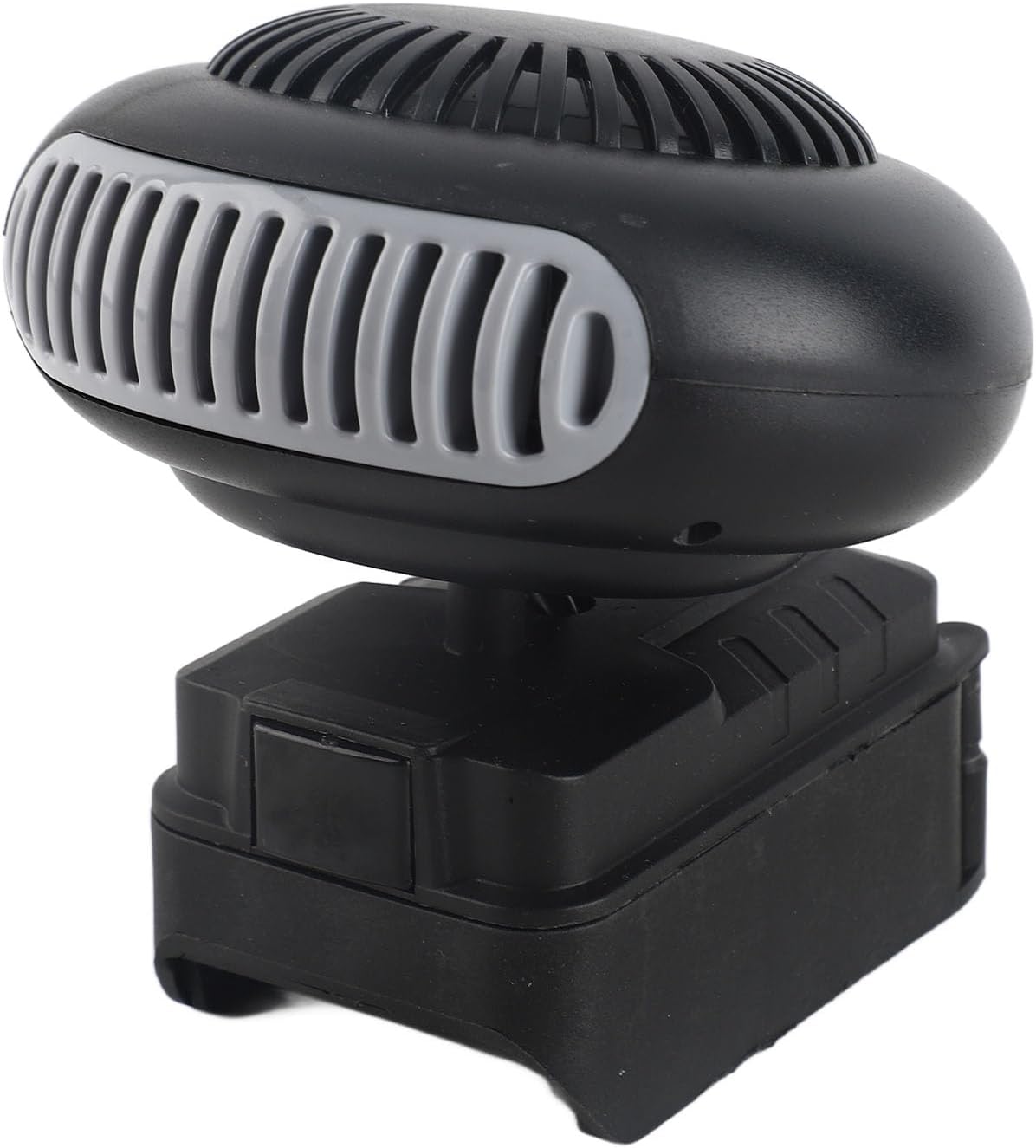
| Power | 170W |
|---|---|
| Mounting Type | Tabletop Mount |
| Temperature Range | 50 to 80℃ |
| Rotation | 180 degree rotating head |
This small Rcniso heater is built for spot heating in tight spaces like a home office, dorm room, or bedside table. Its 170W low-power design and thermostat control with two temperature settings let you keep a localized area comfortably warm while minimizing energy use. The head rotates about 180 degrees so you can direct warmth where you need it without moving the base, and the unit is advertised as quiet in operation which helps for night or focused work. A notable convenience is compatibility with up to 20V battery packs for cordless use, though runtime will depend on the battery you pair. Because it is explicitly sized for small rooms, expect modest heat output and slow warming compared with higher-wattage heaters, and there is limited information about safety cutouts or certified protections on the listing. For anyone wanting a low-power, portable option to take the chill off a desk or single seat, this makes practical sense; it is not intended to replace central heat or warm large spaces.
Best for: Buyers who want an energy-conscious, portable heater to warm a single seat or small room like a dorm, office, or bedside area and value quiet, directed heat.
Less Ideal for: People who need to heat larger rooms, rely on guaranteed safety certifications, or expect rapid whole-room heating should look at higher-capacity models.
- Low 170W power draw reduces energy use for spot heating
- Thermostat with two temperature settings for basic temperature control
- Compact tabletop design with 180 degree rotating head for directional warmth
- Quiet operation suitable for bedrooms or workspaces
- Optional compatibility with up to 20V battery packs for cordless use
- Limited heat output not suitable for heating medium or large rooms
- Listing lacks clear details on safety features and certified protections
Verdict: A compact, low-wattage thermostat heater that delivers quiet, directed warmth for a single spot while keeping energy use minimal.
Good Housekeeping Wall-Mount Heater 750W

| Power | 750W |
|---|---|
| Mounting Type | Wall Mount |
| Heating Method | Forced Air |
| Min Temperature Setting | 59 °F |
| Max Temperature Setting | 86 °F |
The Good Housekeeping 750W wall-mount heater is a compact electric unit designed to warm small rooms or home offices without taking floor space. It mounts to a wall and uses forced-air heating with a radiant element, and the digital display and included remote make it easy to set a target temperature or use the 12-hour timer. Two heat settings provide basic control and the thermostat covers a modest temperature range from 59 to 86 F, which is suitable for maintaining background warmth rather than rapid heating. Safety features such as overheat protection and a cool-touch housing improve peace of mind for continuous or unattended use. Because it is a low-wattage, wall-mounted design, expect slower warm-up and limited coverage compared with larger portable heaters, but its small footprint and remote control make it convenient for targeted spot heating where outlets and space are constrained.
Best for: Buyers who want a compact, low-wattage heater to provide steady background warmth in a small room or home office while keeping floors clear and energy use modest.
Less Ideal for: People who need fast, whole-room heating or to heat larger spaces should choose a higher-wattage portable heater instead.
- Wall-mount design saves floor space and keeps the unit out of the way
- Digital display and included remote make temperature and timer adjustments convenient
- Built-in overheat protection and cool-touch housing improve safety
- Low 750W power draw suitable for limited-circuit environments or energy-conscious use
- Limited heating power means slow warm-up and small coverage area
- Only two heat settings restrict fine-grained temperature control
Verdict: Choose this compact 750W wall-mount heater when you need energy-efficient, out-of-the-way background heating with thermostat control for a small room or office.
GiveBest Cyber 800W Wall Heater

| Heat Output | 800 watts |
|---|---|
| Power Source | Corded Electric |
| Voltage | 120 volts |
| Temperature Range | 60 °F–90 °F |
The GiveBest Cyber 800W wall heater is a small plug-in unit made for heating single small rooms or spots like bathrooms and home offices. It uses a ceramic PTC element and a brushless fan to deliver forced-air heat quietly, and the 800-watt output warms a nearby area without the high draw of larger heaters. Controls include a digital display, adjustable thermostat from 60°F to 90°F, a 12-hour timer, and a 15-foot remote for convenient operation from across the room. The ECO mode throttles power between 400 and 800W to reduce energy use, and built-in overheat protection plus flame-retardant materials add safety for wall-mounted use. Because it is wall-mounted with a rotating plug it fits tight outlet locations and keeps floor space clear. Limitations are obvious: the low 800W output means it is intended for small zones only and will not replace central heat, and wall mounting requires a compatible outlet placement for best performance.
Best for: Buyers looking to heat a single small room or a targeted spot on a tight budget who prioritize low-wattage, low-noise operation and simple remote/thermostat controls.
Less Ideal for: People who need whole-room heating for medium to large spaces or who want a heater that moves between rooms frequently.
- Compact wall-mounted design saves floor space and fits tight outlets with a 180° rotating plug
- Quiet brushless fan and ceramic PTC heating for low-noise operation suitable for bedrooms
- Digital thermostat, 12-hour timer, and 15 ft remote provide precise convenient control
- ECO mode reduces power draw and includes overheat protection and flame-retardant materials for safety
- 800W heat output only suitable for small rooms or spot heating
- Requires an accessible wall outlet in the target location for mounting
Verdict: A budget-friendly, low-wattage wall heater that delivers quiet, controlled spot heating with energy-saving ECO mode for small rooms.
Amazon Basics Portable Ceramic Heater

| Heat Output | 520 watts |
|---|---|
| Number of Speeds | 3 |
| Heating Method | Convection |
| Power Source | Corded Electric |
| Heating Coverage | 107.6 square_feet |
This Amazon Basics portable ceramic heater is a simple, low-wattage option for spot heating in small rooms, under desks, or next to seating. The 520-watt ceramic element warms up quickly and the adjustable thermostat plus three heat settings make it easy to dial in comfortable output without cycling a high-power unit. The housing is cool to the touch, which helps when placing the unit on a table or floor in a household with pets or kids. Its petite footprint and light weight make it easy to move between rooms, and the corded electric power is straightforward to use. Expect limited coverage and modest heat compared with higher-watt models, so this is best for personal or localized heating rather than warming an entire living area. There are no advanced safety sensors listed beyond cool-touch housing and basic thermostat control, and the unit relies on convection and radiant heating rather than forced air, which is quieter but slower to distribute warmth.
Best for: Buyers who prioritize a reliable, low-wattage heater for personal or localized use and want straightforward thermostat control without extra complexity.
Less Ideal for: People looking to heat medium to large rooms or replace a primary room heater should choose a higher-output unit instead.
- Low 520-watt power draw suitable for limited-circuit or energy-conscious use
- Ceramic heating element provides quick, consistent localized heat
- Adjustable thermostat and three heat settings for simple temperature control
- Cool-touch housing improves safety for tabletop or floor placement
- Compact and lightweight design for easy portability
- Limited heating coverage makes it unsuitable for warming larger rooms
- No mention of advanced safety features like tip-over or overheat auto-shutoff in the product details
Verdict: A dependable, low-wattage ceramic heater that delivers quick, local warmth with simple thermostat control for energy-conscious users.
Minetom MH-04 Space Heater

| Heat Output | 450 watts |
|---|---|
| Heating Coverage | 100 square_feet |
| Power Source | Corded Electric |
| Number of Speeds | 2 |
| Max Temperature Setting | 90 °F |
The Minetom MH-04 is a low-wattage, plug-in space heater meant to warm single small rooms like an office or dorm. It heats by convection and offers a digital thermostat that you can set between 60 and 90 degrees, plus an LED display and a 1–12 hour timer for automatic on/off. The unit plugs directly into a wall outlet with a rotating 3-prong plug so it saves floor space and keeps cords out of the way. In use it provides quiet, steady warmth across roughly 100 square feet without drawing much current, which is useful on shared circuits or in mild climates. Practical safety and convenience touches include automatic thermostat cycling to maintain temperature and an outer surface that stays cool during operation. Trade-offs are obvious: 450 watts limits how fast and how deeply it heats larger or cold rooms, and the feature set is focused on basic comfort rather than high-output performance.
Best for: Buyers who want an economical, low-wattage heater for a small personal space and value steady, quiet operation with digital temperature control and timer convenience.
Less Ideal for: People who need rapid heating for larger rooms, high-output performance in cold climates, or more advanced programmability and connectivity.
- Low 450W power draw suitable for mild climates and circuits with limited capacity
- Digital thermostat with degree settings for maintaining a specific temperature
- Built-in timer (1–12 hours) for scheduled on/off convenience
- Plug-in wall-mount design keeps floor space clear and eliminates a trailing cord
- 450W output is insufficient for heating large or very cold rooms quickly
- Simple feature set lacks higher power modes or advanced safety telemetry
Verdict: Choose this compact MH-04 if you need a quiet, low-wattage plug-in heater with a digital thermostat and timer for economical, personal-area warmth.
Brightown Wall Plug-In Heater 450W

| Heat Output | 450 watts |
|---|---|
| Heating Coverage | 50-100 sq.ft |
| Heating Element | PTC ceramic |
| Voltage | 120 volts |
| Min/Max Temp | 59 °F – 86 °F |
This Brightown wall plug-in heater is a low-wattage, space-saving option for heating single small rooms or localized zones. It plugs directly into a standard outlet and uses a PTC ceramic element with forced-air to bring quick warmth to areas up to about 50–100 sq ft while drawing 450 watts, which helps avoid tripping household circuits. The unit includes a digital LED display, precise thermostat control (59–86°F), a 12-hour timer and a remote for convenient operation from a desk or bed. Safety features include overheat protection and a flame-retardant housing, and the rotating plug helps fit awkward outlets. Because it is made for localized auxiliary heating, it warms small, enclosed spaces efficiently but is not intended as a primary heater for large or drafty rooms. Expect near-silent operation suitable for bedrooms or offices, and realize performance depends on closed doors and modest room size.
Best for: Buyers who prioritize simple, low-wattage supplemental heat and want a compact, safety-focused heater for a bedroom, bathroom, office, or dorm where quiet, controlled warmth matters.
Less Ideal for: People seeking whole-room or whole-house heating or who need a heater for large, poorly insulated spaces should look at higher-capacity models instead.
- Low 450W power draw suitable for small rooms and lighter circuit loads
- Built-in digital thermostat with clear LED display and precise temperature settings
- Remote control and 12-hour timer for convenient, hands-off operation
- Safety features including overheat auto shut-off and flame-retardant housing
- 180° rotatable plug design for flexible outlet placement
- Designed for small, enclosed spaces and not effective as a primary heater for larger or drafty rooms
- Fixed plug-in form factor limits placement options compared with freestanding heaters
Verdict: A compact, safety-minded 450W plug-in heater that provides quiet, controlled supplemental warmth for small, enclosed rooms.
Choosing the Right Low-Wattage Space Heater with Thermostat: Key Factors to Consider
Wattage and Coverage
Wattage determines how much heat a unit can produce and how quickly it will warm a space. Low-wattage heaters are designed for smaller rooms or supplemental warmth; they will not bring a cold, badly insulated room up to high temperatures quickly. Consider the square footage you need to heat and match it to a unit rated for that size. A conservative rule is that lower-wattage units work best in well-insulated rooms, or when used to maintain temperature rather than perform rapid heating.
Also note that some low-wattage heaters offer multiple settings or incremental wattage options. Those settings let you fine-tune energy use versus comfort. If you expect to run the heater for long periods, prioritize a model whose maximum output comfortably meets the room's heat loss characteristics so it does not run constantly at full power.
Thermostat Type and Accuracy
The thermostat is the control that keeps the room at a target temperature while allowing the heater to cycle on and off. Mechanical thermostats are simple and often durable, while electronic thermostats can provide tighter control and more precise temperature settings. Accuracy matters: a thermostat that overshoots or undershoots will cause frequent cycling or constant running, negating energy savings.
Also consider where the thermostat sensor is placed. Units with external or remote sensors can read ambient room temperature more accurately than heaters with the sensor placed next to the heating element. Programmable or digital thermostats can offer schedules or slight temperature differentials to reduce runtime while keeping comfort consistent.
Safety Features and Certifications
Safety is critical for any space heater, especially those intended for bedrooms or unattended use. Look for tip-over shutoff, overheating protection, and cool-touch exteriors. Proper internal thermal fuses and automatic shutoff triggers reduce fire risk if airflow becomes restricted. Manufacturers that list certifications from recognized testing labs provide added assurance that safety mechanisms meet industry standards.
Placement matters too. Even a low-wattage heater needs clearance from curtains, furniture, and flammable materials. Choose a design that limits exposed heating elements and offers stable footing if you plan to use it on hardwood, carpet, or near foot traffic.
Noise and Operating Comfort
Noise level influences where you can comfortably use a heater. Low-wattage units aimed at bedrooms or offices typically prioritize quiet operation. Convection-style and ceramic heaters often run quietly, while fan-forced units produce higher decibel levels that may be distracting for sleep or focused work.
Also consider airflow and warmth distribution. Some quiet heaters provide gentle convection that takes longer to distribute heat uniformly, whereas fan-assisted models spread warmth faster but at the cost of noise. Balance your tolerance for sound against how quickly you need the room to warm up.
Controls and Usability
Controls affect how convenient the heater is to live with. Simple rotary dials are intuitive but may lack precision, while digital displays, programmable settings, and remote controls add convenience and better temperature control. Timer functions let you schedule operation to match occupancy patterns, improving efficiency.
Check the clarity and accessibility of buttons and whether the unit offers memory for settings. Ergonomic features such as easy-grip handles, lighted displays, and clear indicator lights make daily use straightforward, particularly for users who will adjust settings frequently.
Size, Weight, and Portability
Compact size and light weight make it easy to move a heater between rooms, which is a common use case for low-wattage units. A small footprint is helpful in tight apartments or offices, but very small units may have limited heat spread and can concentrate heat in a small area.
Consider whether you need a built-in handle or caster wheels for frequent relocation. Also think about storage: a slimmer unit is easier to stow seasonally. Balance portability against stability since very light heaters can be more prone to tipping if not designed with a low center of gravity.
How Low-Wattage Heaters Save Energy
Low-wattage heaters reduce instantaneous power draw compared with high-output space heaters, which can translate into lower energy bills when used properly. They are particularly efficient when the goal is to maintain a steady temperature in a single occupied room rather than heating an entire home.
Because these units cycle on and off to hold a thermostat setpoint, the effective energy usage depends on thermostat accuracy and room insulation. A well-matched low-wattage heater that runs intermittently can use considerably less electricity than running a high-wattage unit that overshoots temperature and wastes cycles.
- Best suited for small rooms or supplemental heating
- Work well in insulated spaces or when doors are kept closed
- Thermostat quality directly affects run time and energy savings
Thermostat Features to Look For
When evaluating thermostat designs, check whether the unit uses a digital or mechanical thermostat and whether it allows fine adjustment. Digital controls usually offer tighter deadband settings and clearer readouts of the set temperature. Mechanical thermostats can be robust but may have wider temperature swings.
Also consider programmable schedules and remote sensors. Scheduling features help limit runtime to occupied hours, and external sensors or remote thermostats provide a truer representation of room temperature than a sensor placed right at the heating element.
- Digital thermostat for precise setpoints
- Programmable timers to reduce unnecessary runtime
- Remote or external sensors for better ambient readings
Placement and Installation Tips
Place the heater on a stable, level surface away from flammable materials and at least the minimum clearance recommended by the manufacturer. Avoid placing the unit directly under shelves or next to curtains that could restrict airflow. If you have a thermostat with an external sensor, position the sensor where it reflects the general room temperature, not in direct drafts or next to vents.
For best comfort, avoid pointing a compact heater at a single spot if you want even heat distribution. Closed doors help contain warmed air, and using the heater alongside improved insulation or draft sealing will significantly increase effectiveness and reduce runtime.
- Keep clearances from furniture and fabrics
- Do not block air intake or outlet grilles
- Place sensor where it measures room air, not near the element
Maintenance and Longevity
Regular maintenance keeps a heater running safely and efficiently. Periodically dust grills and vents to avoid restricted airflow and check for dust buildup inside fan-assisted units. A quick visual inspection for frayed cords or damaged plugs before each season helps catch issues early.
Replace or repair units showing signs of electrical damage rather than continuing use. For units with washable or accessible filters, follow the recommended cleaning schedule to preserve airflow and reduce fan noise. Proper storage during warm months will also reduce wear and prolong service life.
- Dust vents and grills regularly
- Inspect power cord for damage before use
- Store in a dry place when not in use
Safety Best Practices for Daily Use
Even low-wattage heaters can pose hazards if misused. Never run a heater unattended for extended periods, particularly in sleeping areas. Use units with tip-over shutoff and automatic overheat protection when possible to reduce the risk of fire.
Keep heaters away from children and pets, and avoid placing items on top of the unit. Use a dedicated outlet rather than extension cords or power strips to reduce the chance of overheating the circuit.
- Use tip-over and overheat protection features
- Avoid extension cords and power strips
- Keep away from flammable materials, children, and pets
How We Chose the Best Low-Wattage Space Heater with Thermostat
We looked for compact electric space heaters designed to operate at lower wattages while including a built-in thermostat to maintain temperature without constant manual intervention. Priority went to models that demonstrate consistent temperature control, reliable safety features, and reasonable energy draw for small- to medium-sized rooms. We emphasized thermostat responsiveness and accuracy because a poor sensor can cause cycling that defeats the point of a low-wattage heater. Noise levels and physical footprint were also important for bedroom and home-office use. Our filters excluded high-wattage or whole-house heaters and units intended primarily for industrial or outdoor use. We did not consider heaters without an adjustable thermostat or with only on/off settings. Evaluation dimensions included: steady-state energy consumption and wattage options, thermostat accuracy and programmability, safety features such as tip-over and overheating protection, and real-world usability factors like noise, controls, and maintenance. We also discounted units with unclear safety certifications or minimal user control options.
Our full evaluation process is outlined in our review methodology.
FAQ
Are low-wattage space heaters with thermostats effective for bedrooms?
Often yes. In a well-insulated bedroom, a low-wattage heater with a reliable thermostat can maintain a comfortable temperature overnight while using less energy. Make sure the unit has quiet operation and safety features suitable for sleeping areas.
How do I know what wattage I need for a room?
It depends on room size and insulation. Low-wattage heaters are best for small rooms or supplemental heat. Estimate heat needs by considering square footage and insulation quality and choose a unit rated for that room or slightly higher to avoid constant full-power operation.
Is a digital thermostat better than a mechanical one?
Digital thermostats generally provide more precise temperature control and programmable options, which can reduce runtime. Mechanical thermostats are simple and durable but may have wider temperature swings. The better choice depends on whether you value precision and scheduling.
Can I leave a low-wattage heater on all night?
It depends on the unit and safety features. Many heaters designed for home use have tip-over and overheat protection and are intended for extended use, but you should follow manufacturer guidance and avoid leaving any heater completely unattended for long stretches. Using a thermostat and timer reduces unnecessary operation.
Do low-wattage heaters cost much to run?
They typically cost less per hour than higher-wattage models, especially when a thermostat reduces runtime by cycling the unit. Actual cost depends on how often the heater runs and your local electricity rates, but using a correctly sized low-wattage heater for shorter, targeted periods will generally be more economical.
Final Verdict
When choosing a low-wattage space heater with thermostat, prioritize thermostat accuracy, appropriate wattage for the room, and built-in safety features. Balance noise tolerance and portability against how quickly you need the room to warm. For most bedroom and small office uses, a compact, quiet unit with a precise digital thermostat and tip-over protection provides the best mix of comfort and efficiency. Focus on matching the heater's output to the space and on features that reduce runtime, such as programmable schedules and accurate sensors. Those tradeoffs will help you get dependable, economical warmth without unnecessary energy use.