
Note: This article contains affiliate links. If you click on these links and make a purchase, we may earn a small commission at no extra cost to you. This helps support our research and content. Read our full affiliate disclosure here.
If you drink green juice regularly, the right masticating juicer can make a big difference in yield, nutrient retention, and cleanup. Greens like kale, spinach, and wheatgrass are fibrous and low-yield in fast juicers, so a slow, single-gear extractor built for leafy material usually gives better results and less foam. This guide shortlists the top masticating juicers for greens, focusing on extraction efficiency, ease of use, and cleanup. We evaluated models that consistently handle leafy greens without excessive prep or clogging. Below you will find practical buying factors, detailed sections on maintenance and performance, and straightforward criteria we used to pick these top options.
Top Picks at a Glance
| Best Overall The best all-around choice for most situations | Omega Cold Press Juicer J8006HDBLK |  |
| Best Quality Built to a higher standard if you want something more solid | Tribest Greenstar GSE-5000 Elite |  |
| Best Value The sweet spot between price and what you get | ECOSELF Cold Press Juicer |  |
| Best Budget The cheapest option that still gets the job done reliably | TUUMIIST Cold Press Juicer TM-580SJ |  |
| Top Rated A top-rated pick with lots of positive feedback | NAMA J2 Cold Press Juicer |  |
| Most Popular A crowd favorite that many people choose with confidence | Jocuu Slow Masticating Juicer |  |
| Best Seller A high-volume bestseller chosen again and again | EanOruus 3-in-1 Masticating Juicer E-18 |  |
Omega Cold Press Juicer J8006HDBLK

| Wattage | 200 watts |
|---|---|
| Maximum Power | 200 watts |
| Power Source | Corded Electric |
| Number of Speeds | 1 |
The Omega J8006HDBLK is a low-speed, triple-stage masticating juicer designed for extracting high yields from vegetables, leafy greens and fruits while minimizing heat and oxidation. It runs at 80 RPM with a 200-watt motor and an adjustable end cap so you can fine-tune extraction for leafy greens, wheatgrass, or harder produce. Beyond juice it doubles as a nutrition system with attachments for nut butter, baby food, pasta and sorbets, and most removable parts are top-rack dishwasher safe for easier cleanup. In everyday use the slow RPM keeps noise down, and the long auger and sieves deliver drier pulp and fuller cups of juice from the same amount of produce compared with many centrifugal models. Trade-offs are modest throughput and slower prep compared with high-speed juicers, and its taller profile takes counter space. For buyers prioritizing nutrient retention and yield from greens, this model is a practical, versatile choice that also adds value through its food-prep attachments.
Best for: Buyers who want the best extraction and nutrient retention from greens and other produce and who value a versatile nutrition system that also handles nut butters and baby food.
Less Ideal for: People who need very fast juice output for large volumes or who have minimal counter space and prefer compact, high-speed machines.
- Triple-stage auger and adjustable end cap improve juice yield from leafy greens and wheatgrass
- Low 80 RPM speed reduces heat and oxidation for better nutrient retention
- Includes multiple attachments to make nut butters, baby food, pasta and sorbets
- Most removable parts are top-rack dishwasher safe for easier cleaning
- Slower juicing throughput compared with high-speed centrifugal machines
- Larger footprint and taller profile require more counter or storage space
Verdict: Choose this slow masticating Omega if you want high yield and nutrient-rich juice from greens plus a versatile machine that makes nut butters and baby food.
Tribest Greenstar GSE-5000 Elite

| Maximum Power | 135 watts |
|---|---|
| Power Source | Corded Electric |
| Voltage | 120 |
| Number of Speeds | 1 |
The Greenstar GSE-5000 Elite is a twin-gear cold-press juicer built for extracting high-yield, nutrient-rich juice from a wide range of produce, including tough leafy greens. Its stainless-steel twin gears run slowly to mimic chewing and reduce heat and oxidation, which helps retain enzymes and vitamins; the included fine and coarse screens plus homogenizing attachments let you make juices, nut butters, sorbets, and sauces. Practical features include a pressure-adjusting outlet knob for different consistencies, a safety switch that prevents operation when the hood is open, and a glass juice pitcher and cleaning brush in the box. Expect a solid, durable feel thanks to stainless steel construction and customer support based in the U.S. The machine is hand-wash only and larger and heavier than centrifugal machines, so it takes more bench space and a bit more effort to clean and maintain, but for anyone prioritizing maximum green juice yield and nutrient preservation, it delivers consistent, professional-level results.
Best for: Buyers who prioritize maximum juice yield and nutrient retention from leafy greens and fibrous vegetables and who are willing to accept a bigger, more hands-on machine for professional-style extraction.
Less Ideal for: People who need a compact, lightweight, or dishwasher-safe juicer for quick everyday cleanup or who rarely juice greens should consider simpler centrifugal or compact masticating models instead.
- Twin stainless-steel gear system that improves extraction from leafy greens and fibrous vegetables
- Low 110 RPM operation reduces heat and oxidation to preserve nutrients
- Versatile accessories allow making nut butters, sorbets, sauces, and pasta with optional nozzles
- Adjustable outlet pressure knob for handling different produce textures
- Includes glass pitcher, fine and coarse screens, and cleaning brush for a complete kit
- Hand-wash only parts increase cleanup time compared with dishwasher-safe units
- Large and relatively heavy footprint requires substantial counter space
Verdict: Choose the Greenstar GSE-5000 Elite if you want a high-performance cold-press juicer that maximizes yield and preserves nutrition from greens and fibrous produce.
ECOSELF Cold Press Juicer

| Brand | ECOSELF |
|---|---|
| Special Features | Easy to Clean, High Juice Yield, Reverse Function, Low Noise Motor, Self Feeding, Wide Feed Chute |
| Material | Acrylonitrile Butadiene Styrene (ABS) |
The ECOSELF Cold Press Juicer is a slow masticating single-auger juicer built for everyday home use, especially when you want to extract juice from leafy greens and whole fruits without a lot of prep. Its wide feed chute and self-feeding, hands-free design let you drop in larger pieces or whole fruits to speed morning routines, and the low-speed cold-press action reduces heat and oxidation to preserve nutrients and produce smoother, less frothy juice. The machine advertises high juice yield and a reverse function to clear clogs, while a simple rotary knob keeps operation straightforward. Assembly and cleaning are positioned as quick thanks to an integrated hopper and included brush, though as with all masticating juicers expect some pulp cleanup after juicing fibrous greens. The motor emphasizes low noise, which is helpful for early use, and the ABS construction keeps the unit lightweight. For buyers focused on efficient green juicing and minimal prep, this model balances convenience and nutrient preservation, but users who want the absolute fastest throughput or the sturdiest commercial build may prefer higher-end or centrifugal alternatives.
Best for: Buyers who prioritize efficient, low-prep green and vegetable juicing with a focus on maximizing yield and preserving nutrients while keeping daily cleanup simple.
Less Ideal for: Those who need high-volume, commercial-grade throughput or the fastest single-batch speed should consider more powerful or commercial machines instead.
- Wide feed chute and self-feeding design reduce prep time by allowing larger pieces or whole fruits
- Slow masticating cold-press extraction preserves enzymes and reduces oxidation for smoother juice
- Reverse function helps clear clogs and maintain continuous operation
- Simple one-touch rotary control and included brush make assembly and cleaning straightforward
- Low-noise motor suitable for early-morning use
- Made mostly of ABS plastic which may feel less durable than metal-bodied models
- Masticating process is slower than centrifugal juicers, so large batches take more time
Verdict: A practical slow masticating juicer that minimizes prep and maximizes yield for home users focused on greens and nutrient-rich juices.
TUUMIIST Cold Press Juicer TM-580SJ
| Wattage | 300 |
|---|---|
| Number of Speeds | 55 |
| Power Source | AC |
| Special Features | No Mesh Filter, Whole Fruit Processing |
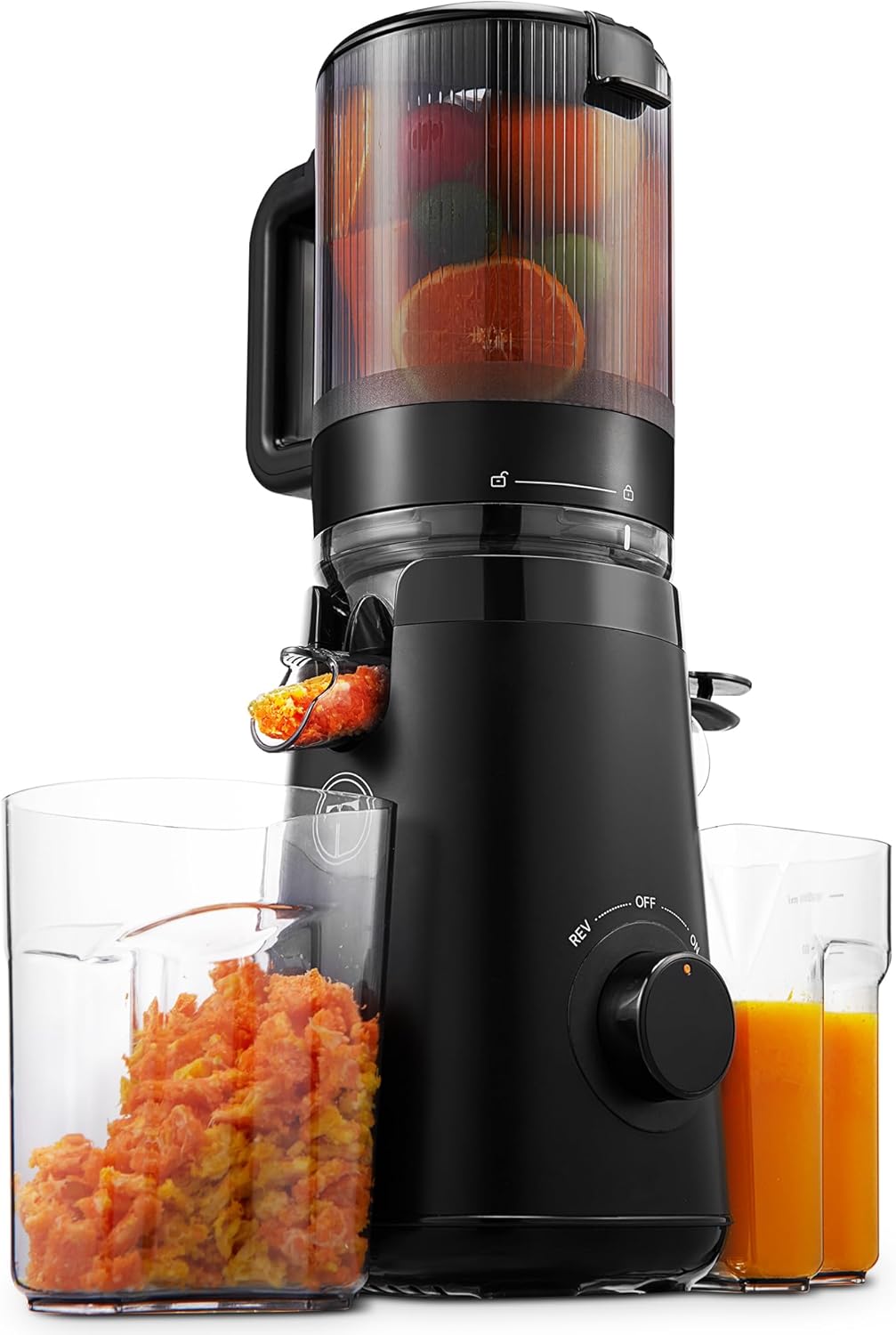
The TUUMIIST TM-580SJ is a budget-minded masticating juicer that uses slow 55 RPM cold-press technology to squeeze juice from whole fruits and vegetables with minimal prep. You load produce into the extra-large 5.8-inch feed chute, the auger crushes and presses at low speed, and juice separates into the cup while pulp is collected in the residue container. The unit ships with a cleaning brush and has a simplified one-piece assembly that the brand says can be rinsed or washed in about five minutes, which helps for daily use. At 300 watts it handles leafy greens, apples, carrots, and softer produce with good yield and nutrient retention compared with centrifugal machines, and the BPA-free construction is reassuring for daily juicing. Expect some limitations: the plastics-based components mean it is not as heavy-duty as commercial metal machines, and slower masticating action means longer run times for big batches. For shoppers prioritizing a low-cost cold-press option that reduces prep work thanks to the wide chute, this delivers solid performance for home greens and mixed juices.
Best for: Buyers on a tight budget who want a cold-press juicer that handles greens and whole produce with minimal prep and decent nutrient retention for daily home use.
Less Ideal for: People who need a commercial‑grade, heavy‑duty juicer for frequent large batches or who prefer mostly metal construction for extreme durability.
- Extra-large 5.8-inch feed chute accepts whole fruits and many vegetables, reducing prep time
- Slow 55 RPM cold-press extraction preserves nutrients and increases juice yield
- 300-watt motor provides steady power for leafy greens and firm produce
- Includes cleaning brush and a simplified one-piece design for faster cleaning
- Major components and auger are plastic-based rather than metal, limiting long-term heavy use
- Slower masticating speed makes large batches take significantly longer than centrifugal juicers
Verdict: A cost-conscious cold-press juicer that handles whole fruits and greens with good yield and minimal prep, making it a strong budget pick for home juicing.
NAMA J2 Cold Press Juicer

| Maximum Power | 200 watts |
|---|---|
| Power Source | Corded Electric |
| Voltage | 120 |
| Number of Speeds | 1 |
| Capacity | 30 fluid ounces |
The NAMA J2 is a compact cold-press masticating juicer built for hands-free batch juicing of fruits and vegetables. It uses a single auger that runs at about 50 RPM and a self-feeding wide-mouth hopper so you can load a full recipe and walk away while it slowly crushes and presses produce to maximize yield and reduce pulp. The 200 W motor is quiet and designed for steady, daily use, and included strainers and containers let you separate juice from pulp without extra accessories. Parts are quick-release and mostly hand-wash only, and NAMA supplies a spinning brush and coarse strainer to ease cleaning. Practical limits are its single speed and compact 30 fl oz capacity, which mean it is best for routine home batches rather than large, continuous juicing sessions, and hand-washing parts takes more time than dishwasher-safe alternatives. Overall, it emphasizes gentle extraction, nutrient retention, and straightforward daily reliability for greener juices.
Best for: Buyers who prioritize a dependable, low-maintenance cold‑press machine for regular home juicing of greens and produce and want consistent extraction without a steep learning curve.
Less Ideal for: If you need large-capacity commercial throughput, multiple speed settings for varied produce, or fully dishwasher-safe parts, look at larger or more feature-rich models instead.
- Self-feeding wide-mouth hopper supports hands-free loading for batch recipes
- Slow single-auger action at low RPM helps extract more juice from leafy greens
- Quiet 200 W motor suitable for daily use without loud noise
- Includes juice and pulp containers plus cleaning brush for a complete kit
- Compact footprint fits smaller kitchens while still delivering high yield
- Parts require hand washing rather than dishwasher convenience
- Single speed limits control for different produce textures
Verdict: A compact, hands‑free cold‑press juicer built to deliver steady, reliable extraction of leafy greens for everyday home use.
Jocuu Slow Masticating Juicer

| Wattage | 150 watts |
|---|---|
| Number of Speeds | 2 |
| Power Source | Corded Electric |
| Special Features | Auto-Reversing, Portable |
| Blade Material | Stainless Steel |
The Jocuu Slow Masticating Juicer is a single-auger cold-press machine designed to extract juice from both soft and hard produce using two speeds and a spiral auger. It is typically used for leafy greens, hard roots, and softer fruits by selecting the soft or hard mode to optimize yield and reduce foam. The motor includes an auto-shutoff after 20 minutes and a reverse function to clear clogs, while detachable parts are dishwasher safe and BPA free for easier cleanup. At 150 watts the unit runs relatively quietly and the small feed chute improves safety but means larger items need pre-cutting. Practical benefits include improved nutrient retention from low-speed extraction, a compact footprint for small kitchens, and a two-year motor coverage promise for added buyer confidence. Important limitations are the smaller feed chute which slows processing of whole fruits and the modest wattage that is suitable for home use but not heavy commercial loads.
Best for: Buyers who prioritize steady, nutrient-rich extraction for home use and want a quiet, compact masticating juicer backed by motor coverage and broad user feedback.
Less Ideal for: Not suited for buyers who need rapid processing of whole fruits or continuous high-volume commercial juicing.
- Two-speed spiral system for soft and hard produce maximizes juice yield from a variety of fruits and vegetables
- Reverse function and auto-reverse help clear clogs and make continuous juicing smoother
- Dishwasher-safe detachable parts and included cleaning brush simplify cleanup
- Low-speed operation reduces oxidation for higher nutrient retention
- Auto shutoff and motor protection chip provide safety and longer motor life
- Small feeding chute requires chopping larger produce before juicing
- 150-watt motor is aimed at domestic use and may struggle with very fibrous loads
Verdict: A compact, quiet cold-press juicer that delivers reliable, nutrient-preserving extraction for home users focused on greens and mixed produce.
EanOruus 3-in-1 Masticating Juicer E-18

| Wattage | 250 watts |
|---|---|
| Power Source | ac |
| Voltage | 110 volts |
| Capacity | 100 fluid ounces |
The EanOruus E-18 is a single-auger cold-press juicer designed for at-home juicing, nut milk and sorbet making. It uses a low-speed masticating action driven by a 250 W AC motor and a 6.5-inch extra-wide chute so you can feed whole fruit and larger produce with minimal prep. The 100 oz hopper reduces refills for family batches and the unit includes interchangeable strainers for juice and sorbet plus a pulp filter and pusher for thicker blends. Practical touches include an auto-reverse function to clear jams, overheat protection for safer longer runs, and removable parts that are hand-washable for easier cleanup. For leafy greens the slow auger and high-torque motor should yield good extraction and reduced oxidation compared with high-speed blenders, though hand-wash care and a heavier footprint mean it takes a little more handling and counter space than compact models. The E-18 is solid for regular household juicing and batch prep, especially if you value quiet operation and large-capacity runs.
Best for: Buyers who prioritize reliable, low-oxidation cold-press extraction for regular household juicing and want a hands-off feed chute and large hopper to make family-sized batches.
Less Ideal for: If you need a compact, lightweight juicer for occasional single servings or want fully dishwasher-safe parts, this model may be more than you need.
- Extra-wide 6.5" feed chute accepts whole fruit and reduces prep time
- Large 100 oz hopper for batching multiple servings without constant refilling
- 250 W AC brushless motor provides steady, quiet cold-press extraction good for greens
- Auto-reverse and overheat protection reduce jams and protect the motor
- Comes with juice and sorbet strainers plus a pulp filter for versatile use
- Removable parts require hand washing rather than dishwasher-safe convenience
- Relatively heavy and sizable compared with compact juicers so needs dedicated counter space
Verdict: Choose the EanOruus E-18 if you want a quiet, heavy-duty masticating juicer that handles whole produce and large batches for consistent greens extraction.
Choosing the Right Masticating Juicer for Greens: Key Factors to Consider
Extraction Efficiency for Leafy Greens
Leafy greens produce much less liquid than fruits, so extraction efficiency is the most important factor. A juicer that presses and shears leaves gradually will yield more juice and less wet pulp, which means fewer trips to the bin and better value from the same produce.
Efficiency also affects flavor and nutrient concentration. Machines with consistent low-speed torque minimize oxidation and heat buildup, helping preserve delicate vitamins and enzymes in greens. When comparing options, look for descriptions or specs that highlight leafy performance, low-speed operation, and fine mesh strainers suited to thin, fibrous material.
Auger Shape and Feed-Chute Design
The auger and feed path determine how greens are handled. A single, slow-turning auger with a long compression zone squeezes juice more effectively from leaves than a short, high-speed screw. Feed-chute width influences prep time: wider chutes reduce chopping but can increase the chance of clogging with long stems if not paired with the right auger geometry.
Consider whether the unit accepts whole leaves or requires much pre-cutting. Some designs include crop guides or integrated stomper tools that help pack leafy material evenly into the auger without jamming, which makes green juicing faster and less frustrating.
Ease of Cleaning and Maintenance
Greens can leave sticky residues in strainers and tight auger channels. Juicers that disassemble easily and have few small crevices cut cleaning time significantly. Look for models with removable strainers and wide-mouth components that are dishwasher-safe or simple to rinse by hand.
Routine maintenance matters for long-term performance. Components that resist staining and odor retention are preferable since leafy juices can leave chlorophyll stains and smells. Consider how often seals and brushes need replacement and whether replacement parts are readily available.
Motor Torque, Speed, and Heat Management
Masticating juicers rely on slow-turning motors with sufficient torque to handle fibrous greens without stalling. High torque at low RPMs squeezes more juice and minimizes heat generation, which helps retain nutrients. Check rated RPM and whether manufacturers indicate thermal protection or duty-cycle limits for continuous juicing.
If you plan to juice large batches of greens, a motor that can run longer without overheating will save time and reduce interruptions. For occasional use, lighter-duty motors may be acceptable, but they often require more frequent breaks between batches.
Countertop Footprint and Noise
Where you plan to use the juicer affects the acceptable size and sound level. Some masticating juicers are compact and quiet enough for early-morning use in apartments, while others are larger and louder and better suited for dedicated kitchen counters.
Think about storage if space is limited. A heavier, larger unit may be fine on a permanent counter but impractical to stash in a cabinet. Noise level is also relevant if you juice while others are sleeping or working nearby; lower-RPM motors typically run quieter than high-speed alternatives.
Preparing Greens for Best Results
Proper prep reduces clogging and improves yield. Trim thick stems from tender greens and remove tough central ribs from leaves like kale when necessary. For softer leafy greens such as spinach or baby lettuce, minimal chopping is typically fine.
Wash greens thoroughly to remove grit that can scratch strainers. Shake off excess water; overly wet leaves can dilute juice and increase foam. Pack leaves loosely into the feed chute instead of tightly cramming them to maintain even compression.
- Remove large ribs and woody stems from kale and chard
- Loosely roll long leaves to feed more consistently
- Dry leaves slightly to reduce foam and dilution
Dealing with Foam and Oxidation
Leafy juices often produce foam, which can trap air and speed oxidation. Let juice sit for a few minutes after extracting and skim off foam before storing. Using a narrow-bore strainer attachment, if available, can reduce foam at the source.
Store green juice in airtight containers and refrigerate promptly. Keeping juice cold slows oxidation and preserves flavor and nutrients. If you plan to make juice ahead, fill containers to the top to minimize air contact.
- Skim foam before storing for clearer juice
- Use airtight bottles and chill immediately
- Consume green juice within 24 to 48 hours for best freshness
Routine Maintenance Tips
Clean strainers and augers immediately after use to prevent residue from drying. Soak parts briefly if pulp has started to harden, then scrub with a brush supplied with the unit or a soft-bristle brush to dislodge trapped fibers.
Inspect seals and gaskets periodically for wear. Replace any components that show cracking or persistent staining that affects performance or hygiene. Keeping spare brush tools and a parts list handy speeds routine upkeep.
- Soak and brush strainers right after juicing
- Check seals regularly and replace when worn
- Store parts dry to avoid mold or odors
Batch Juicing Strategies
If you juice frequently, plan batches to reduce prep and cleanup time. Combine leafy greens with higher-moisture vegetables or fruits in small proportions to increase yield without diluting flavor excessively. Alternate leafy loads with soft produce to help flush the auger.
Work in manageable quantities so the motor does not overheat. Give the juicer short rests between large batches as recommended in its instructions to maintain motor health and consistent extraction.
- Alternate greens with softer produce to clear the auger
- Juice in batches that match motor duty-cycle recommendations
- Use similar-sized leaves to keep feed consistent
What to Expect From Pulp
Pulp from leafy greens will usually be compact and relatively dry in a well-performing masticating juicer. Expect darker, fibrous pulp that retains much of the leaf structure. Very wet pulp typically indicates incomplete extraction or an issue with auger compression.
Use pulp in compost or incorporate it into recipes where fibrous greens are appropriate. While pulp still contains fiber and some nutrients, the majority of juice-soluble vitamins will be in the extracted liquid.
- Dry, compact pulp indicates good extraction
- Save pulp for compost or fiber-rich recipes
- Excessively wet pulp suggests the juicer needs more compressive action
How We Chose the Best Masticating Juicer for Greens
We prioritized machines that consistently extract juice from leafy greens with minimal waste and foam. Our selection filters emphasized extraction efficiency for low-moisture leaves, motor torque and slow RPMs that preserve nutrients, and feed-chute and auger designs that reduce clogging with fibrous material. Usability was another major filter: we looked for units with straightforward assembly, intuitive controls, and manageable prep requirements for typical leafy produce. Durability and maintenance mattered as well. We favored designs with durable auger materials and accessible strainer parts that resist clogging and are easier to clean. Noise and countertop footprint were considered for home kitchens where early-morning or small-space use is common. Finally, we excluded centrifugal-style and twin-gear models that do not match the slow, single-auger extraction profile relevant to leafy greens. Our criteria focused on real-world factors buyers care about for green-juice performance, not broad-feature lists or marketing claims.
Our full evaluation process is outlined in our review methodology.
FAQ
Can I juice only greens without adding fruit or vegetables?
Yes, many masticating juicers handle straight leafy greens, but yield will be lower and juice may be more concentrated. Expect longer feed times and occasionally need to alternate with softer produce to clear the auger.
How often should I clean the juicer after juicing greens?
Clean immediately after each use when possible. Rinse parts and brush strainers to prevent fibers from drying and clogging. A quick rinse right away makes a full cleaning much easier.
Will masticating juicers preserve nutrients in green juice better than fast juicers?
Masticating juicers operate at lower speeds and generate less heat and oxidation, which often helps preserve heat-sensitive nutrients. The difference depends on juicing technique and how quickly you store the juice.
What maintenance extends the life of a juicer used mainly for greens?
Regular inspection of seals and strainers, prompt cleaning, avoiding overfeeding the machine, and respecting duty-cycle recommendations will extend motor and component life. Replacing worn gaskets before they fail prevents leaks and additional wear.
How can I reduce foam when juicing leafy greens?
Dry leaves slightly before juicing, feed them loosely, and skim foam after extraction. Using a finer strainer or letting the juice settle before bottling also reduces foam and improves clarity.
Final Verdict
Prioritize extraction efficiency, auger design, and ease of cleaning when choosing a masticating juicer for greens. Decide whether you need a heavy-duty motor for frequent large batches or a compact, quiet unit for occasional use. Expect tradeoffs between throughput and convenience: higher-torque machines usually give better yields but can be heavier and require more cleaning. Focus on the factors that matter most to your routine: if you juice daily, lean toward units with robust motors and easy-maintenance parts. If you juice occasionally, a compact, simple-to-clean model may be the better fit. With the right priorities, you can pick a juicer that delivers consistent, nutrient-dense green juice and smooth day-to-day operation.