
Note: This article contains affiliate links. If you click on these links and make a purchase, we may earn a small commission at no extra cost to you. This helps support our research and content. Read our full affiliate disclosure here.
If you primarily juice leafy greens, carrots, beets, and other hearty vegetables, the right masticating juicer can make a big difference in yield, nutrient preservation, and cleanup time. You want a machine that extracts as much liquid as possible while handling fibrous produce without clogging or overheating. This guide highlights seven shortlisted masticating juicers for vegetables that are strong candidates for regular home use. Each pick was chosen based on extraction efficiency, ease of cleaning, build durability, and suitability for heavy vegetable loads. Read on for practical buying guidance and what to expect from these top-rated options.
Top Picks at a Glance
| Best Overall The best all-around choice for most situations | Ninja NeverClog Cold Press Juicer JC151 |  |
| Best Quality Built to a higher standard if you want something more solid | Hurom H400 Slow Juicer |  |
| Best Value The sweet spot between price and what you get | TUUMIIST Cold Press Juicer TM-580SJ |  |
| Best Budget The cheapest option that still gets the job done reliably | NEWBULIG Cold Press Juicer |  |
| Top Rated A top-rated pick with lots of positive feedback | NAMA J3 Cold Press Juicer |  |
| Most Popular A crowd favorite that many people choose with confidence | EanOruus 3-in-1 Masticating Juicer E-18 |  |
| Best Seller A high-volume bestseller chosen again and again | EanOruus 3-in-1 Masticating Juicer E-18 |  |
Ninja NeverClog Cold Press Juicer JC151

| Maximum Power | 150 watts |
|---|---|
| Number of Speeds | 2 |
| Power Source | Corded Electric |
| Capacity | 24 fluid ounces |
The Ninja NeverClog JC151 is a slow masticating juicer built to handle fibrous vegetables and leafy greens with fewer jams thanks to a high-torque 150-watt auger and a NeverClog filter. It is used by feeding produce through the chute and choosing between two one-touch programs, plus a reverse function to clear any blockages while maintaining low-speed extraction that reduces foam and helps preserve nutrients. The included interchangeable pulp filters let you dial in texture from smoother juice to more pulp for extra fiber, and the larger 24 oz juice jug and 36 oz pulp container make it practical for family-sized batches or meal-prep. Cleanup is straightforward because juice-contact parts are dishwasher-safe and the design aims to be easier to clean than many centrifugal machines. Limitations include a modest 150W motor that may be slower than higher-powered slow juicers and a relatively tall footprint that should be considered for small counter spaces, but for vegetable-forward juicing the JC151 balances yield, ease of use, and manageable cleanup.
Best for: Buyers who want a balanced vegetable-focused cold press juicer that reduces clogging, offers simple one-touch controls, and produces larger batches for family use or weekly prep.
Less Ideal for: Those who need the fastest possible extraction or a very compact appliance for tight counter spaces should consider other options.
- High-torque 150W auger designed to process fibrous vegetables and leafy greens without frequent clogging
- Two interchangeable pulp filters let you control juice texture from smooth to fiber-rich
- Large 24 oz juice jug and 36 oz pulp container support bigger batches and meal prep
- Dishwasher-safe juice-contact parts simplify cleanup compared with many centrifugal juicers
- 150-watt motor means slower extraction than some higher-powered masticating models
- Taller countertop footprint may be awkward in very small kitchens
Verdict: A practical, vegetable-focused cold press juicer that balances clog-resistant extraction, pulp control, and easier cleanup for everyday use.
Hurom H400 Slow Juicer

| Wattage | 240 watts |
|---|---|
| Power Source | Corded Electric |
| Voltage | 120 |
| Number of Speeds | 1 |
| Capacity | 2 liters |
The Hurom H400 is a slow, single-auger masticating juicer built for vegetable-heavy juicing and family use. It uses Hurom's Slow Squeeze approach with a two-part auger and a strainer-free chamber to reduce pulp and oxidation, producing smoother juice that can stay fresh up to 72 hours refrigerated. The large self-feeding hopper accepts whole or large pieces to cut prep time, and the 240-watt motor runs quietly at low RPM for minimal noise. Practical benefits include higher yield from leafy greens and firm vegetables, easy assembly, and parts designed for hand washing rather than scrubbing a fine strainer. Limitations are that cleaning still requires disassembly and hand washing, and the single-speed design means you cannot adjust speed for very soft or frozen produce. The H400 is best when you want consistent, nutrient-preserving extraction from vegetables and prefer a quiet, low-foam result rather than speed or dishwasher convenience.
Best for: Buyers focused on maximum yield and nutrient preservation from vegetables who value quiet, low-foam extraction and minimal prep time.
Less Ideal for: People who need dishwasher-safe parts, multi-speed control for varied ingredients, or the fastest possible juicing cycle should consider other styles.
- Strainer-free chamber reduces clogging and simplifies cleaning compared with fine-screen designs.
- Self-feeding wide hopper lets you juice larger produce with less chopping.
- Slow masticating extraction minimizes oxidation for higher yield and longer juice freshness.
- Quiet operation suitable for morning use without much noise.
- Hand wash only parts; not dishwasher-safe which adds cleanup time.
- Single fixed speed limits control for very soft or frozen ingredients.
Verdict: Choose the H400 if you want a quiet, high-yield masticating juicer that preserves nutrients and produces low-pulp vegetable juices.
TUUMIIST Cold Press Juicer TM-580SJ
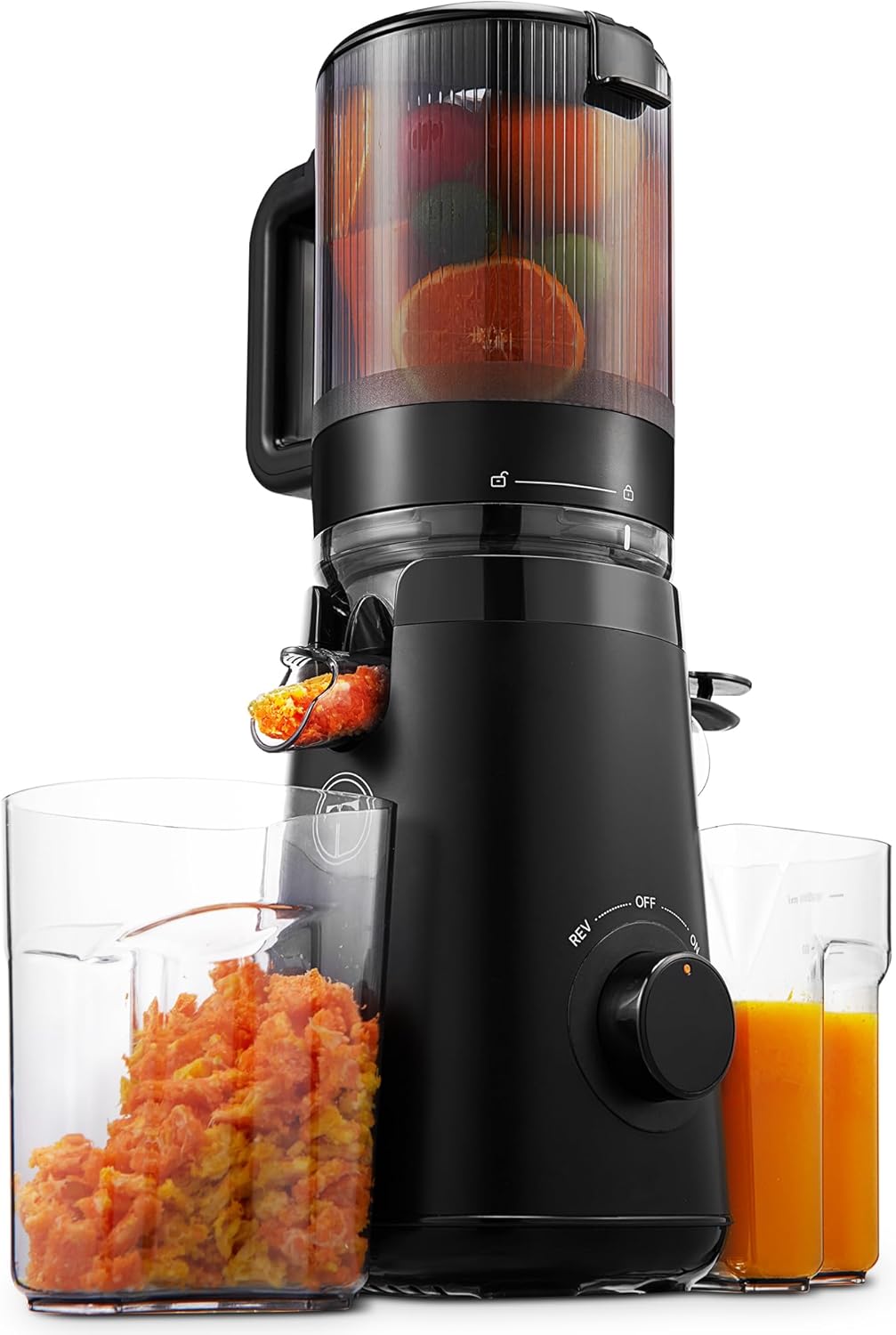
| Wattage | 300 |
|---|---|
| Number of Speeds | 55 |
| Power Source | AC |
| Special Features | No Mesh Filter, Whole Fruit Processing |
| Capacity | 3.8 pounds |
The TUUMIIST TM-580SJ is a slow-speed masticating juicer built to extract juice from whole fruits and vegetables with minimal prep. It uses a 55 RPM auger and 300 watts of power to press produce gently, which preserves nutrients and produces high juice yield while keeping pulp drier than typical centrifugal machines. The 5.8 inch feed chute accepts larger pieces or whole items so you spend less time cutting, and the one-piece design plus the included cleaning brush makes disassembly and cleanup straightforward. The unit is mostly ABS plastic and is BPA-free, which keeps it lightweight and safe for food contact, though plastic parts may feel less premium than metal alternatives. There is no mesh filter listed so the machine emphasizes simple operation over fine straining, and its knob controller provides basic speed control rather than advanced presets. For vegetable-heavy juicing the slow-squeeze action and large chute combine to save prep time and retain nutrients, but users who want ultra-fine filtering or heavier-duty metal construction may prefer a higher-end model.
Best for: Buyers who prioritize efficient vegetable juicing and want a low-prep, nutrient-focused machine that simplifies cleaning and reduces chopping time.
Less Ideal for: Those seeking a premium metal-built juicer or a model with ultra-fine built-in filtration and advanced speed presets should consider higher-end alternatives.
- Large 5.8-inch feed chute reduces or eliminates chopping for many fruits and vegetables
- Slow 55 RPM auger and cold-press design maximize nutrient retention and juice yield
- 300-watt motor offers steady torque for masticating extraction
- One-piece assembly and included cleaning brush make cleanup faster
- BPA-free construction ensures food-safe contact surfaces
- Mostly ABS plastic construction may feel less durable than metal-bodied juicers
- No mesh filter specified, so juice may require extra straining for very smooth textures
Verdict: A practical, vegetable-friendly masticating juicer that saves prep time with a large feed chute while maximizing juice yield through slow cold-press extraction.
NEWBULIG Cold Press Juicer
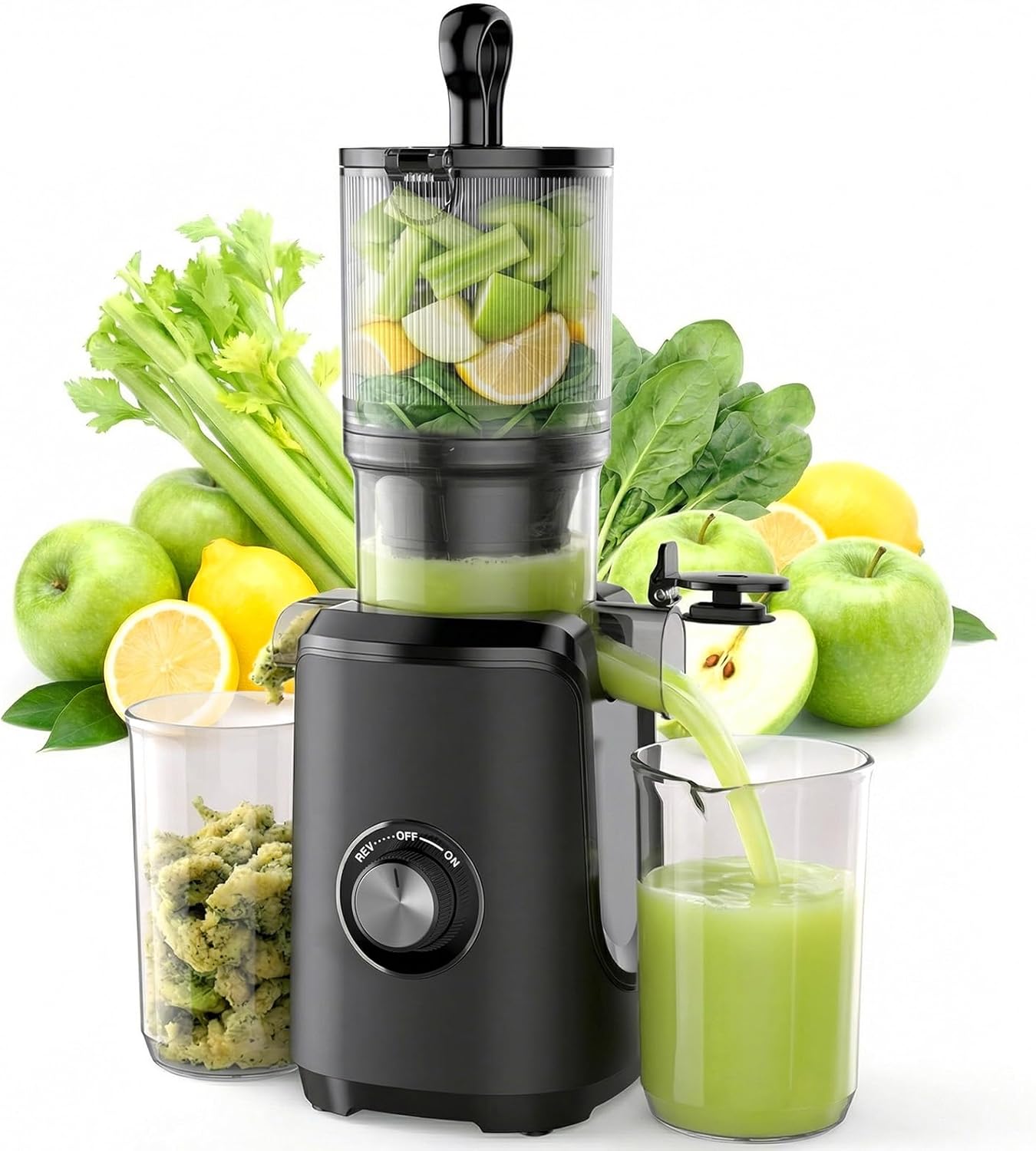
| Wattage | 200 watts |
|---|---|
| Voltage | 120 volts |
| Special Features | Easy to Clean, Masticating, Quiet Motor, Safety Lock |
| Included Components | Fruit residue cup, Juice cup, Power supply base |
The NEWBULIG Cold Press Juicer is a compact masticating machine built for steady, low-speed extraction of juice from whole vegetables and fruits. Its 4.25-inch feed chute accepts larger pieces so you spend less time prepping, and the slow 200-watt motor minimizes heat and oxidation to preserve nutrients and flavor. The included reverse function clears clogs quickly without full disassembly, and parts detach easily for hand-washing with the supplied cleaning brush. Safety features such as a safety lock and a blade-free design make it family-friendly, and the unit runs quietly compared with centrifugal juicers. Practical limitations are its hand-wash-only care instructions and the modest 200-watt power, which means extraction can be slower than higher-powered models and tougher produce may require more feeding time. For buyers focused on getting good yields from greens and root vegetables on a budget, this juicer delivers solid performance and straightforward maintenance.
Best for: Buyers looking for an affordable masticating juicer that prioritizes nutrient retention and reduced prep time for vegetable-heavy juicing routines.
Less Ideal for: Users who need the fastest possible extraction or prefer dishwasher-safe components should consider other options.
- Wide 4.25-inch feed chute reduces prep by fitting larger fruits and vegetables
- Slow masticating action reduces heat and oxidation to retain more nutrients
- Reverse function quickly clears jams without disassembly
- Quiet motor and safety lock make it suitable for family kitchens
- Detachable parts and included cleaning brush simplify cleaning
- Hand-wash-only parts may be less convenient than dishwasher-safe alternatives
- 200-watt motor means slower extraction speed compared with higher-powered juicers
Verdict: A budget-friendly slow masticating juicer that preserves nutrients, reduces prep with a wide chute, and offers easy clog clearing for vegetable-focused juicing.
NAMA J3 Cold Press Juicer

| Maximum Power | 130 watts |
|---|---|
| Wattage | 130 watts |
| Power Source | Corded Electric |
| Voltage | 120 |
| Capacity | 15 fluid ounces |
The NAMA J3 is a compact masticating juicer built for steady, nutrient-focused cold pressing in small kitchens. It uses a single auger and a 130 W motor running at about 50 RPM to slowly crush fruits, vegetables, leafy greens, and some nuts, which reduces heat and oxidation so juice retains more flavor and nutrients. A self-feeding hopper lets you load a recipe and walk away, and included strainers and containers keep the process tidy. The unit is made from stainless steel and Tritan parts that disassemble for hand washing, and the package includes a spinning brush to help clean the screen. Practical limits are its 15 fl oz capacity and compact hopper, so it is best for daily personal batches rather than large-volume juicing, and hand-wash-only components mean more cleanup than dishwasher-safe alternatives. For buyers prioritizing quiet, gentle extraction and a small footprint, the J3 delivers reliable, nutrient-forward juice with straightforward maintenance.
Best for: Buyers who want a durable, quiet cold-press juicer for regular vegetable and fruit juice in a small kitchen and prioritize consistent nutrient retention over high-volume output.
Less Ideal for: Anyone who needs to juice large quantities at once or prefers dishwasher-safe parts for minimal cleanup should consider a larger or dishwasher-friendly model instead.
- Low-speed masticating action (approx. 50 RPM) preserves nutrients and minimizes oxidation
- Self-feeding hopper enables hands-free operation for simple batch processing
- Compact, lightweight design fits small kitchens and is easy to store
- Includes necessary accessories: juice and pulp containers, strainers, and a cleaning brush
- Small 15 fl oz capacity and compact hopper limit output for large batches
- Key parts are hand-wash only, adding more effort to cleanup
Verdict: Choose the NAMA J3 when you want a compact, reliable masticating juicer that quietly preserves nutrients for daily vegetable and fruit juices.
EanOruus 3-in-1 Masticating Juicer E-18

| Maximum Power | 250 watts |
|---|---|
| Power Source | ac |
| Voltage | 110 volts |
| Capacity | 100 fluid ounces |
The EanOruus E-18 is a single-auger masticating juicer built for heavy home use and batch prep. It accepts whole fruit through a very wide 6.5-inch chute into a 100oz hopper so you can feed apples, carrots, and other vegetables with minimal chopping and fewer refills. The quiet, high-torque 250W AC motor runs steadily for extracting juice, and interchangeable strainers let you switch between juice, nut milk, and frozen fruit sorbet. Practical touches include an auto-reverse function to clear clogs, a detachable pulp outlet for easier cleaning, and overheat protection for longer runs. Materials are mostly polycarbonate with plastic blades and removable parts that require hand washing. Expect good yield on leafy greens and fibrous roots thanks to slow masticating action, though the mostly plastic contact parts mean you should follow care instructions to avoid wear. The large hopper and quiet motor make it suited to multi-serving vegetable juicing, but plan for hand-cleaning and occasional reverse cycles during heavy batches.
Best for: Buyers who value high-yield vegetable juicing and batch prep will appreciate the large hopper, wide chute, and steady motor for regular home or family use while relying on broad user feedback and solid performance.
Less Ideal for: Those who want fully dishwasher-safe parts or prefer metal internal components for maximum longevity should consider other options.
- Extra-wide 6.5-inch chute reduces prep time by allowing whole fruits and large vegetables
- 100oz hopper supports large batches or multi-serve juicing without frequent refills
- 250W AC brushless motor gives steady, quiet extraction ideal for leafy and fibrous vegetables
- Auto-reverse and detachable pulp outlet help clear jams and simplify cleaning
- Interchangeable strainers enable juice, nut milk, and sorbet from the same machine
- Removable parts require hand washing rather than dishwasher-safe cleaning
- Primary contact components are plastic which may show wear faster than metal alternatives
Verdict: If you want a quiet, high-capacity masticating juicer that handles whole vegetables and large batches, the EanOruus E-18 delivers practical, high-yield performance.
EanOruus 3-in-1 Masticating Juicer E-18
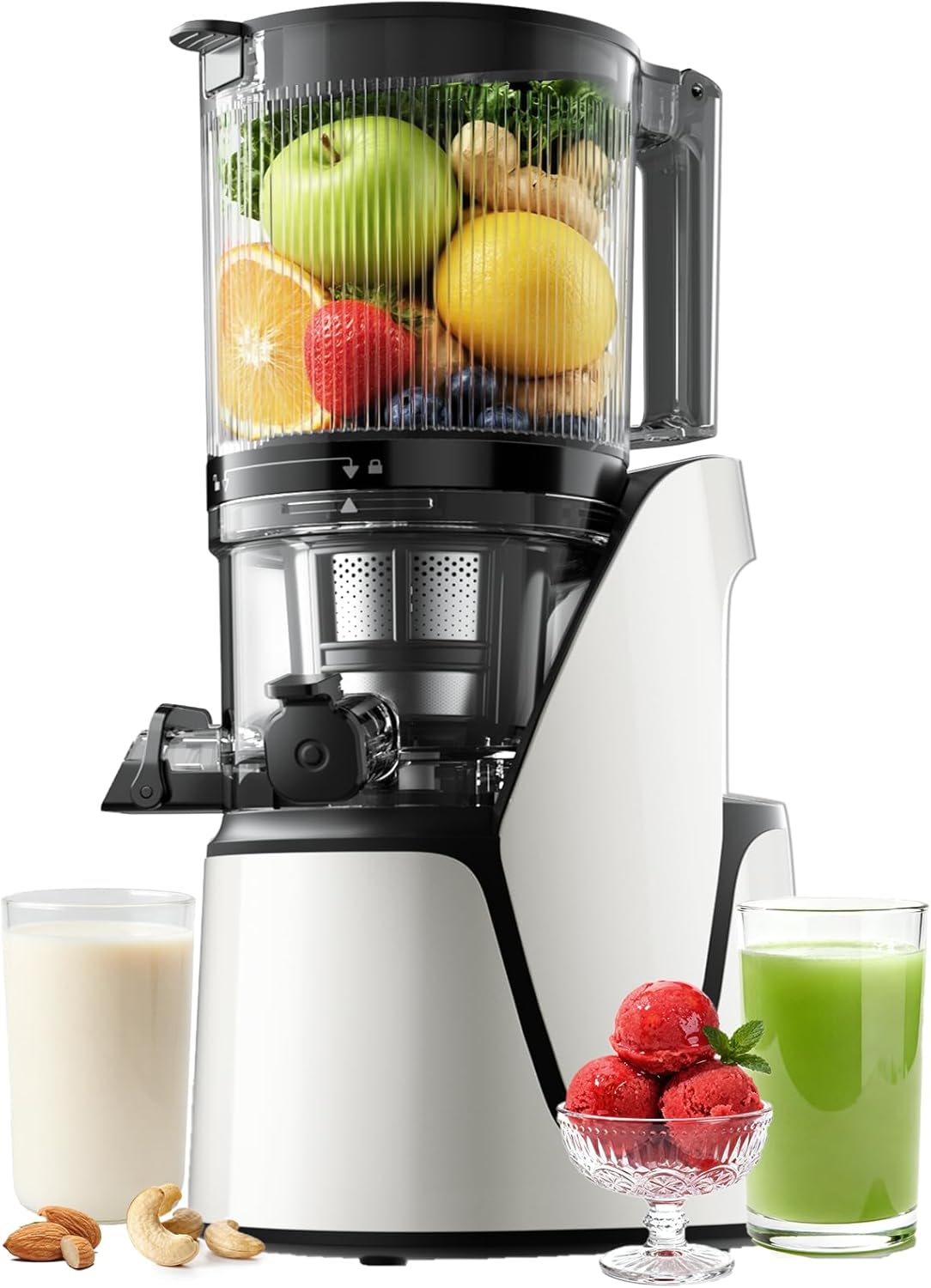
| Capacity | 100 fluid ounces |
|---|---|
| Wattage | 250 watts |
| Power Source | AC |
| Voltage | 110 volts |
The EanOruus E-18 is a single-auger masticating juicer built for high-volume kitchen use and versatile output. It extracts juice from whole fruits and vegetables through a 6.5-inch extra-wide chute and a 100-ounce hopper so you can feed large items or batch-juice with less prep. The included interchangeable strainers let you switch between juice, nut milk, and sorbet, and the AC brushless motor is rated at 250 watts with auto-reversing and overheat protection for continuous runs. Detachable parts and a removable pulp outlet simplify cleaning compared with fixed systems, though the body and some components are polycarbonate and require hand washing. In practice it runs quietly for a motor of this size and handles fibrous greens and hard roots well, but it is a relatively heavy appliance and needs a stable counter footprint. For buyers prioritizing dependable, low-speed extraction for better vegetable yields and multi-use capability, it performs convincingly, but expect to spend a few minutes assembling and cleaning between sessions.
Best for: Buyers who want a reliable, low-speed extractor that handles lots of vegetables and whole produce with minimal prep and who prioritize consistent yields and safety features over ultra-light portability.
Less Ideal for: Anyone who needs a compact, travel-ready juicer or a model that is fully dishwasher-safe and extremely lightweight should look elsewhere.
- Large 6.5" chute accepts whole fruits and reduces prep time
- 100 oz hopper supports batch juicing for families or meal prep
- Versatile 3-in-1 design for juice, nut milk, and sorbet
- AC brushless 250W motor with auto-reverse and overheat protection
- Detachable pulp outlet and removable parts make cleaning easier than fixed systems
- Polycarbonate parts and plastic blade require hand washing rather than dishwasher-safe cleaning
- Relatively heavy and sizable footprint requires dedicated counter space
Verdict: Choose the EanOruus E-18 if you want a quiet, high-capacity masticating juicer that handles whole produce and also makes nut milk and sorbet.
Choosing the Right Masticating Juicer for Vegetables: Key Factors to Consider
Extraction Efficiency and Yield
How much juice a masticating juicer yields from vegetables directly affects cost and prep time. Vegetables like carrots, beets, and leafy greens contain different amounts of liquid and fiber; a high-extraction unit will leave drier pulp and recover more of the vegetable's water and nutrients. Over multiple uses, a machine with better yield saves you buying or prepping less produce for the same amount of juice. Look for information about residual pulp dryness and extraction rate when assessing performance.
Extraction efficiency also influences texture and nutrient concentration of the juice. Slower masticating action generally preserves enzymes and reduces oxidation compared with high-speed alternatives, but extraction geometry and pressure matter most when dealing with dense roots and fibrous stems.
Auger Shape and Feed-Chute Convenience
The auger—the rotating screw that crushes and squeezes produce—determines how well a juicer handles different vegetable forms. Aggressive or multi-stage augers break down fibrous material more effectively, reducing jams and increasing throughput. Feed-chute size and shape affect how much prep you need; a wider chute means fewer trips to the cutting board for carrots or beets, while a narrower chute can still work if the auger and motor are powerful.
Practical feed design also affects continuous juicing. A well-designed chute plus a consistent auger feed reduces the need to push or re-feed items, which lowers the chance of blockages and speeds up a morning routine.
Motor Torque, Speed, and Heat Management
Vegetable juicing often requires sustained torque to pulverize tough roots and leafy bundles. Motors rated for higher torque maintain slow RPMs without stalling, which prevents overheating and preserves sensitive nutrients. A juicer that struggles under load can produce warm juice and stress internal components, shortening service life. Look for proven torque specs, continuous-duty designs, and any thermal protection features.
Heat management is important because excessive temperature during extraction can increase oxidation and reduce enzyme activity. Units designed to keep speed low and torque steady will produce cooler juice, which is preferable for nutrient retention and flavor.
Pulp Management and Hopper Flow
How a juicer handles the expelled pulp affects throughput and user effort. Machines that compact pulp tightly can extract more liquid but may require more frequent cleaning or emptying. Others that produce looser pulp run continuously longer but might leave wetter residue. Consider where and how pulp is collected: a roomy, easy-to-remove pulp container reduces interruptions during batch juicing, while a compact system may be better for small kitchens.
Good hopper flow also reduces the need to stop and clear blockages when juicing mixed vegetable loads. For vegetable-focused use, efficient pulp ejection and a design that resists clogging are major conveniences.
Ease of Cleaning and Maintenance
Daily vegetable juicing is only practical if the machine does not become a time sink to clean. Parts that disassemble without tools, non-porous materials, and dishwasher-safe components cut down teardown time. Augers with minimal crevices and screens that rinse clean reduce buildup, which is especially important when juicing fibrous greens or beets that can stain.
Maintenance extends beyond washing. Consider how accessible seals and bearings are for periodic inspection, and whether replacement parts or brushes are straightforward to source. A design that encourages routine cleaning will last longer and perform better.
Material Quality and Long-Term Reliability
The materials used for the auger, housing, and feed components influence both performance and lifespan. Tough plastics or metal augers resist wear and the abrasive effects of grit in root vegetables. A sturdy housing helps damp vibration and supports heavier-duty motors. Check for corrosion-resistant components near juice channels and pulp bins, since regular exposure to vegetable acids can degrade lesser materials.
A reliable machine also pairs with a manufacturer warranty and clear service information. For frequent vegetable juicing, prioritize quality materials and construction to avoid premature failure under heavy loads.
Best Prep Practices for Vegetable Juicing
Proper prep reduces strain on a masticating juicer and improves yield. Cut dense roots such as carrots and beets into manageable lengths that match the feed chute even if the chute is generous. For leafy greens, bundle stalks and feed them with firmer vegetables to help carry them through the auger.
Trim large stems and remove tough cores when necessary to prevent tangles. If your juicer has a narrow chute, pre-cut produce into thin coins or short batons. Cold, firm vegetables generally juice better and produce clearer liquid than warm or limp produce.
- Soak particularly sandy root vegetables briefly and scrub clean to avoid grit in the pulp.
- Remove large seeds and hard pits that could damage the auger or motor.
- Alternate leafy greens with denser vegetables to improve feed flow.
Cleaning Routines That Save Time
Rinse immediately after juicing to prevent residue from drying on screens and in tight crevices. Quick disassembly and a short rinse cycle are often sufficient for same-day use, while a full wash can be done at the end of the day.
Use the small brush that typically accompanies slow juicers to clear mesh screens. If parts are dishwasher-safe, place them on the top rack; otherwise, hand-wash with warm soapy water and a soft brush to reach crevices without scratching surfaces.
- Empty the pulp container between large batches to avoid back pressure.
- Soak stubborn stains from beet or carrot juice in a baking soda paste before scrubbing.
- Check seals periodically and re-seat them after cleaning to maintain suction and torque transfer.
Maximizing Nutrients and Shelf Life
Slow-speed extraction limits oxidation, which helps preserve vitamins and enzymes in vegetable juice. Chill produce before juicing and transfer juice to an airtight container as soon as possible to further extend freshness. Cold-pressed vegetable juice is best consumed within 24 to 48 hours, depending on storage conditions.
If you plan to store juice, leave minimal headspace and refrigerate immediately. Some home juicers produce wetter pulp, which can indicate less efficient separation and potentially quicker spoilage if solids remain in the juice.
- Use opaque or dark storage containers to reduce light-induced degradation.
- Consider freezing small portions if you need long-term storage.
Handling Tough or Fibrous Vegetables
For particularly fibrous items such as kale stems, celery strings, or whole beet greens, pre-cutting and alternating with hard vegetables helps the auger maintain steady pressure and avoid wrapping. Some masticating designs process fibrous matter better than others, but careful feeding technique reduces strain across models.
If you encounter repeat clogging, try increasing the size of chunks for denser vegetables or decreasing the feed rate. A steady, moderate pace typically outperforms rapid packing of the chute, which invites blockages.
- Feed a thin strip of apple or cucumber intermittently to help wash leafy fibers through the auger.
- Avoid packing the chute tightly; allow the auger to pull produce naturally.
Maintenance Tips to Extend Lifespan
Schedule a monthly inspection of wear parts such as seals, screens, and the auger surface. Replace any components that show cracking or excessive wear. Keep the motor housing dry and avoid immersing electrical parts when cleaning.
Store the juicer in a cool, dry place between uses. If you use the machine daily, periodic lubrication of moving non-electrical fittings as directed in the manual can prevent premature wear.
- Document part numbers or keep images of serial plates for easier replacement orders.
- Do not use abrasive cleaners on auger surfaces; use gentle brushes recommended by manufacturers.
How We Chose the Best Masticating Juicer for Vegetables
We focused on criteria that matter when you run vegetables through a slow, single-gear masticating juicer repeatedly. First, extraction efficiency: machines that squeeze the most juice from fibrous vegetables reduce waste and speed up prep by producing drier pulp. Second, feed-chute and auger design: wider or tapered inlets and aggressive auger geometries reduce jamming when processing carrot chunks, beet slices, and dense stems. Third, motor durability and heat management: low-RPM motors that maintain torque under load avoid heat buildup that can degrade heat-sensitive nutrients. Fourth, ease of cleaning and maintenance: parts that disassemble quickly and rinse clean minimize friction for daily use. Fifth, build materials and warranty support, which indicate long-term reliability for frequent vegetable juicing. We excluded centrifugal and citrus-only machines and any units lacking sufficient torque specs or clear cleaning paths. The final shortlist balances real-world vegetable performance with practical upkeep and durability.
Our full evaluation process is outlined in our review methodology.
FAQ
Can a masticating juicer handle both leafy greens and root vegetables?
Yes, many masticating juicers are designed to process both leafy greens and roots, but effectiveness varies. Look for systems with high torque and an auger geometry suited for fibrous material to get the best results across vegetable types.
How often should I clean the juicer when juicing vegetables daily?
Rinse parts immediately after each session and perform a full wash at least once a day if you juice daily. Immediate rinsing prevents pulp from drying into crevices and keeps screens functioning well.
Will juicing vegetables remove all the fiber I need in my diet?
No, juicing separates most insoluble fiber into the pulp, so juice provides concentrated vitamins and minerals but not the same fiber content as whole vegetables. Complement juice intake with whole produce to maintain dietary fiber.
What causes a masticating juicer to clog when juicing vegetables?
Clogs usually stem from feeding too much fibrous material at once, improper chunk sizes, or insufficient auger torque. Alternating dense and leafy items, cutting roots into appropriate sizes, and feeding at a steady pace usually prevent most blockages.
How long will fresh vegetable juice stay good in the refrigerator?
Fresh cold-pressed vegetable juice typically stays best for 24 to 48 hours when stored in airtight containers and kept cold. Some nutrient and flavor loss is expected over time, so consume as soon as practical for peak freshness.
Final Verdict
When choosing a masticating juicer for vegetables, prioritize extraction efficiency, auger design, and motor torque because those factors determine how well the machine handles dense roots and fibrous greens. Balance those performance traits with ease of cleaning and durable materials to ensure the unit remains practical for daily use. Focus on machines that minimize clogging, produce drier pulp, and offer straightforward maintenance so you can enjoy higher yields and fresher juice with less effort.