
Note: This article contains affiliate links. If you click on these links and make a purchase, we may earn a small commission at no extra cost to you. This helps support our research and content. Read our full affiliate disclosure here.
If you make raw meals for your dog, a purpose-built meat grinder streamlines prep and improves food safety. The right grinder produces a consistent texture that supports balanced recipes and reduces handling time while making cleanup straightforward. This guide covers seven shortlisted meat grinders that suit raw dog food preparation, with attention to grind consistency, motor durability, and sanitary design. We evaluate factors that matter for home raw-feeding, including throughput, ease of disassembly, and material choices to help you pick the best option for your household. Read on for the top picks and a clear breakdown of what to prioritize when choosing a meat grinder for raw dog food.
Top Picks at a Glance
| Best Overall The best all-around choice for most situations | Barton #12 Electric Meat Grinder |  |
| Best Quality Built to a higher standard if you want something more solid | STX Turboforce II 4000 |  |
| Best Value The sweet spot between price and what you get | AAOBOSI Meat Grinder MGC04 |  |
| Best Budget The cheapest option that still gets the job done reliably | Aiheal Electric Meat Grinder MG-2430RB |  |
| Top Rated A top-rated pick with lots of positive feedback | LEM BigBite #8 Meat Grinder |  |
| Most Popular A crowd favorite that many people choose with confidence | Ganiza Food Processor GC10 |  |
| Best Seller A high-volume bestseller chosen again and again | AAOBOSI Meat Grinder MG102A |  |
Barton #12 Electric Meat Grinder

| Wattage | 1100 watts |
|---|---|
| Voltage | 115 volts |
| Capacity | 396 pounds |
| Material Type | Stainless Steel |
This Barton #12 electric meat grinder is a heavy-duty unit built around a 1100W motor and stainless steel grinding components that make quick work of beef, pork, chicken, venison and other proteins. It uses a commercial #12 grinding head with included coarse and fine plates and replacement blades, and the manufacturer rates productivity at up to 396 pounds per hour, so it handles large batches or frequent use without feeling underpowered. The stainless steel parts are removable for basic hand washing, and the offset head design and high blade speed are intended to reduce noise and increase throughput. In practice the machine is best for users who will grind multiple pounds in one session—its weight and size reflect that focus—while casual users may find it bulkier than compact home grinders. There is no advanced electronics or safety automation, so basic care, proper feeding technique and routine cleaning are required to keep it performing well. For making raw dog food, the unit delivers consistent texture control and reliable throughput when processing whole cuts or mixing meat and bone blends.
Best for: Buyers who need a robust, high-throughput grinder for preparing large batches of raw dog food or frequent home/commercial use and who prefer a straightforward, mechanically strong machine.
Less Ideal for: Those who only grind occasional small portions or who want a compact, lightweight countertop grinder with automated safety features should consider smaller home-oriented models instead.
- Powerful 1100W motor suitable for high-volume grinding
- Commercial #12 grinding head with coarse and fine plates for consistent textures
- Stainless steel food-contact parts for durability and easier cleaning
- High rated productivity (396 lbs/hour) for batch processing
- Large and heavy unit that requires dedicated counter or storage space
- No advanced safety interlocks or automation; requires manual care and attention
Verdict: Choose this heavy-duty #12 grinder when you need reliable, high-volume grinding and consistent texture control for making raw dog food at home or in a small commercial kitchen.
STX Turboforce II 4000
| Wattage | 2000 watts |
|---|---|
| Capacity | 3 pounds |
| Voltage | 120 volts |
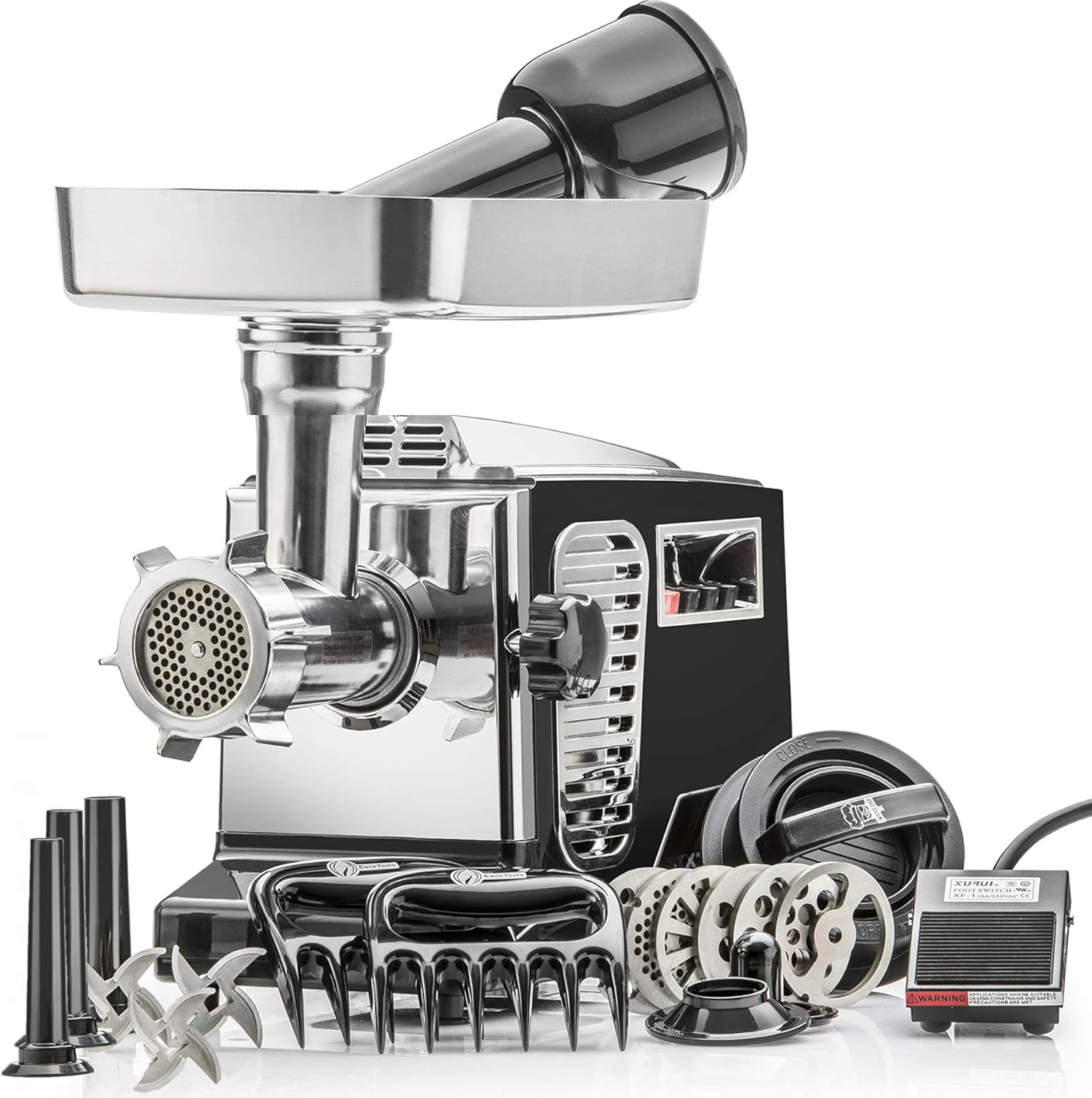
| Included Components | Grinding head, 6 plates, 3 blades, sausage tubes, kubbe attachment, foot pedal |
The STX Turboforce II 4000 is a high-capacity electric meat grinder built for heavy home use and small-batch commercial tasks. It uses a 2000-watt locked motor with a patented air-cooled quad induction system and a circuit breaker to keep the unit running consistently under load, and the large feed tray and No.12-size head let you process larger volumes than hobby models. The package includes multiple stainless steel cutting blades, five grinding plates, three stuffing tubes, a kubbe attachment, meat claws, a burger press and a foot pedal for hands-free control. In practice it handles muscle meat quickly and can accept soft bones, which makes it suitable for preparing raw dog food blends that include poultry carcasses or small game. The unit is robust and intended for frequent use, but it is sizable and requires bench space and careful cleaning of many metal parts after grinding. Users should also plan for the 3-pound tray capacity and break tasks into batches rather than relying on a continuous industrial workflow.
Best for: Buyers who prioritize throughput and a durable, motorized grinder for frequent preparation of raw dog food and want a unit that can handle whole poultry and small bones safely.
Less Ideal for: If you only grind small, occasional batches or need a compact, lightweight unit for infrequent use, this heavy-duty grinder is more machine than necessary.
- Powerful 2000-watt motor with air-cooled system for sustained grinding under load
- No.12 grinding head and large feed tray allow higher throughput than small household grinders
- Comprehensive accessory set including multiple plates, blades, stuffing tubes, kubbe tool, meat claws and foot pedal
- Can process soft bones and a range of meats, useful for raw pet food formulations
- Relatively large and heavy, needs dedicated counter space and more involved cleaning
- 3-pound tray capacity means very large batches require repeated refilling
Verdict: A robust, high-throughput grinder built for frequent raw dog food prep and capable of handling soft bones and whole poultry.
AAOBOSI Meat Grinder MGC04

| Wattage | 2800 watts |
|---|---|
| Capacity | 1.5 kg |
| Voltage | 120 volts |
| Material Type | Stainless Steel |
| Power Source | electric |
This AAOBOSI MGC04 is a countertop electric meat grinder designed for regular home use and small-batch processing. It grinds fresh meat through three stainless steel plates, and the set of slicing/shredding blades, sausage stuffer, and kubbe kit expand it to sausage making and food prep tasks. The 2800 watt peak motor and ventilated housing let it process roughly 1.5 kg per minute on the 7mm plate, and the reverse function plus overload protection reduce jams and overheating during heavier use. Most parts disassemble for cleaning and the metal plates and blades are dishwasher-safe, though the manufacturer recommends hand-wiping alloy parts to avoid oxidation. Practical safety touches include a locking knob, thermostat circuit breaker, and an auto-reverse button for unclogging. Expect a solid, stainless-steel build that handles frequent grinding, but avoid feeding bones or large tendons to prevent jams and stress on the unit.
Best for: Buyers who want a durable, multi-function grinder for making fresh ground meat and homemade sausages frequently and value built-in safety and easy cleaning.
Less Ideal for: People who need industrial-scale throughput, who regularly process bone-in meat, or who require commercial-grade continuous operation.
- Powerful motor rated up to 2800 watts for fast grinding
- Includes multiple stainless steel plates and blades plus sausage stuffer and kubbe maker
- Safety features like overload protection, thermostat circuit breaker, and reverse function
- Most disassemblable parts are dishwasher-safe for easier cleanup
- Not intended for grinding bones, tendons, or very large cuts which can jam the unit
- Higher peak wattage is manufacturer-stated and actual sustained power may be lower
Verdict: A versatile, safety-minded home meat grinder that handles frequent small-batch grinding and sausage making with durable stainless-steel accessories.
Aiheal Electric Meat Grinder MG-2430RB

| Power source | ELECTRIC |
|---|---|
| Material Type | Stainless Steel |
| Capacity | 44 pounds |
| Included Components | 2 Blades, 3 Plates, 3 Sausage Tubes, 1 Pusher |
This Aiheal electric meat grinder is a budget-friendly, stainless steel unit aimed at home kitchens and small-batch processing. It uses a 300W motor with a claimed 3200W max locked power and includes three grinding plates (2mm, 5mm, 7mm), two cutting blades, and three sausage stuffing tubes, so you can grind fine to coarse textures and make sausages or kibbeh. Setup and use are straightforward: cut meat to size, feed with the pusher, and switch between plates to change grind size; an R reverse/unclog button and overload protection add basic safety. The removable head and attachments make cleaning easier than fixed machines, though the brand advises hand drying rather than dishwasher use. For raw dog food, the variety of plate sizes and solid stainless components mean you can achieve consistent textures and avoid additives. Limitations include modest continuous power for very large batches and the need to trim/freeze meat chunks to keep feeds smooth, so it is best for regular home-scale grinding rather than heavy commercial use.
Best for: Home cooks preparing raw dog food who want a cost-conscious grinder that handles small to medium batches and offers multiple plate sizes for texture control.
Less Ideal for: People who need to grind large volumes frequently or require a commercial-grade continuous-duty machine should consider higher-power, heavy-duty models instead.
- Includes three grinding plates and three sausage tubes for texture and stuffing flexibility
- Stainless steel construction and removable parts support food-safe processing
- Reverse/unclog function and overload protection help prevent jams and motor damage
- Compact design suited to counter-top storage and home use
- Motor is intended for home batches and can struggle with very large or tough volumes
- Manufacturer recommends hand-drying parts and not using a dishwasher, adding cleaning time
Verdict: Aiheal's grinder is an affordable, stainless-steel home unit that gives raw dog food makers versatile plate sizes and sausage-stuffing options without a commercial price tag.
LEM BigBite #8 Meat Grinder

| Capacity | 7 pounds |
|---|---|
| Material Type | Stainless Steel |
| Power Source | electric |
| Horsepower | 0.50 HP |
The LEM BigBite #8 is a robust, stainless steel electric grinder built for repeated use in home kitchens and small-scale processing. Driven by a 0.5 HP motor it handles roughly 7 pounds per minute, making it practical for grinding bulk meat, game, or preparing raw dog food. The unit includes three grinding plates, a knife, stomper, and stuffing tubes so you can grind to different textures and make sausages without buying add-ons. Its permanently lubricated motor and mostly stainless construction simplify maintenance and cleaning because the grinder disassembles for access to the components that contact meat. Noise-dampening features help keep operation quieter than some comparable machines. This model is not rated for bone processing and its weight and footprint mean it is better suited to a dedicated prep area rather than quick countertop use. If you plan to grind frequently for raw pet diets, the BigBite offers the durability, parts availability, and customer support that matter for long-term reliability.
Best for: Buyers who prioritize a dependable, long-lived grinder for regular batch grinding or making raw dog food and who value factory support and repairability.
Less Ideal for: If you need a lightweight, portable countertop grinder for occasional small jobs or require bone processing, choose a different, purpose-built model.
- Stainless steel construction for durability and easier cleaning
- Includes three plates, knife, stomper, and stuffing tubes for versatile grinding
- Permanently lubricated motor reduces maintenance
- Processes about 7 pounds per minute suitable for batch prep
- Noise-dampening design for quieter operation
- Not designed to grind bones
- Relatively heavy and sizable, needs a dedicated prep space
Verdict: A sturdy, factory-backed #8 stainless steel grinder built for reliable, frequent batch grinding—ideal for preparing raw dog food at home.
Ganiza Food Processor GC10

| Wattage | 450 watts |
|---|---|
| Capacity | 0.95 gallons |
| Voltage | 120 volts |
| Material Type | Stainless Steel, Glass |
The Ganiza GC10 is a compact 450W food processor designed for everyday sauce making, chopping, and light grinding. It comes with two 8-cup bowls—one glass and one stainless steel—so you can keep ingredients separate for savory sauces or meat-based blends, and it includes two sets of S-shaped stainless blades for different textures. The two-speed motor handles softer ingredients and tougher items like cooked meats or nuts, and built-in overheating protection helps prevent motor damage during repeated use. Setup and cleaning are straightforward thanks to removable blades and simple controls, and the glass bowl gives good visibility when puréeing sauces. Limitations to note are the modest 450W power and thermal cutoff, which mean it is best for small to medium batches rather than heavy-duty continuous grinding, and the unit's compact capacity may require multiple batches for larger sauce volumes. For cooks who want a safe, easy-to-use processor for everyday sauce prep and occasional meat grinding, the Ganiza GC10 is a practical choice.
Best for: Home cooks who prioritize reliable, safe operation and want a versatile small processor for daily sauce making and light grinding without professional-level power.
Less Ideal for: Users who need to process very large batches, run long continuous grinding sessions, or require industrial-strength motor performance.
- Two bowls (8-cup glass and 8-cup stainless steel) let you separate ingredients for different sauces and uses
- 450W full-copper motor with two speeds handles a range of textures from soft purées to light grinding
- Overheating protection and spring-loaded blade safety reduce risk during frequent kitchen use
- Removable blades and simple controls make cleanup and everyday operation easy
- Modest power and thermal cutoff limit continuous heavy-duty grinding
- Capacity may require multiple batches for large sauce volumes
Verdict: A safe, easy-to-use two-bowl processor that reliably handles everyday sauce prep and light grinding for risk-averse home cooks.
AAOBOSI Meat Grinder MG102A

| Capacity | 3 pounds |
|---|---|
| Wattage | 3000 watts (max) |
| Voltage | 120 volts |
The AAOBOSI MG102A is a home electric meat grinder built to handle routine grinding tasks like burger mixes, sausage stuffing, and preparing raw pet food. It uses a digital touch color screen with three speed presets plus reverse to clear jams, and the motor is rated up to 3000W peak while running at a lower rated power for normal use. Included accessories (three plates, two blades, sausage and kibbe attachments) and built-in storage keep parts together, and the stainless steel components are dishwasher-safe for easier cleanup. The unit grinds quickly—manufacturer specs claim up to about 4 lb per minute—but it is intended for shorter runs; continuous use over 10 minutes is discouraged to avoid overheating. Practical benefits include organized storage, easy controls, and a powerful motor for fast processing, while users should plan batch sizes to stay within the recommended run time and follow care instructions for long-term reliability.
Best for: Buyers who want a dependable, easy-to-use grinder for preparing raw dog food in small to medium batches and who prefer a unit with organized storage and simple digital controls.
Less Ideal for: Users who need commercial-scale continuous grinding or who plan very large, uninterrupted processing sessions should consider a commercial-grade machine instead.
- Powerful motor with high peak wattage for fast grinding
- Smart touch color screen and three speed settings including reverse to reduce jams
- Built-in storage keeps plates and attachments organized
- Includes multiple grinding plates and sausage/kibbe attachments for versatile use
- Stainless steel blades and plates are dishwasher-safe for easier cleaning
- Not designed for continuous runs longer than about 10 minutes to avoid overheating
- Heavier, countertop footprint may be bulky for very small kitchens
Verdict: A feature-rich, stainless steel home grinder with touch controls and built-in storage that makes preparing raw dog food in small to mid-size batches fast and organized.
Choosing the Right Meat Grinder for Raw Dog Food: Key Factors to Consider
Grind Size Options and Consistency
Different raw dog food recipes call for distinct textures, from coarse mixes with bone and cartilage to fine mince for tenderizers or small-breed diets. A grinder that offers multiple plate sizes and maintains consistent particle size across the entire batch reduces the need for additional processing and helps ensure even nutrient distribution.
Consistency matters because unevenly ground meat can create choking hazards or make it harder to mix supplements evenly. Look for designs that keep the screw and blade aligned under load and bite through connective tissue without stalling. Durable cutting knives and replaceable plates extend usefulness as your recipes or dog sizes change.
Sanitary Design and Materials
Every surface that contacts raw meat should be easy to clean and made from food-safe materials. Stainless steel contact parts resist corrosion and are less likely to harbor bacteria than painted or porous metals. Smooth, simple geometries with minimal crevices reduce trapped debris and make handwashing or dishwasher-safe components more effective.
Consider whether parts disassemble without tools and whether gaskets or rubber pieces can be removed for cleaning. Units that allow full access to the feed screw, knife, and plate accelerate sanitation between batches and help prevent cross-contamination when handling different proteins.
Motor Power and Cooling
Motor capacity determines how effectively a grinder handles dense cuts, bone, or sinew. Sufficient power reduces the chance of stalling and produces a consistent grind through varied textures. However, continuous power alone is not enough: effective cooling and thermal protection prevent damage during long or repeated runs.
Look for units with rated continuous duty or motors designed for intermittent heavy use with adequate cooling vents. Thermal protection features reduce the risk of overheating and prolong motor life, especially if you plan to process larger batches or tougher cuts.
Throughput and Batch Size
Consider how much raw food you prepare per session. Smaller households may only need a low- to mid-capacity grinder, while multi-dog homes or bulk preppers will want higher throughput to save time. Machines with larger feed chutes and more robust augers process ingredients faster and reduce manual feeding effort.
Throughput also affects heat buildup and cleaning needs. Higher-capacity grinders should still allow manageable cleaning intervals and not force you into excessively long runs that risk quality or motor strain.
Maintenance, Parts, and Serviceability
A grinder is an investment that benefits from accessible replacement parts and simple maintenance steps. Replaceable blades, plates, and gaskets extend useful life and keep grind quality consistent. Clear instructions for blade sharpening, alignment, and assembler reduce downtime and user error.
Evaluate how easy it is to obtain common wear parts and whether the grinder's construction allows home maintenance. Units that require proprietary or difficult-to-source components increase long-term running costs and downtime if a part fails.
Preparing Meat Safely for Raw Grinding
Start by trimming large membranes and silver skin that can wrap around the auger or dull blades. Partially freeze meat and bones until firm but not rock-solid; this firms the tissue and produces a cleaner cut with less smearing. Use a clean, dedicated cutting board and utensils reserved for raw pet food to limit cross-contamination with household food prep areas.
Work in small batches that match your grinder's throughput rating to avoid overworking the motor. Collect trimmings into single-protein batches if you rotate recipes or need to track ingredient sources for dietary management.
- Partially freeze meat for firmer cutting
- Trim long connective tissue before feeding
- Use dedicated surfaces and utensils for raw pet food
- Process quantities matched to grinder capacity
Cleaning and Sanitizing After Each Use
Disassemble the grinder components that contact meat and wash them in hot, soapy water immediately after use. Rinse thoroughly and air dry or towel-dry with a clean cloth. Some stainless-steel parts may be dishwasher-safe, but consult the manual and avoid subjecting gears or motors to moisture.
Sanitize surfaces that touched raw meat with a food-safe sanitizer or a diluted bleach solution, following recommended contact times. Wipe down external housings and the work surface as well to minimize bacterial spread in the kitchen.
- Wash and dry contact parts immediately
- Sanitize surfaces with appropriate solution
- Avoid getting motor housing wet
- Store parts dry to prevent corrosion
Managing Bone and Cartilage in Raw Diets
Not all grinders handle bone consistently. For recipes that include ground bone, choose a grinder rated for light bone or soft bones only, and feed small pieces gradually. Hard, dense bones can damage knives and plates, so many home feeders remove weight-bearing bones or crush them to a size the grinder is designed to accept.
If you include ground bone regularly, plan for more frequent blade maintenance and inspect plates for early wear. Consider alternative processing steps such as pre-crushing bone with a mallet or bone crusher before grinding to protect the grinder's cutting components.
- Feed small, manageable bone pieces
- Use only bones within the grinder's capacity
- Inspect blades and plates frequently
- Consider pre-crushing very dense bones
Storing Ground Raw Food Safely
Portion ground food into meal-sized packages and chill or freeze promptly. Rapid cooling reduces bacterial growth. Label packages with protein type and date so you track freshness and rotate through older portions first.
When thawing, defrost in the refrigerator or cold water and never at room temperature. Use thawed raw meals within the recommended refrigerator holding times and discard any leftovers that were left out for extended periods.
- Portion into meal-sized packages
- Chill or freeze immediately after grinding
- Label with protein and date
- Thaw safely in refrigerator or cold water
Accessory Tools That Make Grinding Easier
A sturdy meat pusher, tray liners, and a bench scraper simplify feeding and cleanup. Dedicated brushes for plate holes and a small file or stone for blade touch-ups extend component life. Use earmuffs or a mat to dampen noise and stabilize the grinder during operation if your unit vibrates.
Invest in spare plates and an extra knife so you can keep a backup while cleaning one set. Rubberized mats under the base reduce movement and protect counters during heavier runs.
- Keep a dedicated meat pusher and tray liners
- Use plate brushes for hole cleaning
- Have spare blade and plate sets
- Use mats to stabilize and protect counters
How We Chose the Best Meat Grinder for Raw Dog Food
We focused on practical, safety-oriented criteria that matter when preparing raw dog food at home. Our editorial filters prioritized machines with durable drive systems capable of sustained operation, stainless-steel contact surfaces or food-safe coatings, and straightforward disassembly for thorough cleaning. We favored grinders that deliver even grind size across a range of meats and connective tissues, since texture affects digestibility and recipe balance. Throughput and motor cooling were considered to ensure a unit can handle typical batch sizes without overheating. We excluded units intended solely for occasional light use that lack serviceable parts or sanitary materials. We also filtered out models with proprietary grinding plates that are hard to replace or visibly difficult to clean. The criteria that most influenced selection were grind consistency, hygiene-friendly design, motor reliability and cooling, throughput for household batch sizes, and availability of common replacement parts. These dimensions align with the score metrics used for each product so you can compare tradeoffs side by side.
Our full evaluation process is outlined in our review methodology.
FAQ
Can a home meat grinder handle ground bone for raw dog food?
Many home grinders can process small, soft bones if they are explicitly rated for light bone. Hard, dense weight-bearing bones often exceed consumer grinders' design limits and can damage blades or plates. Always check the appliance's specifications and feed bone in small increments.
How often should I sharpen or replace grinder blades when making raw food?
Blade life depends on usage and ingredients. If you grind bone or tough connective tissue frequently, expect to sharpen or replace blades several times a year. For muscle-only batches, blades may stay sharp longer. Inspect cutting performance regularly and replace blades at the first sign of tearing instead of clean cutting.
Is stainless steel necessary for grinder parts used with raw pet food?
Stainless steel contact parts are strongly recommended because they resist corrosion and are easier to sanitize. Other coatings can work, but they may wear or pit over time, creating crevices where bacteria can hide. Prioritize materials that are food-safe and easy to clean.
How much meat should I grind per session?
Match batch size to the grinder's rated throughput and your freezer capacity. Many home feeders grind one to several days' worth at a time to balance freshness and time spent cleaning. Larger batch runs are efficient but can increase motor heat and cleaning workload.
Can I use the same grinder for multiple protein types?
Yes, but to avoid cross-contamination, process like proteins together and clean thoroughly between different meats or exotic proteins. If you rotate proteins for dietary reasons, designate separate plates or have spare parts to swap while cleaning.
Final Verdict
Choosing the right meat grinder for raw dog food hinges on balancing consistent grind texture, sanitary construction, and motor capability for your expected batch sizes. Prioritize grinders with stainless steel contact parts, multiple plate sizes, and serviceable blades to keep recipes consistent and minimize downtime. Consider throughput and cooling features if you routinely process larger quantities, and plan for basic maintenance like blade sharpening and part replacement. With those tradeoffs in mind, pick the unit that matches your typical batch size and material preferences so you get reliable, hygienic results for your dog's raw meals.