
Note: This article contains affiliate links. If you click on these links and make a purchase, we may earn a small commission at no extra cost to you. This helps support our research and content. Read our full affiliate disclosure here.
If you plan to make sausage at home, a dedicated meat grinder for sausage can make the process faster, safer, and more consistent. The right grinder preserves texture, keeps fat distribution even, and helps you maintain food-safety standards during mixing and stuffing. This guide covers seven shortlisted meat grinders that are well suited to sausage production, with an emphasis on power, feed consistency, and cleanup. Below we explain the criteria we used to evaluate each option and highlight features that matter when mixing, grinding, and preparing casings. Read on to find the unit that fits your batch size and workflow.
Top Picks at a Glance
| Best Overall The best all-around choice for most situations | Aiheal Meat Grinder MG-2430RB |  |
| Best Quality Built to a higher standard if you want something more solid | Barton Commercial #12 Meat Grinder |  |
| Best Value The sweet spot between price and what you get | AAOBOSI Meat Grinder MGC04 |  |
| Best Budget The cheapest option that still gets the job done reliably | CHEFFANO Life Meat Grinder MG090C |  |
| Top Rated A top-rated pick with lots of positive feedback | LEM BigBite #8 Meat Grinder |  |
| Most Popular A crowd favorite that many people choose with confidence | STX Turboforce 3000 Series |  |
| Best Seller A high-volume bestseller chosen again and again | KitchenAid Metal Food Grinder Attachment KSMMGA |  |
Aiheal Meat Grinder MG-2430RB

| Capacity | 44 pounds |
|---|---|
| Included Components | 2 blades, 3 plates, 3 sausage tubes, 1 pusher |
| Material Type | Stainless Steel |
| Power Source | Electric |
This Aiheal electric meat grinder is built for home cooks who want to grind meat and make sausages without fuss. It uses a 300W motor with a 3200W max locked power rating and a pure copper motor design to push meat through three stainless steel grinding plates (2mm, 5mm, 7mm) and two cutting blades, while three sausage stuffer tubes let you make multiple sizes of sausage. Setup and use are straightforward: cut meat to fit the feed, use the pusher and the on/off controls, and the supplied reverse/unclogging button helps clear jams. The unit is mostly stainless steel which makes the grinding parts durable and easy to disassemble for hand washing. Safety features include a locking knob and thermal overload protection that stops the motor if it overheats. Limitations to note are that the manufacturer warns against dishwasher use for attachments and the stated capacity and max power are marketing-style figures rather than continuous duty ratings, so heavy commercial use or constant long runs are not the intended purpose. For at-home sausage making and batch grinding, it covers the practical bases well.
Best for: Home cooks who want a capable, versatile grinder for making sausages and batch grinding at moderate frequency and who value durable stainless steel parts and safety features.
Less Ideal for: People who need a commercial-grade grinder for constant heavy-duty use or who require dishwasher-safe components for quick cleanup.
- Multiple stainless steel plates (2mm, 5mm, 7mm) for coarse to fine grinds
- Includes three sausage stuffer tubes for different sausage sizes
- Pure copper motor with overload protection for safer operation
- Removable cutting attachments for easier cleaning and maintenance
- Attachments are not dishwasher-safe and must be hand dried
- Power rating uses a high "max locked" figure that does not indicate continuous duty performance
Verdict: Aiheal's grinder is a solid home sausage-making and all-purpose grinder that pairs multiple plate sizes and sausage tubes with a durable stainless steel build and safety features.
Barton Commercial #12 Meat Grinder

| Wattage | 1100 watts |
|---|---|
| Voltage | 115 volts |
| Capacity | 396 pounds |
This Barton #12 electric meat grinder is built for high-volume sausage and ground-meat work in home or small commercial kitchens. Its 1100W (1HP) motor and #12 grinding head are rated to process up to 396 pounds per hour, and the package includes coarse and fine plates, a meat pusher, and spare blades so you can turn whole cuts into burger, sausage, or pet food quickly. Stainless steel food-contact parts make disassembly and cleaning straightforward, and the offset head design and 220 rpm blade speed help keep operation relatively quiet while maintaining consistent output. Because it is a heavy, single-purpose machine, it sits best on a dedicated prep counter and benefits from an attentive operator to avoid overheating on continuous runs. If you need steady, pro-level grinding and sausage stuffing capability without industrial scale plumbing or installation, this unit delivers the power and durability that production-minded cooks require.
Best for: Buyers who prioritize production capacity and consistent, professional-style sausage and ground-meat results for home, hunting, or small commercial use.
Less Ideal for: Casual cooks who need a compact, lightweight grinder for infrequent use or those wanting a multi-function kitchen appliance that stores easily.
- Powerful 1100W motor rated for up to 396 lb/hour throughput
- Stainless steel food-contact components for durability and easier cleaning
- Includes coarse and fine grinding plates plus replacement blades for versatility
- Commercial #12 grinding head suited to sausage making and heavy-duty use
- Heavy and bulky, so it requires a dedicated counter space and is not highly portable
- Designed for high-volume use and may be overkill for occasional home cooks
Verdict: Choose this Barton #12 grinder when you need a durable, high-capacity machine built to produce large batches of sausage and ground meat reliably.
AAOBOSI Meat Grinder MGC04

| Wattage | 2800 watts |
|---|---|
| Capacity | 1.5 kg |
| Voltage | 120 volts |
| Material Type | Stainless Steel |
| Included Components | 2 blades, 3 plates, sausage stuffer, kubbe kit, slicing attachments |
The AAOBOSI MGC04 is a 4-in-1 electric meat grinder designed for routine home sausage and grinding tasks. It uses a high-power motor (listed at up to 2800W peak) and a stainless steel housing to push meat through three grinding plates and two blades, and it includes sausage stuffing tubes, a kubbe maker, and slicing/shredding attachments. Typical use is simple: feed trimmed, boneless meat into the hopper, grind to the desired plate size, and attach the sausage tube for filling casings. Safety features such as an overload protector, thermostat circuit breaker and a reverse function help prevent jams and protect the motor during heavy use. The unit disassembles for cleaning and many blades and plates are dishwasher-safe, though alloy parts should be hand-wiped to avoid oxidation. Practical buyers will appreciate the built-in accessories and storage-friendly design, but users should avoid grinding bones, tendons, or large sinew that can clog the unit and void efficient operation.
Best for: Home cooks who make sausages and ground meat regularly and want a versatile, safety-minded machine that handles batches without fuss.
Less Ideal for: Butchers or users who need continuous commercial throughput or who will grind bones and whole carcass cuts should choose a professional-grade grinder instead.
- Includes multiple grinding plates and blades plus sausage stuffer and kubbe maker for versatile sausage and mince tasks
- High-power motor rating intended for faster grinding throughput
- Stainless steel food-grade casing and mostly dishwasher-safe parts simplify cleaning and durability
- Safety features include overload protection, thermostat circuit breaker and reverse function to clear jams
- Not suitable for grinding bones or very sinewy cuts which can jam the mechanism
- Some alloy parts need hand wiping to prevent oxidation despite dishwasher-safe claim
Verdict: A versatile, safety-focused home meat grinder that bundles plates and sausage-making accessories to streamline regular sausage and mince prep.
CHEFFANO Life Meat Grinder MG090C

| Wattage | 500 watts |
|---|---|
| Voltage | 120 volts |
| Included Components | 2 blades, 3 cutting plates, sausage tube, kibbe set |
| Power Source | Corded Electric |
The CHEFFANO Life MG090C is a home electric meat grinder designed to grind meats and make sausages and kibbe using a stainless steel feeding head and included accessories. It ships with two cutting blades, three plates (7mm, 5mm, 2mm), a sausage stuffer tube and a kubbe kit, so you can adjust coarseness and fill casings without buying extras. The unit runs on a 500W rated copper motor with an advertised 2000W max peak and has an R reverse button and overload protection to clear jams and prevent overheating. Setup and operation are straightforward: assemble the head, plug in, feed chilled meat, and use the reverse if it stalls; removable parts make hand-cleaning easy. Practical limits are home-scale throughput and short continuous runtime compared with commercial machines, and the manufacturer recommends hand washing the parts rather than the dishwasher. For cooks who want to make fresh ground meat and homemade sausage affordably, it covers the essentials without industrial complexity.
Best for: Home cooks who want an affordable, all-in-one grinder to make fresh ground meat and sausages for family meals and occasional larger batches.
Less Ideal for: People who need high-volume, continuous grinding for professional or commercial use should choose a commercial-grade grinder instead.
- Includes two stainless steel blades and three cutting plates for coarse to fine grind options
- Comes with sausage stuffer tube and kubbe kit so you can make sausages and kibbe out of the box
- Copper motor with reverse and overload protection helps handle jams and protect the unit
- Stainless steel construction for the grinder head and accessories simplifies cleaning and durability
- Rated power is 500W continuous which limits heavy continuous grinding compared with commercial models
- Manufacturer advises against dishwasher use for parts, adding manual drying and care
Verdict: A budget-friendly stainless steel home grinder that includes plates and sausage-making accessories to start making sausages and kibbe right away.
LEM BigBite #8 Meat Grinder

| Capacity | 7 pounds |
|---|---|
| Material Type | Stainless Steel |
| Power Source | electric |
| Horsepower | 0.50 HP |
The LEM BigBite #8 is a robust stainless-steel electric meat grinder built for regular use and sausage-making. It pairs a 0.5 HP motor with a noise-dampening design to grind roughly 7 pounds per minute, and it includes three plates, knife, stomper, and stuffing tubes so you can go from trimming to bulk sausage links without sourcing extra parts. The stainless components and permanently lubricated motor simplify cleaning and reduce maintenance, and the unit disassembles for access to cutting parts. Its capacity and steady feed rate make it well suited to hunters, home butchers, and anyone who processes larger batches for burgers, sausage, or pet food. This model is not intended for grinding bones and its 0.5 HP motor is sized for small to medium batches rather than full commercial throughput, so users expecting heavy industrial output will need a larger machine. Still, the included accessories and durable construction make it a dependable choice for repeat sausage production at home.
Best for: Home butchers, hunters, and cooks who need a durable, repeatable grinder for regular sausage and bulk meat prep and prioritize a reliable, low-maintenance machine.
Less Ideal for: Commercial operations or users who need high-throughput industrial grinding or the ability to process bones should look at larger, higher-horsepower machines.
- Stainless-steel construction for durability and easier cleaning
- Includes three grinding plates, knife, stomper, and sausage stuffing tubes
- Permanently lubricated motor and noise-dampening design for reliable, quieter operation
- Processes about 7 pounds per minute for steady small-to-medium batch throughput
- 0.5 HP motor is not suited for heavy commercial workloads
- Not designed to grind bones
Verdict: A sturdy, factory-quality #8 grinder that reliably handles regular sausage and batch grinding for home users who want durable, low-maintenance equipment.
STX Turboforce 3000 Series

| Wattage | 1800 watts |
|---|---|
| Capacity | 3 pounds |
| Voltage | 110 volts |
The STX Turboforce 3000 Series is a powerful home meat grinder built around a size #12 grinding head and a large hopper that holds about 3 pounds of prepped meat. It is typically used for grinding batches of muscle meat into burger, sausage, or kibbe mixtures and includes five grinding plates, three stainless steel cutting blades, sausage stuffing tubes, a kubbe attachment, and a burger press to cover common charcuterie tasks. The unit advertises a locked motor wattage of 3000W while normally drawing 800 to 1200W under load and claims a throughput of roughly 180 to 240 pounds per hour when meat is properly cubed and chilled. Benefits include the large hopper and variable intake auger for steady feed, multiple plate sizes for coarse to fine grinds, and included sausage tubes that make stuffing straightforward. Important limitations are that the grinder is intended for home use only and explicitly should not be used for bones, tendons, or non-meat items, and its listed weight and footprint mean it is less portable than smaller hobby grinders. Expect robust grinding for sausage-making but not commercial continuous operation or bone processing.
Best for: Buyers who prioritize reliable, high-throughput home sausage and burger making and who look for units with multiple plates and stuffing accessories backed by many user reviews.
Less Ideal for: If you need a commercial-grade grinder for continuous heavy use or require bone-crushing capability, choose a dedicated commercial unit instead.
- Large meat hopper holds about 3 pounds for longer continuous feeds
- Includes five grinding plates and three cutting blades for versatile grinds
- Comes with sausage stuffing tubes, kubbe attachment, and burger press for sausage and burger projects
- High-capacity auger and size #12 head allow faster throughput for home use
- Not designed to grind bones, tendons, or non-meat items
- Built for home use rather than commercial continuous operation
Verdict: A workhorse home grinder with a large hopper and full set of sausage-making attachments that makes batch sausage and burger prep faster and more versatile.
KitchenAid Metal Food Grinder Attachment KSMMGA
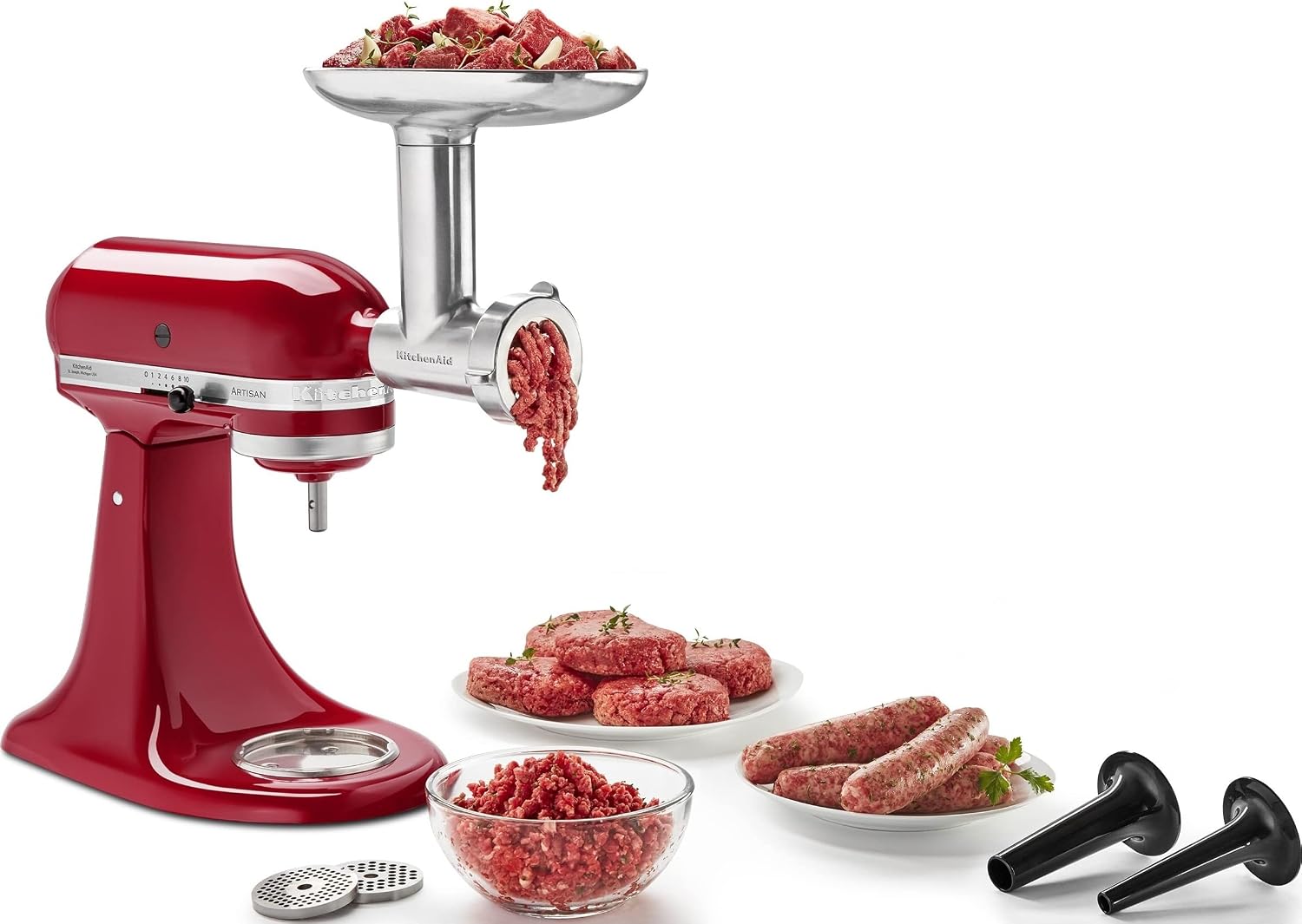
| Included Components | Metal food grinder; removable food tray; fine, medium, coarse plates; cleaning brush; food pusher; 2 sausage stuffer tubes; stuffer plate |
|---|---|
| Material | Metal |
| Voltage | 110 volts |
| Capacity | 11 kg |
The KitchenAid Metal Food Grinder Attachment converts a KitchenAid stand mixer into a powered grinder for burgers, sausages, hard cheeses, and breadcrumbs. It snaps into the mixer's power hub and uses the mixer's motor to push ingredients through metal auger and interchangeable grinding plates for fine, medium, or coarse textures. The kit includes a larger food tray to feed bigger batches, two sausage stuffer tubes and a stuffer plate for making links, plus a storage case to keep parts organized. In use it can speed prep and yield fresher results than store-ground meat, and pre-chilling the unit helps maintain a clean grind. Because it relies on the stand mixer for power and mounting, setup is straightforward and cleanup is limited to the removable metal parts and brush. Limitations are that this is an attachment rather than a standalone grinder so you must own a compatible KitchenAid mixer, and very large commercial volumes will overwhelm the attachment compared with dedicated floor grinders.
Best for: Buyers who value consistent, factory-quality results from a trusted kitchen system and want an easy way to make fresh ground meat and sausages at home with minimal fuss.
Less Ideal for: People who need a standalone grinder or who process large commercial volumes should choose a dedicated countertop or floor grinder instead.
- Uses the stand mixer motor so no separate motor needed
- Includes fine, medium, and coarse plates for versatile grind sizes
- Comes with two sausage stuffer tubes and plate for making links at home
- Larger food tray processes bigger batches to reduce feeding time
- Metal construction and storage case keep parts organized and durable
- Requires a KitchenAid stand mixer to operate; not a standalone unit
- Not designed for heavy commercial throughput or continuous industrial use
Verdict: If you already own a KitchenAid stand mixer and want a durable, ready-made way to grind meat and make sausages at home, this metal grinder attachment is the practical pick.
Choosing the Right Meat Grinder for Sausage: Key Factors to Consider
Grinding Power & Throughput
Grinding power determines how reliably a unit processes dense or fatty cuts used in sausage recipes. Higher torque reduces the chance of stalls and overheating when you push through chunks of partially frozen meat or meat with variable fat content.
Throughput matters if you plan to make batches regularly. A grinder that can handle larger volumes per minute saves time and reduces the need to feed small amounts repeatedly, which also improves grind consistency and reduces hand fatigue.
Feed Consistency and Plate Selection
Plate size and the ability to swap plates affect the texture of your sausage. Coarser plates create chunkier, rustic textures while finer plates produce smoother emulsions for breakfast-style links. Consistent feed through the auger also prevents air pockets and uneven fat distribution.
Look for machines that include multiple plate sizes and that keep the meat cool while grinding. Consistent plate tolerances and tight machining reduce rework and give more predictable results across batches.
Stuffing Accessories and Compatibility
Sausage making is more than grinding meat; it includes stuffing casings and forming links. Built-in or included stuffing funnels in a range of diameters let you match natural or synthetic casings and create different link sizes.
Consider whether the grinder supports optional attachments or adapters for larger casings and whether the motor has enough reserve torque to push seasoned mixes through long lengths of casing without stressing the unit.
Ease of Cleaning and Sanitation
Meat handling demands rigorous cleaning to avoid cross-contamination. Parts that disassemble easily and are accessible for rinsing and scrubbing reduce the time between batches and lower food-safety risk.
Avoid units with hard-to-reach crevices or permanently attached electrical components near the meat path. Dishwasher-safe components can speed cleanup, but the overall design and material finish are equally important for preventing bacterial buildup.
Build Materials and Food-Safety Design
Materials that contact meat should be nonporous and corrosion resistant to preserve flavor and hygiene. Stainless-steel feed tubes, plates, and cutters resist staining and are easier to sanitize than plated or painted parts.
A well-sealed motor housing and robust fasteners also improve longevity, especially if you will be working with wet or brined mixes. Food-safety-oriented design reduces the chance of contaminating batches and simplifies compliance with safe-handling practices.
Noise, Footprint, and Usability
Home sausage making often happens in a kitchen not designed for heavy appliances, so noise level and machine footprint matter. A compact, quieter grinder is easier to integrate into your workflow and less disruptive to household life.
Ergonomic controls, stable feet, and a reasonable weight balance make feeding and operating the unit safer and less tiring during long sessions. Consider where you will store and operate the grinder and whether a heavier, more powerful unit is practical for your space.
Preparing Meat for Sausage
Proper preparation affects both texture and food safety. Trim and partially chill your meat and fat to around refrigerator temperature or slightly below to prevent smearing during grinding. Cold meat holds fat in discrete pieces, producing a cleaner grind and better final texture.
Cut meat into consistent cubes that easily fit the grinder throat. Overly large chunks slow throughput and can strain the motor, while very soft or room-temperature meat can smear and clog the auger.
- Partially freeze large cuts for 30 to 60 minutes before grinding.
- Keep all tools and surfaces chilled and clean to minimize spoilage risk.
- Work in batches to maintain consistent temperature and grind quality.
Choosing Casing Types and Filling Techniques
Natural casings offer a traditional snap and translucency, while synthetic casings provide uniform diameter and longer shelf life. The casing type you choose affects stuffing pressure and the required funnel diameter.
Use gentle, even pressure when filling casings to avoid air pockets. Twist links with consistent spacing and rest them before cooking to let moisture redistribute. Practice with inexpensive casings to dial in stuffing speed and tension.
- Rinse and soak natural casings according to supplier directions before use.
- Select stuffing funnels that match casing diameter to reduce slippage and bursting.
Temperature Management During Sausage Making
Maintaining low temperatures through grinding and stuffing preserves emulsion stability and prevents bacterial growth. Keep meat and finished links refrigerated or on ice between steps, and avoid exposing mixes to warm kitchen air for extended periods.
If you plan continuous batches, consider chilling plates and bowls and working on a cooled surface to reduce temperature rise during processing.
- Chill grinding plates and bowls in the freezer for best results.
- Work with small batches if your kitchen cannot stay consistently cold.
Common Troubleshooting Tips
If the grinder clogs, stop and reverse the feed if the model permits, then clear the obstruction. Avoid forcing meat through a jammed auger as this can damage the motor or warp metal parts.
If texture is uneven, check plate wear and cutter sharpness. Dull blades or warped plates produce inconsistent results and can increase strain on the motor.
- Keep a spare cutter and plate set on hand for quick swaps.
- Avoid overloading the hopper and feed meat steadily to maintain torque.
Maintaining and Storing Your Grinder
After each session, disassemble food-contact parts and clean promptly with hot, soapy water. Dry thoroughly before reassembly to prevent rust or mold. Regular lubrication of non-food metal threads with food-safe grease helps parts remain easy to remove.
Store cutters and plates separated or wrapped to avoid nicks and to keep them sanitary. If your unit has a removable motor head, store the head in a dry area away from heavy humidity or pests.
- Label and date stored casing and accessory packages to track freshness.
- Inspect seals and brushes periodically and replace worn parts as recommended.
How We Chose the Best Meat Grinder for Sausage
We focused on objective, sausage-specific performance and user considerations to assemble this list. Key evaluation dimensions included grinding power and throughput to ensure units can handle fatty, coarse cuts without stalling; feed consistency and plate options so you can achieve the range of grind textures sausage recipes require; build materials and food-safety features to minimize contamination risk and simplify sanitation; and stuffing support such as included funnels or adapter options for casing attachment. We also checked ease of cleaning and disassembly because frequent sausage batches mean more hands-on upkeep, and quieter operation for home kitchens. Durability and warranty coverage were part of the review filters to ensure a reasonable service life under repeated use. We excluded units that lack adequate torque for coarse or mixed-fat cuts, grinders without meaningful plate and stuffing accessories, and models with difficult tool-free cleaning or non-food-grade contact materials. The final shortlist reflects units that balance power, hygienic design, and practical sausage-making features.
Our full evaluation process is outlined in our review methodology.
FAQ
What plate sizes are best for most sausages?
Most sausage styles use a midrange plate around 4.5 to 6 mm for standard texture, while coarser sausages benefit from 8 mm plates and finer emulsions use 2.5 to 3.5 mm. Pick a grinder that includes a range of plates so you can experiment.
Can I grind partially frozen meat safely?
Yes, partially frozen meat is often preferable because it minimizes smearing and helps maintain fat distribution. Keep the core temperature above freezing and work quickly to prevent surface warming.
How do I prevent air pockets when stuffing casings?
Pack the casing steadily using a consistent feed speed, and use manual or mechanical link-tying methods to expel trapped air. Leaving a small vent at the end of the casing and gently massaging finished links also helps remove bubbles.
Is motor horsepower the only measure of capability?
Not entirely. Motor torque and build quality matter as much as nameplate horsepower. A well-designed auger, slow gearing, and robust bearings can outperform a higher-horsepower motor that lacks torque.
How often should I sharpen or replace cutters and plates?
Frequency depends on use, but hobbyist sausage makers should expect to service or replace cutters and plates after many dozens of batches. Inspect parts regularly for nicks or burrs and replace them when cutting performance declines.
Final Verdict
Selecting a meat grinder for sausage comes down to matching capacity and features to how often you will make links and the textures you prefer. Prioritize grinders with sufficient torque and a good range of plates, plus solid stuffing support and easy-to-clean food-contact surfaces. Accept tradeoffs between footprint and power based on your kitchen space and batch size. Focus on hygiene-friendly materials and practical accessories to make sausage making safer and more repeatable, and choose the unit whose specifications align with your typical recipes and session frequency.