
Note: This article contains affiliate links. If you click on these links and make a purchase, we may earn a small commission at no extra cost to you. This helps support our research and content. Read our full affiliate disclosure here.
If you cook at home regularly, a reliable meat grinder changes how you buy, prepare, and enjoy ground meat. The right grinder helps you control texture, fat content, and seasoning while reducing waste from packaged mixes. For cooks working with moderate volume, models under $200 offer a balance of power, durability, and features without taking up commercial-sized space. This guide shortlists the top options in that price range and evaluates them for everyday tasks like burgers, sausages, and pet food. We assessed motor strength, build materials, cleaning and upkeep, and accessory versatility so you can match a grinder to your typical batch size and maintenance tolerance. Read on for the factors that matter and practical guidance for choosing the best meat grinder for your kitchen.
Top Picks at a Glance
| Best Overall The best all-around choice for most situations | AAOBOSI Meat Grinder MG102A |  |
| Best Quality Built to a higher standard if you want something more solid | Weston #12 Electric Meat Grinder | 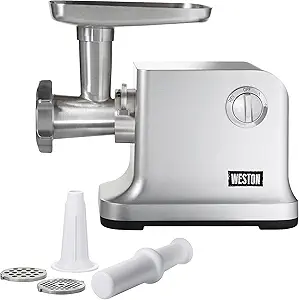 |
| Best Value The sweet spot between price and what you get | STX Turboforce 3000 |  |
| Best Budget The cheapest option that still gets the job done reliably | ALTRA LIFE Meat Grinder MGAC13 |  |
| Top Rated A top-rated pick with lots of positive feedback | ALTRA LIFE Meat Grinder MG090 |  |
| Most Popular A crowd favorite that many people choose with confidence | CHEFFANO Meat Grinder AZ-MG091DG |  |
AAOBOSI Meat Grinder MG102A

| Wattage | 3000 watts |
|---|---|
| Capacity | 3 pounds |
| Voltage | 120 volts_of_alternating_current |
| Included Components | 3 grinder plates, sausage tubes, kibbe kit, blades, cutting attachments |
This AAOBOSI electric meat grinder is aimed at home cooks who want a high-capacity, feature-packed machine without professional cost. It uses a powerful motor (3000W max) and claims up to about 4 pounds per minute throughput, with 9 touch-screen presets and 9 speed settings to control texture for grinding, sausage stuffing, kibbe, and shredding. Practical touches include an auto-reverse to clear jams, built-in accessory storage, and a set of three grinding plates plus blades and stuffing tubes. Most metal parts are stainless steel and the attachments are dishwasher-safe for easier cleanup, though the manufacturer recommends hand-washing for best results. The unit is intended for intermittent heavy use but should not be run continuously beyond the recommended time to avoid overheating. Size and weight make it a substantial counter appliance, and some buyers may find the touchscreen learning curve and noise level noticeable compared with simpler models.
Best for: Buyers who want a versatile, high-capacity home meat grinder that handles frequent batch processing and values built-in storage and preset controls.
Less Ideal for: Those seeking a lightweight, ultra-quiet countertop appliance for occasional light use or a unit intended for continuous commercial operation should consider simpler or commercial-grade alternatives.
- High peak power and claimed high throughput for processing large batches quickly
- 9 touch-screen presets and multiple speed settings for precise texture control
- Includes a broad accessory set (3 plates, blades, sausage tubes, kibbe kit) and built-in storage
- Stainless steel construction and dishwasher-safe attachments simplify cleaning
- Not designed for continuous commercial use; recommended run times should be observed to avoid overheating
- Larger, heavier footprint may be bulky for small kitchens
Verdict: A feature-rich, high-capacity home meat grinder that delivers strong performance and preset control for buyers who process large batches under $200.
Weston #12 Electric Meat Grinder

| Wattage | 750 watts |
|---|---|
| Capacity | 5 pounds |
| Voltage | 120 volts |
The Weston #12 is a workhorse-style electric meat grinder built for fast, repeatable grinding and sausage making at home. Its 750 watt, 1 HP motor and metal gears power two speeds plus a reverse to clear jams, so it can grind several pounds quickly and handle tougher game or fattier cuts without bogging down. The die-cast aluminum body and cam-action headlock make assembly and teardown straightforward while the included medium and coarse stainless steel plates, cutting blade, sausage funnel and stomper cover most kitchen grinding needs. In practice this unit is suited to batch work — burgers, bulk sausage, and ground meat for meal prep — and the slow speed is handy when stuffing casings. Expect some noise and a substantial countertop footprint, and the metal construction means parts need basic cleaning and occasional lubrication to stay smooth. For buyers who want fast throughput and durable construction rather than ultra-compact storage, this grinder performs reliably and feels built for regular use.
Best for: Buyers who prioritize heavy-duty performance and high throughput for frequent grinding, sausage making, or processing game at home.
Less Ideal for: If you need a compact, quiet grinder for occasional small batches or limited countertop space, this unit is more than required and may be inconvenient.
- Powerful 750 W (1 HP) motor for fast grinding and steady performance
- Two-speed control plus reverse reduces jams and helps when stuffing sausages
- Die-cast aluminum body and metal gears for durable, long-lasting construction
- Includes medium and coarse stainless steel plates, cutting blade, sausage funnel and stomper for basic sausage and grinding work
- Relatively large and heavy, so it requires permanent countertop or storage space
- Can be noisy during operation compared with smaller consumer models
Verdict: Choose the Weston #12 when you want a durable, high-output grinder that handles frequent home use and sausage making with commercial-style power.
STX Turboforce 3000

| Wattage | 1800 watts |
|---|---|
| Capacity | 3 pounds |
| Voltage | 110 volts |
The STX Turboforce 3000 is a purpose-built home meat grinder that handles large batches without fuss. It uses a size 12 grinding head, a wide auger opening and a roomy hopper to feed roughly 3 pounds of prepped meat at a time, and the motor delivers effective grinding in normal use between 800 and 1200 watts. The unit ships with three stainless cutting blades, five grinding plates including a sausage stuffing plate, three stuffing tubes, a kubbe attachment, claws for shredding, and a burger/slider press, so you can grind, stuff sausages and form patties without sourcing extra accessories. Practical features like the variable intake auger and multiple plate sizes make it easy to dial in coarse to fine grinds for burgers, sausages and mixed meats. It is not designed to grind bones, tendons, produce or hard items, and it is intended for home rather than commercial continuous operation. Expect a substantial, somewhat noisy machine that rewards regular maintenance and proper meat prep with fast, consistent results.
Best for: Buyers who want a durable, high-capacity home grinder to process large batches, make sausages, and customize grind size while keeping tool and accessory cost low.
Less Ideal for: People who need a grinder for commercial continuous use or anyone who expects to process bones or non-meat items should choose a different, heavy-duty model.
- Size 12 head and large hopper allow high-volume home grinding sessions
- Includes multiple grinding plates, stuffing tubes and specialty attachments for versatile use
- Robust cutting blades and stainless components where food contacts improve durability
- Capable of grinding 180–240 pounds per hour when meat is properly prepared
- Not designed to grind bones, tendons, vegetables, nuts or fruit
- Intended for home use only and not built for continuous commercial duty
Verdict: A high-capacity, feature-packed home meat grinder that lets practical cooks grind, stuff and form large batches without buying extra attachments.
ALTRA LIFE Meat Grinder MGAC13

| Rated power | 350W |
|---|---|
| Peak power | 2300W |
| Capacity | 3 pounds |
| Included plates | Fine, Medium, Coarse |
| Power source | Corded Electric |
The ALTRA LIFE MGAC13 is a countertop electric meat grinder aimed at home cooks who want to grind and stuff meat without a lot of fuss. Its 350W rated (2300W peak) motor claims to process up to about 3 pounds per minute, and the unit ships with two cutting blades, three stainless-steel plates (fine, medium, coarse), a sausage stuffing tube set and a kubbe attachment so you can make sausages, burgers or kibbeh at home. The machine includes overload and overheat protection plus a reverse function to help clear jams, and most food-contact parts are stainless steel or BPA-free plastic that detach for cleaning. Practical strengths are the accessory set and the ability to handle small to moderate batches quickly; the aluminum alloy head should be hand-washed per the instructions to avoid oxidation. Expect typical midrange noise and keep an eye on continuous run times to avoid triggering thermal cutoff. For budget shoppers looking for a full accessory kit and solid basic performance, this grinder covers the essentials, but heavy daily commercial use would call for a larger, more rugged motor and all-metal construction.
Best for: Shoppers on a tight budget who want a capable home meat grinder with a full set of accessories for occasional to regular meal prep and sausage making.
Less Ideal for: Users who need an industrial‑grade, all‑metal grinder for continuous heavy commercial use or large-volume processing sessions.
- Includes two cutting blades and three stainless steel grinding plates for fine, medium and coarse grinds.
- Sausage stuffing tubes and kubbe attachment expand use beyond basic grinding.
- Peak power and rated motor support reasonably fast throughput for home batches.
- Overload/overheat protection and reverse function reduce risk of jams and motor damage.
- Most food-contact parts are detachable and made of stainless steel or BPA-free plastic for easier cleaning.
- Grinder head and some alloy parts are not dishwasher safe and require careful hand drying to avoid oxidation.
- Aluminum alloy structural parts limit suitability for heavy commercial use compared with all-metal pro grinders.
Verdict: A budget-friendly home grinder that pairs a strong peak motor with a generous accessory kit, making it a practical choice for at-home sausage and grind work under $200.
ALTRA LIFE Meat Grinder MG090

| Wattage | 350 watts |
|---|---|
| Voltage | 120 volts |
| Capacity | 180 pounds |
| Included Components | Grinding plates, blades, sausage tubes, kubbe attachment, grater, burger press, meat claws |
This ALTRA LIFE MG090 is a full-featured home meat grinder that combines a 350W rated (up to 2800W peak) pure copper motor with a broad accessory pack for everyday and occasional heavy use. You load meat into the hopper, switch it on and the machine feeds and grinds through one of three stainless steel plates; a reverse button helps clear jams. The included sausage tubes, kubbe attachment, burger press, rotary grater and meat claws expand it beyond basic grinding for sausages, burgers and small-batch charcuterie. Detachable parts and dishwasher-safe plates make cleanup straightforward, while a built-in storage compartment keeps accessories organized. The unit has overload and overheat protection and a locking knob for safer operation, but the manufacturer warns against continuous runs longer than 10 minutes, so plan batches accordingly. Overall it delivers strong performance for home cooks who want control over grind texture and basic sausage making without professional pricing.
Best for: Home cooks who want a reliable, well-protected grinder with a full accessory kit for making sausages, burgers and small-batch processing and who value organized storage and straightforward cleaning.
Less Ideal for: People needing a commercial-grade grinder for uninterrupted large-volume processing or users who plan to grind hard bones frequently.
- Comes with extensive accessory set including 3 grinding plates, stuffing tubes, kubbe maker and grater
- Copper motor design and overload/overheat protection for more reliable operation
- Dishwasher-safe stainless plates and detachable parts simplify cleaning
- Built-in accessory storage keeps attachments organized and within reach
- Not intended for continuous heavy commercial runs; manufacturer advises limiting continuous use to prevent overheating
- Some alloy/exposed parts require hand drying to avoid oxidation
Verdict: A versatile, reliability-minded home meat grinder with strong motor protection and a complete accessory set that suits sausage making and routine household grinding.
CHEFFANO Meat Grinder AZ-MG091DG

| Capacity | 180 pounds |
|---|---|
| Material Type | Stainless Steel |
| Power Source | Corded Electric |
| Included Components | Sausage maker, food pusher, kubbe attachments, 2 blades, 3 cutting plates |
The CHEFFANO AZ-MG091DG is a heavy-duty home meat grinder that converts fresh cuts into ground meat, kibbe, or stuffed sausage using a corded electric motor and a set of stainless steel attachments. It ships with three cutting plates (2mm, 5mm, 7mm), two blades, sausage tubes, kubbe tools, and a food pusher so you can switch between fine grind, coarse grind, and stuffing tasks without extra purchases. The manufacturer says the motor has a 350W continuous rating with a claimed 2800W peak for short bursts, and the updated three-layer auger is designed to reduce heat buildup and preserve meat texture while grinding roughly 3 pounds per minute. Controls include a forward and reverse function to clear jams, and most removable parts are hand-washable for easier cleaning. Expect a sturdy stainless steel body and ETL safety approval, but note that attachments are not dishwasher safe and the peak wattage figure is marketing rather than sustained power, so very heavy commercial use may overtax the unit. For home cooks making fresh sausages, burgers, and kibbe, it provides a lot of kit and decent grinding speed within a home kitchen footprint.
Best for: Buyers who want a well-equipped home grinder with multiple plates and stuffing accessories and who value safety certifications and social-proof from customer feedback.
Less Ideal for: People needing a commercial‑grade machine for continuous heavy duty processing or those who prefer fully dishwasher-safe components.
- Includes three stainless steel cutting plates and two blades for fine to coarse grinding
- Sausage stuffer tubes and kubbe attachments let you make sausages and kibbe at home
- Auger design and reverse function help reduce heat and clear jams during use
- ETL safety approval and mostly stainless steel construction for durability
- Attachments are not dishwasher safe and require hand drying
- Peak wattage claim is promotional and not sustained continuous power
Verdict: A feature-packed, ETL-approved home meat grinder that includes plates, blades, and stuffing accessories—ideal for cooks who want to grind and stuff at home with confidence.
Choosing the Right Meat Grinder: Key Factors to Consider
Motor Power and Torque
Motor power and, more importantly, torque determine how effectively a grinder processes different meats and fat levels. Higher torque helps push through tougher cuts and fatty mixes without bogging down, which matters when you want consistent results across pork, beef, and mixed blends.
For typical home use under $200, look for motors that can sustain short continuous runs without overheating. Pay attention to whether manufacturers specify peak versus continuous horsepower, because continuous ratings are a better indicator of real-world performance.
Build Materials and Drivetrain Design
The materials used for the cutting head, auger, and housing affect durability and food safety. Stainless steel components resist corrosion and easier cleaning, while aluminum or zinc alloys can save weight but may wear faster under heavy use.
A robust drivetrain and well-machined fittings reduce wobble and improve repeatable grind quality. Check for solid metal gears or well-supported worm drives, since plastic gears are more likely to fail when grinding dense or sinewy cuts.
Ease of Cleaning and Food Safety
Grinders contact raw meat, so the ability to disassemble quickly and clean all meat-contact parts is essential. Units with tool-free teardown and smooth, simple shapes reduce trapped residue and bacterial risk.
Also consider whether parts are dishwasher-safe, how many small pieces are involved, and whether the manufacturer uses food-safe coatings. Faster cleanup increases the likelihood you will grind more often and maintain safer kitchen practices.
Accessory Compatibility and Grind Options
The range of included plates, blade quality, and available stuffing tubes influences the versatility of your grinder. Fine, medium, and coarse plates let you customize texture for burgers, meatloaf, or sausages, while additional attachments expand capabilities without buying separate appliances.
Consider whether accessories are proprietary or use common mounting standards so you can replace or upgrade plates and tubes easily. A flexible accessory set makes a grinder more useful over time as your recipes change.
Capacity, Noise, and Kitchen Fit
For home cooks, the grinder's throughput per minute and the noise level determine where and how often you will use it. Higher-capacity units reduce overall processing time for larger batches, while quieter machines are less disruptive in open kitchens.
Footprint and weight matter for storage and counter placement. Choose a size that fits your prep area and can be stored or moved without strain.
Serviceability and Warranty Coverage
Even well-built grinders can need replacement parts or servicing over time. Units designed for easy access to wear items like blades and plates reduce downtime and expense when maintenance is required.
Check the length and scope of warranty coverage and whether common replacement parts are readily available. A clear warranty and accessible parts supply extend the practical life of a home meat grinder.
Why Grinding at Home Improves Flavor and Control
Grinding meat at home gives you direct control over cut selection, fat ratio, and seasoning distribution. Prepackaged ground meat is often a blend of cuts and fat levels that may not match the texture or flavor you want for burgers, sausages, or meatballs.
Making your own grind also reduces additives and lets you choose fresher, better-trimmed cuts. For sausage makers, starting with whole cuts ensures a cleaner bind and more customizable seasoning profiles than premade mixes.
- Customize fat-to-lean ratios for juiciness or leanness
- Use single cuts for consistent texture and flavor
- Control additives and seasoning levels more precisely
Batch Size and Workflow Tips
Plan grinding sessions to match the grinder's capacity and your kitchen workflow. Cutting large roasts into smaller, uniform strips and chilling them briefly improves feed consistency and reduces strain on the motor.
Work in chilled batches to avoid smearing and to keep fat from melting into a paste. Keep a tray of partially frozen chunks ready, and pause between passes to clear blockages or sharpen blades if needed.
- Cut meat into 1-inch strips and chill 20 to 40 minutes
- Alternate lean and fatty pieces for even texture
- Use coarse plate first, then finer plates for desired grind
Basic Maintenance to Extend Lifespan
After each use, disassemble all meat-contact parts and wash with hot, soapy water. Dry parts thoroughly before reassembly to avoid corrosion and microbial growth. Oiling the blade and plates lightly with food-grade oil before storage helps prevent surface rust on steel components.
Inspect the auger and gearbox seams periodically for wear and remove any trapped bits of connective tissue. Replace blades and plates when they show signs of dulling or deformation to maintain efficient, clean cuts.
- Hand wash and dry all metal plates and blade components
- Lightly oil cutting parts before storage
- Check fasteners and seals for tightness periodically
Making Sausages and Specialty Preparations
If you plan to make sausages, confirm the grinder supports standard stuffing tubes and includes a stable feed mechanism. A grinder that handles medium-to-coarse grinds consistently will make it easier to stuff casings without excessive air pockets or blockages.
For specialty items like kibbeh or pâté, consider whether the grinder can be fed at lower speeds and whether the included plates and blade produce a smooth enough texture for fine pastes.
- Use a medium grind for stable sausage filling
- Chill meat and casings before stuffing for cleaner results
- Run meat through two passes for a finer texture when needed
Safe Operation: Tips to Prevent Jamming and Injury
Always follow the manufacturer's safety steps for feeding meat. Use the provided stomper rather than fingers, and power down before removing jams. Overloading the hopper or forcing sinewy pieces can cause the motor to stall or the auger to jam.
Avoid grinding large bones unless a model explicitly supports it. Bones increase wear and can chip plates or blades, leading to poor results and potential hazards during operation.
- Feed small, uniform pieces to avoid overtaxing the motor
- Do not attempt to grind large bones in home grinders
- Power off and unplug before clearing jams or changing plates
How We Chose the Best Meat Grinder
We focused on attributes that directly affect kitchen performance and long-term satisfaction when buying a meat grinder under $200. First, motor power and torque were assessed because they determine how well a unit handles different meats, fat content, and short grinding runs without stalling. Second, build materials and drivetrain design were considered to judge durability and resistance to wear under repeated use. Third, cleaning and disassembly were a priority since grinders with fewer nooks and tool-free teardown reduce time and sanitary risk. Fourth, accessory compatibility and included plates or stuffing tubes matter for cooks who want sausages, kebbe, or variable grind sizes out of a single machine. Fifth, noise, weight, and footprint were noted because home kitchens often require compact, tolerable machines. We excluded heavy commercial units and specialty benchtop meat processors that exceed home-use power or the price cap. Units lacking basic safety features, poor user-serviceability, or with consistently negative reports on drivetrain longevity were also filtered out. The final selection balances usable power, hygienic design, and feature set appropriate for at-home grinding tasks.
Our full evaluation process is outlined in our review methodology.
FAQ
What grind plate sizes do I need for burgers and sausages?
For burgers, a medium to coarse plate is typical to keep a juicy texture and visible meat strands. Sausages often use a medium plate for a stable fill and a finer plate when you want a smoother, more cohesive texture. Many home cooks start with three plates: coarse, medium, and fine.
How often should I sharpen or replace the blade?
Blades dull with use; frequency depends on volume and what you grind. For typical home use, inspect the blade quarterly and replace it when cuts become ragged or require multiple passes. Some users find annual replacement sufficient for moderate workloads.
Can I grind frozen meat safely?
Partially frozen meat is actually better for clean grinding because firmer fat and flesh shear more predictably. Avoid fully frozen blocks, which can strain the motor and damage plates. Aim for firm but not rock-hard pieces for best results.
Is a metal or plastic housing better?
Metal housings generally offer greater durability and heat dissipation, while plastic reduces weight and cost. Either can be fine for home use if the internal drivetrain and mounts are well engineered. Prioritize solid construction over housing material alone.
How do I prevent my grinder from clogging with fatty cuts?
Keep meat cold and cut into small, even pieces to reduce smearing. Alternate lean and fatty pieces when feeding the auger, and use coarser plates if the fat is very soft. Regularly clear the throat and blades during longer runs to prevent buildup.
Final Verdict
Choosing a meat grinder under $200 means balancing useful power with durable materials and easy maintenance. Prioritize torque and a sturdy drivetrain if you plan to process a range of cuts, and favor units that disassemble cleanly if you want quick turnaround and safer sanitation. Accessory options and serviceability help the grinder stay useful as your recipes evolve. Focus on the criteria outlined here to pick a model that matches your typical batch size and cleanup tolerance, and you will get predictable results for burgers, sausages, and a wide range of home-ground dishes.