
Note: This article contains affiliate links. If you click on these links and make a purchase, we may earn a small commission at no extra cost to you. This helps support our research and content. Read our full affiliate disclosure here.
If your kitchen needs stronger extraction or quieter venting, the right microwave-for-venting setup makes a measurable difference. Overbuilt exhaust systems and poorly routed ducts can leave lingering smells, grease buildup, and excess heat. Choosing a microwave designed for effective venting helps control smoke, odors, and steam while fitting into your kitchen's layout. This guide shortlists the top options for venting microwaves and explains the practical tradeoffs you should expect. We evaluate airflow performance, installation flexibility, noise, and maintenance so you can pick a unit that matches your hood needs and duct layout. Read on for the top venting-capable microwaves and the criteria that matter most when venting a kitchen space.
Top Picks at a Glance
| Best Overall The best all-around choice for most situations | Frigidaire FFMV1846VB Microwave |  |
| Best Quality Built to a higher standard if you want something more solid | Frigidaire Professional Over-the-Range Microwave |  |
| Best Value The sweet spot between price and what you get | Empava Over-the-Range Microwave 1.7 Cu Ft |  |
| Best Budget The cheapest option that still gets the job done reliably | Midea Over-the-Range Microwave 1.7 Cu Ft | 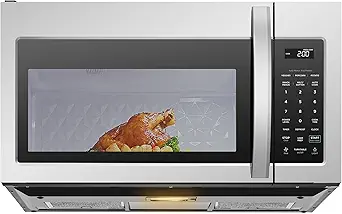 |
| Top Rated A top-rated pick with lots of positive feedback | Farberware Over-the-Range Microwave FMR17BLKD1 |  |
| Most Popular A crowd favorite that many people choose with confidence | BLACK+DECKER Over-the-Range Microwave EM044K6CE-SS | 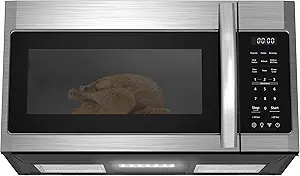 |
| Best Seller A high-volume bestseller chosen again and again | GE 30" Over-the-Range Microwave JVM3160RFSS |  |
Frigidaire FFMV1846VB Microwave

| Wattage | 1000 watts |
|---|---|
| Capacity | 1.8 cubic feet |
| Installation Type | Over-the-Range |
| Number of Power Levels | 10 |
| Included Components | Turntable |
This Frigidaire FFMV1846VB is an over-the-range microwave designed for everyday cooking tasks and basic venting needs. It offers 1000 watts of power and ten power levels, which handle reheating, defrosting, popcorn, and simple veggie or reheat programs reliably. The 1.8 cubic foot interior with a turntable provides enough room for medium dishes and family-sized plates, and the button controls with a touchscreen input make it straightforward to operate. As an over-the-range unit it integrates above a cooktop and includes the basic features you expect for residential use, though it does not advertise advanced convection or sensor-cook functions. Practical benefits include solid heating performance at common power settings, a roomy cavity for its class, and simple controls that reduce the learning curve. Limitations are typical for basic over-the-range microwaves: there are no specialized gourmet cooking modes, and the product listing does not highlight a high-performance ventilation blower or multi-speed exhaust details, so buyers focused primarily on powerful venting may need to verify hood performance separately.
Best for: Buyers seeking a straightforward, reliable over-the-range microwave that balances cooking performance and usable interior space for everyday family meals.
Less Ideal for: Those who need a high-capacity, feature-rich unit with advanced cooking modes or a powerful dedicated range hood vent should consider other options.
- 1000 watts of cooking power for consistent reheating and defrosting
- Ten power levels for more precise heat control across tasks
- 1.8 cu. ft. cavity with turntable fits medium and family dishes
- Simple button controls with touchscreen input make operation easy
- No detailed ventilation blower specs provided in the listing
- Lacks advanced sensor-cook or convection features found on higher-end models
Verdict: A practical over-the-range microwave that delivers reliable 1000-watt cooking and usable interior space for balanced everyday kitchen use.
Frigidaire Professional Over-the-Range Microwave

| Capacity | 1.9 cubic feet |
|---|---|
| Wattage | 1600 watts |
| Heating Method | Convection |
| Cooking Program | air fry, convection, defrost, reheat, sensor cook |
| Number of Power Levels | 9 |
This Frigidaire Professional over-the-range microwave combines a powerful 1600-watt convection system with an air-fry mode to handle high-heat cooking tasks while also functioning as a vented microwave above the cooktop. It installs over the range and offers touch controls, nine power levels, sensor cook, and a 1.9 cu. ft. stainless steel cavity that is easy to clean. The unit includes a push-to-open PureAir filter door and a filter indicator light to simplify grease and odor management when venting is required. For everyday use you can reheat, defrost, and use sensor cook for hands-off results, while air fry and convection expand what you can roast or crisp without a separate oven. Trade-offs are its large footprint and professional styling that need appropriate cabinet space and its weight and installation requirements typical of over-the-range appliances. If you need strong venting capability coupled with convection and air-fry versatility in one unit, this microwave is a capable option.
Best for: Buyers who prioritize cooking performance and want a vented over-the-range microwave that adds convection and air-fry capability to replace or supplement a wall oven.
Less Ideal for: Shoppers with very small kitchens, limited installation options, or those who only need a simple countertop microwave should consider smaller or less complex models.
- High 1600-watt convection power for faster, more even cooking
- Built-in air fry program adds crisping ability without a separate appliance
- Integrated venting with PureAir filter and indicator light for easier grease and odor control
- Spacious 1.9 cu. ft. stainless steel interior that cleans easily
- Large, heavy over-the-range unit requires professional-level installation and sufficient cabinet space
- May be more feature-rich than needed for buyers who only want basic microwave reheating
Verdict: Choose this unit if you want a powerful vented over-the-range microwave that adds convection and air-fry performance in a single appliance.
Empava Over-the-Range Microwave 1.7 Cu Ft

| Capacity | 1.7 cubic feet |
|---|---|
| Output Microwave | 1000 watts |
| Vent Fan CFM | 300 |
| Vent Orientation | Recirculation |
| Number of Power Levels | 11 |
This Empava over-the-range microwave combines a mid-size 1.7 cu ft cavity and 1000 watts of output with a built-in two-speed 300 CFM venting fan, making it suited for typical kitchen cooktops. It offers sensor cooking and a set of preprogrammed auto menus for common items like popcorn, pizza, and vegetables, plus an express 30-second cook pad for small reheats. The stainless steel interior and glass turntable make cleanup straightforward, and LED cooktop lighting keeps the range area well lit. Touchscreen controls, a child lock, and multiple power levels let you fine tune heating while the recirculation vent option helps where external ducting is not available. Trade-offs include a roller-type turntable design that may limit very large dishes and a recirculating vent configuration if you prefer full external duct ventilation for stronger extraction. For typical residential kitchens needing built-in venting and sensor convenience, it balances capacity, vent power, and useful presets without excess complexity.
Best for: Buyers who want a practical over-the-range microwave that combines reliable venting power with sensor cooking and easy maintenance for everyday meal prep.
Less Ideal for: Homes that require high-capacity external-duct commercial ventilation or need to microwave very large bakeware frequently should consider alternatives.
- Built-in 300 CFM two-speed vent fan provides solid extraction for over-the-range use
- 1000W output with sensor cooking and multiple power levels for even reheating
- 1.7 cu ft cavity fits typical plates and medium cookware
- Stainless steel interior and glass turntable for easier cleaning
- LED cooktop lighting improves visibility over the stove
- Vent ships configured for recirculation rather than straight external ducting
- Turntable design and internal clearance may restrict very large or odd-shaped cookware
Verdict: Choose this Empava if you want a mid-size over-the-range microwave that pairs 300 CFM venting with sensor cooking for practical everyday venting and reheating needs.
Midea Over-the-Range Microwave 1.7 Cu Ft

| Capacity | 1.7 cubic feet |
|---|---|
| Power Consumption | 1000 watts |
| Number of Programs | 19 |
| Number of Power Levels | 10 |
This Midea over-the-range microwave combines a roomy 1.7 cu ft interior with 1000 watts of cooking power and a 300 CFM exhaust to handle both reheating and basic ventilation above a cooktop. It uses a one-touch smart panel and 19 auto menus for common tasks like popcorn, pizza, defrost, and reheat, while offering 10 power levels so you can fine-tune heat for different foods. The 12.5-inch turntable and stainless-steel interior make it easy to fit larger items such as a rotisserie chicken, and the bright cooktop light helps when monitoring stovetop cooking. Ventilation includes adjustable fan speeds and a relatively strong suction rating, which should reduce fumes and odors for typical home cooking. Trade-offs are a straightforward control layout without advanced connectivity or convection baking, and it is a basic factory-style unit aimed at practical use rather than premium features. Installation requires over-the-range mounting and the fan performance depends on proper ducting to work at full effectiveness.
Best for: Buyers who want a budget-friendly over-the-range microwave that handles everyday reheating and provides competent venting above a stove will appreciate this model.
Less Ideal for: Those who need advanced features like convection baking, smart connectivity, or professional-grade ventilation for heavy cooking should consider higher-end alternatives.
- 1.7 cu ft capacity fits larger dishes and a 12.5-inch turntable
- 1000W cooking power with 10 power levels for flexible heating
- 19 auto programs and one-touch panel simplify common tasks
- 300 CFM adjustable ventilation helps clear smoke and odors from the cooktop
- Stainless-steel interior and bright cooktop light for easier cleaning and visibility
- No Wi-Fi or smart-home integration and no convection cooking option
- Installation required for over-the-range mounting and proper ducting to get full vent performance
Verdict: A practical, budget-focused over-the-range microwave that pairs solid 1000W cooking performance with a 300 CFM vent to improve kitchen ventilation for everyday cooking.
Farberware Over-the-Range Microwave FMR17BLKD1

| Wattage | 1000 watts |
|---|---|
| Capacity | 1.7 cubic feet |
| Number of Power Levels | 5 |
| Defrost System Type | Auto Defrost |
The Farberware FMR17BLKD1 is an over-the-range microwave aimed at everyday kitchen use where dependable cooking and integrated venting matter. With 1000 watts of cooking power and a 1.7 cubic foot interior it handles reheating, full plates, and family-sized dishes without feeling cramped. Sensor cooking, five power levels and preset programs like potato, defrost and auto-cook simplify routine tasks while the quick +30 second, melt/soften and multi-stage cooking options add convenience for busy nights. The unit also includes an LED kitchen timer, stovetop light and a built-in vent fan, so it functions as both a microwave and a range hood replacement in smaller kitchens. Controls are touch-based for straightforward operation and a child safety lock adds peace of mind. Practical limits are its single turntable and the typical noise and airflow limits of a compact over-the-range vent, so it is better suited to standard household venting needs rather than heavy-duty ventilation for high-output cooktops. For buyers who want a reliable, space-saving microwave with basic venting, this model covers the essentials well.
Best for: Buyers who prioritize a dependable over-the-range microwave that combines consistent cooking performance with basic venting and simple controls for everyday family kitchens.
Less Ideal for: Homes needing powerful, high-capacity ventilation for heavy-duty cooking or users who require advanced commercial-grade venting performance.
- 1000W cooking output for quick, even heating
- Built-in vent fan and stovetop light replace a separate range hood
- Sensor cooking and multiple presets simplify everyday tasks
- Roomy 1.7 cu. ft. interior fits larger plates and family portions
- Compact venting capacity may be insufficient for very heavy stovetop use
- Single turntable limits loading flexibility for very large or oddly shaped dishes
Verdict: A reliable, space-saving over-the-range microwave that delivers solid everyday cooking performance plus integrated venting for standard kitchen use.
BLACK+DECKER Over-the-Range Microwave EM044K6CE-SS

| Capacity | 1.7 cubic feet |
|---|---|
| Wattage | 1000 watts |
| Number of Power Levels | 10 |
| Cooking Programs | Beverage; Defrost; Melt/Soften; Popcorn; Reheat |
| Turntable Diameter | 12.4 inches |
This BLACK+DECKER over-the-range microwave combines a roomy 1.7 cubic foot interior with 1000 watts of microwave power and a dedicated vent fan to serve as both a cooking appliance and a range hood. Typical use is everyday reheating, defrosting, and one-touch auto cooking for items like popcorn, beverages, and frozen entrees, while the integrated 2-speed, 300 CFM vent helps clear fumes and odors from stovetop cooking and provides task lighting above the cooktop. The touchscreen controls and 10 power levels support multi-stage cooking so you can sequence high and low power without babysitting. Practical benefits include a large 12.4-inch turntable that fits casseroles and a stainless steel interior that is easier to wipe clean. Trade-offs are that defrost is manual rather than automated and advanced features like sensor cooking or convection are not available, so timing adjustments may be needed for precise results. Installation requires over-the-range mounting and the unit is designed for standard residential venting scenarios.
Best for: Buyers who prioritize verified performance for both microwave cooking and dependable venting above a busy stovetop and who value straightforward, proven controls and a roomy cavity.
Less Ideal for: People seeking advanced smart features, sensor-based cook programs, or a microwave that doubles as a convection oven should consider other options.
- Large 1.7 cu ft interior with 12.4-inch turntable for bigger dishes
- 1000W output and 10 power levels for faster, versatile cooking
- Integrated 2-speed, 300 CFM vent fan and light for effective stovetop ventilation
- Touchscreen controls and one-touch auto cook menus for common tasks
- Stainless steel interior and exterior for easier cleaning and a durable finish
- No sensor cooking or convection mode for automated or multi-function cooking
- Defrost system is manual which may require monitoring for even thawing
Verdict: Choose this model if you want a spacious, 1000W over-the-range microwave that reliably cooks food and provides strong 300 CFM venting above the stove.
GE 30" Over-the-Range Microwave JVM3160RFSS

| Capacity | 1.6 cubic feet |
|---|---|
| Wattage | 1000 watts |
| Venting | Two-speed 300 CFM |
| Power Levels | 9 |
| Installation Type | Over-the-Range |
The GE 30" over-the-range microwave combines everyday cooking power with built-in ventilation for kitchens that need an integrated hood solution. It delivers 1000 watts and a 1.6 cu ft cavity suitable for family reheats, frozen dinners, and basic cooking tasks, while one-touch controls and nine power levels simplify common tasks like popcorn, defrost, and reheating. The unit includes a two-speed, 300-CFM vent that removes smoke, steam, and odors from stovetop cooking, plus LED surface lighting and a turntable on/off option to accommodate larger dishes. Weight-defrost and auto-cook settings reduce guesswork, and the touch-pad controls keep operation straightforward. Trade-offs are its conventional feature set with no smart connectivity and modest capacity compared with larger countertop microwaves, and installation requires typical over-the-range mounting and ducting considerations. For buyers prioritizing reliable performance and integrated venting in a familiar factory-quality package, this model covers the essentials without unnecessary complexity.
Best for: Buyers seeking a straightforward, dependable over-the-range microwave that combines everyday cooking functions with a built-in hood vent and easy controls for low-risk ownership.
Less Ideal for: People who want smart-connected appliances, very large cooking capacity, or an ultra-high-power microwave for heavy-duty cooking should look elsewhere.
- Integrated two-speed 300-CFM venting removes smoke, steam, and odors from the cooktop area.
- 1000 watts and nine power levels provide predictable, even cooking for reheats and simple meals.
- One-touch preset controls and weight/time defrost simplify common cooking tasks.
- Turntable on/off lets you heat larger or oddly shaped dishes without rotating.
- LED surface light offers bright task lighting with a night-light setting.
- No Wi-Fi or smart features for remote control or recipe integration.
- Capacity and power are modest compared with larger or higher-output models.
- Requires proper over-the-range mounting and possible ductwork changes during installation.
Verdict: A reliable, no-frills over-the-range microwave that pairs everyday 1000W cooking with a built-in 300 CFM vent for straightforward kitchen ventilation.
Choosing the Right Microwave for Venting: Key Factors to Consider
Exhaust Capacity and CFM
Exhaust capacity determines how much air the microwave can move out of the kitchen each minute. Higher cubic feet per minute (CFM) ratings clear smoke and steam more quickly and reduce lingering cooking odors. When evaluating models, match the unit's CFM range to the typical volume of your kitchen and the type of cooking you do.
Keep in mind that published CFM is only part of the picture. Static pressure and blower design affect actual airflow through long duct runs. A unit with moderate CFM but a well-designed blower can outperform a higher-rated fan hampered by restrictive ducting.
Ducting Options and Installation
Duct routing matters when you connect a microwave to an external vent. Look for microwaves that offer both top and rear venting options so you can adapt to existing cabinet layouts and chase locations. Convertible venting that supports multiple duct diameters and clear knockout locations simplifies the installer's job.
Also consider whether the unit supports short, straight runs versus long or angled ducts. Longer runs and multiple bends reduce airflow and can increase noise, so planning duct path before buying is crucial. Professional installation may be needed if modifications to cabinets or walls are required.
Noise During Operation
Fan noise is a practical comfort factor because ventilation often runs while you cook. Check manufacturer decibel specs or real-world reports for noise levels at typical settings. Less intrusive noise levels let you keep the fan on longer to clear odors without disrupting conversation or the room's ambiance.
Remember that higher extraction speeds usually produce more noise. If you cook frequently or run the fan for long periods, balance CFM needs with acceptable noise. Some blowers have multiple speed stages that let you choose quieter low settings for everyday use and higher settings for heavy-duty venting.
Filter Type and Maintenance
Effective grease and odor control depends on accessible filters you can clean or replace easily. Washable metal grease filters are common and reduce long-term cost and waste. If the microwave uses charcoal or carbon filters for recirculation, check how easy the replacements are to find and swap out.
Maintenance frequency matters. Heavy frying and high-odor cooking require more frequent cleaning. Units with clear access panels and tool-free filter removal are faster to service and more likely to be kept clean, which preserves airflow and reduces fire risk.
Cabinet Fit and Mounting Requirements
Microwaves intended for venting are often installed above a cooktop and must fit available cabinet space and electrical locations. Verify overall dimensions, minimum clearance recommendations, and mounting hardware compatibility with your existing cabinets. Some units require reinforcement or specific mounting brackets to handle weight and vibration.
Pay attention to the recommended clearance above the cooktop and whether the microwave's vent outlet aligns with your cabinet chase. Improper fit can force awkward duct bends or require cabinet modification, adding cost and complexity to the installation.
Control Accessibility and Fan Speeds
Controls that are intuitive and reachable at eye level make it easier to adjust venting in real time. Multiple fan speeds and a boost/slide setting provide flexibility for varied cooking tasks, from gentle simmering to high-heat searing. Timers or auto-off features for the fan can help manage run time when you forget to switch the vent off.
Also consider whether controls are mechanical or electronic. Mechanical knobs are often simpler to use during cooking, while electronic controls may offer timers and indicators for filter maintenance but can be harder to operate with wet or greasy hands.
Planning Your Duct Route Before Buying
Survey the path from the microwave vent outlet to the exterior. Short, straight runs preserve airflow and reduce noise. Identify any obstacles such as cabinet backs, shelving, or structural studs that could force longer or angled ducts.
Measure available clearances for top or rear venting. If only a rear route is possible, confirm the unit supports rear duct takeoff in the exact location you need. Where hesitation remains, sketch the run and mark potential bends so you can compare how units' outlet locations align with your plan.
- Prefer smooth, rigid ducts for best airflow when feasible.
- Minimize bends and transitions; each bend reduces effective CFM.
- Check local code for required exterior venting materials and dampers.
Recirculating Vs. External Venting
Recirculating setups use charcoal filters to remove odors before returning air to the room. They are often chosen where external ducting is impractical. While convenient, recirculation generally removes odors less effectively than external venting and adds recurring filter replacement costs.
External venting expels air outdoors and is the preferred method for strong cooking loads. If you want the fastest odor and moisture removal, plan for an external duct run. Consider both the kitchen's layout and the homeowner's tolerance for installation work when choosing between the two.
- Recirculation is easier to install but less effective for heavy use.
- External venting gives superior odor and moisture control.
- Some microwaves support both modes with optional filters.
Noise Management Strategies
If noise is a concern, look beyond the highest CFM numbers and consider blower design and multi-speed operation. Using a lower speed for routine cooking reduces audible disruption while still providing steady extraction. Additionally, placing more of the duct run outside the living space helps muffle sound.
Install vibration-isolating mounts when possible and ensure ducts are supported and not rubbing against cabinet surfaces. Regular filter cleaning also reduces strain on the blower, which can lower noise over time.
- Run the fan at low speed for light cooking to keep noise down.
- Choose routes that avoid transmitting vibration into cabinets.
- Keep filters clean to maintain quieter operation.
Maintaining Vent Performance Over Time
Performance degrades if grease and lint accumulate in filters or ducts. Schedule regular inspections and cleanings based on your cooking frequency. For washable filters, plan a monthly rinse for heavy cooks and quarterly checks for moderate use.
If exhaust performance drops, check for blocked vents, crushed ducts, or a loose duct connection before assuming a faulty fan. Proper preventive maintenance preserves airflow and extends the useful life of the unit.
- Clean metal grease filters on a regular schedule.
- Inspect exterior vent caps to ensure they open freely.
- Replace charcoal filters per manufacturer intervals when using recirculation.
Electrical and Safety Considerations
Confirm the electrical supply and outlet location before purchase. Many over-the-range microwaves expect a dedicated 120V circuit and a grounded outlet in the cabinet chase. If the existing wiring does not match, plan for an electrician to make safe, code-compliant changes.
Also factor in clearance recommendations and heat tolerance for nearby cabinets and finishes. Proper installation reduces fire risk and ensures the venting blower has sufficient clearance to operate without overheating.
- Verify required circuit type and outlet placement during planning.
- Follow recommended clearances to combustible surfaces.
- Use proper vent caps and dampers to prevent backdrafts.
How We Chose the Best Microwave for Venting
We prioritized measurable venting and installation features that matter to anyone replacing or upgrading a kitchen microwave with venting responsibilities. Our evaluation focused on exhaust airflow capacity, ducting versatility, mounting and cabinet-fit compatibility, noise output during operation, and ease of ongoing maintenance. We looked for units that provide clear duct options (top or rear), effective blower designs, and accessible filters for cleaning. Excluded from consideration were microwaves that cannot be configured to work with external duct runs or that rely solely on ineffective recirculating charcoal systems. We also filtered out models with ambiguous installation documentation or limited replacement filter availability. The final selections favor units that balance strong extraction with practical installation choices and manageable noise levels. Editorial judgment weighed technical vent performance and installation flexibility more heavily than cooking features that do not affect venting. Long-term upkeep and filter access were additional tiebreakers when airflow specs were similar.
Our full evaluation process is outlined in our review methodology.
FAQ
Can I use a microwave for venting with a long duct run?
You can, but long runs reduce effective airflow. Plan for larger-diameter ducts, minimize bends, and choose a unit with stronger static pressure capability. In some cases professional ductwork may be needed to preserve CFM.
Is external venting always better than recirculating?
External venting typically removes odors and moisture more effectively. Recirculating is acceptable for light cooking or where ducting is impossible, but it often requires regular charcoal filter replacement and provides less overall extraction.
How often should I clean or replace vent filters?
Washable metal grease filters should be cleaned monthly with heavy use and at least quarterly for moderate use. Charcoal or carbon odor filters used for recirculation usually need replacing every 6 to 12 months depending on usage.
Will a higher CFM always mean better performance in my kitchen?
Not always. Higher CFM helps, but duct layout, static pressure, and blower efficiency determine actual performance. A well-matched blower with a short, straight duct can outperform a higher-CFM unit with a restrictive duct path.
Can I install a venting microwave myself?
Basic installations can be DIY if you have carpentry and electrical experience, but venting runs and electrical connections often require professional skills for safe, code-compliant work. When in doubt, hire a qualified installer.
Final Verdict
Choosing a microwave for venting is a balance between extraction performance and practical installation constraints. Prioritize ducting options and blower capability first, then weigh noise, filter access, and cabinet fit to match your kitchen layout. Good planning around duct route and maintenance expectations will yield the best long-term venting performance. Focus on realistic CFM needs for your cooking habits and select a unit that offers the ducting flexibility and serviceability you can maintain. That approach helps you get reliable ventilation without unnecessary compromises.