
Note: This article contains affiliate links. If you click on these links and make a purchase, we may earn a small commission at no extra cost to you. This helps support our research and content. Read our full affiliate disclosure here.
If you bake bread at home regularly, the right mixer makes the difference between a sticky, underdeveloped loaf and a reliably elastic dough. A mixer for bread dough needs stronger motor torque, a roomy bowl, and attachments that handle heavy, high-hydration mixes without overheating or bogging down. This guide presents seven shortlisted mixers selected for those exact tasks. We evaluate each option on motor durability, dough handling, capacity, and ease of cleaning so you can choose a model that fits the volume and type of bread you bake. Read on for the picks and the core factors that should drive your decision.
Top Picks at a Glance
| Best Overall The best all-around choice for most situations | Cuisinart Stand Mixer SM-50BC |  |
| Best Quality Built to a higher standard if you want something more solid | Bosch Universal Plus Mixer |  |
| Best Value The sweet spot between price and what you get | Hamilton Beach 4-Quart Stand Mixer |  |
| Best Budget The cheapest option that still gets the job done reliably | Vikaluz Stand Mixer 3.2QT |  |
| Top Rated A top-rated pick with lots of positive feedback | KitchenAid Artisan 5-Qt Stand Mixer |  |
| Most Popular A crowd favorite that many people choose with confidence | KitchenAid Classic Series K45SS 4.5-Quart |  |
| Best Seller A high-volume bestseller chosen again and again | Kitchen in the box 3.2QT Stand Mixer | 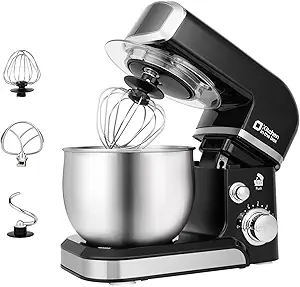 |
Cuisinart Stand Mixer SM-50BC
| Capacity | 5.5 quarts |
|---|---|
| Wattage | 500 watts |
| Number of Speeds | 12 |
| Controls Type | Knob |
| Voltage | 110 volts |
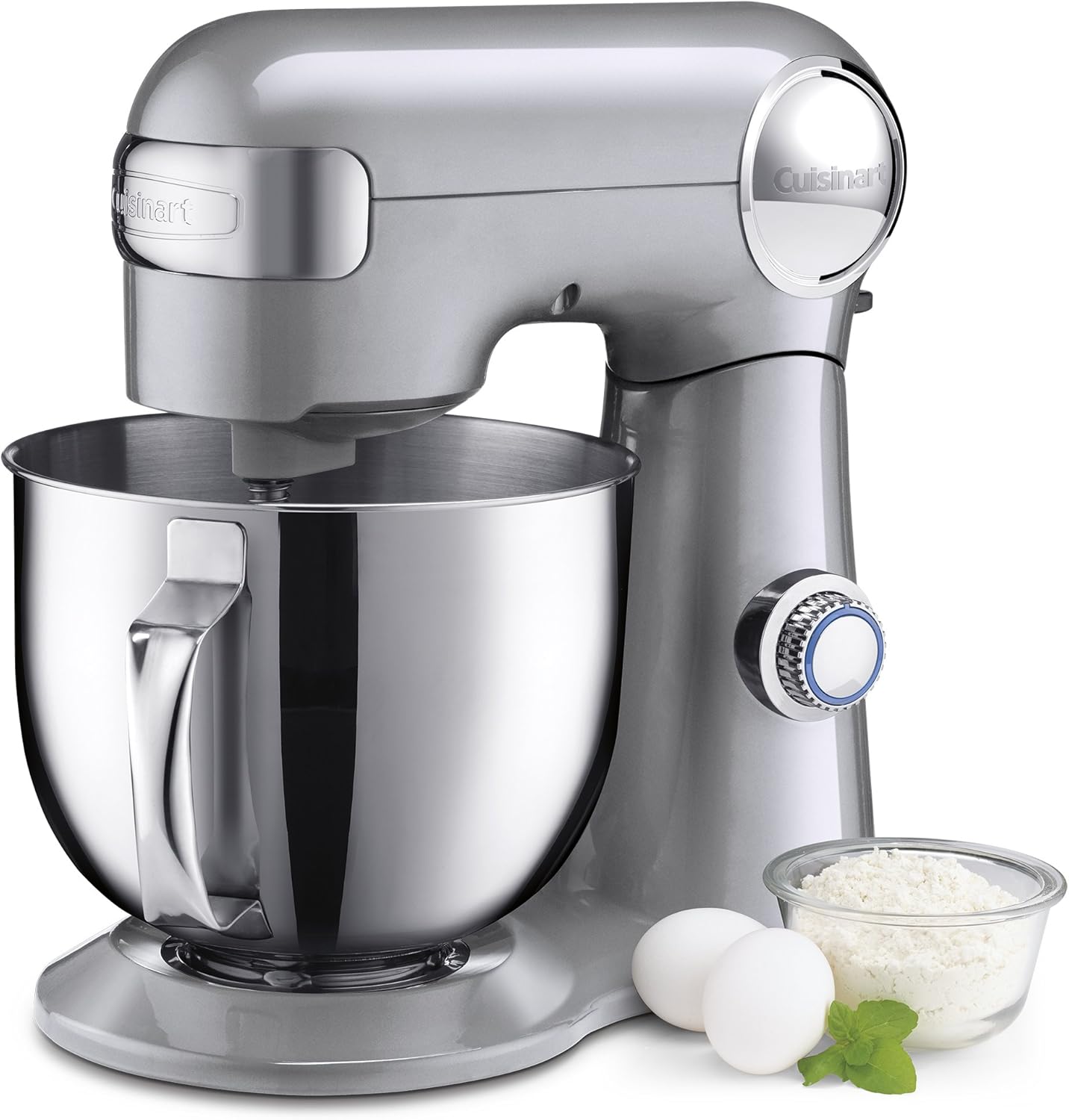
The Cuisinart SM-50BC is a straightforward, sturdy stand mixer built for everyday baking and small-batch bread dough. Its 500‑watt motor and 12 speed settings let you move from slow kneading to higher‑speed whipping without guesswork, and the tilt‑back head gives easy access to the dishwasher‑safe 5.5‑quart stainless bowl and included chef's whisk, flat paddle, and dough hook. In practice it handles cookie batters, cake mixes, and most bread doughs for home bakers—its metal die‑cast build feels durable and the splash guard with pour spout keeps counters cleaner during wet mixes. The unit accepts optional attachments for pasta, grinding, and frozen desserts, which adds versatility beyond baking. Limitations to note are the midrange motor power compared with heavy‑duty commercial mixers, so very large high‑hydration loaves or frequent multi‑batch sourdough bakers may find it taxed; the mixer is best suited to household volumes. Controls are simple knob steps rather than digital programs, which some buyers will prefer for directness and repairability.
Best for: Home bakers who want a durable, versatile mixer that handles everyday bread doughs and general baking without extra complexity.
Less Ideal for: Commercial bakers or home users who regularly mix very large batches or extremely stiff, high‑hydration doughs should consider a heavier‑duty, higher‑wattage machine.
- 500‑watt motor with 12 speeds covers kneading through whipping tasks
- Die‑cast metal construction and stainless steel bowl feel durable for regular use
- Tilt‑back head and included splash guard make bowl access and pouring easier
- Includes essential attachments: chef’s whisk, flat paddle, and dough hook
- Accepts a range of optional attachments for pasta, grinder, and frozen desserts
- Motor is midrange power and may struggle with very large or very heavy doughs
- Controls are simple knob steps with no digital timing or presets
Verdict: A practical, metal‑built stand mixer that gives everyday home bakers reliable kneading power and versatile attachments for most bread and baking needs.
Bosch Universal Plus Mixer

| Wattage | 500 watts |
|---|---|
| Capacity | 6.5 quarts |
| Number of Speeds | 4 |
| Voltage | 230 volts |
The Bosch Universal Plus Mixer is built to handle heavy bread dough and large batches while staying compact on the countertop. Its bottom-drive motor and belt-driven transmission deliver high torque directly into the bowl, which makes kneading dense whole-grain or high-hydration doughs much easier than with typical top-drive machines. The 6.5-quart dishwasher-safe plastic bowl and included dough hook plus extender let you work single loaves up to many loaves in one session, and the dual wire whips create a triple-whip action that speeds up aeration tasks like meringue. Four speeds plus pulse give basic control for different stages of mixing, and suction cup feet improve stability during vigorous kneading. Parts are easy to clean and there are 20-plus optional attachments to expand functionality. Limitations include a modest four-speed control set rather than fine-grain speed dialing and a plastic bowl and exterior versus all-metal construction, which may feel less premium to some users.
Best for: Home bakers who prioritize powerful, torque-forward mixing for frequent bread making and large batches and want a machine that can handle dense doughs reliably.
Less Ideal for: Buyers seeking precise speed control for delicate pastry work or those who prefer an all-metal, heavy-duty casing and bowl should consider different models.
- Bottom-drive, high-torque motor suited for kneading dense doughs
- Large 6.5-quart bowl supports batch baking and multiple loaves
- Included dough hook and extender handle both large and small dough quantities
- Dual wire whips deliver efficient whipping and quick volume build
- Suction cup feet add countertop stability during heavy mixing
- Only four fixed speeds plus pulse limits ultra-fine speed control
- Plastic bowl and many plastic components instead of heavier metal parts
Verdict: Choose this mixer if you want a torque-focused machine that reliably kneads large, dense bread doughs and scales up for batch baking.
Hamilton Beach 4-Quart Stand Mixer

| Wattage | 300 watts |
|---|---|
| Number of Speeds | 7 |
| Capacity | 4 quarts |
| Material | Stainless Steel |
The Hamilton Beach 4-quart stand mixer is a compact, workhorse-style machine for everyday baking tasks and casual bread making. Its 300-watt motor and planetary mixing action provide consistent bowl coverage so doughs and batters are mixed evenly without much manual intervention. The mixer includes a dough hook, flat beater, and whisk plus a splash guard and a 4-quart stainless steel bowl, making it straightforward to knead small to medium loaves, mix cookie dough, or whip egg whites. Seven speeds and a deliberately slow first speed help reduce splatter and let you start slow for heavy doughs, while the mixing guide printed on the unit helps pick appropriate speeds for common tasks. At this size and power it handles typical home bread recipes well, though very large or very dense artisan doughs may strain the motor and require smaller batches. The unit is easy to move and store thanks to the top handle, and most attachments and the bowl are dishwasher safe for simple cleanup.
Best for: Home bakers who want a reliable, space-conscious mixer for regular bread recipes, cookies, and general baking without needing commercial power or oversized capacity.
Less Ideal for: Bakers who frequently make very large loaves, high-hydration artisan doughs, or commercial batches should consider a heavier-duty, higher-capacity mixer instead.
- Planetary mixing delivers even bowl coverage for consistent mixing
- Includes dough hook, flat beater, whisk, and splash guard for common tasks
- Seven-speed control with a slow first speed reduces splatter and helps with kneading
- 4-quart stainless steel bowl and dishwasher-safe attachments simplify cleanup
- 300-watt motor may struggle with very large or extremely dense bread doughs
Verdict: A compact, practical stand mixer that reliably handles typical home bread doughs and everyday baking tasks without taking up much counter space.
Vikaluz Stand Mixer 3.2QT

| Capacity | 3.2 quarts |
|---|---|
| Wattage | 250 watts |
| Number of Speeds | 5 (plus Turbo) |
| Material | 304 Stainless Steel |
| Voltage | 120 volts |
This Vikaluz mixer is a hybrid stand/hand unit designed for small-batch home baking where counter space and versatility matter. It pairs a 250W motor with an auto-rotating 304 stainless steel bowl and a dual-direction beater head to pull ingredients inward, which helps produce more even mixing without constant scraping. The tilt-head design and removable bowl make loading and cleaning straightforward, and the included dough hook, flat beater, and whisk cover typical baking tasks from cookie dough to whipped cream. Five speed settings plus a Turbo boost give usable control for mixing, folding, and whipping. At 3.2 quarts it handles dough for small loaves and a few dozen cookies but is sized for couples or small families rather than large batches. The motor is adequate for light to medium doughs but may slow with very heavy or very large bread doughs compared with higher-wattage, pro-style mixers. Overall it is a space-saving, budget-friendly option that eases everyday bread and pastry work for home bakers who bake in modest quantities.
Best for: Home bakers on a budget who want a compact, versatile mixer that handles everyday bread doughs and smaller batches without occupying much counter space.
Less Ideal for: Frequent bakers who routinely mix large batches, multiple loaves, or very heavy doughs should consider a higher-capacity, higher-wattage stand mixer instead.
- 2-in-1 stand and detachable hand mixer for flexible use
- Auto-rotating 304 stainless steel bowl with dual-direction beater for more even mixing
- Includes dough hook, beater, and whisk so it is ready to bake out of the box
- Tilt-head and removable bowl make adding ingredients and cleaning easy
- Compact 3.2 QT capacity fits small kitchens and daily baking tasks
- 3.2 quart capacity limits large-batch bread or multiple loaves at once
- 250W motor can struggle with very heavy or high-hydration doughs
Verdict: A budget-friendly, space-saving 2-in-1 mixer that reliably handles small to medium bread doughs for everyday home baking.
KitchenAid Artisan 5-Qt Stand Mixer

| Capacity | 5 quarts |
|---|---|
| Wattage | 325 watts |
| Number of Speeds | 10 |
| Voltage | 120 |
The KitchenAid Artisan 5-Quart Tilt-Head Stand Mixer is a durable, full-featured home stand mixer built for frequent use. Its all-metal construction and robust motor deliver consistent mixing across 10 speeds, making it suitable for everything from whipping cream to kneading dense bread dough. The tilt-head design gives easy access to the bowl and attachments, and the included polished stainless steel bowl with a comfortable handle is dishwasher-safe for quick cleanup. KitchenAid also offers a broad accessory ecosystem that lets you add a food grinder, pasta maker, or other hub-powered tools when you need them. For heavy doughs the mixer handles successive batches well thanks to the 5-quart capacity, though very large professional batches will exceed its limits. The controls are simple—a knob with clear speed steps—but the unit is not the lightest countertop appliance and takes up a noticeable footprint. For home bakers who value reliability and a long-lived machine, this model provides years of solid performance for bread and general baking tasks.
Best for: Home bakers who prioritize a reliable, long-lasting mixer for regular bread making and batch baking and who appreciate a proven machine and accessory ecosystem.
Less Ideal for: Commercial bakeries or users who need to mix very large volumes continuously should choose a commercial-grade planetary mixer instead.
- Sturdy metal construction built for long-term use
- 10 speed settings cover mixing, whipping, and kneading tasks
- 5-quart stainless steel bowl handles multiple batches and is dishwasher-safe
- Tilt-head design makes adding ingredients and changing attachments easy
- Large ecosystem of optional hub-powered attachments for expanded uses
- Not ideal for very large or commercial-scale batches
- Relatively heavy and occupies significant counter space
Verdict: A dependable, long-lived stand mixer that reliably handles home bread dough and everyday baking tasks.
KitchenAid Classic Series K45SS 4.5-Quart
| Capacity | 4.5 quarts |
|---|---|
| Wattage | 275 watts |
| Number of Speeds | 10 |
| Voltage | 120 volts |
| Included Components | Flat beater, dough hook, 6-wire whip, stainless steel bowl |
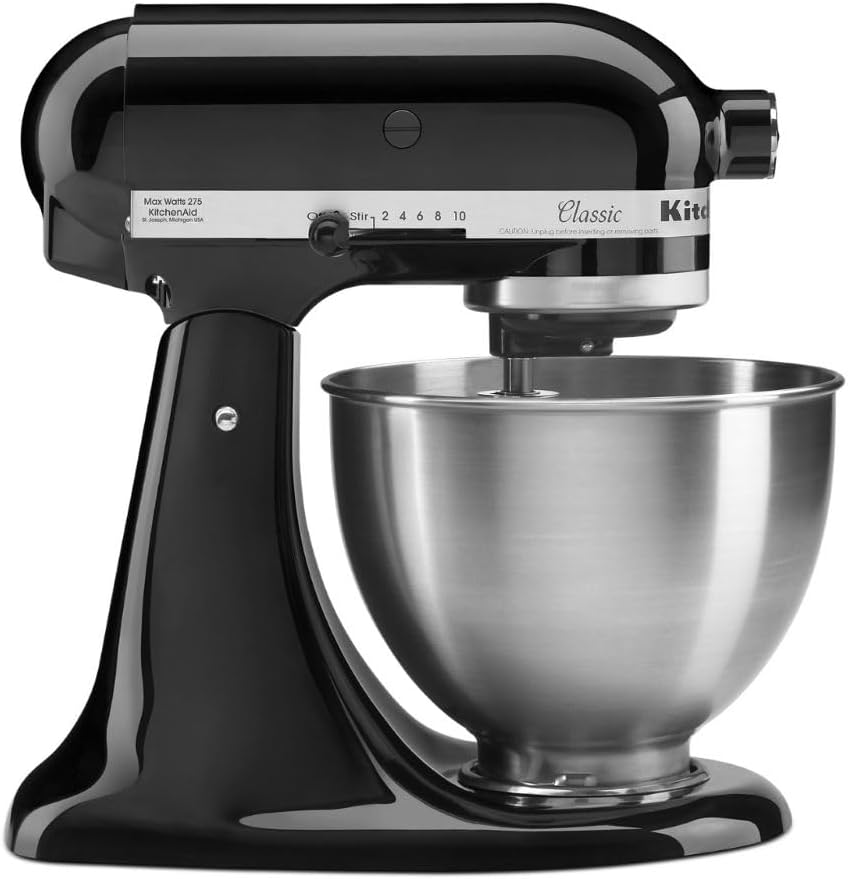
The KitchenAid Classic Series K45SS is a compact tilt-head stand mixer built around a durable metal housing and a 4.5-quart stainless steel bowl that handles everyday mixing and dough tasks. It runs on a 275-watt motor with 10 speed settings, making it suitable for mixing, whipping, and kneading small to medium batches of bread dough; the bowl's 59 touchpoints help ensure consistent mixing across the bowl. Included coated flat beater, dough hook, and 6-wire whip cover most standard recipes, and the power hub lets you add optional attachments like pasta makers or grinders for extra utility. The tilt-head design makes adding ingredients and swapping tools straightforward, and the stainless steel bowl is dishwasher-safe for easier cleanup. Limitations are its smaller 4.5-quart capacity compared with pro-style mixers and a 275W motor that will work well for most home loaves but may struggle with very large or very stiff doughs. If you want a sturdy, proven mixer for regular bread baking in modest quantities, this model is a dependable choice.
Best for: Home bakers who value a reliable, build-quality mixer for frequent small to medium bread batches and want proven performance backed by lots of user feedback.
Less Ideal for: People who regularly mix very large loaves, heavy high-hydration doughs, or need a commercial-capacity mixer should consider a larger, higher-power model.
- Durable metal construction for long-term use
- Includes flat beater, dough hook, and wire whip for common tasks
- 4.5-quart stainless steel bowl handles small to medium batch doughs
- Tilt-head design for easy access when adding ingredients or changing attachments
- Power hub expands functionality with optional attachments
- 275-watt motor is less powerful than larger, professional models
- 4.5-quart capacity limits very large batches or commercial use
Verdict: A sturdy, compact stand mixer that reliably handles home bread baking and expands with attachments for added versatility.
Kitchen in the box 3.2QT Stand Mixer

| Capacity | 3.2QT |
|---|---|
| Power | 300 watts |
| Number of Speeds | 6 |
| Included Components | Whisk, Beater, Dough Hook |
This small stand mixer is built for everyday home baking when you do modest batches rather than commercial quantities. It uses a 300W motor with planetary rotation and six speed settings to handle tasks from stirring and whipping to mixing bread dough for one to two people. The tilt-head design and removable 3.2QT stainless bowl make loading, swapping the aluminum dough hook, flat beater, and stainless whisk, and cleaning straightforward, and the transparent splash guard helps contain ingredients. Four suction feet stabilize the unit during mixing, and the lightweight ABS body keeps it easy to move and store in tight kitchens. The mixer is clearly positioned as a compact, budget-friendly option, so while it tackles doughs and batters reliably for small batches, it is limited by bowl capacity and modest power and may take longer on heavy, large-volume doughs compared with full-size machines.
Best for: A cautious buyer who wants a reliable, space-saving mixer for occasional bread and everyday baking in a small household or apartment.
Less Ideal for: Bakers who regularly make large loaves, multiple loaves at once, or heavy high-hydration doughs should choose a larger, more powerful mixer instead.
- Compact, lightweight design that is easy to store in small kitchens
- Includes three common attachments (dough hook, flat beater, whisk) for versatile baking tasks
- Transparent splash guard and tilt-head make loading and cleaning simpler
- Four suction feet help keep the mixer stable during operation
- 3.2QT bowl is small and not suited for large batches
- 300W motor is modest and may struggle or slow down with very stiff or heavy doughs
Verdict: A compact, user-friendly small-capacity mixer that reliably handles single-batch bread doughs and everyday baking in tight kitchens.
Choosing the Right Mixer for Bread Dough: Key Factors to Consider
Motor Strength and Torque
A mixer that will handle bread dough needs sustained torque more than just high RPM. Dense doughs put constant resistance on the motor, and higher torque reduces the chance of stalls or slowdowns during kneading. Consider the duty cycle specification and any rated continuous-use limits.
Stronger motors also let you work larger batches without reducing speed settings, which helps gluten development and results in consistent crumb structure. If you bake frequently or make multiple loaves at once, prioritize torque and motor cooling over peak speed numbers.
Bowl Capacity and Shape
Bowl capacity dictates how much dough you can mix in one batch and affects how ingredients move during kneading. A bowl that is too small will overflow or prevent proper gluten development, while an appropriately sized bowl gives dough room to fold and rotate effectively.
Also note the bowl shape. Deeper bowls with a rounded base promote better circulation for dough, reducing the need to stop and scrape. Material matters too; stainless steel bowls are durable and easy to clean, while glass bowls let you monitor dough but can be heavier and more fragile.
Dough-Specific Attachments
Not all beaters are equal for bread. A proper dough hook that reaches the full depth of the bowl and has a shape that mimics hand-kneading will develop gluten more efficiently and reduce mixing time. Look for attachments that are sturdy, well-balanced, and designed for heavy loads.
Attachment mounting systems also affect stability. Secure, well-seated hooks reduce wobble and uneven kneading. Consider whether replacements or additional accessories are available in case of wear.
Heat Management and Duty Cycle
Kneading can be a multi-minute process that strains a mixer's electronics and motor. Good heat dissipation, thermal cutoff protection, and realistic duty cycle ratings keep the motor from overheating during repeated use.
If your baking schedule includes long autolyse or extended kneading, choose a mixer with proven cooling features and conservative duty cycle specs. That reduces the risk of premature shutdowns during a bake session.
Ease of Cleaning and Maintenance
Bread work is messy. Mixers with removable bowls, dishwasher-safe attachments, and accessible crevices are easier to keep sanitary. Smooth finishes and minimal seams reduce trapped flour and dough buildup.
Also consider how easy it is to access the attachment mount and whether the exterior and controls wipe clean without specialized tools. Simpler maintenance means the mixer will stay reliable longer and be more pleasant to use daily.
How Bowl Size Affects Batch Scaling
Bowl volume directly limits the largest dough you can mix in one session. If you frequently scale recipes for multiple loaves or bake for a gathering, choose a mixer with a bowl rated for the total dough weight you expect to mix. Smaller bowls force you to split batches, which adds time and risks inconsistent dough development between batches.
- Check the manufacturer's maximum recommended dough weight, not just total capacity
- Leave at least 20 to 30 percent free space in the bowl to allow dough to expand
- Consider both volume and shape: wider bowls mix differently than deep, narrow ones
Attachments and What They Actually Do
Dough hooks are the workhorse for bread. Planetary-style mixers that move the hook around the bowl provide more even mixing than single-arm mixers. The hook shape matters: spiral or C-shaped hooks tend to catch and fold dough efficiently, while straight hooks are better for small or very wet doughs. A well-designed hook reduces kneading time and produces a better crumb.
- Inspect how the hook reaches the bowl floor and sides
- Look for rugged attachments rated for heavy use
- Some machines offer optional spiral hooks optimized for high-hydration doughs
Routine Maintenance to Extend Life
Regular cleaning and occasional lubrication of moving parts extends a mixer's lifespan. After each use, remove attachments and wash them along with the bowl. Wipe the exterior and the attachment port to prevent flour build-up, which can interfere with seals and mechanisms over time. Periodically check fasteners and the attachment hub for signs of wear. If your mixer has user-serviceable parts, refer to the manual for recommended service intervals and safe cleaning procedures.
- Wash attachments promptly to prevent dried dough
- Wipe the attachment hub after use to remove trapped flour
- Follow manufacturer guidance for any periodic maintenance checks
Common Mistakes when Using Mixers for Dough
Overloading the bowl is a frequent error that causes excessive motor strain and uneven mixing. Respect the machine's dough weight limits and reduce batch sizes if necessary. Another mistake is using the wrong attachment or speed; start at low speeds to combine ingredients and only increase once the dough comes together to avoid flour dusting and poor hydration. Ignoring resting times is also common. Proper autolyse and bulk fermentation complement the mixer's work; forcing all gluten development into mechanical kneading can change texture. Use the mixer to jump-start development, then let time finish the process when appropriate.
- Do not exceed recommended dough weight
- Begin mixing at low speed to hydrate flour evenly
- Combine mechanical kneading with proper resting and fermentation
How We Chose the Best Mixer for Bread Dough
We focused on machines that can reliably mix and develop yeast doughs rather than light batters or whipping-only tasks. Selection prioritized motor power and torque ratings sufficient to knead dense, high-hydration doughs without frequent stalls. Bowl capacity and material were important because many home bakers scale recipes up; we favored mixers with sizes that accommodate at least a standard family loaf or larger batches. We also evaluated the quality and fit of dough-specific attachments and how effectively they replicate hand-kneading action. Heat management and duty cycle were considered to minimize motor strain during prolonged kneading. Build materials and serviceability informed durability scoring. Finally, ease of cleaning and accessory storage were included to reflect realistic everyday use. Excluded from consideration were mixers designed only for light mixing, handheld-only units without proper torque, and commercial-only machines outside typical home kitchen power limits. The result is a list that balances power, capacity, and usability for home bread bakers.
Our full evaluation process is outlined in our review methodology.
FAQ
Can a stand mixer overheat while kneading bread dough?
Yes, mixers can overheat if the motor is pushed beyond its duty cycle or if ventilation is blocked. Frequent long kneading sessions or repeatedly processing large batches increase heat buildup. Choose a machine with a conservative duty cycle and allow cooling periods during heavy use.
What bowl size do I need for two standard loaves?
For two standard loaves you typically want a bowl that comfortably holds 6 to 8 quarts of dough volume depending on your recipes. Leave room for expansion and folding, so select a bowl with some extra headspace rather than a tight fit.
Are spiral hooks better than C-shaped hooks for all doughs?
Spiral hooks excel with high-hydration or very dense doughs because they knead more gently and improve gluten alignment. C-shaped hooks are versatile and work well for many home-baked breads. The best choice depends on your typical hydration levels and desired kneading speed.
How often should I replace dough attachments?
Replacement depends on frequency of use and material, but inspect attachments regularly for bending, pitting, or loose mounting points. If hooks show visible wear or no longer seat securely, replace them to maintain consistent mixing performance.
Can I use a mixer for sourdough and enriched doughs?
Yes, mixers are suitable for both sourdough and enriched doughs, but the mixing technique and times differ. Enriched doughs with butter and eggs may need gentler mixing and careful speed control to incorporate fats without overworking the gluten. Monitor dough texture and adjust times accordingly.
Final Verdict
When choosing a mixer for bread dough, prioritize torque, bowl capacity, and dough-specific attachments over peak speed ratings. Consider how often you bake, the batch sizes you plan to run, and whether you need features that help with heat management and easy cleaning. Tradeoffs include larger, heavier machines that handle big batches versus smaller units that fit limited space but require split batches. Focus on the dimensions that matter for bread: sustained motor torque, a bowl that matches your batch size, and robust hooks. Those priorities will help you pick a mixer that performs reliably for home bread baking.