
Note: This article contains affiliate links. If you click on these links and make a purchase, we may earn a small commission at no extra cost to you. This helps support our research and content. Read our full affiliate disclosure here.
Picking a Non-Toxic Electric Pressure Cooker matters because the materials and coatings that contact food affect flavor, durability, and long-term safety. If you want the convenience of electric pressure cooking without worrying about harmful surface treatments, this guide focuses on shortlisted options that prioritize safe inner pots and responsible construction. You will find models selected for leak-free performance, easy cleanup, and material choices that reduce exposure to problematic coatings. Below we summarize the top picks and explain the evaluation criteria used so you can choose the right pressure cooker for your kitchen and health priorities.
Top Picks at a Glance
| Best Overall The best all-around choice for most situations | Ninja HyperHeat Pressure Cooker PC201SP |  |
| Best Quality Built to a higher standard if you want something more solid | Breville Fast Slow Pro BPR700BSS | 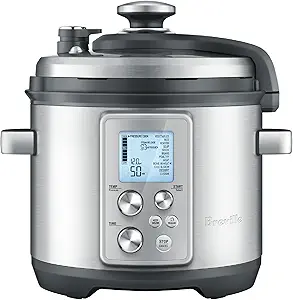 |
| Best Value The sweet spot between price and what you get | Fullwill Dual-Pot Electric Pressure Cooker |  |
| Best Budget The cheapest option that still gets the job done reliably | NEWBULIG 3-Quart Electric Pressure Cooker |  |
| Top Rated A top-rated pick with lots of positive feedback | Blue Diamond 6QT Electric Pressure Cooker |  |
| Best Seller A high-volume bestseller chosen again and again | Cosori Pressure Cooker 6QT |  |
Ninja HyperHeat Pressure Cooker PC201SP
| Wattage | 1200 watts |
|---|---|
| Capacity | 6 quarts |
| Operation Mode | Both Manual and Automatic |
| Special Features | Keep Warm Setting |
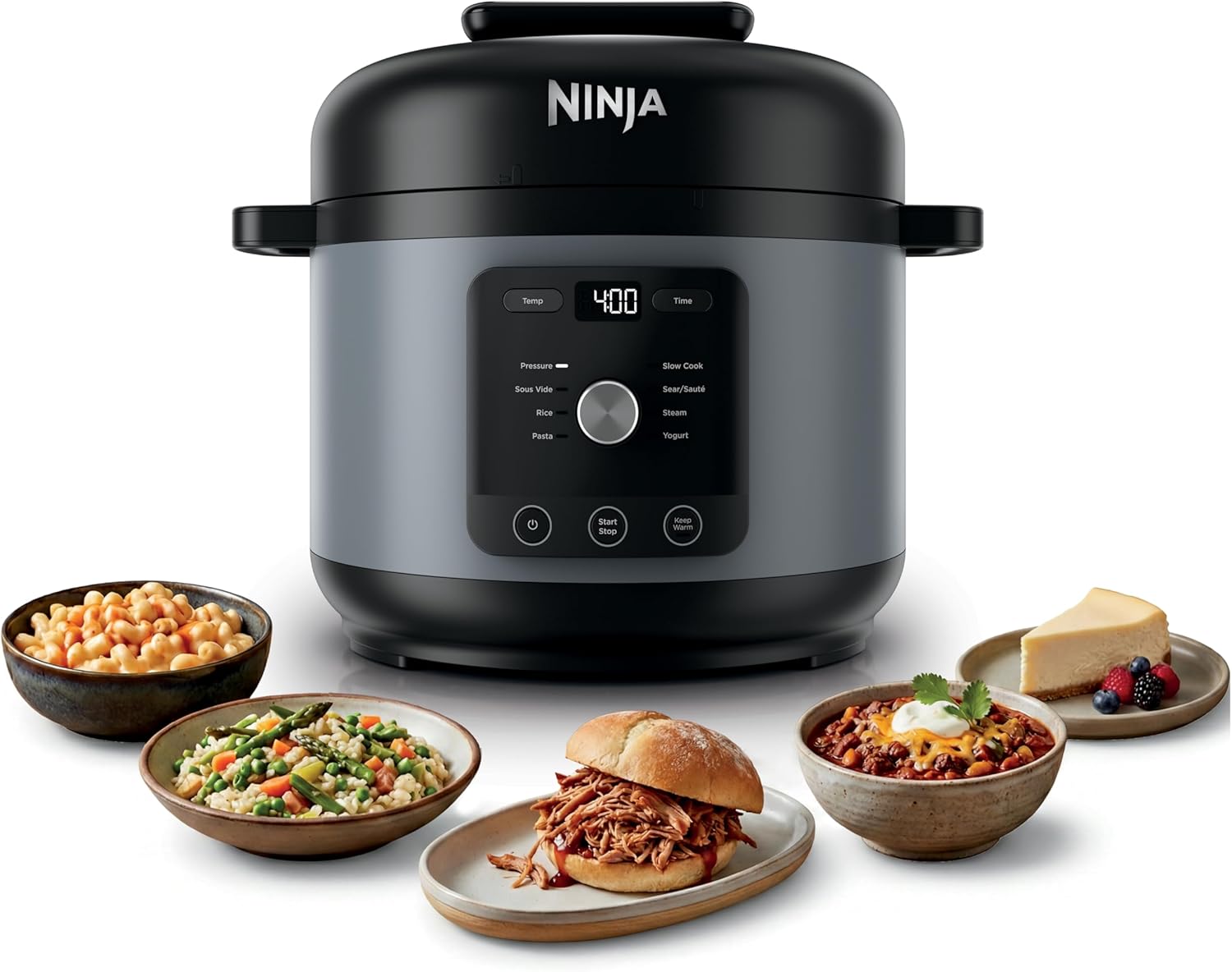
The Ninja HyperHeat 6.5-qt pressure cooker combines a powerful 1200-watt base with a wide 9.5-inch removable SimpliServe ceramic pot to handle pressure cooking, searing, sautéing, sous vide, steaming, slow cooking, rice, and yogurt in one appliance. Typical use is weeknight meals and batch cooking where you want to speed up recipes without hauling out multiple pans: the cooker builds pressure quickly for shorter cook times and lets you sear directly in the pot for better browning. The removable pot is PFAS-free ceramic nonstick for easier cleanup and table-ready serving, and the included reversible rack and large capacity make it practical for roasts or whole chickens. Controls are push-button and offer both manual and automatic modes, so you can rely on presets or tweak times and pressure. The unit is heavier than some competitor multi-cookers and takes countertop space, and users who need extremely compact or ultra-simple single-function devices may find it overfeatured. For buyers prioritizing non-toxic cooking surfaces and flexible, faster multi-cooker performance, this model is a strong choice.
Best for: Buyers who want one reliable, non-toxic multi-cooker that handles pressure cooking plus searing and sous vide while saving time on weeknight and family meals.
Less Ideal for: Those who need a very compact, lightweight appliance or who prefer a single-purpose device with the simplest possible controls.
- 1200-watt HyperHeat base speeds pressure building for faster cook times
- Removable 6.5-qt ceramic nonstick pot that is 100% PFAS-free for safer cooking
- Wide 9.5-inch cooking surface allows searing and sautéing directly in the pot
- 9-in-1 functionality replaces several appliances for versatile meal prep
- Relatively heavy and takes notable countertop space
- May be more complex than single-function cookers for users wanting minimal controls
Verdict: Choose this cooker if you want a fast, versatile 9-in-1 multi-cooker with a PFAS-free removable ceramic pot for safer everyday cooking.
Breville Fast Slow Pro BPR700BSS

| Capacity | 6 quarts |
|---|---|
| Wattage | 700 watts |
| Control Method | Touch |
| Number of settings | 11 |
The Breville Fast Slow Pro is a 6-quart multi-cooker that switches automatically between pressure and slow cooking to preserve texture and flavor. It uses dual top-and-bottom sensors and one-press programs to monitor temperature and pressure across 11 pressure and multiple slow-cook settings, and the LCD shows pressure level, temperature and a countdown timer so you always know what is happening inside. Practical touches include a removable, dishwasher-safe lid, a ceramic-coated cooking bowl that doubles as a serving dish, and an auto steam release that chooses quick, pulse or natural release hands-free. Safety is robust with a triple-safe stainless steel lid and 3-way safety system. The unit is aimed at cooks who want precise, repeatable results and easier cleanup, but it is bulkier and heavier than simpler cookers and the full feature set has a learning curve for basic one-pot meals.
Best for: Home cooks who prioritize precise cooking control and want a non-toxic ceramic-coated inner bowl for frequent pressure and slow-cooking recipes.
Less Ideal for: People seeking the simplest, most compact electric cookers for occasional use or those who prefer a lightweight, grab-and-go appliance.
- Dual top-and-bottom sensors and one-press programs for consistent temperature and pressure control
- Auto steam release that safely selects quick, pulse, or natural release without user intervention
- Ceramic-coated removable cooking bowl that is dishwasher safe and doubles as a serving bowl
- Clear LCD feedback with pressure indicator, temperature readout and countdown timer
- Larger and heavier footprint than basic electric pressure cookers
- Multiple settings and features create a steeper learning curve for casual users
Verdict: Buy this if you want a feature-rich, sensor-controlled multi-cooker with a non-toxic ceramic cooking bowl for reliable, restaurant-quality results.
Fullwill Dual-Pot Electric Pressure Cooker

| Wattage | 1000 watts |
|---|---|
| Control Method | Push Button, Touch |
| Operation Mode | Automatic |
| Cooking Program | Cook, Keep Warm, Melt, Roast, Simmer |
| Capacity | 6 quarts |
The Fullwill Dual-Pot Electric Pressure Cooker is a versatile 12-in-1 multi-cooker built for everyday family cooking. It includes a 6-quart stainless steel pot and a 5-quart ceramic pot, letting you choose a nonstick ceramic option for delicate foods or a stainless insert for heavy braises, and its 1000-watt heater and digital push-button/touch controls run 12 preset programs such as high-pressure stew, rice, steam, yogurt and cake. Practical features include a locking lid, multiple safety protections, automatic shutoff and a keep-warm function, and most removable parts are dishwasher safe which simplifies cleanup. The dual-pot design makes it easy to switch cooking styles without extra accessories, but buyers should note the listing mentions a fluorine-free coating rather than specifying the exact ceramic formulation or third-party safety certifications. For cooks prioritizing convenience, batch cooking and a choice of pot surfaces, this cooker is a functional option that balances programmability with straightforward operation.
Best for: Buyers who prioritize practical, everyday versatility and want a single cooker that offers both a ceramic nonstick option and a durable stainless insert for family meals and meal prep.
Less Ideal for: Those who require verified lab-tested non-toxic certifications or need precise, pro-level pressure/temperature control should consider other models.
- Includes both a 6-qt stainless steel inner pot and a 5-qt ceramic-coated pot for flexible cooking.
- 12 preset programs cover pressure cooking, slow cooking, steaming, rice, yogurt and baking tasks.
- Digital controls with push-button and touch input make selecting modes and timing simple.
- Dishwasher-safe lid, liner and accessories reduce post-cook cleanup time.
- Multiple built-in safety features including lid lock and overheating protection improve day-to-day safety.
- The product description does not list independent third-party non-toxic certifications for the ceramic coating.
- Wattage and cooking performance details are basic; advanced users may want more precise pressure or temperature data.
Verdict: Choose this cooker if you want a practical, family-sized multi-cooker that offers both a ceramic nonstick pot and a stainless steel pot for flexible, everyday cooking.
NEWBULIG 3-Quart Electric Pressure Cooker

| Capacity | 3 quarts |
|---|---|
| Wattage | 700 watts |
| Controller Type | Digital |
| Special Features | Programmable |
This NEWBULIG 3-quart pressure cooker is a small, programmable multi-cooker aimed at everyday meals for one to two people. It offers 10 smart presets including rice, meat, stew, steam, yogurt, and canning, plus a delay-start and keep-warm function so you can schedule meals up to 24 hours ahead. The exterior is stainless steel while the inner pot uses a ceramic nonstick coating for easier food release and simpler cleanup compared with traditional nonstick surfaces. At 700 watts it heats quickly and the brand says high-pressure cooking reduces cook time by about 70 percent versus conventional methods. Safety features include integrated pressure release valves and heat sensors. Practical downsides are the small 3-quart capacity, which limits batch cooking and larger roasts, and the unit is relatively basic compared with higher-end multicookers that add sous-vide or extended app control. For a compact, budget-friendly cooker that avoids PTFE-style coatings and covers the essentials, it is a capable choice.
Best for: Buyers prioritizing an inexpensive, compact pressure cooker that avoids PTFE-style coatings and handles everyday meals for one or two people.
Less Ideal for: Those who regularly cook for larger households, need large-batch meal prep, or want advanced smart features and higher wattage performance.
- Ceramic nonstick inner pot for easier food release and cleaning
- Ten one-touch presets plus delay start and keep-warm for flexible meal timing
- Stainless steel exterior for durability and scratch resistance
- Integrated safety features including pressure release valves and heat sensors
- 3-quart capacity is too small for large families or batch cooking
- Limited power and basic feature set compared with premium multicookers
Verdict: A budget-friendly, compact ceramic-coated pressure cooker that delivers basic, safer nonstick cooking for small households.
Blue Diamond 6QT Electric Pressure Cooker

| Capacity | 6 QT |
|---|---|
| Cooking Programs | 16 presets |
| Inner Pot | Diamond-infused ceramic nonstick |
| Dishwasher Safe Pot | Yes |
This Blue Diamond 6QT electric pressure cooker combines a broad preset menu with a ceramic, diamond-infused nonstick pot aimed at safer, longer-lasting performance. It covers pressure cooking, slow cooking, rice, steam, sauté, yogurt, and cake functions so you can replace several appliances with one unit for family-size meals. The ceramic nonstick coating is marketed as PFAS-, PFOA-, lead-, and cadmium-free and is designed to tolerate metal utensils and withstand abrasion better than conventional coatings. OneTouch presets and a large display make common programs easy to use, while Smart Release and Quick Release options simplify pressure management without manual knobs. The inner pot is removable and dishwasher-safe, which helps with cleanup, though ceramic coatings still need gentle care over time to avoid scratches. The cooker includes a locking safety valve, and the Smart Release tuning helps reduce overcooking, but users who frequently pressure-sear very high-heat foods should note the sauté surface behaves differently than heavy-duty stainless steel. For buyers prioritizing a non-toxic, user-friendly all-in-one cooker for everyday family meals, this is a reliable choice with practical safety and cleanup features.
Best for: Buyers who want a family-capacity, multi-function cooker that emphasizes a non-toxic inner pot and straightforward, preset-driven cooking for reliable everyday use.
Less Ideal for: Home cooks who need heavy-duty stove-top searing performance or professional-level browning should consider a separate cast-iron or stainless skillet instead.
- Wide 16-function preset selection for versatile, one-device cooking
- Diamond-infused ceramic nonstick pot formulated without PFAS, PFOA, lead, or cadmium
- Large 6-quart capacity suitable for family meals and dishwasher-safe removable pot for easier cleanup
- Smart Release and Quick Release pressure controls plus a locking safety valve for safer pressure handling
- Ceramic nonstick still requires careful use to avoid scratching despite enhanced durability
- Sauté surface and high-heat searing performance may not match stainless steel or dedicated stove-top cookware
Verdict: Choose this cooker if you want a family-size, multi-function pressure cooker with a PFAS-free ceramic inner pot and easy preset controls for reliable everyday meals.
Cosori Pressure Cooker 6QT
| Capacity | 6 quarts |
|---|---|
| Wattage | 1100 watts |
| Control Method | Touch |
| Material | Stainless steel |
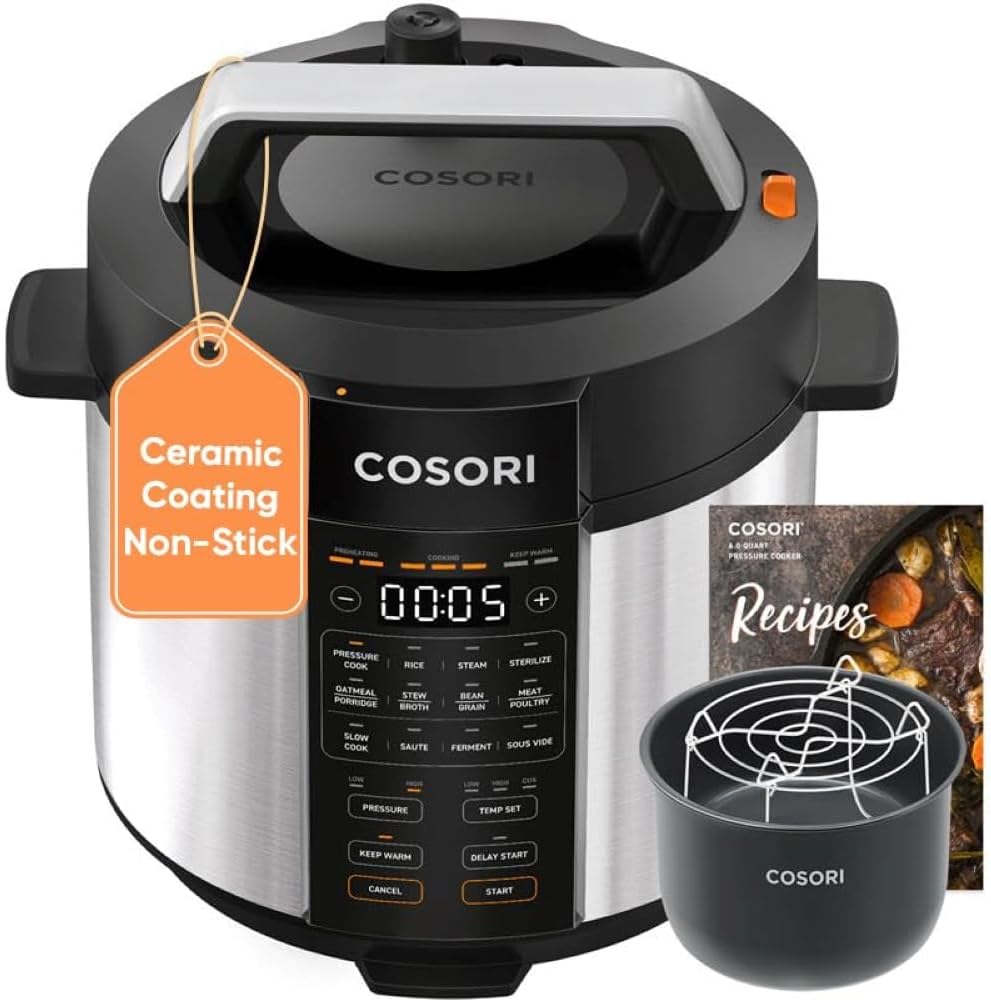
The Cosori 6QT Pressure Cooker is a versatile electric multi-cooker that handles pressure cooking, rice, steaming, slow cooking, sautéing, sous vide, fermenting, and more using 13 presets and 9 primary functions. It is typically used as an all-in-one replacement for separate rice cookers, slow cookers, and steamers, and the touch control panel and preset programs make one-pot meals simple for everyday cooks. The ceramic-coated inner pot is marketed as nonstick and dishwasher-safe, which reduces concern about PFAS-type coatings and simplifies cleanup, and the stainless steel exterior has a wide pot gap and an easy-to-lock lid for safer handling. Practical safety features include a backward-angled steam release, a seal/vent button positioned away from the release valve, and multiple built-in protections to guard against overheating. At 1100 watts it reaches pressure and cooks quickly, but the unit is moderately large and heavier than simpler cookers, which may matter in small kitchens. Overall it offers broad cooking capability with user-friendly safety and a nonstick ceramic inner pot for buyers focused on lower-toxicity cookware.
Best for: Buyers who prioritize safer nonstick options and clear safety features and want a single reliable appliance to replace multiple kitchen devices for everyday family cooking.
Less Ideal for: People who need an ultra-compact or lightweight cooker for very small kitchens or who prefer a bare-bones manual pressure cooker without electronic presets.
- Ceramic nonstick inner pot reduces reliance on PFAS-style coatings and is dishwasher-safe
- Multiple presets and 9-in-1 functions let you cook rice, pressure meals, steam, sous vide, slow cook, ferment, and sauté in one unit
- Built-in safety features including a backward-angled steam release, separated seal/vent button, and overheat protection
- Touch controls and preset programs simplify one-touch cooking for everyday meals
- Unit is comparatively heavy and relatively large on the countertop
- 1100 W power means faster cooking but requires a standard 120 V outlet and can draw notable current
Verdict: A safe-feeling, multi-function 6‑quart cooker with a ceramic inner pot and multiple built-in safety features for buyers seeking lower-toxicity, worry-free everyday cooking.
Choosing the Right Non-Toxic Electric Pressure Cooker: Key Factors to Consider
Inner Pot Material
The inner pot is the primary food-contact surface, so its composition directly affects safety and cooking outcomes. Stainless steel inner pots are durable, nonreactive, and free from synthetic nonstick chemicals. Ceramic-based nonstick coatings offer easier release but vary in formulation, so look for explicit statements that they are PFAS- and PFOA-free. Hard-anodized aluminum conducts heat well but should be paired with a certified safe coating or used with an uncoated stainless steel liner to avoid metal exposure.
Choosing the right inner pot balances your priorities for release properties, cleaning, and long-term chemical safety. Consider whether you want a pot that tolerates metal utensils or one that requires gentler treatment.
Seal, Valve, and Pressure Control
A reliable sealing system and accurate pressure control determine cooking consistency and safety. Look for well-designed silicone or elastomer gaskets that are labeled food-grade and free of questionable additives. The pressure release valve should operate smoothly and include safety interlocks to prevent opening while under pressure.
Pressure accuracy affects texture and doneness, so prefer units with clear pressure-steady designs and redundant safety features. Easy-to-access valves and gaskets also make maintenance simpler, which reduces the chance of wear-related failure that could impact safety over time.
Cleaning and Maintenance
Ease of cleaning influences how long a cooker stays hygienic and safe. Removable inner pots, dishwasher-safe parts, and simple lid designs reduce trapped food and bacteria. Some nonstick coatings simplify cleanup but may wear down faster and require replacement pots or gentler care routines.
Maintenance also includes replacing sealing rings periodically and cleaning steam paths. Choose a unit whose maintenance steps are straightforward and for which replacement parts are readily documented to ensure longevity and continued non-toxic performance.
Control Interface and Programs
The control interface affects how reliably you can reproduce recipes and avoid overcooking. A clear, durable interface with intuitive preset programs reduces user error and unnecessary hold times under pressure. Look for devices that allow manual pressure and time adjustments, as well as memory for customized settings.
Digital controls should be legible and responsive, and mechanical alternatives should have precise, repeatable settings. Programmability can also reduce the need for additional appliances by offering functions like sauté, steam, and slow cook in one unit.
Construction and Long-Term Durability
Overall build quality determines how well a cooker withstands daily use without degrading materials that contact food. Solid lid hinges, a robust locking mechanism, and corrosion-resistant exterior finishes contribute to longevity. Pay attention to how the inner pot fits and whether it rattles or shifts, which can accelerate wear on seals.
Durable construction reduces the frequency of part replacement and helps maintain the cooker's non-toxic properties over time. Investing in sturdier assemblies can protect your kitchen and avoid accidental exposure from degraded components.
Why Non-Toxic Materials Matter
Materials that contact food during pressure cooking are exposed to heat and steam, which can accelerate chemical release from coatings or reactive metals. Choosing a cooker with clear, verifiable material statements helps minimize the risk of ingesting unwanted compounds.
Non-toxic materials also preserve flavor and prevent metallic aftertastes when cooking acidic foods. For routine meal prep, opting for safer inner pot surfaces reduces long-term exposure and makes everyday use more reassuring.
- Heat and pressure increase the risk of coating breakdown
- Stainless steel resists reaction with acidic ingredients
- Ceramic coatings can offer nonstick without PFAS when certified
Maintaining Seals and Steam Paths
Regular inspection and care of gaskets and steam vents keeps a pressure cooker operating safely and efficiently. Worn or misshapen seals can cause steam leaks and inconsistent pressure, which affects cooking results and may stress the cooker's safety mechanisms.
Clean valves and steam paths after each use and replace rubber parts at recommended intervals. Store gaskets dry and avoid exposing them to oils and high-heat sources that can accelerate degradation.
- Inspect gaskets for cracks or flattening monthly with regular use
- Clean vent paths with a soft brush to remove food particles
- Replace seals according to manufacturer guidance or if leakiness appears
Cooking Techniques with Non-Toxic Pots
When using stainless steel inner pots, deglazing and stirring frequently can help prevent sticking without needing nonstick coatings. For ceramic-coated pots, use lower heat during sauté steps and avoid metal utensils to preserve the coating.
Adjust recipes slightly for pressure and heat characteristics of different pot materials. For example, stainless steel transfers heat differently from coated pots, so short sauté steps may need a bit more attention to avoid food sticking before pressurizing.
- Use wooden or silicone utensils with coated pots
- Preheat briefly before searing in stainless steel to reduce sticking
- Add liquid before closing to ensure proper pressure buildup
Accessories and Replacement Parts
Check availability of replacement inner pots, sealing rings, and valves when evaluating long-term ownership. Some cookers offer optional stainless steel inserts or stackable steam racks that expand functionality without changing the food-contact surface.
Having documented part numbers and straightforward maintenance instructions extends useful life and helps maintain non-toxic performance. Accessories that avoid introducing new coatings are preferable for health-focused buyers.
- Confirm compatible inner pot materials and replacement gasket options
- Prefer accessories made from stainless steel or food-grade silicone
- Avoid add-ons that require adhesive-backed coatings or laminated surfaces
Energy Use and Practical Kitchen Impact
Electric pressure cookers are energy-efficient compared with some alternative cooking methods because they trap heat and cook quickly. Reduced cook times mean lower overall energy use, which is helpful for frequent meal preparation.
Consider how the cooker integrates with your routine. Units that finish and switch to hold modes automatically reduce active supervision and make batch cooking more practical while maintaining safety.
- Look for automatic keep-warm functions with reliable time limits
- Rapid pressure build and release cycles save time and energy
- Consider counter footprint and cord storage for small kitchens
How We Chose the Best Non-Toxic Electric Pressure Cooker
We focused on electric pressure cookers that prioritize food-contact safety while still delivering reliable pressure cooking performance. Our selection process filtered for clear, manufacturer-documented material statements, such as stainless steel inner pots, ceramic-based nonstick coatings without PFAS/PFOA, or hard-anodized aluminum with explicit safety testing. We required each candidate to offer consistent pressure control, straightforward sealing and venting mechanisms, and accessible, serviceable parts like removable inner pots and user-replaceable sealing rings. Key evaluation dimensions included material safety, pressure consistency, user interface and controls, ease of cleaning, and build quality. We excluded any models with ambiguous material claims or undisclosed coatings. We also filtered out units lacking basic safety features such as overpressure protection and reliable lid-locking systems. Finally, we weighted factors relevant to everyday use, like programmable settings and accessory compatibility, so the final list balances safety with practical cooking utility.
Our full evaluation process is outlined in our review methodology.
FAQ
How can I tell if an electric pressure cooker is truly non-toxic?
Check for explicit material disclosures such as stainless steel inner pots, PFAS/PFOA-free ceramic coatings, or manufacturer statements about food-grade silicone gaskets. Look for third-party testing or certification language when available.
Are stainless steel inner pots always the safest option?
Stainless steel is nonreactive and durable, making it a very safe choice for most cooks. However, it conducts heat differently than coated pots, and some users may prefer a certified ceramic nonstick surface for easier cleanup.
Do I need to replace the sealing ring regularly?
Sealing rings wear with use and should be inspected periodically. Replace them if you notice cracking, flattening, or persistent steam leaks. A fresh gasket maintains safe pressure performance.
Can I use metal utensils with non-toxic inner pots?
You can use metal utensils with uncoated stainless steel pots without worrying about damaging a nonstick layer. For ceramic or other coatings, use wooden or silicone utensils to preserve the surface.
Is dishwasher cleaning safe for non-toxic inner pots?
Many stainless steel inner pots are dishwasher-safe, while some ceramic-coated pots may be recommended for hand washing to prolong coating life. Refer to care guidance that accompanies the unit and avoid harsh detergents that can accelerate wear.
Final Verdict
When choosing a Non-Toxic Electric Pressure Cooker, prioritize the inner pot material and clear manufacturer disclosures about coatings and gaskets. Balance material safety with practical features like reliable sealing, straightforward controls, and easy maintenance to ensure consistent results and long-term peace of mind. Focus on units that make replacement parts accessible and have robust safety systems. That approach helps you select a cooker that fits your cooking style while minimizing exposure to unwanted chemicals and maximizing daily usability.