
Note: This article contains affiliate links. If you click on these links and make a purchase, we may earn a small commission at no extra cost to you. This helps support our research and content. Read our full affiliate disclosure here.
If you want fast, hands-off cooking without worrying about coatings or reactive metals, a non-toxic stovetop pressure cooker is a smart kitchen upgrade. These cookers speed up braises, beans, and whole grains while reducing nutrient loss compared with long simmering. Choosing a model with safe materials, durable seals, and a predictable pressure range matters because cookware chemistry affects food flavor and long-term health. This guide covers six shortlisted non-toxic stovetop pressure cookers that fit home kitchens. We evaluated each option for material safety, build quality, ease of use, and durability so you can pick the model that matches your cooking style. Read on for the decision factors we used and practical tips for daily use.
Top Picks at a Glance
| Best Overall The best all-around choice for most situations | T-Fal Secure 6.3-Qt Pressure Cooker |  |
| Best Quality Built to a higher standard if you want something more solid | Kuhn Rikon Duromatic 7.0L Pressure Cooker |  |
| Best Value The sweet spot between price and what you get | KOCH SYSTEME CS Stainless Steel Pressure Cooker 6.3 QT |  |
| Best Budget The cheapest option that still gets the job done reliably | Peterboo 6L Pressure Cooker |  |
| Top Rated A top-rated pick with lots of positive feedback | T-fal Clipso Pressure Cooker 6.3 Qt |  |
| Most Popular A crowd favorite that many people choose with confidence | Presto 6-Quart Stainless Steel Pressure Cooker |  |
T-Fal Secure 6.3-Qt Pressure Cooker
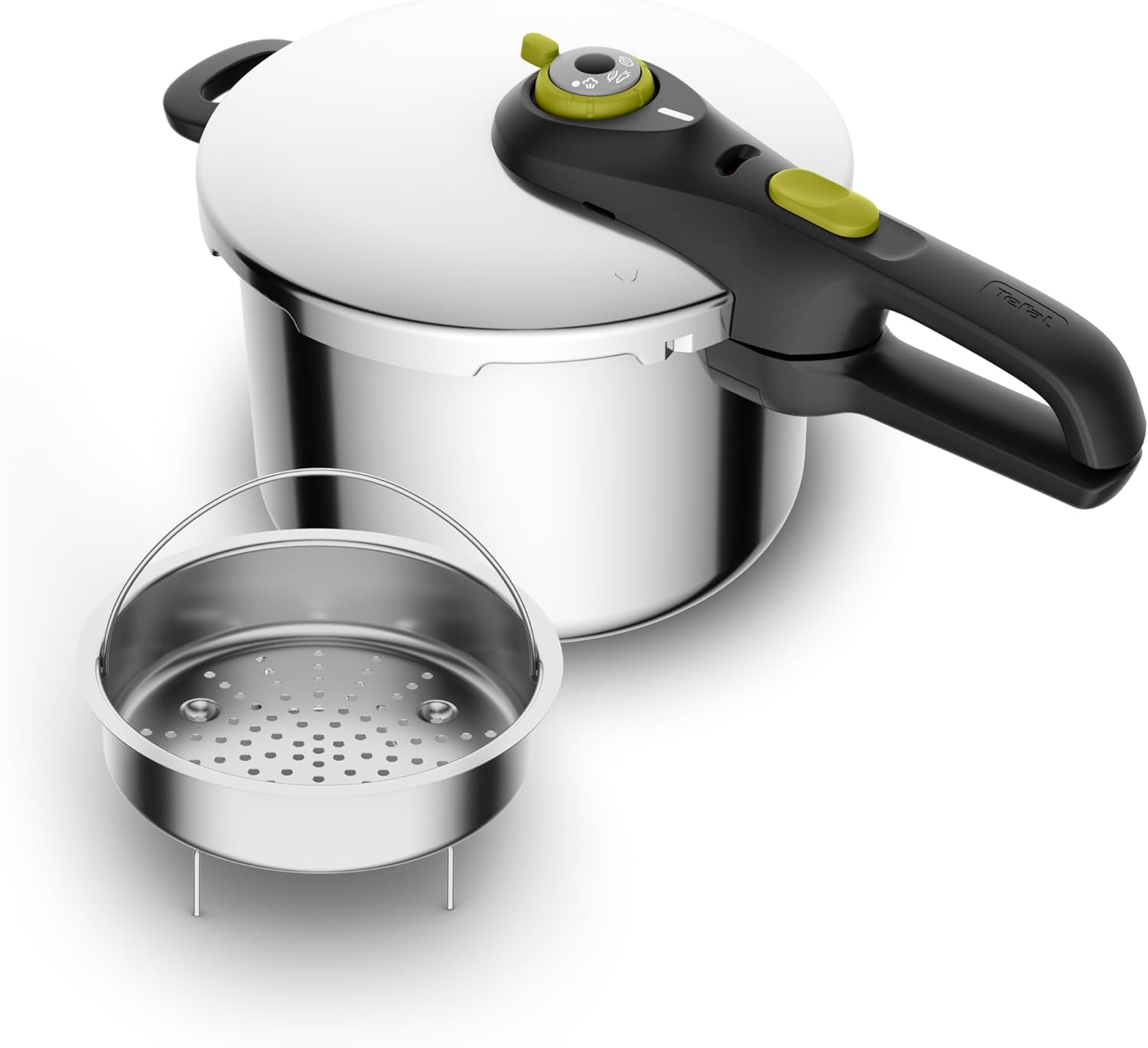
| Capacity | 6.3 quarts |
|---|---|
| Control Method | Touch |
| Wattage | 1000 watts |
| Material | Stainless steel |
The T-Fal Secure 6.3-quart stovetop pressure cooker is a stainless-steel, induction-compatible unit designed for faster everyday cooking. It offers two dedicated pressure programs—one for vegetables and one for meats—that simplify timing and help retain nutrients, and it includes a steam basket to expand steaming and multilevel cooking options. The cooker uses a five-point safety locking system and an audible rotating open/close mechanism that gives clear feedback when the lid is sealed, which makes it feel secure during high-pressure use. Its stainless-steel construction promotes even heat distribution and avoids nonstick coatings, which suits cooks looking to avoid PFAS-coated surfaces. The body is dishwasher-safe for easier cleanup, though precise cleaning of the lid and valve parts requires more attention. It is a practical choice for families and meal preppers who want faster stovetop cooking with straightforward controls, but those wanting electric timer automation or larger capacity for big batches may look elsewhere.
Best for: Buyers who want a reliable, non-coated stovetop pressure cooker that speeds up family meals and preserves nutrients without relying on nonstick surfaces.
Less Ideal for: People who need fully automated electric pressure cookers with programmable timers or those who regularly cook very large batches larger than 6 quarts.
- Durable stainless-steel construction with even heat distribution
- Two simple pressure programs for vegetables and meat to simplify cooking
- Five-point safety locking system with audible seal feedback
- Induction compatible and includes a steam basket for versatility
- Dishwasher-safe body for easier cleanup
- Lid and valve components need careful manual cleaning despite dishwasher-safe body
- No integrated digital timer or electric automation features
Verdict: Choose this stainless-steel stovetop pressure cooker when you want a safe, non-coated unit that speeds up everyday cooking while preserving food quality.
Kuhn Rikon Duromatic 7.0L Pressure Cooker

| Capacity | 7 liters |
|---|---|
| Material | 18/10 stainless steel |
| Base | Superthermic aluminum sandwich, induction compatible |
| Controller Type | Mechanical knob |
| Included Components | Trivet, Quick Cuisine cookbook |
The Kuhn Rikon Duromatic is a performance-focused stovetop pressure cooker designed for fast, energy-efficient cooking. Built from 18/10 stainless steel with a Superthermic aluminum sandwich base, it heats evenly on gas, electric, ceramic, and induction ranges. The manual mechanical knob and two pressure settings give straightforward control for everything from grains and stews to braised meats, while fill-level markings and a supplied trivet make everyday use simple. Safety is a clear priority: the cooker has a secure locking lid plus four independent steam-release features to prevent accidental opening and to manage pressure reliably. Included cookbook helps get started with recipes that take advantage of the faster cook times and nutrient retention. At 7 liters it is roomy for batch cooking but heavier than small models, and because it is a traditional stovetop cooker there is no electronic programming or digital timers. For cooks who value durable, factory-quality construction and fast, predictable stovetop performance, this is a solid choice; those seeking a lightweight or electric multicooker will want to look elsewhere.
Best for: Home cooks who prioritize fast, reliable stovetop performance and durable, factory-quality cookware for nutrient-preserving meals and batch cooking.
Less Ideal for: Buyers who need a lightweight, highly portable pot or who prefer electric multicookers with digital controls and preset programs.
- Premium 18/10 stainless steel construction for durability and nonreactive cooking surface
- Superthermic aluminum sandwich base for even, efficient heating and induction compatibility
- Multiple built-in safety mechanisms including locking lid and four steam-release features
- Large 7.0 L capacity suitable for batch cooking and family meals
- Includes trivet and Quick Cuisine cookbook to help with recipes and safe use
- Heavier weight compared with smaller pressure cookers makes handling and storage more effort
- No electronic controls or programmable presets for hands-off timing
Verdict: Choose this cooker for long-lasting, high-performance stovetop pressure cooking that prioritizes safety and even heating.
KOCH SYSTEME CS Stainless Steel Pressure Cooker 6.3 QT

| Capacity | 6.3 quarts |
|---|---|
| Material | 18/10 stainless steel |
| Pressure settings | 100 / 60 / 0 kPa |
| Special features | Induction compatible base, One‑Press Operation, Steamer included |
This KOCH SYSTEME CS stovetop pressure cooker is built from 18/10 food‑grade stainless steel and is designed to speed up everyday cooking for small families. It offers three selectable pressure levels (100, 60, and 0 kPa) so you can pressure cook tough cuts, make stews and rice, or do gentle steaming and poaching with the glass lid. The pot includes a steaming rack and an extra sealing ring, and a triple‑layer stainless base for even heating on gas, electric, ceramic, and induction ranges. Safety is emphasized with an 8‑in‑1 protection system, an auto‑locking valve that prevents opening under pressure, a pressure regulator, and an overpressure vent. In practice it will cut long braises and beans to a fraction of stovetop time while keeping flavors intact, and the stainless construction resists rust and discoloration over years of use. It is a manual, knob‑controlled design so it lacks digital timers or presets, and the unit is fairly large for smaller kitchens, which may matter if storage is tight.
Best for: Buyers who prioritize reliable, long‑lasting cookware that speeds everyday stovetop meals and values built‑in safety features for regular family cooking.
Less Ideal for: People who need digital controls, timers, or very compact cookware for tiny kitchens and minimal storage space should consider other options.
- Durable 18/10 stainless steel construction for long life and flavor neutrality
- Three adjustable pressure settings for flexible cooking of meats, grains, and delicate foods
- Triple‑layer base that works on induction and provides even heating
- Comes with steamer rack, glass lid, and extra sealing ring for added versatility and maintenance
- Comprehensive 8‑point safety system including auto‑locking valve and overpressure vent
- Manual knob operation without digital timer or programmable presets
- Relatively large footprint that may be bulky for very small kitchens
Verdict: A robust, family‑sized stainless steel stovetop pressure cooker that speeds meals and prioritizes safety for everyday non‑toxic cooking.
Peterboo 6L Pressure Cooker

| Capacity | 6.34 quarts |
|---|---|
| Material | Stainless steel |
| Included Components | Pressure limiting valve, silicone sealing ring, heat‑resistant handle, steamer tray |
| Controller Type | Mechanical knob |
This stainless steel 6.34‑quart pressure cooker is a straightforward stovetop model aimed at daily family use. Made from 304 food-grade stainless steel with an encapsulated base, it heats evenly on induction, gas, electric, and ceramic cooktops and can cut cooking time for meats, beans, and grains. The cooker includes a silicone sealing ring, pressure limiting valve, anti-blocking vent and a locking outer lid for safer pressurized cooking, plus a stainless steel steamer tray for steaming or multi-level cooking. Handles claim to stay cool and removable parts are dishwasher safe, which helps with cleanup after large-batch meals. The control is a mechanical knob and the unit is described as having an automatic operation mode, so it is simple to use but lacks the programmable precision of electric models. At its weight it is robust but less portable, and you should follow the safety steps for stovetop pressure cookers since there is no smart app control to monitor cycles for you.
Best for: Buyers who want a durable, non-toxic stovetop pressure cooker for everyday family meals and prefer simple, mechanical controls over smart or electric models.
Less Ideal for: Those seeking precise programmatic control, app-enabled monitoring, or a lighter, ultra-portable unit should consider other options.
- 304 food-grade stainless steel construction with no nonstick coating for a non-toxic cooking surface
- Encapsulated base that works on induction and other stovetops for even heating
- Includes safety features: locking lid, pressure relief valve, and anti-blocking vent
- Dishwasher-safe removable parts and included steamer tray simplify cleanup and versatility
- No electronic controls or programmable presets compared with electric pressure cookers
- Relatively heavy for lifting and storing when full
Verdict: A solid, non-toxic stainless steel stovetop pressure cooker that delivers reliable, family-friendly performance without electronic complexity.
T-fal Clipso Pressure Cooker 6.3 Qt

| Capacity | 6.3 quarts |
|---|---|
| Material | Stainless steel |
| Control Method | Touch |
| Operation Mode | Manual |
| Voltage | 110 volts |
The T-fal Clipso 6.3 Qt is a stainless steel stovetop pressure cooker built for everyday family cooking and meal prep. It uses sealed high-pressure cooking to cut traditional cook times substantially, and the included steam basket lets you do multi-level cooking for vegetables while braising meats below. Notable features are the one-hand easy-open lid and a secure locking system with a variable steam-release valve that makes pressure changes and venting more controlled and safer than older designs. The encapsulated base ensures even heat distribution and compatibility with induction, and the pot is dishwasher safe for easier cleanup once you remove the gasket and valve. Practical benefits include faster, nutrient-preserving meals, a stable stainless construction that resists reactive coatings, and a recipe booklet to get started. On the downside the unit is manual rather than electric so it needs stovetop attention and a bit of learning to master timing and release; the 6.3 quart size may be larger than needed for singles or very small households.
Best for: Buyers who prioritize a reliable, long-lasting stovetop cooker made from stainless steel and want a straightforward pressure solution for family meals and meal prepping.
Less Ideal for: People who want a fully automated, set-and-forget electric pressure cooker or those who primarily cook very small portions where a smaller pot would be more efficient.
- Durable stainless steel construction avoids nonstick coatings and reduces chemical concerns
- One-hand easy-open lid and secure lock improve safe operation and convenience
- Encapsulated base provides even heat distribution and works on induction cooktops
- Includes steam basket and recipe booklet for multi-level cooking and quick starts
- Manual stovetop operation requires monitoring and skill with pressure timing
- Gasket and valve must be removed before dishwasher cleaning which adds steps
Verdict: Choose this stainless steel stovetop cooker if you want a reliable, nonreactive pressure cooker built for everyday family cooking and safer manual pressure control.
Presto 6-Quart Stainless Steel Pressure Cooker
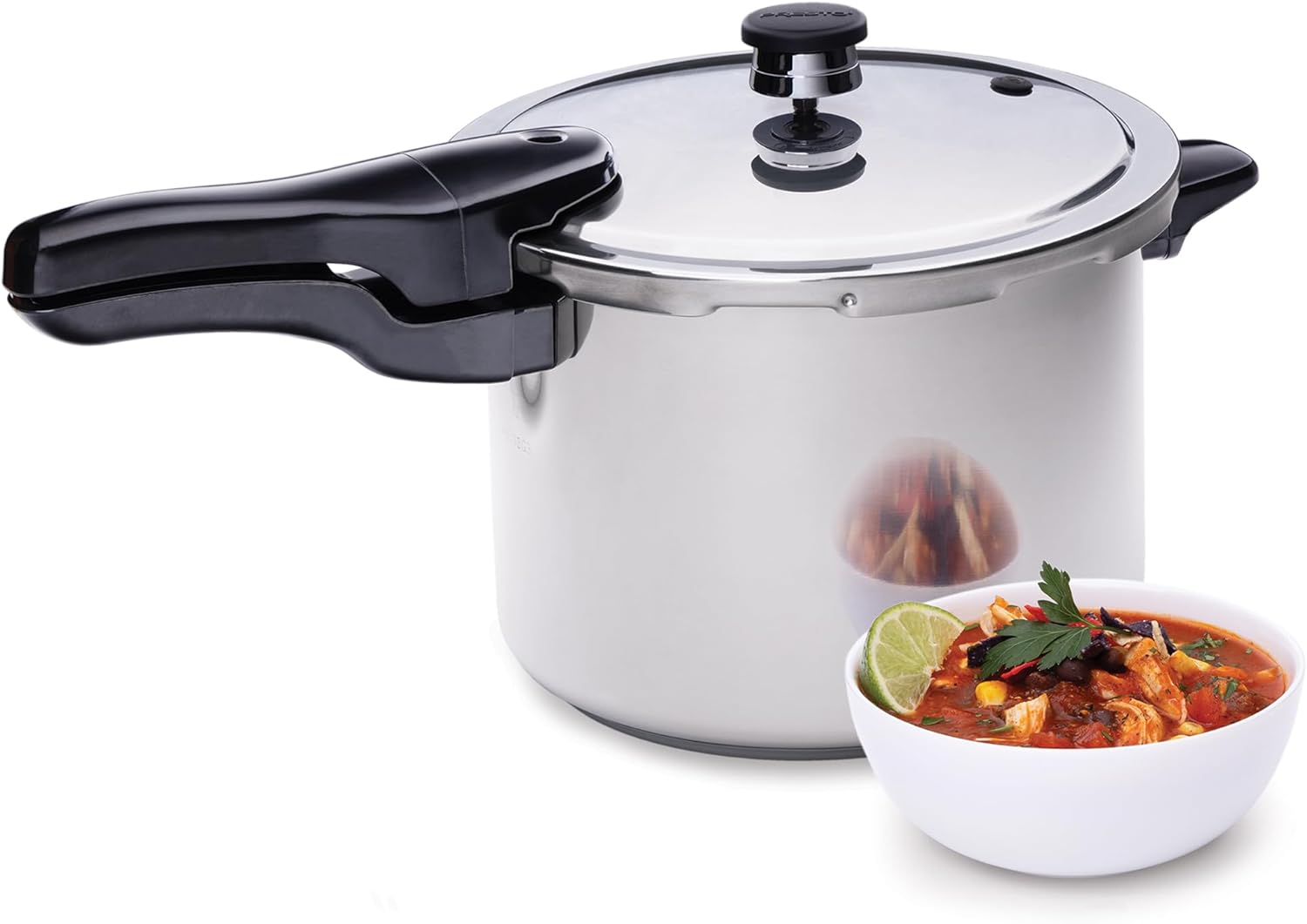
| Capacity | 6 quarts |
|---|---|
| Material | Stainless Steel |
| Special Features | Dishwasher Safe, Induction Compatible Base, Locking Lid |
| Wattage | 1000 watts |
The Presto 6-quart stainless steel pressure cooker is a traditional stovetop cooker that speeds cooking for meats, vegetables, and stews while retaining flavor and nutrients. It uses a pressure regulator and locking lid with a pop-up indicator and overpressure plug for basic safety, and includes a cooking rack and a 64-page recipe booklet to get started. The tri-clad base (aluminum core between stainless layers) promotes even heating on gas, electric, smooth-top, and induction ranges, and the pot is fully immersible for easy cleaning after removing the sealing ring and overpressure plug. Practical benefits include faster braises and tenderizing tough cuts, lower energy use versus long simmering, and dishwasher-safe body parts for convenience. Limitations are that the lid ring and safety parts need hand washing and periodic inspection, and the unit is a manual stovetop cooker so it lacks the automated controls and preset programs of electric multicookers.
Best for: Buyers who prioritize a durable, stainless-steel stovetop cooker that preserves food quality and comes with clear safety features and recipe guidance.
Less Ideal for: Those who want program-driven, hands-off electric pressure cooking or prefer an appliance with built-in digital timers and presets.
- Stainless steel construction with tri-clad base for even heating and induction compatibility
- Locking lid with pressure regulator, pop-up indicator, and overpressure plug for safety
- Dishwasher-safe body and fully immersible design for easier cleaning after removing sealing parts
- Includes cooking rack and a 64-page instruction/recipe book to help with techniques and recipes
- Sealing ring and safety components must be removed and hand-washed separately
- No electronic presets or automated controls found on electric multicookers
Verdict: Choose this stainless-steel stovetop pressure cooker if you want a reliable, non-coated pot that cooks food quickly while offering straightforward safety features and even heating.
Choosing the Right Non-Toxic Stovetop Pressure Cooker: Key Factors to Consider
Contact Materials and Surface Finishes
The metals and finishes that touch food determine whether a cooker is truly non-toxic. Stainless steel of higher grades is inert and resists leaching. Avoid cookware with unknown nonstick coatings that may degrade with heat. If a cooker includes an inner coating, confirm the material and its temperature resilience.
Knowing the contact materials also helps with long-term maintenance. Some low-grade metals can pit or discolor, which not only affects appearance but may change how the surface interacts with acidic foods. Confirming documented material specifications reduces surprises and supports safer day-to-day cooking.
Gasket and Seal Longevity
The sealing system is central to pressure performance and safety. Quality silicone or rubber gaskets that are specified as food-safe provide reliable seals and can be replaced when worn. Poorly fitting or low-grade gaskets degrade faster, causing steam leaks and inconsistent pressure.
Consider how easy it is to inspect, remove, and replace the gasket. Regular gasket inspection and timely replacement keep the cooker functioning safely and avoid moisture-related wear on lid components.
Pressure Regulation and Safety Features
A non-toxic cooker still needs mechanical safety controls to manage steam and pressure. Look for visible, simple pressure indicators and multiple fail-safes such as locking lids and pressure-release mechanisms. Reliable pressure regulation prevents overpressurization without relying on electronic intervention.
Understand how the cooker vents steam and whether the release method is straightforward. Plain mechanical solutions are often easier to maintain and repair over time than complex assemblies.
Construction Thickness and Heat Response
Cooker wall and base thickness affect heat distribution and durability. Thicker bases reduce hotspots and improve browning and deglazing before pressure builds. A substantial build also resists warping over years of stovetop heat.
A heavier, well-built pot may take slightly longer to heat but will hold temperature better once hot. That stability helps reduce fuel use and yields more predictable cooking times.
Maintenance, Cleaning, and Replacement Parts
Non-toxic cookware should remain safe through normal cleaning. Check whether the cooker is hand-wash only or dishwasher-safe and whether common parts like gaskets and pressure valves are available individually. Ease of disassembly for cleaning prevents trapped food residues that can affect seals and odor.
Availability of replacement parts extends the useful life of the cooker and reduces waste. A design that allows basic maintenance with household tools is preferable for long-term ownership.
Capacity and Practical Fit
Choose a capacity that matches household meal sizes and your stovetop. Oversized cookers waste energy on small meals and may be harder to handle safely, while undersized models force crowded cooking that affects results. Consider the pot's interior shape too; a wider base improves searing and browning, while taller pots are better for liquids and large cuts of meat.
Also think about storage and lifting. A pot that is easy to lift when full reduces the risk of spills and accidents during cooking and serving.
Why Non-Toxic Materials Matter
Materials that contact food can influence flavor and safety, especially under high heat and pressure. Non-reactive metals and food-grade silicone gaskets help prevent metal ions or degraded coatings from leaching into food during long cooks.
Choosing cookware with clear material specifications reduces uncertainty about long-term exposure. For cooks who prepare acidic foods often, such as tomato-based sauces, selecting non-reactive interiors matters more than for those who primarily steam vegetables.
- Non-reactive interiors preserve flavor and color
- Food-grade seals reduce risk of contamination
- Documented materials allow informed maintenance
How to Read Material Specs
Look for clear labeling that specifies grade of stainless steel or the absence of proprietary coatings. Manufacturers that provide alloy information and finish details make it easier to assess whether a cooker is suitable for long-term, high-heat use.
If spec sheets mention only vague terms like 'metal interior' or 'nonstick,' request more detail or choose a product that discloses exact materials. For gaskets and small parts, look for statements about food-grade silicone or BPA-free materials.
- Prefer listed stainless grades or explicit coating materials
- Check for food-grade gasket and valve materials
- Avoid ambiguous descriptions of interior surfaces
Maintaining a Stovetop Pressure Cooker
Regular inspection and cleaning keep a pressure cooker safe and predictable. After each use, wash the lid, gasket, and vent components to remove trapped food. Periodically check the gasket for cracks, stretching, or deformation, and replace it when fit or elasticity declines.
Avoid aggressive scourers on polished metal interiors. Use mild abrasive only on stubborn spots and follow manufacturer instructions for removing tough residues. Proper storage with the lid inverted or loosely placed can prevent unpleasant odors from forming in gaskets.
- Wash lid components after each use
- Inspect and replace gaskets as needed
- Store lid loosely to prevent odor buildup
Cooking Tips for Best Results
Bring the cooker to pressure on medium heat and then lower the heat to maintain a gentle, steady pressure. Overly high flame can cause the unit to chatter or vent frequently, which increases wear on the gasket and wastes energy.
Use liquids as the recipe requires and avoid filling past the recommended maximum. For foods that foam or expand, such as beans and grains, use a little more liquid and a lower cooking time to prevent clogging the vent.
- Reduce heat to maintain steady pressure after reaching target
- Do not exceed fill lines, especially with foaming foods
- Release pressure according to recipe to avoid overcooking
Common Safety Checks Before Each Use
Always confirm the gasket is clean and properly seated before bringing the cooker to pressure. Check the vent path for obstructions and ensure the pressure indicator moves freely. Verify that the lid locking mechanism engages correctly and that the handle feels secure.
If you notice unusual noises, rapid venting, or a lid that does not lock fully, do not attempt to force it. Let the unit cool and depressurize fully, then diagnose the issue or perform routine maintenance on the sealing assembly.
- Verify gasket seating and vent clearance
- Confirm pressure indicator and locking lid function
- Stop and inspect if the cooker behaves abnormally
How We Chose the Best Non-Toxic Stovetop Pressure Cooker
We prioritized products built from inert, non-reactive materials and with construction that supports long-term, everyday cooking. Core evaluation criteria included the cooker's contact materials and surface treatments, overall construction and thickness, gasket and sealing system durability, real-world heat control and pressure regulation, and maintenance requirements such as cleaning and part replacement. We also considered accessory availability and whether safety mechanisms meet common home-cooking expectations. We excluded any pressure cookers that depend on unknown or poorly documented coatings or that use reactive inner surfaces without protective barriers. We did not include electric or multi-cooker appliances because stovetop-only performance and material chemistry were the focus. Our selection favors straightforward designs with clear manufacturer documentation about materials and safety features. The result is a curated list of reliable, non-toxic stovetop pressure cookers suitable for regular household use.
Our full evaluation process is outlined in our review methodology.
FAQ
Are stainless steel interiors always non-toxic?
High-grade stainless steel is generally inert and non-reactive, but grades vary. Cookers that specify stainless steel grade and manufacturing standards provide more assurance than vague descriptions.
How often should I replace the gasket?
Gasket life depends on use and care but often ranges from one to several years. Inspect it regularly for cracks or loss of elasticity and replace it when fit or sealing ability declines.
Can I use a pressure cooker on any stovetop?
Most stovetop pressure cookers work on common gas and electric ranges. Check the product documentation for base compatibility with your specific cooktop type before purchase.
Is it safe to use soap and water on the gasket?
Yes, washing the gasket with mild soap and water is standard. Rinse thoroughly and dry before reassembly to prevent odors and fungal growth.
What should I do if the pressure release is slow or blocked?
Stop heating and allow the cooker to cool and depressurize naturally. Once safe, clear the vent path per maintenance instructions and inspect for food debris or buildup that could obstruct flow.
Final Verdict
When choosing a non-toxic stovetop pressure cooker, prioritize confirmed contact materials, a durable sealing system, and clear pressure controls. Tradeoffs are common: heavier construction increases durability and heat stability but raises weight and handling needs. A cooker with documented food-safe materials, replaceable seals, and simple safety mechanisms provides the best long-term balance for home cooks. Focus on the factors that match your cooking style and household size, maintain the sealing assembly regularly, and choose a capacity and build you can manage safely. Those choices will deliver reliable, non-toxic performance for years.