
Note: This article contains affiliate links. If you click on these links and make a purchase, we may earn a small commission at no extra cost to you. This helps support our research and content. Read our full affiliate disclosure here.
If you need on-demand hot water outside the house—for camping, a workshop, cabin, or outdoor shower—picking the right outdoor propane water heater matters. You want dependable ignition, enough recovery to meet multiple users or faucets, and weather-ready components that will survive outdoor exposure. This guide shortlists the top outdoor propane water heaters for those needs. Each pick was evaluated for heating capacity, freeze and weather durability, safety features, and installation practicality to help you find the right unit for your situation. Read on to compare the attributes that matter most and prepare for installation.
Top Picks at a Glance
| Best Overall The best all-around choice for most situations | Rinnai RUS65EP Propane Tankless Heater |  |
| Best Quality Built to a higher standard if you want something more solid | Westinghouse HS180A0G-LP 8.1 GPM Propane |  |
| Best Value The sweet spot between price and what you get | GASLAND BS158 6L Propane Tankless Water Heater |  |
| Best Budget The cheapest option that still gets the job done reliably | AQUAH Outdoor Propane Tankless JSD12-6J |  |
| Top Rated A top-rated pick with lots of positive feedback | CAMPLUX 5.28 GPM Tankless Heater |  |
| Most Popular A crowd favorite that many people choose with confidence | CAMPLUX AY132 Portable Tankless Water Heater |  |
| Best Seller A high-volume bestseller chosen again and again | Orbek RV Tankless Water Heater HRU-RG060-A1 |  |
Rinnai RUS65EP Propane Tankless Heater

| Power Source | Gas Powered |
|---|---|
| Flow Rate | 6.5 gpm |
| Heat Output | 65 KW |
| Voltage | 120 volts |
The Rinnai RUS65EP is an outdoor propane tankless water heater designed to provide on-demand hot water without a storage tank. It fires automatically when you open a hot tap and maintains a continuous flow rate up to 6.5 GPM, which is enough to serve multiple fixtures at once in a typical household. The unit emphasizes energy efficiency by heating only when needed and includes anti-freezing protection for outdoor installation. Installation requires gas, a 120 V electrical connection, and appropriate venting or adaptors for outdoor PVC/CPVC pipe runs, so professional installation is recommended. Practical benefits include a compact, wall-mounted footprint that saves space, factory-backed warranties for the heat exchanger and parts, and a proven brand reputation. Important limitations are that it is an outdoor-only propane model so siting and winterization matter, and performance depends on proper gas supply and correct installation which can add cost and complexity compared with a simple tank heater.
Best for: Buyers who want a space-saving, energy-conscious outdoor propane solution that reliably supplies hot water for multiple household fixtures and are willing to arrange professional installation and winterization.
Less Ideal for: People seeking a plug-and-play, indoor tank replacement or those without a suitable propane gas line and outdoor installation location should consider other options.
- Provides continuous hot water on demand up to 6.5 GPM suitable for several simultaneous fixtures
- Outdoor-rated propane model with anti-freeze protection for colder climates
- Compact wall-mounted design saves indoor space compared with tank heaters
- High factory-backed warranty on the heat exchanger and parts
- Energy-efficient operation since it heats only when water is used
- Requires professional installation and proper gas supply and venting for reliable operation
- Outdoor placement means freeze precautions and exposure considerations are necessary
Verdict: Choose the Rinnai RUS65EP if you need a compact, high-efficiency outdoor propane tankless heater that delivers continuous hot water for multiple fixtures.
Westinghouse HS180A0G-LP 8.1 GPM Propane

| Flow Rate | 8.1 gpm |
|---|---|
| Heat Output | 180,000 BTU |
| Temp Range | 95°F – 158°F |
| Energy Efficiency | UEF >0.81 |
| Mount Type | Wall |
The Westinghouse HS180A0G-LP is an outdoor, propane-fired tankless water heater built to supply continuous hot water for 3–5 fixtures. It uses self-modulating controls and a variable-speed combustion fan to deliver up to 8.1 GPM and 180,000 BTU while maintaining temperature within ±1°F, which cuts down on cold shocks during showers. Installation is wall-mounted and it connects to standard 3/4" NPT plumbing, with an included indoor wired remote for temperature adjustments and an LED display for status. Because it is on-demand, it avoids standby heat loss common to storage tanks and is rated with high energy efficiency (UEF>0.81). The unit is CSA certified and includes built-in electric freeze protection for outdoor durability, but it does require a 120V AC supply and periodic draining below very low temperatures. Practical limits include the need for proper venting/clearance for outdoor placement and professional gas hookup for safe operation. For buyers wanting high continuous flow and tight temperature control in an outdoor propane installation, this model is a strong performer.
Best for: Buyers who prioritize high on-demand flow and precise temperature control for whole-home outdoor propane installations and want a durable unit that performs under varied conditions.
Less Ideal for: Those who need a simple indoor replacement, lack access to propane service, or prefer a plug-and-play electric or small-capacity tank heater for light-duty use.
- High maximum flow of 8.1 GPM suitable for simultaneous showers and appliances
- Very high heat output at 180,000 BTU for strong on-demand performance
- ±1°F temperature stability for consistent shower comfort
- Built for outdoor use with CSA certification and integrated freeze protection
- Includes wired indoor remote and clear LED display for convenient temperature control
- Requires 120V AC power and professional propane hookup for safe operation
- Outdoor installation requires proper clearances and seasonal draining below very low temperatures
Verdict: A high-output outdoor propane tankless heater that delivers strong continuous flow and precise ±1°F temperature control for performance-focused whole-house installs.
GASLAND BS158 6L Propane Tankless Water Heater
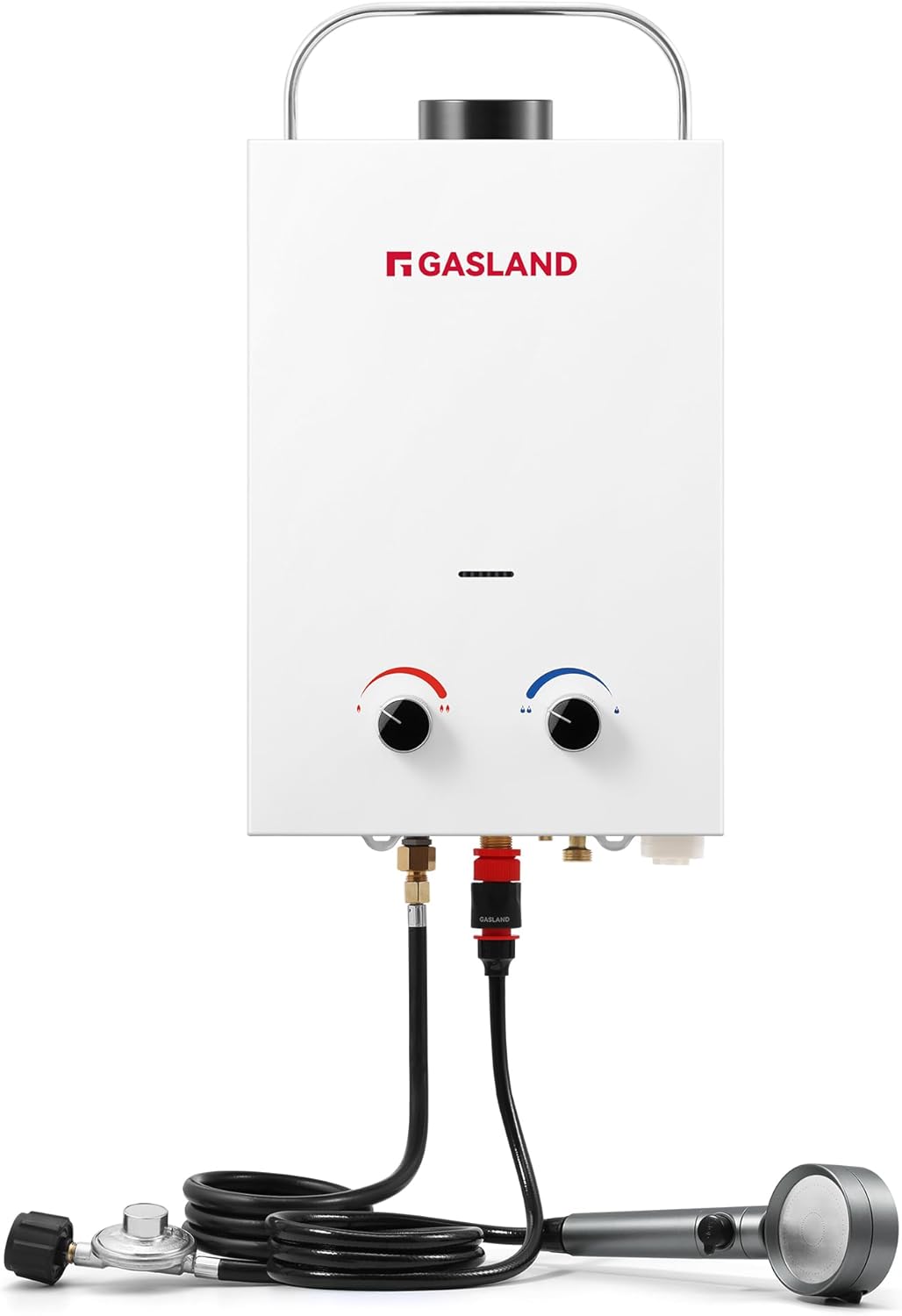
| Power Source | Liquid Propane |
|---|---|
| Flow Rate | 1.58 gpm |
| Capacity | 6 liters |
| Heat Output | 41000 BTU/Hr |
| Maximum Temperature | 109.4 °F |
The GASLAND BS158 is a compact, portable propane tankless water heater designed for outdoor use like RVs, campsites, cabins, and poolside showers. It heats water on demand at a flow rate of 1.58 GPM and reaches a maximum listed temperature of about 109.4°F, powered by a 20 lb LPG tank while ignition and the LED monitor run on two D-cell batteries. Safety features include overheating protection, flame failure device, dry combustion and low-flow protections, and CSA certification. The unit is easy to mount and comes with a regulator, hose, shower head, and adapters so you can hook it up without extra parts. Practical limits to note are modest flow and temperature rise at higher demands, splash-proof rather than fully weatherproof construction, and it is not rated for high-altitude or very windy sites; storage indoors over winter is recommended to avoid damage. For someone who needs a straightforward outdoor hot-water source, the BS158 balances portability, safety features, and simple install-ready hardware.
Best for: Buyers who want a compact, ready-to-install outdoor hot water source for camping, RVing, tiny homes or occasional yard use and who prioritize portability and built-in safety features.
Less Ideal for: Do not choose this if you need high flow or multi-fixture indoor performance, require full weatherproofing for permanent outdoor installation, or plan to use at high altitudes or very windy locations.
- Portable tankless design suitable for RVs, camping, cabins and outdoor showers
- Includes regulator, hose, shower head and adapters for easy setup
- Multiple safety protections and CSA certification for safer outdoor operation
- Battery-powered electronic ignition so no household electricity is required
- Relatively low maximum flow rate limits use to single-point applications
- Splash-proof design means it should be sheltered from heavy rain and stored indoors for winter
Verdict: A compact, install-ready propane tankless heater that delivers safe, on-demand hot water for single-point outdoor uses where portability and simplicity matter most.
AQUAH Outdoor Propane Tankless JSD12-6J

| Flow Rate | 1.6 gpm |
|---|---|
| Heat Output | 40900 british thermal units |
| Wattage | 12000 watts |
| Maximum Pressure | 110 psi |
| Capacity | 1.6 gallons |
This AQUAH outdoor tankless propane heater delivers handheld or shower hot water without electrical hookup by using two D batteries for automatic pulse ignition. It is designed for outdoor, wall-mounted use and produces about 1.6 gallons per minute (96 gal/hr) with a rated thermal input around 40,900 Btu/h and claimed thermal efficiency of at least 85 percent. Controls include winter/summer adjustment and minimum/maximum water and gas flow tuning so you can limit temperature rise or conserve fuel. The unit accepts 1/2" water and gas fittings and includes adapters for common connections, plus a wind shield for exposed locations. Practical benefits are simple install for remote sites, no need for mains power, and modest fuel draw suitable for showers or wash stations. Important limitations are the modest 1.6 gpm flow that restricts use to single fixtures or low-flow showers and the outdoor open-flue design which requires installation in a safe, ventilated location and may be affected by cold conditions. For buyers on a budget this is a straightforward, low-complexity option for outdoor hot water needs.
Best for: Buyers who need an affordable, no-electric outdoor hot water source for a single shower, campsite, RV hookup, or wash station and value simple installation and low operating complexity.
Less Ideal for: Homes that need simultaneous multi-fixture hot water, indoor installations, or higher-flow shower systems should consider larger or indoor-rated units instead.
- Battery-powered pulse ignition so no electrical hookup is required
- Wind shield and outdoor open-flue design intended for exterior use
- Adjustable winter/summer and min/max flow controls for tuning temperature and fuel use
- Includes 1/2" BSP to 1/2" NPT adapters for easier plumbing connections
- Low flow rate (1.6 gpm) limits use to a single fixture or low-flow shower
- Open-flue outdoor design requires careful placement and cannot be used indoors
Verdict: AQUAHs JSD12-6J is a budget-friendly, battery-ignited outdoor propane tankless heater that gives simple, on-demand hot water for single-fixture outdoor uses without needing mains power.
CAMPLUX 5.28 GPM Tankless Heater

| Flow rate | 5.28 GPM |
|---|---|
| Max output | 136,000 BTU/hr |
| Operating pressure | 4–130 PSI |
| Fuel type | Propane (20 lb tank) |
The CAMPLUX 5.28 GPM tankless propane water heater provides instant hot water for outdoor uses like camping, remote cabins, and poolside showers by running on a standard 20 lb propane tank and a preinstalled regulator. It produces up to 136,000 BTU/hr and supports 4 to 130 PSI water pressure, with three control knobs and a real-time digital temperature readout that make dialing in water temperature straightforward. The unit includes a shower kit, garden hose adapters, and hardware for quick hookup and uses selectable combustion rows to reduce gas use in eco mode. Practical benefits include continuous hot water on demand, clear temperature feedback, and compatibility with common propane canisters and garden hoses. Important limitations are that it requires batteries for ignition and can be sensitive to freezing conditions so it must be fully drained and stored indoors in cold climates, and users in very low-pressure situations may need an external pump. For outdoor installations where reliability is the priority, it is a capable, ready-to-use option.
Best for: Buyers who need a reliable, high-output outdoor water heater for camping, cabins, or poolside use and value easy setup and clear temperature control.
Less Ideal for: People who need a freeze-resistant permanent installation or who cannot provide sufficient water pressure without adding an external pump.
- High output up to 136,000 BTU/hr for strong hot-water flow up to 5.28 GPM
- Digital temperature display plus three control knobs for precise temperature adjustment
- Runs on a standard 20 lb propane tank with a preinstalled regulator for easy setup
- Includes shower kit, hose adapters, and hardware for immediate outdoor use
- Must be drained and stored indoors to avoid freeze damage in cold climates
- Requires batteries for ignition and may need a pump in low water pressure situations
Verdict: A robust, ready-to-use outdoor propane tankless heater that delivers dependable continuous hot water with straightforward controls for camping and remote installations.
CAMPLUX AY132 Portable Tankless Water Heater

| Flow Rate | 1.32 gpm |
|---|---|
| Capacity | 5 liters |
| Heat Output | 34,000 BTU/hr |
| Water Pressure Range | 3-130 PSI |
| Ignition | 2 D batteries (3V) |
The CAMPLUX AY132 is a portable propane tankless heater that provides instant hot water for outdoor showering, dishwashing, and pet rinsing. It runs on a 20 lb propane tank for heating and two D batteries for ignition, so it works off-grid without electrical hookups. The unit delivers up to 1.32 gallons per minute with a maximum listed temperature around 114°F and supports very low inlet pressures down to about 3 PSI, making it compatible with gravity feed or small 12V pumps. CAMPLUX includes a 5 ft gas regulator, shower head and hose, and mounting hardware, and safety features such as anti-freeze protection, flame failure and overheat protection are built in and CSA listed. Practical limits are its modest flow rate, which is fine for a single outdoor shower but not for filling tubs or feeding multiple outlets, and temperature rise depends on inlet water temperature and flow. The AY132 is lightweight with a folding handle for transport and can be wall‑mounted for semi‑permanent setups, but expect basic manual controls rather than advanced digital regulation.
Best for: Buyers who want a proven, safety-certified portable propane heater for camping, RV trips, or remote cabins and prioritize reliable off-grid ignition and included accessories.
Less Ideal for: People who need high flow or to serve multiple fixtures at once or who want precise digital temperature control and higher maximum output.
- Portable and lightweight with a folding handle for easy transport and mounting.
- No electrical hookup required—runs on propane and two D batteries for ignition.
- Operates at very low water pressure (around 3 PSI) so it works with gravity bags or small pumps.
- Includes necessary accessories: CSA gas regulator, showerhead, hose, and mounting hardware.
- Multiple safety protections (anti-freeze, flame failure, overheat) and CSA certification.
- Maximum flow of 1.32 GPM limits use to single-person showers and light washing tasks.
- Top listed water temperature is moderate, so hotness depends on inlet temperature and flow rate.
Verdict: A compact, CSA‑certified portable propane tankless heater that reliably delivers on‑demand hot water for single-person outdoor showers and off-grid use.
Orbek RV Tankless Water Heater HRU-RG060-A1

| Power Source | Liquid Propane |
|---|---|
| Flow Rate | 3.5 gpm |
| Maximum Temperature | 123 °F |
| Voltage | 12 volts DC |
| Maximum Pressure | 150 psi |
The Orbek HRU-RG060-A1 is a propane tankless water heater built for RVs and campers that provides continuous hot water on demand for showers, dishwashing, and other onboard needs. It uses a 60,000 BTU burner and oxygen-free copper heat exchanger to produce a steady flow rated at 3.5 gallons per minute while the burner only runs when hot water is requested, which helps conserve propane. The unit is designed for RV electrical systems and runs off 12V DC, includes built-in safety features such as flame failure protection, dry combustion protection, frost protection, and a 150 PSI pressure-reducing valve, and comes with a remote for temperature control between 95 and 123 degrees F. High-altitude mode and a brushless DC fan improve performance at elevation. Trade-offs to note are the need for a 12V power source or DC converter if your RV uses 110V AC and the requirement to confirm door cutout compatibility before installation, but the included remote, safety protections, and relatively high flow rate make this a pragmatic replacement for risk-averse RV owners wanting reliable hot water.
Best for: Buyers who want a reliable, safety-focused on-demand hot water solution for RV travel and prefer a factory-style replacement that minimizes installation uncertainty.
Less Ideal for: People who need a simple plug-and-play electric heater or those with unconventional RV cutouts who cannot match standard door panel sizes.
- High 60,000 BTU output with up to 3.5 gpm flow for consistent hot water supply
- Built-in safety features including flame failure, dry combustion protection, and frost protection
- Designed for RV electrical systems with 12V DC operation and brushless DC fan for high-altitude use
- Includes remote temperature control and a factory-installed 150 PSI pressure-reducing valve
- Requires a 12V DC power source or an AC-to-DC converter for RVs with only 110V AC
- Door panel or cutout size must match available options, so fitment needs verification before purchase
Verdict: A safety-minded, high-output propane tankless heater built for RVs that delivers reliable on-demand hot water and strong high-altitude performance.
Choosing the Right Outdoor Propane Water Heater: Key Factors to Consider
Heating Capacity and BTU Rating
Heating capacity determines how much hot water a unit can supply and how quickly it can raise water temperature. Look at the BTU rating and the manufacturer's published gallons-per-minute or first-hour delivery figures. Higher BTU ratings generally mean faster heating and the ability to support multiple fixtures, but also require appropriate propane supply plumbing.
Matching capacity to demand prevents underperforming setups. For a single outdoor shower or sink, a modest BTU unit may suffice. For multiple simultaneous uses, choose a heater with a higher BTU and higher recovery rate so temperatures do not drop when flow increases.
Recovery Rate and Flow Performance
Recovery rate defines how quickly the heater can reheat incoming cold water during continuous use. This is typically expressed as gallons per minute at a specified temperature rise. Pay attention to declared flow rates at realistic temperature rises rather than peak numbers that assume small rises.
Flow performance directly affects user experience: low recovery causes rapid temperature drop under steady draw, while a higher recovery rate keeps water hot for showers and multiple taps. Consider expected incoming water temperature where you will use the heater because colder source water requires more heating capacity to maintain the same outlet temperature.
Weather Resistance and Freeze Protection
Outdoor units are exposed to temperature swings, moisture, and debris, so construction matters. Look for corrosion-resistant materials, sealed controls, and frost-prevention features such as built-in freeze protection, drain-back capabilities, or suitable insulation. A design that sheds water and prevents pooling around controls reduces corrosion risk.
If you live in an area with freezing temperatures, choose a heater with active freeze protection or plan for winterization. Poor weather resistance shortens service life and increases maintenance needs, so prioritize units engineered for outdoor conditions.
Safety Systems and Ignition Type
Safe operation is essential with propane appliances. Prefer units that include multiple safety interlocks such as flame failure detection, overtemperature cutoffs, and automatic shutoffs for gas supply issues. Reliable ignition systems matter too: battery or direct-pilot ignition can be more dependable in remote locations than manual lighting.
Consider how the ignition and safety systems perform in windy or cold conditions typical of outdoor use. Controls should be intuitive and protected from accidental activation or water exposure to reduce the risk of unsafe operation.
Installation Requirements and Connections
Installation practicality influences cost and how easily you can put the heater into service. Review the gas connection size and required supply pressure, ventilation clearances, and water plumbing connections before choosing a unit. Some models need a certified installer or specific mounting arrangements to meet local codes.
Compact footprint and accessible service points simplify maintenance and seasonal removal. If you plan to move the heater between sites, lightweight and modular designs reduce hassle. Clear installation documentation and standard fittings reduce the chance of surprises during setup.
Maintenance, Serviceability, and Parts Access
Outdoor heaters need occasional maintenance to run reliably. Consider how easy it is to access consumable parts such as burners, igniters, and filters. A unit designed for straightforward servicing will reduce downtime and long-term costs.
Also check whether common replacement parts are standardized or proprietary. Simpler designs with user-serviceable panels and clear instructions help owners perform routine cleaning, winterization, and small repairs without specialist tools.
Sizing Your Heater for Use Case
Estimate peak simultaneous demand before choosing capacity. A single shower needs a different flow and temperature rise than a shower plus a sink or an outdoor kitchen. Calculate expected gallons per minute and choose a unit whose rated flow at the required temperature rise meets or exceeds that number.
Remember incoming water temperature influences sizing. In colder climates, the same BTU output yields a lower gallons-per-minute flow for the same outlet temperature. If you expect very cold supply water, size up to preserve comfort.
- One shower: modest flow requirement, prioritize steady recovery
- Multiple fixtures: add BTU capacity and check simultaneous flow specs
- Seasonal use: factor in colder inlet temperatures for winter performance
Plumbing and Gas Connection Tips
Ensure your propane supply line and regulator meet the unit's specified inlet pressure and flow. Undersized gas lines can cause poor performance even if the heater is otherwise adequate. Use proper fittings and follow local code for gas piping.
Water-side plumbing should minimize long runs of uninsulated supply to reduce heat loss. Install shutoff valves and a drain for winterization if you need to remove the unit seasonally. Strainers on the cold inlet can prevent debris from clogging flow sensors or valves.
- Verify gas line sizing against BTU requirements
- Include isolation valves and a drain for maintenance
- Install inlet strainers to protect internal components
Preparing for Cold Weather and Storage
If you expect freezing temperatures, choose a heater with built-in freeze mitigation or plan a reliable winterization procedure. That may mean draining the unit, blow-out procedures for water lines, or using a heated enclosure to prevent damage to controls and the heat exchanger.
Consider accessibility when mounting the heater so you can service and winterize it easily. A removable panel or an easily unfastened mount will save time each season and reduce the risk of freeze-related failures.
- Built-in freeze protection reduces upkeep in cold climates
- Design for easy seasonal removal or service access
- Store portable units indoors when not in use for long periods
Common Installation Pitfalls to Avoid
Do not assume all outdoor heaters have the same venting needs. Even outdoor-rated units have exhaust considerations; verify clearances and orientation to avoid exhaust recirculation. Mounting too close to walls or under low eaves can create hazards or performance issues.
Avoid undersizing the gas supply or using long, thin hoses that starve the unit under load. Also, protect controls from direct spray or pooling water, which accelerates corrosion and can cause electrical or ignition faults.
- Check exhaust and clearance requirements before mounting
- Install proper gas line size and regulator
- Protect controls and connections from water ingress
Routine Maintenance and Troubleshooting
Regularly inspect burner ports, igniters, and gas fittings for debris, corrosion, or insect nests. Keeping the area around the heater clean and free of vegetation reduces the chance of blockages and improves safety.
If the heater has ignition problems, check batteries, wiring, and electrode alignment first. For flow or temperature inconsistencies, verify inlet water temperature, flow rate, and check that the unit's flow sensors are clean and functioning properly.
- Inspect and clean burners at least annually
- Check gas fittings and pressure if performance falters
- Keep surrounding area free from debris and pests
How We Chose the Best Outdoor Propane Water Heater
We shortlisted products that meet the real-world demands of outdoor hot water use. Our selection filters prioritized units with clear heating capacity ratings and documented recovery rates to ensure buyers can match heater output to intended demands, such as a single shower, multiple taps, or campsite use. Durability and weather resistance were critical; we favored designs with corrosion-resistant materials, frost protection or freeze-prevention features, and serviceable components for seasonal use. Safety and regulatory features also guided inclusion. We looked for reliable ignition systems, built-in overheat protection, flame failure safeguards, and straightforward venting or exhaust designs suitable for outdoor placement. Installation practicality was another key filter: accessible plumbing and gas connections, clear venting requirements, and compact footprints for limited spaces. We excluded units intended strictly for indoor or enclosed-space installation, products without verifiable performance specs, and models lacking basic safety mechanisms. The final list balances heating performance, outdoor durability, user safety, and installability to reflect what matters most to buyers of outdoor propane water heaters.
Our full evaluation process is outlined in our review methodology.
FAQ
Can I use an outdoor propane water heater in winter?
Often you can, but it depends on the unit's freeze protection. Some models include active freeze prevention; otherwise you must winterize or provide an insulated enclosure. Regular maintenance and proper drain procedures reduce freeze risk.
How do I size a unit for an outdoor shower?
Estimate the shower flow in gallons per minute and the expected inlet water temperature. Match those needs to a heater's rated flow at the temperature rise you require. If inlet water is very cold, choose a higher capacity to maintain comfortable outlet temperatures.
What kind of ignition is best outdoors?
Battery-assisted electronic ignition or direct-pilot systems are usually more reliable in remote or windy conditions than manual lighting. Choose an ignition type that is protected from moisture and easy to service in the field.
Do outdoor units need special venting?
Outdoor-rated units are designed for open-air installation but still have exhaust clearance needs. Follow the manufacturer's specified clearances and mounting orientation to prevent exhaust recirculation and ensure safe combustion.
How often should I service an outdoor propane water heater?
Inspect the heater at least once per season and perform cleaning of burners and controls annually. Frequency should increase if the unit is in a harsh environment or used heavily, with additional checks after winter storage.
Final Verdict
Choosing the right outdoor propane water heater comes down to matching heating capacity and recovery rate to your expected demand, and ensuring the unit is built to withstand outdoor conditions. Prioritize BTU and flow specs for performance, and check weather resistance and safety features for longevity and safe operation. Balance installation practicality with the protections you need for your climate. With the right capacity, frost mitigation, and straightforward installation, you can have reliable hot water outdoors without frequent maintenance or surprises.