
Note: This article contains affiliate links. If you click on these links and make a purchase, we may earn a small commission at no extra cost to you. This helps support our research and content. Read our full affiliate disclosure here.
Choosing the right photoelectric smoke detector matters because it can detect smoldering fires earlier and reduce nuisance alarms from cooking or steam. Whether you are upgrading a single room or outfitting an entire home, the right smoke detector improves safety and daily peace of mind. This guide shortlists the top photoelectric smoke detectors and explains the practical differences that matter in real homes. We evaluated detection characteristics, installation and power options, and long-term maintenance factors to help you pick the best fit for your living space.
Top Picks at a Glance
| Best Overall The best all-around choice for most situations | Kidde 20SD10 Smoke Detector |  |
| Best Quality Built to a higher standard if you want something more solid | X-Sense SC07 Combination Detector |  |
| Best Value The sweet spot between price and what you get | SITERWELL GS509A Photoelectric Smoke Alarm |  |
| Best Budget The cheapest option that still gets the job done reliably | Kidde 10SDR Smoke Detector | 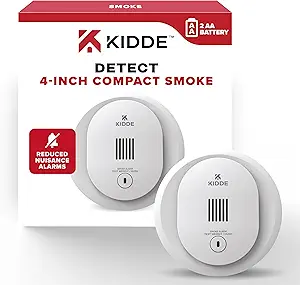 |
| Top Rated A top-rated pick with lots of positive feedback | HEIMAN Photoelectric Smoke Detector 3-Pack |  |
Kidde 20SD10 Smoke Detector

| Power Source | Battery Powered (sealed 10-year) |
|---|---|
| Sensor Type | Photoelectric |
| Alarm Volume | 85 dB |
| Operating Humidity | Up to 95% RH, non-condensing |
| Upper Temperature Rating | 100 °F |
The Kidde 20SD10 is a standalone photoelectric smoke alarm built for long-term, low-maintenance protection in homes and apartments. It uses a photoelectric sensor that is tuned to reduce nuisance triggers from cooking or steam while still delivering faster detection on smoldering fires, and it signals alerts with an 85 dB horn and a red LED for visual confirmation. The alarm is powered by a sealed 10-year battery, eliminating routine battery changes and the familiar low-battery chirp, and the unit is tested to UL 217 10th Edition standards. Installation is simple with the included mounting hardware and the compact plastic housing fits typical ceiling or wall locations. Limitations include that the unit is not interconnectable with other alarms and it lacks smart or voice features, so it suits single-zone coverage rather than integrated whole-home systems. For buyers who want a dependable, low-upkeep photoelectric alarm, this model does the basic job cleanly and reliably.
Best for: Buyers who want a reliable, low-maintenance photoelectric alarm for single rooms or small apartments and prioritize long battery life and reduced nuisance alarms.
Less Ideal for: Those who need interconnected alarms across multiple rooms or want smart connectivity and remote notifications should look at networked or smart models instead.
- Sealed 10-year battery eliminates regular battery replacements and low-battery chirps
- Photoelectric sensor reduces false alarms from cooking and steam while detecting smoldering fires faster
- Loud 85 dB alarm with red LED provides clear audible and visual alerts
- Tested to UL 217 10th Edition standards for code-compliant performance
- Not interconnectable, so it cannot link with other alarms for whole-home notification
- No smart features or remote alerts for off-site monitoring
Verdict: Choose the Kidde 20SD10 if you want a simple, low-maintenance photoelectric smoke alarm with a sealed 10-year battery and reliable detection for individual rooms.
X-Sense SC07 Combination Detector

| Power Source | 10-Year Sealed Battery |
|---|---|
| Alarm | 85 dB |
| Sensor Type | Photoelectric, Electrochemical |
| Battery Type | Lithium metal |
The X-Sense SC07 combines a photoelectric smoke sensor with an electrochemical CO sensor to provide long-term, maintenance-free protection without wiring. It is designed for straightforward ceiling or wall mounting using the included bracket and hardware and runs on a built-in sealed lithium battery rated for 10 years, eliminating routine battery changes and low-battery chirps. The photoelectric sensor responds well to slow, smoldering fires and helps reduce cooking false alarms, while the electrochemical CO sensor continuously monitors carbon monoxide and triggers the 85 dB alarm when dangerous levels are detected. The unit meets UL 217 and UL 2034 standards and includes an LCD for status readouts, but it is a basic standalone model that does not support Wi-Fi or wireless interconnection with other alarms. That makes it a solid, low-maintenance choice for single-room protection where reliable photoelectric smoke detection and long battery life are the priorities, but it is not suited for users who need networked alarms or smart-home integration.
Best for: Buyers who prioritize reliable photoelectric smoke detection and a truly maintenance-free 10-year battery for single-room or spot protection.
Less Ideal for: Homes that require interconnected alarms, centralized monitoring, or smart-home integration should consider networked or Wi‑Fi capable models instead.
- 10-year sealed lithium battery for maintenance-free operation
- Photoelectric sensor reduces cooking false alarms and detects slow-smoldering fires
- Built-in electrochemical CO sensor provides dual hazard detection
- Meets UL 217 and UL 2034 safety standards
- No wireless interconnection or Wi-Fi support for networked alerts
- Standalone unit lacks app control or smart-home features
Verdict: Pick the SC07 if you want dependable photoelectric smoke and CO detection with a worry-free 10-year sealed battery for single-unit protection.
SITERWELL GS509A Photoelectric Smoke Alarm

| Power Source | Battery Powered |
|---|---|
| Sensor Type | Photoelectric |
| Alarm | Audible |
| Operating Humidity | 10-95% RH non-condensing |
| Upper Temperature Rating | 37.8 °C |
The SITERWELL GS509A is a photoelectric smoke alarm intended to detect slow, smoldering fires and provide audible alerting for homes. It uses a photoelectric sensor, a test/mute button for routine checks, and emits louder-than-85 dB alerts so household members can hear the alarm. The unit ships with mounting hardware and a magnetic fastening kit for easier ceiling or wall installation and is powered by a replaceable 9V carbon zinc battery that the listing frames as supporting a 10-year product life with regular battery replacement. In everyday use install one in sleeping areas and common rooms where smoldering fires are a concern, test weekly with the built-in button, and replace the battery promptly on low-battery chirps. Practical strengths are the photoelectric sensing for early detection of smoky, low-heat fires and the loud alarm for clear notification, while buyers should expect to perform periodic battery changes and not rely on hardwiring or sealed 10-year sealed-battery convenience. The detector meets typical UL-style testing claims and includes simple, familiar controls suited to straightforward home safety setups.
Best for: Buyers who prioritize reliable early detection of smoldering fires and a straightforward, easy-to-install alarm that is simple to maintain and test regularly.
Less Ideal for: People who want hardwired or sealed 10-year battery alarms with zero periodic battery changes or integrated smart/home automation features should consider other options.
- Photoelectric sensor tuned for slow smoldering fires
- Built-in test/mute button for easy weekly checks
- Loud alarm over 85 dB for clear household notification
- Includes mounting hardware and magnetic fastening kit for simpler installation
- Uses a replaceable 9V battery so you must change batteries periodically rather than using sealed 10-year power or hardwiring
Verdict: Choose the GS509A when you want an easy-to-install, photoelectric alarm that reliably detects smoldering fires and gives loud, clear alerts.
Kidde 10SDR Smoke Detector

| Power Source | Battery Powered |
|---|---|
| Sensor Type | Photoelectric |
| Alarm Volume | 85 dB |
| Battery Included | 2 AA Batteries |
| Standards | UL 217 10th Edition |
The Kidde 10SDR is a simple photoelectric smoke detector designed for straightforward home protection and easy installation. It runs on two AA batteries, so it works during power outages and requires no wiring, and the compact housing fits well in apartments, bedrooms, and hallways. The unit uses advanced sensing to cut down on nuisance alarms from cooking or steam while still providing faster smoke detection in smoldering fires, and the loud 85 dB alarm plus red LED make alerts easy to notice. Test & Hush lets you temporarily silence false alarms without removing power, and the detector is tested to UL 217 10th Edition for code compliance. Trade-offs are minimal for a basic alarm: it does not interconnect wirelessly or with smart home systems and lacks voice alerts or CO detection, so it is best used as a reliable standalone smoke-only unit where simplicity and dependable battery operation are priorities.
Best for: Buyers seeking an affordable, easy-to-install, code-compliant photoelectric smoke alarm for basic home protection and peace of mind.
Less Ideal for: Users who want networked alarms, smart-home features, or combined smoke and CO protection should consider other models with those capabilities.
- Photoelectric sensor reduces false alarms from cooking and steam
- Battery powered with two AA batteries for easy, no-wiring installation and operation during outages
- Loud 85 dB alarm and red LED provide clear audible and visual alerts
- Test & Hush button lets you silence nuisance alarms temporarily
- No wireless interconnect or smart-home integration
- Detects smoke only and does not include carbon monoxide sensing
Verdict: A dependable, budget-friendly photoelectric smoke alarm that delivers simple, code-tested protection without wiring or smart features.
HEIMAN Photoelectric Smoke Detector 3-Pack
| Power Source | 10-Year Sealed Battery Powered |
|---|---|
| Alarm | Audible (85 dB) |
| Battery Average Life | 10 years |
| Operating Humidity | ≤95% RH (non-condensing) |
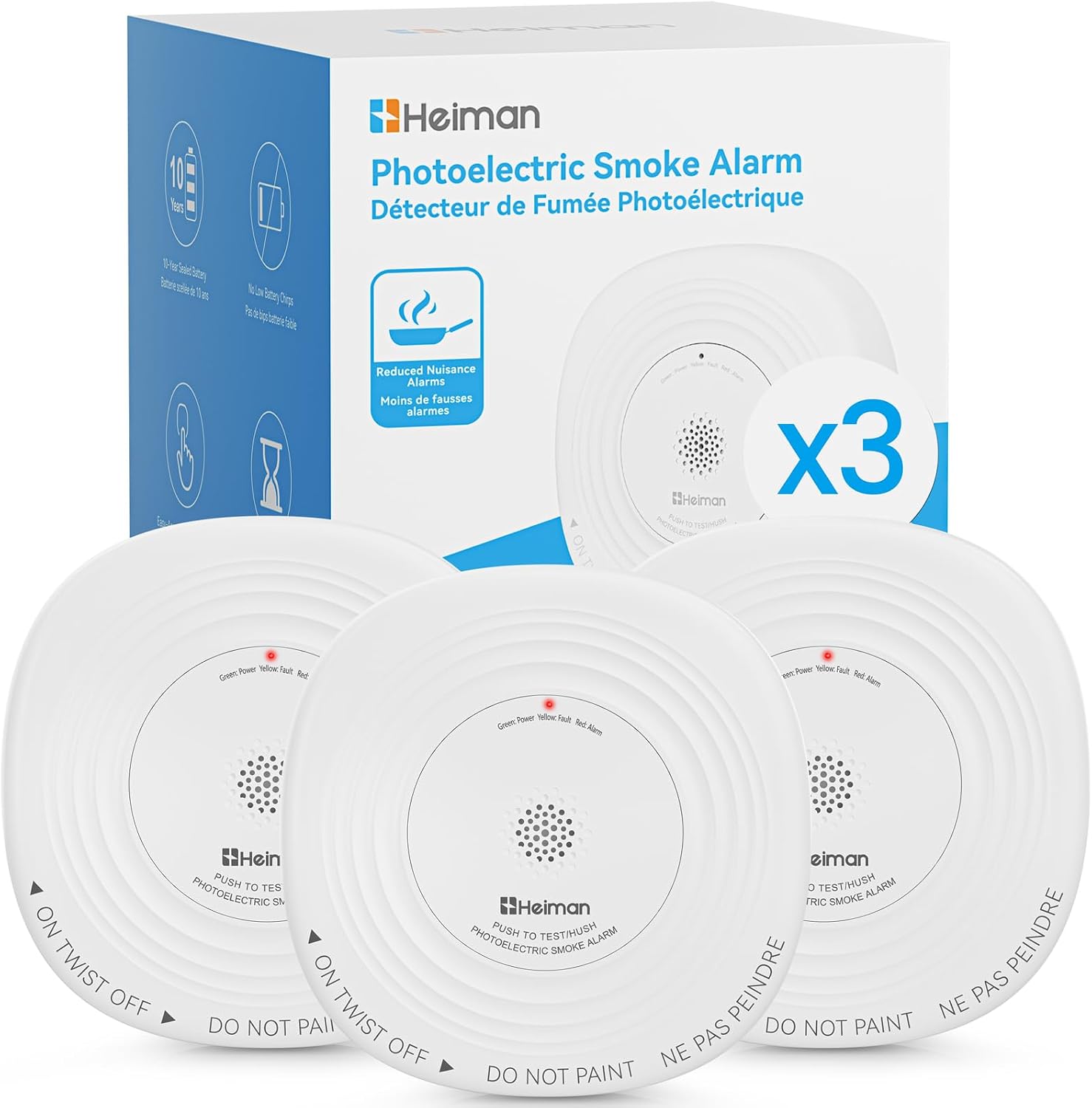
These HEIMAN photoelectric smoke detectors are built for long-term, low-maintenance protection. Each unit uses a dual-beam photoelectric sensor designed to reduce nuisance alarms from cooking while detecting smoldering fires, and the sealed lithium battery is rated to last the full 10-year service life to avoid annual battery changes. Installation is straightforward for ceiling or wall mounting and the housing is made from heat-resistant ABS+PC material. The alarm emits an 85 dB tone and a flashing red LED when triggered, and a memory indicator flashes every 20 seconds after an alarm so you can notice a past event. Self-check diagnostics and an end-of-life warning help ensure you know when a unit needs replacement. Trade-offs are modest: there is no hardwired or interconnected option on this model and no smartphone connectivity, so monitoring and silencing must be done locally at each alarm. For someone prioritizing reliable, code-compliant photoelectric detection with minimal upkeep, these detectors offer practical, durable coverage for bedrooms, apartments, and rental units.
Best for: Buyers who want a dependable, low-maintenance smoke detector that stays protected for a decade without battery changes and meets current safety standards.
Less Ideal for: If you need interconnected alarms, smart-home integration, or hardwired installation, choose a model with those specific connectivity features instead.
- Sealed 10-year lithium battery for maintenance-free operation
- Photoelectric dual-beam sensor that reduces cooking false alarms
- UL 217 10th Edition and CSFM certification for code-compliant protection
- Smart self-checks and end-of-life warning to maintain reliable readiness
- No hardwired or wireless interconnect capability for whole-house alerts
- Lacks app connectivity or remote monitoring
Verdict: A hassle-free, code-compliant photoelectric alarm bundle that delivers decade-long, maintenance-free detection for reliability-minded buyers.
Choosing the Right Photoelectric Smoke Detector: Key Factors to Consider
Detection Type and Response
Photoelectric sensors are specifically designed to detect larger smoke particles typical of smoldering fires. That matters because smoldering fires often produce dangerous smoke and carbon monoxide well before flames develop.
When evaluating a detector, consider how quickly the sensor chamber reacts to visible smoke and whether the manufacturer describes the sensing principle clearly. Faster response to smoldering conditions can provide crucial extra minutes for evacuation and early mitigation.
False-Alarm Immunity
The best photoelectric detectors minimize nuisance alarms from cooking, shower steam, or dust while still detecting real smoke. A detector that triggers frequently can lead to users disabling it, which defeats the safety purpose.
Look for design features such as baffled sensor chambers, adjustable sensitivity modes, or built-in hush functions. Ease of resetting and sensible alarm thresholds make daily life easier without compromising safety.
Power Source and Backup
How a detector is powered affects reliability and upkeep. Hardwired units with battery backup provide continuous power with secondary protection during outages. Battery-only units are simpler to install but require routine battery changes or long-life sealed cells.
Consider whether you prefer replaceable batteries for easy same-day swaps or sealed long-life batteries for maintenance-free operation. Also factor in backup duration and whether low-battery warnings are loud and clear enough for household members to notice.
Installation Flexibility
Mounting options and ease of installation matter for practical placement. Some detectors use simple twist-on mounting plates, while others require more complex junction box compatibility. Proper ceiling or high-wall placement is essential for accurate detection.
Assess whether the unit fits existing electrical boxes if you plan to hardwire, or whether it supports surface mounting. Lightweight, easy-to-mount detectors reduce installation time and make relocation simpler if you change bedrooms or remodel.
Maintenance and Testability
Routine testing and cleaning keep detectors functioning reliably. Look for models with an accessible test button, clear end-of-life indicators, and removable covers for periodic dusting. Easy visual inspection helps homeowners confirm operational status quickly.
Also consider how often the device needs replacement based on manufacturer guidance and whether the design facilitates simple battery changes without specialized tools.
Connectivity and Interoperability
Some photoelectric detectors support interconnect features so that one triggered alarm can sound other linked units. This is important in larger homes where a local alarm may not wake occupants in distant rooms.
Decide whether you need wireless or hardwired interconnect capability. Interconnected systems improve safety by ensuring a single alarm alerts the whole household, but they may require compatible wiring or hub devices depending on the installation type.
Where to Place Photoelectric Smoke Detectors
Place detectors on ceilings or high on walls where smoke will naturally accumulate. Install one in each bedroom, outside sleeping areas, and on every level of the home, including basements.
Avoid installing directly above cooking appliances or bathrooms where steam and grease can trigger false alarms. If placement near a kitchen is necessary, select a detector with proven false-alarm resistance or use a two-sensor strategy.
- Ceiling center is ideal for maximum early detection
- Keep detectors at least 10 feet from cooking appliances when possible
- Mount detectors high on walls only if ceilings are inaccessible
Wired Vs Battery-Operated Units
Hardwired detectors deliver continuous power and often support interconnection without extra hubs. They are a good choice for homes undergoing renovation or where existing junction boxes are available.
Battery-operated models are simpler to install and relocate, making them practical for renters or quick upgrades. Long-life sealed batteries reduce maintenance but check end-of-life replacement intervals so devices remain effective.
- Hardwired: continuous power, may require electrician
- Battery: easy DIY installation, requires battery checks
- Sealed long-life battery: low maintenance, fixed lifespan
Understanding Alarm Features
Key alarm features include hush or silence buttons for transient nuisance events, loudness levels measured in decibels, and clearly labeled test functions. A prominent test button simplifies monthly checks.
Look for clear low-battery chirps and end-of-life signals that avoid confusion with other alerts. Consistent, intelligible alerts improve household response in an emergency.
- Hush mode for temporary silence during false alarms
- Test button for monthly functional checks
- Distinct end-of-life alerts so units are replaced on time
Maintaining Your Detector
Regular maintenance is simple but important. Test alarms monthly, replace or recharge batteries according to the schedule, and dust the sensor chamber annually to prevent false triggers.
Record replacement dates and set reminders for end-of-life replacement. Even sealed units need eventual replacement when their sensors age out, so track that date to keep the system reliable.
- Monthly tests using the built-in button
- Periodic dusting and visual inspections
- Set calendar alerts for battery and end-of-life replacement
Interconnected Systems and Home Safety Planning
Interconnected detectors that all sound together increase the chance that sleeping occupants will wake and evacuate. Plan the network layout so every bedroom and escape route is covered by at least one linked alarm.
If you choose wireless interconnection, verify signal range and compatibility with existing devices. For hardwired interconnect, ensure wiring meets current codes and that installation preserves circuit integrity.
- One triggered alarm should alert the whole household
- Verify interconnect range for wireless setups
- Coordinate placement with escape routes and sleeping areas
How We Chose the Best Photoelectric Smoke Detector
We prioritized features that directly affect real-world fire detection and long-term reliability. Our selection process focused on detection responsiveness to smoldering fires, resistance to false alarms from cooking and humidity, installation flexibility, and battery or power longevity. We also evaluated build quality and warranty support information where available, plus ease of testing and maintenance. Excluded items included combination-only sensors that primarily rely on ionization sensing and units without clear photoelectric sensing specifications. We filtered out devices with unclear replacement battery access or poor installation options. The final list emphasizes units with demonstrable photoelectric sensing design, clear mounting hardware, and straightforward maintenance procedures. Our editorial filters favored detectors that balance quick detection of slow-burning fires with low nuisance alarm rates and reasonable upkeep needs.
Our full evaluation process is outlined in our review methodology.
FAQ
How often should I test a photoelectric smoke detector?
Test the detector at least once a month using the built-in test button. Regular testing confirms the alarm sound and verifies battery or power status.
Can photoelectric detectors be used near kitchens?
Photoelectric detectors are less prone to kitchen nuisance alarms than other sensing types, but they can still trigger from heavy cooking or grease. If installing near a kitchen, choose a model with proven false-alarm resistance and place it at least 10 feet from cooking surfaces when possible.
What is the expected lifespan of a photoelectric smoke detector?
Most detectors have an end-of-life recommendation typically between 7 and 10 years. The sensor performance can degrade over time, so track the manufacture or replacement date and plan to swap units when recommended.
Are sealed long-life batteries better than replaceable batteries?
Sealed long-life batteries reduce maintenance because you do not change them yearly, but the entire unit must be replaced when the battery dies. Replaceable batteries let you restore power immediately but require routine checking and swaps.
Do photoelectric detectors work with home automation systems?
Some photoelectric detectors offer wireless connectivity or hubs that integrate with home automation platforms. Compatibility varies, so verify communication protocols and any required bridge devices before assuming interoperability.
Final Verdict
Prioritize detectors that reliably sense smoldering smoke while minimizing false alarms from everyday household activities. Decide between hardwired or battery-operated power based on installation constraints and how much maintenance you want. Also factor in interconnect capability and ease of testing so alarms alert the whole home when needed. Focus on practical tradeoffs: faster smolder detection and false-alarm resistance for living spaces, and robust power arrangements for continuous protection. Choose a detector that aligns with your installation scenario and maintenance preferences to ensure consistent, long-term safety.