
Note: This article contains affiliate links. If you click on these links and make a purchase, we may earn a small commission at no extra cost to you. This helps support our research and content. Read our full affiliate disclosure here.
A bedroom needs a dehumidifier that quietly tames humidity without interrupting sleep. Too much moisture makes rooms feel clammy, encourages odors, and can aggravate allergies. Choosing the right portable dehumidifier for bedrooms matters because the wrong unit can be noisy, overpowered for small spaces, or require frequent emptying. This guide covers seven shortlisted portable dehumidifiers selected for bedroom use. We focus on practical criteria like nighttime noise, moisture removal capacity for typical bedroom sizes, ease of maintenance, and safety features. Read on to see which options suit different bedroom layouts and humidity conditions.
Top Picks at a Glance
| Best Overall The best all-around choice for most situations | BEDRED CT11 Dehumidifier |  |
| Best Quality Built to a higher standard if you want something more solid | Midea 22 Pint Dehumidifier |  |
| Best Value The sweet spot between price and what you get | Spacekey QIG-D02 Dehumidifier |  |
| Best Budget The cheapest option that still gets the job done reliably | Eva-Dry Mini Dehumidifier E-333 |  |
| Top Rated A top-rated pick with lots of positive feedback | Semzodax D01 63oz Dehumidifier |  |
| Most Popular A crowd favorite that many people choose with confidence | TABYIK 35OZ Dehumidifier DH-CS01 |  |
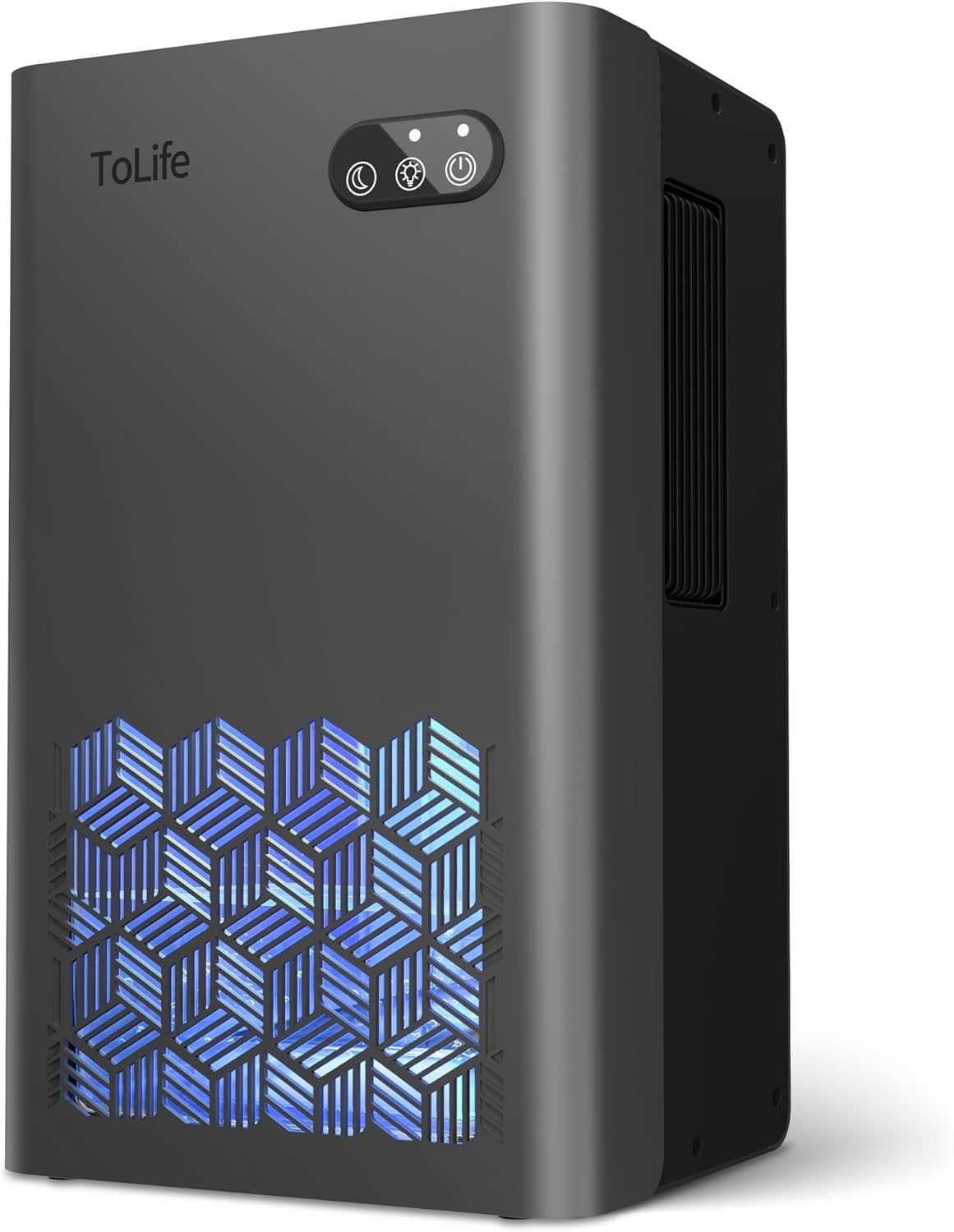
| Best Seller A high-volume bestseller chosen again and again | ToLife Dehumidifier TZ-C2 |  |
BEDRED CT11 Dehumidifier

| Floor Area | 1000 square_feet |
|---|---|
| Tank Volume | 95 fluid ounces |
| Capacity | 5.9 pounds |
| Operation Mode | Intermittent |
| Other Special Features of the Product | 7 Color Ambient Light, Automatic Shutoff, Sleep Mode |
The BEDRED CT11 is a compact thermoelectric dehumidifier intended to reduce humidity in small spaces such as bedrooms, bathrooms, and modest basements up to about 1000 sq ft. It uses semiconductor cooling rather than a compressor, so it runs quietly and is simple to operate with an intermittent operation mode and an automatic shutoff when the 95 oz tank fills. Sleep Mode turns off the lights and lowers noise for overnight use, and the seven-color ambient light gives an optional mood-lighting feature. Practical benefits include easy emptying from the included tank, portability thanks to a lightweight design, and low sound levels that suit living spaces. Important limitations are inherent to semiconductor units: lower capacity compared with compressor dehumidifiers, reduced performance in very cold or very damp basements, and a smaller tank that requires more frequent emptying in high-humidity conditions.
Best for: Buyers who prioritize quiet, low-maintenance dehumidification and want a compact unit that is easy to move and run in living spaces or small basements without frequent intervention.
Less Ideal for: People needing heavy-duty moisture control for large, cold, or very damp basements should choose a higher-capacity compressor dehumidifier instead.
- Quiet thermoelectric operation suitable for bedrooms and living rooms
- Automatic shutoff protects against overfill and simplifies unattended use
- 95 oz removable tank for straightforward water removal
- Sleep Mode and ambient light options for low‑noise nighttime use
- Compact and lightweight for easy placement or moving between rooms
- Semiconductor cooling gives lower moisture removal capacity than compressor models
- Performance drops in cold basement conditions and very high humidity areas
Verdict: Choose the BEDRED CT11 if you want a quiet, portable dehumidifier with auto‑shutoff and sleep‑friendly operation for small basements or living spaces.
Midea 22 Pint Dehumidifier

| Coverage | 1500 square_feet |
|---|---|
| Dehumidification Capacity | 22 pints_per_day |
| Tank Volume | 0.8 gallons |
| Noise Level | 47 dBA |
| Wattage | 295 watts |
The Midea 22 Pint Dehumidifier is a compact, room-focused unit that removes up to 22 pints of moisture per day and is intended for spaces up to about 1,500 square feet. It is typically used in bedrooms, basements, laundry rooms, or other living areas to maintain a comfortable humidity level; controls include adjustable humidity (35%–85%), a programmable timer, turbo mode for faster moisture removal, and continuous drainage via a hose connection. Notable features include Energy Star certification for lower energy use, Wi‑Fi and voice assistant support for remote monitoring and control, a washable reusable filter, auto‑defrost and auto‑restart after power outages, and four 360° rotating wheels that make it easy to move between rooms. Practical benefits are quiet operation at about 47 dBA that suits bedroom use and built‑in smart control for hands‑off humidity management. Limitations are modest daily capacity that may struggle in very damp basements or large open areas and a relatively small internal tank that requires draining unless a hose is attached.
Best for: Buyers who prioritize effective, quiet humidity control in bedrooms or similarly sized rooms and who value smart remote control and energy efficiency for daily use.
Less Ideal for: People needing heavy‑duty dehumidification for very large basements, whole‑house applications, or extremely damp environments should choose a higher‑capacity commercial unit.
- Removes up to 22 pints per day suitable for typical bedrooms and small basements
- Energy Star certified for lower energy consumption compared with conventional units
- Wi‑Fi and voice assistant support for remote monitoring and control
- Quiet operation (~47 dBA) appropriate for overnight use
- Reusable washable filter and continuous drain option reduce maintenance frequency
- 22‑pint capacity may be insufficient in very damp or large spaces
- Water tank is relatively small so frequent emptying is required without a continuous drain hose
Verdict: A quiet, energy‑efficient smart dehumidifier well suited to bedrooms and small rooms where remote control and modest continuous moisture removal are the priority.
Spacekey QIG-D02 Dehumidifier

| Floor Area | 1000 square_feet |
|---|---|
| Capacity | 95 fluid ounces |
| Number of Speeds | 2 |
| Wattage | 88 watts |
| Dehumidification Capacity | 40 pints_per_day |
The Spacekey QIG-D02 is a compact, portable dehumidifier aimed at bedrooms, bathrooms, closets and small RVs. It uses semiconductor (thermoelectric) dehumidification and is rated to remove up to 40 pints per day under test conditions while collecting into a large 95 ounce removable tank, and it shuts off automatically when full. Operation is simple: two modes let you choose a higher-power setting for rapid moisture removal or a quiet night mode for sleeping, and an LED indicator and 7-color ambient light provide visual status and a soft nightlight. The unit is lightweight with a built-in handle so you can move it between rooms, and its low noise in night mode makes it suitable for bedrooms. Trade-offs are typical for compact thermoelectric units: it is best for small to medium spaces rather than whole-house use and performance will be lower in cold environments compared with compressor models. The large tank reduces how often you need to empty it, and automatic shutoff reduces maintenance hassle.
Best for: Buyers who want a low-maintenance, quiet bedroom dehumidifier that is easy to move and minimizes how often you need to empty the tank.
Less Ideal for: If you need aggressive moisture removal for large basements or cold spaces, this compact thermoelectric unit will be insufficient and a compressor model is a better choice.
- Large 95 oz removable tank reduces refill frequency
- Two operating modes including a very quiet night mode for bedrooms
- Auto shut-off prevents overflow and simplifies unattended use
- Portable design with built-in handle for easy room-to-room placement
- Semiconductor dehumidification limits efficiency in cooler rooms compared with compressor units
- Designed for small to medium spaces, not whole-house dehumidification
Verdict: A quiet, easy-to-use portable dehumidifier with a large tank that’s optimized for bedroom use and minimal daily maintenance.
Eva-Dry Mini Dehumidifier E-333

| Floor Area | 333 square_feet |
|---|---|
| Capacity | 6 ounces |
| Dehumidification Capacity | 0.38 pints_per_day |
| Operation Mode | Continuous |
| Wattage | 22.5 |
The Eva-Dry E-333 is a compact, rechargeable mini dehumidifier that uses crystallized silica gel to pull moisture from small spaces such as closets, bathrooms, cars, and gun safes. It requires no cords or batteries during operation and signals when it needs recharging via color-changing moisture beads, making it easy to hang or place where humidity is a problem. The unit captures roughly 4 to 6 ounces before recharge and is marketed to cover spaces up to 333 square feet, so it works best as a point solution rather than a whole-room appliance. Because it is non-electric during use and has no tank to empty, it is low maintenance and leak-free, but its dehumidification rate is very low compared with powered dehumidifiers and it cannot actively lower large-room humidity quickly. For someone looking for a simple, quiet, and renewable moisture absorber for a bedroom closet or bedside cabinet, it is a practical budget option, though larger or continuously damp bedrooms will need a powered unit for reliable humidity control.
Best for: Buyers looking for an inexpensive, no-fuss way to control occasional humidity in small bedroom zones like closets or under-sink areas who prioritize simplicity and low maintenance.
Less Ideal for: People needing continuous, whole-bedroom humidity control or fast moisture removal in persistently damp rooms should choose a powered dehumidifier instead.
- Fully cordless and rechargeable, no batteries or constant power required
- Simple color-change indicator shows when to recharge
- Compact, hangable design fits closets, cabinets, and small bedroom spaces
- Non-toxic silica gel media provides leak-free moisture absorption
- Very low dehumidification capacity compared with electric units
- Needs periodic recharging rather than continuous operation
Verdict: A very affordable, cordless moisture absorber that is ideal for keeping small bedroom zones like closets and cabinets dry without electricity.
Semzodax D01 63oz Dehumidifier

| Capacity | 63 fluid ounces |
|---|---|
| Tank Volume | 63 fluid ounces |
| Operation Mode | Auto Dehumidify |
| Other Special Features | Automatic Defrost, Automatic Shutoff, Night Light, Timer, Ultra Quiet |
The Semzodax D01 is a small bedroom-focused dehumidifier designed for low-noise, hassle-free operation. It removes moisture either in an auto-dehumidify mode that maintains preset humidity levels or in continuous mode for maximum extraction, while an automatic defrost feature helps it run down to about 41 F without icing. The large 63oz removable tank uses an auto shut-off and visual LED alert when full, and a programmable 6/8/10 hour timer plus a flowing 7-color night light make it easy to run overnight. At roughly 35 dB it is quiet enough for nurseries and bedrooms, and its light weight and compact footprint make it simple to move between a closet, bathroom, RV, or small room. Practical limitations are that it is sized for small spaces rather than whole floors and it relies on the internal tank rather than a continuous drain hose for long unattended runs, so frequent emptying may be needed in very damp conditions.
Best for: Buyers who prioritize a quiet, low-maintenance bedroom dehumidifier that can run overnight with simple controls and a large internal tank.
Less Ideal for: Those needing a high-capacity or whole-room solution for very large or consistently damp areas should consider larger, more industrial units.
- Very quiet operation at about 35 dB suitable for bedrooms and nurseries
- Large 63 oz removable tank with auto shut-off and LED full indicator
- Auto-defrost lets the unit operate efficiently at lower temperatures
- Programmable timer and a soft 7-color night light for overnight use
- Lightweight, compact design that is easy to move between rooms
- Designed for small spaces only and not intended to dehumidify large rooms or whole floors
- No listed continuous drain option so tank emptying is required during heavy use
Verdict: A compact, ultra-quiet bedroom dehumidifier with a large internal tank and auto-defrost that makes overnight moisture control simple and reliable.
TABYIK 35OZ Dehumidifier DH-CS01

| Tank Volume | 1000 ml |
|---|---|
| Dehumidification Capacity | 0.45 liters_per_day |
| Floor Area | 280 square_feet |
| Wattage | 40 watts |
| Number of Speeds | 1 |
The TABYIK 35OZ DH-CS01 is a small, portable Peltier dehumidifier built for bedrooms, bathrooms, closets and RVs. It runs continuously on a single-button control, pulls moisture from the air at up to roughly 450 ml (16 oz) per day under warm, humid conditions, and stores water in a transparent 1000 ml tank with an auto shutoff that stops the unit as the tank nears full. The unit advertises very quiet operation around 28 dB and includes a seven-color light with an independent control so you can run it without disturbing sleep. Its low 40 W power draw keeps daily energy use modest. Practical benefits are straightforward: small footprint and built-in handle make it easy to move between spaces, the visible tank simplifies monitoring and emptying, and the simple controls keep operation foolproof. Important limits are its low daily extraction rate and single fan speed, which means it is best for mildly damp, small spaces rather than basements or large rooms, and Peltier-style dehumidifiers are slower than compressor models in cooler conditions.
Best for: Buyers who prioritize quiet, easy-to-use moisture control for small rooms and want a compact, low-energy unit with straightforward tank monitoring and auto shutoff.
Less Ideal for: People who need fast dehumidification for larger rooms, basements, or very damp conditions should choose a higher-capacity compressor dehumidifier instead.
- Compact, lightweight and easy to move with a built-in handle
- Transparent 1000 ml tank with groove design for simple removal and cleaning
- Very quiet operation (~28 dB) suitable for bedrooms and offices
- Low power draw (40 W) for economical daily use
- Auto shutoff protects against overflow and notifies when the tank is nearly full
- Low maximum extraction (~0.45 liters / 16 oz per day) limits use to small, mildly damp spaces
- Single speed operation offers no adjustable humidity control
Verdict: A quiet, energy-efficient compact dehumidifier that is ideal for low-intensity moisture control in small bedrooms and similar spaces.
ToLife Dehumidifier TZ-C2
| Floor Area | 1000 |
|---|---|
| Tank Volume | 95 fluid ounces |
| Number of Speeds | 2 |
| Wattage | 93 watts |
| Voltage | 220 volts |
The ToLife TZ-C2 uses semiconductor condensation technology to quietly pull moisture from the air and deposit it into a removable 95 oz tank, making it a straightforward option for damp rooms. It offers two operating modes: a higher-power setting for faster moisture removal and a low-speed sleep mode that runs under 30 dB for overnight use. A seven-color LED can act as a night light and the unit includes automatic shutoff when the tank is full or removed, plus handles for easy moving between rooms. Practical benefits include simple setup, low noise, and a compact footprint that fits in basements, bathrooms, or bedrooms. Limitations are its modest rated dehumidification capacity and stated coverage, which means it will be most effective in smaller basement zones or for spot treatments rather than drying a large, very damp basement quickly. Also this model runs on 220 volts, so electrical compatibility should be confirmed for your location.
Best for: Buyers who need an affordable, portable dehumidifier for spot dehumidifying small basement areas, bathrooms, or bedrooms and who prioritize low noise and easy portability.
Less Ideal for: People looking to dry large, very damp basements or whole-house coverage should consider a higher-capacity compressor dehumidifier instead.
- Large removable 95 oz water tank reduces how often you need to empty it
- Quiet sleep mode under 30 dB suitable for nighttime operation
- Portable design with handles for moving between rooms
- Automatic shutoff prevents overflow when the tank is full
- Dehumidification capacity is modest and may be slow in very damp or large basements
- Requires 220 volt power which may not match all household outlets
Verdict: A compact, budget-friendly portable dehumidifier that is best for quiet, small-area moisture control and occasional basement spot treatments.
Choosing the Right Portable Dehumidifier for Bedrooms: Key Factors to Consider
Room Size and Capacity Match
Choosing a dehumidifier rated for the correct room size matters because a unit sized too small will run continuously without bringing humidity down, while an oversized unit may short-cycle and waste energy.
Look for moisture removal rates and recommended square footage or room volume listed by the manufacturer. For standard bedrooms, focus on units designed for small to medium rooms and consider how high the ceilings are. If the bedroom connects to a bathroom or has frequent moisture sources, err toward a slightly higher capacity to maintain comfortable relative humidity.
Operational Noise and Night Modes
Noise matters considerably in bedrooms where machines run while you sleep. Decibel ratings provide a baseline, but real-world night modes and low-fan settings often matter more for perceived disturbance.
Check for explicit low-noise or sleep modes that reduce fan speed and display lights. Users should also consider whether the unit broadcasts fan or compressor hum at low speeds and whether controls or alerts can be muted. A quieter unit may trade some dehumidifying speed for comfort, which is usually the right choice for sleeping spaces.
Water Tank Capacity and Drain Options
How a unit handles collected water affects how hands-on you must be. Small tanks mean frequent emptying, which is inconvenient in a bedroom. Larger tanks or continuous-drain options reduce maintenance but affect placement and setup.
Look for tanks with easy-grip handles and clear level windows, and check whether gravity drain or pump-assisted continuous drainage is available. If you cannot place a hose to a floor drain, choose a larger tank or a model with an internal pump to move water to a nearby sink or through a window.
Ease of Use and Controls
Simple, intuitive controls and clear indicators make everyday operation less of a chore. Digital hygrometers, set-and-forget humidity targets, and simple timers help you manage comfort without fiddling.
Consider whether the unit remembers settings after a power interruption, whether a programmable timer is present, and how visible the display is in a dark room. Remote controls or smartphone integration can add convenience but also increase complexity and potential for troubleshooting.
Energy Use and Efficiency
Dehumidifiers can run for many hours, so energy efficiency affects both operating cost and environmental impact. Efficiency depends on compressor design, fan speed control, and how the unit performs at typical bedroom temperatures.
Look for units with energy-saving modes, auto-humidity features, and clear specifications about watts or energy use at standard conditions. Efficient performance at lower room temperatures is important in cooler bedrooms because some dehumidifiers lose capacity as temperature drops.
Safety and Placement Constraints
Safety features like automatic shutoff when the tank is full and tip-over protection are important in bedrooms where the unit may be placed near furniture or foot traffic.
Also consider clearance needs for airflow, cord length, and whether the unit should sit on carpeting or a hard surface. If you have children or pets, look for handles and recessed controls that reduce the chance of tampering.
Sizing a Dehumidifier to Bedroom Layout
To pick the right capacity, start by measuring the floor area and ceiling height of the bedroom. Multiply area by ceiling height to estimate room volume; higher ceilings increase the amount of air the unit must process.
For rooms with intermittent moisture sources like attached bathrooms, mirror condensation, or poor ventilation, select a slightly higher removal-rate rating than you would for a dry room. Placement matters too: position the unit near the moisture source without blocking airflow or creating tripping hazards.
- Place unit at least a few inches from walls or furniture for proper airflow.
- Avoid corners where airflow is restricted.
- Use continuous drainage if the unit will run for long periods or in damp climates.
Quiet Operation Tips for Better Sleep
If you need the dehumidifier running overnight, choose a model with a verified sleep mode or operate it on a low fan setting. Lower fan speeds reduce noise but also slow moisture removal, so balance comfort against how humid the room gets.
Consider sound-absorbing placement such as on a hard floor rather than a hollow nightstand, which can amplify vibrations. Also, dim or disable display lights to minimize sleep disruptions.
- Run the unit in low or sleep mode during nighttime.
- Check for rubber feet or vibration dampers to reduce buzzing.
- Position the intake away from the bed to reduce perceived noise.
Maintenance Routines That Keep Units Working Well
Regular maintenance extends the life and effectiveness of a dehumidifier. Clean or replace filters on the schedule the manufacturer recommends and inspect the tank for mold or buildup. Wiping the tank and filter housing with mild detergent every few weeks is usually sufficient.
If you use continuous drainage, flush hoses periodically to prevent blockages. Keep intake and exhaust grilles free of dust, and store the unit in a dry place during off-season months after it has been thoroughly cleaned and dried.
- Empty and rinse the tank regularly, even if full-auto shutoff is present.
- Clean the filter monthly in dusty environments.
- Inspect drain hoses and fittings for leaks or clogs.
Placement and Electrical Safety in Bedrooms
Place the unit where it has good airflow and where the power cord can reach an outlet without stretching. Avoid extension cords unless the unit is approved for that use. Keep the unit away from drapery or bedding that could obstruct airflow.
Ensure the floor can handle the weight of a full tank. In multi-level homes, avoid placing a unit above finished ceilings or near sensitive flooring where accidental spills could cause damage. If the unit includes a pump for automatic drainage, confirm the plumbing path and elevation limits before installation.
- Use a dedicated outlet to avoid overloading circuits.
- Keep the unit on a stable, level surface to ensure proper drainage.
- Avoid placing the unit directly against heated ducts or radiators.
Managing Humidity Targets and Air Quality
Set a realistic humidity target for bedrooms: often 40 to 50 percent relative humidity is comfortable and helps reduce dust mites and mold risk. Running a dehumidifier to maintain this band is more effective and energy efficient than attempting extremely low humidity.
Dehumidifiers do not replace air purifiers; they control moisture but do not remove fine particulates or odors. For combined humidity and air quality concerns, pair a dehumidifier with appropriate ventilation or an air-cleaning device.
- Aim for mid-40s relative humidity for most bedrooms.
- Use a separate hygrometer if precise monitoring is needed.
- Combine with ventilation strategies to reduce indoor sources of humidity.
How We Chose the Best Portable Dehumidifier for Bedrooms
We narrowed candidates using filters that reflect real bedroom use. First, we limited units to portable designs with capacities appropriate for small to medium bedrooms rather than whole-house systems. We prioritized measured moisture removal rates suitable for 150 to 500 square foot rooms and considered how a unit performs at typical indoor temperatures. Operational sound level was a core filter because many people run dehumidifiers overnight. We favored models with verified low-noise or dedicated night modes. Maintenance factors were also important: water-tank capacity and drain options affect how often a unit needs attention, and easy-access filters reduce upkeep time. Safety and energy use were evaluated through presence of automatic shutoff, tip-over protection, and efficiency-minded controls. We excluded industrial, non-portable, or whole-house machines that are inappropriate for bedroom use. Units lacking basic safety features or with inadequate moisture removal for typical bedroom sizes were removed. The criteria we emphasized are reflected in our scoring dimensions: noise, moisture removal, tank and drainage convenience, energy efficiency, and ease of use.
Our full evaluation process is outlined in our review methodology.
FAQ
How loud is a typical bedroom dehumidifier at night?
Noise varies, but well-designed bedroom units often operate between about 30 and 45 decibels on low or sleep mode. The perceived disturbance depends on fan speed, compressor cycle, and where the unit sits relative to the bed.
Can I run a dehumidifier in a room while I sleep?
Yes. Running on a low or night mode is common practice. Choose a unit with verified quiet operation and dimmable displays, and be mindful that lower fan speeds reduce moisture removal speed.
Do I need a continuous drain for a bedroom dehumidifier?
Continuous drain is helpful if the unit runs for extended periods or you want to avoid frequent emptying. If a nearby drain is not available, select a larger tank capacity to reduce how often you need to empty it.
Will a dehumidifier also improve air quality?
Dehumidifiers reduce moisture, which helps inhibit mold and dust-mite growth, indirectly improving air quality. They do not remove fine particulates or gases, so consider adding ventilation or an air cleaner for particle removal.
How often should filters be cleaned in a bedroom unit?
Filter-cleaning frequency depends on dust levels and usage but typically ranges from monthly to every three months. Regular checks are recommended to maintain airflow and efficiency.
Final Verdict
For bedroom use, prioritize low operational noise, a moisture removal rate matched to room volume, and convenient drainage or tank capacity. Energy efficiency and safety features like automatic shutoff and stable placement help make long-term ownership easier. Balance removal speed against nighttime comfort: in most cases choosing a quieter unit with sufficient capacity will deliver the best sleep environment while keeping humidity in a healthy range.