
Note: This article contains affiliate links. If you click on these links and make a purchase, we may earn a small commission at no extra cost to you. This helps support our research and content. Read our full affiliate disclosure here.
A portable dehumidifier with a pump saves you from frequent emptying and simplifies continuous drainage in basements, laundry rooms, and other damp areas. If you are managing persistent humidity or want unattended operation in spaces below-grade, choosing the right pump-equipped unit matters for reliability, noise, and how long it can run unattended. This guide covers seven shortlisted portable dehumidifiers with pumps that meet common home needs, focusing on extraction performance, pump durability, and practical features like automatic shutoff and hose routing. Below you'll find concise evaluations and a clear explanation of the criteria we used to select these pump-equipped units, followed by buying guidance to help match a model to your space and usage patterns.
Top Picks at a Glance
| Best Overall The best all-around choice for most situations | Abestorm Guardian SN35P |  |
| Best Quality Built to a higher standard if you want something more solid | avylo 90 Pint Dehumidifier ADC018 |  |
| Best Value The sweet spot between price and what you get | DuraComfort DH50PH Dehumidifier |  |
| Best Budget The cheapest option that still gets the job done reliably | Midea 50 Pint Dehumidifier |  |
| Top Rated A top-rated pick with lots of positive feedback | DuraComfort DH50PWM 50-Pint Dehumidifier | 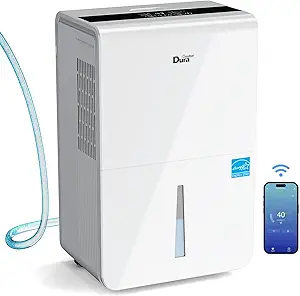 |
| Most Popular A crowd favorite that many people choose with confidence | hOmeLabs 50 Pint Dehumidifier HME1004 |  |
| Best Seller A high-volume bestseller chosen again and again | AEOCKY LEO Dehumidifier |  |
Abestorm Guardian SN35P

| Capacity | 70 pints |
|---|---|
| Floor Area | 1000 square_feet |
| Air Flow Capacity | 130 cfm |
| Dehumidification Capacity | 35 pints_per_day |
| Operation Mode | automatic |
The Abestorm Guardian SN35P is a portable commercial-grade dehumidifier intended for crawl spaces, basements, and similar enclosed areas up to roughly 1,000 square feet. It removes up to 70 pints (rated) and uses an internal condensate pump that can lift water up to about 19.6 feet for convenient continuous drainage or you can use gravity drain with the included hose. The unit runs automatically with humidity setpoint control, auto-restart after power interruptions, and an auto-defrost routine that protects the compressor in low temperatures. Its 130 CFM airflow and 35 pints/day AHAM rating translate to steady moisture removal in tight, damp spaces, while the compact footprint and optional hanging or riser kit options make installation flexible. Expect a practical commercial feature set—built-in pump, auto-defrost, and straightforward controls—though the housing and filter details are basic and the 38 lb weight means it is portable but not lightweight for frequent moves. For balanced buyers wanting pump-equipped portability and reliable moisture control in basements or crawl spaces, this unit delivers functional performance without extra consumer frills.
Best for: Buyers who want a practical, pump-equipped dehumidifier that balances reliable moisture removal and installation flexibility for crawl spaces or basements without paying for consumer luxury features.
Less Ideal for: People seeking a lightweight, handheld dehumidifier for small rooms or those who need advanced smart-home connectivity or premium air filtration features.
- Built-in condensate pump with roughly 19.6 ft lift for flexible drainage placement
- Auto-defrost and auto-restart protect operation in cool crawl spaces and recover after power loss
- Compact footprint and hanging/riser installation options suit tight crawlspaces and basements
- Automatic humidity control lets the unit stop and restart to maintain set humidity levels
- At about 38 pounds it is portable but relatively heavy to move frequently
- Filter and exterior finish are utilitarian with limited premium filtration details provided
Verdict: Choose the Guardian SN35P if you need a robust, pump-equipped portable dehumidifier that reliably controls humidity in crawl spaces or basements up to about 1,000 sq ft.
avylo 90 Pint Dehumidifier ADC018

| Dehumidification Capacity | 90 pints_per_day |
|---|---|
| Tank Volume | 2.11 gallons |
| Floor Area | 4500 square_feet |
| Number of Speeds | 3 |
| Wattage | 235 watts |
The avylo ADC018 is a performance-focused dehumidifier designed to handle large, damp spaces such as basements and garages. It delivers up to 90 pints per day and uses a high-efficiency compressor and optimized airflow to reach target humidity automatically via onboard sensors and an LED display. Practical features include a top-mounted 2.11 gallon tank with full-tank auto shutoff, a built-in pump with 15 foot lift and included drain hose for continuous unattended drainage, and three fan speeds for adjusting output and noise. Energy-efficient operation (certified Most Efficient ENERGY STAR 2025) and protections like auto defrost, child lock, and overload safeguards help keep running costs and maintenance needs lower. Expect quieter operation at typical levels around 41 dB, but the unit is fairly heavy and aimed at dedicated basement or whole-room dehumidification rather than occasional spot use. Setup requires planning for a drain route if you want continuous pump operation, and its size and weight make it less convenient to move frequently.
Best for: Buyers who need strong, continuous moisture removal in basements or large areas and prioritize high daily capacity, reliable pump drainage, and energy-efficient operation.
Less Ideal for: Those seeking a lightweight, highly portable unit for occasional use in small bedrooms or bathrooms should consider smaller, simpler models.
- High maximum dehumidification capacity (90 pints/day) for large or very damp spaces
- Built-in pump with 15 ft lift plus included drain hose enables continuous unattended drainage
- ENERGY STAR Most Efficient 2025 rating for lower operating cost and better efficiency
- Top-mounted 2.11 gallon tank with full-tank reminder and auto shutoff for easy monitoring and protection
- Multiple protections and features (auto defrost, child lock, overload protection) for safe, long-term operation
- Relatively heavy and bulky, so not ideal for frequent relocation
- Intended for large areas so overkill for small rooms or light humidity issues
Verdict: If you need a powerful, energy-efficient dehumidifier with a factory-quality built-in pump for continuous drainage in basements or large spaces, the avylo ADC018 is a top practical choice.
DuraComfort DH50PH Dehumidifier

| Capacity | 50 pints |
|---|---|
| Tank Volume | 6 pints |
| Wattage | 510 watts |
| Air Flow Capacity | 150 cfm |
| Operation Mode | Automatic |
The DuraComfort DH50PH is a high-capacity portable dehumidifier aimed at removing moisture in large rooms and basements. It extracts up to 50 pints per day and offers automatic operation with adjustable humidity setpoints between 35 and 80 percent, two fan speeds, and a 24-hour timer so you can tailor runtime to the space. The unit includes a built-in drain pump and supports continuous drainage via a 1.06" hose, which removes the need to empty the 1.7-gallon tank manually in many installations. Practical touches like washable filters, caster wheels, and carry handles make placement and maintenance easier, and a quiet fan helps it run unobtrusively. On the downside the unit is fairly heavy and larger than small-room models, and its controls and app-based Wi-Fi features may be more than needed for users who prefer a simpler plug-and-play device. For homeowners managing persistent basement humidity, the pump and continuous-drain capability are the standout conveniences.
Best for: Buyers who prioritize reliable moisture removal and hands-off drainage in basements or large, frequently damp spaces and who want features that simplify long runs without frequent emptying.
Less Ideal for: If you need a lightweight, ultra-compact dehumidifier for a single small room or prefer a purely manual unit without smart controls, this model is more capacity and complexity than necessary.
- High extraction rate up to 50 pints per day suitable for large, damp spaces
- Built-in drain pump plus continuous-drain compatibility eliminates frequent tank emptying
- Adjustable humidity range and 24-hour timer let you control runtime and comfort
- Washable filter, wheels, and handles simplify maintenance and relocation
- Relatively heavy and bulky compared with smaller room dehumidifiers
- App and Wi-Fi control add complexity for users who want a basic unit
Verdict: Choose this model if you want a powerful portable dehumidifier with a built-in pump for reliable, low-maintenance drainage in basements and large damp spaces.
Midea 50 Pint Dehumidifier

| Dehumidification Capacity | 50 pints per day |
|---|---|
| Floor Area | 4500 square_feet |
| Tank Volume | 1.6 gallons |
| Other Special Features of the Product | Quiet Operation, Built-In Pump, Continuous Draining, Timer, Portable |
| Operation Mode | Automatic |
The Midea 50 Pint Dehumidifier with Pump is a portable unit meant to remove up to 50 pints of moisture per day from spaces as large as 4,500 square feet. It is typically used in basements, large rooms, or areas prone to dampness where continuous drainage is desirable. Notable features include a built‑in pump for automatic water removal, a 1.6 gallon internal tank for temporary collection, a programmable timer, and quiet operation quoted around 47 dBA. The four-wheel design makes it easy to move between rooms, and automatic operation with adjustable humidity settings lets you set and forget. Practical benefits are fewer interruptions from full tanks thanks to the pump, less manual emptying, and the option to route water away through a hose for long‑term use. Trade-offs are that the unit is a renewed model and may show previous wear, and its pump and pump plumbing require periodic checks to prevent clogs or failure in continuous‑drain setups. The built‑in Wi‑Fi and voice control add convenience but are not essential for straightforward dehumidifying tasks.
Best for: Buyers who need a budget-friendly solution to control humidity in large or damp areas and prioritize automatic drainage over frequent tank emptying.
Less Ideal for: People seeking a brand‑new unit with full factory warranty coverage or users who only need a small, ultra-compact dehumidifier for tiny rooms.
- Built‑in pump for automatic continuous drainage reduces the need to empty the tank manually.
- 50 pint per day capacity suitable for large, damp spaces up to 4,500 sq ft.
- Quiet operation around 47 dBA makes it suitable for living areas and bedrooms.
- Portable four‑wheel design for easy repositioning and a programmable timer for scheduled runs.
- Renewed condition may show cosmetic wear or have shorter remaining life than new units.
- Requires proper hose routing and occasional pump maintenance to avoid clogs or pump failure.
Verdict: If you want a cost-conscious, pump-equipped dehumidifier for large spaces that minimizes manual draining, this Midea 50‑pint renewed unit is a practical pick.
DuraComfort DH50PWM 50-Pint Dehumidifier

| Capacity | 50 pints |
|---|---|
| Floor Area | 4500 square_feet |
| Tank Volume | 12 pints |
| Wattage | 510 watts |
| Air Flow Capacity | 150 cfm |
The DuraComfort DH50PWM is a 50-pint dehumidifier designed for large, damp spaces and includes a built-in pump for elevated drainage. It removes up to 50 pints per day and supports continuous operation with a 12-pint tank while offering gravity or powered pump drainage using the included hoses. The unit connects to 2.4 GHz WiFi and a companion app to change humidity setpoints (30 to 85% RH), set timers, and switch modes, which makes remote monitoring and scheduling straightforward. Practical features include multiple operating modes (Comfort, Smart, Continuous, Laundry), a washable filter with a clean reminder, child lock, caster wheels, handles, and cord storage for easier placement and maintenance. Noise levels are moderate and the Energy Star rating plus adjustable fan speeds help balance performance and efficiency. It is relatively heavy for a portable unit and requires a 110V outlet, and users should plan for the footprint when placing in basements or laundry rooms.
Best for: Buyers who prioritize dependable moisture removal and unattended drainage in large basements or laundry spaces and want remote control for scheduled operation.
Less Ideal for: People who need a lightweight, ultra-compact unit for small rooms or who lack 2.4 GHz WiFi at the installation site.
- Built-in drain pump supports up to 16.4 ft vertical drainage for unattended removal
- Smart app control over 2.4 GHz WiFi lets you set humidity, timers, and modes remotely
- 50-pint daily capacity suitable for large spaces up to 4,500 sq ft
- Multiple modes including laundry drying and continuous operation for flexible use
- Washable filter with reminder and caster wheels simplify maintenance and placement
- Relatively heavy, which makes lifting between floors awkward
- Requires 2.4 GHz WiFi for smart features and a 110V outlet for operation
Verdict: Choose the DH50PWM if you need a reliable, high-capacity portable dehumidifier with a built-in pump and smart control for large or hard-to-drain spaces.
hOmeLabs 50 Pint Dehumidifier HME1004

| Dehumidification Capacity | 50 pints_per_day |
|---|---|
| Capacity | 120 pints |
| Floor Area | 7500 square_feet |
| Air Flow Capacity | 135 cfm |
| Number of Speeds | 3 |
This hOmeLabs unit is a heavy‑duty portable dehumidifier aimed at larger rooms and basements, removing up to 50 pints per day under standard conditions and up to 120 pints in very warm, humid environments. It offers a built‑in pump for automatic continuous drainage, a digital control panel with preset Comfort and Turbo modes, a 24‑hour timer, and Wi‑Fi for remote control. Practical touches include swiveling caster wheels, tidy cord storage, and a washable removable air filter that simplifies upkeep. In regular use it works well for basements, laundry rooms, and large living areas where steady moisture removal is needed without frequent emptying. Expect noticeable humidity reduction when set to Turbo, but the unit is relatively large and requires floor space and occasional filter cleaning. The built‑in pump and continuous drain option are particularly helpful for owners who do not want to empty the bucket frequently, while Wi‑Fi control adds convenience for remote monitoring. Noise and power draw can be higher in Turbo mode, so placement and outlet access are worth planning.
Best for: Buyers who want a pump‑equipped dehumidifier for large rooms or basements and prefer remote control plus low‑maintenance continuous drainage.
Less Ideal for: People needing a compact, lightweight unit for a single small room or those who prioritize the quietest possible operation over high extraction rates.
- Built‑in pump enables automatic continuous drainage without manual bucket emptying
- Wi‑Fi connectivity lets you monitor and control humidity remotely
- Multiple modes and digital display make it easy to set target humidity and timers
- Washable removable air filter and caster wheels simplify maintenance and placement
- Large physical footprint and heavier weight compared with small room units
- Higher airflow and pump operation can be noticeably louder and use more power in Turbo mode
Verdict: Choose this model if you need a pump‑equipped, Wi‑Fi controllable dehumidifier that reliably handles large spaces with continuous drainage.
AEOCKY LEO Dehumidifier

| Capacity | 80 pints |
|---|---|
| Tank Volume | 1.45 gallons |
| Floor Area | 4500 square_feet |
| Operation Mode | Automatic |
| Included Components | Drain Hose |
The AEOCKY LEO is a pump-equipped compressor dehumidifier built for large, damp spaces such as basements and whole-house zones. Its built-in pump and included 5 m drain hose let you route condensate upward or away without lifting the tank, which makes continuous operation easy in locations without a floor drain. The unit targets high-volume removal—rated up to 80 pints per day under hot, humid conditions—and uses a rotary compressor and multi-row heat-exchange design to prioritize efficiency, earning an ENERGY STAR Most Efficient 2025 designation. Controls include an intelligent humidistat and timer for set-and-forget operation, and the design emphasizes low vibration and quiet running for night use. Practical limits are typical for high-capacity compressors: the water tank is modest at 1.45 gallons so pump or continuous drain is essential for long unattended runs, and the unit will be larger and heavier than small portable or thermoelectric models. If you need powerful, energy-efficient moisture removal with automatic pumping, this model delivers a strong mix of performance and convenience.
Best for: Buyers who prioritize reliable, energy‑efficient moisture removal in large or hard-to-drain spaces and want an automatic pump to avoid frequent emptying.
Less Ideal for: If you need a tiny, ultra-portable dehumidifier for a single small room or infrequent spot use, this high-capacity compressor unit is overkill.
- Integrated pump with 5 m hose for upward or remote drainage
- High dehumidification capacity rated up to 80 pints per day
- ENERGY STAR Most Efficient 2025 certification for strong energy performance
- Smart humidistat and timer for automated, set-and-forget operation
- Designed for low vibration and quieter operation compared with many pump models
- Relatively small internal tank requires use of the pump or continuous drain for long unattended runs
- Compressor-based system is larger and heavier than compact thermoelectric units
Verdict: If you want powerful, energy-efficient dehumidification for large spaces without manual draining, the LEO’s built-in pump and ENERGY STAR Most Efficient performance make it a practical hands-off choice.
Choosing the Right Portable Dehumidifier with a Pump: Key Factors to Consider
Extraction Capacity and Real-World Conditions
Extraction capacity, usually stated in pints per day, gives a baseline for how much moisture the unit can remove under standard test conditions. However, real rooms are often cooler or warmer than lab settings, which affects actual removal rates.
Choose a capacity that exceeds your typical moisture load rather than matching it exactly. For basements, laundry areas, or rooms with intermittent high humidity, extra extraction headroom reduces runtime and wear. Consider seasonal variations and whether you need sustained performance during warmer months.
Pump Head Height and Drain Routing
An integrated condensate pump is useful when gravity drainage is impractical. Pump head height, measured as maximum vertical lift, determines how far above the unit you can route the drain line. Confirm the rated lift and remember that longer horizontal runs and fittings reduce effective lift.
If you plan to route water up to a sink, utility drain, or out a window, measure the required vertical distance and allow margin for bends. Units with higher head ratings are more flexible but may cost more or run louder during pumping cycles.
Reservoir Capacity and Overflow Protections
Even with a pump, many units include a collection reservoir as a safety backup. A larger reservoir buys time during pump faults or when the drain becomes restricted. Built-in overflow shutoffs and float switches prevent spills if the pump fails or the drain backs up.
Look for clear indicators and easy access to the reservoir for cleaning. Units that stop operation on overflow reduce the risk of water damage, which is especially important in finished basements and laundry rooms.
Noise and Duty Cycle
Noise matters because dehumidifiers often run for long stretches and may sit near living spaces. Compressor noise, fan whine, and the pump's operation can all contribute to perceived loudness. Manufacturers sometimes list decibel ratings, but real-world placement and room acoustics change how loud a unit seems.
Also consider duty cycle: some units can run continuously with automatic pump cycles, while others are designed for intermittent operation. If you need quiet overnight operation, prioritize lower noise figures and modes that reduce fan speed during off hours.
Controls, Auto Modes, and Timers
Good controls let you set a target humidity, schedule runtimes, or switch between modes such as continuous pump-enabled drainage and reservoir-only operation. A reliable humidistat that maintains setpoints accurately reduces cycling and wear.
Digital displays and simple programming make it easier to integrate the dehumidifier into routine use. If you want remote monitoring or smart features, verify those options are robust and do not require constant manual intervention.
Maintenance Access and Filter Design
Regular cleaning of filters and coils keeps performance high. Accessible, tool-free filter access and washable filter materials simplify upkeep. Coil cleaning is less frequent but should be feasible without disassembling the whole unit.
Consider the availability of serviceable parts such as pump assemblies and float switches. Units designed for easy maintenance reduce long-term ownership costs and downtime.
Where Pumped Dehumidifiers Make The Biggest Difference
Integrated pumps are most valuable when you cannot place the unit near a floor drain or when frequent emptying is impractical. Common situations include finished basements with sump systems, laundry rooms where you want unattended operation, and spaces where the unit sits below the desired drain outlet.
A pumped unit also reduces daily maintenance in humid climates or during seasons when moisture load spikes. If you need continuous operation without daily trips to empty a bucket, a pump-equipped dehumidifier provides a practical solution.
- Basements and crawlspaces without nearby floor drains
- Laundry rooms where manual emptying interrupts chores
- Vacation homes or seldom-visited spaces needing unattended humidity control
Installation Tips for Reliable Pumped Drainage
Measure vertical lift and plan the shortest practical hose route. Every elbow and foot of horizontal run reduces effective pump capacity. Secure and slope the hose to avoid kinks and low points where water can pool.
Use the recommended hose diameter and avoid compression fittings that can trap debris. Periodically inspect the hose for blockages and clean the reservoir and float mechanism to ensure the pump can engage reliably.
- Keep hose runs as straight and short as possible
- Avoid tight loops or sharp bends that impede flow
- Check fittings and clamps for leaks after initial operation
Managing Noise and Placement
Place the unit on a stable, vibration-damping surface to reduce rattles and transfer of noise to the structure. If the unit is in living areas, run it at lower fan settings when possible or use built-in night modes.
Consider noise produced during pump activation. Some pumps run briefly but loudly; others pump more quietly over longer cycles. If the unit will operate in an adjacent room to sleeping areas, test placement to minimize disturbance.
- Use rubber feet or a small foam pad to isolate vibration
- Avoid tight enclosures that amplify sound
- Locate the unit where the pump head does not face toward sleeping spaces
Winter Use and Low-Temperature Performance
Refrigerant-style dehumidifiers lose efficiency as ambient temperatures drop and may cycle or shut down at low temps. If you plan year-round basement use where temperatures fall, choose a unit rated for low-temperature operation or that includes an auto-defrost feature.
Some models include modes that adjust fan speed or compressor operation to maintain extraction in cooler conditions. For areas that routinely dip near freezing, consider supplemental heating or placing the unit in the warmest part of the space to preserve performance.
- Check for low-temperature ratings and defrost features
- Avoid placing units in unheated spaces if consistent performance is required
- Allow clearance for airflow to prevent icing
Safety and Water Management Best Practices
Even with a pump, plan for backups. Install a high-level float or secondary alarm if the drained water could cause damage. Inspect the pump and hose periodically to prevent slow leaks or blockages that can lead to overflow.
If the drain outlet is subject to backflow, position an air gap or check valve to prevent contamination. Keep the area around the unit clear to allow ready access for inspections and maintenance.
- Install an overflow alarm for sensitive areas
- Use an air gap where municipal drains might backflow
- Schedule seasonal inspections of the pump and hose
How We Chose the Best Portable Dehumidifier with a Pump
We screened units specifically for reliable integrated condensate pumps and practical home use. Our filters prioritized measurable, spec-driven criteria that matter for pump-equipped portable dehumidifiers: extraction capacity at realistic room temperatures, pump head height and run time for unattended drain routing, reservoir and overflow protection, long-term reliability indicators in component design, and noise levels during typical operation. We excluded dehumidifiers without factory-installed pumps, gravity-drain-only units, and products intended solely for commercial or industrial use. For each candidate we checked rated pints per day at standard conditions and looked for clear pump specifications such as maximum lift height and continuous-run capability. We also weighed feature tradeoffs like control precision, filter access, and hose routing options because these affect everyday use. Units lacking basic safety features such as overflow shutoff or with ambiguous pump specs were not considered. Our final set reflects a balance of performance, unattended drainage capability, and user-focused features that make pump-equipped portable dehumidifiers practical for home environments.
Our full evaluation process is outlined in our review methodology.
FAQ
Can a pump-equipped portable dehumidifier run continuously?
Many pump-equipped units are designed for continuous operation and will cycle the pump to evacuate condensate automatically. Continuous runtime depends on the unit's duty-cycle rating and proper maintenance. Confirm the manufacturer's guidance on continuous use and ensure the condensate path remains clear.
How high can the pump push water?
Pump head height varies by model but is usually specified as maximum vertical lift. The effective lift is reduced by horizontal distance and fittings, so plan for some margin. Measure the required lift before purchase to ensure reliable drainage.
Will the pump cause more noise than a gravity-drain unit?
Pumps add brief operational noise during discharge cycles, but overall noise depends on compressor and fan levels as well. Some pumps are quiet and run intermittently, while others are louder but short-lived. Placement and vibration isolation can greatly reduce perceived noise.
Do pumped dehumidifiers still have reservoir maintenance?
Yes. Many pumped units retain a reservoir as a backup and require occasional cleaning to prevent mold and debris buildup. Regular maintenance helps keep the pump and float mechanisms reliable.
Can I route the pump hose outdoors or to a sink?
Routing outdoors or to a sink is common, provided the vertical and horizontal distances are within the pump's rated limits. Protect the line from freezing if routed outside and avoid low spots where water can collect and cause blockages.
Final Verdict
When selecting a portable dehumidifier with a pump, prioritize reliable pump lift, realistic extraction capacity for your space, and clear overflow protections. Balance noise and placement considerations with maintenance accessibility and control features that match how you plan to use the unit. For most homes, a model with modest extra extraction headroom and simple, serviceable pump components offers the best mix of unattended operation and long-term reliability. Focus on the specific drainage route you need and verify pump specifications against that plan. That approach will help you pick a pump-equipped dehumidifier that minimizes daily chores while protecting finished spaces from excess moisture.