
Note: This article contains affiliate links. If you click on these links and make a purchase, we may earn a small commission at no extra cost to you. This helps support our research and content. Read our full affiliate disclosure here.
If you want more control over home comfort and lower energy use, a programmable smart thermostat is one of the easiest upgrades. The right thermostat automates daily temperature changes, adapts to your routine, and communicates cleanly with your heating and cooling system. In this guide we shortlisted six top-rated options that balance scheduling flexibility, remote access, and HVAC compatibility. You will get a clear look at how each model handles daily schedules, integration with common smart-home setups, and the practical features that affect long-term comfort and savings. Read on to find the thermostat that fits your living space and control preferences.
Top Picks at a Glance
| Best Overall The best all-around choice for most situations | Sensi Smart Thermostat ST55 |  |
| Best Quality Built to a higher standard if you want something more solid | ecobee Smart Thermostat Premium |  |
| Best Budget The cheapest option that still gets the job done reliably | Amazon Smart Thermostat |  |
| Top Rated A top-rated pick with lots of positive feedback | Sensi Touch ST75 |  |
| Most Popular A crowd favorite that many people choose with confidence | Google Nest Thermostat |  |
| Best Seller A high-volume bestseller chosen again and again | ecobee Smart Thermostat Essential |  |
Sensi Smart Thermostat ST55

| Connectivity Technology | Wi-Fi |
|---|---|
| Controller Type | Amazon Alexa, Apple HomeKit, Google Assistant, SmartThings, Vera |
| Temperature Control Type | Programmable, Smart/Remote |
| Power Source | Corded Electric |
| Energy Certification | ENERGY STAR Certified |
The Sensi Smart Thermostat ST55 provides straightforward smart temperature control for typical home HVAC systems, letting you schedule heating and cooling, access remote control via the mobile app, and use voice commands through Alexa, Google Assistant, or Apple HomeKit. Installation is geared to DIYers with mounting hardware, wire stickers, an included level, and step-by-step app guidance, and most homes do not require a common wire. The thermostat displays information on a 5‑inch LED screen and offers practical features such as usage reports, smart alerts, filter reminders, and keypad lockout for simple maintenance and energy tracking. Because it is ENERGY STAR certified and emphasizes data privacy, it is a good fit for buyers focused on measurable energy savings and straightforward smart home integration. Limitations to note are the basic button control interface rather than a fully featured touchscreen and reliance on 2.4 GHz Wi‑Fi only, which may constrain advanced UI interactions compared with higher-end models.
Best for: Buyers who want a reliable, easy-to-install smart thermostat that focuses on straightforward scheduling, energy reports, and broad voice assistant compatibility without a steep learning curve.
Less Ideal for: Users seeking a premium touchscreen interface, advanced customization options, or multi-band Wi‑Fi support should consider higher-end models instead.
- Easy DIY installation with included mounting hardware, wire stickers, and step-by-step app guidance
- Works with major voice assistants and smart home platforms for remote and voice control
- ENERGY STAR certified and provides usage reports and smart alerts to help reduce HVAC energy use
- Includes practical maintenance features like filter reminders and keypad lockout
- Uses button control instead of a full touchscreen, limiting on‑device navigation
- Supports only 2.4 GHz Wi‑Fi which may be less flexible on congested networks
Verdict: A practical, energy-minded smart thermostat that delivers easy DIY installation, broad voice assistant support, and useful energy reports for balanced buyers.
ecobee Smart Thermostat Premium

| Connectivity Protocol | Wi-Fi |
|---|---|
| Controller Type | Amazon Alexa, Android, Apple HomeKit, Google Assistant, iOS |
| Power Source | Battery Powered |
| Voltage | 24 volts |
| Included Components | SmartSensor, backplate, wire labels, screws, PEK, trim plate |
The ecobee Smart Thermostat Premium is designed to optimize comfort and energy savings while acting as a smart home hub. It installs on a wall and connects to 24VAC HVAC systems, with a Power Extender Kit included for homes without a C-wire, then pairs with the ecobee app for remote control and scheduling. Notable features include a built-in speaker with Siri or Alexa, a large vibrant LCD, built-in air quality monitor that issues alerts and filter reminders, radar-based occupancy sensing for smarter presence detection, and an included SmartSensor to balance hot and cold spots. The thermostat supports HomeKit, Google Assistant, SmartThings, and IFTTT and can stream live view from an ecobee doorbell. For performance-minded users the dual-band Wi-Fi, radar occupancy, and SmartSensor integration enable more precise temperature control and potential energy savings. Trade-offs are that advanced features require app setup and smart-home integration, and some users may need to verify system compatibility before installing.
Best for: Buyers who prioritize precise temperature control, energy savings, and advanced smart-home integration and want a thermostat that doubles as a voice-enabled hub and air quality monitor.
Less Ideal for: People who want a simple, no-frills programmable thermostat or those who prefer a completely local device without cloud-connected features.
- Built-in voice assistant speaker (Siri or Alexa) for hands-free control and audio
- Air quality monitor provides alerts and filter reminders for healthier indoor air
- Radar occupancy sensor plus included SmartSensor reduce hot and cold spots
- Dual-band Wi-Fi and wide smart-home platform support for reliable connectivity and integrations
- Advanced setup and integrations require time in the app and possibly an Apple Home hub for Siri features
- Requires compatibility check for some HVAC systems despite broad support
Verdict: Choose the ecobee Premium if you want a performance-focused smart thermostat that pairs radar occupancy and SmartSensor room detection with built-in voice and air quality monitoring for smarter, energy-saving climate control.
Amazon Smart Thermostat
| ASIN | B08J4C8871 |
|---|---|
| Brand | Amazon |
| Requires | C-wire |
| Works with | Alexa and Ring |
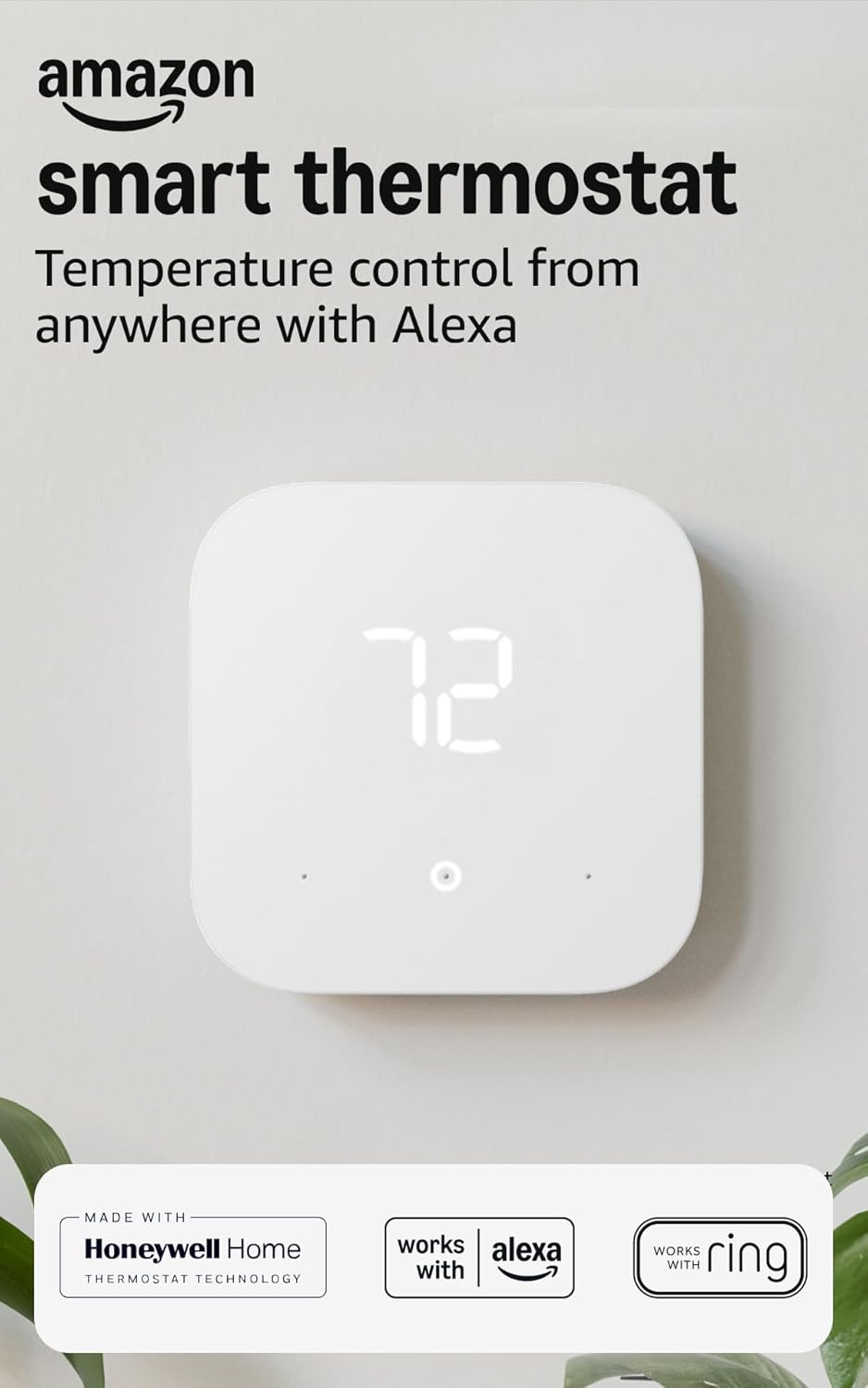
The Amazon Smart Thermostat is a straightforward programmable thermostat that connects to Alexa and the Alexa app for remote control, schedules, and basic presence-based adjustments. Installation is aimed at DIYers and requires a C-wire; the app walks you through wiring and setup while leveraging Honeywell Home thermostat technology for temperature sensing and control. In daily use you can create home, away, and sleep schedules, adjust the temperature from your phone, and let Alexa routines manage multiple devices together. The unit is focused on energy saving rather than advanced HVAC diagnostics, and Amazon highlights potential rebate eligibility and ENERGY STAR benefits. It does not expose deep technical controls for complex systems, so technicians or users needing extensive HVAC reporting or multi-stage system configuration may find it limited. For most households seeking an affordable, Alexa-native smart thermostat that replaces a basic programmable unit, it covers the essentials reliably and makes remote scheduling and voice control easy to use.
Best for: Buyers wanting an inexpensive, Alexa-first smart thermostat that replaces a basic programmable unit and prioritizes simple scheduling and remote voice control.
Less Ideal for: Homes that require advanced multi-stage HVAC controls, detailed energy reporting, or users who want in-depth system diagnostics and customization.
- Works with Alexa and Alexa app for remote control and routines
- Guided DIY installation with C-wire support and Honeywell-derived control logic
- Programmable schedules and presence-based automatic adjustments
- Energy-saving focus with potential utility rebate information provided
- Requires a C-wire which may need professional installation in older homes
- Lacks advanced HVAC diagnostics and multi-stage system configuration options
Verdict: A budget-friendly, Alexa-native smart thermostat that gives most households easy remote control, scheduling, and basic energy-saving features.
Sensi Touch ST75

| Connectivity Technology | Wi-Fi |
|---|---|
| Controller Type | Amazon Alexa, Apple HomeKit, Google Assistant, SmartThings, Vera |
| Temperature Control Type | programmable |
| Display Type | LCD |
| Specification Met | Energy Star |
The Sensi Touch ST75 is a programmable smart thermostat designed for DIY installation and everyday control of heating and cooling systems. It uses 2.4 GHz Wi‑Fi and a companion mobile app to provide remote access, scheduling, usage reports, and energy‑saving features; it also works with Alexa, Google Assistant, Apple HomeKit, SmartThings and Vera for voice and smart‑home automation. The touchscreen color display and illuminated easy‑click terminals simplify setup, while built‑in diagnostics and usage alerts help you monitor HVAC performance and maintenance needs. As an Energy Star certified model, it includes features like geofencing, filter reminders, and flexible scheduling that can reduce HVAC runtime. The unit requires a common wire (C‑wire) and runs on AC/DC power, so homes without a C‑wire will need a compatible power solution. Overall the thermostat balances a readable touchscreen interface and broad platform support with practical energy reporting, making it a solid choice for homeowners who want reliable remote control and system monitoring without professional installation.
Best for: Homeowners who prioritize a reliable, app‑driven thermostat with clear diagnostics and broad smart‑home compatibility and who prefer to install devices themselves.
Less Ideal for: People without an available C‑wire or those who need a battery‑only thermostat without any hardwiring requirements.
- Easy DIY installation with illuminated easy‑click terminals and built‑in level
- Compatible with major smart platforms including Alexa, Google Assistant and Apple HomeKit
- Mobile app provides remote control, scheduling and usage reports for energy savings
- Energy Star certified with smart alerts and maintenance reminders
- Requires a common wire (C‑wire) so older homes may need a wiring adapter or professional help
Verdict: Choose the Sensi Touch ST75 for a dependable, DIY smart thermostat that pairs wide platform support with practical energy reporting and easy installation.
Google Nest Thermostat
| Connectivity Technology | Bluetooth, Wi-Fi |
|---|---|
| Power Source | Battery Powered |
| Display Type | LCD |
| Control Type | Remote Control, Voice Control |
| Number of Batteries | 2 A batteries required. (included) |
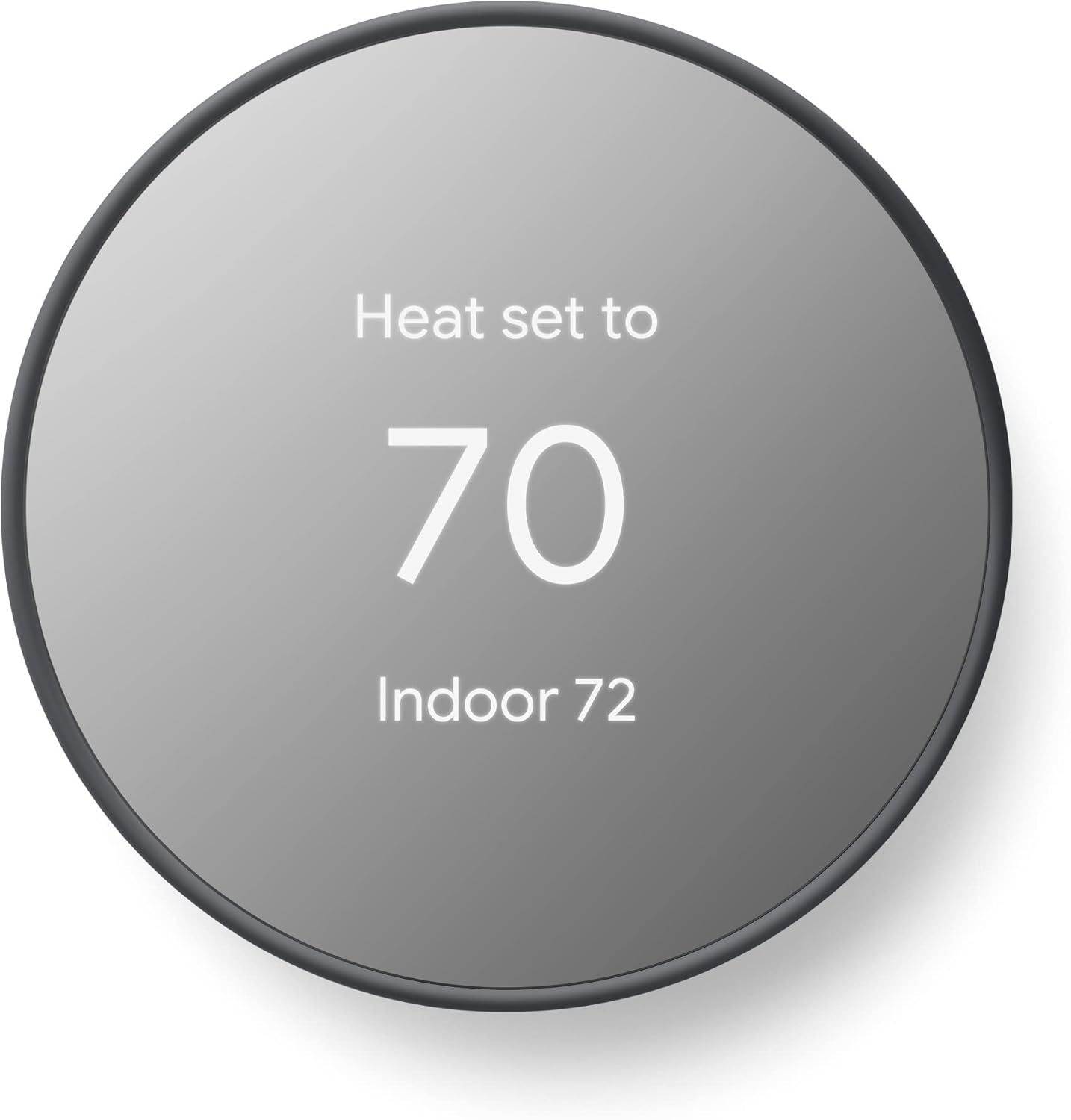
The Google Nest Thermostat is a compact smart thermostat that provides remote temperature control, basic scheduling, and energy-saving automation through the Google Home app. It installs on a wall plate and is designed for do-it-yourself setup in most homes, often without a C wire, and runs on two included A batteries. In daily use you can adjust temperature with the touch bar, the mobile app, or voice via Google Assistant and other Matter-certified assistants, and the device can automatically set an Eco Temperature when it senses the house is empty. The thermostat also includes Savings Finder suggestions and simple HVAC monitoring that sends alerts when something seems off. Practical benefits include easy remote access, integration with Google smart-home ecosystems, and ENERGY STAR qualification for efficiency. Limitations to note are that some HVAC configurations require a C wire or power accessory, voice and remote features require working Wi‑Fi and compatible devices, and advanced learning features from higher-end Nest models are not included on this budget-oriented unit.
Best for: Buyers who prioritize simple smart-home integration, remote and voice control, and energy savings in an affordable, easy-to-install thermostat backed by wide user adoption.
Less Ideal for: Homes with uncommon or high-voltage HVAC systems or users who want the most advanced learning thermostat features and diagnostics should consider a higher-end Nest model or a pro-installed solution.
- Remote control from the Google Home app for temperature changes from anywhere
- Works with Google Assistant and other Matter-certified voice assistants for hands-free control
- Designed for easy DIY installation and usually works without a C wire
- Energy-saving features like Savings Finder and automatic Eco Temperature when away
- Includes basic HVAC monitoring and alert notifications for potential issues
- May require a C wire or a compatible power accessory for some HVAC setups
- Advanced learning and premium features from higher-end Nest models are not available on this version
Verdict: A straightforward, budget-friendly smart thermostat that delivers app and voice control plus practical energy-saving features for most typical homes.
ecobee Smart Thermostat Essential

| Connectivity Technology | Wi‑Fi |
|---|---|
| Power Source | Battery Powered |
| Display Type | LCD |
| Control Type | Touchpad Control |
| Specification Met | Energy Star |
The ecobee Smart Thermostat Essential is a pared-down smart thermostat designed to replace a basic wall thermostat and add remote control, scheduling, and energy-saving automations. It mounts to a standard wall plate and connects to your HVAC through common 24 VAC wiring; if you lack a C wire the Power Extender Kit is available separately. Setup is aimed at DIYers and the touchscreen plus ecobee app make daily temperature changes and schedules easy to manage. eco+ features like schedule assistant, time-of-use preheating/precooling, and indoor humidity detection help reduce energy use while maintaining comfort. The unit integrates with Apple HomeKit, Google Assistant, and Alexa so you can use voice control and mobile routines. Limitations include no included room sensor and a simpler feature set compared with ecobee's higher-end models, so it may not offer advanced zoning or air quality monitoring out of the box. It is nonetheless a reliable, energy-focused choice for replacing a conventional thermostat and getting basic smart controls without a steep learning curve.
Best for: Buyers who want a straightforward, energy-conscious upgrade from a manual thermostat and prefer easy setup, reliable app control, and compatibility with major smart home ecosystems.
Less Ideal for: Users who need built-in multi-room sensing, advanced air quality monitoring, or the most feature-rich ecobee model for complex zoning setups.
- Compatible with major smart assistants and HomeKit for voice and app control
- Energy Star rated with eco+ features to reduce heating and cooling costs
- Simple touchscreen and app setup aimed at DIY installation
- Works with most 24 VAC HVAC systems and offers a Power Extender Kit for homes without a C wire
- No SmartSensor included so room-by-room temperature balancing requires separate purchase
- Fewer advanced sensors and air quality features compared with premium ecobee models
Verdict: A practical, Energy Star certified smart thermostat that delivers easy app and voice control plus energy-saving automations for homeowners seeking a low-risk smart upgrade.
Choosing the Right Programmable Smart Thermostat: Key Factors to Consider
Scheduling and Automation Options
How you can set temperature changes across days and times matters because it directly controls comfort and potential savings. Look for models that support multiple daily periods, separate weekday and weekend schedules, and fine-grained time blocks so you can align heating and cooling with occupancy patterns.
Advanced automation such as geofencing, presence-based adjustments, or adaptive learning can reduce manual programming, but these features vary widely in behavior. Decide whether you want full manual control, rule-based automation, or self-learning schedules that change over time.
HVAC System Compatibility
Thermostats must match the wiring and control signals of your furnace, heat pump, boiler, or multi-stage system. Incorrect compatibility can result in poor control or system faults. Verify whether the thermostat supports single-stage and multi-stage heating and cooling, heat pump configurations, and accessories like humidifiers or ventilators.
Also consider whether your home has a common wire available. Some models require a C-wire for stable operation while others include power-extending adapters. Compatibility affects installation choices and whether a professional electrician or HVAC tech is needed.
Connectivity and Smart-Home Integration
Reliable Wi-Fi or local network connectivity determines whether you can control your thermostat remotely and receive alerts. App stability, cloud reliability, and update cadence influence daily usability. Check whether the thermostat works with voice assistants, smart hubs, or the automation platforms you already use.
Integration also affects how schedules and scenes interact with other devices. Thermostats that expose robust APIs or work with common automation platforms let you build conditional routines, while closed systems may limit interoperability.
Installation Complexity and Support
Installation difficulty ranges from straightforward wall-plate swaps to systems that require re-wiring or a common-wire adapter. Consider how comfortable you are with basic wiring and whether the thermostat provides clear diagrams and in-app step-by-step instructions. Some manufacturers offer in-app troubleshooting and live support which can reduce installation time.
If your setup is nonstandard or if you want warranty-safe installation, factor in the potential need for professional help. Clear labeling, color-coded terminals, and included mounting hardware simplify the process for DIYers.
Energy Savings and Reporting
Thermostats that provide energy reports, runtime tracking, or estimated savings give useful feedback on how programming changes affect consumption. Look for devices that present clear, actionable data rather than dense charts. Features such as setpoint reminders, vacation mode, and eco presets help enforce efficiency without sacrificing comfort.
Keep in mind that savings depend on user behavior, home insulation, and the HVAC system's efficiency. Use the thermostat's reports as a guide rather than an exact measurement of bills.
User Interface and Daily Usability
A clear, responsive interface makes frequent adjustments painless. Consider screen legibility, tactile buttons versus touchscreen controls, and the clarity of on-screen information like current temperature, target temp, and system mode. Intuitive app layouts and easy schedule editing reduce friction for ongoing use.
Also weigh notifications and alerts. Useful alerts can warn you about extreme indoor conditions or connectivity loss, while excessive notifications become background noise. Choose a thermostat whose interface matches how often you plan to interact with it.
Wiring and Power Considerations
Before choosing a programmable smart thermostat, map out the existing thermostat wiring and confirm which terminals are present at the wall. The presence of a common wire, or C-wire, is often the deciding factor because it supplies continuous power to Wi-Fi radios and bright displays. If your current thermostat lacks a C-wire, some smart thermostats include a power adapter or support power stealing, but those approaches can be less reliable on some HVAC systems.
If you have a multi-stage system, heat pump, or auxiliary heat, check that the thermostat supports those control signals. Planning wiring needs ahead of purchase prevents surprises during installation.
- Locate the furnace or air handler junction to verify wire routing if the wall wiring is ambiguous.
- Consider a thermostat that offers a simple C-wire adapter if you prefer a DIY install.
- Document each wire terminal before disconnecting the old thermostat.
Scheduling Strategies That Actually Save Energy
Effective schedules align temperature setbacks with real occupancy windows and the thermal inertia of your home. Short setbacks for homes with fast-responding HVAC can differ from longer lead times required for well-insulated houses. Program setbacks for sleeping and away periods rather than extreme swings that force systems to run inefficiently.
Use features like staggered temperature changes and weekday/weekend profiles to match real routines. If you expect to be gone for an extended period, use vacation modes that maintain safe temperatures while minimizing runtime.
- Set conservative setbacks for overnight periods to avoid discomfort.
- Use adaptive or learning modes with caution; monitor their adjustments for a few weeks and tweak as needed.
- Combine geofencing with schedules if you often leave at irregular hours.
Maintenance and Firmware Updates
A smart thermostat is firmware-driven, so the vendor's update policy affects long-term reliability and security. Look for vendors with a history of regular patches and clear release notes. Firmware updates can add features, improve Wi-Fi stability, and close security vulnerabilities.
Regular maintenance tasks include replacing HVAC filters on schedule and ensuring the thermostat remains dust-free and securely mounted. If you rely on battery backup, monitor battery health to avoid unexpected offline periods.
- Enable automatic firmware updates if you want hands-off maintenance.
- Check support documentation for rollback options or manual update procedures.
- Keep the thermostat firmware current to ensure ongoing compatibility with mobile platforms.
Privacy and Data Handling
Programmable smart thermostats often collect usage patterns and temperature histories. Understand the privacy settings and what telemetry the device shares with the cloud. Some systems offer local control modes that limit cloud dependency and reduce data sent to vendor servers.
Review account and data retention policies if you are concerned about long-term storage of occupancy or temperature records. Choosing a thermostat with clear privacy controls helps you balance convenience and data exposure.
- Disable unnecessary analytics if you prefer minimal data sharing.
- Use strong, unique passwords and enable two-factor authentication where available.
- Prefer products that document data use and provide export or deletion options.
Using Schedules with Zoned or Multi-Unit Systems
If your home has zoning or multiple thermostats, coordinate schedules across zones to avoid fighting between dampers and system cycles. Central scheduling strategies can ensure that one zone does not force the whole system into extra runtime.
In multi-unit buildings, consider how shared HVAC resources and building-level thermostats interact with your programmable thermostat. Local setbacks remain useful, but consult building management for any centralized controls or override policies.
- Create staggered schedules for adjacent zones to reduce simultaneous peak loads.
- Use shared profiles to replicate preferred schedules across similar rooms.
- Document any building-level restrictions before changing major schedule settings.
How We Chose the Best Programmable Smart Thermostat
We evaluated candidates using criteria that matter most to homeowners and renters installing a programmable smart thermostat. Key dimensions included scheduling and automation flexibility, which measures how granular and adaptable temperature schedules can be. We assessed HVAC compatibility and wiring support to ensure units work with common furnace, heat pump, and multi-stage systems. Connectivity and app reliability were judged for Wi-Fi stability, app feature set, and remote control functions. Installation complexity and available support were considered, including built-in installers, wiring diagrams, and whether a common wire is required. Energy-saving features and reporting were evaluated to see how well a thermostat suggests or enforces efficiency gains. Finally, build quality and display usability were reviewed for daily interactions. We excluded specialty controllers intended only for commercial HVAC, systems requiring proprietary hubs, and devices that do not offer programmable schedules. We prioritized devices offering clear wiring documentation and a mix of user-friendly software and robust compatibility. The scoring dimensions below reflect the concrete specs and user-facing behavior that drove selections.
Our full evaluation process is outlined in our review methodology.
FAQ
Do I need a C-wire for a programmable smart thermostat?
Often, yes. Many Wi-Fi-enabled thermostats prefer a C-wire for continuous power. Some models include power adapters or support power-stealing techniques, but those options can vary in reliability depending on your HVAC system.
Can a programmable smart thermostat save money on energy bills?
It can, depending on how you use it and your home's efficiency. Automated setbacks, sensible schedules, and vacation modes reduce runtime, but actual savings depend on insulation, system efficiency, and occupant behavior.
How hard is it to install a programmable smart thermostat myself?
Installation difficulty ranges from straightforward to moderately complex. If your existing thermostat has standard wiring and a C-wire, many installs are DIY-friendly. Nonstandard wiring, multi-stage systems, or missing C-wires might require professional help.
Will a programmable smart thermostat work with a heat pump?
Many programmable smart thermostats support heat pumps, but compatibility varies. Confirm that the thermostat supports auxiliary and emergency heat stages and the correct control wiring for your heat pump configuration.
Are smart thermostats vulnerable to security risks?
Like any connected device, smart thermostats can expose data or access paths if not secured. Use strong account credentials, enable two-factor authentication if available, and keep firmware up to date to reduce risk.
Final Verdict
Prioritize compatibility and scheduling flexibility when choosing a programmable smart thermostat. Confirm wiring and HVAC support first, then evaluate connectivity, app reliability, and the quality of energy reporting to match your control preferences. Expect tradeoffs between advanced automation and the need for manual tuning; pick a thermostat that offers the balance of automation and direct control you prefer. With the right priorities, you can improve comfort and reduce unnecessary runtime without complicating daily use.