
Note: This article contains affiliate links. If you click on these links and make a purchase, we may earn a small commission at no extra cost to you. This helps support our research and content. Read our full affiliate disclosure here.
If you want café-level espresso at home, choosing the right prosumer espresso machine matters. These machines bring commercial-style features into a kitchen footprint, and the right pick affects shot consistency, milk-texturing ability, and maintenance time. This guide shortlists the top options for home users seeking precise temperature control, reliable steam, and durable build quality. Below we cover the standout machines we vetted and the key specs that separate them. Read on to see which models meet the criteria most important for your brewing style.
Top Picks at a Glance
| Best Overall The best all-around choice for most situations | Nuova Simonelli Oscar II |  |
| Best Quality Built to a higher standard if you want something more solid | Rancilio Silvia HSD-SILVIA |  |
| Best Budget The cheapest option that still gets the job done reliably | Gaggia Classic Evo Pro RI9380/46 |  |
| Top Rated A top-rated pick with lots of positive feedback | Breville Barista Express BES870XL |  |
| Most Popular A crowd favorite that many people choose with confidence | Breville Barista Pro BES878BSS |  |
Nuova Simonelli Oscar II

| Operation Mode | Semi-Automatic |
|---|---|
| Boiler Type | Heat Exchange Copper Boiler |
| Wattage | 1200 watts |
| Water Tank Capacity | 3 liters |
| Coffee Input Type | Ground Coffee Beans |
The Nuova Simonelli Oscar II is a semi-automatic home espresso machine built around a professional-style heat-exchange copper boiler and timed dosing controls. It accepts ground coffee, uses a pour-over water feed, and includes pro-oriented accessories like a portafilter, tamper, milk frother and shot baskets for manual steaming and milk work. The copper boiler and 1,200 W heater deliver stable steam and consistent extraction for multiple drinks in a row, while the reusable filter and soft-touch keypad make daily use straightforward. This model lacks an integrated grinder and hot water nozzle, so you will need a separate grinder and a different source for extra hot water. The manual steam wand gives good milk control but requires technique, and the pour-over water feed means you must refill the 3 L tank yourself rather than plumb it in. For someone wanting a compact machine that brings commercial heat stability and a long water capacity to a home setup, the Oscar II balances performance and hands-on control, but it assumes you already own or plan to add a quality grinder and some barista practice.
Best for: Buyers who want a compact, prosumer-level espresso machine that prioritizes boiler stability and hands-on control for high-quality shots at home and are willing to pair it with a separate grinder.
Less Ideal for: Users who need an all-in-one countertop solution with an integrated grinder, automated milk frothing, or plumb-in water hookup should consider different models.
- Professional heat-exchange copper boiler for stable steam and extraction
- Large 3 L water tank reduces refill frequency for home use
- Includes essential accessories: portafilter, tamper, milk frother, and shot baskets
- Reusable filter and soft-touch keypad simplify daily operation
- No built-in grinder so a quality grinder is required separately
- No hot water nozzle limits convenience for Americanos or other hot-water needs
- Manual steam wand requires skill to produce consistent microfoam
Verdict: Buy this if you want a compact prosumer espresso machine that delivers commercial-style temperature and steam stability for serious home brewing.
Rancilio Silvia HSD-SILVIA
| Capacity | 10.14 fluid ounces |
|---|---|
| Operation Mode | Semi-Automatic |
| Voltage | 110 volts |
| Filter Type | Reusable |
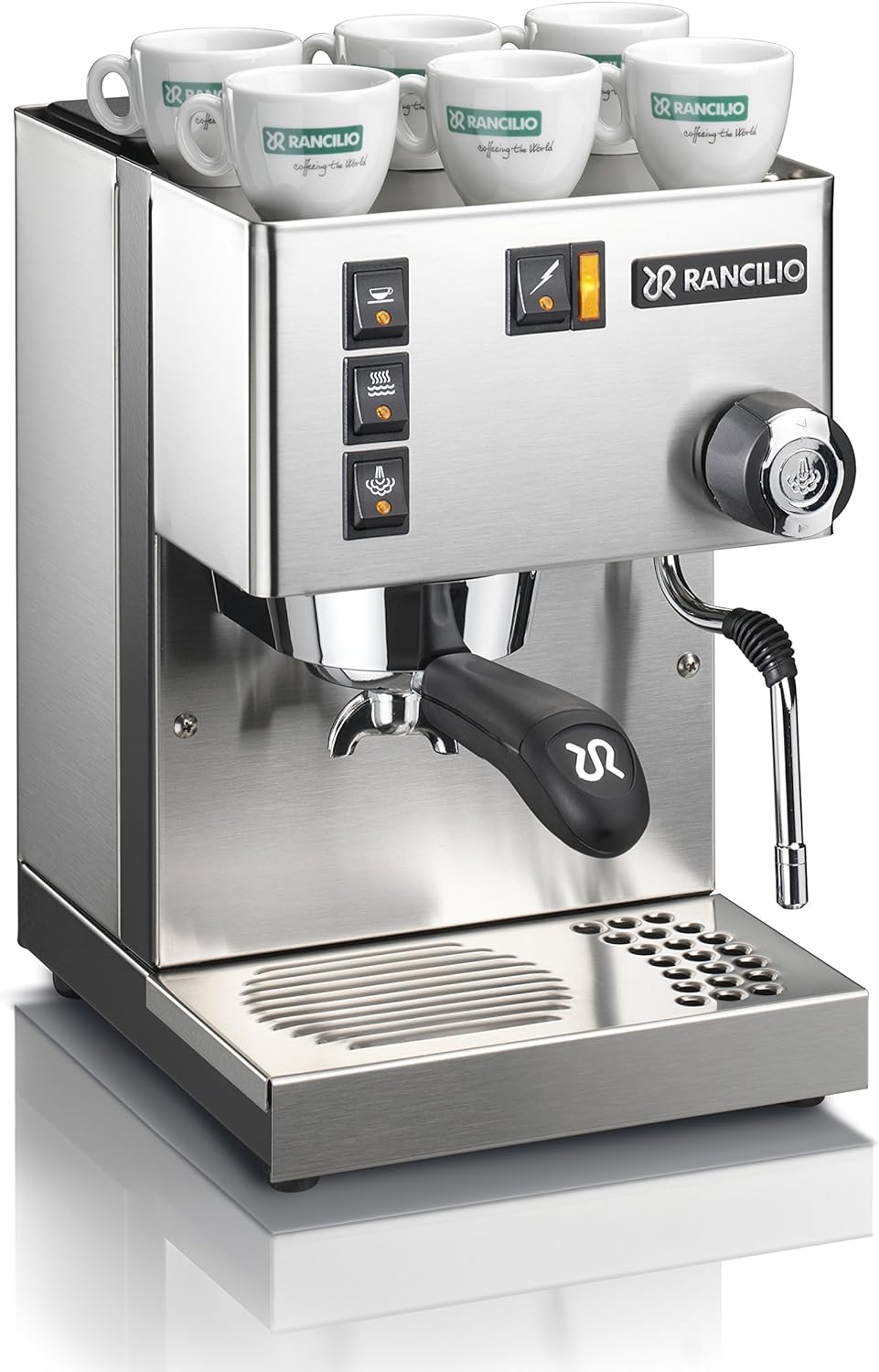
The Rancilio Silvia is a prosumer-style semi-automatic espresso machine that brings commercial components to a home setup. It uses a chrome-plated brass single boiler and Rancilio's commercial-grade group head to hold temperature and deliver consistent extractions, while a 58mm commercial-style portafilter and supplied single/double baskets let you dial shot size and grind. The articulating stainless-steel steam wand and steam control knob provide the power and maneuverability needed for microfoam and milk-based drinks, and the removable top-fill water reservoir makes refilling straightforward during operation. Because it is single-boiler, users must manage steaming and brewing sequences rather than pull simultaneous shots and steam, which adds routine but preserves shot quality. The machine is solidly built with an iron frame and stainless panels, so it sits steady on a counter and tolerates frequent use, though it lacks onboard PID temperature control and some modern conveniences like programmable presets. It is best for buyers who prefer hands-on control and long-term reliability over one-touch automation.
Best for: A buyer who prioritizes extraction stability and commercial-grade components and who wants a hands-on machine to develop barista skills and produce café-quality espresso and milk drinks.
Less Ideal for: People seeking fully automated, one-touch operation or those who want dual-boiler convenience for brewing and steaming at the same time.
- Commercial-grade group head for improved heat stability and consistent extraction quality
- 58mm commercial-style portafilter with supplied single and double baskets for precise dosing
- Powerful articulating stainless-steel steam wand with a dedicated steam control knob for quality milk texture
- Robust construction with iron frame and stainless steel panels for long-term durability
- Removable top-fill water reservoir for convenient refilling during use
- Single-boiler design requires swapping between brewing and steaming rather than simultaneous operation
- No built-in PID or digital temperature control for advanced temperature tuning
Verdict: Buy this if you want a rugged, commercial‑grade home espresso machine that rewards hands-on tuning and delivers consistent, café-quality extraction.
Gaggia Classic Evo Pro RI9380/46
| Operation Mode | Semi-Automatic |
|---|---|
| Output Pressure | 9 bar |
| Wattage | 1200 watts |
| Coffee Input Type | ground, pod |
| Capacity | 2.1 liters |
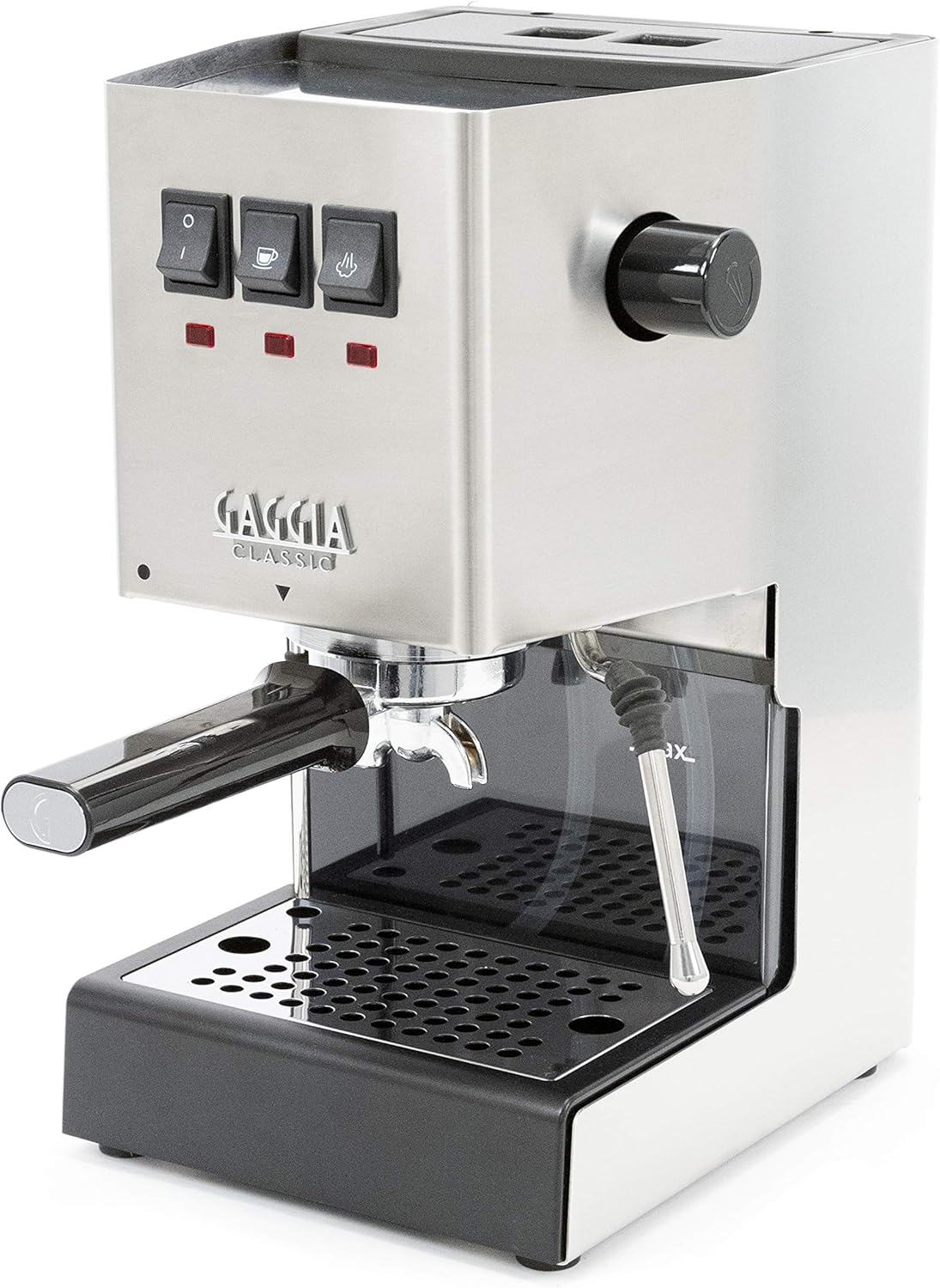
The Gaggia Classic Evo Pro is a compact, prosumer-grade semi-automatic espresso machine that brings commercial components into a home kitchen. It brews espresso at 9 bars through a stainless steel 58 mm commercial portafilter and includes both commercial and pressurized filter baskets so you can use fresh grounds or pods while you learn. The commercial steam wand and stainless-steel housing let you texture milk for latte art and give the machine a durable, serviceable feel. Practical updates on this Evo Pro include quieter pump mounting and a boiler designed to resist scale, which helps long-term reliability. You will need to dial in grind and dosing to get café-level shots and the machine expects some user maintenance, but those are normal for prosumer gear. Its heavier build and included accessories make it a solid choice for someone practicing barista skills at home rather than a fully automatic convenience option.
Best for: Home brewers who want a durable, hands-on prosumer machine to practice espresso skills and make café-style milk drinks without stepping up to a commercial unit.
Less Ideal for: Buyers seeking a fully automatic, low-maintenance machine or those who want one-button brewing without manual dosing and technique.
- Commercial 58 mm stainless-steel portafilter for stable temperature and better extraction
- Includes commercial single and double shot baskets plus a pressurized basket for flexibility
- Commercial steam wand capable of producing microfoam for latte art
- Robust stainless-steel housing and serviceable components made in Italy
- Requires manual dialing of grind and dose so there is a learning curve for consistent shots
- Heavier, more workshop-style machine that needs routine descaling and maintenance
Verdict: If you want a made-in-Italy, serviceable prosumer machine that uses commercial components to learn and pull café-quality shots at home, the Gaggia Classic Evo Pro is a strong choice.
Breville Barista Express BES870XL

| Wattage | 1600 watts |
|---|---|
| Voltage | 120 |
| Coffee Input Type | whole_beans |
| Filter Type | Reusable |
| Capacity | 1 cups |
The Breville Barista Express BES870XL combines an integrated conical burr grinder, 54mm portafilter and a powerful steam wand to take users from whole beans to finished espresso drinks on a single countertop unit. Typical use is hands‑on: you grind directly into the portafilter, dose and tamp, then pull shots using the machine's manual controls and Thermocoil temperature system that stabilizes extraction temperature. Notable features include 16 grind settings, low‑pressure pre‑infusion for balanced flavor, a PID‑style temperature control and a steam wand capable of producing microfoam for lattes and cappuccinos. The included accessories such as a razor dose trimming tool and integrated tamper help produce consistent shots without needing a lot of extra gear. Expect a learning curve for dialing in grind size, dose and milk texturing, and because the unit is manual it requires regular cleaning and occasional maintenance to keep performance consistent. For buyers who want granular control and cafe results at home, this machine delivers reliable, repeatable performance when used with fresh beans and proper technique.
Best for: Home baristas who prioritize consistent, cafe‑quality shots and want machine‑level control over grind, dose and milk texturing while valuing long‑term reliability.
Less Ideal for: Casual users who want fully automatic, walk‑away brewing or people who prefer a maintenance‑free pod or superautomatic machine.
- Integrated conical burr grinder with 16 grind settings for fresh dosing
- Thermocoil temperature control and low‑pressure pre‑infusion for balanced extraction
- 54mm stainless steel portafilter and included dosing/tamping tools support consistent shots
- Powerful steam wand that textures milk to produce microfoam for latte art
- Durable stainless steel construction and reusable filter reduce consumable waste
- Manual operation requires practice to consistently dial in shots and steam milk
- Regular cleaning and maintenance are needed to preserve performance
Verdict: Choose the Barista Express if you want a durable, grinder‑integrated prosumer machine that reliably produces cafe‑quality espresso when you invest time in dialing it in.
Breville Barista Pro BES878BSS

| Wattage | 1680 watts |
|---|---|
| Voltage | 120 |
| Coffee Input Type | whole bean, ground |
| Filter Type | Reusable |
| Capacity | 2 liters |
The Breville Barista Pro is a prosumer-grade semi-automatic espresso machine designed to deliver café-style shots and milk drinks at home. It combines an integrated conical burr grinder with dose control and 30 grind settings, a 54mm portafilter with single and double-wall filters, and a ThermoJet heating system with PID digital temperature control for fast warm-up and stable extraction. The machine is typically used for grinding fresh beans, dosing and tamping, pulling a 9-bar extraction, then steaming milk with the steam wand to texture microfoam for lattes and cappuccinos. The intuitive LCD guide shows grinding and extraction progress, which shortens the learning curve for new home baristas. Practical benefits include quick heat-up, consistent dosing from the grinder, and a powerful steam wand that supports latte art. Limitations are the manual tamping and hands-on workflow that require some technique to get repeatable results and the substantial footprint and weight that demand counter space. Maintenance like regular cleaning of the grinder and group components is also necessary to keep performance steady.
Best for: Home baristas who want a near‑professional workflow and built‑in grinder to make café-quality espresso and milk drinks and who value guided controls while learning.
Less Ideal for: Buyers seeking a fully automatic, hands-off capsule or pod machine or those with very limited kitchen counter space.
- Integrated conical burr grinder with dose control and 30 grind settings for precise dosing
- ThermoJet heating with PID temperature control for fast warm-up and stable extraction
- 54mm portafilter and dual/single-wall filters support 18g dosing and fuller shots
- Powerful steam wand produces smooth microfoam suitable for latte art
- Intuitive LCD display that guides grind and extraction to help learning users
- Manual tamping and hands‑on workflow require practice for consistent results
- Relatively heavy and takes significant counter space
- Requires regular cleaning and maintenance of grinder and group parts
Verdict: Choose the Barista Pro if you want a fast‑heating, grinder‑equipped prosumer machine that helps you learn and produce café-quality espresso and steamed milk at home.
Choosing the Right Prosumer Espresso Machine: Key Factors to Consider
Boiler Type and Temperature Management
Boiler configuration—single‑boiler, heat‑exchange, or dual‑boiler—directly affects how you brew and steam. Dual‑boiler systems let you dial stable brew temperature while steaming simultaneously, which is critical when pulling back‑to‑back drinks. Heat‑exchange machines can offer near‑simultaneous brew and steam but usually require a learning curve to manage brewing temperature.
Accurate, repeatable temperature control reduces shot variability. Look for PID control or equivalent regulation rather than simple thermostat cycling; PID lets you fine‑tune temperatures for different beans and roast levels. Temperature management also impacts preheat time and energy use, which matters if you plan frequent heavy use.
Steam Performance and Wand Design
Steaming power determines how quickly and consistently you can texture milk for lattes and cappuccinos. Higher steam pressure and larger boiler capacity reduce wait times between milk batches and make microfoam creation easier.
Wand ergonomics and tip design affect control and visibility while steaming. A commercial‑style full‑range wand with a quality tip and good reach provides better maneuverability. Also consider whether the wand has an articulating joint, the quality of the steam valve, and how easy it is to purge and clean the tip after use.
Pump and Extraction Consistency
Pump type and stability influence shot quality. Vibration pumps are common and can be fine when engineered well; rotary pumps offer quieter operation and stable pressure under heavy use but typically require more complex installation in some contexts.
Beyond pump type, look for adjustable pressure profiling or preinfusion options to manage extraction dynamics. Consistent volumetric or flow control reduces the need for guesswork and helps replicate recipes across sessions. Mechanical reliability of the pump also affects long‑term shot stability.
Materials, Construction, and Serviceability
Durable materials like brass boilers, stainless steel frames, and commercial‑grade group heads extend a machine's usable life and often improve thermal mass and stability. Solid construction reduces vibration and improves component longevity.
Serviceability matters because prosumer machines are meant to be maintained rather than replaced. Accessible panels, user‑replaceable gaskets, and clear component layouts save time and expense for routine servicing or part swaps. Consider availability of spare parts and how simple it is to reach common wear items.
Controls, Programming, and Workflow
How the machine lets you interact with it affects daily workflow. Machines with programmable shot volumes, preinfusion timing, and temperature overrides make dialing in recipes easier and reduce variability between users.
Look at the control interface: dedicated buttons, knobs, or digital displays. The best workflow setups let you save profiles for different coffees, enable quick toggles between single and double shots, and provide meaningful feedback like shot timers and brew temperature readouts. Intuitive controls reduce training time for household members or small-team use.
Size, Water Supply, and Footprint
Prosumer machines vary widely in footprint and water handling. Some expect direct plumbing while others have generous built‑in reservoirs. Decide whether you need a plumb‑in setup or want flexibility with a removable tank.
Also consider counter depth and height—steam wands and portafilters need clearance—and ventilation if the unit produces heat. A heavier, larger machine often has better thermal mass but may be harder to move or place in tight kitchen layouts.
Setting Up Your Countertop Workflow
Positioning and workflow planning make a big difference with prosumer machines. Place the machine near your water source or plan for regular reservoir fills; if the model supports plumbing, ensure line access and a professional install when needed. Keep a small footprint for your grinder nearby to minimize time between dosing and tamping, which preserves grind freshness and shot quality.
- Reserve space for a knock box, milk pitcher, and tamping mat.
- Keep a dedicated small towel and a steaming pitcher within arm's reach.
- Plan for ventilation and heat clearance around the machine.
Grind and Dose: Matching Your Grinder
A prosumer machine will only perform as well as the grinder you pair with it. Consistent particle size and the ability to dial in fine adjustments are essential for repeatable extraction. If you intend to use different roast profiles, choose a grinder with stepped or stepless adjustments that match the machine's extraction characteristics.
- Aim for a grinder with low retention to keep beans fresh between shots.
- Match burr size and speed to your volume of use; larger burrs are more consistent for heavy throughput.
- Consider dosing options: timed, weight‑based, or manual dosing depending on your workflow.
Routine Maintenance and Descaling
Regular maintenance protects performance and longevity. Flush the group head and wand after each use, backflush with detergent on a scheduled cadence, and descale according to water hardness and manufacturer guidance. Replace group head gaskets and shower screens when signs of wear appear to keep extraction uniform.
- Keep a small kit of basic tools and common spare parts handy.
- Record service intervals to avoid missed maintenance windows.
- Use filtered water to reduce scale buildup and protect boiler life.
Accessories That Improve Results
A few well‑chosen accessories can significantly raise beverage quality and consistency. A quality tamper sized to your basket, a precision milk pitcher with clear volume markers, and an accurate scale for dosing shots all contribute to repeatability. A thermometer for dialing steam technique helps train microfoam creation.
- Get a calibrated scale with taring function for shot weight control.
- Choose a tamper that matches your portafilter diameter for even compression.
- Consider a distribution tool or WDT implement if you struggle with channeling.
How We Chose the Best Prosumer Espresso Machine
We focused on features and real-world usability that matter for home-based prosumer espresso machines. Our selection prioritized machines with reliable temperature stability, robust steam systems, and durable components that hold up to frequent use. We also considered workflow features such as programmable dosing, boiler configuration, and serviceability because owners often perform routine maintenance or upgrades. Evaluation centered on concrete technical attributes: boiler or heat‑exchange design and temperature control, steam boiler pressure and panellings, pump type and vibration/transducer performance, build materials and service access, and user controls for dosing and shot timing. We excluded toy or entry-level consumer machines that lacked commercial-grade steam or temperature control, and we did not consider compact pod-based units. Products were filtered for consistent extraction behavior, accessible maintenance points, and components commonly used in prosumer setups.
Our full evaluation process is outlined in our review methodology.
FAQ
How often should I descale a prosumer espresso machine?
Descaling frequency depends on water hardness and usage. Heavy daily use with hard water may require descaling every 1 to 3 months, while softened or filtered water can extend intervals to 6 months or longer. Always follow the manufacturer's guidance for procedure and products.
Can I use tap water or should I install a water filter?
Filtered water is recommended to reduce scale and preserve flavor. A point‑of‑use filter or a softened supply will extend service intervals and protect boilers. If you install a direct plumb line, include appropriate filtration to prevent mineral buildup.
Is a dual‑boiler machine worth it for home use?
A dual‑boiler setup is valuable if you frequently steam and brew back‑to‑back or need immediate steam power while maintaining precise brew temperature. For occasional use, a heat‑exchange machine can offer a compromise, but dual boilers provide the most consistent simultaneous performance.
What maintenance can I do myself versus needing a technician?
Routine tasks like daily group rinses, wand purging, backflushing, and gasket replacements are typically user‑serviceable. More complex work—boiler repairs, pump replacements, or internal plumbing—often requires a trained technician. Start with accessible maintenance and consult service documentation for larger repairs.
How important is pump type for home prosumer machines?
Pump type affects noise level and pressure stability. Vibration pumps are common and effective when well engineered, while rotary pumps offer quieter, more stable pressure for heavy use. For most home users, a well‑implemented vibration pump performs adequately; choose rotary if you need quieter operation or anticipate very high throughput.
Final Verdict
Focus first on the features that matter for repeatable café‑style results: stable temperature control, effective steam power, and serviceable construction. Balance those capabilities against your workflow needs, footprint, and whether you require plumbed water. Prioritize machines with clear controls and accessible maintenance points if you plan to keep the unit long term. Your best choice depends on how much steaming you do, how many drinks you prepare consecutively, and how hands‑on you want to be with maintenance. Use the evaluation criteria here to match a machine to your brewing habits and confidence level so you can achieve consistent, high‑quality espresso at home.