
Note: This article contains affiliate links. If you click on these links and make a purchase, we may earn a small commission at no extra cost to you. This helps support our research and content. Read our full affiliate disclosure here.
If you want café-style espresso without a big investment, choosing the right economical machine matters. A lower-cost espresso machine can still deliver good crema, steady steam for milk frothing, and straightforward maintenance—if you pick a model that matches your daily routine. This guide covers seven shortlisted espresso machines under $200 that balance shot quality, steam performance, and user friendliness. We evaluate heat-up time, pump/steam power, durability, and how simple each unit is to clean so you can pick the machine that fits your kitchen and morning habits.
Top Picks at a Glance
| Best Overall The best all-around choice for most situations | CASABREWS Ultra Espresso Machine |  |
| Best Quality Built to a higher standard if you want something more solid | Breville Nespresso Essenza Mini |  |
| Best Value The sweet spot between price and what you get | De'Longhi Dedica EC680M |  |
| Best Budget The cheapest option that still gets the job done reliably | IMUSA 4-Cup Espresso Maker |  |
| Top Rated A top-rated pick with lots of positive feedback | AMZCHEF Espresso Machine EM3131 |  |
| Most Popular A crowd favorite that many people choose with confidence | De'Longhi Stilosa EC260BK | 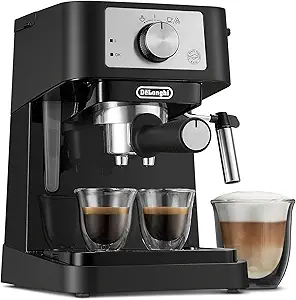 |
| Best Seller A high-volume bestseller chosen again and again | CASABREWS CM5418 Espresso Machine |  |
CASABREWS Ultra Espresso Machine

| Wattage | 1350 watts |
|---|---|
| Voltage | 120 volts |
| Operation Mode | Semi-Automatic |
| Filter Type | 58mm Portafilter & single/dual wall filters |
| Capacity | 73 fluid ounces |
The CASABREWS Ultra is a semi-automatic countertop espresso machine aimed at home baristas who want café-style drinks without a steep learning curve. It uses a 20-bar Italian pump and a 1350W heating system to deliver consistent extraction and dense crema, and a PID-style temperature system with four settings (90–96°C) lets you fine-tune brew temperature. A 10mm commercial-style steam wand and one-touch steam controls produce microfoam for lattes and cappuccinos, while the 58mm portafilter and included filters accommodate single and double shots. The removable 73 oz water tank and adjustable drip tray make refills and cup placement easy, and the LCD interface simplifies control and status monitoring. Practical perks include pre-infusion and an automatic pressure release for drier pucks and easier cleaning. Expect a learning curve for dialing grind and dose to match the machine, and the single-boiler design means you will wait between steaming and brewing during busy runs. For its class and price range this unit balances performance and features well for everyday home use.
Best for: Buyers who want a feature-rich machine that produces café-quality espresso and milk drinks at home while offering temperature control and a commercial-style portafilter.
Less Ideal for: Users who need instant back-to-back steaming and brewing for frequent high-volume use or those who prefer fully automatic one-touch specialty drink programs.
- 20-bar Italian pump for strong extraction and good crema
- Adjustable brewing temperature (four PID settings) for more consistent shots
- Commercial-style 58mm portafilter and included filters for single/double shots
- Powerful steam wand producing fine microfoam for lattes and cappuccinos
- Large removable 73 oz water tank and LCD controls simplify daily use
- Single boiler requires wait time between steaming and brewing
- Requires some dialing of grind/dose to reach best results
Verdict: If you want a versatile, café-capable espresso machine with temperature control and a commercial-style portafilter under $200, the CASABREWS Ultra delivers strong performance for home use.
Breville Nespresso Essenza Mini
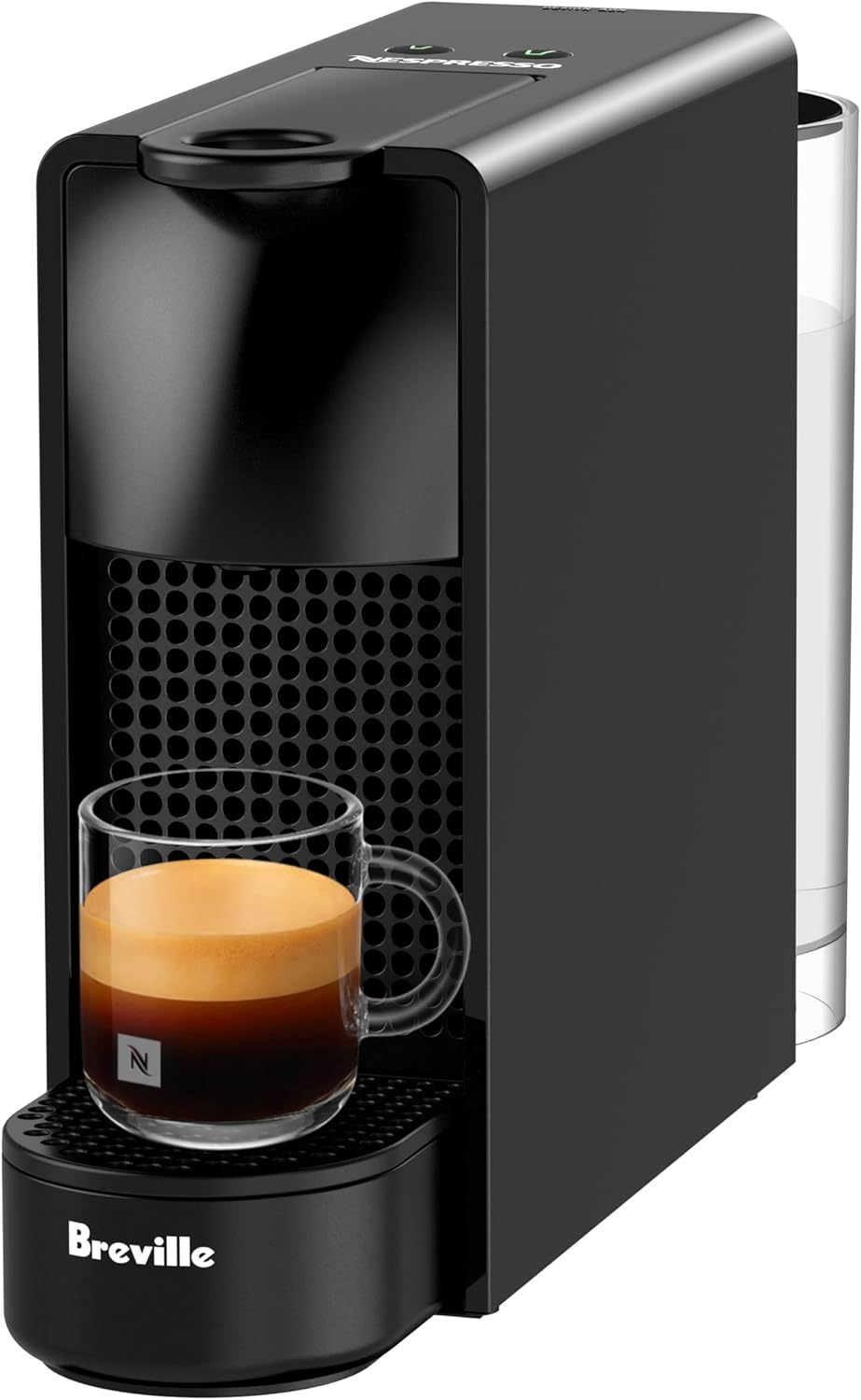
| Compatible Coffee Pods | Nespresso Original |
|---|---|
| Wattage | 1255 watts |
| Operation Mode | Fully Automatic |
| Coffee Input Type | capsules |
| Human Interface Input | Buttons |
The Breville Nespresso Essenza Mini is a small, capsule-based espresso machine built for simple, consistent single-serve shots. It uses Nespresso Original capsules and a 19-bar high-pressure pump to deliver espresso and lungo at the touch of a button, with two programmable cup-size settings and a roughly 25-second heat-up time. The unit includes a removable water tank, a drip base and a basic milk frother option in the feature list for making milk drinks, and it has an eco mode and auto-shutoff to save energy between uses. Its compact footprint makes it easy to fit into tight kitchens or to take on trips, and the reusable filter option reduces capsule residue. Limitations include dependence on Nespresso Original capsules rather than ground coffee and a minimal control set that offers little room for dialing-in extraction beyond the preset sizes. For buyers who prioritize fast, fuss-free espresso shots and reliable pressure-driven crema from capsules, this delivers strong performance in a very small package.
Best for: Buyers who want reliable, barista-style espresso quickly and with minimal fuss, and who value compact size and consistent capsule-based performance over manual control.
Less Ideal for: If you want full manual control, use freshly ground coffee, or brew larger multiple-cup servings regularly, choose a different machine with a portafilter or larger capacity.
- Compact, space-saving design fits small kitchens or travel
- 19-bar pump delivers consistent pressure and good crema for capsule shots
- Very fast heat-up time (about 25 seconds) for quick single-serve brewing
- Two programmable cup sizes for espresso and lungo with one-touch operation
- Energy-saving eco mode and automatic shutoff reduce standby power use
- Works only with Nespresso Original capsule format so you cannot use fresh ground coffee
- Minimal manual controls limit ability to fine-tune shot parameters
Verdict: A compact, fast capsule espresso machine that delivers consistent, high-pressure shots for buyers who prioritize quick, reliable performance under $200.
De'Longhi Dedica EC680M
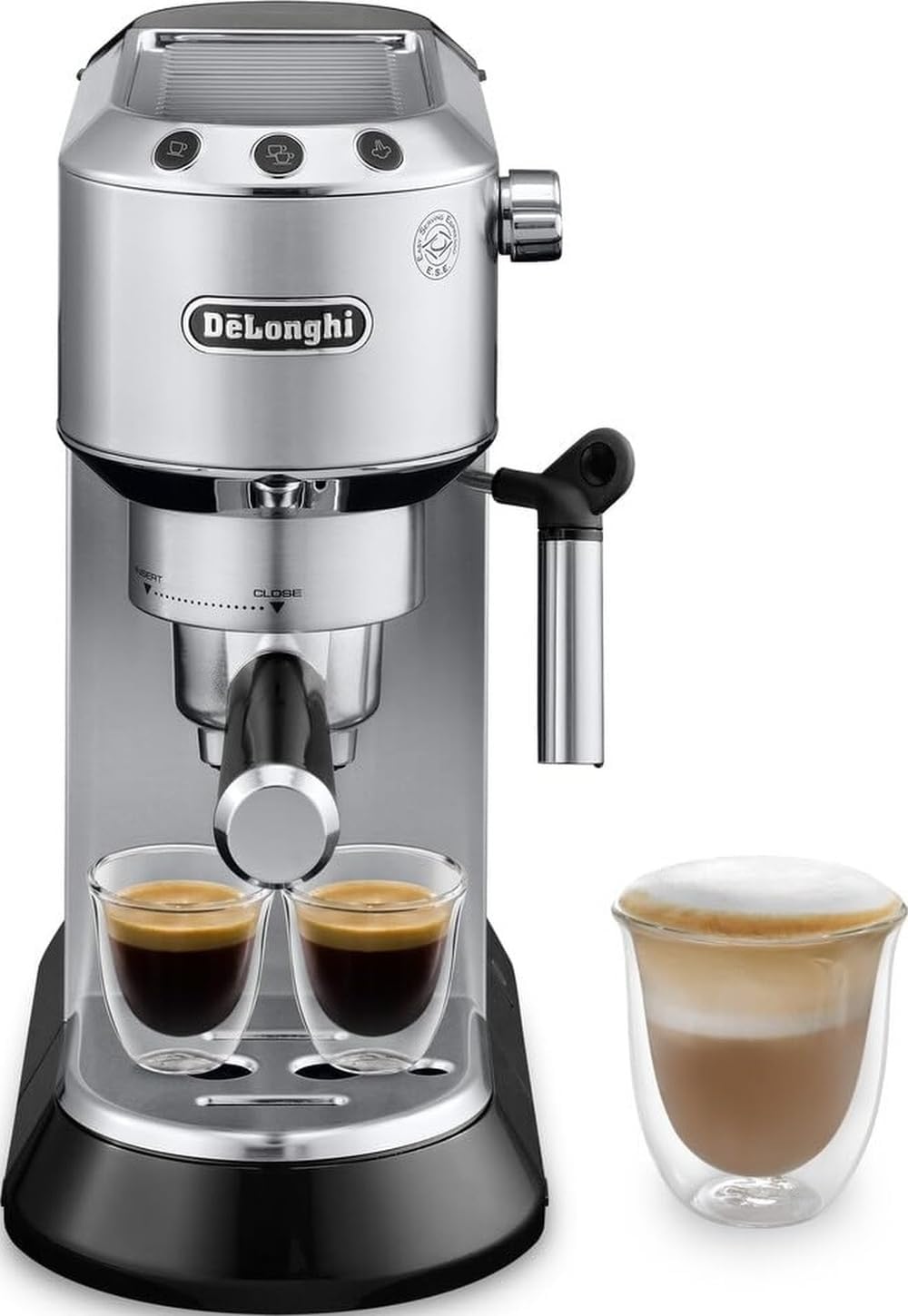
| Output Pressure | 15 bar |
|---|---|
| Wattage | 1450 watts |
| Coffee Input Type | ground, pod |
| Capacity | 1 liters |
| Operation Mode | Manual |
The De'Longhi Dedica EC680M packs a lot of espresso capability into a very narrow footprint, making it a good fit for small kitchens. It uses a 15-bar pump and thermoblock heating to reach brewing temperature in about 40 seconds, and the 3-in-1 filter holder accepts single and double shots or ESE pods so you can use ground coffee or pods. The manual steam wand produces creamy froth for cappuccinos and lattes when you learn the technique, and an adjustable drip tray lets you fit taller cups up to about 5 inches. The removable water tank and dishwasher-safe parts simplify cleanup. Limitations are the manual operation and smaller reservoir, which mean more hands-on work and more frequent refills compared with larger machines, and the frother requires some practice to get consistent microfoam. For someone who wants a compact, fast machine that delivers café-style shots without a large countertop footprint, the Dedica is a practical choice.
Best for: Buyers looking to maximize kitchen space while getting authentic espresso and milk-based drinks at home and who prefer a manual, hands-on brewing experience.
Less Ideal for: Those who want a fully automatic or low-maintenance machine with large water capacity and one-touch milk drinks should consider different models.
- Slim 6-inch-wide footprint saves counter space
- 15-bar pump and thermoblock heat up quickly for consistent espresso extraction
- 3-in-1 filter holder accepts single/double shots and ESE pods for brewing flexibility
- Removable water tank and dishwasher-safe parts make cleaning easier
- Manual frother requires practice to produce consistent microfoam
- Small water reservoir means more frequent refilling during heavy use
Verdict: A space-saving manual espresso machine that delivers fast, café-style shots and frothing capability for buyers prioritizing counter space and hands-on control.
IMUSA 4-Cup Espresso Maker

| Capacity | 4 cups |
|---|---|
| Wattage | 800 watts |
| Operation Mode | Semi-Automatic |
| Other Special Features | Milk Frother, Permanent Filter |
The IMUSA 4-Cup Espresso Maker is a compact countertop machine that brews espresso and produces steamed milk foam for cappuccinos and lattes. It uses a semi-automatic operation with a 3-option selector knob and claims 5 bar pressure to extract espresso into a transparent glass carafe, while a steam nozzle froths milk for creamy foam. Practical touches include a permanent filter basket, removable drip tray for easier cleaning, and a cool-touch carafe handle for safe pouring. At 800 watts the unit warms quickly and its small footprint fits tight kitchens. Expect cafe-style drinks for small households or casual home baristas, but it is not a commercial-grade espresso machine so extraction control and pressure will be limited compared with larger units. The plastic exterior keeps weight down but may feel less durable than metal-bodied machines. For buyers wanting an inexpensive, space-saving machine that also froths milk, this IMUSA model delivers simple daily espresso and basic cappuccinos without a steep learning curve.
Best for: Buyers prioritizing an inexpensive, space-saving espresso machine that can make simple espresso drinks and froth milk at home without complex setup.
Less Ideal for: People who want precise extraction, high pressure or a heavy-duty, long-lasting commercial-style machine should consider more robust models.
- Compact footprint suitable for small kitchens and countertops
- Built-in steam nozzle milk frother produces thick foam for cappuccinos and lattes
- Permanent filter and removable drip tray simplify cleanup
- Quick heat-up with 800-watt power for fast daily use
- Plastic exterior and lightweight construction feel less premium than metal-bodied machines
- Limited pressure and manual controls compared with higher-end espresso machines
Verdict: A compact, budget-friendly espresso machine that makes basic espresso and frothy cappuccinos for small households without complexity.
AMZCHEF Espresso Machine EM3131
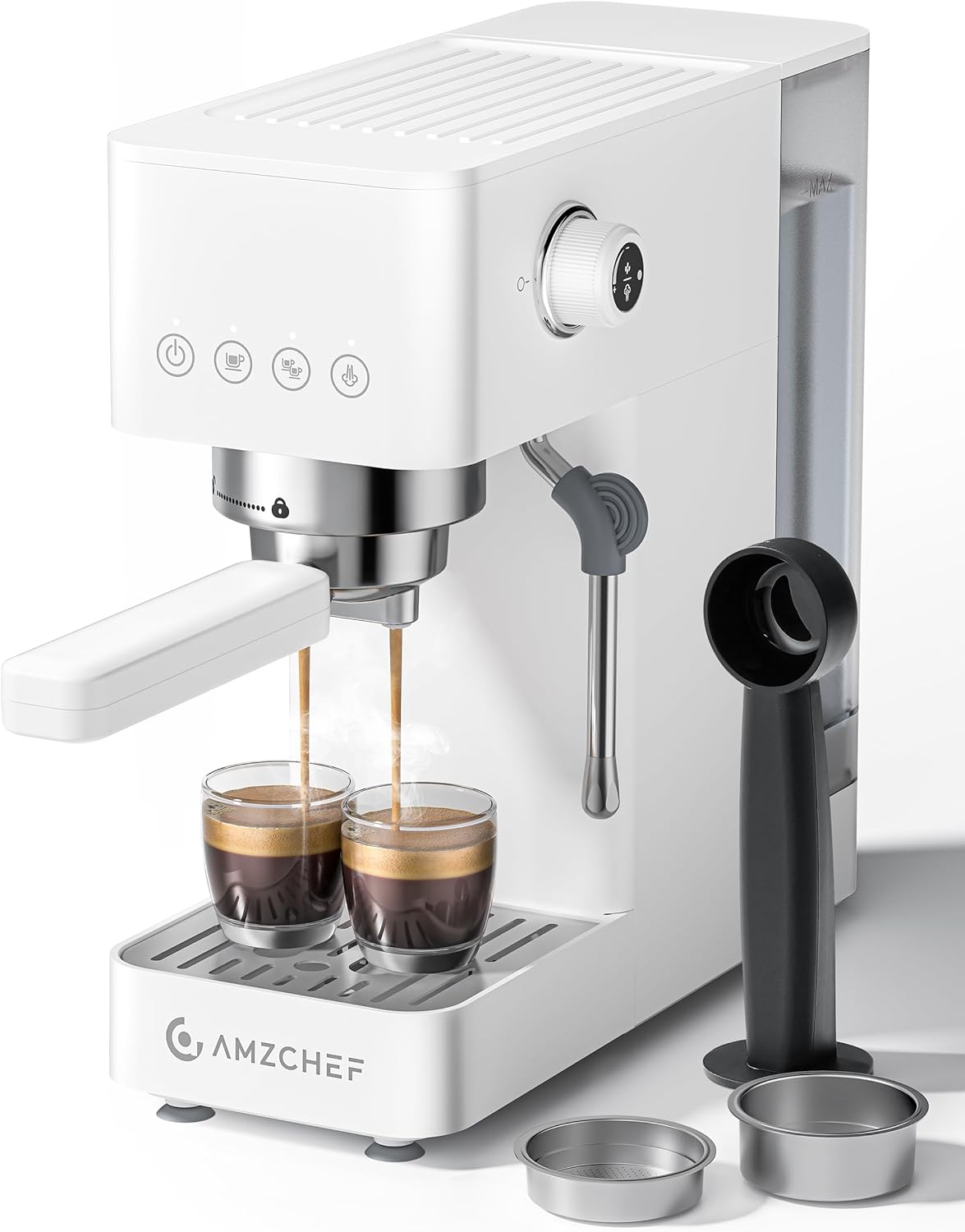
| Output Pressure | 20 bar |
|---|---|
| Wattage | 1350 watts |
| Human Interface Input | Buttons |
| Coffee Input Type | ground |
| Filter Type | Reusable |
This AMZCHEF EM3131 is a compact semi-automatic espresso machine geared toward everyday home use. It uses a 20-bar Italian pump and PID temperature control to keep brewing temperatures steady, and the 1350W heater reaches operating temperature in about 30 seconds so you can pull shots quickly. Controls are button-based with single and double cup extraction and adjustable extraction time for basic dial-in. The stainless steel steam frother offers strong steam and 360-degree rotation for frothing milk for lattes or cappuccinos, and the removable 50 oz tank reduces how often you refill. Practical touches include a reusable filter and a cup-warming top. Expect solid performance for regular espresso and milk drinks without a built-in grinder, so you will need pre-ground espresso or a separate grinder for whole beans. Build is mostly plastic, so treat it as a value-focused machine rather than a commercial-grade unit.
Best for: Buyers who want a reliable, quick-start home espresso machine that delivers consistent temperature control and easy milk steaming without paying for commercial features.
Less Ideal for: If you need an all-in-one solution with a built-in grinder or prefer heavy-duty metal construction for intensive daily commercial use, choose a different model.
- 20-bar pump with PID temperature control for consistent extraction
- Fast 30-second heat-up so the machine is ready quickly
- Removable 50 oz water tank reduces refill frequency
- Powerful steam frother with 360° rotation for effective milk texturing
- No built-in grinder, requiring pre-ground coffee or a separate grinder
- Mostly plastic construction may feel less durable than metal-bodied machines
Verdict: A dependable, fast-start espresso machine with PID temperature control and strong steaming capability that suits buyers wanting consistent home espresso performance under $200.
De'Longhi Stilosa EC260BK
| Output Pressure | 15 bar |
|---|---|
| Operation Mode | Manual |
| Wattage | 1100 watts |
| Coffee Input Type | ground_coffee |
| Filter Type | Reusable |
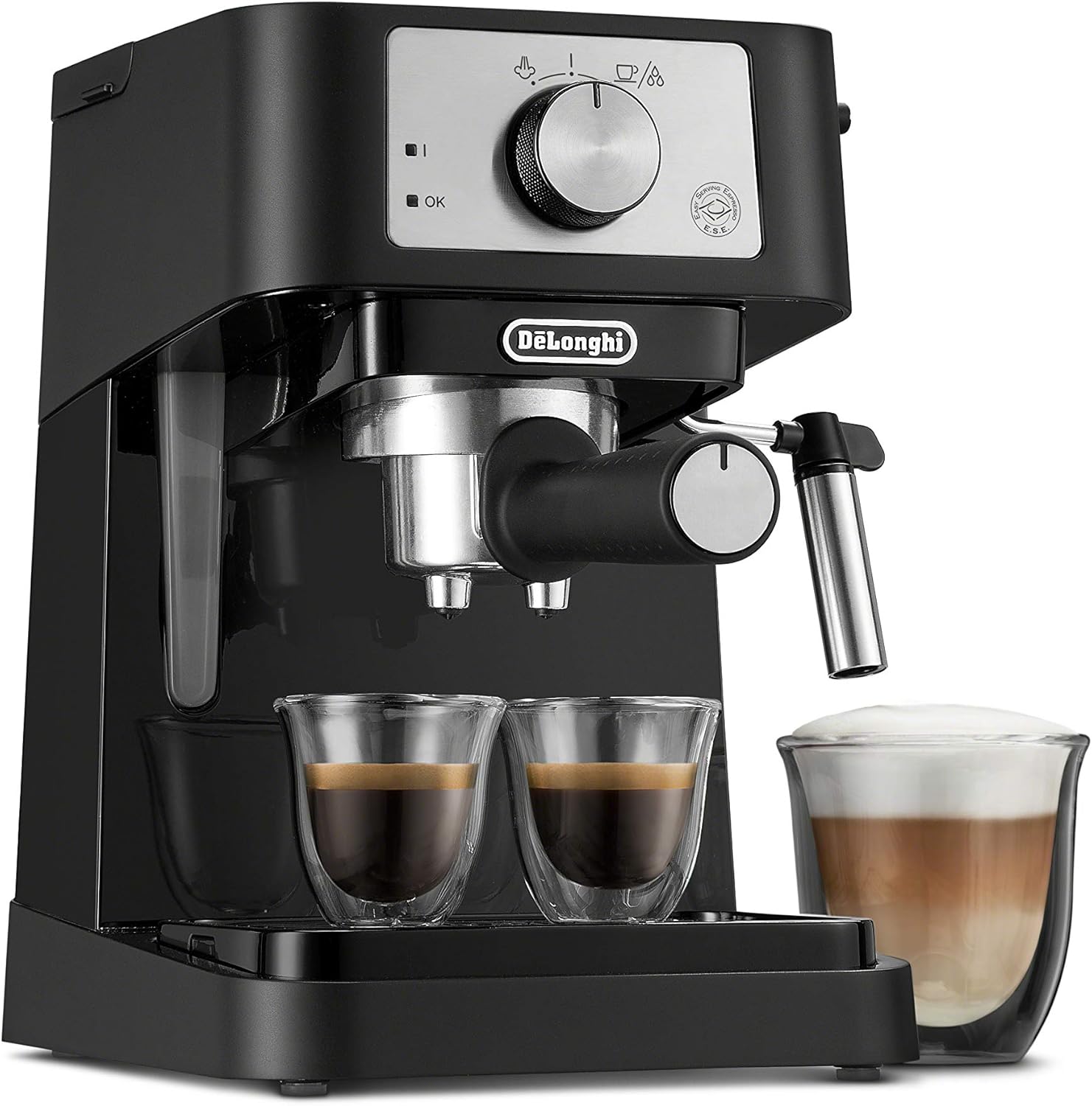
The De'Longhi Stilosa is a compact manual espresso machine aimed at home users who want control over extraction and milk texture without a large footprint. It uses a 15-bar pump and an ergonomically designed portafilter with single and double filters, so you can pull either a single or double shot from ground coffee, and the included tamper helps achieve even puck compression. The stainless steel boiler gives a more robust feel and should deliver consistent heat compared with plastic-only units, while the manual steam wand lets you texture milk for lattes and cappuccinos if you learn the technique. The water tank is removable for refilling and the two-level cup tray fits taller cups. Practical limitations are the fully manual workflow and modest water capacity, which means a learning curve for espresso dialing and more frequent refills during heavier use; it does not automate dosing or steaming. For buyers prioritizing reliable build and an authentic manual experience at a budget-friendly price, Stilosa balances durability and simple controls effectively.
Best for: Buyers who want a budget-friendly, build-focused machine that delivers an authentic manual espresso and the ability to texture milk themselves while relying on social proof and brand reliability.
Less Ideal for: People who want push-button convenience, automatic dosing, or hands-off milk steaming should consider semi-automatic or super-automatic machines instead.
- 15-bar pump and ergonomic portafilter for consistent extraction of single or double shots
- Stainless steel boiler improves heat stability and durability versus plastic boilers
- Manual steam wand produces textured milk for lattes and cappuccinos
- Compact footprint with two-level cup holder fits taller cups and saves counter space
- Fully manual operation requires practice to get consistent shots and microfoam
- Relatively small water capacity means more frequent refills during repeated use
Verdict: If you want a compact, well-built manual espresso machine under $200 that delivers classic espresso shots and hands-on milk steaming, the Stilosa is a dependable choice.
CASABREWS CM5418 Espresso Machine
| Output Pressure | 20 bar |
|---|---|
| Operation Mode | Semi-Automatic |
| Wattage | 1350 watts |
| Coffee Input Type | ground_coffee |
| Filter Type | Reusable |
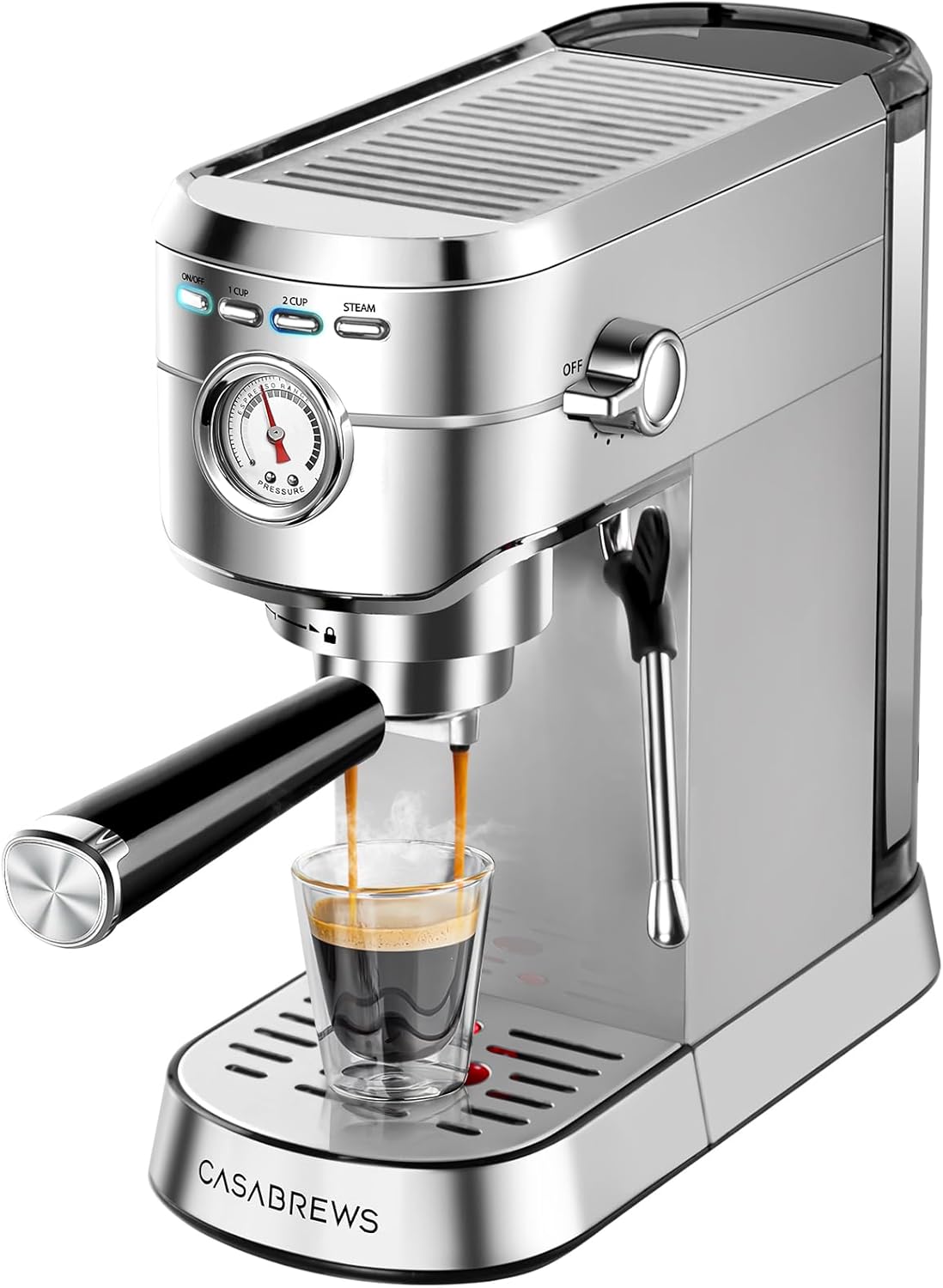
The CASABREWS CM5418 is a compact semi-automatic espresso machine aimed at home users who want café-style drinks without a complicated setup. It uses a 20-bar Italian pump and a built-in pressure gauge to help dial in extraction, and a low-pressure pre-infusion feature that evens out the puck before full pressure for more balanced shots. The machine accepts ground coffee, comes with 51mm portafilter baskets for single and double shots, and includes a powerful steam wand for textured microfoam suited to lattes and cappuccinos. Practical touches include a removable 34 oz water tank, a cup-warming top tray, and a removable drip tray that fits taller cups. Expect a short warm-up time and straightforward button controls, though the single-boiler design means you should wait between steaming milk and brewing to avoid over-temperature protection. The machine is stainless steel and fairly compact, so it fits small counters, but getting consistent results requires learning grind, tamp, and shot timing like most semi-automatic machines.
Best for: Buyers who want a compact, café-style semi-automatic machine under $200 and prefer a straightforward unit with pressure feedback to learn and refine espresso technique.
Less Ideal for: People seeking fully automated one-touch convenience or those who want simultaneous steaming and brewing without managing temperature cycles.
- 20-bar pump with built-in pressure gauge for visual feedback on extraction
- Low-pressure pre-infusion to promote more even flavor extraction
- Powerful steam wand capable of producing microfoam for lattes and cappuccinos
- Removable 34 oz water tank and removable drip tray for easy refills and cleaning
- Compact stainless steel body with a cup warmer for hotter drinks
- Single boiler requires cooling time between steaming milk and brewing to avoid lockouts
- Requires manual dialing of grind, dose, and tamp to get consistent shots like other semi-automatic machines
Verdict: A compact, learning-friendly semi-automatic that brings pressure feedback and a powerful steam wand to home baristas looking for café-style drinks on a budget.
Choosing the Right Espresso Machine: Key Factors to Consider
Steam and Pressure Capability
Steam pressure and pump consistency determine how well a machine extracts espresso and textures milk. Higher, steady pressure produces fuller crema and more even extraction, while reliable steam makes cappuccinos and lattes achievable even on budget machines.
For home use under $200, expect compromises compared with pro equipment. Look for machines that advertise stable pump or thermoblock systems and offer a steam wand rather than implied steam-only milk frothing. A modestly capable steam system lets you practice milk texturing without constant re-heating.
Temperature Control and Heat-Up Time
Temperature stability during extraction affects flavor. Machines that reach brew temperature quickly and hold it through several shots reduce wait time and produce more consistent cups. Fast heat-up also suits households that want near-instant use on busy mornings.
Budget machines often use simpler heating systems, so check user-facing features like preheat indicators, power recovery time between shots, and whether the unit benefits from a short warm-up routine. These small operational details change the daily experience more than raw spec numbers.
Ease of Cleaning and Maintenance
Regular cleaning and occasional descaling keep an espresso machine working and tasting good. Removable water reservoirs, drip trays that lift out, and easily accessible brew groups or portafilter areas make routine tasks faster and less messy.
For lower-cost machines, simple maintenance access is vital because they are less likely to be serviced professionally. Machines that allow you to clean the steam wand, remove and rinse the drip tray, and run a straightforward descaling cycle will last longer and deliver better flavor over time.
Build Quality and Long-Term Reliability
Materials and construction affect how a machine holds up to daily use. Metal components in high-contact areas, secure portafilters, and sturdy steam wands resist wear better than thin plastics. Even within a lower price tier, prioritizing models with more metal parts in critical areas pays off.
Durability also relates to replaceable parts and modular design. Machines that let you swap out a gasket, clean the shower screen, or replace a removable water tank extend usable life and reduce the chance of early failure.
User Controls and Ergonomics
Controls should be intuitive for the kind of drinks you make. Simple on/off and single-shot options serve many beginners, while clearly labeled knobs or switches for steam and brew let you move between espresso and milk drinks quickly.
Ergonomics includes portafilter size and handle comfort, cup clearance under the spout, and whether the steam wand is positioned for easy access. These details shape daily convenience more than top-line specifications.
Size and Countertop Fit
Counter space matters in small kitchens. Compact machines with a smaller footprint fit crowded countertops and may store under cabinets more easily. However, very compact designs sometimes sacrifice water-tank capacity or steam wand clearance.
Balance footprint against reservoir size and service access. If you brew multiple drinks daily, a slightly larger machine with an easier-to-fill tank may be more convenient than a tiny unit that needs refilling and frequent attention.
How Budget Machines Deliver Better Espresso Than You Expect
Affordable espresso machines have improved in extraction and steam capability, letting home users get acceptable crema and milk texture without pro-level costs. Manufacturers have optimized pump designs and thermoblock heaters to focus on the core brewing parameters that matter most: pressure, temperature, and repeatability.
That said, technique still plays a large role. Even with a modest machine, correct grind size, consistent tamping, and a short warm-up routine greatly improve results. Treat the machine as part of a workflow: a stable workflow reduces variability more than small hardware upgrades.
- Preheat the group head and portafilter for 30–60 seconds to stabilize extraction.
- Use a quality grinder and adjust grind size rather than relying on machine pressure alone.
- Purge the steam wand briefly before and after frothing to maintain hygiene and consistency.
Daily Routines That Keep a Budget Machine Performing
Daily care prevents common failures and keeps flavor consistent. Wipe the steam wand after each use, knock out spent puck after each shot, and rinse the portafilter and shower screen regularly. These quick steps preserve seals and prevent blockages.
Weekly and monthly tasks matter too. Run a short backflush or cleaning cycle if the machine supports it, and descale according to water hardness. Even simple routines reduce long-term maintenance and keep extraction consistent across weeks.
- Empty and rinse the drip tray and basket every day.
- Descale on a regular schedule based on local water hardness.
- Inspect gaskets and screens periodically and replace when worn.
Milk Texturing Tips for Machines with Modest Steam
Machines under $200 usually have less powerful steam output, so technique becomes crucial for silky microfoam. Start with cold milk, use a small pitcher, and focus on introducing air early in the stretch stage before lowering the wand for heat.
Keep the wand tip just below the surface and position the pitcher to create a gentle whirlpool. Short, repeated stretches combined with faster heating will produce acceptable microfoam for lattes and cappuccinos even when steam pressure is limited.
- Use lower-volume pours and a chilled pitcher to gain more control.
- Practice short bursts of aeration rather than prolonged steaming.
- Clean the steam tip immediately after use to prevent milk buildup.
Water Quality and Its Effect on Flavor and Longevity
Even affordable machines are sensitive to mineral buildup. Hard water shortens component life and dulls espresso flavor through scale formation. Using filtered or softened water improves taste and reduces descale frequency.
If you use a filter or bottled water, follow manufacturer guidelines for acceptable mineral content. Regular descaling paired with better water preserves heating elements and keeps temperature performance steady over time.
- Test your tap water hardness and adjust maintenance intervals accordingly.
- Use a simple carbon filter or bottled water if local water is very hard.
- Avoid fully demineralized water, which can be aggressive on metal parts.
When to Consider Serviceability and Spare Parts
Because budget machines are more likely to be serviced at home, check whether common wear parts are accessible. Removable tanks, easily reachable gaskets, and a serviceable shower screen make small repairs and deep cleaning feasible.
If a machine looks sealed or requires special tools to access internals, routine maintenance may become expensive or impractical. Prioritizing serviceability extends usable life and reduces the chance that a minor issue becomes irreparable.
- Look for user-accessible screws and removable panels for basic fixes.
- Confirm that seals and filters are replaceable without professional help.
- Keep simple spare parts like gaskets and shower screens on hand if you use the machine daily.
How We Chose the Best Espresso Machine
We focused on machines that make repeatable espresso shots and give usable steam for basic milk drinks while staying under the $200 cap. We prioritized models with consistent temperature control, adequate pump or thermoblock performance, and user-accessible serviceability so owners can keep them running without professional repairs. Key evaluation dimensions included steam/pressure delivery, heat-up and temperature stability, ease of cleaning and access, build quality and durability for daily use, and usability features such as simple controls and clear water access. We also considered footprint and noise for small kitchens. We excluded single-purpose espresso tools that require extensive aftermarket parts, machines designed only for pods or capsule systems, and units that lack basic cleaning access or removable water reservoirs. The result is a practical shortlist of machines that meet everyday home use needs while keeping maintenance and setup straightforward.
Our full evaluation process is outlined in our review methodology.
FAQ
Can machines under $200 make real espresso?
Yes, many budget machines can produce true espresso as long as you manage grind size, tamping, and machine warm-up. They may not match commercial machines in steam power or recovery, but they can deliver concentrated shots with crema.
How often should I descale a low-cost espresso machine?
Descaling frequency depends on water hardness and usage. For average tap water, expect to descale every 2 to 3 months with regular use. Using filtered water can extend that interval.
Is a built-in steam wand necessary for frothed milk drinks?
A steam wand greatly improves control when texturing milk. Machines that only offer steam gas or frothers may produce foam but not the fine microfoam needed for latte art. For cappuccinos and lattes, a wand is preferable.
Will a compact machine compromise shot quality?
Compact machines trade reservoir capacity and sometimes thermal stability for a smaller footprint. Shot quality can still be good if you manage temperature and reduce wait times between shots. Consider how many drinks you make per session.
Are replacement parts easy to find for budget machines?
Availability varies by design, but many entry-level machines use common gaskets, filters, and pressure valves. Choosing models with removable components and documented parts lists makes sourcing spares simpler.
Final Verdict
When shopping for an espresso machine under $200, prioritize steady steam and reliable pressure, ease of cleaning, and serviceable design. Those factors directly impact everyday performance, maintenance needs, and long-term reliability. Accept that you will trade some power and thermal mass for affordability. Focus on fit with your routine: if you want milk drinks, pick a machine with a usable steam wand and easy access for cleaning. If you mostly pull straight shots, emphasize temperature stability and pump consistency.