
Note: This article contains affiliate links. If you click on these links and make a purchase, we may earn a small commission at no extra cost to you. This helps support our research and content. Read our full affiliate disclosure here.
If you bake at home regularly, the noise a bread maker makes can affect when and where you run cycles. A Quiet Bread Maker keeps early-morning or late-night baking from disturbing household routines while still producing consistent loaves. This guide covers seven shortlisted models that balance low operational sound with dependable mixing, rising, and baking performance. Below you will find the top quiet bread makers selected for steady loaf texture, predictable crust results, user-friendly controls, and practical maintenance. Read on to see which features matter most and which machines fit different home baking styles.
Top Picks at a Glance
| Best Overall The best all-around choice for most situations | Zojirushi Home Bakery Supreme BB-CEC20 |  |
| Best Quality Built to a higher standard if you want something more solid | Breville Custom Loaf BBM800XL | 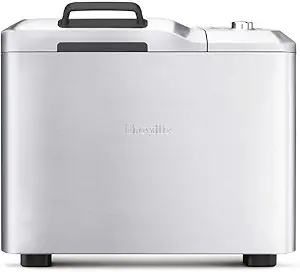 |
| Best Value The sweet spot between price and what you get | Amazon Basics 2-Pound Bread Maker |  |
| Best Budget The cheapest option that still gets the job done reliably | Elite Gourmet Programmable Bread Maker |  |
| Top Rated A top-rated pick with lots of positive feedback | Cuisinart Bread Maker CBK-110P1ES |  |
| Most Popular A crowd favorite that many people choose with confidence | OSIPOTO 2LB Bread Maker | 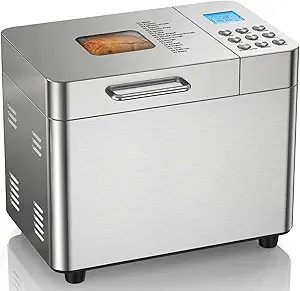 |
| Best Seller A high-volume bestseller chosen again and again | KITCHENARM Smart Bread Machine 2LB |  |
Zojirushi Home Bakery Supreme BB-CEC20

| Capacity | 2 pounds |
|---|---|
| Wattage | 700 watts |
| Number of Programs | 10 |
| Voltage | 120 volts |
The Zojirushi Home Bakery Supreme is a versatile countertop breadmaker designed for making 2-pound loaves, doughs, jams, and cakes at home. It uses fuzzy-logic controls and offers 10 programs including dough, jam, sourdough starter, cake, and a quick-bake option plus a 13-hour delay timer so you can set it up overnight for fresh bread in the morning. The machine's rectangular nonstick pan and adjustable crust shade produce attractive, evenly baked loaves, and the clear LCD control panel makes program selection straightforward. At 700 watts it delivers consistent results without requiring advanced baking knowledge, and the included measuring cups and recipe booklet help with getting started. Practical downsides are its relatively heavy weight and hand-wash care for removable parts, which adds cleanup effort, and while Zojirushi machines are known for quiet operation, the kneading and baking cycles still produce normal appliance noise. For someone who wants reliable, fuss-free homemade bread with flexible programing, this unit performs well.
Best for: Buyers who want a dependable, feature-rich breadmaker that makes full-size 2-pound loaves and simplifies a variety of recipes with preset programs and a timer.
Less Ideal for: Those who need an ultra-light, portable machine or who prefer dishwasher-safe parts for minimal cleanup.
- Wide program set including dough, jam, sourdough starter, cake, and quick-bake modes
- Adjustable crust shade produces consistent, attractive 2-pound loaves
- 13-hour delay timer for scheduled baking
- User-friendly LCD control panel and included recipe booklet to simplify use
- Heavier unit that is less convenient to move or store
- Removable parts require hand washing rather than dishwasher-safe cleaning
Verdict: A reliable, feature-packed breadmaker that delivers consistently good 2-pound loaves with flexible programs and a convenient delay timer.
Breville Custom Loaf BBM800XL

| Capacity | 2.5 pounds |
|---|---|
| Wattage | 830 watts |
| Voltage | 120 volts |
| Number of Programs | 13 |
The Breville Custom Loaf BBM800XL is built for bakers who want control over their loaves rather than one-button results. It offers 13 programs plus nine user-definable settings so you can create and store custom recipes, and the smart LCD shows progress from mix through bake. The collapsible kneading paddle mixes ingredients on a platform and folds away before baking to reduce the hole left by a fixed paddle, and the automatic fruit and nut dispenser times add-ins so they are incorporated at the right stage. Practical touches include a power-interruption backup (60 minutes) that preserves long cycles and two included paddles for regular loaves and jam. At 830 watts it performs efficiently, but the machine is fairly solid and not the quietest model available, especially during kneading. If quiet operation is a priority, expect some motor noise during mixing cycles. For performance-focused home bakers who want consistent, customizable results and fewer manual steps, this is a capable machine with thoughtful features.
Best for: Bakers who prioritize performance and recipe control over silence and want a machine that lets them program and save custom loaves for consistent results.
Less Ideal for: Buyers who need an ultra-quiet machine for noise-sensitive living spaces or those with very limited counter space should consider quieter or more compact alternatives.
- Extensive program options with 13 built-in and nine customizable settings for recipe control
- Collapsible kneading paddle reduces the large hole common with fixed paddles
- Automatic fruit and nut dispenser times add-ins correctly for complex flavors
- 60-minute power-interruption backup protects long cycles
- Clear LCD makes monitoring progress straightforward
- Kneading/mixing cycles produce noticeable motor noise compared with ultra-quiet models
- Relatively heavy and substantial footprint for small kitchens
Verdict: Choose the Breville Custom Loaf BBM800XL if you want a performance-focused, highly customizable bread maker that produces consistent, bakery-style loaves.
Amazon Basics 2-Pound Bread Maker

| Voltage | 120 volts |
|---|---|
| Capacity | 2 pounds |
| Wattage | 550 watts |
| Number of Programs | 14 |
This Amazon Basics bread maker is a straightforward machine for making fresh loaves at home without a lot of fuss. It handles the full cycle — mix, knead, rise, and bake — for up to a 2 pound loaf and offers 14 programs that include dough, gluten-free, and jam modes, plus an ExpressBake setting that finishes a loaf in under 90 minutes. The stainless steel housing and nonstick pan simplify cleanup and the LCD and program list make selecting cycles easy. You can pick from three crust colors to suit preference, and the 550 watt motor provides enough power for consistent kneading. It is not a miniature baker and sits on the counter, so it is best used by people who bake regularly or like scheduled loaf baking. Noise is moderate for a bread machine of this class, and while the feature set is solid, there are no advanced custom-program memory options or smartphone controls. For home bakers who want reliable, programmable loaves with minimal setup, it covers the essentials well.
Best for: Buyers who want a reliable, no-frills machine to produce regular homemade loaves and appreciate straightforward presets and an express bake option.
Less Ideal for: People who want app control, complex custom programming, or a very compact travel-friendly unit should consider other options.
- Full automated bake cycle: mixes, kneads, rises, and bakes a 2 pound loaf
- 14 preset programs including gluten-free and dough modes for versatility
- ExpressBake option produces a loaf in under 90 minutes
- Nonstick pan and stainless steel exterior that are easy to wipe clean
- No smartphone app or advanced programmability for custom cycles
Verdict: A dependable, programmable 2-pound bread maker that delivers versatile preset baking and a fast ExpressBake cycle for practical home use.
Elite Gourmet Programmable Bread Maker

| Capacity | 2 pounds |
|---|---|
| Wattage | 550 watts |
| Number of Programs | 19 |
| Voltage | 120 volts |
The Elite Gourmet Programmable Bread Maker automates kneading, rising, and baking to deliver fresh loaves with minimal effort, making it a good pick for everyday use. You load the ingredients, pick one of 19 programs—everything from gluten-free to pizza dough and jam—choose loaf size (1, 1.5, or 2 lb) and crust shade, and the machine handles the rest; a 15-hour delay timer and 60-minute keep-warm let you schedule fresh bread for mornings or meals. Its 550-watt compact design uses less energy than an oven and comes with a nonstick pan, kneading blade, and measuring tools for first-time bakers. Practical benefits include broad program selection for varied recipes and simple one-touch operation that reduces hands-on time. Important limitations are that it is a countertop appliance limited to single loaves and that the aluminum construction and removable parts mean you will still need to clean the pan and blade after each use; serious home bakers wanting custom shaping or larger batches may prefer a conventional oven or stand mixer plus bake. For budget-minded cooks who want fresh bread with low fuss, this model covers the essentials.
Best for: Buyers looking for an affordable, easy-to-use bread maker that reliably produces single loaves on a schedule and supports a wide range of preset recipes.
Less Ideal for: Those who need large-volume baking, custom-shaped artisanal loaves, or the flexibility of mixing and baking separate batches in a conventional oven.
- 19 preset programs cover gluten-free, whole wheat, pizza dough, jam, and more
- Supports three loaf sizes (1, 1.5, 2 lb) and three crust shades for flexibility
- 15-hour delay timer and 60-minute keep-warm for scheduled fresh bread
- Compact, energy-efficient 550-watt design suitable for small kitchens
- Bakes only one loaf at a time so not ideal for large batches
- Requires cleaning of the pan and kneading blade after each use
Verdict: A budget-friendly, compact bread maker that delivers scheduled, low-effort fresh loaves with a wide set of one-touch programs.
Cuisinart Bread Maker CBK-110P1ES

| Capacity | 2 pounds |
|---|---|
| Wattage | 550 watts |
| Number of Programs | 12 |
| Voltage | 120 volts |
The Cuisinart CBK-110P1ES is a compact, fully automatic bread machine that mixes, kneads, and bakes up to 2 lb. loaves using 12 preset programs. It is typically used on the countertop for everyday loaves, quick breads, cakes, and even jams thanks to its program variety and removable nonstick vertical pan. The LCD display, audible beeps, and 13-hour delay-start make scheduling fresh bread easy, while a 60-minute keep-warm cycle keeps loaves ready to serve. Practical controls let you select three crust colors and three loaf sizes, which helps dial in texture and portion for different recipes. The stainless steel/plastic housing keeps the unit compact enough for smaller kitchens, and the included presets plus foolproof recipe guidance simplify baking for users who do not want to tweak settings manually. Limitations include basic manual controls rather than smartphone connectivity and a vertical loaf shape that may not suit all users' preferences, and occasional noise during kneading typical of machines this size but not unusually loud for its class.
Best for: Buyers who prioritize a reliable, no-fuss countertop machine that produces consistent loaves on a regular schedule and values straightforward presets over smart features.
Less Ideal for: Users who want Wi-Fi control, fully silent operation, or a traditional pan-style loaf without the vertical shape should consider other options.
- 12 preprogrammed menus cover basic breads, cakes, jams, and specialty options
- Three crust color and three loaf-size settings for customizable results
- 13-hour delay-start and 60-minute keep-warm let you schedule fresh bread
- Compact footprint with removable nonstick vertical bread pan for easy cleaning
- Vertical loaf shape may not match preferences for traditional horizontal loaves
- Kneading cycle produces typical machine noise, so it is not completely silent
Verdict: A dependable, preset-driven bread maker that reliably produces scheduled fresh loaves for buyers who want simple, consistent results.
OSIPOTO 2LB Bread Maker

| Capacity | 2 pounds |
|---|---|
| Wattage | 600 watts |
| Number of Programs | 17 |
| Voltage | 120 |
The OSIPOTO 2LB Bread Maker is a compact automatic machine designed for home bakers who want fresh loaves with minimal fuss. You add ingredients, pick one of 17 preset programs (including basic, whole wheat, gluten-free, jam, and cake), and the machine handles kneading, proofing, and baking; it also offers three loaf sizes and three crust settings for customization. Practical touches include a nonstick baking pan for easier removal and cleanup, a 15-hour delay timer plus a keep-warm function, and an overheat-protection safety pause. Its 600 W motor claims 360 degree even heat distribution and the listing emphasizes low-noise operation around 50 dB, which fits this machine well into kitchens where quiet is important. For first-time bakers the clear preset options and included measuring tools and recipe book lower the learning curve. Limitations are typical for compact household bread makers: baking times run several hours for full loaves and the unit is best for loaves up to 2 pounds rather than artisan-size or very large batches.
Best for: Buyers who value low-noise, beginner-friendly bread making and want a reliable countertop machine to produce family-sized loaves with little hands-on effort.
Less Ideal for: If you need rapid small-batch baking, commercial-scale output, or artisan-style loaves that require free-form shaping and very large sizes, this unit is not the best fit.
- Quiet operation advertised around 50 dB, suitable for noise-sensitive kitchens
- 17 preset programs cover common breads plus cake, jam, yogurt, and gluten-free options
- Large 2 lb maximum loaf capacity with three loaf-size and three crust settings
- Nonstick pan and included measuring tools make cleanup and setup easier
- Baking a full loaf takes multiple hours, so it is not for quick turnaround
- Hand-wash care and stainless steel exterior may require extra maintenance
Verdict: Choose this model if you want a quiet, easy-to-use bread maker that reliably produces family-sized loaves with a wide selection of preset programs.
KITCHENARM Smart Bread Machine 2LB

| Voltage | 120 volts |
|---|---|
| Capacity | 2 pounds |
| Wattage | 550 watts |
| Number of Programs | 29 |
This KitchenArm bread machine is a full-featured home baker aimed at making from-scratch loaves easy for beginners while giving advanced users deep control. You pick a program from 29 menus (including gluten free and whole wheat), add ingredients, and use the 1-press recall for repeat recipes; you can also build up to four fully customizable cycles to tweak knead, rise, and bake times. The unit supports three loaf sizes and three crust colors, and useful extras include a 15-hour delay timer, 1-hour keep-warm, and interruptions recovery. The stainless steel housing, ETL certification, and nonstick coated pan make for solid build quality, and the large LCD is easy to read. At 550 watts it runs at typical bread machine power, so it is not silent but performs reliably; expect some motor/kneading noise during operation. The recipe book and cloud recipes expand what you can bake beyond bread into cakes, jams, and yogurt. Overall it suits home kitchens that want flexibility and dependable results rather than a minimalist single-function machine.
Best for: Buyers who want a reliable, feature-rich bread maker that handles a wide range of recipes and offers saved presets for repeating favorite loaves with minimal fuss.
Less Ideal for: If you need an ultra-quiet countertop appliance or require fully dishwasher-safe parts, this machine may not meet those specific priorities.
- Wide selection of 29 preset programs covering bread types plus cake, jam, and yogurt
- Customizable HOME MADE menu lets you program individual cycle times and save up to four personalized recipes
- Three loaf sizes and three crust settings give consistent portion control and appearance
- ETL certified stainless steel build and nonstick pan for safer, durable everyday use
- Large LCD and features like delay timer, keep-warm, and power-interruption recovery add convenience
- Not specifically designed for ultra-quiet operation; kneading motor produces noticeable sound during cycles
- Product care requires hand washing of removable parts rather than dishwasher-safe components
Verdict: Choose this machine if you want a dependable, versatile bread maker with extensive presets and programmable cycles for repeatable homemade bread.
Choosing the Right Quiet Bread Maker: Key Factors to Consider
Noise Level And Motor Design
A bread maker's noise level is shaped by motor quality, gearing, and internal insulation. Quieter models often use slower, more efficient motors or improved gear trains that reduce vibration and whine during kneading. Sound dampening around the motor compartment and rubberized mounting points for the kneading paddle also cut audible vibration.
When evaluating a Quiet Bread Maker, consider both the decibel rating if provided and real-world descriptions of motor sound during the knead and bake cycles. Quiet operation matters if you bake while others sleep, in small apartments, or near baby rooms. A marginally louder unit with superior mixing may still be acceptable if it runs on a schedule when noise is less disruptive.
Mixing And Kneading Efficiency
How well a machine mixes ingredients and develops gluten affects loaf rise, crumb structure, and the need for manual intervention. Efficient kneading arms and well-designed pan geometry encourage even dough formation and reduce the chance of unmixed pockets.
For quiet machines, the kneading mechanism should balance power and smoothness. Excessive torque will increase noise but may handle dense doughs better. Choose based on the breads you intend to bake most often; for enriched or whole-grain recipes, look for machines with stronger, yet still quiet, kneading action.
Program Flexibility And Controls
Programs and control layout determine how easily you can prepare different bread styles and schedule cycles. Useful features include multiple loaf sizes, crust darkness settings, rapid or artisan-style programs, and a delayed-start timer for overnight rises.
Intuitive controls and clear displays reduce the time you need to interact with the machine and lower the chance of user error. For quieter kitchens, options that let you schedule baking during daytime or quieter hours are especially helpful.
Loaf Size, Pan Shape, And Output
Loaf size and pan shape affect crumb density and sliceability. Typical home bread makers offer multiple loaf-size settings; choose a size that matches your household consumption so you avoid wasted bread or frequent baking.
Pan shape also influences crust-to-crumb ratio. Taller loaf pans give a different crust distribution than wider pans. If you bake for sandwiches, a uniform, moderately shaped loaf will usually be preferable.
Ease Of Cleaning And Maintenance
Removable pans, dishwasher-safe parts, and accessible kneading paddles make routine cleaning less of a chore. Machines that require special tools for maintenance or have many nooks where dough accumulates will demand more time and can lead to hygiene issues over time.
Also consider how easy it is to remove and reattach parts without damaging seals or nonstick coatings. Regular maintenance matters for quiet models too; loose or worn components can increase operational noise over time.
Durability And Serviceability
Long-term satisfaction depends on build quality and the availability of user-serviceable components. Metal gearing and robust motor mounts reduce the risk that vibration will degrade parts and increase noise. Consider whether common wear items, like kneading paddles or drive belts, are easy to replace.
A machine designed for easy access to key components will stay quieter longer because it is simpler to restore tight tolerances during repairs. Durability considerations are particularly important if you bake multiple times per week.
How Quiet Bread Makers Cut Noise
Quiet bread makers combine several mechanical and acoustic strategies to reduce audible operation. These include using lower-speed motors with higher torque, improved gear trains that run smoothly, and damping materials around the motor and pan to absorb vibration.
Reducing noise often involves tradeoffs. Slower motors can be quieter but may require longer knead cycles to achieve the same dough development. Designers balance motor speed, gearing, and program timing to deliver acceptable baking results while keeping sound levels low.
- Rubber mounts isolate vibration from the chassis
- Heavier, well-balanced paddles minimize wobble
- Insulation layers around the motor reduce high-frequency noise
- Optimized program timing compensates for gentler kneading
Setting Up For Quiet Operation
Placement and setup influence perceived noise more than you might expect. Position the bread maker on a stable, vibration-absorbing surface such as a silicone mat or wooden countertop to reduce transmitted sound. Avoid thin shelves or cabinets that can amplify motor vibration.
Level the machine carefully and ensure the paddle and pan are seated correctly before starting a cycle. Loose parts increase noise and can impair mixing performance. Choosing the right program for the dough type also prevents excessive motor load and unnecessary sound.
- Use a soft surface pad to dampen vibration
- Check pan and paddle seating before each use
- Select gentler programs for enriched or soft doughs
Programs And Recipes That Run Quieter
Some settings allow a quieter overall operation by using gentler kneading or longer rise times. For instance, a dough-only program with extended rests can achieve similar gluten development with less aggressive motion.
Adapting recipes slightly, such as increasing hydration or using pre-ferments, can reduce the mechanical work the machine must do. That can translate to quieter cycles and better crumb in many cases.
- Choose longer, gentler knead cycles over short intensive ones
- Increase hydration slightly for softer dough that requires less torque
- Use delayed start settings to time noisy cycles for daytime
Maintenance Tips To Keep Noise Low Over Time
Regular maintenance preserves quiet operation. Clean the pan and paddle after each use to prevent residue buildup that creates imbalance and vibration. Inspect the paddle shaft and drive interface periodically for wear or looseness.
Lubrication of accessible mechanical joints, where recommended by the manufacturer, and replacing worn paddles or gaskets can prevent new noise from developing. Tightening mounting screws that loosen with repeated use will also reduce rattles.
- Wash and dry removable parts after each bake
- Inspect paddle and pan fit for signs of wear
- Tighten screws and fasteners to eliminate rattles
When To Prioritize Performance Over Absolute Quiet
If you bake heavy whole-grain or dense brioches frequently, you may need a stronger kneading action that produces more noise. In that case, prioritize machines with robust mixing and accept slightly higher sound levels for consistent dough handling.
For occasional quick loaves or light sandwich breads, quieter models that sacrifice some kneading torque can be a worthwhile tradeoff. Consider how often and what styles you bake most when balancing noise against capability.
- Heavy doughs often need stronger motors and may be louder
- For casual bakers, prioritize quietness and convenience
- For frequent, varied baking, choose a model with stronger mixing even if a bit louder
How We Chose the Best Quiet Bread Maker
We focused on attributes that directly affect the everyday experience of using a Quiet Bread Maker. Primary evaluation criteria included measured operational noise during kneading and bake cycles, the machine's ability to produce even crumb texture and crust color across settings, and the effectiveness of mixing and kneading mechanisms for consistent dough development. We also assessed control ergonomics and program flexibility, such as loaf-size options, crust darkness settings, and delayed-start features that matter for timed baking. Ease of cleaning and maintenance, including removable pans and nonstick surfaces, were considered because routine upkeep influences long-term satisfaction. Build quality and component durability were factored in to estimate lifespan under normal household use. We excluded machines that lacked clear noise-reduction features or that offered only minimal program control, since the goal was low-noise reliable baking rather than basic or single-function units. Units with poor serviceability or non-removable critical parts were also filtered out. The final selection emphasizes machines that balance quiet operation with measurable baking performance and practical user features.
Our full evaluation process is outlined in our review methodology.
FAQ
How loud is a typical quiet bread maker during kneading?
Quiet bread makers usually operate in a lower sound range compared with standard machines, with knead cycles described as a low hum or gentle whir. Actual noise depends on motor design and mounting, but many units are quiet enough to run without disturbing others in adjacent rooms.
Will a quieter machine still handle dense doughs like whole-grain mixes?
It depends. Some quiet models are engineered with higher torque at lower speeds and can handle denser doughs effectively. Others achieve quietness by using gentler kneading and may struggle with very heavy whole-grain recipes. Check the machine's program capabilities and user guidance for dense doughs.
Can placement reduce the perceived noise of my bread maker?
Yes. Placing the machine on a stable, vibration-damping surface and keeping it away from thin shelving will reduce transmitted noise. Leveling the unit and ensuring all parts are properly seated also minimizes rattles and vibration.
Does using different programs change how noisy a cycle is?
Often it does. Programs that use shorter, more aggressive kneading are typically louder than gentler, longer cycles. Choosing a program optimized for gentle kneading or using extended rest intervals can lower noise during operation.
How should I maintain a Quiet Bread Maker to keep it running smoothly?
Clean removable pans and paddles after each use, inspect the paddle shaft and drive interface for wear, and tighten any loose fasteners. Replacing worn paddles or seals when they show signs of deterioration will help preserve quiet operation.
Final Verdict
Choosing a Quiet Bread Maker is about balancing low operational noise with the mixing power and program flexibility you need most. Prioritize models with proven noise-reduction features if you bake at night or in shared living spaces, but give extra weight to kneading performance if you frequently make dense or enriched breads. Ultimately, select the machine that fits your typical recipes and schedule. If silence is critical, opt for gentler kneading and better acoustic design. If you bake frequently and with varied doughs, accept a bit more noise for stronger, more reliable mixing.