
Note: This article contains affiliate links. If you click on these links and make a purchase, we may earn a small commission at no extra cost to you. This helps support our research and content. Read our full affiliate disclosure here.
Picking the right quiet floor fan makes a big difference when you need cooling without the constant hum. Whether you sleep light, work from home, or want gentle background airflow for a nursery, the best quiet floor fans deliver steady cooling while staying unobtrusive. This guide presents the top shortlisted options in the quiet floor fan category and explains the features that matter most for calm, effective airflow. Below you will find picks selected for low noise output, airflow performance, and practical features for everyday use. Read on for the evaluation criteria and details that will help you choose the right fan for your space.
Top Picks at a Glance
| Best Quality Built to a higher standard if you want something more solid | Rowenta Turbo Silence Stand Fan VU5670 |  |
| Best Budget The cheapest option that still gets the job done reliably | Lasko 2520 Oscillating Pedestal Fan | 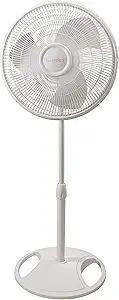 |
| Top Rated A top-rated pick with lots of positive feedback | DREO DR-HPF013 Pedestal Fan |  |
| Most Popular A crowd favorite that many people choose with confidence | Levoit Classic 36-inch Tower Fan |  |
| Best Seller A high-volume bestseller chosen again and again | DREO Tower Fan 307 |  |
Rowenta Turbo Silence Stand Fan VU5670

| Noise Level | 35 db |
|---|---|
| Air Flow Capacity | 2436 cfm |
| Number of Blades | 5 |
| Number of Power Levels | 5 |
| Wattage | 35 watts |
The Rowenta Turbo Silence VU5670 is a pedestal fan built to move a lot of air quietly for bedrooms and home offices. It uses a 16-inch head and five blades to produce up to 2436 cfm at max speed while offering five speed settings including a Turbo Boost and a Silent Night mode for near-silent operation. Controls are available on an electronic panel and via a compact remote that stores onboard, and convenient features include automatic oscillation, an adjustable height, an 8-hour timer and an energy-save mode that reduces airflow over time. In real rooms the fan delivers focused, powerful cooling at higher speeds and a gentle, whisper-quiet breeze at low settings, making it useful both for sleep and for quickly cooling a standing area. Trade-offs are its plastic construction and a brushed motor, which may feel less premium and could limit long-term durability compared with higher-end brushless models, and the fan is mains-powered so it is not portable without an outlet.
Best for: Buyers who prioritize strong cooling output without sacrificing quiet operation and want a feature-rich floor fan for bedrooms or home offices.
Less Ideal for: Anyone needing battery-powered or fully portable cooling, or buyers seeking a metal-bodied fan with a brushless motor for maximum durability.
- High maximum airflow up to 2436 cfm for strong room coverage
- Very low noise at minimum speed (about 35 dB) suitable for bedrooms
- Five speed settings including Turbo and Silent Night for flexible use
- Remote control with onboard storage and 8-hour timer for convenience
- Energy-save mode that reduces power and airflow over time to save energy
- Plastic build and a brushed motor may be less durable than metal construction or brushless designs
- Requires mains power so it cannot run in locations without an outlet
Verdict: Choose this fan if you want powerful room airflow combined with genuinely quiet low-speed performance for sleep or focused cooling.
Lasko 2520 Oscillating Pedestal Fan

| Blade Diameter | 16 inches |
|---|---|
| Number of Speeds | 3 |
| Wattage | 91 watts |
| Power Source | Corded Electric |
| Motor Type | AC |
The Lasko 2520 is a straightforward pedestal fan that delivers adjustable, focused airflow for bedrooms, living rooms, or home offices. It uses a four-blade plastic propeller driven by an AC motor and offers three speed settings that are deliberately tuned for quieter operation, so you can run it at night without excessive noise. The head tilts and the unit oscillates to spread air broadly, while the telescoping stand extends up to 47 inches to target airflow at different heights. Assembly requires no tools and the fan plugs into a standard outlet; built-in Blue Plug safety cuts power if a fault is detected. Practical benefits include reliable, no-frills cooling, easy portability, and simple manual controls that are intuitive to use. Limitations are its basic control set—no remote, timer, or advanced speed increments—and a plastic construction that favors value over premium durability or high CFM performance for large spaces. For buyers after an inexpensive, quiet floor fan, this model covers the essentials well.
Best for: Buyers prioritizing an affordable, low-noise fan for bedrooms or small living spaces who want easy setup and simple manual controls.
Less Ideal for: People needing high-airflow solutions for very large rooms or those who want smart features, remote control, or advanced fan settings.
- Three quiet speed settings suitable for nighttime use
- Adjustable height up to 47" and tilt head for targeted airflow
- Widespread oscillation spreads air across a room
- Tool-free assembly and lightweight for easy portability
- No remote control, timer, or fine-grained speed control
- Plastic construction may feel less durable than metal alternatives
Verdict: A low-cost, quietly tuned pedestal fan that delivers reliable, targeted airflow for bedrooms and small rooms.
DREO DR-HPF013 Pedestal Fan

| Power Source | Corded Electric |
|---|---|
| Number of Speeds | 8 |
| Noise Level | 28.2 db |
| Air Flow Capacity | 1000 cfm |
| Motor Type | Brushless |
The DREO DR-HPF013 is a quiet DC-powered pedestal air circulator designed to move air across a whole room while staying unobtrusive. It uses a brushless DC motor and a three-blade turbo design to deliver up to about 1000 CFM and claims reach up to 90 feet, making it useful for bedrooms, living rooms, or home offices. Controls are available on a top touch panel and with the included remote, and you get 8 manual speeds, an auto mode that adjusts speed with temperature, 90° horizontal oscillation plus a 105° vertical pivot, and an 8-hour timer. The fan disassembles for blade and grill cleaning and includes an aroma pad for light scenting. In real use the combination of DC motor and low quoted noise level (28.2 dB) makes it noticeably quieter than many standard pedestal fans while still providing strong airflow on higher speeds. Trade-offs are typical for quiet circulators: the plastic construction keeps weight down but feels less substantial than metal stands, and intensive high-speed use will produce more noise than sleep modes. For buyers prioritizing steady, quiet performance the DR-HPF013 balances airflow, adjustable positioning, and easy controls effectively.
Best for: Buyers who want a reliable, low-noise floor fan that consistently circulates air across a whole room and values simple remote and touch controls for everyday use.
Less Ideal for: People seeking a heavy-duty, industrial-grade metal fan or those who prioritize the absolute highest possible airflow regardless of noise.
- Brushless DC motor for efficient, low-noise operation
- High airflow capacity (about 1000 CFM) and long throw up to 90 ft for whole-room circulation
- Full remote plus top touch controls with 8 speeds, auto mode and 8-hour timer
- Adjustable height, 90° oscillation and 105° vertical pivot for targeted airflow
- Detachable grill and blades for easier cleaning
- Plastic construction can feel less sturdy compared with metal pedestal fans
- Max output speeds are louder than low-speed or sleep settings
Verdict: A dependable, quiet DC pedestal fan that delivers strong whole-room circulation with convenient remote and touch controls.
Levoit Classic 36-inch Tower Fan

| Number of Speeds | 5 |
|---|---|
| Noise Level | 28 db |
| Wattage | 39 watts |
| Air Flow Capacity | 1044 cfm |
| Power Source | Corded Electric |
The Levoit Classic 36-inch Tower Fan is a tall, slim floor fan designed for quiet, whole-room airflow in bedrooms and living spaces. It delivers up to 28 ft/s airflow with a wide oscillation and an advertised 1044 cfm capacity, and offers five speeds plus four modes: Normal, Turbo, Sleep, and Auto that uses a built-in temperature sensor to adjust fan speed. Practical features include a 12-hour timer, LED display that dims in Advanced Sleep mode, touchpad controls, and a handheld remote for adjusting settings from across the room. The fan is relatively quiet on low settings, making it suitable for light sleepers and nurseries, while Turbo mode provides a stronger burst when rapid circulation is needed. It is corded with an AC motor and a removable back grille for cleaning. Trade-offs are typical for tower fans: it is plastic-bodied and not as powerful as larger pedestal or box fans for very large rooms, and some users may prefer app or smart-home controls that this model does not provide.
Best for: Buyers who prioritize a quiet, bedroom-friendly floor fan with simple remote and sensor-driven automatic adjustments for nightly comfort and steady air circulation.
Less Ideal for: People needing maximum raw airflow for very large open rooms or those wanting Wi-Fi or voice-controlled smart features should look elsewhere.
- Multiple modes including Auto and Sleep with a temperature sensor for hands-off adjustments
- Near-silent operation on low settings suitable for bedrooms and light sleepers
- Wide oscillation and up to 28 ft/s airflow for effective whole-room circulation
- Convenient controls with touchpad, remote, and a 12-hour timer
- Removable back grille for straightforward cleaning
- Plastic construction may feel less durable than metal alternatives
- Lacks smart-home or app connectivity for remote scheduling or voice control
Verdict: Choose this tower fan if you need a quiet, sensor-driven floor fan for bedroom use that balances low-noise operation with useful manual and auto modes.
DREO Tower Fan 307

| Number of Speeds | 8 |
|---|---|
| Noise Level | 28 db |
| Wattage | 42 watts |
| Air Flow Capacity | 1408 cfm |
| Motor Type | Brushless |
The DREO Tower Fan 307 is a tower-style floor fan designed to move a lot of air while staying quiet enough for bedrooms and workspaces. It uses an upgraded brushless DC motor and an algorithmic impeller to produce up to 1408 CFM and airflow speeds claimed up to 28 ft/s, with 90° oscillation to spread airflow across a room. Controls include a touch panel on the unit plus a battery-powered remote, and the fan offers 8 speed settings and four modes (Normal, Natural, Sleep, Auto) so you can dial in anything from a gentle night breeze to a stronger cooling sweep. Practical features include a removable rear grille for easier cleaning, a timer, ETL safety certification, and a painted plastic housing that keeps the unit lightweight and easy to move. At higher speeds it still delivers notable air movement but may be louder than ultra-quiet specialty models, and the plastic construction is functional rather than premium. For someone prioritizing quiet, its Sleep Mode and low-noise design make it a strong candidate among mainstream floor fans, though buyers seeking near-silent operation at maximum output should compare noise figures closely.
Best for: Buyers who want a dependable, easy-to-use tower fan that balances strong airflow with quiet operation for bedrooms and common rooms and who prefer proven safety and simple maintenance.
Less Ideal for: If you need a near-silent fan at maximum power or prefer a premium metal build, consider specialist low-noise models or sturdier high-end fans instead.
- Brushless DC motor with tuned impeller for strong airflow at lower noise levels
- Eight speeds and four modes including a dedicated Sleep Mode for quiet night use
- Remote and touch controls for convenient adjustments from across the room
- Removable rear grille and impeller for easier cleaning and maintenance
- ETL-certified with built-in safety features like a fused plug
- Plastic construction is lightweight but feels less premium than metal alternatives
- Noise will increase at higher speeds, so maximum output is not as quiet as lower-speed settings
Verdict: A reliable, quiet-focused tower fan with a brushless DC motor and multiple modes that suits buyers who want strong room coverage without complex setup.
Choosing the Right Quiet Floor Fan: Key Factors to Consider
Noise Level (Decibels and Perceived Quiet)
A fan's published decibel rating is a useful starting point, but perceived quiet depends on frequency and vibration as well. Lower-sounding fans minimize high-pitched whines and rattles that draw attention even at modest dB levels.
When assessing noise, consider measurements at typical operating distances such as 1 meter and across low to medium speeds. Also account for the environment: hard floors and reflective surfaces amplify sound, while soft furnishings absorb it. For bedrooms or home offices, prioritize units that stay below commonly accepted quiet thresholds and that use brushless motors or well-damped bearings to reduce mechanical noise.
Airflow Performance and Coverage
Airflow ratings indicate how much air the fan moves, but real-world effectiveness is driven by the fan's ability to deliver that flow across the room. Look for fans that specify cubic feet per minute or provide directional airflow data to estimate reach and coverage.
Consider the room layout and whether you need a focused blast for cooling a chair or broad circulation to assist HVAC. Balance airflow against quiet operation: some high-flow settings are louder, so identify models that still deliver usable cooling at lower, quieter speeds.
Control Options and Speed Variety
The number and quality of speed settings affect how precisely you can dial in comfort. Multiple distinct speeds let you run the fan at a near-silent level while retaining useful airflow when you need it. Variable-speed dials or stepped controls should operate without clicking or introducing extra noise.
Additional modes like sleep, eco, or natural breeze can improve perceived quietness by modulating output. Remote controls and timers add convenience for night use and allow you to change settings without disturbing a sleeping person.
Build Quality, Stability, and Vibration Dampening
A well-engineered base and secure motor mount reduce rattling and movement that create extra noise. Check for features such as rubber feet, weighted bases, and tight grill fittings, which prevent resonance and wobble at higher speeds.
Materials and assembly matter: flimsy plastics and loose fasteners are common sources of irregular sounds over time. A stable fan also poses less risk of tipping and tends to maintain quieter operation as components wear.
Maintenance and Ease of Cleaning
Fans that are easy to clean will stay quieter longer because dust buildup on blades and motor parts often increases noise and reduces airflow efficiency. Quick-release grills or tool-free disassembly speeds up routine maintenance and encourages regular cleaning.
Also consider how accessible the motor housing is for light service and whether filters or simple parts can be wiped down without special tools. Lower-maintenance designs reduce long-term degradation in noise and performance.
Safety Features and Child-Friendly Design
Since floor fans operate at occupant level, safe grill spacing and secure housings are important to prevent fingers or objects from reaching moving parts. A stable, wide base minimizes tipping risk, and automatic shutoff on impact or excessive tilt adds protection.
Overheat protection and durable wiring reduce fire and electrical risks, especially when fans run continuously. Safety considerations also influence placement choices, which in turn affect noise and airflow outcomes.
Where to Place a Quiet Floor Fan for Best Results
Position matters more than most people expect. For gentle background cooling, place the fan where it can draw cooler air from an open window or circulate conditioned air from a vent toward occupied zones. Angling the head slightly upward helps mix air without creating a direct draft on a sleeper.
Avoid tight corners and placements directly against walls, which can cause turbulent eddies and increase perceived noise. If you need airflow for a workstation, place the fan on the side that avoids blowing papers or creating keyboard noise.
- Bedroom: aim toward the center of the room or ceiling plane for broader circulation.
- Home office: position off to the side to avoid direct drafts across screens and documents.
- Nursery: set on low speed and angle to create gentle air turnover rather than a direct stream.
Understanding Fan Speeds and When to Use Them
Low speed is best for nighttime and focused quiet work; it reduces both noise and energy use while providing steady background airflow. Medium speeds are good for general comfort during the day, offering a balance between movement and sound.
High speed delivers maximum cooling but is typically noticeably louder. Reserve high settings for short periods of increased cooling need or to quickly ventilate a space.
- Sleep: use the lowest setting that maintains comfort.
- Active cooling: medium for most daytime use.
- Rapid ventilation: high for quick air exchange or to dissipate heat spikes.
Maintenance Tips to Keep Your Fan Quiet
Regular cleaning prevents dust from accumulating on blades and grills, which otherwise causes imbalance, noise, and reduced airflow. Wipe down accessible surfaces monthly and perform deeper cleaning every few months depending on dust levels.
Check fasteners and mounts periodically. Tighten any loose screws and replace rubber feet or vibration pads if they show wear. If the motor begins to hum or grind, stop use and inspect for debris or aging bearings.
- Unplug before cleaning.
- Use a soft brush or compressed air for grills.
- Lubricate moving parts only if the design permits and the manual recommends it.
Using a Floor Fan with HVAC or Air Purification
A quiet floor fan can complement HVAC systems by improving air distribution, reducing hotspots, and enabling higher thermostat setpoints for energy savings. Use fans to move conditioned air into stagnation zones rather than relying on full-power HVAC cycles.
Floor fans also help circulate purified air when paired with a nearby air cleaner, assisting with room turnover. Be mindful of placement so the fan does not blow dust directly into occupants or across filtration intakes.
- Place fans to nudge conditioned air toward occupied zones.
- Avoid blowing directly from dusty areas toward people.
- Coordinate fan use with HVAC cycles for steady comfort.
When Low-Noise Features Matter Most
Low-noise operation is essential for bedrooms, studies, and nurseries where sleep and concentration are priorities. In these settings, small differences in motor tone or vibration become more noticeable than raw airflow numbers.
If you plan to run a fan all night, prioritize models with proven quiet performance and features like sleep modes, timers, and remote control so you can adjust settings without causing disturbance.
- Nighttime use: prioritize noise profile and timers.
- Work-from-home: reduce tonal noises that interfere with calls.
- Shared spaces: choose unintrusive airflow rather than maximum speed.
How We Chose the Best Quiet Floor Fan
We focused on real-world noise performance and airflow effectiveness to narrow the field. Each candidate had to demonstrate measurable low-decibel operation at normal speeds and retain adequate airflow to cool a typical bedroom or living room. We prioritized models with reliable speed control, oscillation or directional tilting, and stable floor-friendly designs that reduce vibration noise. Durability and ease of upkeep were also key: units with straightforward controls, accessible grills for cleaning, and readily serviceable parts scored higher. Energy use and motor efficiency were weighed because quieter operation often pairs with efficient motors that produce less heat and wear. Safety features such as stable bases and guarded blades were required for inclusion. We excluded products that lacked published noise figures or had consistently poor user feedback regarding bearing noise and vibration. The final shortlist reflects options that balance audible quietness, measurable airflow, build quality, and everyday convenience.
Our full evaluation process is outlined in our review methodology.
FAQ
How many decibels is quiet for a floor fan?
Quiet fans typically operate in the low 30s to mid 40s dB at one meter on lower settings. Perceived quiet also depends on motor tone and vibration, so a slightly higher dB reading with a low-pitched, smooth sound can seem quieter than a lower dB reading with high-pitched whine.
Can a quiet floor fan effectively cool a whole room?
A floor fan can help circulate air to improve overall comfort, but its effectiveness for whole-room cooling depends on airflow output and placement. Fans are best used to move conditioned air or provide local cooling rather than replace central air conditioning.
Will running a floor fan increase my energy bill significantly?
Most floor fans use modest electricity compared with HVAC systems, so they have a relatively small impact on energy bills. Energy use varies by motor type and speed, with higher speeds consuming more power.
How often should I clean my floor fan to keep it quiet?
Light cleaning every month and a deeper cleaning every three to six months is a good rule of thumb. More frequent cleaning is worthwhile in dusty environments or if you notice increased noise or reduced airflow.
Are there features that specifically reduce vibration noise?
Yes. Look for rubberized feet, weighted bases, rigid grill assemblies, and well-mounted motors. Brushless motors and precision-balanced blades also reduce vibration-related noise over time.
Final Verdict
When choosing a quiet floor fan, prioritize measurable low-noise performance and stable build quality over maximum airflow numbers. Consider how you will use the fan most often—sleeping, working, or broad-room circulation—and pick a model with speed control and mounting that match that use. Accept the tradeoff that the quietest operation usually means reduced peak airflow. Focus on models that deliver usable cooling at low settings, are easy to maintain, and include safety and stability features to ensure long-term quiet operation. That approach will help you select a fan that stays pleasantly unobtrusive while keeping your space comfortable.