
Note: This article contains affiliate links. If you click on these links and make a purchase, we may earn a small commission at no extra cost to you. This helps support our research and content. Read our full affiliate disclosure here.
When you need steady cooling without the distraction of a loud motor, choosing the right quiet pedestal fan matters. These tall, adjustable fans are designed to move more air than a small tabletop model while remaining unobtrusive during sleep, work, or social time. In this guide we shortlisted the top pedestal fans that prioritize low noise, effective airflow, and practical controls. Below you will find our top picks and a clear explanation of the criteria we used so you can match a quiet pedestal fan to your space and needs.
Top Picks at a Glance
| Best Overall The best all-around choice for most situations | Levoit CoreBreeze 382 Pedestal Fan |  |
| Best Value The sweet spot between price and what you get | PELONIS AeroFan Pedestal Fan FG18-23MRL |  |
| Top Rated A top-rated pick with lots of positive feedback | DREO TurboPoly Fan 513S |  |
| Most Popular A crowd favorite that many people choose with confidence | Lasko 2520 Pedestal Fan | 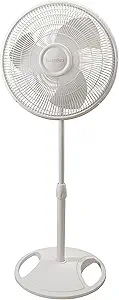 |
| Best Seller A high-volume bestseller chosen again and again | DREO DR-HPF013 Pedestal Fan |  |
Levoit CoreBreeze 382 Pedestal Fan

| Power Source | dc |
|---|---|
| Number of Speeds | 5 |
| Noise Level | 20 db |
| Air Flow Capacity | 1024 cfm |
| Control Method | Push Button, Remote |
The Levoit CoreBreeze 382 is a compact pedestal fan built around a DC motor that prioritizes airflow efficiency and low noise for bedrooms and living areas. It delivers up to 1024 CFM and a top wind speed of 22 ft/s, while five speed settings plus a Turbo mode let you move a lot of air quickly or dial back to an ultra-quiet sleep setting near 20 dB. Controls are available on a top panel and with the included remote, and the fan offers 90° horizontal oscillation, manual vertical tilt and two height positions for aiming airflow where you need it. The detachable grille and blades make routine cleaning straightforward, and the low power draw supports long nightly use with the 12-hour timer. Trade-offs are its plastic construction and modest size, which make it portable but less heavy-duty than larger metal pedestal fans, and there is no app or smart-home integration for remote scheduling beyond the built-in timer.
Best for: Buyers who want a quiet, energy-efficient pedestal fan that still pushes strong airflow for bedrooms or living rooms and value easy controls and portability.
Less Ideal for: Those seeking a heavy-duty, commercial-grade metal pedestal fan or fans that integrate with smart-home systems should look elsewhere.
- Very high reported airflow (1024 CFM) for rapid whole-room circulation
- Quiet operation down to about 20 dB suitable for sleep
- Energy-efficient DC motor with low daily power consumption
- Included remote and top control panel for convenient adjustments
- Detachable grille and blades for easy cleaning
- Mostly plastic construction feels less durable than metal alternatives
- No smart app or voice control for advanced scheduling
Verdict: If you need a quiet bedroom pedestal fan that still delivers powerful whole-room airflow with energy-efficient operation and simple remote controls, this is a strong choice.
PELONIS AeroFan Pedestal Fan FG18-23MRL

| Number of Speeds | 3 |
|---|---|
| Noise Level | 26 db |
| Wattage | 36 watts |
| Air Flow Capacity | 900 cfm |
| Motor Type | Brushless |
The PELONIS AeroFan is a pedestal air circulator built to move air gently and evenly through a medium room while staying very quiet. It combines automated 3D oscillation—135° horizontal plus 90° vertical—with a brushless motor and a three-blade Bionic Butterfly design to spread airflow without harsh drafts, making it suited to bedrooms and offices. Controls include a touch panel and a small remote, three speeds, and a timer plus memory that restores settings after power loss. Dual-height mounting lets you raise or lower the head for bed- or desk-level circulation and the detachable grille simplifies cleaning. At 26 dB on low it is among the quieter pedestal fans, though maximum airflow is limited by only three speeds and no smart app control. The fan is plastic-bodied and uses a 36 W AC motor, so it is efficient but not premium-feeling compared with metal models. For buyers wanting quiet, draft-free whole-room circulation and easy remote operation, this model balances performance and simplicity; those seeking many speed increments or app features may want a different option.
Best for: Buyers who prioritize quiet, even circulation and simple remote operation for bedrooms, home offices, or shared living spaces and who value easy maintenance and consistent settings.
Less Ideal for: People who need many precise speed steps, app or smart-home control, or a heavier-duty metal build for workshop or outdoor heavy-use environments should look elsewhere.
- Omni-directional 3D oscillation (135° horizontal + 90° vertical) for wide, draft-free coverage
- Very low noise at 26 dB for near-silent operation in bedrooms or offices
- Brushless motor and 900 CFM airflow provide efficient whole-room circulation
- Remote and touch controls with memory and timer for convenient, consistent operation
- Dual-height design adapts for bed, sofa, desk, or floor use
- Only three speed settings limit fine control over airflow intensity
- Plastic construction feels less robust than metal pedestal fans
Verdict: Choose the PELONIS AeroFan if you want a very quiet, draft-free pedestal fan that spreads gentle whole-room airflow with easy remote and memory controls.
DREO TurboPoly Fan 513S

| Power Source | dc |
|---|---|
| Number of Speeds | 8 |
| Noise Level | 25 db |
| Air Flow Capacity | 1100 cfm |
| Wattage | 36 watts |
The DREO TurboPoly Fan 513S is a smart pedestal air circulator built to move a lot of air quietly around a bedroom or living area. It offers wide horizontal (120°) and tall vertical (105°) oscillation plus adjustable height so you can aim airflow across the room rather than just at one spot. Use the included remote, touch controls, app, or voice assistant to pick among eight speeds and six wind modes for steady cooling, sleep breeze, or an energetic jet that claims long reach. A brushless DC motor and custom blades keep operating noise low (around 25 dB) while delivering a high airflow rating (about 1100 CFM) at modest power (36 W). The fan includes a timer and a reset behavior for oscillation after power-off, and its plastic body with metal blades simplifies cleaning and maintenance. Trade-offs are typical of smart pedestal fans: the control system adds complexity compared with a basic mechanical fan, and the larger reach and multiple settings mean it is bulkier than compact desk models. If quiet, controllable whole-room circulation is the priority, this model balances power, low-noise operation, and smart controls well.
Best for: Buyers who prioritize quiet, dependable whole-room circulation and want convenient smart controls for daily use without sacrificing airflow.
Less Ideal for: If you need a very compact desk fan or prefer a purely mechanical plug-and-play unit with no app or voice features, consider simpler, smaller models instead.
- Very low operating noise (around 25 dB) for night and shared spaces
- Wide vertical and horizontal oscillation for whole-room air distribution
- Multiple control options: app, remote, touchpad, and voice for convenient operation
- High reported airflow (1100 CFM) with efficient DC motor at modest wattage
- Smart features add setup complexity compared with simple mechanical fans
- Plastic housing may feel less premium than metal alternatives
Verdict: Choose the TurboPoly Fan 513S when you want powerful, whole-room airflow delivered with very low noise and flexible smart controls.
Lasko 2520 Pedestal Fan

| Blade Diameter | 16 inches |
|---|---|
| Number of Speeds | 3 |
| Wattage | 91 watts |
| Motor Type | AC |
| Power Source | Corded Electric |
The Lasko 2520 is a basic oscillating pedestal fan designed to deliver targeted airflow around bedrooms, living rooms, or home offices. Its 16-inch blade and widespread oscillation move a solid stream of air while a fully adjustable stand (up to 47 inches) and tilt-back head let you aim the breeze where you need it. Three quiet speed settings cover light background airflow for sleeping to stronger circulation for hot afternoons, and the rotary/manual controls are simple to use. The fan uses an AC motor and a standard plug with Blue Plug safety technology that cuts power if an electrical fault is detected. Assembly requires no tools and the plastic construction keeps weight and cost down, though that also means it lacks premium finishes or remote control features. If you want a straightforward, reliable pedestal fan that prioritizes low noise and effective room circulation, this model performs well; buyers seeking advanced controls, timers, or higher-end materials should look elsewhere.
Best for: Shoppers who prioritize a quiet, no-frills floor fan for sleeping spaces or shared rooms and want a proven, safety-minded model with simple controls.
Less Ideal for: If you need a fan with remote control, programmable timer, premium materials, or high-end styling, choose a more feature-rich model instead.
- Widespread oscillation with adjustable tilt and height for directed airflow
- Three quiet speed settings suitable for sleep and daytime use
- Blue Plug safety feature that stops current on electrical faults
- Tool-free assembly for quick setup
- Plastic construction feels basic and is less durable than metal alternatives
- No remote, timer, or advanced control features
Verdict: A straightforward, quiet pedestal fan that delivers dependable targeted airflow and built-in safety for bedrooms and living spaces.
DREO DR-HPF013 Pedestal Fan

| Power Source | Corded Electric |
|---|---|
| Number of Speeds | 8 |
| Noise Level | 28.2 db |
| Air Flow Capacity | 1000 cfm |
| Motor Type | Brushless |
The DREO DR-HPF013 is a quiet DC-motor pedestal air circulator built for whole-room airflow. It delivers up to 1000 CFM and a claimed 90 ft throw while offering 8 speeds, three modes and an auto mode that steps speed with temperature changes, so it can run continuously and adapt to warmer conditions. The fan tilts 105 degrees, oscillates 90 degrees horizontally, and has a 38–42 inch adjustable height range for directing air at different seating or sleeping positions. Controls are simple: a top touch panel plus a full remote that mutes beeps and sets the 8-hour timer. Practical touches include a detachable grill and blade for easier cleaning and a small aroma pad for scented use. At 28.2 dB listed noise it is targeted at bedrooms or home offices where low noise matters, and the brushless DC motor supports energy-efficient, quiet operation. Trade-offs are typical for pedestal circulators: performance depends on placement for best room-wide circulation and the plastic construction means it is lightweight but less premium-feeling than metal alternatives.
Best for: Buyers who prioritize a very quiet, energy-efficient standing fan for bedrooms or home offices and want easy remote and timer control with simple maintenance.
Less Ideal for: People who need a heavy-duty, commercial-grade metal fan or those who prefer an industrial aesthetic for large open-plan spaces.
- Brushless DC motor for quieter, energy-efficient operation
- High airflow (1000 CFM) with long throw suitable for whole-room circulation
- 8 speeds, auto mode, and 3 modes let you tailor airflow to changing conditions
- Remote control, touch panel, and 8-hour timer for convenient hands-off use
- Detachable grill and blade simplify cleaning
- Plastic construction feels less premium than metal pedestal fans
- Effective room-wide circulation depends on careful placement
Verdict: If you want a low-noise, energy-efficient pedestal fan with long reach and easy remote/timer controls for bedrooms or home offices, this DREO model is a strong, practical choice.
Choosing the Right Quiet Pedestal Fan: Key Factors to Consider
Noise Level and Measured Decibels
Noise level is the single most important factor when buying a quiet pedestal fan. Look for products that publish measured decibel ratings across low, medium, and high settings so you can compare real-world sound. A lower dB figure on the low setting matters most for sleep and focused work, while the high setting performance indicates how loud the fan will be when maximum airflow is needed.
Also consider how sound changes with distance. A fan that lists 30 dB at one meter may be substantially quieter at two to three meters in a living room. Pay attention to whether noise descriptions mention tonal qualities such as motor whine or low-frequency hum, since some loudness is less annoying depending on pitch.
Airflow Strength and Coverage Area
Airflow strength determines how effectively a pedestal fan moves air across a room. Look for fans that provide clear airflow metrics such as CFM or that describe coverage range and effective throw distance. Strong airflow helps circulate cooled air from an air conditioner or pushes stale air out during ventilation.
Consider room size when assessing airflow. A bedroom or office typically needs lower throw and a more focused breeze, while an open living area benefits from higher airflow and wide oscillation. Adjustable head tilt and height let you target airflow without running the fan at higher, noisier speeds.
Control Options and Speed Range
Control flexibility affects comfort and convenience. Multiple speed settings let you balance noise and cooling needs across situations. Finer-grain control, such as a seven-speed or continuously variable setting, makes it easier to find a quiet-but-effective level. Remote controls, timers, and programmable quiet modes are useful for bedrooms or overnight use.
Oscillation settings and sweep angle also contribute to perceived comfort. Wider oscillation improves coverage without increasing speed, while limited or adjustable oscillation helps focus airflow when needed.
Build Quality, Stability, and Vibration
A quiet fan needs solid construction to avoid rattles and amplified vibration. Check for a stable base or weighted design so the fan does not wobble at higher speeds. The materials, such as thicker plastic or metal components, affect how sound is transmitted and how durable the unit will be over time.
Fasteners, blade balance, and motor mounting influence whether vibration will become louder with age. Ease of assembly and the availability of simple maintenance tasks, like tightening hardware or cleaning a grill, also play into long-term quiet operation.
Energy Use and Motor Type
Energy-efficient motors reduce running costs and often run cooler and quieter. Brushless DC motors tend to be quieter and more efficient than traditional AC motors, and they offer smoother speed control. If energy draw is a priority, look for published wattage or power consumption at different speeds.
Lower energy use can also mean less heat buildup and reduced motor strain, which helps maintain quiet performance over the fan's life. Consider how long you expect to run the fan daily and whether features like an Eco or sleep mode are offered to conserve power.
Where a Quiet Pedestal Fan Makes the Most Difference
Quiet pedestal fans are particularly useful in bedrooms, home offices, and media rooms where background noise matters. In these spaces a fan that can deliver a steady, low-volume breeze improves comfort without disrupting sleep, concentration, or entertainment.
In larger open-plan rooms, a single quiet pedestal fan can supplement existing cooling by improving circulation and reducing reliance on higher thermostat settings. Positioning and oscillation settings are key to getting even coverage without running the fan at its loudest setting.
- Bedrooms: prioritize low-speed noise and remote or timer features.
- Home offices: look for stable operation and adjustable head angles.
- Living rooms: choose models with wider sweep and stronger airflow.
Placement and Setup Tips to Reduce Noise
Proper placement and basic setup can significantly reduce perceived noise. Place the pedestal fan on a flat, level surface and tighten any assembly hardware that might vibrate. Keep it a short distance from walls or furniture to avoid amplified resonance from nearby surfaces.
If the fan has multiple base or mounting configurations, use the most stable option recommended by the manufacturer. Angle the head slightly upward in living areas to improve circulation without directing air straight at occupants, which lets you run the fan slower and quieter.
- Avoid placing the fan directly on hollow or resonant surfaces.
- Use a rug or mat under the base on hard floors to cut down vibration transmission.
- Check and balance blades if you hear wobble or tick at certain speeds.
Maintenance Habits That Keep Fans Quiet
Regular cleaning and simple maintenance preserve quiet operation. Dust buildup on blades and grills can unbalance the assembly and increase motor load, which raises noise and reduces airflow. Wipe blades and vacuum grills according to the user manual schedule.
Tighten loose screws and check the grille clips periodically to prevent rattling. If the fan has a brushless motor, it may require less maintenance, but bearings and mounts can still benefit from occasional inspection.
- Clean blades and grills every few weeks in dusty environments.
- Tighten fasteners and inspect for cracked plastic that could vibrate.
- Follow any manufacturer guidelines for lubrication or part replacement.
Smart Features and When They Matter
Smart controls such as app connectivity, voice compatibility, or scheduling are convenient but not essential for everyone. They become valuable when you want to integrate the fan into a nightly routine or automate energy savings with timers and sleep modes. For users who prioritize absolute quiet, check whether smart features introduce extra noise from indicators or motors tied to connectivity functions.
Remote controls and onboard timers often offer a simpler, quieter way to adjust settings without walking across a room. Consider whether the convenience of smart features justifies any potential tradeoffs in complexity or background network activity.
- Remote and timer: useful for bedrooms to avoid getting up to change settings.
- App/voice control: good for integration but check for any added noise.
- Preprogrammed quiet modes: helpful for overnight use.
Measuring Performance Without a Meter
If you do not have a decibel meter, use comparative listening tests at home. Place the fan at the intended distance and run it at low, medium, and high settings while doing quiet activities like reading or sleeping. Note which settings are tolerable for sleep or focused work.
Also observe airflow subjectively by placing your hand at several distances and heights to sense the breeze. This practical approach will help you evaluate whether a model's claimed quietness actually meets your personal comfort threshold.
- Listen for tonal noise versus broadband hum; tonal is often more noticeable.
- Test the fan in the room you will use it, since acoustics vary.
- Compare settings by doing the same simple tasks to get consistent impressions.
How We Chose the Best Quiet Pedestal Fan
We focused on objective, measurable factors that matter for quiet pedestal fans in everyday home use. Key criteria included measured sound output across speed settings, steady-state airflow and distribution, range of speed and oscillation controls, and build features that affect durability and ease of use. We also weighed energy efficiency and motor design because quieter fans often rely on brushless motors or tuned housings that reduce vibration and power draw. Usability factors such as height adjustment, tilt range, and remote or programmable controls were included to reflect how people actually interact with these fans in living rooms and bedrooms. We excluded products that lacked published noise data or had known reliability issues in user reports. Also excluded were fans that only function as small personal desk units or that do not offer standard pedestal adjustability. The final shortlist favors fans that deliver the best combination of low decibel output, useful airflow across multiple settings, and practical features that keep operation simple and quiet.
Our full evaluation process is outlined in our review methodology.
FAQ
How quiet is a typical quiet pedestal fan on the low setting?
Quiet pedestal fans on their low setting are often in the low 30s dB range, which is similar to a quiet library or a soft whisper in the background. Actual noise depends on distance and room acoustics, so measured values should be compared at a consistent distance.
Are brushless motors really quieter than standard motors?
Brushless DC motors usually run smoother and with less vibration than conventional AC motors, which tends to reduce noise and improve efficiency. However, overall quietness also depends on blade design, housing, and build quality, not motor type alone.
Will a quieter fan still move enough air to cool a room?
Yes, many quiet pedestal fans are engineered to balance airflow and noise. Effective models use larger, well-shaped blades and tuned housings to move air efficiently at lower RPMs. Consider coverage area and airflow specs to ensure the fan meets room-cooling needs.
How can I make a noisy fan quieter at home?
Start by tightening screws and ensuring the base is level. Clean dust from blades and grills to prevent imbalance. Placing the fan on a vibration-damping mat and adjusting its position away from resonant surfaces can also reduce perceived noise.
Do remote controls or timers make a fan noisier?
Remote controls and timers themselves do not typically increase fan noise, but some models include indicator sounds or motors that make small noises when switching modes. Choose models with quiet mode transitions and minimal audible indicators if absolute silence is important.
Final Verdict
When choosing a quiet pedestal fan, prioritize measured noise levels, the airflow needed for your room size, and controls that let you fine-tune speed without unnecessary complexity. Balance energy-efficient motor types and solid construction to avoid vibration and long-term noise increase. Make a final choice based on which tradeoffs matter most to you: the absolute lowest dB for sleep, broader coverage for a living area, or additional controls like timers and remotes. Focusing on those priorities will help you pick a fan that stays quiet while keeping the room comfortable.