
Note: This article contains affiliate links. If you click on these links and make a purchase, we may earn a small commission at no extra cost to you. This helps support our research and content. Read our full affiliate disclosure here.
Picking the right Remote Control Thermostat makes daily comfort and energy management much easier. Whether you want to adjust temperatures from another room or automate schedules for efficiency, the right unit affects comfort, utility bills, and how much hands-on tuning you need. This guide shortlists the top Remote Control Thermostats across common home scenarios and highlights the criteria that matter most, including connectivity, compatibility with HVAC systems, user interface, and reliability. Read on to see the best options and why they made the list before the product breakdown.
Top Picks at a Glance
| Best Overall The best all-around choice for most situations | ecobee Smart Thermostat Essential |  |
| Best Quality Built to a higher standard if you want something more solid | ecobee Smart Thermostat Premium |  |
| Best Value The sweet spot between price and what you get | Amazon Smart Thermostat |  |
| Best Budget The cheapest option that still gets the job done reliably | DIGITEN Wireless Thermostat Outlet |  |
| Top Rated A top-rated pick with lots of positive feedback | DIGITEN WTC100 Pro Thermostat |  |
| Most Popular A crowd favorite that many people choose with confidence | Google Nest Thermostat |  |
| Best Seller A high-volume bestseller chosen again and again | Sensi Smart Thermostat ST55 |  |
ecobee Smart Thermostat Essential

| Connectivity Technology | Wi-Fi |
|---|---|
| Power Source | Battery Powered |
| Display Type | LCD |
| Controller Type | Amazon Alexa, Android, Apple HomeKit, Google Assistant, iOS |
| Mounting Type | Wall Mount |
The ecobee Smart Thermostat Essential is a compact Wi‑Fi thermostat that lets you control home temperature from its color touchscreen or the ecobee app, and it integrates with Siri, Alexa, Google Assistant, and Apple HomeKit. It is meant for straightforward schedule-based control and includes eco+ features such as schedule assistant, indoor humidity detection, and time-of-use preheating to reduce energy costs. Installation is aimed at DIYers and ecobee provides a Power Extender Kit option for homes without a C wire, while the included trim kit and backplate keep the wall finish tidy. Practical benefits include remote temperature adjustments, automatic away behavior to save energy, and compatibility with most 24 VAC HVAC systems. Limitations are that it is the Essential model, so it lacks built-in room sensors and some premium monitoring features found on higher-end ecobee units, and battery power means occasional battery changes instead of constant line power. For buyers who want basic smart thermostat control and integrations without extra sensors, it covers the essentials reliably.
Best for: Buyers who want dependable remote thermostat control and smart home integration with straightforward scheduling and energy-saving features without paying for premium extras.
Less Ideal for: People who need advanced multiroom temperature sensing, built-in air quality monitoring, or the highest-tier feature set should consider a more fully featured model.
- Wi‑Fi and major voice assistant integration for remote and voice control
- Color touchscreen with simple touch controls and app-based scheduling
- eco+ features for automated energy saving and humidity detection
- Compatible with a wide range of 24 VAC HVAC systems and includes basic installation hardware
- Power Extender Kit option available for homes without a C wire
- Does not include SmartSensor room sensors by default
- Essential model lacks some advanced features of higher-tier ecobee thermostats
Verdict: A sensible, no-frills smart thermostat that delivers remote control, voice integration, and basic energy-saving features for buyers who prioritize value over premium extras.
ecobee Smart Thermostat Premium

| Connectivity Protocol | Wi-Fi |
|---|---|
| Controller Type | Amazon Alexa, Android, Apple HomeKit, Google Assistant, iOS |
| Power Source | Battery Powered |
| Voltage | 24 volts |
The ecobee Smart Thermostat Premium is designed to deliver precise, room-focused comfort while trimming HVAC energy use. It installs on standard 24VAC systems and includes a SmartSensor to detect temperature in key rooms so the thermostat can prioritize occupied spaces and reduce hot or cold spots. Built-in radar occupancy sensing and geofencing improve automatic setback behavior, and the integrated air quality monitor provides alerts and filter reminders. The Premium model also has a metal finish, a large LCD interface, and a speaker with either Siri or Alexa voice control for hands-free adjustments and media playback. Dual-band Wi‑Fi and app control let you change schedules and temperature remotely, and the included Power Extender Kit helps when a C-wire is absent. Expect straightforward DIY installation on compatible systems and tangible seasonal savings, but advanced features require time to configure and full benefit depends on proper sensor placement and compatible HVAC wiring.
Best for: Buyers who want a performance-focused smart thermostat that actively optimizes comfort and energy use across rooms and who are comfortable investing time to configure advanced sensors and automations.
Less Ideal for: People with line-voltage, millivolt, or non-24VAC HVAC systems or those who prefer a simpler, set-and-forget basic thermostat.
- Room-level SmartSensor included to reduce hot and cold spots
- Built-in air quality monitor with alerts and filter reminders
- Integrated voice assistant (Siri or Alexa) and speaker for hands-free control
- Dual-band Wi‑Fi and mobile app for remote scheduling and control
- Power Extender Kit and trim plate included for easier install without a C-wire
- Advanced features like occupancy sensing and sensor placement need setup to perform optimally
- Not compatible with high-voltage or millivolt systems
Verdict: Choose the ecobee Smart Thermostat Premium if you want a performance-oriented remote thermostat that uses room sensors, occupancy detection, and built-in voice control to maximize comfort and energy savings.
Amazon Smart Thermostat
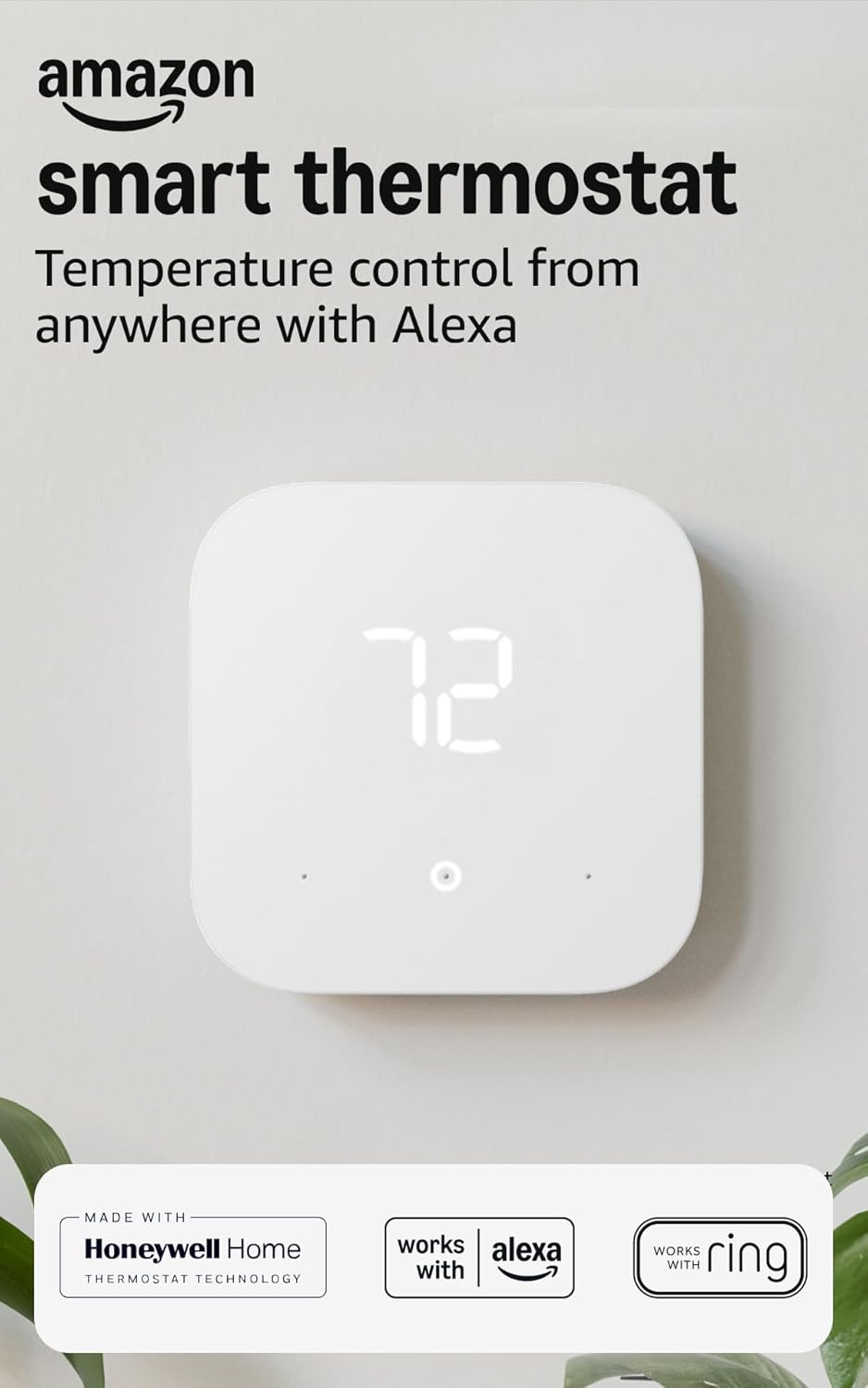
| Requires C-wire | Yes |
|---|---|
| Works with | Alexa, Ring |
| Manufacturer tech | Honeywell Home Thermostat Technology |
| Energy guidance | ENERGY STAR estimated savings referenced |
The Amazon Smart Thermostat is a basic Wi‑Fi thermostat designed to replace a conventional thermostat and give you Alexa-based scheduling and remote control. It installs using a C‑wire and the Alexa app walks you through setup, then lets you create home, away, and sleep schedules or let Alexa adjust temperature based on presence and linked Echo devices. The unit emphasizes energy savings with built‑in scheduling and compatibility with Alexa+ features, and Amazon highlights potential utility rebates and EPA ENERGY STAR savings. The hardware is straightforward and relies on Honeywell thermostat technology under the hood, so it feels familiar and reliable, but it lacks advanced learning algorithms found in some premium models and depends on Alexa for many smart automations. Expect solid remote control, easy voice commands when paired with Echo or Ring devices, and a no‑frills approach that focuses on practicality rather than an extensive feature set.
Best for: Buyers who want an easy upgrade from a conventional thermostat to get dependable Alexa voice control, remote scheduling, and straightforward energy savings without complexity.
Less Ideal for: People seeking a thermostat that learns occupants' patterns automatically or offers the deepest fleet of advanced HVAC diagnostics and high-end third‑party integrations.
- Works with Alexa and Ring for voice control and presence‑based adjustments
- Guided DIY installation via the Alexa app with C‑wire support
- Scheduling and remote control through the Alexa app for on‑the‑go adjustments
- Built on Honeywell thermostat technology for familiar, reliable control
- Requires a C‑wire for installation, which may need wiring work in older homes
- Does not include advanced self-learning temperature optimization found on some higher‑end models
Verdict: Choose this thermostat if you want a practical, Alexa‑centric replacement that adds remote schedules and reliable voice control to a conventional HVAC system.
DIGITEN Wireless Thermostat Outlet

| Voltage | 240 volts |
|---|---|
| Wattage | 1500 watts |
| Connectivity Technology | Wireless |
| Control Method | Remote |
| Number of Batteries | 2 AAA batteries required. |
The DIGITEN Wireless Temperature Controlled Outlet is a plug-in thermostat that uses a remote control and built-in sensor to switch A/Cs, fans, and heaters on or off based on set temperatures. You plug the receiver into an outlet, attach your appliance, and use the handheld remote to set target temperatures and modes; the remote can also detect temperature if placed in a separate spot. The unit supports up to 1500 watts and offers both portable and wall-mount placement, making it useful for spot-heating or cooling in rooms, garages, greenhouses, or basements. It runs on two AAA batteries for the remote and displays settings on a digital screen with button controls. Limitations include a basic wireless setup without advanced scheduling or smart-home integration and a simple on/off control rather than variable power modulation, so it is best for appliances that tolerate cycling rather than precise HVAC systems.
Best for: Buyers looking for an inexpensive, easy-to-install way to add temperature-based control to portable heaters or fans without wiring or a smart-home hub.
Less Ideal for: Users who need precise HVAC thermostat features, multi-zone control, or integration with voice assistants and home automation systems.
- Plug-and-play design with included receiver and remote for fast setup
- Built-in temperature sensor plus remote temperature detection for flexible placement
- Supports common portable appliances up to 1500 watts
- Portable or wall-mount options let you move it between rooms or mount it permanently
- No advanced scheduling or integration with smart-home platforms
- Controls appliance by simple on/off cycling rather than variable output
Verdict: A budget-friendly plug-in thermostat that adds basic remote temperature control to portable heaters and fans without wiring or a hub.
DIGITEN WTC100 Pro Thermostat

| Controller Type | Push Button |
|---|---|
| Connectivity Protocol | Infrared (IR) |
| Power Source | Corded Electric |
| Display Type | LCD |
| Specific Uses For Product | Air Conditioner |
The DIGITEN WTC100 Pro is a simple plug-and-play wireless thermostat designed to switch heating or cooling devices on and off to maintain a set temperature. It uses an infrared remote-style controller with a built-in temperature sensor and a large backlit LCD for clear readings and basic programming. Typical uses include automating space heaters, fans, or air conditioners in rooms, greenhouses, or pet enclosures where set-and-forget temperature control is helpful. Practical benefits include straightforward three-button operation, selectable heating or cooling modes, and automatic switching when the measured temperature reaches the target, which can save energy compared with leaving devices running continuously. Limitations are that it relies on IR communication and the remote must remain in the same space as the receiver for accurate sensing, and the unit is limited to the power ratings the product specifies, so it is not suitable for high-load appliances beyond its capacity. For buyers who want a reliable, no-frills remote thermostat for moderate loads, this model delivers easy setup and dependable basic control.
Best for: Buyers who prioritize a dependable, easy-to-use remote thermostat to automate moderate-load heaters or coolers in rooms, greenhouses, or pet enclosures and who want straightforward controls over advanced features.
Less Ideal for: Those who need networked Wi-Fi control, smartphone integration, or support for high-wattage commercial appliances should look for more advanced or higher-capacity controllers.
- Plug-and-play setup with simple three-button operation
- Built-in temperature sensor in the remote for automatic control
- Large backlit LCD for easy reading and programming
- Supports both heating and cooling modes for versatile use
- Uses infrared/RF-style remote sensing so transmitter and receiver must share the same space for accuracy
- Not rated for high-power appliances beyond the listed maximum power
Verdict: A straightforward, reliable plug-in remote thermostat that makes automating moderate-load heating or cooling devices quick and easy.
Google Nest Thermostat
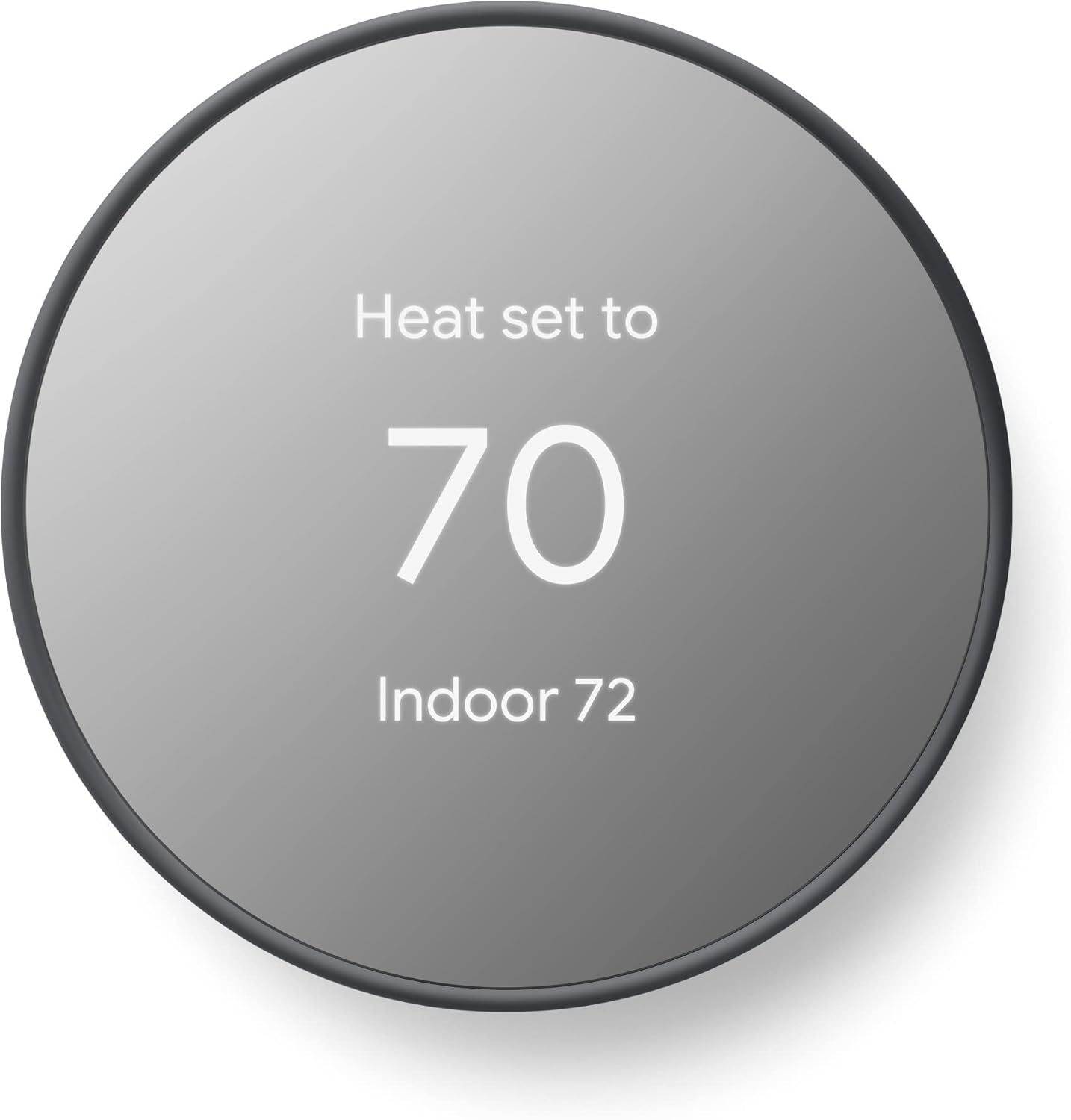
| Connectivity Technology | Bluetooth, Wi-Fi |
|---|---|
| Control Type | Remote Control, Voice Control |
| Power Source | Battery Powered |
| Display Type | LCD |
The Google Nest Thermostat is an entry-level smart thermostat that replaces a traditional wall thermostat and lets you control heating and cooling from the device, the Google Home app, or voice assistants. It connects over Wi‑Fi and Bluetooth for remote control, supports Alexa and Google Assistant, and is designed for DIY installation in most homes without a C wire. The thermostat learns simple schedules via the app, offers Savings Finder suggestions, and can set an Eco Temperature when the house is empty to reduce energy use. It also provides basic HVAC monitoring and sends alerts if it detects potential system issues. Practical benefits include easy remote changes, simple touch-bar control on the unit, and included mounting hardware and batteries for a quick setup. Limitations are that advanced features like Nest Renew and some alerts require additional Nest devices or account setup, and certain HVAC configurations still need a C wire or power accessory for reliable operation. The display and controls are minimalist compared with higher-end Nest models, but that keeps the interface straightforward for everyday remote management.
Best for: Buyers who want an affordable, easy-to-install smart thermostat for remote control and basic energy savings backed by a widely used smart-home ecosystem.
Less Ideal for: People who need enterprise-level HVAC diagnostics, advanced local controls, or full feature parity with higher-end Nest models should look at more capable thermostats.
- Remote control from Google Home app for temperature changes anywhere
- Works with major voice assistants including Google Assistant and Alexa
- Easy DIY installation with included mounting plate and screws
- Energy-saving features like Eco Temperature and Savings Finder suggestions
- May require a C wire or power accessory for some HVAC systems
- Fewer advanced onboard features compared with higher-end Nest models
Verdict: Choose this Nest thermostat if you want a straightforward, remote-manageable smart thermostat that saves energy and integrates cleanly with Google Home and voice assistants.
Sensi Smart Thermostat ST55

| Connectivity Technology | Wi-Fi |
|---|---|
| Control Method | App, Touch, Voice |
| Temperature Control Type | Programmable, Smart/Remote |
| Power Source | Corded Electric |
| Number of Batteries | 2 AA batteries required (included) |
The Sensi Smart Thermostat ST55 is a wall‑mounted Wi‑Fi thermostat that replaces standard programmable thermostats and lets you control heating and cooling from the Sensi mobile app, voice assistants, or the unit itself. It supports common HVAC systems including furnaces, heat pumps, boilers and air conditioners and is ENERGY STAR certified to help reduce HVAC energy use. Installation is aimed at DIYers — the unit includes mounting hardware, wire stickers, an in‑app step‑by‑step guide and does not require a common wire in most setups. The thermostat shows simple status on an LED display, offers scheduling, usage reports, filter reminders and smart alerts, and integrates with Alexa, Google Assistant, Apple HomeKit and other smart hubs. Practical benefits include easy setup, remote access for temperature control and useful maintenance notifications that can extend equipment life. Limitations are a basic LED screen and button controls rather than a full color touchscreen and dependence on 2.4 GHz Wi‑Fi for remote features, which may require network adjustments in some homes.
Best for: Buyers who want a reliable, easy‑to‑install smart thermostat that provides remote control, scheduling and energy savings without professional installation.
Less Ideal for: Users who want an advanced touchscreen interface or need features that depend on an alternate Wi‑Fi band or nonstandard HVAC integrations.
- Works with Alexa, Google Assistant and Apple HomeKit for voice and remote control
- ENERGY STAR certified with scheduling and usage reports to reduce HVAC energy use
- Designed for DIY install with included mounting hardware, wire labels and step‑by‑step app guidance
- Smart alerts and filter reminders help with maintenance and system efficiency
- Uses a basic LED display and button controls instead of a full color touchscreen
- Requires a stable 2.4 GHz Wi‑Fi connection for remote features
Verdict: A straightforward, energy‑saving smart thermostat that lets risk‑averse buyers get reliable remote control and scheduling with simple DIY installation.
Choosing the Right Remote Control Thermostat: Key Factors to Consider
Connectivity and Control Methods
How the thermostat communicates remotely matters for reliability and convenience. Wi-Fi enables smartphone control and cloud features but depends on home network stability. Local RF remotes or proprietary wireless controllers offer direct, low-latency control without relying on internet access.
Consider where you will operate the remote from and whether you need internet-based access when away from home. A thermostat with multiple control paths can provide fallback options if one method is temporarily unavailable.
Wiring and HVAC System Compatibility
Thermostats must match the control signals and wiring of your heating and cooling equipment. Most residential systems use standard low-voltage terminals, but some systems require common wires, heat pump staging, or relay-driven equipment. Confirm that the thermostat supports your system's wiring and control modes.
If you are not comfortable with wiring work, choose a thermostat with clear wiring diagrams and compatibility guides. Some models include adapters or simplified wiring schemes that reduce installation complexity.
Remote Interface Usability
Remote control is only useful if the interface is intuitive. Look for clear button layouts on physical remotes or simple, responsive controls in an app. Features like quick temperature overrides, zone selection, and visible feedback from the thermostat improve day-to-day usability.
Also evaluate how the remote reports status. Essential information includes current temperature, active mode, and whether the system is currently calling for heat or cooling. Better feedback reduces guesswork when you control the thermostat from another room.
Scheduling and Automation Capabilities
Programmable schedules and automation rules let you reduce manual changes and can lower energy use. Consider whether the thermostat supports multiple daily schedules, temperature setbacks, vacation modes, or triggered scenes tied to other home devices.
Advanced automation can include learning-style schedules or integration with occupancy sensing. Decide how much automation you want: simple weekday/weekend schedules are sufficient for many households, while others benefit from more adaptive behavior.
Installation and Ongoing Maintenance
Ease of installation affects upfront effort and risk of incorrect wiring. Thermostats with clear labeling, included templates, and good documentation make DIY installation feasible. Some units provide wiring adapters or backplates that simplify replacement of older thermostats.
Maintenance considerations include battery access, firmware update methods, and physical cleaning. Choose a thermostat whose maintenance needs match your willingness to manage occasional updates and housekeeping.
Reliability and Support
Remote control features add complexity, so reliability is important. Look for thermostats with stable firmware, resilient connection behavior, and reasonable recovery from power or network interruptions. Good manufacturer documentation and accessible support resources can reduce frustration when problems arise.
Consider whether firmware updates are clearly communicated and whether local control persists if remote services are temporarily unavailable.
Wiring Basics Every Buyer Should Know
Most Remote Control Thermostats connect to existing low-voltage control wiring, but terminal labeling can vary. Before you choose a model, identify the wires in your wall and note which terminals they attach to. Common terminals include power, heat stages, cool stages, fan, and common.
If your system lacks a common wire, some thermostats offer battery operation or adapter modules. Knowing whether you have a conventional furnace, a heat pump, or multi-stage equipment makes it easier to pick a compatible thermostat without needing professional intervention.
- Label wires during removal to simplify replacement.
- Take a photo of the existing connections for reference.
- Check for C-wire requirements or adapter options.
Local Remote Vs. Networked Control
Thermostats with local remotes or RF controllers offer immediate control without depending on home internet. These are useful in homes with unreliable Wi-Fi or for users who prefer a dedicated handheld controller.
Networked Wi-Fi thermostats provide remote access from smartphones and integrate with other smart home systems. Consider whether you need remote away-from-home access or whether local control is sufficient for your routine.
- Local remotes: lower latency, independent of internet.
- Wi-Fi control: access from anywhere, more features.
- Hybrid models: offer both for flexibility.
Practical Installation Tips
Turn power off to the HVAC system at the breaker before removing the old thermostat to avoid shorts. Use the thermostat's provided template to mark screw holes for a neat installation and to avoid damaging wall surfaces.
Test control wiring with a multimeter if you are unsure about terminals. After wiring the new thermostat, power the system back on and verify that heat, cool, and fan functions respond correctly before finishing wall plate installation.
- Keep screws and small parts in a labeled container.
- Follow startup wizards to confirm system type and settings.
- If unsure, consult a professional to verify complex wiring.
Managing Remote Access and Security
Remote access introduces security considerations. Use strong Wi-Fi passwords and keep thermostat firmware updated to reduce exposure to vulnerabilities. If the thermostat supports local-only control, that option can be preferable for privacy-focused households.
When granting access to family members, manage user accounts carefully and revoke access for devices no longer in use. For cloud-connected units, review privacy settings to limit data sharing if that is a concern.
- Enable two-factor authentication when available.
- Use a guest network for IoT devices to isolate them from personal devices.
- Monitor firmware release notes and apply updates promptly.
Energy Savings Strategies with Remote Control
Remote Control Thermostats can reduce energy use by allowing timely temperature setbacks and easy adjustments when schedules change. Program conservative setback profiles for unoccupied times and use remote overrides when your plans deviate from the schedule.
Pair thermostat schedules with occupancy patterns rather than fixed times for better results. Even small setback changes can add up over time, especially in homes with significant heating or cooling loads.
- Set modest setbacks for sleeping and away periods.
- Use remote overrides sparingly to maintain efficiency.
- Consider combined temperature and fan strategies to improve comfort.
How We Chose the Best Remote Control Thermostat
We evaluated Remote Control Thermostats using practical, measurable filters that reflect how people use thermostats in real homes. First, we prioritized connectivity options, checking for reliable local remote control methods and networked features. Second, system compatibility was a core filter: we considered support for common HVAC wiring configurations and control outputs so homeowners avoid installation surprises. Third, we assessed user interface and control ergonomics, including how straightforward remote operation is from a handheld controller or a dedicated remote device. Fourth, we considered automation and scheduling flexibility, since programmable comfort profiles reduce manual adjustments and can increase efficiency. Fifth, we looked at setup and maintenance: units that are easier to install, configure, and maintain scored higher. We excluded products that lack clear remote-control capability or that are strictly hardwired without any remote interface. We also set aside devices with insufficient documentation about wiring or connectivity. The outcome is a short list of Remote Control Thermostats that balance real-world compatibility, straightforward installation, dependable remote operation, and the automation features buyers typically want.
Our full evaluation process is outlined in our review methodology.
FAQ
Do Remote Control Thermostats require Wi-Fi to work?
Not always. Some Remote Control Thermostats work with a local RF remote or a proprietary wireless controller and do not require Wi-Fi. Wi-Fi adds remote access and cloud features but is not mandatory for basic remote operation.
Can I install a Remote Control Thermostat myself?
Many homeowners can install Remote Control Thermostats if they are comfortable with basic wiring and follow instructions. Turn off power before starting and verify wiring labels. For systems with complex wiring or uncertainty about compatibility, professional installation is recommended.
Will a remote thermostat work with my existing heating and cooling system?
Compatibility depends on the control signals and wiring your system uses. Check the thermostat's wiring requirements and supported system types against your equipment. Models that list common wiring configurations and heat pump or multi-stage support are easier to match to your system.
How do I secure remote access to my thermostat?
Use strong Wi-Fi passwords, keep firmware updated, and enable any available account protections like two-factor authentication. Isolating the thermostat on a guest network can also reduce risk from other devices on your home network.
What happens to schedules if the internet goes down?
Most thermostats retain local scheduling and continue to operate on their programmed profiles if the internet disconnects. Cloud-dependent features and remote access from off-site devices will be unavailable until connectivity is restored.
Final Verdict
Choosing a Remote Control Thermostat comes down to matching control options with your household habits and HVAC wiring. Prioritize connectivity that fits your comfort with networked devices, ensure the unit supports your system's wiring, and favor remote interfaces that make everyday adjustments simple. Balance automation against your desire for manual control. If you value hands-off efficiency, look for flexible scheduling and dependable remote overrides. If you prefer local simplicity, a unit with a robust handheld remote may be the better fit. Use the evaluation criteria above to narrow the field and pick the Remote Control Thermostat that fits your home and routine.