
Note: This article contains affiliate links. If you click on these links and make a purchase, we may earn a small commission at no extra cost to you. This helps support our research and content. Read our full affiliate disclosure here.
If your home runs on well water, a well-chosen reverse osmosis system can dramatically reduce common contaminants and improve taste. You need reliable removal of minerals, nitrates, and bacteria risks along with consistent daily output to meet drinking and cooking needs. This guide shortlists seven top-rated reverse osmosis water filter systems for well water, selected for performance, capacity, and real-world maintenance demands. Read on to understand the practical tradeoffs—like storage tank size, prefiltration needs, and maintenance intervals—that matter when installing an RO system for a private well.
Top Picks at a Glance
| Best Overall The best all-around choice for most situations | Waterdrop G2P600 Under-Sink RO |  |
| Best Quality Built to a higher standard if you want something more solid | Home Master Artesian Full Contact TMAFC-ERP |  |
| Best Value The sweet spot between price and what you get | Express Water RO5DX 5-Stage RO |  |
| Best Budget The cheapest option that still gets the job done reliably | AQUALTRA USF-4RF-100 RO System | 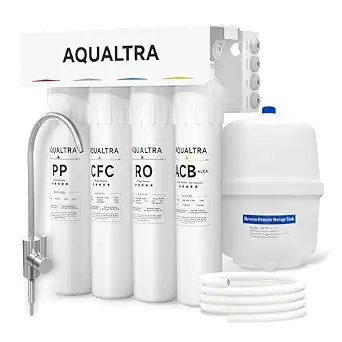 |
| Top Rated A top-rated pick with lots of positive feedback | iSpring RCC7-BN 5-Stage RO |  |
| Most Popular A crowd favorite that many people choose with confidence | Waterdrop G3P600 Tankless RO |  |
| Best Seller A high-volume bestseller chosen again and again | DREO RO Countertop Water Filter 5L |  |
Waterdrop G2P600 Under-Sink RO
| Purification Method | Reverse Osmosis |
|---|---|
| Flow Rate | 600 GPD |
| Filtration Stages | 7-Stage Filtration |
| Pure to Drain Ratio | 2:1 |
| Supported Water TDS Level Maximum (PPM) | 500 |
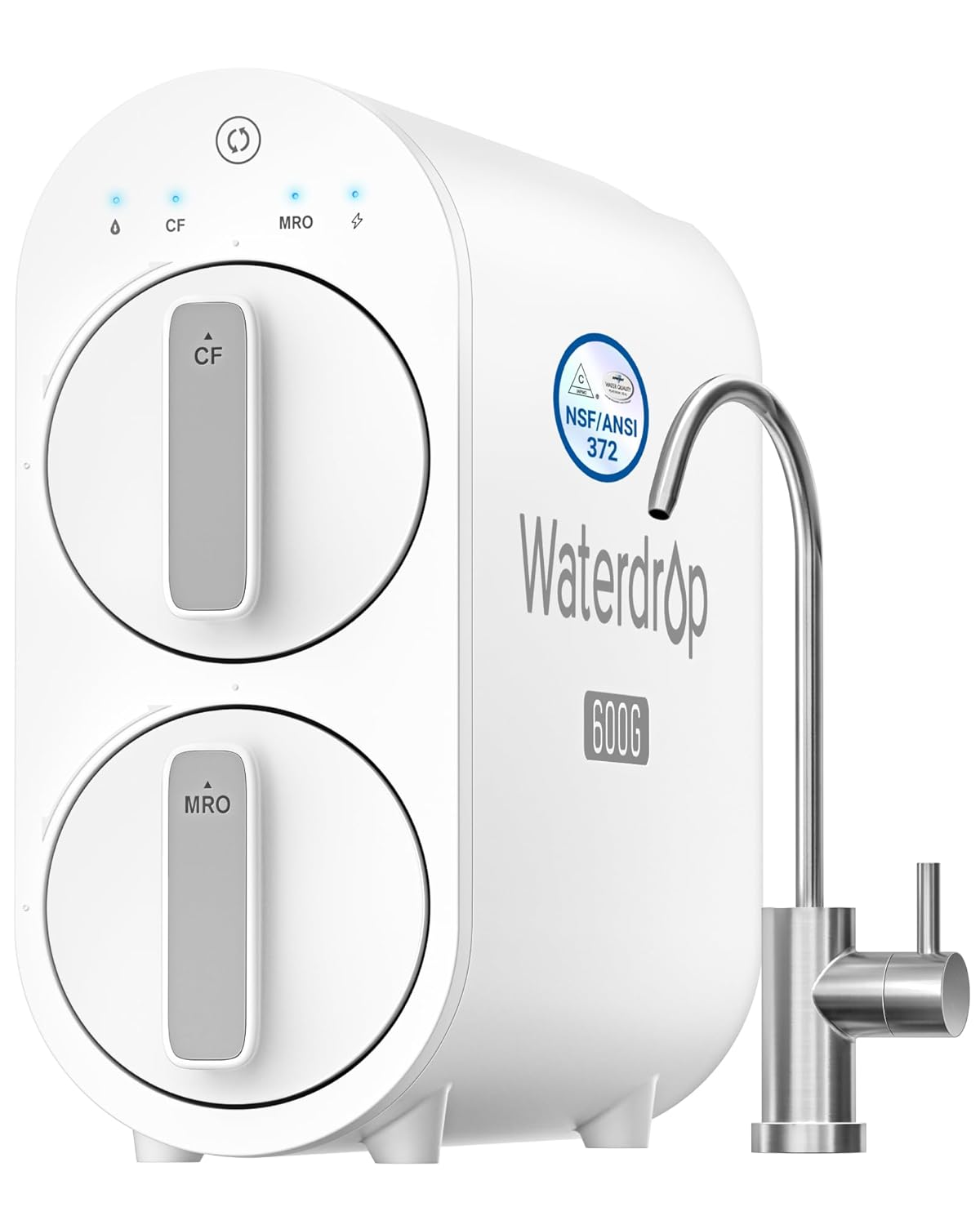
The Waterdrop G2P600 is a tankless under-sink reverse osmosis unit designed to supply high volumes of filtered drinking water without a storage tank. It uses a 7-stage filtration pathway and an electric pump to produce up to 600 gallons per day, so it fills a cup quickly and can meet the needs of larger households or light commercial use. The unit is rated for a 2:1 pure-to-drain ratio, which reduces wastewater compared with many traditional RO systems, and the twist-and-pull filter modules make replacements fast and tool-free. It requires an electrical outlet and supports feed water up to 500 ppm TDS, so it is appropriate for many well-water situations though very high-TDS sources may need pre-treatment. Practical benefits include a small tankless footprint under the sink, visible filter-life indicators, and included faucet and replacement filters to get started. Expect periodic filter changes and the need to verify local water quality for optimal performance.
Best for: Buyers who want a high-capacity, space-saving under-sink RO that reduces wastewater and delivers fast drinking water for a family or light commercial use.
Less Ideal for: Homes with very high TDS well water or heavy sediment that need pre-treatment or a heavy-duty well-specific system should consider alternatives.
- Tankless design saves under-sink space and avoids a storage tank
- High flow capacity up to 600 gallons per day for fast dispensing
- 2:1 pure-to-drain ratio reduces wastewater compared with many RO units
- 7-stage filtration and NSF/ANSI 372 certified materials for lead-free components
- Quick twist-and-pull filter replacement and filter-life indicators
- Requires a nearby electrical outlet to power the pump
- Maximum supported feed TDS is 500 ppm which may be limiting for very hard or contaminated well water
Verdict: Choose the G2P600 if you want a tankless, high-flow under-sink RO that saves space and cuts wastewater while delivering fast filtered water.
Home Master Artesian Full Contact TMAFC-ERP

| Purification Method | Alkaline, Reverse Osmosis |
|---|---|
| Operating Pressure Range | 40-95 psi |
| Maximum Flow Rate | 1 gpm |
| Supported Water TDS Level Maximum (PPM) | 500 |
| Capacity | 2000 gallons |
The Home Master Artesian Full Contact TMAFC-ERP is an under-sink RO system designed to deliver very low TDS water while adding beneficial minerals back in two stages for better taste. It installs under a sink and includes a storage tank and dedicated faucet; a non-electric permeate pump reduces waste and raises production so you get faster fill rates and higher usable output. Notable features include catalytic carbon for chloramine removal, a 5-micron sediment prefilter to protect downstream filters, and a modular filter cluster that simplifies annual changes. The system supports up to 500 ppm TDS source water and the Fast Flo kit and larger tubing produce a noticeably quicker 4.5-second 8-oz fill. For well-water use the strong sediment protection and catalytic carbon improve contaminant handling, but extremely high iron or heavy sediment may still require a separate pretreatment. The unit is backed by a five-year limited parts warranty and ships as a fully assembled purification cluster for easier setup. If you want high-purity water with improved taste and better water efficiency, this model is built for that purpose.
Best for: Buyers focused on high-performance purification and better-tasting water from well sources who want faster faucet flow and reduced wastewater without adding electrical components.
Less Ideal for: Homes with heavy iron, manganese, or very sandy well water should consider prefiltration or a dedicated well pretreatment solution before this RO system.
- Built-in non-electric permeate pump reduces waste and increases water production without electricity.
- Patented two-pass remineralization adds calcium and magnesium for improved taste.
- Catalytic carbon stage specifically targets chloramines and chlorine more effectively than standard carbon.
- Fast Flo kit and larger fittings deliver a quicker faucet fill rate for convenient everyday use.
- Modular, easy-to-change filter design and included components simplify maintenance and installation.
- Not intended to handle very high iron or extreme sediment without additional pretreatment.
- Under-sink size and tank require adequate cabinet space and access for servicing.
Verdict: Choose this system if you want high-efficiency, fast-flow RO water with two-stage remineralization for cleaner, better-tasting water from a well without adding power-hungry components.
Express Water RO5DX 5-Stage RO

| Purification Method | Reverse Osmosis |
|---|---|
| Filtration Stages | 5-stage (SED, GAC, ACB, ROM, PAC) |
| Gallons Per Day | 50 GPD |
| Maximum Flow Rate | 0.8 gpm |
| Supported Water TDS Level Maximum (PPM) | 300 |
The Express Water RO5DX is an under-sink reverse osmosis system designed to deliver highly filtered drinking water for home and well-water applications. It uses a five-stage sequence—sediment, granular activated carbon, activated carbon block, RO membrane, and post-activated carbon—to strip particulates, chlorine, VOCs, heavy metals, fluoride, PFAS and many pharmaceuticals, then polishes taste before delivery through a dedicated faucet. The unit includes a 4 gallon storage tank and a fast-flow faucet rated at 0.8 gpm, and it installs with quick-connect fittings that support common 3/8" and 1/2" supply lines. Practical extras include a leak stop valve and labeled, color-matched housings for easier filter swaps; standard maintenance calls for replacing pre/post filters twice a year and the membrane annually. Expect a 1:1 to 1:3 wastewater ratio depending on feed pressure and water quality, and be aware the system requires 40–80 psi to operate reliably and may need a booster pump or extra tubing for remote installs. For someone optimizing water quality on a budget, this RO balances strong contaminant reduction with straightforward DIY installation.
Best for: Homeowners using well or municipal water who want laboratory-level contaminant reduction and a practical, DIY-friendly under-sink RO that balances performance with easy maintenance.
Less Ideal for: People who need zero-waste or tankless solutions, or installations with very low water pressure where adding a pump is not desirable.
- Comprehensive five-stage filtration including RO membrane for heavy metals, fluoride, PFAS and many pharmaceuticals.
- NSF-tested construction and independent lab reductions reported for a wide range of contaminants.
- Quick-connect fittings, included adapters and labeled housings make DIY installation and filter changes easier.
- Includes 4 gallon storage tank and a brass-chrome faucet delivering up to 0.8 gpm for usable flow at the sink.
- Built-in leak stop valve and extra filter set included for initial year of use.
- Produces wastewater at a variable drain ratio and may need a booster pump if home water pressure is low.
- Requires periodic filter and membrane replacement and space under the sink for the tank and housings.
Verdict: A lab-tested, easy-to-install five-stage RO that delivers high contaminant removal and usable flow for well-water households seeking reliable drinking water quality.
AQUALTRA USF-4RF-100 RO System
| Purification Method | Reverse Osmosis |
|---|---|
| Installation Type | Under Sink |
| Filter Life Cycle | 36 months |
| Supported Water TDS Level Maximum (PPM) | 96 |
| Capacity | 3.2 gallons |
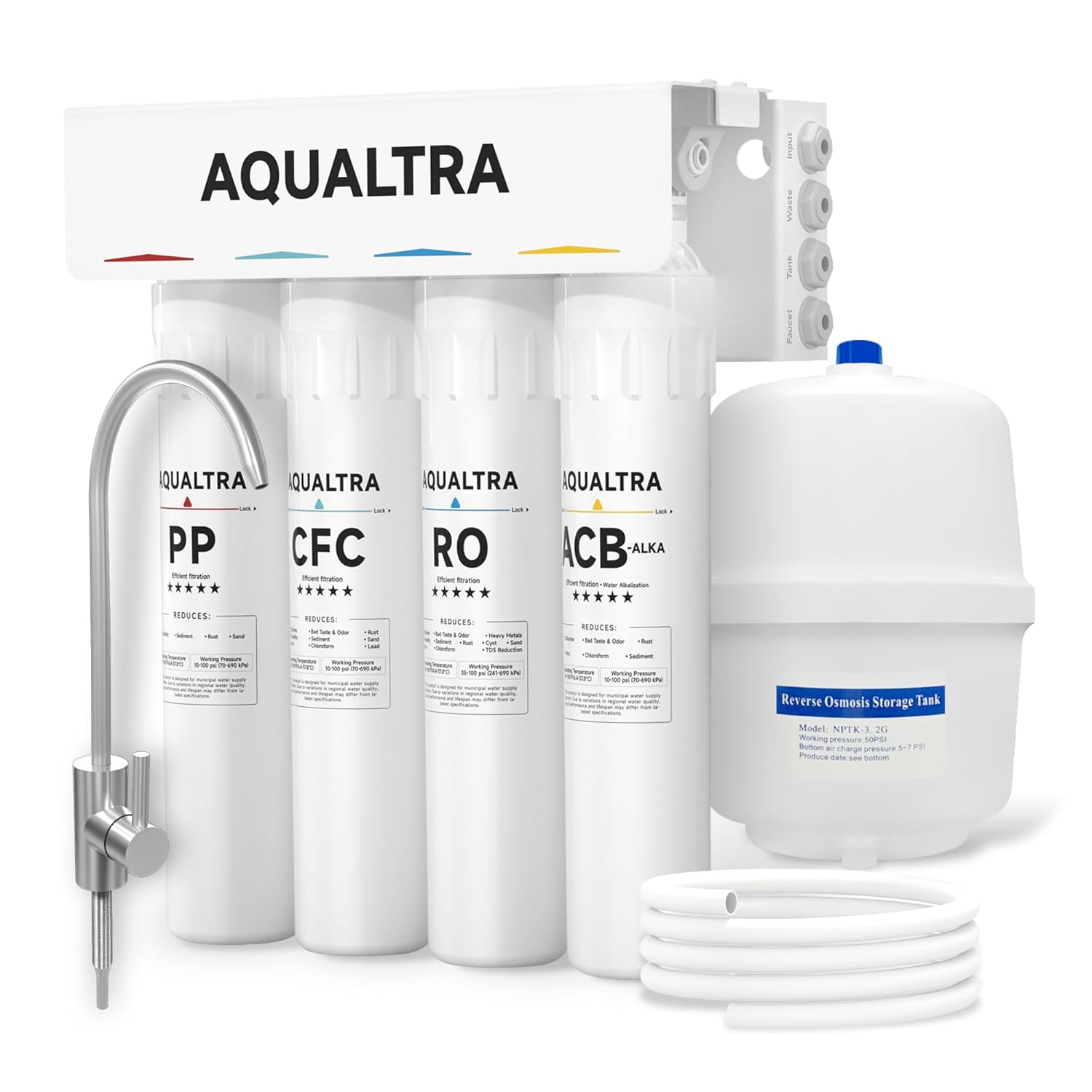
The AQUALTRA USF-4RF-100 is an under-sink reverse osmosis system intended for municipal cold water that combines a sediment/PP stage, carbon filtration, an RO membrane and an alkaline remineralization filter. It installs with push-to-connect fittings and a dedicated faucet, and includes a 3.2 gallon storage tank so treated water is available on demand. The system advertises 100 GPD production and a 3:1 pure-to-drain ratio, which reduces wastewater compared with many entry-level RO units and helps when you want faster refills. Filter lifespans are clearly listed (PP 6-12 months, carbon/alkaline 24 months, RO 36 months) and the manufacturer emphasizes leak-resistant integrated housings. Important limitations for this listing are that it is not designed for well water or hot water sources and the supported TDS entry is capped at 96 ppm, so pre-treatment is required for higher-TDS or well water. For budget-conscious buyers on municipal supplies this system offers strong contaminant reduction, mineral boost, and straightforward installation, but it is not suitable as-is for untreated well water.
Best for: Buyers on a tight budget with municipal cold tap water who want an easy-to-install RO that improves taste with added minerals and reduces wastewater compared with basic RO units.
Less Ideal for: Households served by untreated well water, high-TDS municipal supplies, or users who need a system rated for hot water without upstream pre-treatment.
- 100 GPD rated flow with a 3:1 pure-to-drain ratio reduces wastewater and provides faster tank refill
- Alkaline remineralization adds calcium and magnesium to improve taste
- Push-to-connect quick fittings and included faucet/tank make installation and maintenance simpler
- Long RO filter life (36 months) lowers replacement frequency
- Not designed for well water or hot water use without additional pre-filtration
- Supported inlet TDS listed only up to 96 ppm, limiting use with harder municipal sources
Verdict: A cost-conscious under-sink RO that adds minerals and saves water for municipal cold tap supplies but is not suitable for untreated well water without pre-filtration.
iSpring RCC7-BN 5-Stage RO

| Purification Method | Reverse Osmosis, Activated Carbon, Carbon block |
|---|---|
| Power Source | No Power Needed |
| Maximum Flow Rate | 3.4 liters per minute |
| Supported Water TDS Level Maximum (PPM) | 750 |
| Capacity | 75 gallons |
The iSpring RCC7-BN is a traditional 5-stage under-sink reverse osmosis system designed to produce high-quality drinking water without electricity. It uses three pre-filters (sediment, GAC, carbon block), a thin-film RO membrane that removes contaminants down to 0.0001 microns, and a final polishing GAC filter, sending treated water to a pressurized storage tank and a dedicated brushed nickel faucet. Typical use is household point-of-use drinking and cooking water where municipal tap water is the feed; push-to-connect fittings, transparent first-stage housing for quick visual checks, and online installation videos make DIY setup and maintenance straightforward. The system is NSF/ANSI 58 certified, rated for up to 75 gallons per day, and accepts feed water up to 750 ppm TDS, which gives confidence in daily reliability and contaminant reduction. Important limitations are that the manufacturer states it is not intended for untreated well water without prior point-of-entry treatment, and filter/membrane replacement is needed on a schedule to maintain performance.
Best for: Buyers who prioritize a proven, factory-quality under-sink RO system for reliable daily drinking water on municipal supplies and want clear inspection points and support for DIY installation.
Less Ideal for: Homes with untreated well water or very high TDS that need whole-house or point-of-entry pretreatment solutions should choose a system designed specifically for well-water conditions.
- NSF/ANSI 58 certified for RO performance and safety
- Five-stage filtration including sediment, carbon block, RO membrane, and post-carbon polishing
- Transparent first-stage housing for easy visual inspection
- Push-to-connect fittings and included faucet and tank simplify installation and use
- Produces up to 75 gallons per day and reduces over 1,000 contaminants
- Not recommended for direct use with untreated well water without additional pre-treatment
- Requires periodic filter and membrane replacements to maintain TDS reduction and flow
Verdict: Choose the RCC7-BN if you want a certified, proven 5-stage under-sink RO that reliably produces high-quality drinking water from municipal supplies with straightforward DIY installation.
Waterdrop G3P600 Tankless RO
| Purification Method | Carbon Block, Reverse Osmosis |
|---|---|
| Filtration Stages | 8-stage Filtration |
| Flow Rate | 600 GPD |
| Pure to Drain Ratio | 2:1 |
| Maximum Flow Rate | 0.42 gpm |
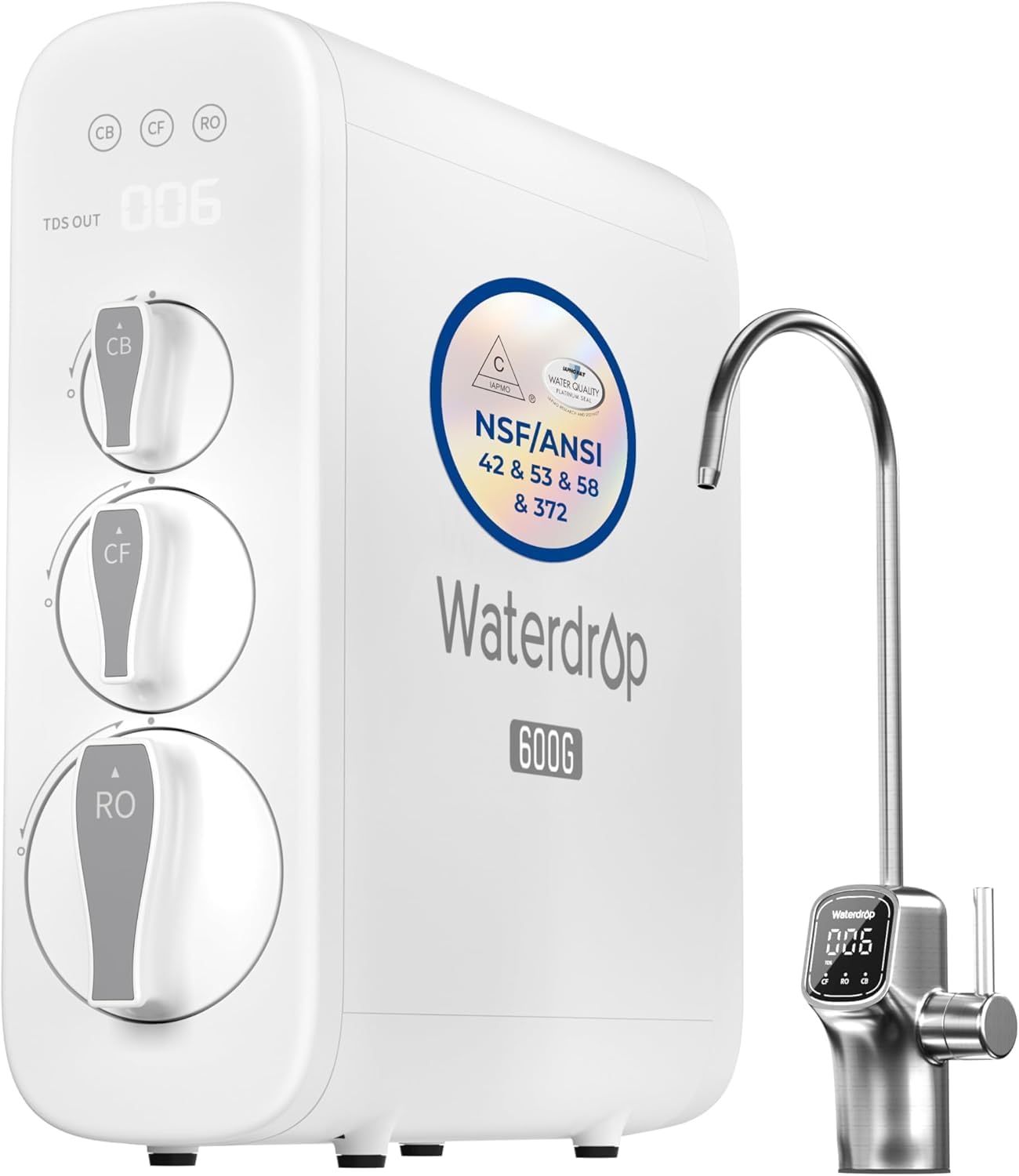
The Waterdrop G3P600 is a tankless under-sink RO system designed to produce a high daily output while saving cabinet space. It uses an 8-stage filtration train including carbon block and an RO membrane to reduce TDS, heavy metals, PFAS, chlorine and other common contaminants, and the unit claims a fast flow that fills an 8 oz cup in about 8 seconds. The smart faucet displays TDS and filter life, which makes water quality and maintenance status easy to monitor. Tankless construction eliminates a storage tank and frees under-sink room, and filters twist out for tool-free replacement. The system requires a plug-in power source and needs two drilled holes for faucet and drain connections, so installation is more involved than a passive filter and needs electrical access. Also the unit lists a supported TDS limit and operating pressure/range that you should verify for well water conditions. For buyers wanting a compact, high-capacity RO with visible TDS readout, this model offers strong contaminant reduction and convenient upkeep, but confirm your well water chemistry and pressure before purchase.
Best for: Buyers who prioritize strong contaminant reduction and observable water quality feedback and who want a compact, high-output RO for regular household drinking and cooking use.
Less Ideal for: Homes without easy under-sink power access or owners with very high TDS or unusual well-water chemistry who should first test water and consult a water-treatment pro.
- High 600 GPD production capacity suitable for heavy household use
- 8-stage filtration including RO membrane and carbon block targets TDS, heavy metals, PFAS and chlorine
- Smart faucet with TDS monitor and filter-life display simplifies water-quality checks
- Tankless design saves under-sink space and allows tool-free filter replacement
- Requires under-sink electricity and two drilled holes for faucet and drain connection
- Installation may need verification of incoming water pressure and TDS for optimal performance
Verdict: If you want a compact, high-capacity tankless RO with an easy-to-read TDS display and strong multi-stage contaminant removal, the Waterdrop G3P600 is a solid choice for household well-water filtration.
DREO RO Countertop Water Filter 5L

| Capacity | 5 liters |
|---|---|
| Purification Method | Reverse Osmosis |
| Other Special Features | Built In TDS Meter, Change Filter Indicator, Touch Control |
| Pure to Drain Rate | 3:1 |
| Included Components | RO Filter and 2 Autofill Water Pitchers |
The DREO countertop RO system provides point-of-use purified water without any plumbing changes by combining a 7-stage reverse osmosis filter with a 5 L storage tank and two autofill pitchers. It is designed for everyday kitchen use: the built-in TDS meter and filter-life indicator let you verify incoming and output water quality and know when to change the cartridge, while an auto-fill sensor and dual-pitcher arrangement keep one pitcher ready while the other refills. The unit includes an auto-flush self-cleaning routine to reduce internal buildup and a twist-to-install filter for quick replacements. DREO claims a 3:1 pure-to-drain ratio and filter runtime of about 265 gallons (1000 L), which helps limit waste compared with many RO units. Important practical limits are its countertop footprint and 5 L capacity, which suits small households but means frequent refills for larger families, and the system still produces wastewater inherent to RO. For buyers who want install-free RO with visible TDS monitoring and simple maintenance, this model is a practical, low-hassle option.
Best for: A cautious buyer who wants the proven contaminant removal of RO without plumbing changes and values visible water-quality monitoring and low-maintenance operation.
Less Ideal for: Those who need high daily filtered volume for large families or who want a permanently plumbed under-sink solution should consider other formats.
- 7-stage reverse osmosis filtration with SGS-tested impurity reduction for comprehensive contaminant removal
- Built-in TDS meter and filter-life indicator for real-time water quality and maintenance alerts
- Auto-fill sensor plus two autofill pitchers for hands-free refilling and continuous access to filtered water
- Self-cleaning auto-flush system reduces internal buildup and maintenance effort
- Twist-to-install filter design simplifies cartridge replacement
- Produces wastewater as all RO systems do despite an improved 3:1 pure-to-drain ratio
- 5 L tank capacity may require frequent refills for larger households
Verdict: If you want install-free RO with real-time TDS readings and hands-free autofill pitchers, this DREO countertop system delivers reliable, low-hassle purification for small households.
Choosing the Right Reverse Osmosis Water Filter for Well Water: Key Factors to Consider
Contaminant Profile of Your Well
Well water chemistry varies widely from one property to another, and the types of contaminants present should drive your system choice. Test your well for common issues such as hardness minerals, iron, manganese, nitrates, and coliform bacteria. Different RO systems and prefilters target different contaminants; for example, sediment and chlorine are handled by simple prefilters, while dissolved minerals and nitrates require the RO membrane.
Knowing your well's contaminant profile helps you choose appropriate prefiltration and post-treatment stages. If bacteria or high turbidity are present, a system that can integrate disinfection or finer sediment filtration is important. Budgeting for upfront testing avoids surprises and ensures the selected RO configuration will actually address the specific impurities in your water.
System Daily Output and Household Demand
Reverse osmosis systems have rated production rates, usually expressed in gallons per day, and most include a pressurized storage tank. Consider your household's peak and daily drinking and cooking needs when matching capacity. A small system may suffice for a single person or couple, but families or homes that use RO-treated water for cooking and small appliances will need higher production or a larger tank to avoid running dry.
Also factor in how frequently you want to wait for the tank to refill and whether you need a booster pump to improve flow. Production rates are measured at a standard feed pressure and temperature; actual output from a well with lower pressure or colder water can be much lower, so allow margin for real-world conditions.
Prefiltration and Sediment Management
Well water often carries higher sediment loads and particulate matter than municipal supplies. Effective prefiltration protects the RO membrane from clogging and extends membrane life. Look for systems that either include robust multi-stage prefilters or allow easy integration of additional sediment and iron filters upstream.
Consider the ease of servicing these prefilters and their replacement intervals. If your well produces a lot of sand or rust, plan for more frequent cartridge changes and choose housings and fittings rated for abrasive conditions. Prefiltration also affects maintenance costs and system uptime, since clogged prefilters reduce flow and can force premature membrane replacement.
Water Pressure and Booster Pump Options
Many reverse osmosis membranes require a minimum feed pressure to produce rated volumes. Well systems sometimes operate at lower pressures than municipal systems, so you may need a booster pump to achieve reasonable production and recovery rates. Check whether a system supports an optional pump and whether installation space and electrical access exist for adding one.
Also evaluate automatic shutoff functions and pressure-sensing controls that prevent backflow and reduce waste. A system with integrated or compatible pump options will be more flexible for homes where well pressure fluctuates or is marginal for RO operation.
Filter Lifespan and Ongoing Costs
Upfront cost is only part of the picture. Replacement filter and membrane costs, plus how often they must be changed, determine the true long-term expense of ownership. Some systems use proprietary cartridges at a premium while others use standard sizes that are more widely available and potentially less expensive.
Estimate annual operating costs by combining recommended replacement intervals with local filter prices. Also consider whether the system allows easy DIY servicing or if it requires professional maintenance. Systems designed for tool-free cartridge swaps lower labor costs and simplify upkeep.
Installation Complexity and Space Requirements
Reverse osmosis systems require under-sink or basement space for the membrane housing, prefilters, and storage tank, plus a drain connection and a faucet hole. Measure installation space and verify clearances before selecting a model. Some systems are more compact and suited to tight under-sink cabinets, while higher-capacity units need more room.
If you are not comfortable with plumbing and drilling, factor in the potential need for professional installation. Also check whether the system's fittings and mounting hardware are compatible with your existing plumbing layout, especially in older homes with nonstandard pipework.
Addressing Iron, Manganese, and Hardness Before RO
High iron or manganese and hard water minerals can foul RO membranes and shorten filter life. For wells with elevated levels, install targeted pretreatment such as sediment filters, iron removal media, or water softening ahead of the RO stack. These steps reduce membrane replacement frequency and preserve flow rates.
Pretreatment choices depend on the specific contaminants and their concentrations. Simple cartridge filters can handle sand and rust, while catalytic media or oxidizing filters are necessary for dissolved iron and manganese. If hardness is the primary issue, a water softener upstream of the RO system reduces scaling on membranes and improves overall system longevity.
- Use sediment filters with micron ratings matched to your well's turbidity.
- Consider oxidizing media for dissolved iron and manganese before the RO membrane.
- Install a water softener upstream if hardness causes scaling issues.
Boosters, Pressure Tanks, and Flow Considerations
Low feed pressure from a well will reduce RO output and increase waste water. A booster pump raises feed pressure to the membrane, improving production rates and shortening tank refill times. Many systems are compatible with add-on pumps, which can be a cost-effective way to get usable flow without changing your well pump.
Pressure tank sizing affects how often the RO system cycles. Larger tanks provide more usable treated water before the system pauses to refill, which improves user experience at the faucet. Balance tank size with available space and household demand to avoid frequent drawdowns.
- Match booster pump capacity to system flow and expected water demand.
- Choose a tank sized to reduce refill frequency during peak use.
- Ensure electrical and wiring access if adding a powered booster pump.
Installation Tips for Well Water Homes
When installing an RO system on a well, locate the unit where pipe runs are short and protected from freezing. Use high-quality fittings rated for potable water and ensure a secure drain connection that prevents backflow. Plan the faucet placement to minimize visible tubing and to keep the treated-water line short.
If your well water contains heavy sediment, install a larger sediment housing with a clear bowl for visual inspection. Label shutoff valves and filter change dates to simplify maintenance. If you are unsure about compatibility with your well pump or pressure tank, consult a well technician to verify system requirements before installation.
- Protect lines from freezing if the unit is installed in an unheated basement.
- Use shutoff valves to isolate the RO for filter changes.
- Mount the storage tank horizontally or vertically according to manufacturer clearance specs.
Monitoring Water Quality After Installation
After the RO system is in service, periodically test treated water to confirm contaminant removal remains effective. Testing helps detect membrane failure, bypasses, or prefilter exhaustion. Basic home test kits can check for hardness and common indicators, but professional lab tests are recommended for bacteria, nitrates, and dissolved solids.
Keep a maintenance log of filter changes, tank sanitizations, and test results. That record makes it easier to spot trends like rising total dissolved solids that indicate membrane degradation, allowing timely service before water quality declines noticeably.
- Test for nitrates and coliform bacteria on a schedule suitable for private wells.
- Monitor total dissolved solids to track membrane performance.
- Sanitize the system and replace filters after any well contamination incident.
Water Efficiency and Waste Considerations
Traditional RO systems produce waste brine as part of the filtration process. For well owners mindful of water use, consider systems with improved recovery rates, permeate pumps, or those designed to reduce wastewater. Higher recovery reduces the volume sent to drain and eases pressure on septic systems where applicable.
Keep in mind that recovery rates depend on feed pressure and water temperature, so real-world efficiency may be lower than laboratory ratings. Planning for wastewater management and possibly reusing reject water for nonpotable uses can make an RO installation more sustainable in a well-water household.
- Look for systems with permeate or booster pumps to improve recovery.
- Account for lower recovery in cold or low-pressure conditions.
- Reuse reject water for landscape or cleaning where safe and appropriate.
How We Chose the Best Reverse Osmosis Water Filter for Well Water
We prioritized selection criteria that reflect the specific challenges of treating well water. First, contaminant removal effectiveness was a primary filter: systems had to demonstrate multi-stage filtration capable of reducing common well contaminants such as sediment, hardness minerals, nitrates, and microbial risks when paired with appropriate prefilters. Second, daily production and storage capacity were evaluated so a system can meet typical household consumption without long waits. Third, compatibility with well-water prefiltration and pressure requirements was considered, since low pressure or high sediment loads affect real-world performance. Fourth, maintenance frequency and filter replacement costs were measured to reflect ongoing ownership costs. Finally, build quality and installation flexibility were considered, including whether the unit supports optional booster pumps or larger tanks for high-demand homes. We excluded single-stage countertop filters or systems designed only for municipally treated water because those do not address common well-water issues. Units that rely entirely on chemical feed without physical filtration were also excluded. Overall, selections emphasize systems that balance robust contaminant reduction, adequate flow and storage, and manageable maintenance for well-water households.
Our full evaluation process is outlined in our review methodology.
FAQ
How often should I test my well water after installing an RO system?
Test treated water at least annually for bacteria and nitrates, and test more often if conditions change or you notice taste or odor shifts. After any contamination event on the well, perform immediate testing and sanitation.
Can an RO system remove iron and manganese from well water?
RO membranes can reduce dissolved iron and manganese, but heavy concentrations may require upstream treatment. Pretreatment with oxidation or specialized media is often necessary to prevent membrane fouling and maintain performance.
Will a reverse osmosis system work if my well has low pressure?
Low well pressure reduces RO output and increases waste. Adding a compatible booster pump is a common solution to raise feed pressure and restore production, provided electrical access and space are available.
How much maintenance does an RO system for well water typically need?
Maintenance depends on water quality and system design. Expect regular prefilter changes every 3 to 12 months, membrane replacement every 2 to 5 years, and occasional tank sanitization. Heavy sediment or contaminants accelerate service intervals.
Is it necessary to soften water before an RO system?
Softening before RO helps prevent scaling on the membrane if your well has high hardness. If hardness is low, a softener may be unnecessary. Use test results to determine whether a softener is a cost-effective pretreatment.
Final Verdict
When choosing a reverse osmosis water filter for well water, prioritize the contaminant removal profile, adequate daily production, and proper pretreatment for sediment or iron. Balance tank size and booster pump options against available space and well pressure to ensure reliable flow. Plan for regular maintenance and testing, since ongoing filter and membrane service will determine long-term performance. Focus on a system that matches your well's specific chemistry and household demand to get consistent, safe drinking water without unnecessary complications.