
Note: This article contains affiliate links. If you click on these links and make a purchase, we may earn a small commission at no extra cost to you. This helps support our research and content. Read our full affiliate disclosure here.
If you rely on tile floors in kitchens, entryways, or bathrooms, a combined robot mop and vacuum can save time and reduce daily dust and spills. Choosing the right robot mop with vacuuming for tile floors matters because tile presents unique cleaning challenges: grout lines trap dirt, smooth glazed surfaces show streaks, and frequent moisture exposure can affect cleaning cycles. This guide covers seven shortlisted robot mops that excel on tile surfaces, balancing suction for debris pickup and wet-mop performance for residue removal. We evaluated navigation, cleaning modes, water control, and upkeep needs so you can pick a model suited to your home and routine. Read on for the evaluation criteria and practical buying guidance before the product list.
Top Picks at a Glance
| Best Overall The best all-around choice for most situations | iRobot Roomba Plus 405 Combo |  |
| Best Quality Built to a higher standard if you want something more solid | roborock Q10 S5+ |  |
| Best Value The sweet spot between price and what you get | ILIFE A30 Pro Robot Vacuum |  |
| Best Budget The cheapest option that still gets the job done reliably | ILIFE V5s Plus Robot Vacuum |  |
| Top Rated A top-rated pick with lots of positive feedback | Bagotte G6 Robot Vacuum |  |
| Most Popular A crowd favorite that many people choose with confidence | eufy C28 Robot Vacuum |  |
| Best Seller A high-volume bestseller chosen again and again | iRobot Roomba 105 Combo |  |
iRobot Roomba Plus 405 Combo
| Battery Life | 120 minutes |
|---|---|
| Power Source | Battery Powered |
| Capacity | 0.5 liters |
| Filter Type | Cartridge |
| Controller Type | App Control, Button Control, Voice Control |
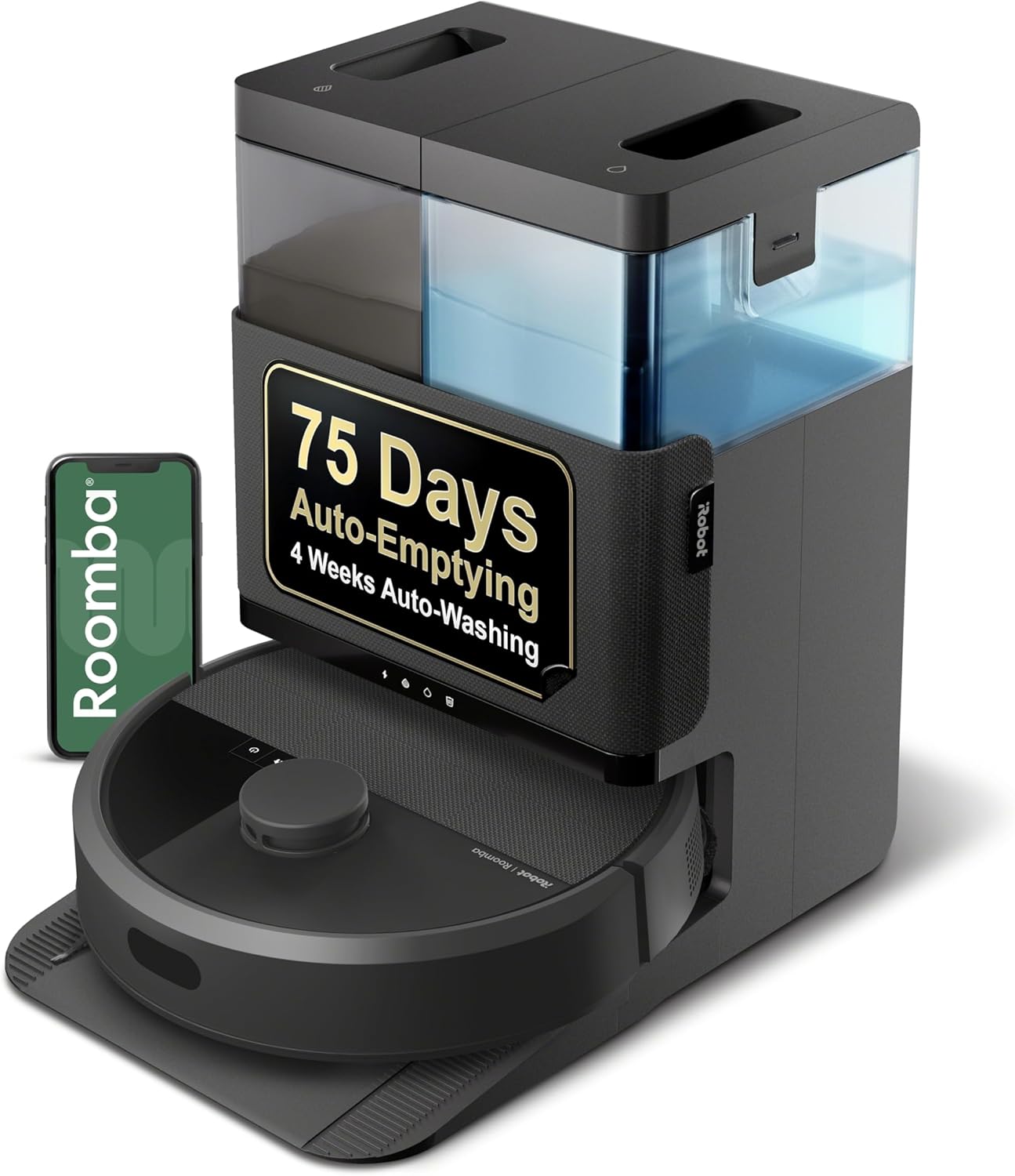
The Roomba Plus 405 Combo pairs Roomba vacuuming with aggressive spinning mop pads and an AutoWash dock to minimize hands-on maintenance. It uses ClearView LiDAR to build maps and navigate precisely while offering four suction levels and SmartScrub for deeper scrubbing on hard floors; the mop pads automatically lift when carpets are detected. The AutoWash dock handles self-emptying for up to 75 days and rinses and dries pads after jobs, which keeps the robot ready and reduces odor or messy storage. Setup and control are available via the Roomba Home app or voice assistants, and the robot supports targeted cleaning zones and keep-out areas. Expect strong suction and good mixed-surface performance, but the system still needs occasional filter and brush care and you should plan for dock maintenance like rinsing tanks. The unit is geared toward users who want thorough vacuuming plus more confident mopping without daily intervention rather than a simple budget cleaner.
Best for: Buyers who want a balanced, low-maintenance cleaning solution that vacuums and mops reliably across a mix of hard floors and carpets while minimizing daily touch-ups.
Less Ideal for: People with very tight living spaces where the dock cannot be placed on a hard floor or users who only need a simple, low-cost vacuum without mopping capabilities.
- Combined vacuum and mop with spinning DualClean mop pads for deeper scrubbing
- ClearView LiDAR mapping for precise navigation and room maps
- AutoWash dock that auto-empties debris and washes and dries mop pads
- Four suction levels and SmartScrub mode to target stubborn spots
- App and voice control with custom zones and keep-out areas
- AutoWash dock requires periodic tank rinsing and upkeep to stay sanitary
- Larger unit footprint and dock need floor space and a hard-surface location
Verdict: Choose the Roomba Plus 405 Combo if you want a single robot that combines powerful vacuuming with hands-off mop washing and drying for consistently fresh floors.
roborock Q10 S5+

| Maximum Suction | 10,000 Pa |
|---|---|
| Capacity | 2.7 liters |
| Battery Life | 150 minutes |
| Filter Type | Washable |
| Noise Level | 65 db |
The roborock Q10 S5+ is a robot vacuum and mop combo built for low-touch, regular maintenance of mixed flooring. It navigates with 360° LiDAR mapping and ReactiveTech obstacle avoidance, so it plans efficient routes and avoids common household objects while supporting multi-level maps and no-go zones via the app. The unit pairs a 10,000 Pa suction system and smart carpet detection to boost suction on rugs and a dual anti-tangle brush setup to reduce hair clogs, which is helpful for pet homes. Its VibraRise 2.0 sonic mopping lifts and scrubs floors and can auto-lift the mop when carpet is detected. The included auto-empty dock holds a 2.7 L dust bag for extended hands-free operation, advertised up to about 70 days between bag changes. Battery runtime and app controls allow scheduled and voice-operated cleaning. Expect roughly moderate noise and a relatively large robot footprint that may limit access under very low furniture, and advanced features depend on using the app and 2.4 GHz Wi-Fi.
Best for: Buyers who prioritize low-maintenance, reliable cleaning backed by broad user adoption and want a robot that cleans floors and mops with strong suction and advanced navigation.
Less Ideal for: If you need an ultra-compact robot for very low-clearance furniture or want a model that runs without any networked app features, this is not the best fit.
- Strong 10,000 Pa suction for deep pickup on carpets and floors
- LiDAR mapping with multi-level maps and no-go zones for predictable navigation
- VibraRise sonic mopping that auto-lifts on carpet to protect rugs
- Large 2.7 L auto-empty dock reduces how often you need to empty the bin
- Dual anti-tangle brush design reduces hair snags and maintenance
- Relies on 2.4 GHz Wi‑Fi and the app for full feature set
- Noise level is moderate and may be noticeable during runs
Verdict: Choose the Q10 S5+ when you want a mostly hands-free robot that combines strong suction, LiDAR mapping, and auto-emptying for dependable weekly cleaning under $1,000.
ILIFE A30 Pro Robot Vacuum

| Battery Life | 150 minutes |
|---|---|
| Filter Type | Hepa |
| Capacity | 2.5 liters |
| Power Source | Battery Powered |
| Controller Type | App, Remote, Voice Control |
The ILIFE A30 Pro is a midrange self-emptying robot that combines vacuuming and mopping with LiDAR mapping for predictable, room-by-room cleaning. It uses a 2-in-1 on-board dustbin and water tank to run vacuum and mop simultaneously, and the included self-emptying base holds five 2.5L dust bags so the system can go for months without you emptying it. LiDAR navigation and multi-floor mapping create accurate maps and let you set no-go zones, schedules, and spot cleaning from the ILIFEClean app or via voice assistants. Suction modes range from quiet to a claimed 10000Pa max for heavier debris, and a HEPA filter helps capture fine dust. Practical limitations: the mop water capacity is modest, the 200ml tank means heavier mopping jobs need refills, and the app requires a 2.4GHz Wi-Fi network only. While performance on low-pile carpet and hard floors should be solid, very dense rugs or large homes may need multiple runs or manual touch-ups.
Best for: Buyers who want a low-maintenance cleaning routine and prioritize automated, scheduled whole-home cleaning with reliable mapping and occasional mopping included.
Less Ideal for: Homes that need heavy-duty mopping or very deep-cleaning of dense high-pile carpets should consider a dedicated wet-cleaner or a more powerful upright for spot jobs.
- Self-emptying base with five 2.5L dust bags for extended hands-free operation
- LiDAR navigation with multi-floor mapping and no-go zones for consistent coverage
- Vacuum and mop simultaneously with selectable suction and water levels
- HEPA filter and multiple suction modes for better dust and pet hair pickup
- Small onboard water tank limits continuous mopping time
- Max suction value is claimed and real-world results can vary
Verdict: If you want long stretches of hands-off floor care with reliable LiDAR mapping and a bagged self-emptying base, the A30 Pro delivers practical automation."}
ILIFE V5s Plus Robot Vacuum

| Battery Life | 110 minutes |
|---|---|
| Capacity | 300 ml |
| Controller Type | App Control, Voice Control, Remote Control |
| Compatible Devices | Amazon Echo, Google Home |
The ILIFE V5s Plus is a slim 2-in-1 robot that vacuums and mops while offering app, remote and voice control for scheduled cleaning. It runs up to 110 minutes per charge and automatically returns to its charging dock when the battery is low, making it suitable for daily maintenance across small to medium rooms. The unit provides five cleaning modes including auto, spot, edge and max for adjustable suction and targeted passes, and its 300 ml tanks handle both dust and water for light mopping tasks. Practical benefits include a low profile that reaches under furniture, compatibility with Alexa and Google Assistant, and sensor suites that reduce falls and collisions. Limitations are a modest suction level compared with higher-end models, a relatively small water/dust capacity that requires frequent emptying for larger homes, and simpler navigation that may miss complex path optimization on cluttered carpets. For its price point the V5s Plus delivers consistent, hands-off upkeep rather than deep clean performance on thick carpeted surfaces.
Best for: Buyers looking for an affordable, no-frills robot that keeps hard floors and low-pile carpet tidy with minimal setup and smart-home control.
Less Ideal for: Homes that need powerful deep-cleaning on thick or high-pile carpets or large houses where longer runtimes and larger dust/water capacity are required.
- 2-in-1 vacuum and mop combination for quick maintenance of floors and light spills
- 110-minute runtime with automatic self-charging for largely unsupervised cleaning cycles
- Multiple cleaning modes and scheduling via app, remote or voice for flexible operation
- Slim profile and sensors help the robot reach under furniture and avoid drops or collisions
- Smaller 300 ml tanks and dustbin need more frequent emptying during larger jobs
- Navigation is basic compared with lidar or advanced mapping systems, so pathing can be inefficient on cluttered layouts
Verdict: A budget-friendly robot that combines vacuuming and light mopping with smart controls to keep small-to-medium homes tidy without breaking the bank.
Bagotte G6 Robot Vacuum

| Maximum Suction | 6000Pa |
|---|---|
| Navigation | 360° LiDAR |
| Filter Type | H13 |
| Battery Life | 120 minutes |
| Capacity | 300 ml |
The Bagotte G6 is a round robot vacuum that combines LiDAR mapping, strong suction, and a mop function for mixed hard‑floor and carpet cleaning. It uses 360° LiDAR to create precise maps and supports virtual no‑go zones via the app, which helps it avoid fragile areas and plan efficient routes; the mapped navigation also enables it to store multiple maps for multiroom use. With a quoted peak suction of 6000Pa and an H13 filter, the G6 tackles pet hair and embedded dirt and runs up to about two hours per charge, then returns to the dock to recharge automatically. The two‑in‑one dust and water tank and included mops let you sweep, vacuum and mop in one pass, though heavy shag carpet may reduce mop effectiveness and require separate vacuum passes. Practical benefits include low noise operation, Alexa/Google voice control, and a relatively wide cleaning path for faster coverage, while buyers should note its listed battery life and that very deep pile can limit agitating performance compared with full‑size upright vacuums.
Best for: Buyers who prioritize dependable, map‑based navigation and strong suction for routine cleaning across mixed hard floors and medium‑pile carpets and who want hands‑off scheduling and voice control.
Less Ideal for: Homes with very deep shag carpeting or heavy long‑pile rugs where a full‑size upright or a robot with a dedicated high‑torque brushroll is needed for thorough agitation.
- 360° LiDAR mapping for accurate room maps and virtual no‑go zones
- High peak suction (6000Pa) for pickup of pet hair and embedded dirt
- Combined dust and water tank plus included mops for sweeping, vacuuming and mopping in one device
- H13 filter helps contain fine dust and allergens during cleaning
- App, remote and voice control for scheduled and hands‑off operation
- Mop function is less effective on deep or shag carpets compared with hard floors
- Two‑hour runtime may require mid‑day recharges for very large homes
- No mention of a powered brushroll designed specifically for long pile carpets
Verdict: Choose the Bagotte G6 when you want reliable LiDAR mapping and strong suction for regular cleaning across mixed floors, with convenient app and voice control.
eufy C28 Robot Vacuum

| Suction | 15,000 Pa |
|---|---|
| Battery Life | 140 minutes |
| Capacity | 3 liters |
| Filter Type | Washable |
The eufy C28 is a full-featured robot vacuum and mop designed to reduce hands-on maintenance. It uses LiDAR navigation to map rooms and avoid obstacles without cameras while its HydroJet roller mop spins and self-cleans into a separate dirty-water tank, and the included Omni station automatically empties dust into a 3 L container, refills and washes the mop, and dries it with hot air. In daily use it handles hard floors and short-pile carpet, boosts suction on carpets, and its zero-tangle DuoSpiral brush is built to manage pet hair without frequent brush cleaning. The unit reports long runtimes for multi-room jobs and can lift the mop on rugs to protect carpets. Practical limitations include the robot's overall size and weight for homes with very low clearances and the dependence on the docking station for the hands-free features to work as advertised. For buyers who prioritize low-maintenance cleaning and reliable navigation, the C28 delivers measurable time savings but it is best suited to households that can accommodate the Omni station footprint.
Best for: A cautious buyer who wants dependable mapping, strong suction, and near hands-off vacuuming and mopping with minimal daily maintenance.
Less Ideal for: Homes with very limited floor space for the docking station or users who need a compact robot that performs primarily without a large base station.
- 15,000 Pa suction with automatic carpet boost for stronger pickup on rugs
- All-in-one Omni station auto-empties dust, washes and hot-dries the mop, and collects wastewater for up to 75 days
- LiDAR navigation avoids obstacles using laser mapping without cameras to protect privacy
- Zero-tangle DuoSpiral roller reduces hair wrap and simplifies pet-hair maintenance
- Large station and robot size may be difficult to place in tight or low-clearance homes
- Hands-free features require the Omni station, so benefits are reduced if you only use the robot standalone
Verdict: Buy this if you want a privacy-safe LiDAR robot that combines strong suction with a station that largely automates emptying, mop washing, and drying for low-maintenance floor care.
iRobot Roomba 105 Combo
| Surface Recommendation | Carpet & Hard Floor |
|---|---|
| Battery Life | 100 minutes |
| Controller Type | App Control, Button Control, Voice Control |
| Filter Type | Cartridge |
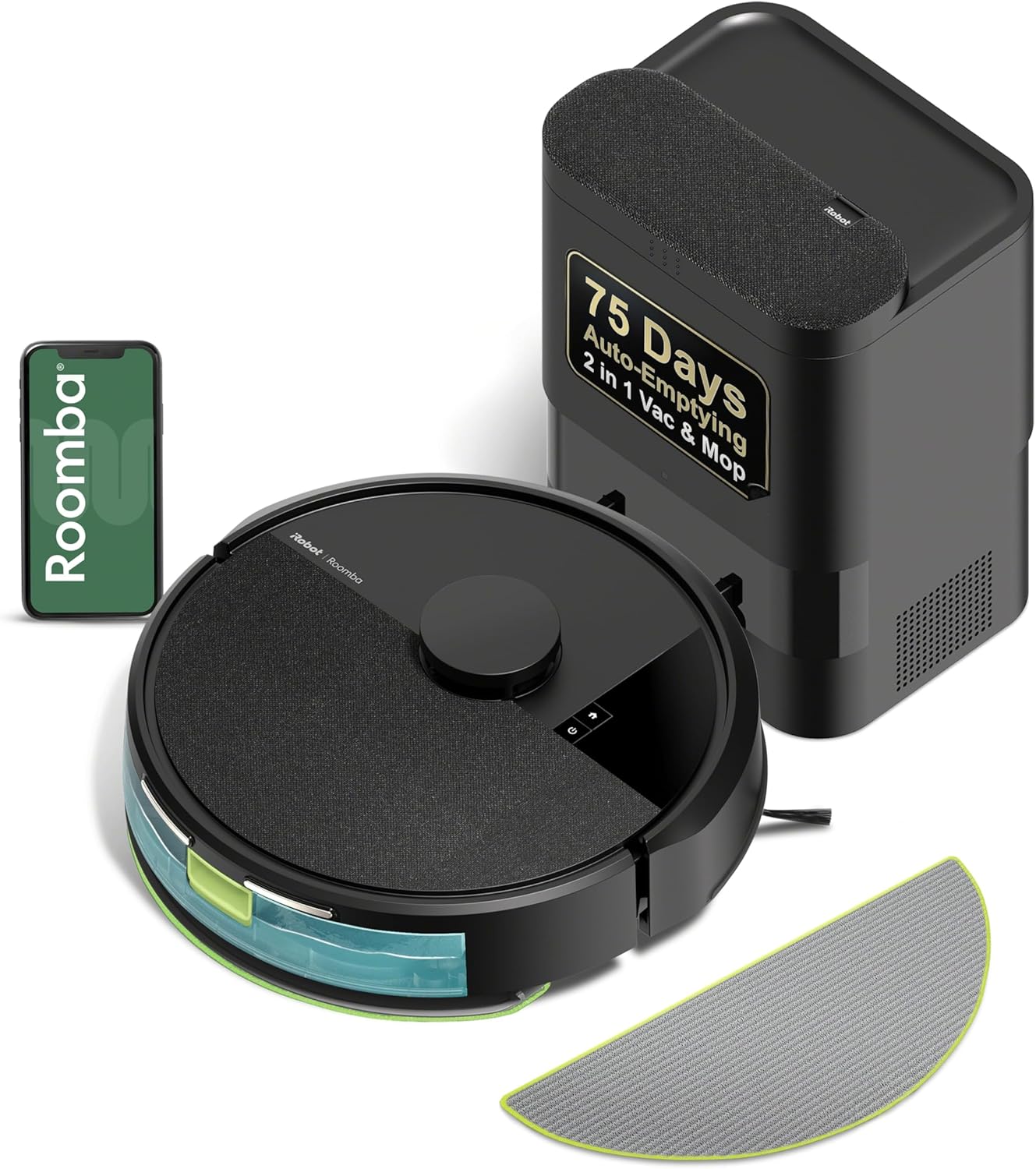
The Roomba 105 Combo is a vacuum-and-mop robot built for regular home cleaning on carpets and hard floors, with ClearView LiDAR mapping, 3 cleaning modes, and a self-emptying AutoEmpty dock. In typical use you pick mop only, vacuum only, or vacuum-and-mop, schedule runs in the iRobot Home app or start with voice commands, and the robot maps rooms to avoid obstacles and stairs. Notable features include a 4-stage cleaning system with power-lifting suction and an edge-sweeping brush for better corner cleaning, a washable microfiber mop pad and a micro-pump that meters cleaning solution for controlled mopping, plus a dock that holds up to 75 days of debris in a disposable bag. Practical benefits for LVP floors are targeted wet cleaning with carpet detection so rugs stay dry, and LiDAR navigation for consistent coverage. Limitations to expect are routine maintenance like filter and brush cleaning, a 100-minute battery life that may need recharges for larger homes, and dependency on the companion app for advanced settings and map customization.
Best for: Buyers who want a mostly hands-off vacuum-and-mop robot that reliably cleans LVP and other hard floors and values documented performance and peer reviews when choosing a dependable, low-maintenance option.
Less Ideal for: People who need the longest possible run time for very large homes, want a mop dock that washes and dries pads, or who prefer fully bagless base stations.
- Self-emptying AutoEmpty dock holds up to 75 days of debris for low-touch maintenance.
- ClearView LiDAR mapping gives reliable room coverage and obstacle avoidance.
- Combined vacuum-and-mop modes with a micro-pump and washable microfiber pad let you control how much liquid is applied to hard floors.
- 70x power-lifting suction and an edge-sweeping brush improve pickup, including pet hair and edge debris.
- App and voice control with scheduling and keep-out zones simplify routine cleaning.
- Battery runtime is 100 minutes which may require mid-run recharges in larger homes.
- AutoEmpty uses disposable bags, adding ongoing consumable cost.
- Does not include heated pad washing or advanced self-washing dock features found on higher-end models.
Verdict: Choose the Roomba 105 Combo if you want a trustworthy LiDAR-mapped vacuum-and-mop with a hands-free AutoEmpty dock that keeps LVP clean with minimal daily effort.
Choosing the Right Robot Mop with Vacuuming for Tile Floors: Key Factors to Consider
Suction Power and Debris Pickup
Tile floors collect everything from fine dust to larger crumbs. Strong suction helps lift dry debris effectively, but the shape and height of the intake and brush design also influence pickup on grout lines. Consider how the robot handles a mix of particle sizes and whether it can clear crumbs without needing repeated passes.
A unit that sacrifices suction for longer mop runtime may leave particulate behind, which undermines wet-mopping results. Look for specs and user-friendly controls that let you increase suction in high-traffic areas while conserving battery on lighter cleaning days.
Wet-Mopping System and Water Control
Wet-mop effectiveness depends on controlled water delivery, pad design, and surface contact. Too much water causes streaks or leaves floors soggy; too little yields smearing without true residue removal. For tile, adjustable flow or multiple mop modes matter because grout can absorb more moisture than glazed tile.
Evaluate whether the robot uses single-pass spray plus microfiber pads or an electrically driven mop plate. Removable, machine-washable pads and straightforward tank refills cut ongoing effort and improve hygiene between uses.
Navigation and Mapping Accuracy
Good navigation reduces missed spots and prevents excessive passes that waste battery. For tile floors that often include transitions to rugs, thresholds, or narrow grout-lined areas, mapping accuracy and obstacle avoidance matter. A robot that methodically follows mapped lanes provides more consistent cleaning and better coverage of grout lines.
Features like virtual no-go zones or scheduled multi-room mapping let you tailor runs for specific tile areas, minimizing accidental encroachment onto wet rugs or delicate flooring.
Runtime and Tank Capacity
Runtime is tied to how much floor area a robot can cover before it must recharge or refill water. On larger tile surfaces, small dustbins and tiny water reservoirs mean more interruptions for emptying and refilling. Consider the combination of battery life and tank capacity: longer runtime with adequate water and debris capacity reduces active maintenance during a cleaning cycle.
If you plan frequent short runs, smaller tanks may be fine. For weekly deep cleans of several rooms, larger tanks and longer battery life improve convenience.
Maintenance, Consumables, and Upkeep
Regular maintenance affects the total cost and effort of ownership. Consumables include mop pads, filters, brushes, and water-treatment items. For tile that shows water marks easily, you will replace or launder mop pads more often. Check how easy it is to replace filters and obtain replacement pads.
Also consider how accessible the dustbin and water tank are for emptying and refilling, and whether the robot notifies you promptly about clogs, filter changes, or pad wear to avoid degraded cleaning over time.
How Tile Surfaces Change Cleaning Priorities
Not all hard floors are equal. Tile tends to highlight grout discoloration, mineral streaks from water, and trapped debris along edges. That means a robot must both collect dry debris efficiently and distribute cleaning solution in a way that avoids streaking or residue build-up. Expect to prioritize mop control and navigation precision more than you might for wood floors.
- Grout lines need repeated agitation or focused passes to clear embedded dirt.
- Glossy tile shows streaks quickly, so water control is essential.
- Edges and corners often require targeted suction or spot cleaning routines.
Setting Up Robot Routines for Tile Rooms
Create cleaning zones that separate tile-heavy areas from rugs and carpeted spaces. Schedule more frequent, shorter runs for high-traffic tile zones like kitchens to prevent crumbs from turning into stains. Use mapping tools or virtual boundaries to keep the robot off wet rugs and to focus mop cycles on tile only.
- Run a quick vacuum-only pass before a mop cycle if heavy dry debris is present.
- Schedule mop cycles during low-traffic times to allow floors to dry without foot traffic.
- Use spot-clean features on grout-prone areas after meals or spills.
Dealing with Grout Lines and Edge Cleaning
Grout often traps particles that a general sweeping action will not remove. Robots with stronger suction and brush designs that reach slightly into grout lines perform better. You may still need occasional manual agitation with a stiff brush on badly soiled grout, but regular robot maintenance can minimize the frequency of manual intervention.
- Consider a robot that allows multiple passes or high-suction spot cleaning.
- Position furniture or run spot-clean routines along baseboards where debris accumulates.
- Keep an eye on brush wear; worn brushes lose the ability to dislodge debris from grout.
Drying Time and Floor Finish After Mopping
Tile will dry at different rates depending on the amount of water applied and air circulation. Robots that deliver a more even, minimal wetting produce faster-drying floors and reduce the chance of streaks. For kitchens and entryways, fast drying minimizes slips and keeps the finish looking uniform.
- Open windows or run exhaust fans to speed drying after mop cycles in humid areas.
- Use low-water modes on glossy tiles to prevent surface streaking.
- Wipe high-traffic transition strips by hand if the robot leaves slight moisture that could attract dirt.
Maintenance Tips to Extend Performance
Regularly clean and replace filters, brushes, and mop pads to maintain peak suction and mop effectiveness. Rinse mop pads after use and allow them to dry fully before storage to avoid odors. Keep the water tank free of sediment and inspect seals to prevent leaks that could reduce mop pressure over time. Also schedule firmware updates when available to improve navigation and cleaning routines. Routine checks for hair or debris wrapped around rollers will preserve suction and reduce motor stress.
- Wash or replace mop pads per manufacturer guidelines.
- Empty dustbin after heavy-duty cleaning sessions to preserve suction.
- Check brush rolls and remove trapped hair weekly for busy households.
How We Chose the Best Robot Mop with Vacuuming for Tile Floors
We focused on products designed to handle tile surfaces reliably while offering both vacuuming and wet-mopping functions. Our editorial filters prioritized models with proven mapping or navigation systems that reduce missed zones and avoid repeat passes on grout. We assessed suction capability separately from mop delivery because strong vacuuming does not guarantee effective mopping on tile. Concrete evaluation criteria included suction power and debris pickup across tile and grout, mop delivery control and streak-free finish, navigation accuracy and edge/grout access, dustbin and water tank capacity for practical runtime, noise and runtime endurance for household use, and ease of maintenance including pad replacement and filter access. We excluded single-function robot vacuums or mops without integrated wet-mop systems, and we did not consider units intended only for hard-surface dusting. Models were filtered for reliable firmware and widely supported replacement parts, and items with unclear specifications for water flow or suction were not considered. The result is a curated set focused on real-world tile-floor performance and sensible upkeep demands.
Our full evaluation process is outlined in our review methodology.
FAQ
Can a robot mop with vacuuming remove grout stains?
Robots can remove surface dirt and lighten some grout discoloration through repeated passes, but deeply stained grout often needs targeted scrubbing or specialized grout cleaners. Regular robot maintenance and spot-clean routines reduce long-term buildup.
Will the robot wet-mop damage tile grout?
Properly controlled wet-mopping should not damage grout. Excessive water or harsh chemicals can over time affect grout integrity, so use recommended cleaning solutions and the robot's lower-flow settings on grout-prone areas.
How often should I run a robot mop on tile floors?
Frequency depends on foot traffic and mess level. High-traffic kitchens may benefit from daily quick runs, while lower-traffic rooms can be mopped once or twice weekly. Vacuum-only passes can be scheduled more often to prevent grit from scratching tile.
Do I need to vacuum before mopping with a combined robot?
If your model supports separate modes, a vacuum-only pass before mopping improves results by removing loose debris that would otherwise smear. Some robots perform integrated vacuum-plus-mop runs effectively, but starting with a dry pick-up often yields a cleaner finish.
Are special mop pads required for tile floors?
Microfiber pads designed for wet-mopping are usually best for tile because they absorb residue and leave fewer streaks. Replace or launder pads frequently to avoid redepositing dirt on the floor.
Final Verdict
When choosing a robot mop with vacuuming for tile floors, prioritize a balance of suction strength and controlled wet-mop delivery. Navigation accuracy and adequate tank capacity determine how thoroughly and efficiently the unit covers tile rooms, while consumable availability and ease of maintenance shape long-term convenience. Decide whether you need higher suction for heavy debris or finer water control for glossy tile, then pick a model that aligns with your cleaning schedule and upkeep tolerance. Focus on these tradeoffs to choose confidently and keep tile floors cleaner with less effort.