
Note: This article contains affiliate links. If you click on these links and make a purchase, we may earn a small commission at no extra cost to you. This helps support our research and content. Read our full affiliate disclosure here.
Tile floors demand a different approach than carpeted rooms. You need a machine that can pick up grit from grout lines, handle dust without scattering it, and leave a streak-free finish after mopping. Choosing the right robot vacuum and mop combo matters because an ill-suited unit can leave residue, struggle with grout, or require constant intervention. This guide shortlists seven top robot vacuum and mop combos for tile floors and evaluates them on the factors that matter most to tile owners. We focus on suction performance, mop design and water control, navigation on smooth surfaces, and daily convenience. Read on to see which features matter and which tradeoffs to expect before making a choice.
Top Picks at a Glance
| Best Overall The best all-around choice for most situations | roborock Q7 M5+ Robot Vacuum |  |
| Best Quality Built to a higher standard if you want something more solid | eufy Omni S2 |  |
| Best Value The sweet spot between price and what you get | ILIFE A30 Pro Robot Vacuum |  |
| Best Budget The cheapest option that still gets the job done reliably | ILIFE V5s Plus Robot Vacuum & Mop |  |
| Top Rated A top-rated pick with lots of positive feedback | iRobot Roomba 105 Combo |  |
| Most Popular A crowd favorite that many people choose with confidence | Tikom G8000 Max Robot Vacuum |  |
| Best Seller A high-volume bestseller chosen again and again | roborock Q10 S5+ |  |
roborock Q7 M5+ Robot Vacuum
| Suction | 10000Pa |
|---|---|
| Dust Bag Capacity | 2.7 liters |
| Battery Life | 150 minutes |
| Navigation | PreciSense LiDAR |
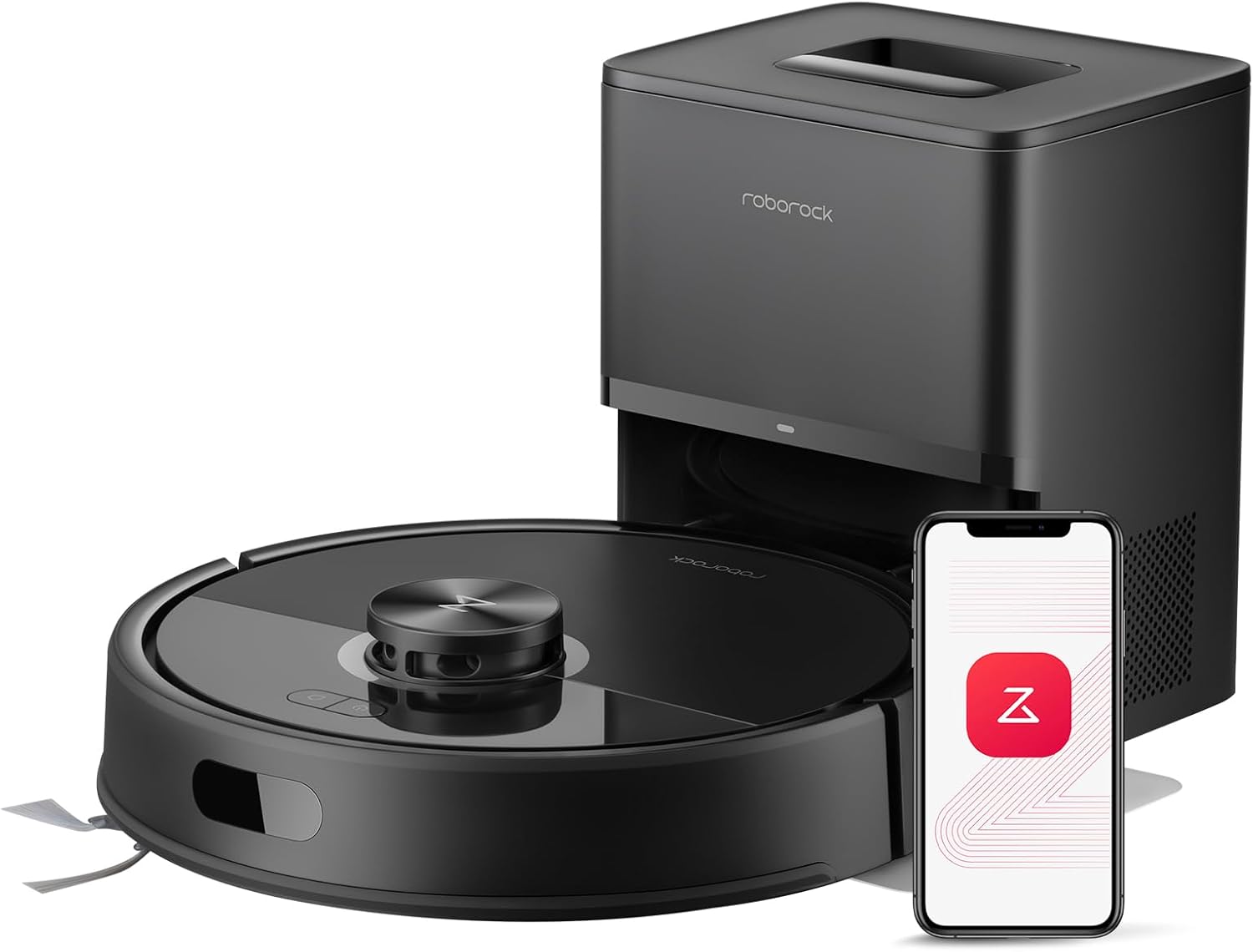
The roborock Q7 M5+ combines a 10000Pa HyperForce suction system with an electronic mop module and PreciSense LiDAR navigation to handle everyday dirt on tile and mixed floors. It maps rooms, follows efficient routes, and supports multi-level mapping and no-go zones through the Roborock app so you can schedule cleanings or run spot cleans from your phone. The bundled RockDock Plus holds a sealed 2.7L dust bag for roughly 7–9 weeks of hands-free emptying, which reduces maintenance in busy homes or pet households. The dual anti-tangle brush design and zero-tangle side brush cut down on hair wrap, and the suction plus adjustable water flow settings help lift stuck debris and wipe up light spills. Expect about 150 minutes of runtime per charge and typical robot noise in the mid 60s dB. Trade-offs include a modest noise level and reliance on app control and 2.4GHz Wi-Fi for full feature access, so manual control and offline use are limited.
Best for: Buyers who want a balanced, low-maintenance robot that vacuums and mops tile floors reliably and minimizes daily upkeep, especially in homes with pets.
Less Ideal for: Homes that need near-silent operation or users who prefer full local/manual control without depending on Wi-Fi and app features should consider other options.
- Very strong 10000Pa suction for lifting dirt from tile and grout edges
- Self-emptying RockDock Plus with 2.7L sealed dust bag reduces how often you handle debris
- PreciSense LiDAR navigation with multi-level mapping and no-go zones for reliable coverage
- Dual anti-tangle brush system designed to minimize hair wrap and maintenance
- App control with scheduling, spot clean and adjustable water flow for mopping
- App and smart features require 2.4GHz Wi-Fi and limit some offline control
- Noise level around 65 dB may be noticeable during operation
Verdict: A strong-suction, self-emptying robot mop and vacuum that keeps tile floors cleaner with minimal hands-on maintenance.
eufy Omni S2

| Suction | 30,000 Pa / 100 AW |
|---|---|
| Battery Life | 150 minutes |
| Filtration | AirClean 5-Layer (E11), Washable |
| Auto-empty | Up to 68 days |
| Noise Level | 59 db |
The eufy Omni S2 is a performance-focused robot that combines powerful AeroTurbo suction with a HydroJet 2.0 self-cleaning roller mop and a hands-free UniClean station. In real use it vacuums and mops in one run, automatically lifting the mop on carpets, boosting suction on rugs, and delivering sustained fade-free suction for deep carpet cleaning. The docking station auto-empties dust for up to 68 days, washes the mop with hot water, dries it, and dispenses detergent and electrolyzed water for sanitizing hard floors, which helps kill bacteria without manual scrubbing. Navigation is driven by 3D MatrixEye 2.0 and CleanMind AI, which map rooms, avoid small obstacles, and let you set no-go zones and carpet-boost areas via the app or voice assistants. For tile and hardwood it provides edge-to-edge coverage and a fragrance diffuser for fresh-smelling air. Trade-offs are its large footprint and relatively high weight from the full station, and it requires 2.4 GHz Wi-Fi for smart features and scheduling.
Best for: Buyers prioritizing top cleaning performance on tile and mixed floors who want an automated, low-touch system that deep-cleans carpets and sanitizes hard floors with a self-maintaining station.
Less Ideal for: People with very small homes or limited storage who need a compact unit, or buyers who prefer a simple offline robot without app-dependent smart features.
- Very strong 30,000 Pa suction and 100 AW airflow for deep carpet and grout-edge cleaning
- HydroJet 2.0 roller mop with real-time hot-water self-cleaning and electrolyzed water sterilization
- UniClean station auto-empties dust up to 68 days and washes and dries the mop after each session
- 3D MatrixEye navigation and CleanMind AI that detect many obstacle types and enable precise room mapping
- Tangle-free DuoSpiral brush and anti-tangle side brushes validated to prevent hair wrap
- Large, heavy system that takes more floor and storage space than compact robot units
- Smart features require 2.4 GHz Wi-Fi and the companion app for full functionality
Verdict: If you want a high-performance robot that deep-cleans tile and carpets while keeping the mop and dust bin hygienically maintained with minimal intervention, the eufy Omni S2 is a top choice.
ILIFE A30 Pro Robot Vacuum

| Max Suction | 10000 Pa |
|---|---|
| Battery Life | 150 minutes |
| Capacity | 2.5 liters |
| Filter Type | Hepa |
| Power Source | Battery Powered |
The ILIFE A30 Pro is a robot vacuum-mop designed to handle routine cleaning on hard floors and carpets with minimal intervention. It combines a 2-in-1 vacuum and mop system with LiDAR mapping to build accurate room maps, set no-go zones, and run scheduled cleans from the ILIFEClean app or via voice control. The unit offers four suction levels up to 10000Pa for spot or deep cleaning and a 150-minute runtime per charge, while the included self-emptying base uses replaceable 2.5L dust bags to extend hands-free operation for weeks. For tile floors the mop function and adjustable water level let you remove light soils while the strong suction picks up debris and pet hair from grout lines and edges. Limitations include a relatively small integrated water tank and 200ml dustbin/water combination that may require more frequent refills for large homes, and the self-emptying system depends on replaceable bags. The A30 Pro is best used as an easy daily maintainer on tile with periodic manual spot cleaning for very stubborn stains.
Best for: Buyers who want a low-maintenance, regularly-scheduled cleaner for tile floors that balances strong suction with smart mapping and long autonomous intervals.
Less Ideal for: Homes that need heavy-duty mopping or have very large open areas where a larger water tank and dust capacity would be preferable.
- LiDAR mapping with no-go zones and room scheduling for efficient coverage
- Self-emptying base with 2.5L dust bag capacity extends hands-free intervals
- High max suction (up to 10000Pa) for picking up debris and pet hair
- App, remote and voice control for convenient operation and customization
- Integrated water tank and dust bin are modest in size, requiring refills on larger homes
- Self-emptying relies on replaceable dust bags rather than a reusable bin
Verdict: Choose the A30 Pro if you want a smart LiDAR-mapped robot that combines powerful suction with a self-emptying base to keep tile floors maintained with minimal hands-on work.
ILIFE V5s Plus Robot Vacuum & Mop

| Battery Life | 110 minutes |
|---|---|
| Capacity | 300 ml |
| Controller Type | App, Voice, Remote Control |
| Compatible Devices | Amazon Echo, Google Home |
| Form Factor | Robotic |
The ILIFE V5s Plus is a compact robot that vacuums and mops in a single pass, making it useful for tile and other hard floors. It offers five cleaning modes (auto, spot, edge, max, and scheduled) selectable via the remote, app, or voice assistants, and a 300 ml water/dust capacity for light daily maintenance. Runtime reaches up to about 110 minutes on a charge and the unit will automatically return to its charging base when battery is low. The unit is slim and quiet, so it fits under low furniture and runs without much disruption. Practical benefits include pet-hair pickup on low-pile rugs, simple app and Alexa/Google Home integration, and basic anti-drop and anti-collision sensors that reduce accidents. Limitations to expect are modest suction compared with higher-end models, limited water capacity for large homes, and basic navigation rather than lidar or advanced mapping, so it may miss spots in cluttered rooms or require occasional manual intervention.
Best for: Buyers who want an affordable, no-frills robot that maintains tile and hard floors with automated vacuuming and light mopping and value simple smart-home integration.
Less Ideal for: Not a good choice for large homes needing strong suction, systematic room mapping, or high-capacity mopping for extended coverage.
- Two-in-one vacuum and mop cleans hard floors without swapping devices
- App, remote and voice control for scheduled and hands-off cleaning
- Long runtime up to 110 minutes with automatic return-to-charge
- Slim, quiet profile fits under low furniture and runs discreetly
- Multiple cleaning modes for tailored spot, edge, and max cleaning
- Navigation is basic without advanced mapping, so it can miss or revisit areas
- 300 ml tank limits continuous mopping on larger floor plans
- Suction power is moderate compared with premium robot vacuums
Verdict: A wallet-friendly robot vacuum-mop that keeps tile floors tidy with simple smart controls and long runtime.
iRobot Roomba 105 Combo
| Surface Recommendation | Carpet & Hard Floor |
|---|---|
| Battery Life | 100 minutes |
| Filter Type | Cartridge |
| Control Method | App, Touch, Voice |
| Other Special Features of the Product | Self-Emptying, LiDAR Navigation, Simultaneous Vacuuming & Mopping |
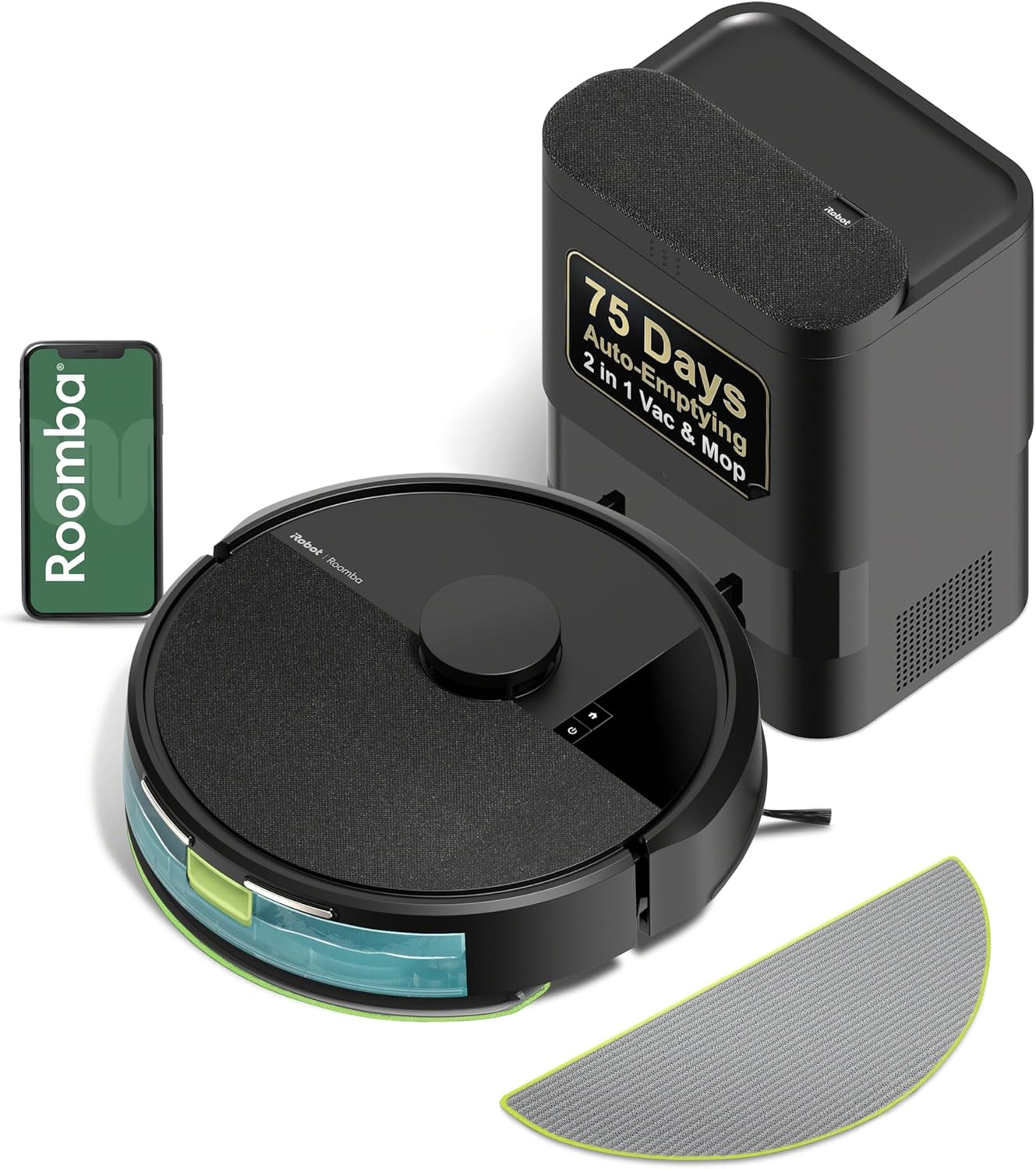
The Roomba 105 Combo pairs a vacuum and microfiber mop pad with ClearView LiDAR navigation to handle routine cleaning on tile and mixed floors. It maps rooms, avoids obstacles, and automatically skips carpets while mopping, so you can schedule mop-only or combined vacuum-and-mop runs through the iRobot Home app or a voice assistant. The included AutoEmpty dock collects debris for up to 75 days into a disposable bag, reducing hands-on maintenance, while the 4-stage cleaning system and 70x-enhanced suction lift dirt before the mop pads finish the surface cleaning. SmartScrub increases scrubbing in high-traffic spots and the micro-pump meters water or solution for consistent pad moisture. Expect straightforward setup on a 2.4 GHz network and routine upkeep like filter changes and brush cleaning. Limits to consider: battery runtime and lack of heated pad drying — long multi-room wet mops may need recharge breaks and mop pads require manual washing over time.
Best for: Buyers who prioritize a low-maintenance, reliable floor-care routine for tile and mixed floors and want hands-off debris disposal and accurate room mapping.
Less Ideal for: Homes that need long uninterrupted cleaning cycles without recharging or users who prefer docked pad washing and drying instead of manual pad care.
- LiDAR mapping for accurate room coverage and obstacle avoidance.
- AutoEmpty dock holds up to 75 days of debris to minimize manual emptying.
- Combined vacuum-and-mop modes with carpet-detection to prevent wetting rugs.
- SmartScrub and micro-pump deliver deeper, controlled scrubbing on tile.
- Works with app and voice assistants for scheduled, on-demand cleaning.
- Battery run time is listed at 100 minutes which may require recharges for very large homes.
- AutoEmpty uses disposable bags that must be replaced periodically.
Verdict: Choose the Roomba 105 Combo if you want dependable LiDAR navigation plus a self-emptying dock and combined vacuum-and-mop performance for low-effort tile floor maintenance.
Tikom G8000 Max Robot Vacuum

| Suction | 5000Pa |
|---|---|
| Battery Life | 150 minutes |
| Dustbin Capacity | 450 ml |
| Water Tank | 300 ml |
| Noise Level | 45 db |
The Tikom G8000 Max is a low-profile robot vacuum that combines strong suction with mopping to keep hard floors and low-pile carpets tidy with minimal user effort. In use it maps and navigates with anti-collision and anti-fall sensors, and supports app, remote, voice, and onboard button control so you can schedule cleanings and start runs from a phone or the included remote. Notable features include a 5000Pa suction motor for lifting pet hair and debris, a combined 450 ml dustbin plus 300 ml water tank for simultaneous vacuuming and mopping, and a runtime up to 150 minutes with automatic recharge. Its 3-inch height lets it access under furniture and the Zig-zag cleaning mode improves coverage on open floor areas. Limitations to keep in mind are that higher-pile carpets may not get deep cleaning compared with upright vacuums and mopping is best for maintenance rather than heavy wet cleaning; occasional emptying of the dustbin and refilling the water tank are still required. For routine hardwood maintenance the G8000 Max offers a practical balance of suction, run time, and smart controls.
Best for: Buyers who want a practical, time-saving floor care solution for hardwood and low-pile carpets and prioritize long runtime, reliable navigation, and flexible control options.
Less Ideal for: Households that need deep carpet extraction, heavy wet mopping, or commercial-grade cleaning should consider a dedicated upright or standalone mop system instead.
- Strong 5000Pa suction effective on hard floors and short-pile carpets
- Simultaneous vacuuming and mopping with combined dustbin and water tank saves time
- Long run time up to 150 minutes with auto-recharge for larger homes
- Slim 3-inch profile reaches under low furniture
- Multiple control options including app, remote, voice, and onboard button
- Mopping function is for light maintenance and not heavy wet cleaning
- May be less effective on high-pile carpets compared with full-size vacuums
Verdict: A slim, long-running robot that combines powerful suction and light mopping to keep hardwood floors clean with minimal hands-on work.
roborock Q10 S5+

| Maximum Suction | 10,000Pa |
|---|---|
| Capacity | 2.7 liters |
| Battery Life | 150 minutes |
| Filter Type | Washable |
| Noise Level | 65 db |
The roborock Q10 S5+ combines a 2.7 L self-emptying base, LiDAR mapping, and a VibraRise 2.0 sonic mopping module to handle regular floor care with minimal intervention. Typical use is scheduled app-based cleaning of tile and mixed floors, with the robot vacuuming first and then mopping using high-frequency vibrations to tackle dried spots. Notable features include a 10,000 Pa suction for embedded dirt and pet hair, ultrasonic carpet detection that lifts the mop module and boosts suction on rugs, ReactiveTech obstacle avoidance to reduce snags, and multi-level mapping so it remembers different floors. The washable filter and dual anti-tangle brush design cut upkeep compared with brush-only models, and the large dust bag claims up to 70 days between emptying for average households. Trade-offs are the noise level around 65 dB during operation and the unit's reliance on 2.4 GHz Wi‑Fi for smart features, which may limit connectivity in some networks. For tile-focused cleaning it offers precise navigation and thorough wet-scrubbing power, but expect occasional manual spot treatments for very stubborn stains.
Best for: Buyers who prioritize reliable, low-touch cleaning for tile and mixed floors and want a robot that maps well, reduces hands-on emptying, and handles pet hair without constant maintenance.
Less Ideal for: People seeking the quietest possible robot or those with only 5 GHz Wi‑Fi networks and no 2.4 GHz option should consider other models.
- Large 2.7 L self-emptying dust bag reduces how often you need to touch the robot
- 10,000 Pa suction removes embedded dirt and pet hair from hard floors and low rugs
- VibraRise 2.0 sonic mopping provides active scrubbing for better stain removal on tile
- LiDAR-based 360° mapping and multi-level maps enable precise navigation and room scheduling
- Dual anti-tangle brush design and washable filter lower routine maintenance frequency
- Operates around 65 dB which can be noticeable during high-power cleaning
- Smart features require 2.4 GHz Wi‑Fi which may not work with all home networks
Verdict: If you want a hands-off cleaner for tile floors that combines strong suction, sonic mopping, and long self-empty intervals, the Q10 S5+ is a practical, low-maintenance choice.
Choosing the Right Robot Vacuum and Mop Combos for Tile Floors: Key Factors to Consider
Suction Strength and Debris Collection
Tile hides fine grit and sand in grout lines and corners. Strong, sustained suction matters because it pulls abrasive particles away from grout rather than pushing them around. Look for units with adjustable suction so you can step up power in high-dirt zones and dial it back to conserve battery on lighter cleanings.
Also consider brush design and whether the combo uses a combination of side brushes and main brush or a brushless suction path. Brushes help loosen debris from grout edges, but they can also scatter fine dust on smooth tile if poorly tuned. Effective debris collection reduces the need for frequent spot-cleaning and protects grout from long-term wear.
Mopping Method and Water Delivery
How a robot dispenses and controls water determines whether your tile dries streak-free or ends up blotchy. Active water-delivery systems that meter fluid and maintain steady pad dampness perform better than purely passive setups. Some units offer electronic pumps or variable flow settings that adapt to different floor types and soil levels.
Consider pad attachment type and whether the system agitates or scrubs while mopping. For tile with textured grout, a mop that can apply light mechanical action while keeping water localized will typically deliver better results than a broadly damp pad that soaks grout and leaves residue.
Navigation Accuracy on Reflective Surfaces
Tile floors can be highly reflective and uniform, which challenges sensors and mapping algorithms. Reliable navigation reduces missed spots, inefficient overlap, and repeated passes that waste battery. Mapping systems that combine LiDAR, visual SLAM, or multi-sensor fusion are generally better at maintaining accurate paths on glossy tile.
Also evaluate how the robot handles thresholds, rugs, and tight corners adjacent to tile. Good obstacle detection and the ability to define virtual no-go zones help prevent the robot from getting stuck or pushing mop pads into areas that should remain dry.
Battery Capacity Relative to Area
Battery life determines how much continuous coverage a robot can provide before needing to recharge. For homes with large tile expanses or open-plan layouts, longer run times reduce the number of recharge cycles and allow single-session cleaning of multiple rooms.
Check whether the robot returns to the dock and resumes where it left off. Resume-after-charge capability effectively extends usable coverage for very large tile areas. Consider typical real-world run time rather than peak or advertised numbers, since mopping and higher suction modes draw more power.
Ease of Maintenance and Consumable Costs
Robots require regular upkeep: emptying dustbins, washing or replacing mop pads, and changing filters and brushes. For tile floors that contribute grit, you may need to replace pads or filters more frequently. Consider how accessible the dustbin and water reservoirs are and whether parts are machine-washable.
Lower-effort maintenance means more consistent use. Units that make consumables easy to clean, provide clear indicators for replacements, and avoid specialized disposable parts will generally be less expensive and more convenient to own over time.
How Mopping and Vacuuming Work Together on Tile
Robot vacuum and mop combos use coordinated steps to clean tile floors. First, the vacuum pass removes loose debris and grit so the mop does not push abrasive particles across the surface. Then the mopping phase applies a controlled amount of moisture to lift stains and residue without oversaturating grout.
When both systems are well matched, you get a single automated cycle that handles routine maintenance. If the suction is weak or the mop over-wets, you may need to run separate vacuum and mop cycles to avoid spreading dirt or leaving streaks.
- Vacuum first, mop second is the typical and most effective sequence.
- Water control prevents excess moisture in grout and on baseboards.
- A short dry time between mop passes reduces streaking on glossy tiles.
Setting Up for Tile: Mapping, Zones, and No-Go Areas
Take time to map your home and define zones. For tile rooms with different needs, set separate mop intensity or water flow per Zone. Virtual boundaries keep the mopping pad away from carpeted areas, high-pile transitions, or regions where water could damage wood trim.
Use scheduling to run cleaning outside of peak household traffic, which allows floors to dry before people walk on them. Fine-tuning zone settings can also limit repeated traversals of the same area, saving battery life and extending consumable life.
- Create a dedicated tile room zone with higher suction and moderate mop flow.
- Mark off rugs or grout-sensitive areas with no-go lines.
- Schedule mopping for times when floors can air-dry.
Dealing with Grout and Textured Tile
Grout lines collect dust and grit more than the tile faces. For textured tile, a robot that can focus suction along edges or that includes agitation in the mop pad will lift more embedded material. Expect to supplement robot cleaning with occasional manual grout scrubbing for deep-clean maintenance.
If grout discoloration is a primary concern, choose a routine that emphasizes frequent vacuum passes over high-moisture mopping. Over-wetting grout can trap dirt and lead to longer-term staining issues.
- Run a focused vacuum pass along high-traffic grout lines weekly.
- Use moderate mop flow to avoid pushing debris into grout.
- Schedule periodic manual deep cleans for grout maintenance.
Maintaining a Robot That Cleans Tile
Regular maintenance keeps performance steady. Empty the dustbin after heavy debris pickups to avoid reduced suction. Rinse or replace mop pads according to the manufacturer schedule, and keep filters clean to maintain airflow. Inspect brushes and side attachments for embedded grit that can wear parts and reduce cleaning effectiveness.
Store the robot dock in a low-dust area and keep water reservoirs free of contaminants. Using filtered or clean water reduces mineral buildup in pumps and nozzles, which improves long-term mop consistency.
- Empty the bin after heavy sand or grit pickups.
- Rinse mop pads after each mopping session and let them air-dry.
- Replace filters and brushes on a schedule to maintain suction.
When to Prioritize Mop Performance Over Suction
If your tile tends to show streaks, residue, or soap scum rather than embedded sand, prioritize mop accuracy and water control. A robot with fine-grain flow settings, steady pad pressure, and scrubbing action will deliver a better visual finish even if suction is moderate.
However, if grit and loose debris are the main issue, stronger suction and robust debris capture should come first. In mixed scenarios, look for adjustable settings that let you boost suction for debris-heavy passes and use a gentler mop mode for finishing.
- Choose mop-first settings for cosmetic cleaning and streak reduction.
- Boost suction for grit-prone entryways and high traffic areas.
- Use multi-pass schedules to separate heavy vacuuming from gentle mopping.
How We Chose the Best Robot Vacuum and Mop Combos for Tile Floors
We prioritized features that directly affect how well a robot vacuum and mop combo performs on tile floors. Key evaluation criteria included suction power and debris capture for removing sand and dust from grout lines, mop system effectiveness and water-control accuracy for streak-free mopping, and navigation and mapping capability to avoid repeated passes or missed areas on reflective tile. Battery life and real-world run time were measured as how long a unit can clean a typical medium-to-large tiled room before returning to base. Finally, ease of maintenance and replaceable consumables were considered to reflect ongoing ownership effort. Excluded from consideration were units that lack a dedicated wet-mop mode or that rely solely on passive microfiber pads without any water-control mechanism, because those typically underperform on tile. We also filtered out basic models without mapping or multi-room planning, since efficient coverage and boundary control are important on open tile plans. The resulting shortlist balances cleaning mechanics, water management, navigation, battery endurance, and upkeep requirements to produce practical options for tile-floor households.
Our full evaluation process is outlined in our review methodology.
FAQ
Will a robot mop damage tile grout?
Usually not if the robot controls water flow and avoids oversaturation. Excess water over time can affect some grout types, so choose a unit with metered delivery and avoid prolonged wetting cycles on grout-heavy areas.
Can I run vacuum and mop at the same time on tile?
Many combos perform a vacuum pass first and then a mop pass in the same cycle. Running both simultaneously is uncommon because it can limit suction effectiveness. Look for machines that sequence operations or let you schedule separate vacuum-only and mop-only runs.
How often should I deep-clean grout if I use a robot?
Robots reduce surface dust but do not replace occasional manual grout cleaning. Depending on use and traffic, plan a deep grout cleaning every few months to a year. Heavy-traffic areas may need more frequent attention.
Is distilled water necessary for the mop reservoir?
Not always, but using filtered or distilled water reduces mineral deposits in pumps and nozzles, which helps maintain consistent flow and extends the life of the water-delivery system.
How should I prepare my tile floors before the robot cleans?
Remove large debris, pick up cords and small objects, and secure loose rugs or mats. For the first runs, watch how the robot handles thresholds and corners so you can set no-go zones or adjust suction and mop settings accordingly.
Final Verdict
For tile floors, prioritize a robot that balances strong debris pickup with controlled, adjustable mopping. Suction strength prevents abrasive particles from abrading grout, while a metered mop system minimizes streaking and excess moisture. Navigation accuracy and sufficient battery life ensure complete coverage without repeated interventions. Decide which tradeoffs matter most for your home: if grit and sand dominate, lean toward higher suction; if streaks and residue are the issue, favor precise water control and mop action. Use the evaluation criteria in this guide to match a combo to your tile layout and cleaning habits, and you will have a practical, low-effort solution for maintaining tile floors.