
Note: This article contains affiliate links. If you click on these links and make a purchase, we may earn a small commission at no extra cost to you. This helps support our research and content. Read our full affiliate disclosure here.
If you have vinyl plank floors, you want a cleaning robot that removes dirt without damaging the surface or leaving excess moisture. Robot vacuum and mop combos are designed to pick up dust and then follow with a damp mop pass, but not all models handle resilient flooring the same way. This guide focuses on options suited to vinyl plank floors and summarizes the top shortlisted units that balance suction, mop control, and floor safety. Below you will find practical notes on performance and usability plus the factors we used to evaluate each model, so you can match a robot to the needs of your home. The picks that follow are the top-reviewed options we considered for this floor type and cleaning style.
Top Picks at a Glance
| Best Overall The best all-around choice for most situations | Shark Matrix Clean AV2511AE |  |
| Best Quality Built to a higher standard if you want something more solid | roborock Qrevo S5V |  |
| Best Value The sweet spot between price and what you get | Tikom G8000 Max Robot Vacuum |  |
| Best Budget The cheapest option that still gets the job done reliably | ILIFE V5s Plus Robot Vacuum |  |
| Top Rated A top-rated pick with lots of positive feedback | iRobot Roomba 105 Combo |  |
| Most Popular A crowd favorite that many people choose with confidence | ROPVACNIC S1 Robot Vacuum & Mop |  |
| Best Seller A high-volume bestseller chosen again and again | roborock Q10 S5+ |  |
Shark Matrix Clean AV2511AE

| Battery Life | 120 minutes |
|---|---|
| Capacity | 0.27 gallons |
| Compatible Devices | Amazon Alexa, Google Assistant |
| Controller Type | App Control |
The Shark Matrix Clean AV2511AE is a robot vacuum and mop designed to handle both carpets and hard floors using Matrix Clean grid navigation and 360° LiDAR mapping. It maps your home, targets rooms through the app, and cleans in precision passes for more complete coverage than random-pattern robots. The unit pairs strong suction, a self-cleaning brushroll for pet hair, and sonic-style mopping to pick up dirt on vinyl plank and other hard surfaces while also managing rugs and low-pile carpets. A bagless self-empty base holds up to 60 days of debris so routine maintenance is minimal, and voice or app control lets you schedule and direct cleanings. Runtime is listed around two hours with recharge-and-resume to finish larger jobs. Practical compromises include a relatively heavy base and the usual added complexity of mop maintenance and app setup, but for buyers who want a mostly hands-off whole-home cleaner that tackles pet hair and mopping on vinyl plank floors, it is a capable choice.
Best for: Buyers who want an all-in-one, low-maintenance robot that reliably vacuums and mops daily traffic areas and handles pet hair with minimal hands-on time.
Less Ideal for: People who need a lightweight travelable unit or those who prefer a simple robot with no mop function or large self-emptying base to store.
- Self-emptying bagless base that holds up to 60 days of debris for low-maintenance use
- Matrix Clean grid navigation with 360° LiDAR mapping for systematic coverage
- Combined vacuum and sonic-style mopping to clean vinyl plank and other hard floors
- Self-cleaning brushroll and strong suction designed to handle pet hair
- Mop system requires regular upkeep and may need manual intervention for heavy spills
- Larger, heavier base can take up significant floor space
Verdict: Choose the Shark Matrix Clean AV2511AE for hands-off whole-home cleaning that combines systematic LiDAR navigation, robust suction, and an auto-empty base to keep vinyl plank floors and pet messes under control.
roborock Qrevo S5V

| Suction | 12,000Pa |
|---|---|
| Dock capacity | 2.7 liters |
| Battery life | 180 minutes |
| Navigation | PreciSense LiDAR |
| Filter type | Washable |
The roborock Qrevo S5V is a high-performance robot vacuum and mop designed for thorough floor care in multi-floor homes. It pairs a strong 12,000Pa HyperForce suction and a zero-tangle rubber main brush for deep carpet and hard-floor pickup with a FlexiArm and dual 200 RPM spinning mops for scrubbing vinyl, tile, and wood. The included all-in-one dock handles dust self-emptying, automatic mop washing, warm-air drying, and water refilling, which reduces hands-on maintenance for large areas. PreciSense LiDAR mapping plus reactive obstacle avoidance and 3D mapping let it plan efficient routes and avoid cables and furniture legs, and the app gives fine control over 30 water levels, no-go zones, and scheduled or room-specific cleaning. Battery life rated to 180 minutes supports long runs on big homes, but the unit is relatively heavy and the noise level is listed around 64 dB, so it is noticeable during operation. For performance-focused buyers who prioritize suction power, advanced navigation, and automated dock maintenance, the Qrevo delivers a capable combination of vacuuming and mopping for vinyl plank floors.
Best for: Buyers who want top-tier cleaning power and advanced automation for maintaining vinyl plank floors across large or multi-level homes with minimal daily intervention.
Less Ideal for: Shoppers looking for the quietest possible robot or a lightweight, easy-to-carry unit for occasional spot cleaning should consider simpler models instead.
- Powerful 12,000Pa suction lifts embedded dirt and pet hair from carpets and hard floors
- All-in-one dock that self-empties dust, self-washes and warm-air dries mops, and auto-refills water
- Dual spinning mops with 30-level app water control and 10mm auto-lift protect vinyl and carpets
- PreciSense LiDAR and reactive obstacle avoidance provide accurate mapping and fewer stuck runs
- Long 180-minute battery life suitable for large or multi-room cleaning sessions
- Reported noise level around 64 dB makes operation noticeable in quiet homes
- Heavier unit which may be less convenient to move or reposition manually
Verdict: If you want powerful suction, precise LiDAR mapping, and an automated dock that handles mop washing and self-emptying, the Qrevo S5V is a performance-focused solution for vinyl plank floors.
Tikom G8000 Max Robot Vacuum

| Suction | 5000Pa |
|---|---|
| Battery Life | 150 minutes |
| Dustbin Capacity | 450 ml |
| Water Tank | 300 ml |
| Noise Level | 45 db |
The Tikom G8000 Max is a low-profile robot vacuum that combines strong suction with mopping to keep hard floors and low-pile carpets tidy with minimal user effort. In use it maps and navigates with anti-collision and anti-fall sensors, and supports app, remote, voice, and onboard button control so you can schedule cleanings and start runs from a phone or the included remote. Notable features include a 5000Pa suction motor for lifting pet hair and debris, a combined 450 ml dustbin plus 300 ml water tank for simultaneous vacuuming and mopping, and a runtime up to 150 minutes with automatic recharge. Its 3-inch height lets it access under furniture and the Zig-zag cleaning mode improves coverage on open floor areas. Limitations to keep in mind are that higher-pile carpets may not get deep cleaning compared with upright vacuums and mopping is best for maintenance rather than heavy wet cleaning; occasional emptying of the dustbin and refilling the water tank are still required. For routine hardwood maintenance the G8000 Max offers a practical balance of suction, run time, and smart controls.
Best for: Buyers who want a practical, time-saving floor care solution for hardwood and low-pile carpets and prioritize long runtime, reliable navigation, and flexible control options.
Less Ideal for: Households that need deep carpet extraction, heavy wet mopping, or commercial-grade cleaning should consider a dedicated upright or standalone mop system instead.
- Strong 5000Pa suction effective on hard floors and short-pile carpets
- Simultaneous vacuuming and mopping with combined dustbin and water tank saves time
- Long run time up to 150 minutes with auto-recharge for larger homes
- Slim 3-inch profile reaches under low furniture
- Multiple control options including app, remote, voice, and onboard button
- Mopping function is for light maintenance and not heavy wet cleaning
- May be less effective on high-pile carpets compared with full-size vacuums
Verdict: A slim, long-running robot that combines powerful suction and light mopping to keep hardwood floors clean with minimal hands-on work.
ILIFE V5s Plus Robot Vacuum

| Battery Life | 110 minutes |
|---|---|
| Capacity | 300 ml |
| Controller Type | App, Voice, Remote Control |
| Compatible Devices | Amazon Echo, Google Home |
| Form Factor | Robotic |
The ILIFE V5s Plus is a budget-friendly 2-in-1 robot that vacuums and mops hard floors and light carpet. It uses a slim, round body and multiple sensors to navigate rooms, offers five cleaning modes (auto, spot, edge, max, schedule), and can be controlled with the included remote, the ILIFE app, or voice assistants. Practical benefits include a 300 ml dual dust/water capacity for simultaneous vacuuming and mopping, a claimed runtime of about 110 minutes per charge, and automatic return to the charging base when battery is low. For vinyl plank floors you can expect regular dirt, pet hair, and light spills to be handled with minimal intervention, and the mop function helps with surface stains. Important limitations are modest suction compared with higher-end models, a relatively small combined tank that requires frequent emptying or refilling in larger homes, and basic navigation that may miss tight corners or need occasional unsticking. Maintenance like cleaning the cartridge filter, side brushes, and wheels is needed to keep peak performance.
Best for: Buyers who want an affordable, no-frills robot that can maintain vinyl plank floors and pick up pet hair and light debris with minimal setup and occasional maintenance.
Less Ideal for: Homes that need deep cleaning, heavy carpet agitation, or large open areas where a larger dust/water capacity and stronger suction are required.
- Vacuum and mop combo handles light mopping and vacuuming in one pass
- App, remote, and voice control provide flexible scheduling and remote starts
- Up to 110 minutes runtime covers most daily cleaning sessions
- Slim profile helps it fit under low furniture and reach along baseboards
- Water and dust capacity is modest at 300 ml and needs frequent attention in larger spaces
- Navigation is basic and may require manual nudges in cluttered rooms
- Suction power is moderate compared with higher-end robot vacuums
Verdict: A cost-conscious 2-in-1 robot that keeps vinyl plank floors tidy with simple controls and long runtime for everyday maintenance.
iRobot Roomba 105 Combo
| Surface Recommendation | Carpet & Hard Floor |
|---|---|
| Battery Life | 100 minutes |
| Other Special Features of the Product | LiDAR Navigation, Self-Emptying, Simultaneous Vacuuming & Mopping |
| Controller Type | App Control, Button Control, Voice Control |
| Filter Type | Cartridge |
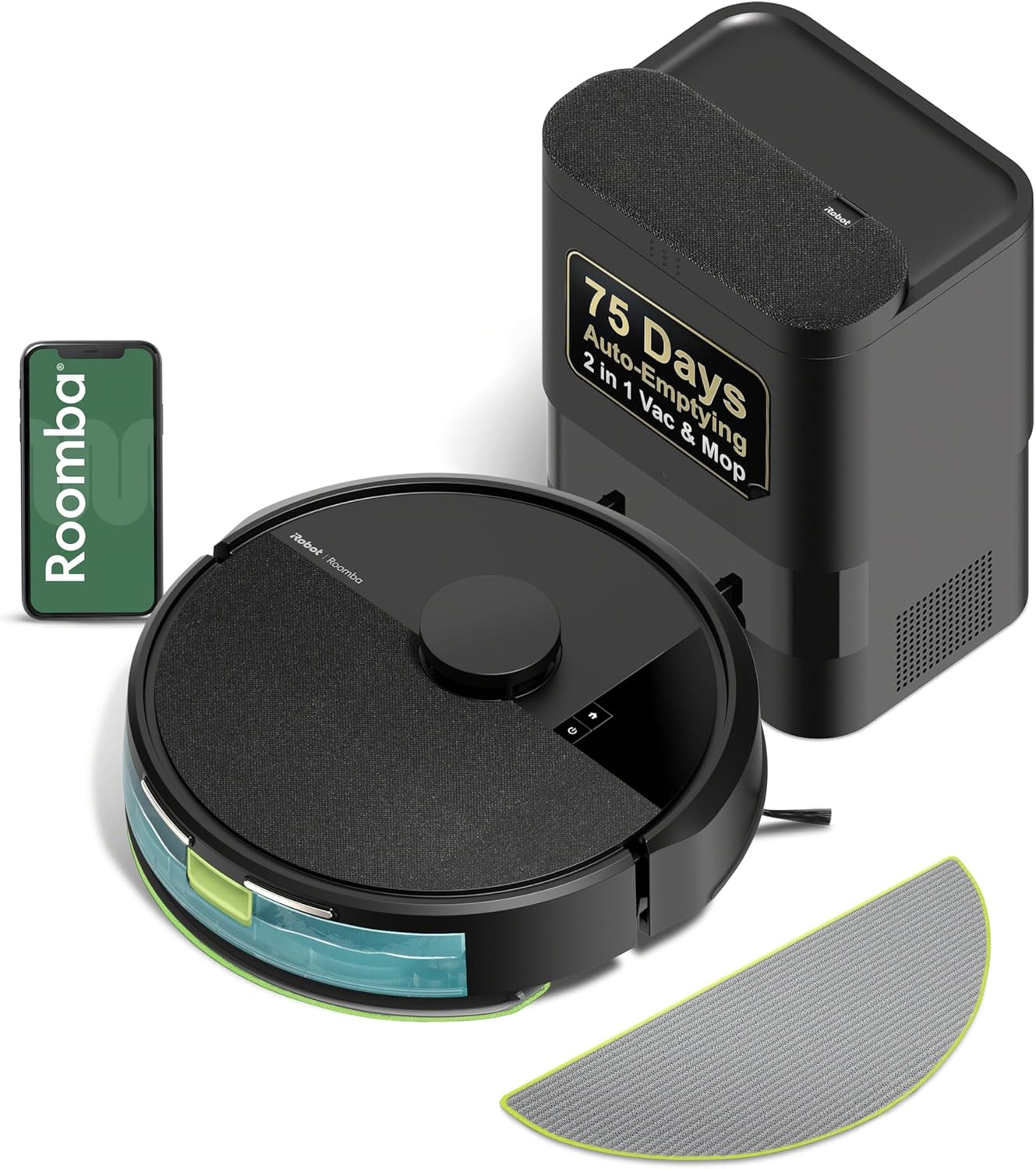
The Roomba 105 Combo pairs vacuuming and mopping in a single disc-shaped robot and includes an AutoEmpty dock that holds up to 75 days of debris so you spend less time emptying the bin. It uses ClearView LiDAR to map rooms for systematic navigation and avoid obstacles and stairs, and offers three cleaning modes: vacuum, mop, or vacuum-and-mop together. The 4-stage cleaning system combines intense suction, an edge-sweeping brush and a multi-surface brush with a reusable microfiber mop pad and a micro-pump that meters water for consistent mopping and an optional SmartScrub mode for deeper scrubbing. Control is available via the iRobot Home app, onboard buttons, or voice assistants, and the dock uses disposable bags that trap fine allergens. Expect routine upkeep like cleaning brushes, wiping the bin and replacing filters periodically, and note run time is listed around 100 minutes which may require recharges for very large areas. For vinyl plank floors the controlled water delivery and carpet-avoidance while mopping make it a practical, low-effort option for regular maintenance.
Best for: Buyers who prioritize a low-maintenance, reliable floor-cleaning routine for hard floors and want a robot that maps well, self-empties, and handles both vacuuming and mopping with minimal daily attention.
Less Ideal for: People who need continuous runtime for very large single-level homes without recharging or who prefer single-use disposable mopping pads and no pad maintenance.
- AutoEmpty dock holds up to 75 days of debris for hands-free emptying
- ClearView LiDAR mapping provides systematic navigation and obstacle avoidance
- Combined vacuum-and-mop modes with micro-pump for controlled water delivery
- 70x more intense suction with multi-surface and edge-sweeping brushes
- Battery life around 100 minutes may require mid-clean recharge on very large homes
- Mopping uses a reusable microfiber pad that requires washing and occasional replacement
Verdict: Choose the Roomba 105 Combo when you want a dependable, low-maintenance robot that maps well and keeps vinyl plank floors clean with hands-off emptying and controlled mopping.
ROPVACNIC S1 Robot Vacuum & Mop
| Suction | 5200Pa |
|---|---|
| Battery Life | 120 minutes |
| Filter Type | Multi-layer Optimized High-Efficiency Filtration |
| Surface Recommendation | Hardwood Floors, Low Pile Carpets |
| Controller Type | App, Remote, Touchpad, Voice |
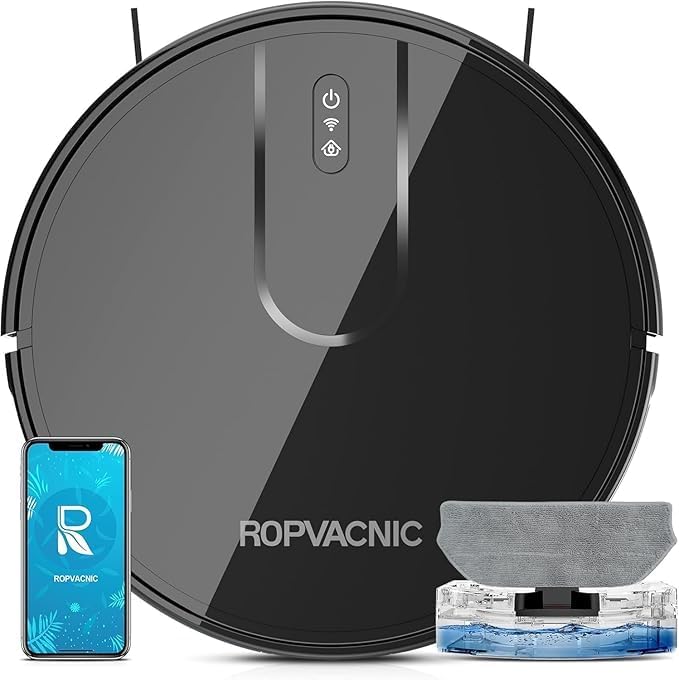
The ROPVACNIC S1 is a compact robot vacuum that combines powered suction and electronically controlled mopping for routine floor upkeep. It uses a 5200Pa suction motor with a three-point cleaning system and side brushes to lift dust, crumbs, and pet hair, while the adjustable water tank and four-stage mopping settings let you tailor wet cleaning to surface soil levels. Navigation leans on an advanced sensing system for obstacle avoidance and automatic self-charging when battery falls below 20 percent, and you can control schedules and modes from the app or with voice assistants. In practice the low 2.99-inch profile helps it reach under low furniture on vinyl plank and other hard floors, and the included HEPA-style filter and spare parts reduce ongoing maintenance fuss. Expect solid performance on low-pile carpets and vinyl plank floors, though like most combo robots the mop function is best for light spills and daily refreshes rather than heavy scrubbing of set-in stains.
Best for: Buyers who want a single device to maintain vinyl plank and other hard floors with reliable suction and convenient app or voice control, especially households with pets seeking low-effort daily cleaning.
Less Ideal for: Users seeking a robot that can deep-scrub dried or heavily soiled floors or those who need guaranteed room-by-room mapping for extremely precise cleaning patterns.
- Strong 5200Pa suction good for picking up pet hair and debris on vinyl plank floors
- Adjustable electric mopping with four water levels for tailoring wet cleaning
- Long 120-minute battery and automatic self-charging for large-area cycles
- App, remote, and voice control allow scheduling and hands-free operation
- Low 2.99" profile reaches under low furniture and skirting
- Mopping is suited for light maintenance rather than heavy scrubbing of stubborn stains
- No explicit mapping/navigation guarantees for perfectly systematic room coverage
Verdict: A pet-friendly robot vacuum and mop that delivers strong suction and adjustable mopping for effortless upkeep of vinyl plank floors.
roborock Q10 S5+

| Maximum Suction | 10,000Pa |
|---|---|
| Capacity | 2.7 liters |
| Battery Life | 150 minutes |
| Filter Type | Washable |
| Compatible Devices | Amazon Echo, Google Home, Smartphones |
The roborock Q10 S5+ pairs a 10,000 Pa suction motor with a VibraRise 2.0 sonic mopping system and a 2.7 L self-emptying dock to reduce hands-on maintenance for weeks at a time. It uses 360° LiDAR mapping and ReactiveTech structured-light obstacle avoidance to build multi-level maps, follow efficient routes, and avoid clutter while cleaning. In daily use you can schedule runs, set no-go zones, and adjust mop and suction settings from the app or with voice assistants, and the mop module auto-lifts when carpets are detected so wetting is avoided. The dual anti-tangle brush layout and washable filter help with pet hair, and the long 150-minute runtime supports larger apartments. Practical downsides are noticeable noise at higher power and the docked system still needs periodic bag and brush care; very tall rugs or extremely uneven vinyl seams may challenge the mop lift and transitions. For vinyl plank floors the sonic mop and LiDAR mapping provide controlled, repeatable cleaning without excessive wetting when configured correctly.
Best for: Buyers who want a low-maintenance, reliable robot that cleans hard floors and handles pet hair with strong suction and precise mapping while minimizing daily upkeep.
Less Ideal for: People who need near-silent operation or who prefer a purely manual mop solution for delicate flooring finishes.
- Very strong 10,000 Pa suction for deep cleaning on hard floors and low pile carpets
- 2.7 L self-emptying dock offers long intervals between maintenance
- VibraRise 2.0 sonic mopping scrubs stains with selectable mopping modes
- LiDAR navigation with multi-level mapping and reliable no-go zone setup
- Auto mop lift and ultrasonic carpet detection prevent wetting of rugs and carpets
- Higher operating noise at top suction settings
- Requires periodic replacement/emptying of the dock bag and routine brush maintenance
Verdict: The Q10 S5+ is a low-maintenance robot vacuum-mop that combines very strong suction, sonic mopping, and reliable LiDAR mapping for consistent vinyl plank floor care.
Choosing the Right Robot Vacuum and Mop Combos for Vinyl Plank Floors: Key Factors to Consider
Suction Strength and Brush Design
Suction strength determines how well a robot removes dry debris, pet hair, and fine dust from the gaps and textured surfaces of vinyl planks. Strong suction helps avoid repeated passes and prevents grit from being ground into the finish.
Brush design matters too. Soft roller or combination brush systems reduce the risk of scuffing while lifting debris effectively. Stiff bristle brushes can displace dirt but may also mark delicate surfaces, so look for systems designed for hard floors rather than aggressive carpet-focused heads.
Mop System Type and Water Delivery
Mop systems vary from simple damp cloth plates to electronic reservoirs that meter water. For vinyl plank floors, controlled water delivery is essential to avoid excessive moisture that can seep into seams or edges.
Choose robots with adjustable flow settings, small onboard tanks that limit soak time, or dual-tank systems that separate clean and dirty water. Avoid machines that rely on continuous heavy wetting or steam functions, since vinyl planks are sensitive to prolonged exposure to water and heat.
Navigation Precision and Mapping
Accurate navigation keeps the robot from repeatedly bumping moldings, disturbing loose boards, or missing corners. Mapping features let you set no-go zones and schedule targeted cleaning of high-traffic rooms without manual intervention.
Robots that use LiDAR, visual SLAM, or reliable sensor fusion generally cover rooms more efficiently and return to docks reliably. When mapping is precise, the robot avoids running along edges too aggressively, which preserves baseboards and reduces the chance of edge lifting on vinyl flooring.
Battery Life Relative to Home Size
Battery capacity affects whether a single charge can clean an entire floor level. Longer runtimes reduce the need for mid-cycle recharges and repeated pathing over the same area, which can leave streaks when mopping.
Consider your home footprint. For larger spaces elect models with extended runtimes or intelligent recharge-and-resume behavior. For small apartments, compact robots with modest battery life may be sufficient and easier to store.
Pad and Tank Maintenance
How easy it is to remove, clean, and replace mop pads and empty tanks affects long-term satisfaction. Reusable microfiber pads with clear washing instructions reduce ongoing costs, while easily accessible tanks make quick top-ups and cleanings less of a chore.
Look for straightforward filter access, brush-bar removal without tools, and clear indicators for pad replacement or tank water levels. Simpler maintenance routines mean you are more likely to keep up with care, which preserves cleaning performance and protects flooring.
Floor Protection and Sensors
Built-in sensors that detect floor type transitions, drop-offs, and proximity to walls help prevent damage to vinyl planks. Soft bumpers, edge-sensing, and lift detection for rugs are all useful features for protecting both the robot and the floor.
Additionally, carpet-detection prevents the mop from running on rugs, and water-lock features stop the mop when the unit is lifted. Those safeguards reduce the risk of accidental over-wetting or friction that could harm the floor finish.
Why Vinyl Plank Floors Need Specific Care
Vinyl plank floors are durable but have specific vulnerabilities such as susceptibility to swelling at seams from standing water, and potential surface dulling from abrasive particles. A robot that wets too aggressively or leaves residue can cause long-term cosmetic and structural problems.
Choosing a robot with controlled moisture delivery and soft cleaning interfaces prevents common issues. Properly designed mop cycles and routine debris removal will maintain the floor's appearance without introducing excess water.
- Avoid steam-based cleaners that expose vinyl to heat and saturation
- Prefer mop systems that meter water and use microfiber pads
- Regular vacuuming prevents grit from scratching the finish
Scheduling and Area Management for Frequent Upkeep
Set cleaning schedules to run at times when you can monitor first cycles to ensure the robot behaves correctly around furniture and transitions. Frequent short cycles are better than infrequent long ones because they limit the amount of water applied per session.
Use mapping features to assign high-traffic rooms for daily passes and less-used areas for weekly maintenance. Virtual barriers let you exclude delicate zones such as area rugs that should not be mopped.
- Daily light vacuuming prevents soil buildup
- Short, frequent mopping minimizes moisture exposure
- Zone scheduling focuses cleaning where it matters most
Mop Pad Care and Replacement Strategies
Microfiber pads are effective at trapping dirt and distributing moisture evenly. Washable pads are economical but require regular laundering; disposable pads reduce maintenance but create waste and recurring expense.
Inspect pads for embedded grit before reuse because trapped particles can scratch vinyl surfaces. Replace pads when they show fabric breakdown or when staining persists after washing.
- Rinse pads after each use and wash regularly per manufacturer guidance
- Keep a small spare set so the robot can run while one set is laundered
- Avoid abrasive scrubbing of the pad against the floor when removing stubborn spots
Dealing with Edge Seams and Transitions
Transitions between vinyl planks and other flooring types or thresholds can trap debris and collect moisture. Robots that run aggressively along edges may push water into seams, so choose units that reduce mop action near vertical transitions.
If seams are pronounced in your installation, use virtual no-mop lines to prevent water ingress. For narrow gaps, perform targeted hand-cleaning to avoid saturation rather than relying solely on an automated mop.
- Use no-mop zones for vulnerable thresholds
- Manually dry seams after mopping in sensitive areas
- Check edge seals periodically for signs of moisture damage
Integrating a Robot with Your Cleaning Routine
Robots are best used as part of a broader maintenance plan. Use the robot for daily debris control and light mopping, and reserve deeper wet cleaning for occasional manual sessions that let you control dwell time and spotting.
Keep an eye on consumables like filters and pads and set calendar reminders for inspections. That small effort extends the life of both the robot and your vinyl flooring.
- Combine robot runs with weekly manual checks
- Address spills promptly before scheduled mopping
- Rotate pad types or levels of dampness based on seasonal humidity
How We Chose the Best Robot Vacuum and Mop Combos for Vinyl Plank Floors
We prioritized machines that clean effectively without risking vinyl plank finish or causing warping from excess water. Our selection process focused on concrete, testable features and real-world user considerations rather than brand popularity. Key evaluation criteria included suction and debris pick-up on smooth floors, mop-system water control and coverage, navigation accuracy for room-by-room cleaning, battery life sufficient for typical home floorplans, and ease of maintenance for pads, tanks, and brushes. We excluded units that rely on heavy steam cleaning or fully wet scrub cycles because those approaches can introduce too much moisture for vinyl planks. We also removed designs with inconsistent navigation that repeatedly bump baseboards or fail to follow room boundaries. The final list emphasizes robots that combine controlled damp-mopping with proven vacuum performance, reliable mapping, and straightforward upkeep.
Our full evaluation process is outlined in our review methodology.
FAQ
Can robot mop functions damage vinyl plank floors?
They can if the robot applies too much water or uses steam. Choose units with adjustable water delivery and avoid steam-based cleaners to minimize the risk of seam swelling or finish dulling.
How often should I run a robot on vinyl planks?
Frequent short cycles are usually best. Daily or every-other-day light vacuuming with occasional damp-mop passes reduces grit buildup and limits moisture exposure compared with infrequent, intensive sessions.
Will the robot scratch my vinyl floor?
Scratching is unlikely when the robot uses soft-roller brushes and clean microfiber pads. However, embedded grit in pads or aggressive bristle brushes can cause marks, so maintain pads and remove debris that could abrade the surface.
Should I be concerned about transitions and thresholds?
Yes. Seams and thresholds can trap moisture. Use mapping features to create no-mop zones over sensitive transitions and check seals periodically for signs of moisture intrusion.
Is mopping necessary if I run the vacuum daily?
Daily vacuuming removes most loose debris, but periodic damp mopping helps eliminate fine dust and sticky residues that vacuums may not remove. How often you mop depends on household traffic and spill frequency.
How do I maintain the mop pads to protect vinyl floors?
Rinse pads immediately after use and launder following care instructions. Inspect pads for trapped grit and replace them when fibers break down or stains persist after washing.
Final Verdict
When choosing a robot vacuum and mop combo for vinyl plank floors, prioritize controlled moisture delivery, soft cleaning interfaces, and reliable navigation. Balance suction strength with gentle brush systems so the robot lifts debris without scratching, and prefer mop systems that let you set water flow to avoid excess wetting. Ultimately, match runtime and mapping features to your home size and schedule frequent light cleaning rather than long, infrequent sessions. With the right balance of suction, mop control, and upkeep, a robot can keep vinyl plank floors clean and protected with minimal ongoing effort.