
Note: This article contains affiliate links. If you click on these links and make a purchase, we may earn a small commission at no extra cost to you. This helps support our research and content. Read our full affiliate disclosure here.
If you or someone in your household struggles with allergy symptoms, a robot vacuum for allergies can make day-to-day life noticeably better by removing dust, pet dander, and pollen from floors and low surfaces. Choosing the right unit matters because not all robot vacuums capture fine particles or maintain suction on different floor types. This guide shortlists seven top options optimized for allergy relief and explains the practical tradeoffs you should consider, such as filtration efficiency, sustained suction, and runtime. Below are the top picks for allergy-focused cleaning plus clear evaluation criteria to help you pick the best fit for your home and routine.
Top Picks at a Glance
| Best Overall The best all-around choice for most situations | iRobot Roomba 105 Combo |  |
| Best Quality Built to a higher standard if you want something more solid | roborock Saros 20 |  |
| Best Value The sweet spot between price and what you get | roborock Q7 L5 Robot Vacuum |  |
| Best Budget The cheapest option that still gets the job done reliably | ILIFE V2 Robot Vacuum |  |
| Top Rated A top-rated pick with lots of positive feedback | Bagotte G6 Robot Vacuum |  |
| Most Popular A crowd favorite that many people choose with confidence | ROPVACNIC S1 Robot Vacuum |  |
| Best Seller A high-volume bestseller chosen again and again | eufy 11S Max Robot Vacuum |  |
iRobot Roomba 105 Combo
| Battery Life | 100 minutes |
|---|---|
| Surface Recommendation | Carpet & Hard Floor |
| Controller Type | App Control, Button Control, Voice Control |
| Filter Type | Cartridge |
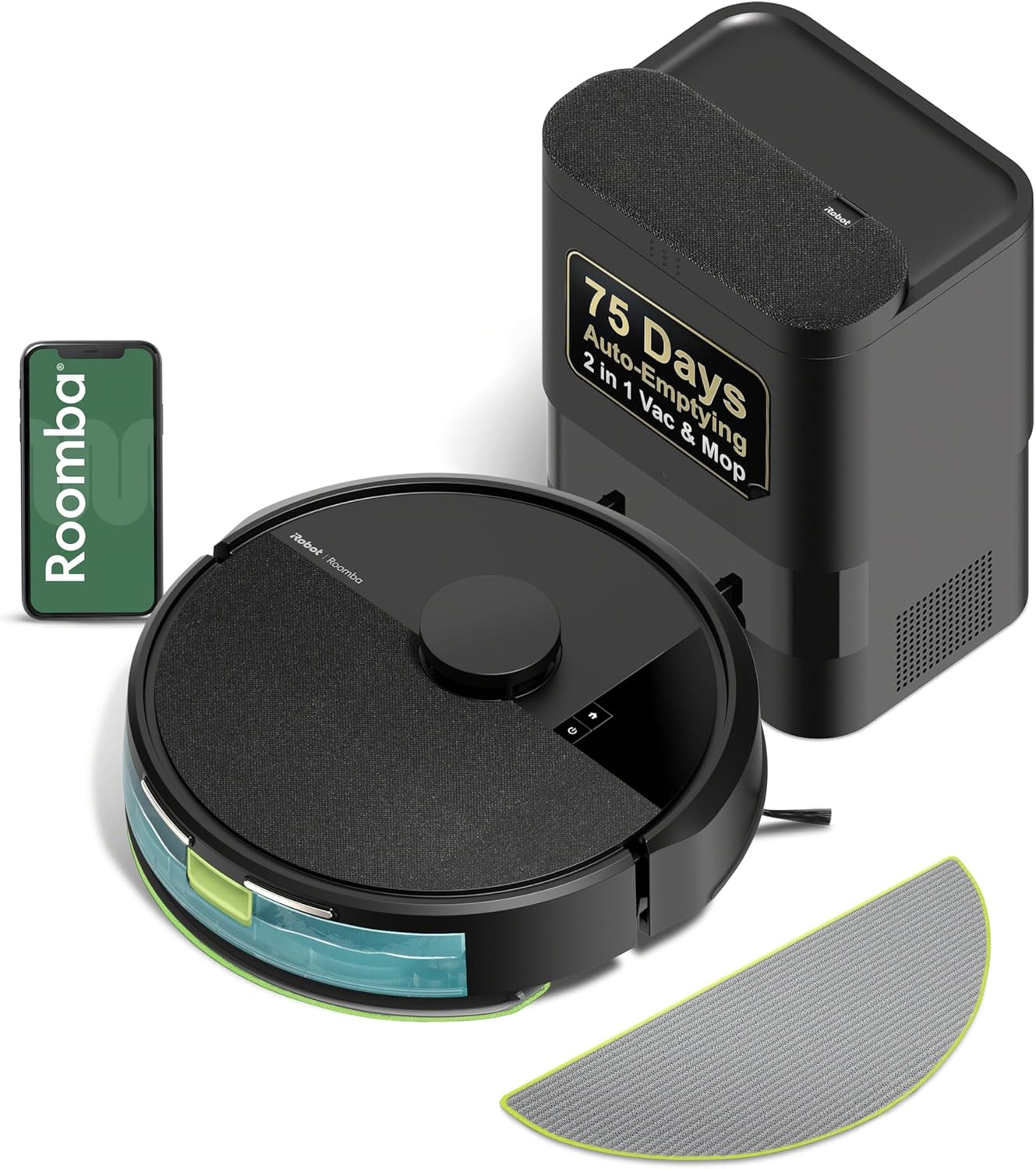
The Roomba 105 Combo pairs a vacuum and microfiber mop with ClearView LiDAR navigation and a hands-free AutoEmpty dock to reduce maintenance. It cleans using a 4-stage system that combines intensified suction, an edge-sweeping brush and a multi-surface brush for carpets plus a reusable microfiber pad and controlled water delivery for mopping hard floors. The dock holds a bag rated to trap most allergens and stores debris for up to 75 days, cutting down on exposure when emptying. Setup and control happen through the Roomba Home app, physical buttons or voice assistants, and mapping supports room targeting and keep-out zones. Battery runtime and frequent maintenance on brushes and filters are typical for robot vacuums, and mopping works only on hard floors because the robot detects and avoids rugs. For allergy-focused buyers, the sealed bag docking and cartridge filter reduce direct contact with dust, though buyers should still replace filters and bags per the maintenance schedule to keep performance and allergen control high.
Best for: Buyers who want a low-maintenance machine that balances vacuuming and mopping while minimizing contact with dust and allergens through a sealed, self-emptying dock.
Less Ideal for: Homes that need heavy-duty deep-cleaning beyond routine maintenance or users who expect wet-mopping of carpets or large continuous mopping without manual intervention.
- AutoEmpty dock that holds up to 75 days of debris to minimize exposure when emptying
- ClearView LiDAR mapping for thorough, efficient coverage and obstacle avoidance
- 70x stronger power-lifting suction and multi-surface brush system for improved pickup on carpets and edges
- Combined vacuum-and-mop modes with controlled water delivery and reusable microfiber pad
- Mopping is limited to hard floors and the robot must avoid carpets to keep rugs dry
- Requires routine maintenance: brush cleaning and periodic filter and bag replacement to sustain allergen control
Verdict: If you want an easy-care robot that cuts down on allergen exposure with a sealed AutoEmpty dock while delivering competent vacuuming and mopping, this Roomba is a solid balanced choice.
roborock Saros 20

| Suction | 36,000 Pa |
|---|---|
| Battery Life | 180 minutes |
| Filter Type | Washable Filter |
| Noise Level | 55 db |
| Power Source | Battery Powered |
The roborock Saros 20 combines very strong suction, low‑profile reach, and an automated dock to keep floors cleaner with minimal intervention. It uses StarSight 3D sensors and an RGB camera to map rooms, avoid obstacles, and plan efficient routes while its AdaptiLift chassis raises the unit to cross thresholds and clean higher‑pile carpets. The included RockDock handles hot‑water mop washing, hot‑air drying, and extended auto empty cycles so routine maintenance is largely hands‑free. In practice the 36,000 Pa motor and dual anti‑tangle brush system pull embedded dirt and pet hair from edges and carpets better than typical midrange robots, and the slim 3.13 in height lets it access under sofas and beds. Expect quieter, more consistent mopping thanks to the larger tray and automated re‑wash, but keep in mind the high power and complex dock add system complexity and may require occasional dock maintenance. App controls, voice support, and a washable filter round out an experience tailored for homes with pets and allergy concerns.
Best for: Buyers who prioritize deep cleaning performance in pet‑heavy or allergy‑sensitive homes and who want a largely automated maintenance workflow.
Less Ideal for: People who prefer the simplest, lowest‑maintenance robot or a budget model with fewer app features should look elsewhere.
- Extremely strong 36,000 Pa suction for deep dirt and pet hair removal
- Advanced 3D navigation and RGB camera reduce missed spots and collisions
- AdaptiLift chassis crosses high thresholds and cleans thicker carpets without losing suction
- RockDock offers hot‑water mop washing, hot‑air drying, and long auto‑empty intervals for hands‑free upkeep
- Washable filter and dual anti‑tangle system reduce filter replacements and brush clogs
- Powerful motor and full‑service dock increase system complexity and potential maintenance points
- Large dock and advanced features mean the unit is heavier and may be more involved to service
Verdict: Choose the Saros 20 if you need a high‑performance, pet‑focused robot with powerful suction and an automated dock to reduce allergens and manual upkeep.
roborock Q7 L5 Robot Vacuum

| Suction | 8,000 Pa |
|---|---|
| Navigation | LiDAR |
| Battery life | 150 minutes |
| Water tank capacity | 270 ml |
| Filter type | Washable |
The roborock Q7 L5 is a LiDAR-guided robot vacuum that vacuums and mops in a single run, using an integrated 270 ml water tank and up to 8,000 Pa suction to handle dust and pet hair on hard floors and low‑pile carpet. It maps rooms with multi-floor support and quick mapping so you can set scheduled cleans, no-go zones, and targeted room runs from the Roborock app or with voice assistants. Practical features include a dual anti-tangle brush system that reduces hair wrap, carpet boost that increases suction where needed, washable filters, and a child lock. For hardwood floors the precise navigation and along-floor-direction cleaning reduce repeated passes and the electronic water control offers three water levels to avoid over-wetting. Limitations to note are the combined dustbin/water-tank design which means you cannot refill water without handling the combo unit, and the robot requires a 2.4 GHz Wi‑Fi connection for full app features.
Best for: Buyers who prioritize reliable, predictable cleaning on hardwood and want a robot that follows precise maps, runs on a schedule, and minimizes hair-related maintenance.
Less Ideal for: People who need separate, large-capacity water or dust tanks for long runs without handling the unit frequently or who cannot provide a 2.4 GHz Wi‑Fi network.
- LiDAR mapping and multi-floor mapping for accurate, efficient coverage
- Strong 8,000 Pa suction with carpet boost for better pickup of dust and pet hair
- Dual anti-tangle brushes minimize hair wrap and maintenance
- Electronic water tank with three water levels lets you control mop moisture
- App control plus Alexa and Google Home compatibility for scheduled, hands-free operation
- Integrated dustbin and water tank is a single combo part, which adds steps when refilling or emptying
- Requires 2.4 GHz Wi‑Fi for app connectivity, which may need router changes for some homes
Verdict: A strong‑suction, LiDAR‑mapped vacuum‑and‑mop that reliably cleans hardwood with low hair maintenance and smart app controls.
ILIFE V2 Robot Vacuum

| Battery Life | 120 minutes |
|---|---|
| Capacity | 300 ml |
| Filter Type | Sponge |
| Control Method | Remote |
| Noise Level | 69 db |
The ILIFE V2 is an entry-level robot vacuum built to keep hardwood and other hard floors tidy without a lot of fuss. Its 2.99-inch slim body fits under low furniture while a tangle-free suction port and sponge filter make it practical for homes with pet hair. You can run scheduled cleanings, switch between auto, spot and edge modes, or start jobs with the included remote control or the single-button on the unit. A 300 ml dustbin and up to 120 minutes of runtime let it cover medium rooms on one charge, and it will automatically return to the dock when the battery is low. Noise is noticeable at 69 dB and there is only one power level, so it lacks adjustable suction or app-based controls, but for straightforward floor maintenance on hardwood and low-pile carpet the V2 delivers solid value at an affordable price.
Best for: Buyers who want an affordable, no-frills robot to maintain hardwood and low-pile carpet cleanliness with simple controls and scheduled runs.
Less Ideal for: Those who need strong adjustable suction, smart app control, or advanced mapping for large or complex homes should consider higher-end models.
- Slim 2.99-inch profile cleans under low furniture
- Tangle-free suction port suited for pet hair
- 120 minutes runtime with automatic return-to-dock
- Multiple cleaning modes (auto, spot, edge) and simple remote control
- Single power level limits suction control for heavier debris
- No smartphone app or advanced navigation features
Verdict: A low-cost, slim robot vacuum that reliably maintains hardwood floors and handles pet hair for budget-focused buyers.
Bagotte G6 Robot Vacuum

| Filter Type | H13 |
|---|---|
| Battery Life | 120 minutes |
| Maximum Suction | 6000 picometer |
| Capacity | 300 ml |
| Control Method | App, Remote, Voice |
The Bagotte G6 is a robot vacuum and mop designed for scheduled whole-home cleaning with precise LiDAR mapping and virtual no-go zones. It navigates using 360-degree LiDAR to build maps and plan efficient routes, then vacuums and mops with a 2-in-1 dust and water tank while offering app, remote, and voice control. With up to 6000Pa suction and an H13 filter included, it handles pet hair, crumbs, and embedded dirt on hard floors and low-pile carpet; the 120-minute battery life supports longer jobs before auto-recharging. The unit's mop and sweeping functions make it useful for mixed surfaces, and the smart mapping stores multiple maps for multi-room homes. Practical limitations include a relatively compact dust/water capacity (300 ml) that may need frequent emptying on large or very dirty homes, and taller furniture or deep-pile rugs could reduce cleaning efficiency. For allergy-conscious buyers the H13 filter and closed-system suction are helpful, but regular maintenance of the brushes, filter, and tank is still required to keep airborne particles down.
Best for: Buyers who prioritize dependable, map-driven cleaning and want a vacuum that reduces airborne dust and pet hair through frequent, scheduled passes and a high-efficiency filter.
Less Ideal for: Homes with very large floorplans that need long unattended runs without emptying, or households with high-pile rugs where a deeper upright vacuum is preferred.
- LiDAR 360-degree mapping for accurate room maps and efficient routes
- High reported suction up to 6000Pa for lifting pet hair and embedded dirt
- Includes H13 filter which helps capture fine particles relevant to allergies
- Multi-mode cleaning: vacuuming and mopping with a 2-in-1 dust and water tank
- App, remote, and voice control plus virtual no-go zones for hands-off scheduling
- 300 ml tank capacity is small and may require frequent emptying during large cleanings
- Effectiveness on high-pile carpet or very cluttered rooms may be limited
Verdict: Choose the Bagotte G6 if you want a map-driven robot with strong suction and an H13 filter to help reduce allergens during regular automated cleanings.
ROPVACNIC S1 Robot Vacuum
| Suction power | 5200Pa |
|---|---|
| Battery life | 120 minutes |
| Filter type | Multi-layer optimized high-efficiency filtration |
| Surface recommendation | Hardwood floors, low pile carpets |
| Form factor | round |
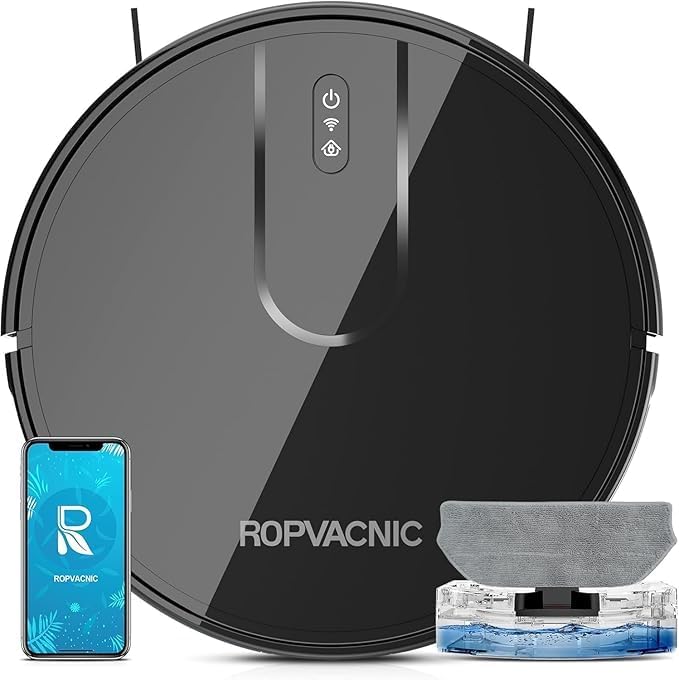
The ROPVACNIC S1 is a compact robot vacuum that combines strong suction with an electronically controlled mopping system for daily floor care. It is typically scheduled or started from the app, remote, or voice assistant to vacuum hard floors and low-pile carpets and then optionally apply one of four water-intensity mopping settings for light stains. Notable features include 5200Pa suction, a multi-layer HEPA-style filtration, intelligent obstacle sensing with auto-docking, and a long 120-minute runtime driven by a 4400mAh battery. In practice the low 2.99-inch profile helps it reach under furniture and the no-entanglement brush design is aimed at homes with shedding pets. Limitations to keep in mind are the focus on low-pile carpets rather than deep-cleaning high-pile rugs and that mopping is suited to light maintenance rather than heavy scrubbing; also advanced navigation details are not presented, so room mapping may be less sophisticated than premium models. For regular upkeep and pet-hair pickup on hard floors this model delivers a lot of capability for the price point.
Best for: Buyers who prioritize measurable cleaning performance and want a feature-rich robot that handles daily dust, pet hair, and light mopping with app and voice control while offering sensible filtration.
Less Ideal for: Users needing deep-pile carpet extraction, heavy-duty mopping, or advanced multi-room mapping features should consider higher-end robotic models or dedicated vacuums and mops.
- Strong 5200Pa suction for picking up dust and pet hair.
- Electronically controlled mopping with four water-intensity settings for tailored floor care.
- Multi-layer high-efficiency filtration to trap fine particles relevant to allergy concerns.
- 120-minute battery runtime with automatic return-to-dock charging for long sessions.
- Low 2.99" height design accesses under-furniture zones where allergens collect.
- Mopping function is for light maintenance and not designed for heavy stains or grout cleaning.
- Recommended for low-pile carpets; performance on high-pile rugs and deep soil is limited.
Verdict: A strong-suction, app-controlled vacuum-mop with HEPA-style filtration that reliably reduces dust and pet hair for allergy-conscious homes.
eufy 11S Max Robot Vacuum
| Surface Recommendation | Hard Floor & Tile & Medium carpet |
|---|---|
| Battery Life | 100 minutes |
| Suction Power | 2000 Pa |
| Capacity | 600 ml |
| Noise Level | 55 db |
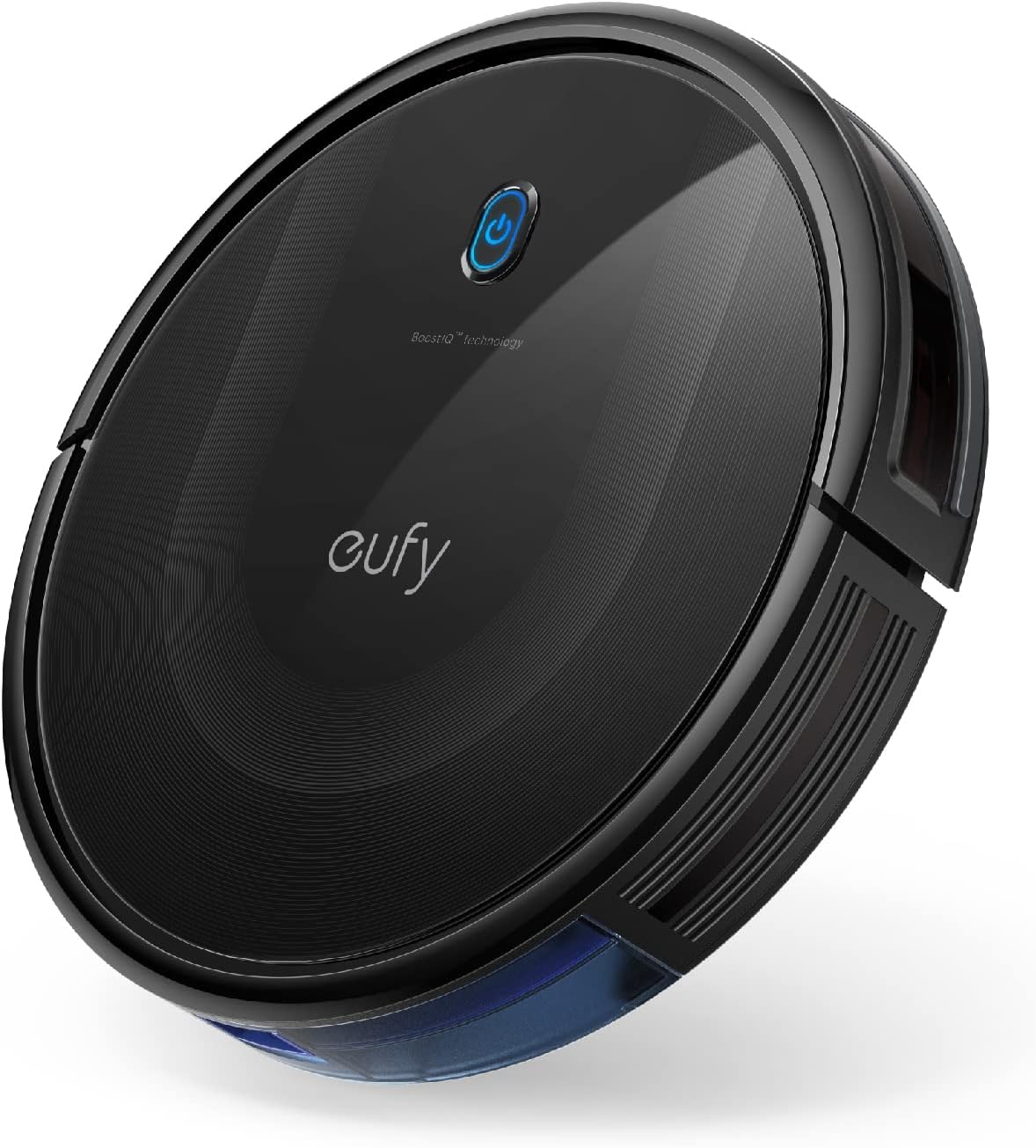
The eufy 11S Max is a low-profile robot vacuum built to clean hard floors and medium-pile carpets without drawing attention. Its 2.85-inch slim body lets it slide under low furniture while 2000Pa suction and a 12.8-inch cleaning path pick up dust, crumbs, and pet hair. It runs up to 100 minutes on hardwood at a reported low 55 dB, and automatic return-to-base means it tops off battery without user intervention. Controls are simple: the included remote and onboard buttons let you start, stop, and switch modes quickly, though there is no Wi-Fi or app control. Practical touches include washable filters, drop-sensing and anti-collision sensors, and a 600 ml dust capacity that reduces how often you empty the bin. The trade-offs are straightforward: navigation is basic rather than lidar or map-based, so room coverage is more random and may miss tight corners, and the single-side-brush design can be less thorough along edges compared with dual-brush models. For routine, quiet cleaning of hardwood, the 11S Max balances strong suction and a slim profile in a simple, reliable package.
Best for: Buyers who prioritize a quiet, no-frills robot that cleans hardwood reliably and fits under low furniture will appreciate this model for regular maintenance cleaning.
Less Ideal for: If you want mapped cleaning, smartphone scheduling, or the most thorough edge-cleaning for complex floorplans, choose a model with advanced navigation and app control instead.
- Slim 2.85" profile reaches under low furniture
- Up to 100 minutes runtime for extended cleaning sessions
- Powerful 2000Pa suction for effective pickup on hard floors
- Quiet operation at about 55 dB suitable for daytime or evening use
- Large 600 ml dust capacity and washable filter lower maintenance frequency
- Random navigation rather than mapping can lead to uneven coverage
- No Wi‑Fi or smartphone app means limited scheduling and remote control options
Verdict: A slim, quiet robot with strong suction made for routine hardwood maintenance when you want reliable, no-frills cleaning.
Choosing the Right Robot Vacuum for Allergies: Key Factors to Consider
Filtration Efficiency and Filter Type
A robot vacuum's ability to remove allergens depends primarily on its filter efficiency. Look for high-efficiency particle filters that trap fine dust, pollen, and pet dander rather than just coarse debris. Filters that reach true HEPA or equivalent capture levels reduce the number of particles reintroduced into the air during cleaning.
Filter accessibility and replacement frequency also matter. A highly efficient filter that is hard to remove or clean will remain clogged and lose performance. Consider whether the unit accepts replaceable filters and how often replacements are recommended to keep allergen capture consistent.
Suction Consistency Across Floor Types
Suction power listed on packaging is only part of the story; what matters for allergy sufferers is how well suction holds up across carpets, rugs, and hard floors. Carpets tend to hide pet dander and dust, while hard floors allow particles to remain suspended longer. A system that maintains good airflow and suction across surfaces will extract more embedded allergens rather than pushing them around.
Also assess whether the vacuum automatically adjusts suction when moving between floor types. Automatic adjustment helps ensure high suction where it is needed without wasting battery on easy surfaces.
Brush Design and Hair Management
Brush systems determine how well a robot vacuum lifts hair and dander from fibers and edges. Roller brushes, combination rubber and bristle designs, or tangle-resistant heads each perform differently with pet hair and fine particles. A brush that pushes debris into the intake without dispersing dust is preferable for allergy control.
Consider how the brush handles long hair and how often it requires cleaning. A design that minimizes tangles and allows tool-free removal will reduce maintenance exposure to trapped allergens.
Runtime, Coverage, and Scheduling
Long runtime and reliable coverage are important because incomplete cleaning cycles leave allergen reservoirs. If a unit has short battery life and must return to the base frequently, rooms can be only partially cleaned, which reduces overall allergen reduction. Look for models with enough runtime to clean the majority of your typical living area or that can automatically resume after recharging.
Scheduling flexibility also matters. Regular, frequent cleanings prevent buildup more effectively than sporadic deep cleans. Being able to program daily or multiple-pass schedules helps maintain lower allergen loads without manual intervention.
Dust Bin Capacity and Hygiene
A larger dust bin reduces how often you need to empty the unit, which can limit direct exposure to collected allergens. However, bin design is equally important. Sealed dust bins and one-touch emptying reduce the chance of airborne dust release during maintenance. Some models use enclosed disposal systems or bags that further protect against exposure when you empty the container.
Evaluate how easy the bin is to remove, whether filters are exposed during emptying, and how often you will need to access the internals for cleaning. Less frequent, cleaner maintenance is better for individuals sensitive to captured allergens.
Navigation Accuracy and Edge Cleaning
A robot vacuum that navigates well will reach corners, baseboards, and under furniture where allergens accumulate. Poor navigation leaves missed patches that act as continuing sources of dust and dander. Mapping and obstacle detection can improve coverage efficiency and reduce missed spots.
Edge and corner cleaning performance matters because these areas collect significant amounts of visible debris and fine particles. Look for models with side brushes or edge brushes designed to sweep debris into the intake without spraying dust out into the room.
How Filtration Ratings Translate to Real-World Allergy Reduction
Filter ratings give a standardized sense of particle capture, but real-world performance depends on the vacuum's airflow and how well the filter is sealed within the dust path. A high-rated filter paired with poor airflow or leaking seals will underperform in practice. For allergy control, both capture efficiency and containment matter.
Pay attention to whether the unit routes all suctioned air through the filter and whether there are secondary pre-filters to catch larger debris. Pre-filters prolong the life of the main filter and help maintain steady capture rates between replacements.
- True high-efficiency filters are best for fine particles.
- Sealed filtration prevents escape of trapped allergens.
- Pre-filters reduce load on the main filter and maintain performance.
Placement and Routine: Getting the Most Out of Daily Runs
Where and how you run a robot vacuum affects allergen reduction more than occasional deep cleans. Schedule runs during times when occupants are out of the room to avoid disturbing active allergens. For multi-room homes, set focused runs in rooms where allergy sufferers spend the most time, such as bedrooms and living rooms.
Keep clutter minimized on floors so the robot can access edges and under furniture. Remove cords, small rugs that can shift, and low obstacles that interrupt mapping. Consistent placement of the charging base and an unobstructed path to common areas improves coverage and ensures full cleaning cycles.
- Schedule frequent short runs in high-use rooms.
- Clear floors to let the robot reach edges and under beds.
- Position base station where the robot can easily return and resume.
Maintenance Routines to Minimize Allergen Exposure
Even the best robot vacuums require periodic maintenance, and how you perform that maintenance influences your exposure to captured allergens. Empty bins over a trash container outdoors or near an exhaust fan when possible. Use gloves or a simple mask if you are especially sensitive during cleaning tasks.
Clean or replace filters on the manufacturer-recommended schedule and follow best practices for washing washable components. Wiping the robot's exterior, side brushes, and sensors keeps performance steady and prevents dust buildup that could be disturbed during future runs.
- Empty bins in well-ventilated areas or use enclosed disposal if available.
- Replace high-efficiency filters per schedule to maintain capture rates.
- Inspect brushes and remove tangles with tools to avoid direct contact.
Integrating a Robot Vacuum with Other Allergy Controls
A robot vacuum is one part of an overall allergy management strategy. Pair it with regular HVAC filter maintenance, localized air purifiers in bedrooms, and humidity control to reduce dust mite proliferation. Combining surface cleaning with airborne particle control yields the best symptom reductions.
Use room-based strategies: run the robot in bedrooms before sleeping and consider supplemental air cleaning during peak pollen seasons. These complementary steps reduce both settled and airborne allergen loads.
- Coordinate vacuum schedules with air purifier runtimes for continuous reduction.
- Maintain HVAC filters to stop redistribution of fine particles.
- Control indoor humidity to limit dust mite growth.
Common Misconceptions About Robot Vacuums and Allergies
Some buyers assume that any robot vacuum will substantially reduce airborne allergens. In reality, units without sealed high-efficiency filters or consistent suction can disturb dust without effectively capturing it. Evaluate the complete system rather than relying solely on marketing claims.
Another misconception is that more frequent runs substitute for poor filtration. While frequent cleaning helps, it cannot compensate for inefficient particle capture. Both frequency and filtration quality are necessary for meaningful allergy relief.
- Not all models capture fine particles equally.
- Frequency does not replace filtration efficiency.
- Maintenance matters as much as runtime for long-term effectiveness.
How We Chose the Best Robot Vacuum for Allergies
We focused on features and performance metrics that directly affect allergen reduction rather than general conveniences. Our selection prioritized high-efficiency filters and filtration ratings, suction consistency across floor types, and brush and airflow designs that capture pet hair without redistributing fine dust. Runtime and recharge behavior were included because frequent interruptions reduce coverage and can leave allergen hot spots untreated. We also considered navigation and sealing design to ensure the vacuum reaches common dust traps and limits particle escape during cleaning. Excluded from consideration were units lacking replaceable high-efficiency filters or models that only advertise brushless dust pickup without measured suction consistency. We filtered out options with poor dust-bin hygiene or difficult filter access, since these increase exposure to captured allergens during maintenance. In short, choices were guided by filtration performance, sustained suction, brush-system effectiveness, runtime and scheduling flexibility, and maintenance ergonomics.
Our full evaluation process is outlined in our review methodology.
FAQ
How often should I run a robot vacuum to reduce allergens?
Often daily or at least several times per week in high-traffic rooms is most effective. Frequency depends on pet presence, foot traffic, and local pollen counts; more frequent runs reduce buildup between manual cleanings.
Do robot vacuums stir up dust and make allergies worse?
They can if the unit lacks proper filtration or has leaky seals. Models with sealed high-efficiency filters and controlled airflow are less likely to re-release particles and are better suited for allergy-sensitive households.
Will a robot vacuum replace the need for an air purifier?
No. Robot vacuums clean settled dust and debris from floors and low surfaces, while air purifiers reduce airborne particles. Using both together provides broader control of allergen sources.
Are some brush types better for pet dander?
Yes. Combination rubber and bristle rollers or low-tangle brush designs tend to lift hair and dander effectively without tangling. Choose a brush system that is easy to clean to avoid frequent direct contact with trapped allergens.
How important is dust-bin design for allergy sufferers?
Very important. Sealed bins and one-touch emptying limit exposure to trapped allergens when you dispose of debris. Smaller, open bins require more frequent emptying and increase the chance of releasing dust during maintenance.
Final Verdict
When selecting a robot vacuum for allergies, prioritize proven filtration efficiency, consistent suction across the floor types in your home, and a brush system that manages hair without frequent tangles. Balance runtime and scheduling features with maintenance ergonomics so the unit can clean often without creating more exposure during emptying or filter care. Focus on the tradeoff between suction performance and filter containment: both are required for measurable allergen reduction. Choosing a unit that combines sealed high-efficiency filtration, reliable navigation, and easy maintenance will deliver the clearest benefits for allergy-sensitive households.