
Note: This article contains affiliate links. If you click on these links and make a purchase, we may earn a small commission at no extra cost to you. This helps support our research and content. Read our full affiliate disclosure here.
If you rely on area rugs to add warmth and comfort in high-traffic spaces, a robot vacuum designed for rugs can save time while protecting fibers and pile. Choosing the right Robot Vacuum for Area Rugs matters because rug construction, pile height, and fringe can all affect cleaning performance and the risk of damage. This guide shortlists the top picks suited to area rugs, focusing on consistent suction, brush design, and smart navigation that reduces snagging and edge wear. Below you will find the editorial criteria used to evaluate each option, followed by practical guidance to match a model to your rug types and home layout.
Top Picks at a Glance
| Best Overall The best all-around choice for most situations | Shark AI Ultra AV2501S |  |
| Best Quality Built to a higher standard if you want something more solid | roborock Saros 20 |  |
| Best Value The sweet spot between price and what you get | roborock Q7 L5 Robot Vacuum |  |
| Best Budget The cheapest option that still gets the job done reliably | ILIFE V5s Plus Robot Vacuum |  |
| Top Rated A top-rated pick with lots of positive feedback | iRobot Roomba 105 Combo |  |
| Most Popular A crowd favorite that many people choose with confidence | ROPVACNIC S1 Robot Vacuum |  |
| Best Seller A high-volume bestseller chosen again and again | eufy 11S Max Robot Vacuum |  |
Shark AI Ultra AV2501S
| Battery Life | 120 minutes |
|---|---|
| Control Method | Voice |
| Compatible Devices | Amazon Alexa, Google Home |
| Other Special Features of the Product | Bagless, Pet Hair Pick Up, Self-Cleaning Brushroll, Self-Emptying |
| Surface Recommendation | Carpets & Hard Floors |
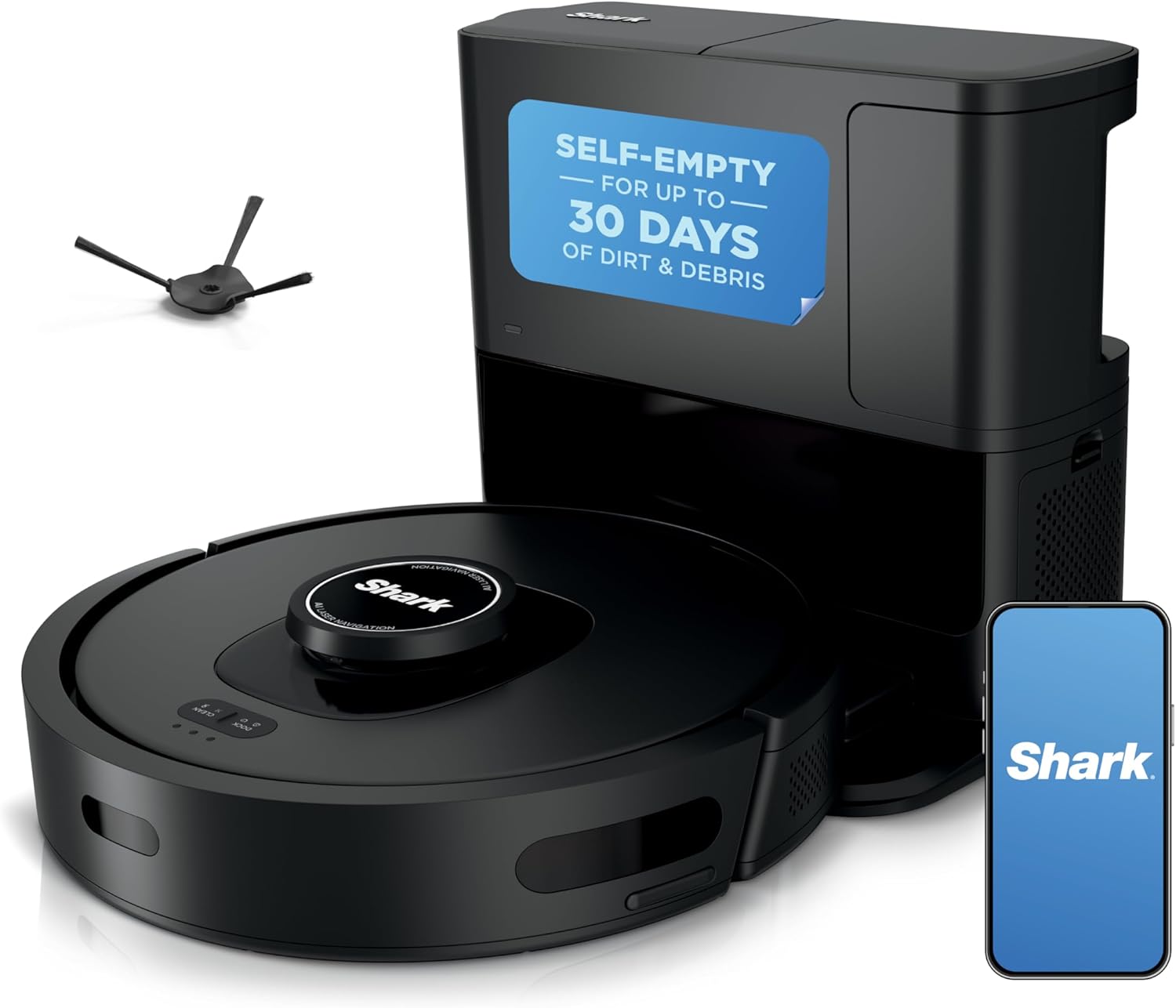
The Shark AI Ultra AV2501S is a feature-packed robot vacuum that combines 360° LiDAR home mapping with Matrix Clean navigation to methodically clean carpets and hard floors, making it a strong choice for area rugs. It uses a self-cleaning brushroll and powerful suction to lift pet hair and embedded debris while the bagless self-emptying base holds up to 30 days of dirt for low-maintenance use. Runtime of up to 120 minutes plus Recharge and Resume helps it cover larger spaces and return to finish jobs, and the SharkClean app with Alexa and Google compatibility makes scheduling and targeted zone cleaning straightforward. Practical limitations include a single-speed setting and a foam filter rather than multiple filter stages, which may be less ideal for households needing very fine particle capture beyond HEPA in the base. The robot's methodical grid passes are good for deep cleaning rugs, though very high-pile or loosely woven area rugs should be checked for compatibility before regular use.
Best for: Buyers who want a hands-off, thorough cleaner for mixed floors and area rugs and prioritize reliable pet-hair pickup and automated dirt disposal.
Less Ideal for: Users who need fine-grain control over suction levels for very delicate or specialty rugs or who require multi-stage filtration on the robot itself.
- Matrix Clean navigation with 360° LiDAR produces methodical, repeat passes over rugs for deeper cleaning
- Self-cleaning brushroll reduces hair wrap and keeps suction consistent on pet hair
- Bagless self-emptying base holds up to 30 days of debris for low-maintenance operation
- Up to 120 minutes runtime with Recharge and Resume covers larger homes and finishes interrupted runs
- App control plus Alexa and Google compatibility for scheduling, zone targeting, and voice starts
- Only one listed cleaning speed limits control over suction intensity for delicate rugs
- Foam filter in the robot requires relying on the base HEPA for higher-level allergen capture
Verdict: Choose the Shark AI Ultra if you want a mostly hands-off robot that maps precisely and reliably lifts pet hair and dirt from area rugs while auto-emptying for minimal upkeep.
roborock Saros 20

| Suction | 36,000 Pa |
|---|---|
| Battery Life | 180 minutes |
| Filter Type | Washable Filter |
| Noise Level | 55 db |
| Power Source | Battery Powered |
The roborock Saros 20 is a high-performance robot vacuum and mop aimed at thorough, low-intervention floor care. It combines a 36,000 Pa digital motor with AdaptiLift Chassis 3.0 so it can boost suction and raise its body to cross double-layer thresholds and deep carpets while staying slim enough to reach under low furniture. StarSight autonomous navigation and 3D ToF sensors map rooms and identify common obstacles, which reduces missed spots and interruptions during runs. The RockDock auto-maintenance dock handles hot-water mop washing, hot-air drying, and long periods of auto-emptying to cut routine chores. App control, voice support, and SmartPlan learning let you schedule targeted runs for rugs or hard floors. Expect strong deep-cleaning on area rugs and reliable pet hair pickup, but note the unit is relatively heavy and the included dock system requires space and occasional upkeep of brushes and filters. Noise around 55 dB in normal modes can rise at full power, and advanced features depend on the app and Wi-Fi for full functionality.
Best for: Buyers who prioritize deep, consistent cleaning performance on area rugs and pet hair and want a robot that minimizes hands-on maintenance through an automated dock and smart mapping.
Less Ideal for: People with very small homes, minimal storage for a large dock, or those who prefer a lightweight, budget robot without advanced app-dependent features.
- Very high suction power (36,000 Pa) for deep-cleaning rugs and embedded debris
- AdaptiLift chassis can raise the robot to cross thresholds and handle thicker rugs or carpet transitions
- Advanced 3D ToF and RGB camera navigation reduces collisions and missed areas
- Automated RockDock handles hot-water mop washing, drying, and extended auto-emptying for low maintenance
- App and voice controls with SmartPlan learning make zone scheduling and customized rug care easy
- Large, heavier unit and dock take more floor space than compact robots
- Advanced features require a stable Wi-Fi connection and regular app updates
Verdict: If your priority is powerful, hands-free deep cleaning for area rugs and pet hair, the Saros 20 delivers the suction, navigation, and automated dock to get the job done.
roborock Q7 L5 Robot Vacuum

| Suction | 8,000 Pa |
|---|---|
| Navigation | LiDAR |
| Battery life | 150 minutes |
| Water tank capacity | 270 ml |
| Filter type | Washable |
The roborock Q7 L5 is a LiDAR-guided robot vacuum that vacuums and mops in a single run, using an integrated 270 ml water tank and up to 8,000 Pa suction to handle dust and pet hair on hard floors and low‑pile carpet. It maps rooms with multi-floor support and quick mapping so you can set scheduled cleans, no-go zones, and targeted room runs from the Roborock app or with voice assistants. Practical features include a dual anti-tangle brush system that reduces hair wrap, carpet boost that increases suction where needed, washable filters, and a child lock. For hardwood floors the precise navigation and along-floor-direction cleaning reduce repeated passes and the electronic water control offers three water levels to avoid over-wetting. Limitations to note are the combined dustbin/water-tank design which means you cannot refill water without handling the combo unit, and the robot requires a 2.4 GHz Wi‑Fi connection for full app features.
Best for: Buyers who prioritize reliable, predictable cleaning on hardwood and want a robot that follows precise maps, runs on a schedule, and minimizes hair-related maintenance.
Less Ideal for: People who need separate, large-capacity water or dust tanks for long runs without handling the unit frequently or who cannot provide a 2.4 GHz Wi‑Fi network.
- LiDAR mapping and multi-floor mapping for accurate, efficient coverage
- Strong 8,000 Pa suction with carpet boost for better pickup of dust and pet hair
- Dual anti-tangle brushes minimize hair wrap and maintenance
- Electronic water tank with three water levels lets you control mop moisture
- App control plus Alexa and Google Home compatibility for scheduled, hands-free operation
- Integrated dustbin and water tank is a single combo part, which adds steps when refilling or emptying
- Requires 2.4 GHz Wi‑Fi for app connectivity, which may need router changes for some homes
Verdict: A strong‑suction, LiDAR‑mapped vacuum‑and‑mop that reliably cleans hardwood with low hair maintenance and smart app controls.
ILIFE V5s Plus Robot Vacuum

| Battery Life | 110 minutes |
|---|---|
| Capacity | 300 ml |
| Controller Type | App Control, Voice Control, Remote Control |
| Compatible Devices | Amazon Echo, Google Home |
The ILIFE V5s Plus is a slim 2-in-1 robot that vacuums and mops with five selectable cleaning modes controlled by app, remote, or voice assistants. It is designed for routine upkeep on hard floors and low-pile rugs, using a 300 ml dustbin/water tank and a cartridge filter to pick up pet hair, dust, and light debris while also handling small spills with the mop plate. Runtime is up to about 110 minutes per charge and the robot automatically returns to its charging dock when battery is low. Notable conveniences include scheduling, multiple power/speed settings, and compatibility with Alexa and Google Home for hands-off operation. The V5s Plus is slim enough to get under low furniture, but its simpler navigation (no LiDAR) and modest suction compared with higher-end models mean it is best for maintenance cleaning rather than deep extraction from thick area rugs. Maintenance tasks such as cleaning wheels, brushes, and the charging contacts are necessary to keep reliable docking and performance.
Best for: Buyers on a tight budget who want an affordable robot that maintains hard floors and low-pile area rugs with simple smart controls and routine scheduling.
Less Ideal for: Homes with thick, high-pile area rugs or buyers seeking advanced mapping, strong suction, and deep-pile hair removal performance.
- 2-in-1 vacuum and mop that handles light mopping in addition to vacuuming
- Multiple control options including app, remote, and voice for flexible scheduling
- Long runtime of up to 110 minutes with automatic return to charge
- Slim 3.19-inch profile fits under low furniture and cleans edges with edge mode
- Uses basic navigation rather than advanced mapping, so room coverage can be less efficient
- Suction and brush system are modest and not ideal for deep-cleaning thick or high-pile rugs
Verdict: A budget-friendly vacuum-and-mop that keeps hard floors and low-pile rugs tidy with smart controls and long runtime.
iRobot Roomba 105 Combo
| Surface Recommendation | Carpet & Hard Floor |
|---|---|
| Battery Life | 100 minutes |
| Filter Type | Cartridge |
| Controller Type | App Control, Button Control, Voice Control |
| Other Special Features of the Product | Self-Emptying, LiDAR Navigation, Simultaneous Vacuuming & Mopping |
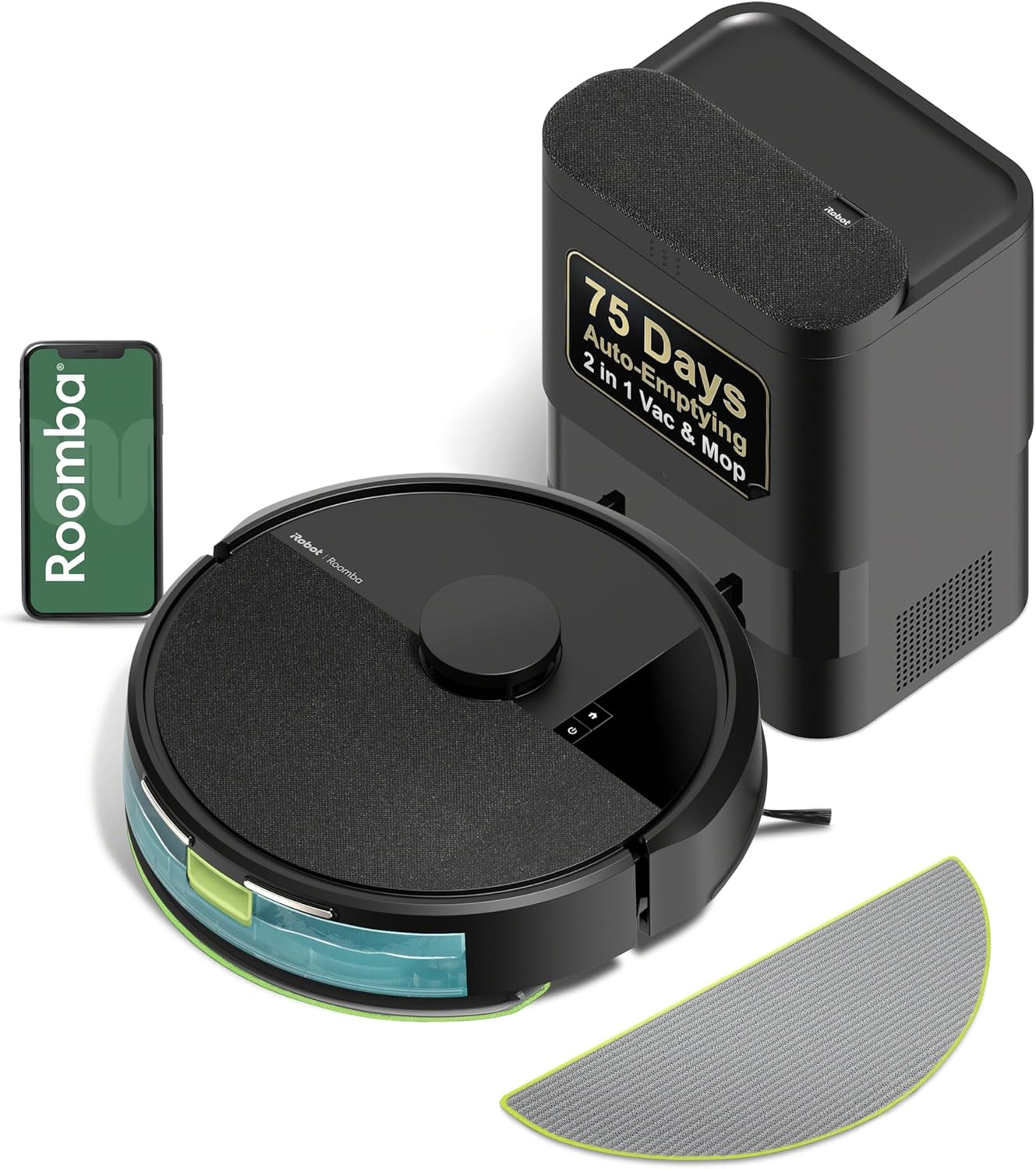
The Roomba 105 Combo pairs vacuuming and mopping in a compact disc-shaped robot that uses ClearView LiDAR to map rooms and avoid obstacles while offering three cleaning modes: vacuum, mop, or vacuum-and-mop. It combines intense suction, an edge-sweeping brush and a multi-surface brush to lift dirt from carpet edges and hard floors, while a microfiber pad and micro-pump supply controlled mopping and SmartScrub for deeper scrubbing on high-traffic spots. The included AutoEmpty dock holds up to 75 days of debris in a disposable bag to reduce how often you touch dirt, and the robot is controlled via the iRobot Home app, onboard buttons, or voice assistants. Practical benefits include reliable navigation, scheduled cleans, and carpet detection that keeps rugs dry during mopping. Expect routine maintenance like wiping the bin, cleaning brushes, and replacing filters every few months, and note the 100-minute battery life may require recharges for larger homes or long multi-room sessions.
Best for: Buyers who prioritize a reliable, low-touch cleaning routine for mixed carpet and hard-floor homes and want dependable navigation and automatic debris disposal.
Less Ideal for: Large homes where long continuous runtime is essential or buyers looking to avoid any ongoing consumable costs from dock bags should consider other options.
- ClearView LiDAR mapping for consistent room coverage and obstacle avoidance
- AutoEmpty dock that holds up to 75 days of debris for less frequent emptying
- Combined vacuum-and-mop modes with SmartScrub for deeper cleaning of high-traffic areas
- Carpet detection that avoids rugs while mopping to prevent wetting area rugs
- 100-minute battery life can be short for larger homes without mid-run recharging
- Uses disposable bags in the AutoEmpty dock which add ongoing consumable costs
Verdict: Choose the Roomba 105 Combo if you want dependable LiDAR navigation and a hands-off AutoEmpty dock to keep area rugs safe while maintaining both vacuuming and mopping with minimal fuss.
ROPVACNIC S1 Robot Vacuum
| Surface Recommendation | Hardwood Floors, Low Pile Carpets |
|---|---|
| Battery Life | 120 minutes |
| Other Special Features of the Product | Adjustable Electric Mopping, Intelligent Auto Docking, Advanced Obstacle Avoidance, 5200Pa Powerful Suction |
| Controller Type | App Control, Remote Control, Touchpad Control, Voice Control |
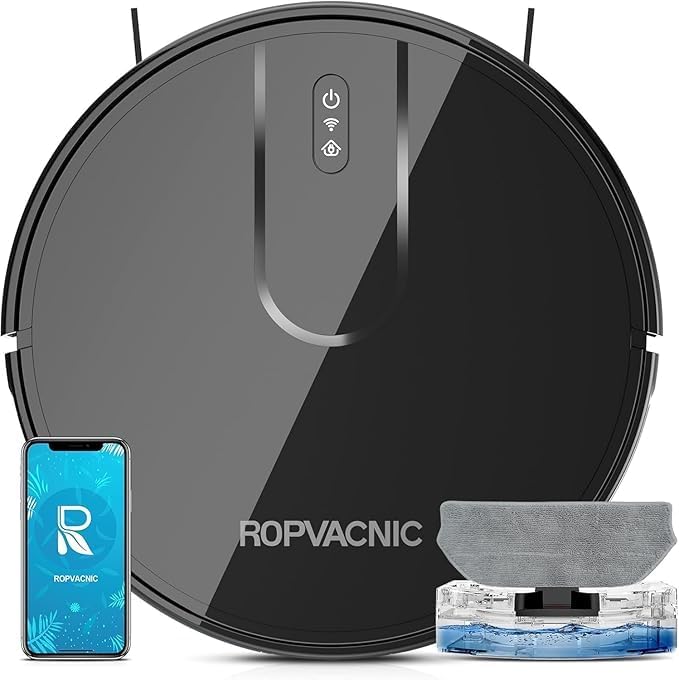
The ROPVACNIC S1 combines vacuuming and electrically controlled mopping in a low-profile round body that slips under furniture to clean hidden areas. You control it via app, remote, or voice and can schedule runs, set one of several cleaning modes, and adjust mopping water levels for different floor needs. A claimed 5200Pa suction and a three-point cleaning system target dirt and pet hair while a no-entanglement brush design and side brushes help pick up fur without frequent tangles. Navigation uses obstacle sensing and automatic return-to-base charging so the robot finishes larger homes on its own; the listed 120-minute battery supports extended runs. Practical limitations include its stated suitability for low-pile rugs rather than deep or high-pile area rugs and the typical maintenance of filters, brushes, and mop pads that mopping models require. For buyers focused on rug performance note that the product is optimized for hard floors and low-pile carpets, not thick shag rugs.
Best for: Buyers who want an app- and voice-controlled robot that vacuums and mops automatically and who prioritize reliable pet-hair pickup on hard floors and low-pile rugs with minimal daily involvement.
Less Ideal for: Homes with thick, high-pile, or delicate area rugs that need deep agitation or specialized rug care should look at models designed specifically for high-pile rug cleaning.
- Combined vacuum and electronically controlled mopping with adjustable water levels for tailored cleaning
- High advertised suction (5200Pa) and a three-point cleaning system for more thorough pickup
- No-entanglement brush design and side brushes aimed at handling pet hair
- App, remote, and voice control plus scheduling for hands-off operation
- 120-minute battery life and auto-return charging for extended unattended cleaning
- Optimized for low-pile carpets and hard floors so deep or high-pile area rugs may not clean effectively
- Mopping function adds upkeep for the water tank, pads, and filters compared with vacuum-only units
Verdict: Choose the ROPVACNIC S1 if you want a hands-off vacuum-and-mop robot that targets pet hair and maintains hard floors and low-pile rugs with strong suction and app-based control.
eufy 11S Max Robot Vacuum

| Surface Recommendation | Hard Floor & Tile & Medium carpet |
|---|---|
| Battery Life | 100 minutes |
| Suction Power | 2000 Pa |
| Capacity | 600 ml |
| Noise Level | 55 db |
The eufy 11S Max is a low-profile robot vacuum built to clean hard floors and medium-pile carpets without drawing attention. Its 2.85-inch slim body lets it slide under low furniture while 2000Pa suction and a 12.8-inch cleaning path pick up dust, crumbs, and pet hair. It runs up to 100 minutes on hardwood at a reported low 55 dB, and automatic return-to-base means it tops off battery without user intervention. Controls are simple: the included remote and onboard buttons let you start, stop, and switch modes quickly, though there is no Wi-Fi or app control. Practical touches include washable filters, drop-sensing and anti-collision sensors, and a 600 ml dust capacity that reduces how often you empty the bin. The trade-offs are straightforward: navigation is basic rather than lidar or map-based, so room coverage is more random and may miss tight corners, and the single-side-brush design can be less thorough along edges compared with dual-brush models. For routine, quiet cleaning of hardwood, the 11S Max balances strong suction and a slim profile in a simple, reliable package.
Best for: Buyers who prioritize a quiet, no-frills robot that cleans hardwood reliably and fits under low furniture will appreciate this model for regular maintenance cleaning.
Less Ideal for: If you want mapped cleaning, smartphone scheduling, or the most thorough edge-cleaning for complex floorplans, choose a model with advanced navigation and app control instead.
- Slim 2.85" profile reaches under low furniture
- Up to 100 minutes runtime for extended cleaning sessions
- Powerful 2000Pa suction for effective pickup on hard floors
- Quiet operation at about 55 dB suitable for daytime or evening use
- Large 600 ml dust capacity and washable filter lower maintenance frequency
- Random navigation rather than mapping can lead to uneven coverage
- No Wi‑Fi or smartphone app means limited scheduling and remote control options
Verdict: A slim, quiet robot with strong suction made for routine hardwood maintenance when you want reliable, no-frills cleaning.
Choosing the Right Robot Vacuum for Area Rugs: Key Factors to Consider
Pile Height and Rug Construction
Pile height determines whether a robot can climb onto and traverse a rug without bogging down. Low- to medium-pile rugs are usually compatible with most robot vacuums, while high-pile or shag rugs can tangle brushes and strain motors.
Rug backing and construction also matter. Rugs with thick latex or rubber backing can be harder to climb, and fringes or tassels can cause entanglement. When selecting a robot for area rugs, check the maximum climb height and look for models that explicitly mention handling short to medium pile.
Suction Power and Adjustable Settings
Suction alone is not enough; the ability to vary suction based on surface type prevents over-enthusiastic pulling that can damage delicate fibers. Adjustable suction allows stronger settings on low-pile rugs and lower, gentler modes for thin, decorative rugs.
For homes with pets or heavy foot traffic, stronger suction settings help extract embedded hair and grit from rug fibers. Make sure the robot you consider has clearly labeled cleaning modes or an automatic surface-detection feature that raises suction on rugs.
Brush Type and Tangle Resistance
Roller and side brush designs determine how aggressively the machine scrubs and how likely it is to wrap fibers. Combination rollers that mix bristles and rubber blades tend to balance hair pickup and tangle resistance better than all-bristle rollers.
If your rugs have long fibers or loose weave, choose a robot with easily removable, tool-free brush access for quick cleaning. Models with anti-tangle features or brushless suction pathways reduce maintenance and the risk of fiber damage.
Navigation Precision and Boundary Control
Accurate navigation prevents repetitive passes that wear rug fibers and helps the machine avoid snagging areas like fringes. Mapping-capable robots can be instructed to avoid delicate rugs or to concentrate cleaning on high-traffic ruged zones.
Virtual boundary tools, spot-clean options, and quiet bumpers give you control over where the robot runs and how it engages edges. For homes with multiple area rugs, the ability to set no-go lines or separate cleaning zones is especially helpful.
Wheel Design and Transition Smoothness
Wheel diameter, clearance, and suspension affect how well a robot climbs from hard floor to rug and vice versa. Larger wheels and flexible suspension make transitions smoother and reduce the chance the unit will stall at rug edges.
If rugs are on thresholds or have uneven edges, prioritize robots with proven climb capability and clearance specifications that exceed your rug's edge height.
Maintenance Needs and Filter Quality
Regular maintenance keeps a robot running well on rugs and reduces fiber wear. Consider how often brushes need detangling, how easy it is to empty the dustbin, and whether filters are HEPA-rated for homes with allergy concerns.
Higher-capacity dustbins reduce interruptions during cleaning sessions on multiple rugs. Replaceable filters and clear maintenance access points simplify upkeep for busy households.
How Rug Type Changes Your Priorities
Different rugs shift the balance between suction, brush design, and gentleness. Low-pile, flatweave rugs tolerate stronger rollers and higher suction, while Oriental and hand-knotted rugs benefit from lighter, more delicate contact and controlled passes.
When you know your rug materials and construction, you can pick a robot whose features align with those needs, for example, one that reduces suction automatically on delicate surfaces or that offers a soft brush mode.
- Flatweave and low-pile: prioritize suction adaptation and edge cleaning
- Medium pile: choose balanced rollers and decent wheel clearance
- High-pile or shag: look for gentle modes and large wheel suspension
Setting Up Your Home for Better Rug Cleaning
Placement and prep can dramatically improve a robot's rug performance. Remove small loose items, secure fringes with low-profile tape or rug tape, and use small threshold ramps if transitions are a frequent stall point.
Use virtual boundaries or physical barriers to prevent the robot from attacking delicate display rugs or getting trapped under low furniture near rugs. Regularly shake out or rotate rugs to reduce uneven wear from repeated passes.
- Secure fringes to avoid tangles
- Add threshold ramps for high edges
- Define no-go zones for delicate rugs
Maintenance Tips to Extend Rug Life
Frequent light cleaning by a robot is great for removing surface dirt, but periodic deep cleaning is still necessary. Vacuum from different directions manually or use a more powerful upright on a low setting for deep extraction a few times a year.
Keep the robot's brushes, filter, and wheels clean to avoid transferring grit that can abrade fibers. Replace filters on the schedule recommended by the manufacturer and empty the dustbin before it reaches capacity to preserve suction performance.
- Clean rollers after 1 to 2 weeks in high-traffic homes
- Wash or replace filters per manufacturer guidance
- Rotate rugs seasonally to distribute wear
Common Rug Problem Areas and Fixes
Fringes, tassels, and loosely woven edges are frequent trouble spots. If a robot tends to get stuck, mark the area as no-go or temporarily remove the rug during active cleaning sessions.
High-traffic spots may show matting even with regular robot cleaning. Address these areas with periodic spot treatment and a manual groom to restore pile direction and loft.
- Use no-go zones around fringes
- Spot-treat high-traffic matting by hand
- Consider professional deep cleaning for stubborn embedded dirt
When to Use Manual or Professional Cleaning
Robots are excellent for routine surface maintenance, but they cannot replace occasional manual vacuuming or professional cleaning. For stains, deep-embedded grit, or delicate antique rugs, rely on targeted manual methods or professionals to avoid damage.
If a rug shows uneven wear or fiber loss, reduce robot frequency on that rug and increase manual care until condition improves.
- Reserve robots for day-to-day upkeep
- Use manual cleaning for deep soil and stains
- Seek professional service for antiques and delicate fibers
How We Chose the Best Robot Vacuum for Area Rugs
We prioritized features and performance attributes that matter specifically when a robot is expected to clean area rugs without damaging fibers or getting stuck. Top considerations included suction adaptability and brush design so cleaners can lift embedded dirt without pulling long fibers. Navigation intelligence and boundary controls were required to reduce snagging on fringes and to keep the robot on- and off-rug transitions safe. Suspension and wheel size were evaluated for the ability to climb low-to-medium pile without getting stuck, while dustbin capacity and filter quality were considered for homes with pet hair and frequent rug traffic. Battery life and recharge behavior were included so a unit can finish larger ruged zones without leaving streaks. We excluded units that lack adjustable suction profiles, have exposed rubberized brushes likely to tangle long pile, or report frequent navigation failures in ruged environments. Our selections favor robots with clear rug-handling features, reliable mapping or boundary control, and maintenance needs that match typical rug owners.
Our full evaluation process is outlined in our review methodology.
FAQ
Can a robot vacuum damage my area rug?
It depends on the rug. Robots with aggressive brushes or strong suction can pull long fibers or snag fringes. Choosing a model with adjustable suction and anti-tangle brush design reduces the risk.
Will a robot climb onto rugs with a rubber backing?
Some robots can handle low- to medium-height backed rugs, but thick rubber-backed rugs may be too high or slippery. Check the robot's maximum climb specification and test one rug edge before regular use.
How often should I run a robot on area rugs?
Daily runs help prevent grit from embedding, but frequency depends on traffic and pets. High-traffic rugs may benefit from every-other-day cleaning, while decorative rugs can be scheduled less often.
How do I prevent my robot from getting tangled in tassels or fringe?
Use virtual boundaries or physically secure fringes with low-profile tape. You can also exclude those rugs from robot runs and clean them manually to avoid entanglement.
Are certain brush types better for rugs with pet hair?
Combination rollers that mix bristles and rubber blades tend to pull pet hair from fibers while resisting tangles. Models with tool-free brush removal simplify clearing hair when tangles do occur.
Final Verdict
Prioritize adjustable suction, an anti-tangle brush system, and dependable navigation when choosing a robot vacuum for area rugs. Match the robot's climb and clearance specs to your rug pile height and secure any fringes or loose edges before regular use. Balance daily robotic upkeep with occasional manual or professional cleaning to preserve fibers and extend rug life. With the right priorities, you can rely on a robot to keep rugs looking cleaner while minimizing risk to delicate materials.