
Note: This article contains affiliate links. If you click on these links and make a purchase, we may earn a small commission at no extra cost to you. This helps support our research and content. Read our full affiliate disclosure here.
If you live with cats, you know how quickly hair and tracked litter can turn a clean floor into a daily chore. A purpose-built robot vacuum for cat hair and litter removes loose fur, catches scattered granules, and reduces the time you spend sweeping or dragging a hand vacuum around the house. Buying the right model matters because not all robot vacuums handle dense pet hair or fine litter equally well. This guide highlights seven shortlisted robot vacuums that stood out for suction, brush design, and filtration. We evaluated candidates on concrete, homeowner-focused criteria so you can pick a reliable unit for busy litter areas and hair-prone rooms. Read on to see which qualities matter most and which features deserve extra attention for multi-cat households and litter zones.
Top Picks at a Glance
| Best Overall The best all-around choice for most situations | ILIFE A30 Pro |  |
| Best Quality Built to a higher standard if you want something more solid | roborock Q10 S5+ |  |
| Best Value The sweet spot between price and what you get | Tikom G8000 Max Robot Vacuum |  |
| Best Budget The cheapest option that still gets the job done reliably | ILIFE V2 Robot Vacuum |  |
| Top Rated A top-rated pick with lots of positive feedback | WSUANE D15S Max Robot Vacuum |  |
| Most Popular A crowd favorite that many people choose with confidence | iRobot Roomba 105 Combo |  |
| Best Seller A high-volume bestseller chosen again and again | roborock Q7 M5+ |  |
ILIFE A30 Pro

| Suction power | 10000 Pa |
|---|---|
| Battery life | 150 minutes |
| Navigation | LiDAR (SLAM) |
| Filter type | Hepa |
| Dustbag capacity | 2.5 liters |
The ILIFE A30 Pro is a self-emptying robot vacuum and mop designed for regular household cleaning, especially homes with pets. It uses LiDAR mapping and the SLAM algorithm to create accurate maps and plan efficient routes, while four suction modes — including a Max 10000Pa setting — handle fine dust, cat hair, and tracked litter. The unit combines a 200ml dustbin and 200ml water tank so it can vacuum and mop simultaneously, and the self-emptying base accepts 2.5L disposable bags for long stretches of hands-free operation. You control it via the ILIFEClean app, remote, or voice assistants and can set no-go zones and room schedules. Practical benefits include strong suction for embedded pet hair, reliable navigation around furniture, and reduced maintenance thanks to the auto-empty feature. Limitations include relatively small onboard dust/water volumes (relying on the base for full capacity), the 2.4GHz-only Wi‑Fi requirement, and that wet-mopping is basic rather than a heavy-duty scrub, so it is best as regular light mop maintenance rather than deep floor cleaning.
Best for: Buyers who want a low-intervention, reliable robot that handles everyday cat hair and tracked litter while offering room mapping and scheduled cleaning.
Less Ideal for: Households that need heavy wet-mopping performance or want a robot that works on 5GHz Wi‑Fi networks.
- Strong peak suction up to 10000Pa useful for lifting pet hair and tracked litter
- LiDAR navigation with SLAM for accurate mapping, room selection, and efficient cleaning paths
- Self-emptying base with 2.5L dust bags reduces how often you manually empty debris
- App, remote, and voice control plus no-go zones and scheduling for convenient automated cleaning
- Onboard dustbin and water tank are small, so continuous mop capacity depends on the base
- App only supports 2.4GHz Wi‑Fi which may limit modern network setups
- Mopping function is light-duty and not a substitute for manual deep cleaning
Verdict: A30 Pro is a hands-off, LiDAR‑mapped robot that excels at keeping cat hair and litter under control with very strong suction and a self-emptying base.
roborock Q10 S5+

| Maximum Suction | 10,000 Pa |
|---|---|
| Capacity | 2.7 liters |
| Battery Life | 150 minutes |
| Filter Type | Washable |
| Control Method | App, Voice |
The roborock Q10 S5+ is a mid‑to‑high‑end robot vacuum and mop designed for frequent, hands‑free cleaning in homes with pets. It combines a 10,000 Pa HyperForce suction system and a dual anti‑tangle brush setup to pick up embedded pet hair and litter, while the VibraRise 2.0 sonic mop scrubs hard floors and lifts the mop automatically over carpets. LiDAR navigation builds detailed multi‑level maps, supports no‑go zones, and enables predictable, efficient runs, and ReactiveTech obstacle avoidance reduces stalls around clutter. The included 2.7 L self‑emptying dock holds weeks of debris and offers set-emptying modes to cut routine maintenance. App and voice control let you schedule targeted cleans, change mop modes, and boost suction on carpets with ultrasonic carpet detection. Trade-offs include a moderate noise level around 65 dB during operation and relatively simple power-level options, but for pet owners who prioritize reliable hair and litter pickup with strong mapping and mopping, the Q10 S5+ is a capable choice.
Best for: Buyers who want strong, reliable hair and litter pickup with advanced mapping and low-maintenance emptying for busy pet households.
Less Ideal for: Users who need very quiet operation, very granular suction control, or who prefer a bare‑bones robot without app-led features should consider other options.
- High 10,000 Pa suction for lifting embedded hair and tracked litter
- Dual anti‑tangle brush system reduces hair wrap and maintenance
- 2.7 L self‑emptying dock provides up to ~70 days of hands‑free debris collection
- LiDAR navigation with multi‑level mapping and no‑go zones yields efficient, repeatable cleaning routes
- VibraRise sonic mopping with auto lift protects carpets while scrubbing hard floors
- Noise level is noticeable during heavy suction runs (around 65 dB)
- Only two power levels limits fine control over suction settings
Verdict: If you need powerful suction, anti‑tangle brushes, and a long‑interval self‑empty dock to handle cat hair and litter with minimal intervention, the Q10 S5+ delivers.
Tikom G8000 Max Robot Vacuum

| Suction | 5000Pa |
|---|---|
| Battery Life | 150 minutes |
| Dustbin Capacity | 450 ml |
| Water Tank | 300 ml |
| Noise Level | 45 db |
The Tikom G8000 Max is a low-profile robot vacuum that combines strong suction with mopping to keep hard floors and low-pile carpets tidy with minimal user effort. In use it maps and navigates with anti-collision and anti-fall sensors, and supports app, remote, voice, and onboard button control so you can schedule cleanings and start runs from a phone or the included remote. Notable features include a 5000Pa suction motor for lifting pet hair and debris, a combined 450 ml dustbin plus 300 ml water tank for simultaneous vacuuming and mopping, and a runtime up to 150 minutes with automatic recharge. Its 3-inch height lets it access under furniture and the Zig-zag cleaning mode improves coverage on open floor areas. Limitations to keep in mind are that higher-pile carpets may not get deep cleaning compared with upright vacuums and mopping is best for maintenance rather than heavy wet cleaning; occasional emptying of the dustbin and refilling the water tank are still required. For routine hardwood maintenance the G8000 Max offers a practical balance of suction, run time, and smart controls.
Best for: Buyers who want a practical, time-saving floor care solution for hardwood and low-pile carpets and prioritize long runtime, reliable navigation, and flexible control options.
Less Ideal for: Households that need deep carpet extraction, heavy wet mopping, or commercial-grade cleaning should consider a dedicated upright or standalone mop system instead.
- Strong 5000Pa suction effective on hard floors and short-pile carpets
- Simultaneous vacuuming and mopping with combined dustbin and water tank saves time
- Long run time up to 150 minutes with auto-recharge for larger homes
- Slim 3-inch profile reaches under low furniture
- Multiple control options including app, remote, voice, and onboard button
- Mopping function is for light maintenance and not heavy wet cleaning
- May be less effective on high-pile carpets compared with full-size vacuums
Verdict: A slim, long-running robot that combines powerful suction and light mopping to keep hardwood floors clean with minimal hands-on work.
ILIFE V2 Robot Vacuum

| Battery Life | 120 minutes |
|---|---|
| Capacity | 300 ml |
| Filter Type | Sponge |
| Control Method | Remote |
| Noise Level | 69 db |
The ILIFE V2 is an entry-level robot vacuum built to keep hardwood and other hard floors tidy without a lot of fuss. Its 2.99-inch slim body fits under low furniture while a tangle-free suction port and sponge filter make it practical for homes with pet hair. You can run scheduled cleanings, switch between auto, spot and edge modes, or start jobs with the included remote control or the single-button on the unit. A 300 ml dustbin and up to 120 minutes of runtime let it cover medium rooms on one charge, and it will automatically return to the dock when the battery is low. Noise is noticeable at 69 dB and there is only one power level, so it lacks adjustable suction or app-based controls, but for straightforward floor maintenance on hardwood and low-pile carpet the V2 delivers solid value at an affordable price.
Best for: Buyers who want an affordable, no-frills robot to maintain hardwood and low-pile carpet cleanliness with simple controls and scheduled runs.
Less Ideal for: Those who need strong adjustable suction, smart app control, or advanced mapping for large or complex homes should consider higher-end models.
- Slim 2.99-inch profile cleans under low furniture
- Tangle-free suction port suited for pet hair
- 120 minutes runtime with automatic return-to-dock
- Multiple cleaning modes (auto, spot, edge) and simple remote control
- Single power level limits suction control for heavier debris
- No smartphone app or advanced navigation features
Verdict: A low-cost, slim robot vacuum that reliably maintains hardwood floors and handles pet hair for budget-focused buyers.
WSUANE D15S Max Robot Vacuum

| Suction | 10000Pa max |
|---|---|
| Dustbin capacity | 3.5 liters |
| Battery life | up to 160 minutes (Silent Level) |
| Navigation | dToF LiDAR mapping |
| Filter type | Three-layer high-efficiency (washable) + filter cotton |
The WSUANE D15S Max is a self-emptying robot vacuum and mop built around strong suction, lidar mapping, and pet-hair friendly features. In daily use it maps rooms with dToF LiDAR to create multi-level maps and supports custom no-go zones through the app, then runs long cleaning cycles thanks to its 3200mAh battery and selectable power levels. The 3.5L dust collection station reduces how often you handle dirt—promised up to about 90 days between emptying—and the hair-cutting anti-tangle roller helps prevent brush clogs from long pet or human hair. Practical benefits include high suction for deep-cleaning carpets and effective corner reach via side brushes, plus washable multi-layer filtration for better dust capture. Trade-offs are a reported noise level near 70 dB at higher power and the extra maintenance of replacing bags/filters in the base over time. The mop function and app controls add flexibility, but households that need ultra-quiet night cleaning may prefer lower-power modes to reduce sound and runtime.
Best for: Buyers who want a low-intervention cleaning solution that consistently handles pet hair and litter with reliable navigation and long autonomous runtimes.
Less Ideal for: Those who prioritize ultra-quiet operation overnight or who prefer a purely manual vacuuming approach without app-based scheduling and mapping.
- Large 3.5L self-emptying dustbin reduces how often you touch dirt
- High maximum suction up to 10,000Pa with auto-boost on carpets for deeper cleaning
- dToF LiDAR mapping with multi-level maps and custom no-go zones for reliable navigation
- Hair-cutting anti-tangle roller and side brushes designed to handle pet hair and prevent clogs
- Washable three-layer filtration plus additional filter cotton for improved dust capture
- Noise can reach about 70 dB on higher power settings
- Self-emptying base requires replacement dust bags/filters over time
Verdict: Choose the D15S Max if you want a hands-off robot that reliably clears cat hair and litter with strong suction, lidar mapping, and a large self-emptying base.
iRobot Roomba 105 Combo
| Battery Life | 100 minutes |
|---|---|
| Surface Recommendation | Carpet & Hard Floor |
| Filter Type | Cartridge |
| Controller Type | App, Button, Voice Control |
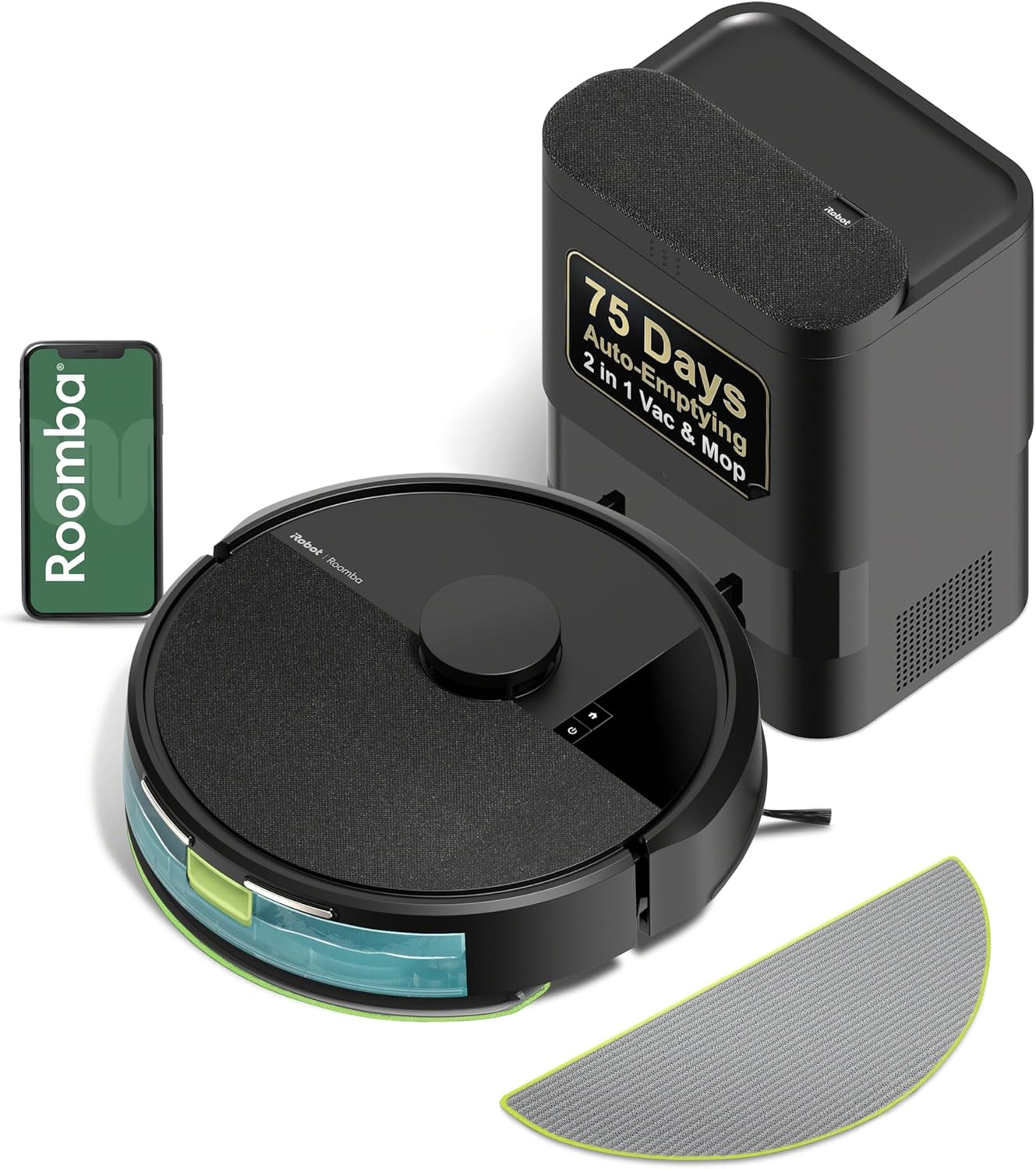
The Roomba 105 Combo pairs a disc-shaped robot with an AutoEmpty dock to handle vacuuming and mopping on hard floors and light carpets. It uses ClearView LiDAR to map spaces for targeted, scheduled cleans and offers three modes: vacuum, mop, or vacuum-and-mop together. The 4-stage cleaning system combines strong suction, an edge-sweeping brush and a multi-surface brush to pick up dust, debris and pet hair, while a reusable microfiber pad and controlled micro-pump deliver measured mopping with SmartScrub for deeper scrubbing of soiled areas. The AutoEmpty dock holds up to 75 days of debris in a disposable bag, reducing frequent bin handling and allergen exposure. Controls are via the iRobot Home app, onboard buttons, or voice assistants, and the robot detects and avoids carpets while mopping. Expect routine upkeep like brush cleaning and periodic filter changes, and note that heavy-pile carpets or very large homes may need supplemental cleaning or more run time than the stated battery life.
Best for: Buyers who want hands-off cleaning for everyday cat hair and tracked litter on hard floors and low-pile rugs and who prioritize reduced maintenance and allergen exposure.
Less Ideal for: Homes that rely on deep-cleaning heavy carpets or very large floorplans where longer runtime and more powerful upright vacuums are needed.
- Self-emptying AutoEmpty dock stores up to 75 days of debris to minimize bin exposure
- ClearView LiDAR mapping provides consistent room coverage and obstacle avoidance
- Combined vacuum-and-mop modes with controlled water delivery and SmartScrub for tougher stains
- Edge-sweeping and multi-surface brushes plus boosted suction for picking up pet hair and litter
- App, button, and voice control give flexible scheduling and targeted room cleaning
- Battery life and run time are moderate at 100 minutes, which may limit single-run coverage in larger homes
- Not intended for heavy-pile carpets where deep cleaning requires a full-size vacuum
Verdict: A practical pick for cat owners who want a mostly hands-free solution to manage hair and litter on hard floors with long-duration debris storage.
roborock Q7 M5+
| Suction | 10000Pa |
|---|---|
| Capacity | 2.7 liters |
| Battery Life | 150 minutes |
| Filter Type | Cartridge |
| Other Special Features of the Product | App Or Voice Control, Dual Anti-Tangle Design, PreciSense LiDAR Navigation |
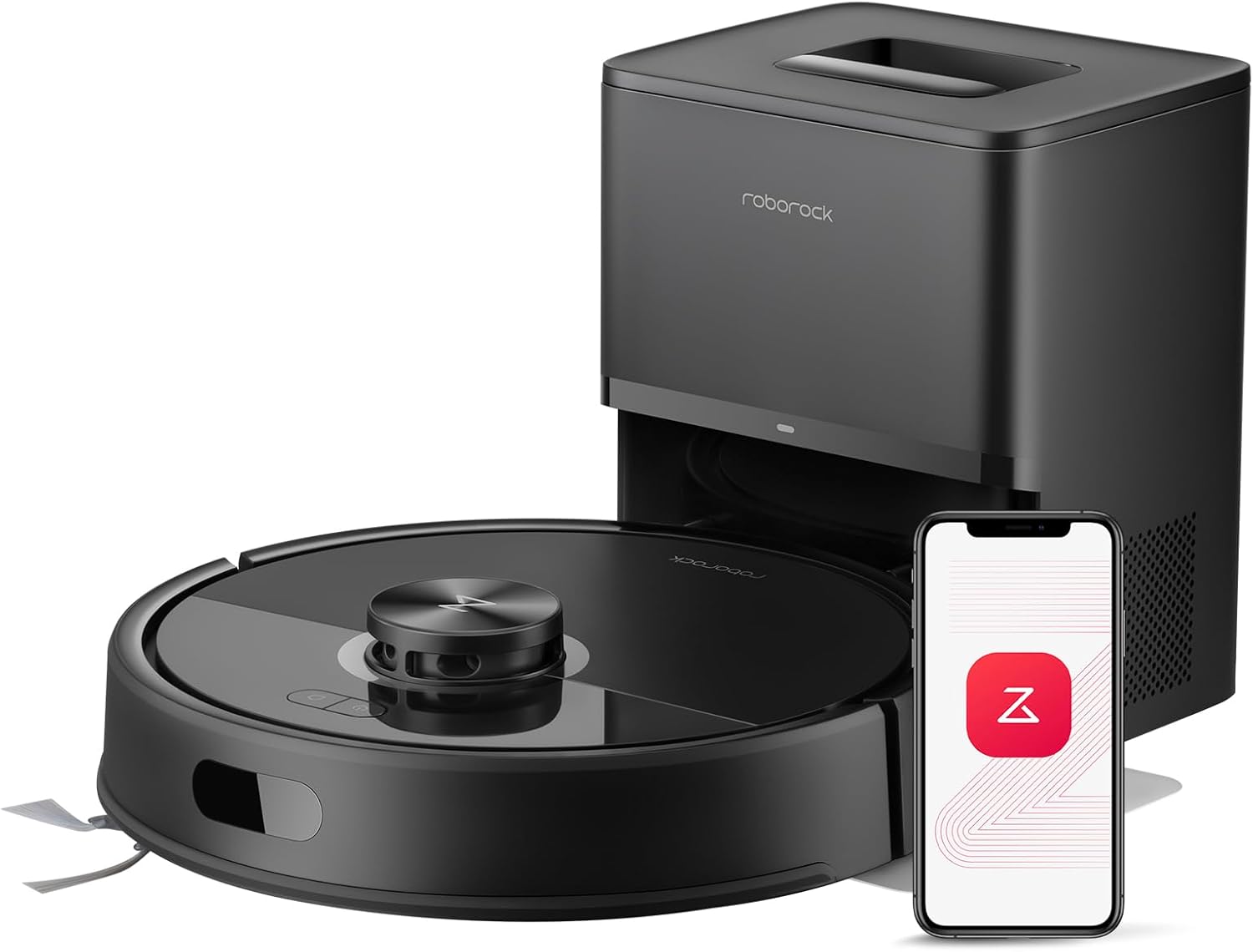
The roborock Q7 M5+ combines powerful 10000Pa suction, PreciSense LiDAR navigation, and a 2.7L auto-empty dock to deliver thorough, low-maintenance cleaning for homes with pets. It vacuums and mops in a single run, offers app and voice control, and stores maps so you can set no-go zones and room schedules from your phone. The dual anti-tangle system and 0% hair-tangling side brush reduce hair wrap, which is especially helpful for cat hair and litter tracking, while the RockDock Plus bag holds multiple weeks of debris before needing attention. Runtime and noise are typical for this class, and the app requires 2.4 GHz Wi-Fi. Expect routine maintenance like brush and filter cleaning and occasional bag replacement, but otherwise the unit minimizes daily chores by keeping floors regularly swept and mopped with minimal intervention.
Best for: Buyers who prioritize a reliable, low-maintenance cleaner for homes with cats and who want hands-free emptying, strong suction, and predictable app-driven scheduling.
Less Ideal for: People who need ultra-quiet operation for nighttime runs or who want a robot strictly for heavy wet mopping should consider other specialized units.
- Very strong 10000Pa suction lifts embedded pet hair and tracked litter
- Large 2.7L sealed dust bag provides up to 7–9 weeks of hands-free emptying
- Dual anti-tangle brush design and zero-tangling side brush reduce hair wrap
- PreciSense LiDAR with multi-level mapping enables precise navigation and no-go zones
- Integrated vacuum-and-mop function with adjustable water flow for light mopping tasks
- App requires 2.4 GHz Wi-Fi and may need occasional connectivity troubleshooting
- Noise level around 65 dB may be noticeable during high-suction runs
Verdict: If you want a dependable, low-touch robot that handles cat hair and tracked litter with strong suction and long self-empty intervals, the Q7 M5+ is a smart choice.
Choosing the Right Robot Vacuum for Cat Hair and Litter: Key Factors to Consider
Suction Power and Airflow
Strong suction and efficient airflow are the primary drivers of pick-up performance for cat hair and litter. High-rated suction helps lift hair from carpet fibers and draws fine litter from grout lines and floor crevices. Airflow design matters as much as nominal suction numbers; a well-engineered intake path prevents clogs and maintains consistent performance across a cleaning cycle.
When evaluating suction, consider how suction holds up over time and under load. Some vacuums advertise peak suction but fall off quickly when bins start to fill or brushes tangle. For litter specifically, continuous, steady airflow reduces the chance that tiny particles will be pushed ahead of the machine rather than captured.
Brush Design and Tangle Resistance
A brush system designed to handle pet hair reduces maintenance and improves cleaning consistency. Rubberized or comb-style main brushes and open-ended brush rolls resist hair wrap better than densely packed bristle rolls. Side brushes should be able to sweep litter toward the intake without scattering it across the room.
Also consider brush access for cleaning. Removable brush modules that allow quick hair removal and clear bearings or brush guards reduce the time you spend disassembling components to remove wrapped fur. The easier the maintenance, the more likely the vacuum will perform well over months of regular use.
Filtration and Containment
Cats shed dander and fine dust that can aggravate allergies and recirculate if not effectively contained. High-efficiency filters trap small particles rather than expelling them back into the living space. A sealed dustbin and solid sealing between the intake and dust cup reduce leakage and keep captured litter contained until you empty the bin.
Check whether filters are washable or replaceable and how often the manufacturer recommends changes. Frequent filter changes add to the lifetime upkeep, so factor that into your decision if anyone in the household has sensitivities to allergens.
Battery Life and Cleaning Coverage
Battery runtime affects how much floor the robot can cover between charges, which matters if you want whole-room or multi-room cleaning sessions without interruptions. Longer battery life is particularly useful when you run extra passes over high-traffic litter areas. Also consider the vacuum's return-to-base and recharge behavior; reliable resume-and-return features let larger homes get cleaned in stages without user intervention.
Think about average run-time in realistic mixed conditions rather than peak numbers. Heavy suction modes and repeated spot passes will drain battery faster, so choose a model whose typical runtime matches the size and layout of the spaces where your cats frequent.
Dustbin Capacity and Emptying Convenience
Homes with cats produce more hair and more frequent litter pickups, which fills dustbins faster. A larger bin reduces emptying frequency, but bin design and how easy it is to dump hair and litter matter as much as capacity. A wide, easy-access bin opening and a mechanism that avoids scattering contents when emptying will save time and reduce mess.
Consider whether the vacuum supports hands-free emptying docks or just manual bin emptying. Hands-free docks can reduce exposure to dust and hair, but they add to the overall system complexity and require space for the base station.
Navigation and Edge/Litter Zone Handling
Good navigation helps the robot systematically find and clean litter-prone zones rather than repeatedly missing corners or pushing litter into inaccessible areas. Advanced mapping and perimeter control let you set no-go zones around litter boxes or delicate areas, while reliable cliff and object detection prevent the unit from scattering litter by bumping repeatedly into obstacles.
Also evaluate how a robot behaves when encountering concentrated litter piles. Some models slow, make repeated passes, or apply spot-cleaning behaviors, while others may struggle and push debris outward. The behavior on encounter affects overall cleaning effectiveness in rooms where litter is frequently tracked.
Where to Run the Robot Vs When to Use Spot Cleaning
Robots are great at maintaining general cleanliness but are sometimes less effective with concentrated litter piles immediately after a litter-box clean-out. Use whole-room runs to keep fur and dispersed litter under control and reserve spot-clean modes for concentrated messes.
Run full cleaning cycles in the morning or evening when most tracked litter has been spread so the robot can pick up distributed debris. For immediate spills, a quick handheld sweep or a spot-clean on the robot will remove the bulk before the unit makes its scheduled pass.
- Schedule full runs for low-traffic times to maximize coverage.
- Use spot cleaning for fresh litter spills to prevent tracking.
- Combine robot runs with weekly manual checks around litter box perimeters.
Managing Litter That Clumps or Tracks
Different litters behave differently when tracked. Fine, non-clumping litter will create dust and fine granules, while clumping litters form heavier beads that can impede brushes. Choose a robot with sufficient intake geometry to collect fine grains and a brush path that does not simply push clumps ahead.
If you regularly deal with tracked clumps, schedule more frequent cleanings and consider spot passes after litter-box use. Keep the litter-box area well-contained with mats or rugs designed to capture granules before they spread across the main flooring.
- Use entry mats designed to trap litter at doorways.
- Increase cleaning frequency in high-traffic litter pathways.
- Avoid rugs with very deep piles that hide tracked clumps.
Maintenance Routine to Keep Performance High
Regular maintenance preserves suction and prevents hair from degrading brush performance. Plan a simple weekly routine: empty the bin, check and clean the main brush, and inspect side brushes and filter. Removing hair before it tightens around bearings will prolong brush life and keep suction stable.
Monthly checks should include a closer inspection of suction inlets, filter condition, and any hoses or ports that could clog from accumulated fine litter. Replace filters according to the manufacturer timeline or sooner if you notice increased dust output.
- Weekly: empty bin, clean brush roll, clear side brushes.
- Monthly: inspect filters, inlet ports, and sensors.
- Keep spare brushes and filters on hand to avoid downtime.
Placement of the Charging Base and Litter Box Considerations
Place the charging base in an open, level area where the robot can find it easily. Avoid positioning the base directly adjacent to litter boxes where tracked granules could collect near the dock and interfere with charging contacts or sensors.
If space is limited, create a small barrier or use a mat under the litter-box area to catch granules and prevent them from forming a thin layer around the base. Good placement minimizes false negatives in navigation and reduces the likelihood of the robot becoming stuck amid scattered litter.
- Keep the dock away from high-litter zones and direct sunlight.
- Use a low-profile mat under the litter box to capture granules.
- Ensure at least a small clear perimeter around the base for reliable returns.
Accessory Upgrades and Replacement Parts to Prioritize
Having a stock of replacement filters and brush rolls makes upkeep painless and keeps performance consistent. Filters tend to capture the most dander and may need replacement more often in multi-cat households. Prioritize compatible, high-efficiency filters and tangle-resistant brush modules when sourcing replacements.
If your routine produces a lot of tracked litter, consider accessories such as entrance mats, litter-trap rugs, or boundary strips to reduce the load on the robot. These low-tech solutions complement the vacuum and reduce frequent maintenance.
- Keep spare filters and brush rolls available.
- Use mats and traps to limit litter migration.
- Check accessory fit and ease of installation before buying.
How We Chose the Best Robot Vacuum for Cat Hair and Litter
We focused on features and performance attributes that matter most for homes with cats and litter areas. Our shortlist process prioritized suction power and airflow because these determine how effectively a robot vacuum lifts embedded fur and fine litter from both hard floors and low-pile rugs. Brush system design was another core filter, with weight on tangle-resistant main brushes and effective side brushes that move litter into the suction path rather than scattering it. Filtration and containment were treated as essential: we evaluated how well filters capture dander and fine dust without blowing particles back into the room. Battery life and navigation were judged in terms of real-world cleaning cycles across multiple rooms and in litter-prone zones where repeated passes may be necessary. We also considered bin capacity and maintenance needs to reduce how often you must empty hair-filled dustbins or untangle brush rolls. Excluded from the list were units that lack basic pet-hair features such as adequate suction, anti-tangle brushes, or sealed filtration. Very low-quality or novelty devices that do not reliably move litter into the intake were not considered. Overall, we selected products that balance powerful cleaning with practical upkeep requirements for cat owners.
Our full evaluation process is outlined in our review methodology.
FAQ
Can a robot vacuum pick up litter without spreading it around?
Often, yes, if the robot has strong suction and the right brush geometry. Models with careful intake design and side brushes that sweep debris toward the main intake tend to collect litter rather than push it. For concentrated piles, use a short spot-clean cycle or quick manual pick-up to avoid scattering.
How often will I need to empty the dustbin with cats?
It depends on household size and how much hair and litter the cats produce, but expect more frequent emptying than a no-pet home. Houses with multiple cats or heavy shedders may need daily or every-other-day emptying during peak shedding; single-cat homes may get multiple runs between empties.
Are certain litter types harder for robot vacuums to handle?
Yes. Very fine, dusty litters can create more airborne dust and may clog filters faster, while heavier clumping granules can be harder to pick up if the intake path is shallow. Choosing a robot with good suction and a robust filter mitigates many of these issues.
Will the robot spread cat hair around as it cleans?
A properly designed robot with sealed dust containment and efficient suction will pick up hair rather than redistribute it. Problems arise when brushes are heavily tangled or filters are saturated. Regular maintenance reduces the chance of hair being pushed out of the bin path.
Should I run the robot every day if I have cats?
Running the robot daily helps keep hair and tracked litter from accumulating and reduces manual cleaning time. Frequency depends on how much your cats shed and how much litter they track, but daily or every-other-day runs are common recommendations for multi-cat homes.
Final Verdict
When choosing a robot vacuum for cat hair and litter, prioritize suction and a brush system designed to resist tangles. Good filtration and a sealed dustbin protect indoor air quality, while adequate battery life and bin capacity determine how practical the unit is for multi-room cleaning without constant intervention. Balance cleaning power against the maintenance you are willing to perform. If you prefer low upkeep, focus on models with tangle-resistant brushes and easy-empty bins or hands-free emptying options. For homes with heavy shedding or frequent tracked litter, choose units with stronger suction and larger bins to minimize interruptions and preserve consistent cleaning results.