
Note: This article contains affiliate links. If you click on these links and make a purchase, we may earn a small commission at no extra cost to you. This helps support our research and content. Read our full affiliate disclosure here.
If you live with allergy triggers, pets that shed, or simply a lot of fine debris, picking the right robot vacuum for dust changes how often you need to deep-clean floors and upholstery. A dust-focused robot vacuum concentrates on steady suction, effective filtration, and dirt-trapping brushes so you spend less time sweeping and more time enjoying cleaner indoor air. This guide profiles seven shortlisted robot vacuums that perform well at collecting fine particles and dust. We evaluated each pick on suction and filtration, dustbin design and capacity, navigation and edge cleaning, and ease of maintenance so you can match a model to your home's layout and cleaning habits.
Top Picks at a Glance
| Best Overall The best all-around choice for most situations | iRobot Roomba Plus 405 Combo |  |
| Best Quality Built to a higher standard if you want something more solid | roborock Qrevo S5V |  |
| Best Value The sweet spot between price and what you get | ILIFE A30 Pro Robot Vacuum |  |
| Best Budget The cheapest option that still gets the job done reliably | Lefant M210 Robot Vacuum |  |
| Top Rated A top-rated pick with lots of positive feedback | WSUANE D15S Max Robot Vacuum |  |
| Most Popular A crowd favorite that many people choose with confidence | iRobot Roomba 105 Vac |  |
| Best Seller A high-volume bestseller chosen again and again | roborock Q10 S5+ |  |
iRobot Roomba Plus 405 Combo
| Battery Life | 120 minutes |
|---|---|
| Capacity | 0.5 liters |
| Control Method | App, Push Button, Voice |
| Filter Type | Cartridge |
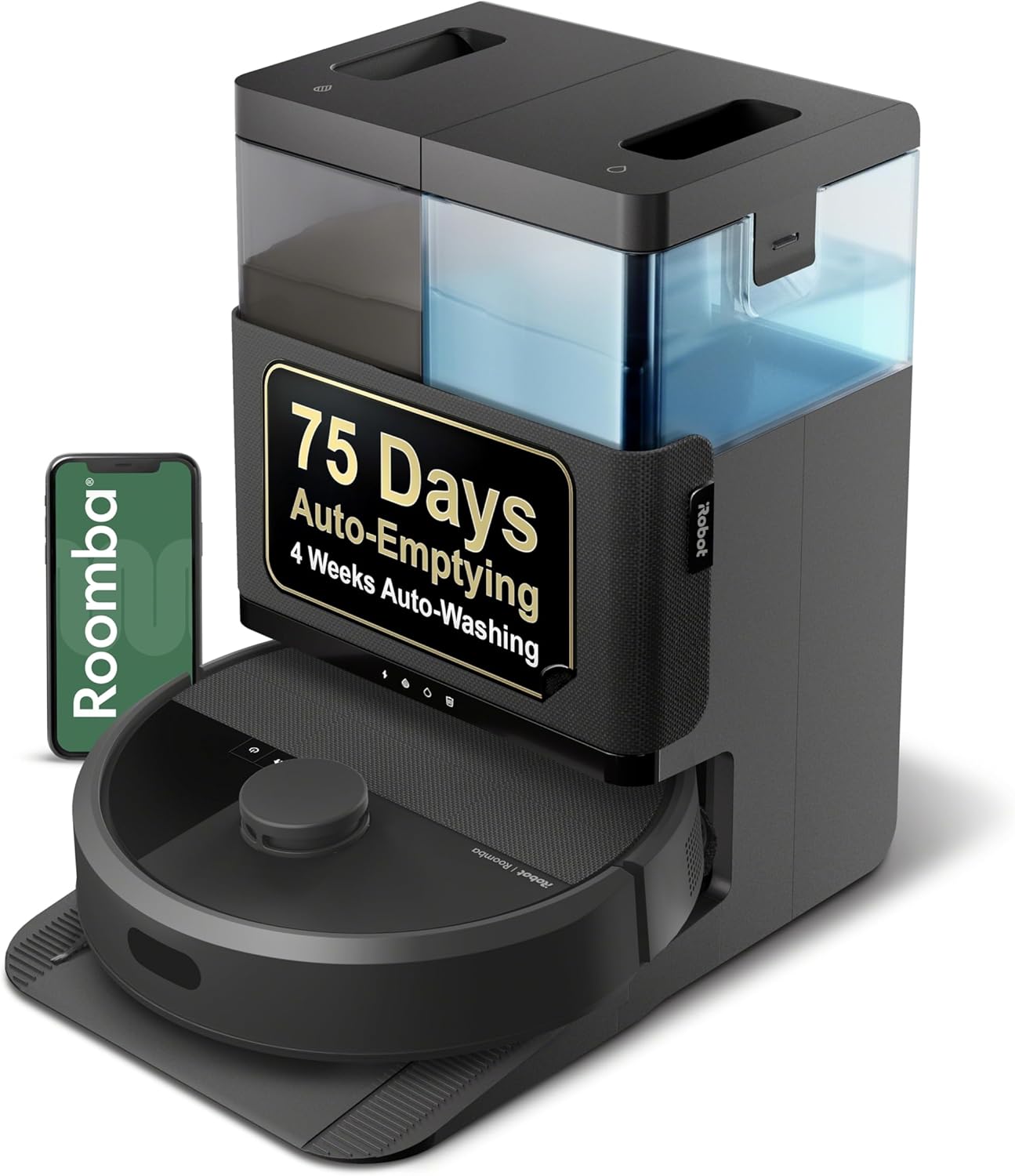
The Roomba Plus 405 Combo is a combined vacuum-and-mop robot designed to handle everyday dirt, pet hair, and stuck-on messes while minimizing hands-on maintenance. It uses ClearView LiDAR mapping to build room maps and navigate efficiently, offers four suction levels and dual spinning mop pads with SmartScrub for deeper scrubbing, and lifts the mop when it detects carpets to avoid wetting them. The included AutoWash dock auto-empties debris for up to 75 days and rinses and dries mop pads after runs, which keeps the system ready without frequent user intervention. Typical use cases are scheduled whole-house cleans, spot-cleaning high-traffic zones via the app, and combined vacuum-then-mop cycles for kitchens and entryways. Practical benefits include strong suction compared with older Roomba series, precise mapping for good coverage, and reduced upkeep thanks to the self-cleaning dock. Important limitations are routine maintenance tasks like filter and brush cleaning, and that effective mopping still depends on suitable cleaning solution and periodic care of the dock's tanks and components.
Best for: Buyers who want a capable, low-maintenance robot that handles both vacuuming and mopping for everyday dust and pet hair with reliable mapping and minimal frequent intervention.
Less Ideal for: Users who need a lightweight handheld or upright vacuum replacement for heavy upholstery or very deep carpet cleaning, or those who prefer a robot solely for vacuuming without a docking system to maintain.
- Combined vacuum and mop with automatic pad washing and drying reduces manual upkeep
- ClearView LiDAR mapping creates reliable room maps and efficient navigation
- AutoEmpty dock holds debris up to 75 days to cut down on emptying frequency
- Dual spinning mop pads plus SmartScrub provide stronger scrubbing for dried spots
- AutoWash dock requires occasional rinsing and maintenance of water tanks and parts
- Mopping performance depends on using compatible cleaning solutions and correct setup
Verdict: Choose the Roomba Plus 405 Combo if you want a balanced, low-maintenance robot that reliably vacuums and mops while the AutoWash dock handles most of the dirty-work for you.
roborock Qrevo S5V

| Suction | 12,000Pa |
|---|---|
| Battery Life | 180 minutes |
| Dust Capacity | 2.7 liters |
| Filter Type | Washable |
| Noise Level | 64 db |
The roborock Qrevo S5V is a high-performance robot vacuum and mop designed to handle heavy dust, pet hair, and mixed-floor homes. It uses a brushless motor to deliver up to 12,000Pa suction and a zero-tangle floating brush that reduces hair wrap, while dual spinning mop pads and a FlexiArm reach edges and around furniture legs for deeper cleaning. Navigation is driven by PreciSense LiDAR plus structured-light reactive sensors, producing detailed multi-floor maps, reliable obstacle avoidance, and targeted no-go zones via the app. The included all-in-one dock automates dust emptying, mop self-washing, warm air drying, and water refilling so the machine can run longer without hands-on maintenance. Battery life is rated at about 180 minutes, and app controls let you schedule, set water flow across 30 levels, and toggle cleaning modes. Trade-offs are the 64 dB noise level at higher power and reliance on a single 2.4 GHz Wi‑Fi band for smart features, but for dust-focused performance and low maintenance the S5V is engineered to stay working across large, multi-floor homes.
Best for: Buyers who prioritize dust pickup and hands-off maintenance for multi-floor or pet-heavy homes and want a robot that combines strong suction with automated dock care.
Less Ideal for: People who need a very quiet machine for noise-sensitive environments or who require dual-band Wi‑Fi smart control should consider different options.
- Strong 12,000Pa suction for lifting embedded dust and debris
- Zero-tangle brush design that resists hair wrap, useful in pet homes
- All-in-one dock that self-empties dust, self-washes and dries mops, and refills water
- PreciSense LiDAR plus reactive sensors for accurate mapping and obstacle avoidance
- Long 180-minute runtime and multi-floor mapping for large homes
- Operates relatively loud at higher power levels (listed 64 dB)
- Smart features require 2.4 GHz Wi‑Fi only
Verdict: If your top priority is powerful, low-maintenance dust pickup across multiple floors and pet households, the Qrevo S5V delivers performance-focused cleaning with an automated dock to minimize hands-on work.
ILIFE A30 Pro Robot Vacuum

| Max suction | 10000 Pa |
|---|---|
| Battery life | 150 minutes |
| Filtration | Hepa |
| Dust capacity (base bag) | 2.5 liters |
| Control methods | App, Remote, Voice |
The ILIFE A30 Pro is a robot vacuum and mop designed for hands-off cleaning of hard floors and carpets. It uses LiDAR mapping and the SLAM algorithm to create accurate floor plans, supports multi-floor maps, and can be controlled via the ILIFEClean app, remote, or voice assistant. Practical features include four suction modes from quiet to a 10000Pa max for heavy debris, a 2-in-1 dustbin and 200ml water tank for simultaneous vacuuming and mopping, and a self-empty base that accepts 2.5L disposable bags for long stretches between maintenance. Runtime is up to 150 minutes, which is suitable for medium-to-large homes, and Hepa filtration helps capture fine dust. Limitations to note are the small on-board water capacity for extended mopping, reliance on 2.4GHz Wi-Fi for smart features, and that the highest suction setting may reduce runtime and increase noise. For dust-focused cleaning the strong suction and self-emptying base reduce how often you need to interact with the machine, but you should plan routine base bag changes and occasional manual edge cleaning for corners and tight crevices.
Best for: Buyers who prioritize low-maintenance, dust-focused cleaning and want a mapped, app-controlled robot that minimizes daily intervention.
Less Ideal for: People who need long continuous mopping without refilling or those with only 5GHz home networks for smart control should consider other options.
- LiDAR mapping with SLAM for accurate navigation and room mapping
- Self-emptying base with 2.5L disposable bags for extended hands-free intervals
- Very high max suction (up to 10000Pa) for picking up dust, debris, and pet hair
- App, remote, and voice control with no-go zones and scheduled cleaning
- Hepa filter to help capture fine dust particles
- Onboard water tank is small, limiting continuous mopping time
- Max suction mode shortens runtime and increases noise
- Smart features require 2.4GHz Wi-Fi and may not work on 5GHz networks
Verdict: If you want a low-maintenance robot that maps your home and uses very strong suction plus a self-emptying base to keep dust out of your hands, the ILIFE A30 Pro is a practical choice.
Lefant M210 Robot Vacuum

| Battery Life | 120 minutes |
|---|---|
| Capacity | 500 cubic centimeters |
| Filter Type | Cartridge |
| Compatible Devices | Amazon Echo, Google Home, Smartphones |
| Other Special Features of the Product | Anti-Fall, Auto-Docking, Obstacle Avoidance, Pet Hair Pick Up, Scheduling |
The Lefant M210 is a small, app-controlled robot vacuum aimed at regular upkeep on hardwood and other hard floors. Its low 3-inch profile slips under furniture, and a brushless suction port helps pick up pet hair without brush tangles. You can run scheduled cleans, pick from six modes including edge and spot, and control the unit via the Lefant app or Alexa/Google voice commands. The listed 120-minute runtime (quiet mode) covers mid-size rooms on a single charge, and the 500ml dustbin reduces how often you empty it. Navigation relies on infrared anti-collision and anti-drop sensors rather than LIDAR, so it follows zigzag or randomized patterns rather than tightly mapped routes; that makes coverage fine for open hardwood areas but less precise in cluttered rooms. Noise is moderate at about 52 dB and suction is tuned for surface dirt rather than deep carpet extraction. For buyers wanting a straightforward, affordable hardwood-focused cleaner, the M210 delivers solid basic performance, but expect simpler navigation and fewer advanced mapping features than higher-end models.
Best for: Buyers on a tight budget who need a dependable, easy-to-use robot for regular hardwood and low-pile cleaning and value app/voice scheduling over advanced mapping.
Less Ideal for: Homes that require precise room mapping, systematic multi-room navigation, or deep-cleaning on high-pile carpets should consider more advanced models.
- Slim profile fits under low furniture for hidden-dirt pickup
- Brushless suction port reduces hair tangles for pet owners
- App scheduling plus Alexa and Google voice control for hands-free operation
- 500ml dustbin and up to 120 minutes runtime support longer cleaning cycles
- Navigation uses infrared sensors and randomized or zigzag patterns rather than LIDAR mapping, so room coverage can be less efficient in cluttered spaces
- Suction and cleaning are optimized for hard floors and low-pile carpet, not deep-cleaning thick carpet
Verdict: If you want an affordable, compact robot that handles daily hardwood and pet hair cleaning with app and voice scheduling, the Lefant M210 is a practical pick.
WSUANE D15S Max Robot Vacuum

| Suction | 10000Pa peak |
|---|---|
| Dustbin Capacity | 3.5 liters |
| Navigation | dToF LiDAR mapping |
| Run Time | Up to 160 minutes |
| Filter | Three-layer high-efficiency (washable) + filter cotton (not washable) |
The WSUANE D15S Max is a robot vacuum and mop combo designed to minimize hands-on maintenance while keeping floors free of dust and pet hair. It uses dToF LiDAR to build accurate maps and supports app control and no-go zones for scheduled, repeatable cleaning of large areas. The standout hardware is a 3.5L self-emptying dustbin that the brand says can hold roughly 90 days of debris, paired with a high-suction brushless motor that peaks at 10,000Pa and auto-boosts on carpets. Practical features include multiple suction levels, a washable three-layer filter plus disposable filter cotton, anti-tangle blades on the roller, and a 3200mAh battery that runs up to 160 minutes on the quiet setting. Trade-offs to expect are a reported noise level near 70 dB at higher power and the usual need to replace dust bags and filter cotton over time; the anti-tangle cutter also activates only after cleaning cycles. For buyers who prioritize low-maintenance dust control, the D15S Max focuses on sustained debris containment and reliable mapping rather than whisper-quiet operation.
Best for: Buyers who want a low-maintenance vacuuming setup that reliably contains dust and pet debris with long automated runtimes and accurate mapping for scheduled cleaning.
Less Ideal for: People who need the quietest possible vacuum or who prefer fully washable filter systems without periodic consumable replacements.
- Large 3.5L self-emptying dustbin reduces how often you must touch dirt
- dToF LiDAR mapping with no-go zones enables precise, repeatable cleaning of large spaces
- 10,000Pa peak suction and Auto Boost improve pickup on carpets and pet hair
- Anti-tangle blade on the roller helps prevent hair wrap during runs
- App control plus Google Home compatibility for scheduled cleaning and remote control
- Higher noise at maximum suction, listed near 70 dB
- Some filter elements are not washable and require replacement
- Hair-cutting function triggers after the cleaning cycle rather than during
Verdict: If you want reliable, low-touch dust control for a home with pets or heavy traffic, this self-emptying LiDAR robot prioritizes containment and strong pickup.
iRobot Roomba 105 Vac

| Surface Recommendation | Carpet & Hard Floor |
|---|---|
| Other Special Features | Anti-Fall, Bagless, Dirt Detection Sensor, Eco Mode, LiDAR Navigation |
| Controller Type | App Control, Button Control, Voice Control |
| Battery Life | 200 minutes |
| Filter Type | Cartridge |
The Roomba 105 Vac is a straightforward robot vacuum built for everyday dust and debris pickup on carpets and hard floors. It maps rooms with ClearView LiDAR so it cleans in neat rows and navigates around obstacles while cliff sensors prevent falls. The 3-stage cleaning system combines a multi-surface brush, edge-sweeping brush, and selectable suction levels to target dirt in corners and high-traffic areas, and the Home App and voice control let you schedule cleans, set keep-out zones, or start spot clean cycles. A long battery life is listed and the robot automatically returns to its dock to recharge and resume cleaning. Practical limitations include basic accessory inclusion (dock and filter only) and the absence of advanced features like an auto-empty base or integrated mopping; buyers who want hands-off maintenance or deep cleaning for heavy shedder pets may need a higher-tier model. Maintenance requires regular brush and filter care and periodic replacement of consumables.
Best for: Buyers who want a reliable, easy-to-use robot vacuum that follows mapped routes and removes daily dust from mixed flooring while providing app and voice controls for scheduling and spot cleaning.
Less Ideal for: People who prioritize fully hands-off maintenance or integrated mopping functions should consider higher-end models with auto-empty bases or vacuum-plus-mop systems instead.
- ClearView LiDAR mapping for systematic room coverage and obstacle avoidance
- Multiple suction levels and a 3-stage cleaning system for better pickup on carpets and hard floors
- App and voice control for scheduled, targeted, and spot cleaning
- Returns to dock to recharge and resumes cleaning to complete larger jobs
- No hands-free auto-empty base included
- Does not include mopping capability
Verdict: A practical, app- and voice-controllable robot vacuum that reliably removes everyday dust and debris with LiDAR-guided cleaning, ideal for buyers seeking proven performance without premium automation features.
roborock Q10 S5+

| Maximum Suction | 10,000 Pa |
|---|---|
| Capacity | 2.7 liters |
| Battery Life | 150 minutes |
| Filter Type | Washable |
| Compatible Devices | Amazon Echo, Google Home, Smartphones |
The roborock Q10 S5+ is a hybrid robot vacuum and mop built around a large self-emptying dock and strong suction for handling dust and pet hair. It navigates with 360° LiDAR mapping and ReactiveTech obstacle avoidance for methodical runs and supports multi-level maps plus no-go zones in the Roborock app. The VibraRise 2.0 mop provides sonic scrubbing while the mop module automatically lifts for carpets and ultrasonic carpet detection triggers extra suction when needed. The included 2.7 liter dust bag and settable emptying modes make maintenance infrequent, and app and voice controls let you schedule or run targeted cleaning without interaction. Battery life is long enough for extended sessions and washable filters reduce ongoing consumable costs. Expect a moderate noise level during powerful modes and slightly larger footprint than slim models, so it may be more noticeable in tight spaces. The maximum suction spec and anti-tangle brush design make it effective at removing household dust, especially in homes with pets, while the self-emptying system reduces day-to-day handling.
Best for: Buyers who prioritize low-maintenance, reliable dust removal and want a feature-rich, app-controlled robot that handles pet hair and multi-floor homes with minimal hands-on care.
Less Ideal for: People who need an ultra-quiet or very low-profile robot for tight under-furniture clearance should consider slimmer or lower-power alternatives.
- Strong 10,000 Pa suction for lifting embedded dust and pet hair
- 2.7 L self-emptying dock supports up to about 70 days between bag changes
- LiDAR navigation with multi-level mapping and app-controlled no-go zones for reliable, methodical cleaning
- VibraRise sonic mopping with auto-lift that protects carpets while scrubbing hard floors
- Dual anti-tangle brush design reduces hair wrap and maintenance
- Noticeable noise level under heavy suction compared with quieter, lower-power models
- Larger unit footprint may struggle in very tight or cluttered spaces
Verdict: If you want a low-maintenance robot that removes dust and pet hair reliably, the Q10 S5+ combines very strong suction with a large self-emptying dock and precise LiDAR navigation to keep floors cleaner with minimal intervention.
Choosing the Right Robot Vacuum for Dust: Key Factors to Consider
Suction Power and Airflow
Strong suction is the primary driver of a robot vacuum's ability to remove fine dust from both hard floors and low-pile carpets. Look beyond advertised watts or pascals and focus on how the unit maintains airflow under load, since sensors, brush rotation, and clogged ports reduce effective suction over time.
Consistent airflow matters for lifting microscopic particles and carrying them into the dustbin rather than letting them resettle. Models with sealed suction paths and well-designed ducts will retain more cleaning power during typical use. Consider homes with deep carpet or heavy shedding; those environments demand higher sustained suction to reach embedded dust.
Filtration Type and Seal
A good filter does two things: captures fine particles and prevents recontamination of the room by holding that dust inside the machine. HEPA-style or high-efficiency particulate filters are important for allergy-sensitive households because they trap smaller particles that simple foam or mesh filters miss.
Also check the machine's sealing between the intake, filter chamber, and dustbin. Even an efficient filter cannot prevent dust release if gaps allow particles to bypass the filter during operation or when emptying the bin. Filter replacement frequency and the availability of washable pre-filters influence ongoing maintenance.
Brush Design and Edge Cleaning
Brushes and side bristles are the mechanical interface with dust on floors and along baseboards. Multi-surface main brushes that combine rubber flaps and bristles tend to move dust more reliably than a single-style roller because they adapt to tile grout, hardwood seams, and low-pile carpet.
Side brushes or dedicated edge-cleaning patterns are crucial for pulling dust out from corners and along molding where vacuums often miss. For homes with lots of fine dust, a brush arrangement that minimizes scattering and directs particles toward suction is preferable.
Dustbin Capacity and Emptying Method
How often you need to empty the dustbin affects exposure to dust during maintenance. Larger bins reduce frequency, but the emptying mechanism also matters. Sealed, bagged emptying or hands-free auto-empty bases reduce contact with collected dust compared with open dustcups that require manual dumping.
Consider how easy it is to remove and replace the dustbin and filters. Models that let you quickly swap a bag or inner container and then reseal the compartment are more user-friendly for allergy-prone households because they limit airborne dust release.
Navigation Accuracy and Coverage Patterns
A vacuum that misses areas will leave dust behind. Accurate mapping and systematic coverage routines are more effective at removing distributed fine dust than random bump-and-turn patterns, which often revisit the same spots and neglect corners.
Look for features such as room mapping, no-go boundaries, and multi-pass behaviors. These allow the robot to concentrate cleaning in high-traffic or dusty zones and ensure consistent passes along edges and under furniture where dust accumulates.
Runtime, Charging, and Noise
Sufficient battery runtime ensures the vacuum can complete cleaning cycles without prematurely stopping and leaving portions of the floor dusty. Charge-and-resume capability helps larger homes by letting the robot finish a job after recharging.
Noise is often tied to suction. For dust-focused cleaning you may accept higher decibels, but if you plan to run the robot during work-from-home hours or at night, consider tradeoffs between noise and suction. Also factor in how quickly the vacuum recharges and whether scheduling features let you run the machine when it is least disruptive.
How Dust Differs From General Debris
Dust is composed of very fine particles that behave more like an airborne pollutant than the larger crumbs or hair a vacuum typically handles. Because fine dust settles into carpet fibers, grout lines, and fabric, picking it up requires sustained suction and filters that stop re-release into the room. Surface sweeping alone is often insufficient.
- Fine particles can pass through coarse filters and recirculate.
- Dust lodges in carpet backing and upholstery, demanding agitation plus suction.
- Walls and baseboards collect dust that regular passes must reach.
Maintenance Tips to Keep Dust Containment Effective
Regular maintenance preserves both suction and filtration efficiency. Empty or swap the dustbin frequently before airflow restriction becomes severe, and replace or wash pre-filters on schedule. Inspect brushes and remove hair or fibers that reduce their ability to lift fine particles.
- Clean main brush and side brushes weekly in high-dust homes.
- Replace HEPA-style filters at manufacturer-recommended intervals.
- Wipe sensor windows and charging contacts monthly to prevent navigation errors.
Placement and Scheduling for Maximum Dust Pickup
Where and when the robot runs affects how much dust it collects. Run the robot when traffic is low so it can traverse rooms methodically rather than being interrupted by people or pets. Schedule multiple short passes in high-traffic zones rather than a single long run to keep dust from accumulating between sessions.
- Place chargers in a central, unobstructed location to minimize deadheading.
- Set no-go lines around fragile or cluttered zones to avoid interruptions.
- Increase frequency in entryways, kitchens, and pet areas where dust and fine debris concentrate.
Using Add-Ons and Consumables Wisely
Filters, replacement brushes, and dust bags are consumables that directly impact performance. Buy compatible replacement filters and keep spares on hand so filtration does not lapse. High-quality aftermarket brushes can restore agitation in older machines, but always choose parts specified for the unit to protect seals and brush geometry.
- Keep a small stock of pre-filters and HEPA-style cartridges.
- Replace worn brush rollers to maintain edge and carpet cleaning.
- Use manufacturer-approved consumables to preserve fit and seal integrity.
How We Chose the Best Robot Vacuum for Dust
We prioritized features that directly affect a robot vacuum's ability to pick up dust and keep it contained over time. Key evaluation criteria included measurable suction capability and airflow design, filter type and efficiency at trapping fine particles, brush and agitator geometry for lifting embedded dust, navigation accuracy for consistent coverage, and dustbin capacity plus emptying convenience to limit exposure to dust during maintenance. Battery runtime and charge‑and‑resume behavior were assessed to ensure coverage of typical home sizes without frequent interruptions. Noise levels were considered because higher suction often raises decibel output, which matters for daytime or overnight cleaning. Durability and parts availability were included to favor units that remain effective after months of regular dust pickup. We excluded models that focus primarily on wet mopping with only minimal dry dust pickup or those whose suction and filter specs were not disclosed, since opaque performance makes it impossible to judge dust control. The list reflects practical tradeoffs between raw suction, filtration efficiency, and real-world usability for people who need dependable dust removal.
Our full evaluation process is outlined in our review methodology.
FAQ
How often should I run a robot vacuum to control dust?
Often depends on household activity, but daily to every-other-day runs are typical in high-dust or pet homes. For lower-traffic households, two to three times per week is usually sufficient.
Will a robot vacuum remove allergens from the air?
A robot vacuum with a high-efficiency filter can reduce particles on floors and some resuspension, which helps lower allergen load. It will not filter room air like an air purifier, but it reduces the sources of airborne allergens.
Do side brushes spread dust around instead of collecting it?
Side brushes can scatter very fine dust if the suction path and brush geometry are not well matched. Effective designs sweep debris toward the intake while minimizing scattering, so brush design matters for dust control.
Is an auto-empty base necessary for dust control?
An auto-empty base is not essential for pickup performance, but it reduces direct contact with collected dust during bin emptying. That makes maintenance cleaner and better for allergy-sensitive users.
How do I know when to replace filters and brushes?
Replace filters according to the recommended interval or sooner if you notice reduced suction or higher dust in the room after cleaning. Brushes that show uneven wear or missing bristles should be replaced to maintain agitation performance.
Final Verdict
Prioritize sustained suction, efficient filtration, and a sealed dust path when choosing a robot vacuum for dust. Match brush design and navigation features to your floor types and high-dust zones so the robot covers trouble spots without scattering particles. Balance runtime and noise requirements based on when you plan to run the machine. Focusing on those tradeoffs will help you pick a model that reduces visible dust and lowers airborne particulate resuspension, while minimizing maintenance exposure and keeping cleaning cycles practical for daily life.