
Note: This article contains affiliate links. If you click on these links and make a purchase, we may earn a small commission at no extra cost to you. This helps support our research and content. Read our full affiliate disclosure here.
If you have luxury vinyl plank floors you want cleaned without scratching, gouging, or leaving residue, the right robot vacuum matters. LVP surfaces resist water and wear differently than hardwood or carpet, so a machine that balances suction, soft contact points, and debris containment will keep your floors looking new longer. This guide covers seven shortlisted robot vacuums that are well suited to LVP floors. We focused on machines that combine controlled suction, soft wheels and bumpers, and filtration to capture fine grit and dust. Below you will find the evaluation criteria we used and practical buying factors to help you pick the best fit for your home.
Top Picks at a Glance
| Best Overall The best all-around choice for most situations | iRobot Roomba Max 705 |  |
| Best Quality Built to a higher standard if you want something more solid | roborock Saros 20 |  |
| Best Value The sweet spot between price and what you get | dreame D30 Ultra CE |  |
| Best Budget The cheapest option that still gets the job done reliably | ILIFE V2 Robot Vacuum |  |
| Top Rated A top-rated pick with lots of positive feedback | iRobot Roomba 105 Combo |  |
| Most Popular A crowd favorite that many people choose with confidence | eufy C28 Robot Vacuum |  |
| Best Seller A high-volume bestseller chosen again and again | roborock Q10 S5+ |  |
iRobot Roomba Max 705

| Surface Recommendation | Carpet & Hard Floor |
|---|---|
| Battery Life | 210 minutes |
| Filter Type | Cartridge |
| Control Method | App, Push Button, Voice |
| Other Special Features of the Product | Auto-Docking, LiDAR Navigation, Self-Emptying, Self-Sealing Dust Bag |
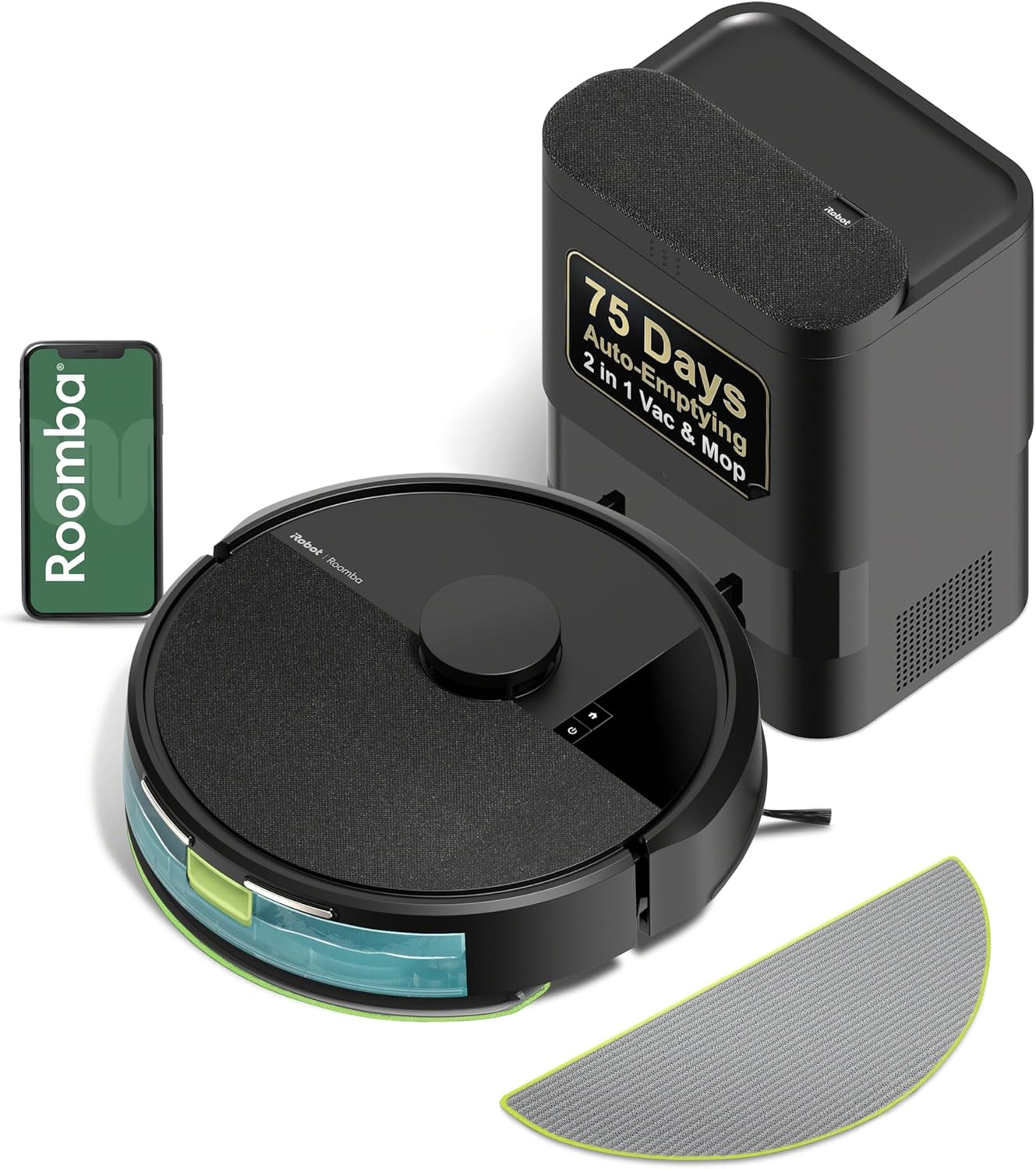
The Roomba Max 705 combines powerful suction, dual rubber anti-tangle brushes, and ClearView Pro LiDAR mapping to deliver reliable floor cleaning with minimal user involvement. It uses PrecisionVision AI to recognize and avoid obstacles while Dirt Detect technology focuses extra passes on high-traffic messes, and Carpet Boost increases suction automatically on rugs. The included AutoEmpty dock holds debris for about 75 days in a sealed bag, reducing how often you touch dust. Typical use is set-and-forget: map your home with the Roomba Home app, set schedules or clean specific rooms by voice or app, and let the robot handle daily pickup on luxury vinyl plank and other hard floors. Practical benefits include strong pet-hair pickup, thorough edge cleaning, and night or low-light operation thanks to LiDAR. Important limitations are the relatively small onboard dust bin that relies on the dock for long runs and the need to perform periodic maintenance like brush and filter cleaning to keep performance high.
Best for: Buyers who want a low-maintenance, dependable robot that handles daily pickup on LVP and mixed floors while offering strong pet hair performance and smart mapping.
Less Ideal for: Shoppers who need a high-capacity onboard bin for frequent deep-clean sessions without a dock or those who prefer ultra-quiet operation at the expense of maximum suction.
- ClearView Pro LiDAR mapping enables precise navigation and room mapping even in low light
- AutoEmpty dock captures debris for up to 75 days, reducing manual emptying
- Dual rubber anti-tangle brushes and Carpet Boost improve pickup of pet hair and debris
- PrecisionVision AI recognizes and avoids common obstacles for fewer interruptions
- Small robot dust bin capacity requires the AutoEmpty dock for extended hands-free runs
- Regular maintenance like brush and filter cleaning is needed to sustain peak performance
Verdict: If you want a smart, hands-off vacuum that maps well and keeps LVP floors free of pet hair and daily dirt with minimal intervention, the Roomba Max 705 is an excellent choice.
roborock Saros 20

| Suction | 36,000 Pa |
|---|---|
| Battery Life | 180 minutes |
| Filter Type | Washable Filter |
| Noise Level | 55 db |
| Power Source | Battery Powered |
The roborock Saros 20 is built for heavy cleaning tasks on hard floors and carpets, combining a 36,000 Pa digital motor with advanced StarSight 3D navigation and AI obstacle recognition. In daily use it navigates room maps via the Roborock app, avoids hundreds of common obstacles, and lifts or lowers its chassis to cross thresholds and clean deep carpet edges without getting stuck. The included multifunctional RockDock handles hot‑water mop washing, hot‑air drying, and long auto dust‑emptying intervals to reduce hands‑on maintenance. Slim clearance lets the robot reach under low furniture while FlexiArm side brush and mop extension improve edge and corner cleaning. The unit is optimized for pet hair with a dual anti‑tangle system and a washable filter, but its size and feature set mean it is a substantial appliance that requires the dock footprint and occasional app tuning for ideal route mapping. Noise is listed around 55 dB, and full capability is best realized when paired with the brand dock and app features.
Best for: Buyers who prioritize maximum cleaning performance on luxury vinyl plank floors and pet‑heavy homes and who want advanced automation to minimize daily upkeep.
Less Ideal for: People with very small homes or limited storage for a larger auto‑maintenance dock or buyers who prefer the simplest, lowest‑cost robot without advanced mapping features.
- Very high suction power (36,000 Pa) for deep cleaning on LVP and carpets
- Advanced 3D navigation and RGB camera reduce missed spots and avoid obstacles
- AdaptiLift chassis crosses high thresholds and cleans under low furniture
- RockDock offers hot‑water mop washing, hot‑air drying, and extended auto dust emptying for low maintenance
- Dual anti‑tangle system and washable filter make pet hair management easier
- Large dock and robot footprint require space for the charging/cleaning station
- Powerful suction and full dock cycles can be louder and more noticeable than basic models
Verdict: Choose the Saros 20 when you need a high‑suction, feature‑rich robot that delivers deep, hands‑off cleaning for LVP and pet‑heavy households.
dreame D30 Ultra CE

| Suction | 25,000Pa |
|---|---|
| Dust bag capacity | 3.2 liters |
| Battery life | 180 minutes |
| Control | App, Voice |
| Mop lift | 0.41 in |
The dreame D30 Ultra CE is a robot vacuum and mop designed to handle regular vacuuming and wet mopping with minimal intervention. It pairs a 25,000Pa suction motor with a DuoScrub mopping system and a self-cleaning washboard in its multifunctional base, so it can vacuum, mop, auto-empty its dustbin, wash mop pads, and hot-air dry them after runs. Navigation uses laser-guided mapping and obstacle avoidance for efficient room coverage and supports no-go zones and room scheduling via app and voice control. Practical features for LVP floors include automatic mop lift to protect carpets and adjustable mop moisture, plus a large 3.2 L dust bag for infrequent emptying. Expect long battery runtime for larger homes but also a sizeable base station footprint and routine maintenance for brushes and pads. The unit only supports 2.4 GHz Wi‑Fi and is configured for U.S. use. For buyers who want a set-and-forget cleaning routine on hard floors, the D30 Ultra delivers strong cleaning power with advanced self-maintenance, while the base station size and ecosystem limits may matter to space-conscious users.
Best for: Buyers who prioritize time savings and consistent cleaning on luxury vinyl plank floors and want a vacuum that largely maintains itself with automated emptying and mop care.
Less Ideal for: People with very small homes or limited storage who cannot accommodate a sizable base station or users who need dual-band Wi‑Fi support and broader network compatibility.
- Very strong 25,000Pa suction for effective debris pickup on hard floors and pet hair
- All-in-one base automates dust emptying, mop washing, and hot-air drying to reduce hands-on maintenance
- DuoScrub mopping with adjustable moisture and automatic mop lift protects LVP and carpets
- Laser mapping and obstacle avoidance enable efficient room-by-room cleaning and no-go zones
- Large 3.2 L dust bag and expanded dust box reduce frequency of manual emptying
- Multifunctional base station is large and needs a dedicated space
- Only supports 2.4 GHz WiFi which limits modern network options
Verdict: If you want powerful, low‑touch cleaning for LVP floors, the D30 Ultra CE pairs strong suction with a self-maintaining base to cut routine chores.
ILIFE V2 Robot Vacuum

| Battery Life | 120 minutes |
|---|---|
| Capacity | 300 ml |
| Filter Type | Sponge |
| Control Method | Remote |
| Noise Level | 69 db |
The ILIFE V2 is an entry-level robot vacuum built to keep hardwood and other hard floors tidy without a lot of fuss. Its 2.99-inch slim body fits under low furniture while a tangle-free suction port and sponge filter make it practical for homes with pet hair. You can run scheduled cleanings, switch between auto, spot and edge modes, or start jobs with the included remote control or the single-button on the unit. A 300 ml dustbin and up to 120 minutes of runtime let it cover medium rooms on one charge, and it will automatically return to the dock when the battery is low. Noise is noticeable at 69 dB and there is only one power level, so it lacks adjustable suction or app-based controls, but for straightforward floor maintenance on hardwood and low-pile carpet the V2 delivers solid value at an affordable price.
Best for: Buyers who want an affordable, no-frills robot to maintain hardwood and low-pile carpet cleanliness with simple controls and scheduled runs.
Less Ideal for: Those who need strong adjustable suction, smart app control, or advanced mapping for large or complex homes should consider higher-end models.
- Slim 2.99-inch profile cleans under low furniture
- Tangle-free suction port suited for pet hair
- 120 minutes runtime with automatic return-to-dock
- Multiple cleaning modes (auto, spot, edge) and simple remote control
- Single power level limits suction control for heavier debris
- No smartphone app or advanced navigation features
Verdict: A low-cost, slim robot vacuum that reliably maintains hardwood floors and handles pet hair for budget-focused buyers.
iRobot Roomba 105 Combo
| Battery Life | 100 minutes |
|---|---|
| Navigation | ClearView LiDAR |
| Cleaning Modes | Vacuum, Mop, Vacuum-and-Mop |
| AutoEmpty Capacity | Up to 75 days |
| Filter Type | Cartridge |
The Roomba 105 Combo pairs a vacuum and microfiber mop pad with a hands-free AutoEmpty dock for up to 75 days of debris containment, making it a low-effort option for regular floor care. It uses ClearView LiDAR to map spaces and navigate around obstacles while choosing between vacuum-only, mop-only, or simultaneous vacuum-and-mop modes, and carpet detection prevents the mop from running over rugs. The cleaning system combines high-suction power, an edge-sweeping brush for corners, a multi-surface brush, and a micro-pump that controls water flow to the mop pad with an optional SmartScrub setting for deeper scrubbing. Control works through the iRobot Home app, onboard buttons, or voice assistants, and routine maintenance is limited to occasional brush and filter care plus replacing the dust bag in the dock. Trade-offs include a mid-length battery runtime and the need to replace AutoEmpty bags periodically, but for homeowners who want reliable, scheduled cleaning with minimal daily handling this unit streamlines both vacuuming and light mopping tasks.
Best for: Homeowners who prioritize dependable, low-touch floor care and want a robot that routinely vacuums and light-mops hard floors with reliable navigation and minimal daily maintenance.
Less Ideal for: People who need long single-charge runtime for very large homes or those who prefer fully bagless docking systems without ongoing bag replacements.
- AutoEmpty dock holds debris for up to 75 days to reduce frequent bin emptying
- ClearView LiDAR mapping enables efficient navigation and room mapping
- Combined vacuum and microfiber mopping with carpet avoidance keeps rugs dry
- Adjustable cleaning modes and app/voice control let you schedule and customize runs
- Battery life is moderate at about 100 minutes which can limit coverage on large homes
- AutoEmpty uses disposable bags that must be replaced over time
Verdict: Choose the Roomba 105 Combo if you want a reliable, low-maintenance robot that routinely vacuums and mops luxury vinyl plank floors while minimizing how often you handle dirt and debris.
eufy C28 Robot Vacuum

| Suction | 15,000 Pa |
|---|---|
| Battery Life | 140 minutes |
| Capacity | 3 liters |
| Filter Type | Washable |
| Surface Recommendation | Hard floor, wooden floor, short wool carpet |
The eufy C28 is a combo robot designed to vacuum and mop hard floors and short-pile carpets with minimal hands-on maintenance. It uses a HydroJet roller mop that self-cleans while spinning and a DuoSpiral brush that claims to resist hair tangles, which makes it practical for homes with shedding pets. LiDAR navigation maps rooms and avoids small obstacles without using cameras, and the robot will lift the mop automatically when it detects carpets. The Omni all-in-one station holds a 3 L dust bag, refills and collects wastewater, washes the mop, and dries it with warm air — eufy says this supports roughly 75 days of unattended operation. Battery runtime and selectable suction let the C28 cover multiple rooms in one charge, and app and voice controls let you schedule and tailor cleans. Trade-offs include a large base footprint and the need to replace consumables like dust bags and filters; the unit is also optimized for hard surfaces so deep-cleaning thick carpets may be less effective.
Best for: Buyers who prioritize low-maintenance cleaning on hard floors and want reliable pet-hair pickup with tech that respects privacy and automates most upkeep.
Less Ideal for: Homes that need intensive deep-cleaning on thick, high-pile carpets or buyers who cannot accommodate a large base station in their floor plan.
- Strong 15,000 Pa suction for lifting pet hair and fine debris from hard floors and short carpets
- HydroJet roller mop with self-wash and hot-air drying reduces manual mop maintenance
- Zero-tangle DuoSpiral brush minimizes hair wrap for multi-pet households
- LiDAR navigation maps rooms and avoids obstacles while preserving privacy by not using cameras
- All-in-one station auto-empties, refills, collects wastewater, and handles up to 75 days of hands-free upkeep
- All-in-one station and robot together are bulky and require floor space near an outlet
- Consumables such as dust bags and washable filters need periodic replacement or cleaning
Verdict: If you want a hands-off vacuum-and-mop setup for luxury vinyl plank and other hard floors with strong pet-hair performance, the eufy C28’s automated station and tangle-free brush make it a top practical choice.
roborock Q10 S5+

| Maximum Suction | 10,000Pa |
|---|---|
| Capacity | 2.7 liters |
| Battery Life | 150 minutes |
| Filter Type | Washable |
| Noise Level | 65 db |
The roborock Q10 S5+ is a robot vacuum and mop designed for hands-off floor care in homes with hard floors and carpets. It uses 10,000 Pa suction and an ultrasonic carpet sensor to boost suction on carpets while lifting or pausing the mop module to avoid wetting rugs, which makes it practical for luxury vinyl plank and other LVP surfaces. LiDAR mapping and ReactiveTech obstacle avoidance produce predictable, efficient routes and let you set no-go zones in the app, while the VibraRise 2.0 sonic mop scrubs stains without soaking floors. The included 2.7 L self-empty dock holds many cycles of debris for low maintenance, and app plus voice control add scheduling and mode adjustments. Expect around 150 minutes of runtime for larger areas, but note the unit is relatively loud at 65 dB in use and the cleaning path is about 14 inches wide so narrow corners may need spot passes. Maintenance steps like emptying the bag, cleaning brushes, and occasional mop pad care are still required. For LVP owners who want automated vacuuming plus controlled mopping, this is a strong, low-effort option.
Best for: Homeowners who want a low-maintenance, automated solution that vacuums and mops LVP and hard floors reliably with strong suction and predictable mapping.
Less Ideal for: People who need ultra-quiet overnight cleaning or who require a robot that reaches very narrow crevices and tight corners as its primary function.
- Very strong 10,000 Pa suction for embedded dirt and pet hair
- LiDAR mapping with multi-level maps and reliable obstacle avoidance for predictable cleaning
- VibraRise sonic mopping with auto-lift to protect carpets and LVP from excess moisture
- Large 2.7 L dust bag self-empty dock reduces hands-on maintenance for many weeks
- App and voice control allow scheduling, no-go zones, and suction/mop adjustments
- Reported noise level around 65 dB can be noticeable during operation
- Relatively wide cleaning path may miss tight corners and edges without spot cleaning
Verdict: If you want a mostly hands-off vacuum-and-mop that protects LVP with controlled mopping and powerful suction, the Q10 S5+ is a practical choice.
Choosing the Right Robot Vacuum for LVP Floors: Key Factors to Consider
Suction Power and Adjustability
Suction strength determines how well the vacuum picks up fine dust, pet hair, and grit that can abrade vinyl if left behind. For LVP floors, raw maximum suction is less important than the ability to dial it down for gentle cleaning. Adjustable suction modes let the robot remove surface debris without forcing large particles against the finish.
Also consider automatic boost features. A unit that temporarily increases suction on rugs then drops back on hard floors protects vinyl while still handling mixed-floor homes. Look for explicit floor-type settings or sensors that detect surface changes so the vacuum adapts to LVP without over-agitating.
Wheel and Bumper Materials
Wheels and bumpers are the parts that physically contact your floor most often. Softer, rubberized wheels reduce scuffing and distribute weight more evenly than hard plastic. Bumpers with flexible, cushioned edges prevent dings to baseboards and reduce the chance of abrasive contact when the robot meets obstacles.
Examine wheel width and tread design. Wider, softer wheels spread load and are less likely to create pressure points that mark vinyl. A suspension or compliance system helps the robot traverse transitions and thresholds without a harsh impact on the plank surface.
Brush Type and Contact Pressure
Brush design drives how the vacuum interacts with the floor. Soft roller brushes or rubber extractors are usually preferred for LVP because they lift debris without scraping. Stiff bristle brushbars can trap grit and act like sandpaper, gradually dulling the finish.
Also check how the brushhead floats and how much downward pressure the unit applies. Lower contact pressure and a compliant brush assembly decrease the risk of micro-abrasions while maintaining pickup efficiency across uneven plank seams.
Dust Containment and Filtration
Fine dust and grit are the main culprits behind surface wear. A dustbin and filter system that traps small particles prevents them from being re-deposited across the floor as the robot runs. HEPA or fine-particle filters help with airborne allergens and stop the smallest particles from circulating.
Emptying convenience matters because a full or poorly sealed bin will leak dust back onto the floor. Consider robots with sealed dust paths and easy-to-clean bins to minimize contact with trapped grit during maintenance.
Navigation and Coverage Efficiency
Effective navigation reduces repeated passes and random bumping that can stress sensitive flooring. Robots with systematic mapping and path planning cover areas methodically, reducing overall runtime and limiting unnecessary contact with the surface. Good edge-cleaning routines are important for baseboard areas without repeatedly scraping along the same line.
Look for features like no-go lines, room zoning, and accurate obstacle detection so the robot avoids dragging debris across finished planks and spends time only where needed.
Mopping Compatibility and Moisture Control
Some robot vacuums include damp-mop or wipe attachments. For LVP floors you must ensure any wet-cleaning mode uses very light, controlled moisture. Excess water can seep into plank seams or undercoating and cause warping over time. Robots that allow adjustable water flow or use disposable damp pads reduce the risk.
If you plan to use mopping features, choose units with clear moisture controls and pads designed for vinyl. Avoid aggressive scrubbing actions or rotating wet brushes that might lift edges or force water into seams.
How LVP Differs From Other Hard Floors
Luxury vinyl plank is durable and water-resistant but has a thinner wear layer than some hardwood finishes. That means abrasives and high-friction contacts play a larger role in long-term finish wear even when a surface appears resilient.
Because of this, cleaning tools that are acceptable on tile or sealed hardwood may be too aggressive for LVP over time. Choosing a robot vacuum that minimizes abrasive contact and controls grit pickup is the best approach for preserving appearance and lifespan.
- LVP has seams that can trap grit; repeated passes can grind particles into the surface.
- Finish thickness varies across products; assume a conservative approach to avoid premature wear.
Setup Tips for Protecting Vinyl Planks
Position rugs, runners, and entry mats so the robot picks up most outdoor grit before it reaches the vinyl. High-traffic doorways benefit most from a small mat that captures dirt.
Use no-go lines or physical barriers around delicate thresholds and areas with raised seams. Program cleaning schedules for low-traffic times to reduce the chance of the robot encountering loose debris that can be dragged across planks.
- Check wheel cleanliness periodically and remove trapped grit.
- Keep transitions and thresholds free of loose screws or sharp edges that can damage wheels.
Maintenance Habits That Extend LVP Life
Regularly empty and clean the dustbin and filter so the robot does not redistribute debris. Inspect the brush for trapped hair or particles and replace worn rollers before they become abrasive. Routine maintenance reduces the chance of hard particles being pressed into the floor.
Rotate cleaning modes occasionally to avoid wearing down the same spots. If your robot supports mapped room cleaning, vary schedules to distribute traffic and cleaning pressure across the floor more evenly.
- Wipe wheels and bumper surfaces monthly with a damp cloth to remove grit.
- Replace filters according to the manufacturer interval and keep a spare filter on hand.
When to Use Mopping Modes on LVP
Light, infrequent damp-mopping can remove sticky residues left by daily life, but it should not replace routine vacuuming. Use the lowest moisture setting and a soft pad to avoid excess water sitting on seams. For heavier spills, spot cleaning with a microfiber cloth is safer than whole-room wet cycles.
Avoid aggressive or rotary wet-cleaning heads on LVP. If your robot offers a combined vacuum-and-mop routine, run vacuuming first and ensure the mop stage applies only a light film of moisture.
- Always dry the floor after a mopping cycle if visible moisture remains.
- Test mopping settings in a small, inconspicuous area before full use.
Dealing With Pet Hair and LVP
Pet hair can clump and trap grit that abrades vinyl when the robot moves it around. Choose a machine with brush designs that resist matting and a suction path sized to pull hair into the bin rather than wrapping it around the roller.
Frequent filter checks and bin emptying help keep hair from building up. In homes with heavy shedding, a robot with higher-capacity bins or automatic bin-emptying bases reduces maintenance intervals and the risk of accidental redeposition.
- Run the robot more frequently in high-shed periods to prevent hair buildup.
- Consider a short manual sweep of high-hair areas before the robot runs.
How We Chose the Best Robot Vacuum for LVP Floors
We prioritized attributes that directly affect how robot vacuums interact with luxury vinyl plank floors. Key evaluation criteria included suction control for debris pickup without over-aggressive agitation, wheel and bumper materials to prevent scuffs, brush design to avoid surface abrasion, dust containment and filtration to limit microparticle redeposition, and navigation that reduces repeated passes over the same spot. We also considered battery runtime and recharge behavior because consistent coverage matters on larger LVP layouts, and mopping or damp-wipe integration when present. Excluded from the list were units that rely on hard, stiff brushbars or metal wheels known to increase wear on vinyl surfaces, as well as models lacking adjustable suction or soft-contact features. We tested for usable real-world attributes such as ease of maintenance for brushes and filters, and clarity of suction settings. The result is a selection focused on protecting finish and removing dirt effectively without introducing damage risks to LVP floors.
Our full evaluation process is outlined in our review methodology.
FAQ
Can robot vacuums scratch or damage LVP floors?
They can if the unit has hard wheels, stiff brushbars, or trapped grit. Choosing a robot with soft wheels, compliant brushes, and good dust containment reduces the risk of scratching.
Is it safe to use a robot vacuum mopping mode on LVP?
Light damp-mopping is usually safe if moisture is controlled. Avoid heavy wet cycles and ensure the robot applies only minimal water to prevent seepage into seams.
How often should I run a robot vacuum on LVP floors?
Frequency depends on traffic and pets. High-traffic or pet homes benefit from daily or alternate-day runs, while low-traffic spaces may need only two to three times per week.
What maintenance keeps my LVP safe from robot damage?
Regularly clean wheels and brushes, empty the dustbin, and replace filters on schedule. Inspect for trapped grit and remove it before it abrades the finish.
Do I need to avoid rugs with my robot on LVP?
Not necessarily. Use low-profile rugs and ensure the robot can transition without catching edges. Set boundary lines if a rug has rough backing or risks dragging grit onto the vinyl.
Final Verdict
Prioritize robots that balance effective pickup with gentle contact when choosing for LVP floors. Adjustable suction, soft wheels and bumpers, brush designs that avoid abrasive bristles, and strong dust containment should guide your decision. Consider maintenance needs and navigation features that reduce repeated contact with the same areas. Choose a model that maps your space, offers floor-specific settings, and makes upkeep simple. That approach minimizes wear and keeps luxury vinyl plank floors looking their best for years.