
Note: This article contains affiliate links. If you click on these links and make a purchase, we may earn a small commission at no extra cost to you. This helps support our research and content. Read our full affiliate disclosure here.
If you want a hands-off way to keep floors tidy, a robot vacuum with a self emptying base removes one of the most tedious chores: emptying the dustbin. These systems can run more frequently and for longer stretches between interventions, which matters if you have pets, high foot traffic, or allergy concerns. This guide shortlists six top options and explains the practical tradeoffs that affect everyday use. We evaluate suction and dirt-handling, base capacity and filtration, navigation and mapping, plus noise and ongoing upkeep. Read on for the criteria we used and the operational differences that determine which setup will work best for your home.
Top Picks at a Glance
| Best Overall The best all-around choice for most situations | Shark AV2501AE AI Ultra Robot Vacuum |  |
| Best Quality Built to a higher standard if you want something more solid | MOVA V50 Ultra Complete |  |
| Best Value The sweet spot between price and what you get | ILIFE A30 Pro Robot Vacuum |  |
| Top Rated A top-rated pick with lots of positive feedback | iRobot Roomba 105 Combo |  |
| Most Popular A crowd favorite that many people choose with confidence | eufy C28 Robot Vacuum |  |
| Best Seller A high-volume bestseller chosen again and again | roborock Q10 S5+ |  |
Shark AV2501AE AI Ultra Robot Vacuum

| Filter Type | HEPA |
|---|---|
| Battery Life | 120 minutes |
| Other Special Features of the Product | Bagless, LiDAR Navigation |
| Control Type | App Control, Voice Control |
| Capacity | 60 days |
The Shark AV2501AE is a LiDAR-guided robot vacuum that combines methodical mapping with a bagless, XL HEPA self-empty base rated for about 60 days of debris capacity. It uses Matrix Clean Navigation to run systematic, multi-pass cleaning across carpet and hard floors, while a self-cleaning brushroll and strong suction make it effective at lifting pet hair. Precision home mapping and object avoidance let it navigate day or night, and app plus voice control (Alexa, Google Assistant) make scheduling and spot runs simple. Runtime is up to 120 minutes with recharge-and-resume for larger homes. The included HEPA filtration and sealed empty base help trap fine dust and allergens between emptying cycles. Trade-offs include a relatively tall base and a heavier package compared with compact robot models, and you will need occasional maintenance of brushes and sensors to keep navigation and suction at peak performance. For buyers who want hands-off, whole-home vacuuming with reliable mapping and a long self-empty interval, this model delivers strong everyday cleaning.
Best for: Buyers who want a mostly hands-off, whole-home vacuum that reliably maps rooms, handles pet hair, and minimizes how often you empty the bin.
Less Ideal for: People wanting a very small, lightweight robot for tight storage spaces or those who prefer a mop-and-vac combo rather than a vacuum-focused robot.
- LiDAR-based precision mapping for systematic, whole-home cleaning
- XL bagless self-empty base holds up to 60 days of debris
- True HEPA filtration captures fine dust and allergens
- Up to 120 minutes runtime with recharge-and-resume for larger areas
- Self-cleaning brushroll and strong suction effective on pet hair
- Self-empty base and unit are relatively large and heavier than compact robots
- Requires periodic brush and sensor maintenance to maintain performance
Verdict: Choose this Shark if you want reliable LiDAR mapping and a long-interval self-empty base for low-maintenance whole-home cleaning, especially in homes with pets.
MOVA V50 Ultra Complete

| Suction Power | 24,000 Pa |
|---|---|
| Battery Life | 220 minutes |
| Controller Type | App Control, Voice Control |
| Filter Type | HEAP |
| Surface Recommendation | Hard Floor, Carpet, Marble, Wood, Tile |
The MOVA V50 Ultra Complete is a high-performance robot vacuum and mop built for homes that need strong suction and automated maintenance. It uses a 24,000 Pa motor and a triple anti-tangle system to pull hair and debris from carpets and hard floors while app and voice controls let you schedule and manage runs. The DuoSolution mop system dispenses either an all-purpose or pet-odor solution and the washboard plus 176°F hot water provides mop self-cleaning and a fast hot-air drying routine so pads stay sanitary between cycles. FlexiRise navigation retracts sensors in tight spaces and extendable wheels help the robot climb thresholds and door tracks up to about 2.36 inches, improving coverage under furniture and across rooms. The included accessories kit and multiple mop pads aim to reduce upkeep, but the unit is relatively large and heavy compared with compact models and the full-featured base and hot-water system add complexity that may require occasional maintenance. For buyers prioritizing suction, mop hygiene, and automated base functions, this model delivers powerful, low-touch cleaning.
Best for: Buyers who want a high-suction robot that also delivers deep, hygienic mopping and reduces hands-on maintenance through automated wash and drying routines.
Less Ideal for: Those who need a lightweight, ultra-compact robot for small apartments or who prefer a simpler, lower-maintenance emptying base without heated mop systems.
- Very strong 24,000 Pa suction for deep carpet and debris pickup
- Triple anti-tangle system and TroboWave DuoBrush reduce hair wrap
- DuoSolution mop with heated 176°F self-cleaning and fast hot-air drying keeps mop pads sanitary
- FlexiRise navigation and extendable wheels improve under-furniture access and obstacle crossing
- Large accessories kit and extra mop pads included for extended use without immediate reorders
- Physically large and relatively heavy compared with compact robot vacuums
- Complex base station with hot-water and drying systems can require more maintenance than simpler self-empty bases
Verdict: If you want a performance-focused robot that combines very strong suction with heated mop self-cleaning and an automated base for low-touch upkeep, the MOVA V50 Ultra Complete is a top choice.
ILIFE A30 Pro Robot Vacuum

| Max suction | 10000 Pa |
|---|---|
| Battery life | 150 minutes |
| Dust capacity (bag) | 2.5 liters |
| Navigation | LiDAR with SLAM |
| Filter type | Hepa |
The ILIFE A30 Pro is a combined robot vacuum and mop designed to reduce hands-on maintenance with its self-emptying base and replaceable dust bags. It navigates with LiDAR mapping and SLAM, so it builds accurate floor maps, follows planned routes and supports no-go zones through the ILIFEClean app or voice/remote control. Suction is adjustable across four modes and the unit offers a true vacuum-and-mop workflow via its integrated dustbin and water tank, which can be removed when mopping is not needed. The self-empty station accepts 2.5 L dust bags and the included five bags extend time between manual emptying. Runtime is rated up to 150 minutes, and the HEPA filter and roller brush help with pet hair and mixed floor types. Limitations to consider are the relatively small integrated water tank for heavy mopping jobs, the requirement for 2.4 GHz Wi-Fi for app features, and occasional dependency on bag supply costs over long-term use. For buyers who want low-touch cleaning with mapping and solid suction, the A30 Pro covers core needs effectively.
Best for: Buyers who prioritize low-maintenance cleaning and efficient room mapping and want a vacuum that minimizes daily intervention for mixed hard floors and carpets.
Less Ideal for: Homes that need heavy-duty mopping or have unreliable 2.4 GHz Wi-Fi where advanced app features and remote setup are critical.
- Self-emptying base with 2.5 L dust bags for extended hands-free operation
- LiDAR mapping and SLAM for accurate room mapping and efficient route planning
- Four suction modes including a high-power Max setting for pet hair and embedded dirt
- App, remote and voice control with no-go zones and scheduling
- Integrated water tank is small for heavy or large-area mopping sessions
- App requires 2.4 GHz Wi-Fi which may limit connectivity for some networks
Verdict: If you want a largely hands-off robot that maps reliably and empties itself into replaceable bags, the ILIFE A30 Pro is a practical self-emptying solution.
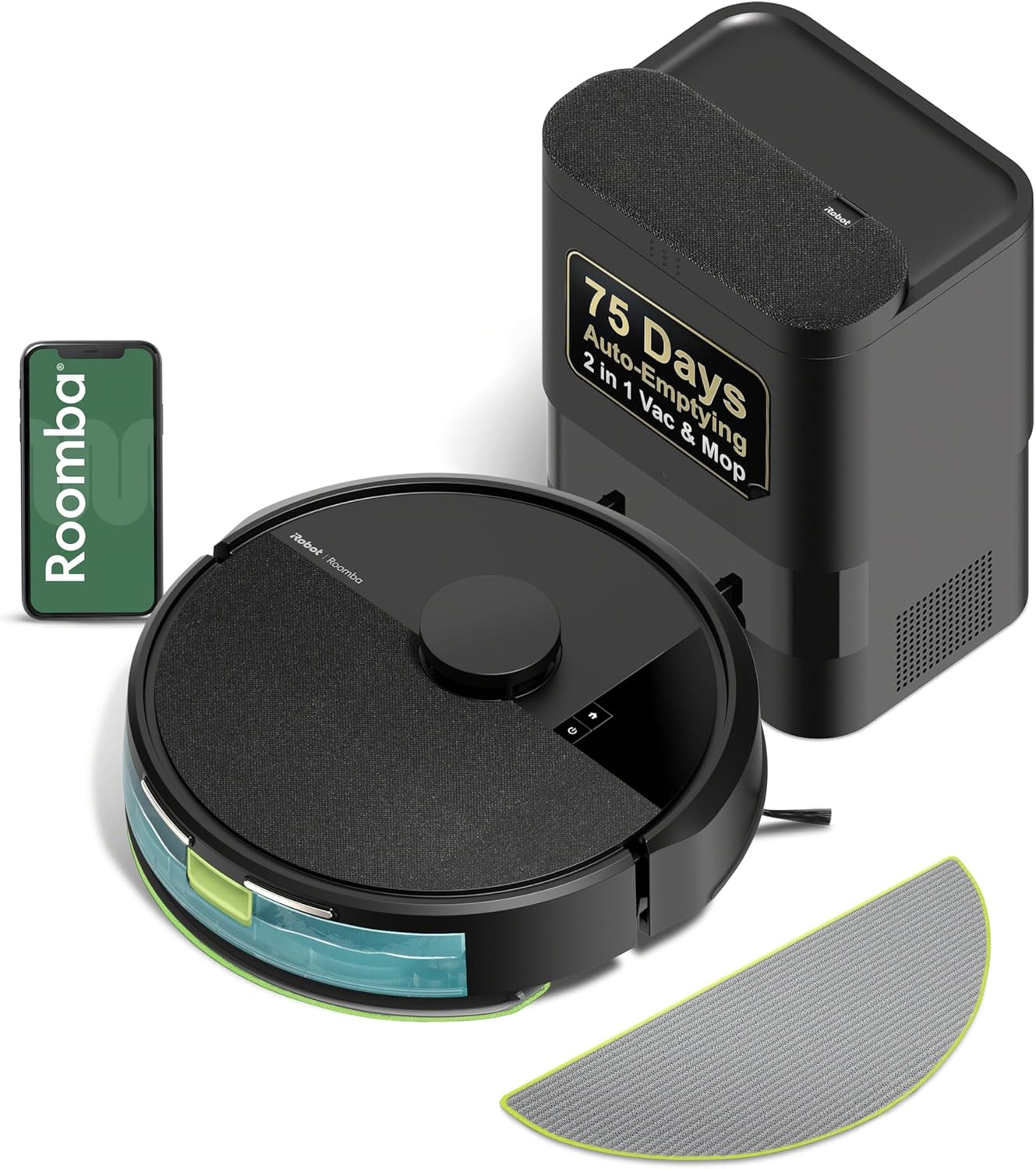
iRobot Roomba 105 Combo
| Battery Life | 100 minutes |
|---|---|
| Filter Type | Cartridge |
| Controller Type | App Control, Button Control, Voice Control |
| Surface Recommendation | Carpet & Hard Floor |
| Other Special Features of the Product | Self-Emptying, LiDAR Navigation, Simultaneous Vacuuming & Mopping |
The Roomba 105 Combo pairs a compact robot vacuum-and-mop with an AutoEmpty dock that holds up to 75 days of dirt, making hands-off maintenance the main appeal. It uses ClearView LiDAR to quickly map rooms and navigate around obstacles while offering three cleaning modes: vacuum, mop, or vacuum-and-mop together. The cleaning system combines intense suction, an edge-sweeping brush and a multi-surface brush for improved pickup, plus a washable microfiber pad and a micro-pump that meters water for consistent mopping and SmartScrub for deeper scrubbing in high-traffic areas. Setup and daily control are handled through the Roomba Home app or voice assistants, and the robot can detect and avoid carpets while mopping. Battery runtime is listed at 100 minutes, so a single charge covers many medium-sized homes but may require staging for larger spaces. The unit needs routine brush and filter care and occasional bag changes in the dock, but the AutoEmpty feature significantly reduces frequent user emptying and dust exposure.
Best for: Buyers who prioritize a low-maintenance cleaning routine and dependable mapping for regular home upkeep will appreciate the hands-off emptying and automated vacuum-and-mop options.
Less Ideal for: Households that need extended runtime for very large floorplans or those that prefer a purely vacuum-focused robot without mopping functions should consider alternatives.
- AutoEmpty dock holds up to 75 days of debris, reducing how often you handle dust
- ClearView LiDAR mapping provides accurate navigation and room coverage
- Combo vacuum-and-mop with micro-pump and SmartScrub offers consistent mopping and deeper scrubbing
- Multiple cleaning modes and app or voice control make scheduling and targeting rooms simple
- 100-minute battery life may be short for very large homes on a single charge
- Mop system requires manual refill of water/solution and periodic pad care
Verdict: Choose this Roomba if you want a reliable, low-touch robot that vacuums and mops while the AutoEmpty dock handles debris for weeks at a time.
eufy C28 Robot Vacuum

| Suction power | 15,000 Pa |
|---|---|
| Dust bag capacity | 3 liters |
| Battery life | 140 minutes |
| Filter type | Washable |
| Control method | App, Push Button, Voice |
The eufy C28 is a robot vacuum and mop designed to minimize hands-on upkeep with a large Omni Station that auto-empties a 3 L dust bag, auto-washes and hot-dries the mop, and collects wastewater for extended maintenance intervals. In daily use it navigates with LiDAR to map rooms and avoid small obstacles while the 15,000 Pa turbo suction lifts pet hair and debris from hard floors and short carpets. The HydroJet roller mop spins rapidly and self-scrapes to keep the mop head cleaner while an auto-lift feature raises the mop on carpets for hybrid cleaning. Notable conveniences include app and voice control, washable filters, a 140-minute runtime for multi-room jobs, and claimed zero-tangle roller brushes for long pet hair. The main compromises are size and complexity: the full station plus robot increases footprint and initial setup compared with simpler vacuums, and advanced features like hot-air drying and hydro-wash add more consumable parts to maintain over time. For buyers prioritizing low-maintenance, automated emptying and a capable mop system, the C28 aims to deliver a nearly hands-free schedule.
Best for: Buyers who want a nearly hands-free cleaning routine and prioritize automated emptying and mop maintenance so they can run frequent multi-room cleans with minimal daily attention.
Less Ideal for: People with very limited floor space for a bulky docking station or those who prefer a compact, simple robot without an integrated mop and washing system.
- All-in-One Omni Station auto-empties, auto-washes mop, hot-dries, and collects wastewater for long maintenance intervals
- Powerful 15,000 Pa suction for lifting pet hair and fine debris
- HydroJet roller mop with self-cleaning scraper reduces mop marks and keeps the roller cleaner
- LiDAR navigation with obstacle avoidance for reliable room mapping and pathing
- Long 140-minute runtime supports multi-room cleaning cycles
- Large station and robot footprint requires dedicated floor space
- More complex maintenance over time due to mop washing, filters, and waste systems
Verdict: If you want a self-emptying robot that also handles hands-free mop washing and drying, the eufy C28 delivers extensive automation to cut routine maintenance nearly in half.
roborock Q10 S5+

| Maximum Suction | 10,000 Pa |
|---|---|
| Capacity | 2.7 liters |
| Battery Life | 150 minutes |
| Filter Type | Washable |
| Control | App Control, Voice Control |
The roborock Q10 S5+ is a robot vacuum and mop designed for long stretches of low-maintenance cleaning in homes with mixed floors and pets. It uses 360° LiDAR mapping and ReactiveTech obstacle avoidance to plan efficient routes and avoid furniture, while multi-level maps and app controls let you schedule cleanings and set no-go zones. The 10,000 Pa suction and smart carpet boost handle embedded dirt and pet hair, and the VibraRise 2.0 sonic mopping scrubs hard floors while automatically lifting the mop over carpets. The included auto-empty dock holds a 2.7 liter dust bag for roughly 70 days of unattended use, which greatly reduces how often you need to empty the robot. You get voice control and washable filters for convenience, but expect noticeable noise during high-suction modes and occasional maintenance of brushes or sensors. The unit is feature-rich and aimed at buyers who prefer a robust, largely hands-off solution rather than the quietest or cheapest option.
Best for: Owners who prioritize low-touch, reliable cleaning for mixed-floor homes and pet hair removal and want the convenience of long intervals between dust bin emptying.
Less Ideal for: Buyers who need the quietest possible cleaner or who prefer the lowest upfront cost and are comfortable emptying a dust bin frequently.
- Large 2.7 L auto-empty dock supports extended hands-free cleaning cycles
- Strong 10,000 Pa suction and smart carpet boost for lifting pet hair and embedded dirt
- LiDAR-based 360° mapping with multi-level maps and reliable obstacle avoidance
- VibraRise 2.0 sonic mopping that scrubs hard floors and auto-lifts for carpets
- App control plus voice assistants for easy scheduling and no-go zone setup
- Higher noise level, especially on powerful suction modes
- Requires periodic brush and sensor maintenance despite auto-emptying
Verdict: If you want a powerful, feature-rich robot that minimizes hands-on maintenance with a large self-emptying dock, the roborock Q10 S5+ is a strong choice.
Choosing the Right Robot Vacuum with Self Emptying Base: Key Factors to Consider
Suction Power and Brush System
Suction power determines how well a robot vacuum lifts fine dust, crumbs, and pet hair from both hard floors and carpets. Combined with an effective brushroll and side brushes, stronger suction improves soil removal in a single pass and reduces the need for repeated runs.
Brush geometry and material matter too. Rubberized brushrolls resist hair wrap better than multi-bristle designs, which means less frequent manual detangling. If you have long-haired pets or high pile rugs, prioritize systems where the brush design and suction work together rather than suction specs alone.
Self-Emptying Base Capacity and Sealing
The whole point of a self-emptying base is to extend the time between manual interventions. Base capacity is important because a larger, well-sealed collection bag or bin lets the robot run multiple cycles without overflowing. Also evaluate how the base seals during transfer; a poorly sealed path can release dust back into the room while emptying.
Consider how often you realistically want to open and replace the base receptacle. Bigger households or those with shedding pets benefit from higher-capacity bases and replaceable bags that minimize dust exposure during disposal.
Filtration and Allergy Control
If allergies are a concern, the filtration system in both the robot and the base matters. High-efficiency filters capture fine particles and pollen that would otherwise recirculate. Also check whether the base offers sealed transfer into a bag or closed bin to reduce the chance of allergen exposure when the robot empties itself.
Filters need regular replacement to maintain performance, so factor in the ease of swapping filters and the expected replacement cadence when assessing long-term effectiveness for allergy management.
Navigation, Mapping, and Floor Coverage
Reliable navigation determines how consistently the robot covers your floorplan and avoids getting trapped. Mapping features let you set no-go zones and targeted cleaning, which is useful for fragile areas or rooms you want cleaned more often.
Better mapping typically reduces failed runs and missed spots, which means fewer manual corrections and a more predictable cleaning schedule. For multiroom homes, look for systems with multi-floor mapping and robust obstacle detection to minimize interruptions.
Maintenance and Consumable Costs
A self-emptying robot reduces day-to-day handling, but brushes, filters, and base bags still wear out. Consider how accessible these parts are and how often they must be replaced. Models with easily removable components and simple tool-free access make routine upkeep faster and less frustrating.
Also think about consumable availability and how often you will need to replace filters and base bags. Low ongoing effort is only meaningful if replacement items are affordable and easy to source.
Battery Life and Auto-Resume Capability
Battery runtime affects how large an area the robot can clean in a single session. Longer runtimes let the robot finish bigger jobs without returning to the base mid-cycle. Equally important is auto-resume functionality: the robot should be able to recharge and continue the interrupted job so coverage remains complete.
If your home is large or you plan frequent deep cleans, prioritize models with longer runtimes and reliable recharge-and-resume behavior to avoid partial runs and missed areas.
How Self-Emptying Bases Work and What To Expect
Self-emptying bases use the robot's docking alignment to transfer collected debris from the robot's internal bin into a larger container inside the base. That transfer is typically driven by a brief burst of suction or a mechanical plunger. The process reduces how often you open the robot's small internal bin, and in many designs it deposits debris into a replaceable bag or sealed canister for easier disposal.
- Transfer methods vary: suction-driven or mechanical plunger systems.
- Some bases use replaceable bags for cleaner disposal, while others use reusable bins that require manual emptying.
- Expect occasional dust clouds during transfer if the base or transfer path is not well sealed.
Typical Maintenance Routines for Low-Touch Ownership
Even with a self-emptying base, you will still perform periodic maintenance. Common chores include wiping sensors and charging contacts, cleaning the brushroll and side brushes, and swapping filters. Base maintenance usually involves checking the collection bin or replacing the disposable bag and occasionally cleaning the transfer port to prevent clogs.
- Establish a weekly quick check: clear visible debris from brush areas and sensors.
- Plan for monthly filter checks and brush inspections; replace consumables per manufacturer guidance.
- Store replacement bags or filters on hand if you prefer uninterrupted operation.
Placement and Setup Tips for Reliable Emptying
Base placement affects how reliably the robot docks and empties. Position the base against a wall on level flooring with several feet of clear space in front to allow the robot to approach and align. Avoid tight corners and sloped mats that can misalign the robot during docking. Initial mapping runs are useful to let the robot build an accurate floorplan before you rely on scheduled cleanings. During the first week, monitor several cycles to confirm the robot can return to the base and complete the emptying sequence consistently.
- Leave at least 3 feet of clearance in front of the base when possible.
- Avoid placing the base near high-traffic areas where people or pets might block docking.
- Run a few supervised cycles to ensure mapping and docking accuracy.
Noise and Scheduling Considerations
Self-emptying events add a short noise spike compared with a robot running alone. If noise during the night is a concern, schedule emptying cycles for daytime or set quiet cleaning modes on the robot to limit disturbance. Some bases are louder during the transfer, so factor transfer noise into placement decisions if the base will sit near a living area or bedroom. Many robots let you schedule cleanings by room or time of day. Combining scheduled runs with automatic emptying reduces how often you open the base, but be mindful of overlap with household routines to avoid interference.
- Expect a louder noise during the emptying event compared to normal cleaning.
- Use schedules to keep emptying events out of quiet hours.
- Select quieter modes for light daily cleaning and reserve maximum-suction modes for deeper weekly cleans.
How We Chose the Best Robot Vacuum with Self Emptying Base
Our selection prioritized real-world factors that matter for daily upkeep and long-term reliability. First, we filtered for robot vacuums that include a truly self-emptying base rather than simple remote-empty charging docks. We then evaluated suction and airflow specs alongside brush design to estimate how well each unit handles pet hair and embedded debris. Base capacity and the sealed dust containment strategy were treated as a separate dimension because an oversized internal bin defeats the point of low-touch maintenance. Navigation and intelligence were another key filter: devices that offer reliable mapping and obstacle avoidance tend to finish cleaning cycles more consistently and require fewer manual recoveries. We also considered filtration quality and whether the base supports sealed transfer to reduce dust escape. Practical upkeep factors such as filter and brush replacement accessibility, availability of consumable parts, and typical maintenance intervals influenced inclusion. Excluded items included models that rely on manual dustbin emptying or require frequent base maintenance that undermines the low-touch promise. The final picks balance autonomous emptying, effective dirt pickup, practical upkeep, and mapping reliability.
Our full evaluation process is outlined in our review methodology.
FAQ
How often will I need to empty the base container or change bags?
Frequency depends on household size, pets, and how often the robot runs. Many homes can go several weeks between bag changes with regular daily or every‑other‑day cleaning, but heavy shedding or large homes may require weekly attention.
Does a self-emptying base reduce allergy exposure?
A sealed transfer into a bag or closed container reduces exposure compared with emptying a small robot bin into a trash can. Filtration quality and how well the base seals during transfer are the main factors that determine the allergy benefit.
Will the robot still pick up large debris with a self-emptying system?
Most systems handle common debris like crumbs and pet hair well, but very large pieces or string-like materials can clog brushrolls or the transfer path. Clearing oversized items before a run reduces the chance of jams.
Can the robot still run if the base bag is full?
Many robots will still complete a cleaning cycle but will flag a full-base notification and may reduce emptying attempts until the bag or bin is addressed. Routine checks prevent interrupted emptying and potential overflow.
Are replacement bags and filters easy to find and replace?
Availability varies by manufacturer, but most systems use commonly sized bags or filters that are straightforward to swap. Check the expected replacement cadence to plan for ongoing upkeep.
Final Verdict
Self-emptying robot vacuums shift routine bin emptying from daily chores to periodic upkeep, but they are not maintenance-free. Prioritize suction and brush design if you need effective pickup, and choose a base with adequate capacity and a sealed transfer path if allergies or frequent shedding are concerns. Navigation and battery runtime determine how reliably a unit cleans your floorplan with minimal intervention. Weigh these tradeoffs against maintenance cadence and consumable availability to pick the setup that truly reduces hands-on work. With the right configuration, a robot vacuum with a self emptying base can deliver meaningful time savings and more consistent floor cleanliness.