
Note: This article contains affiliate links. If you click on these links and make a purchase, we may earn a small commission at no extra cost to you. This helps support our research and content. Read our full affiliate disclosure here.
Luxury vinyl plank (LVP) needs cleaning that removes grit without scuffing or dulling the surface. A Robot Vacuum for LVP can save time and reduce wear when it handles dust, pet hair, and fine debris without aggressive brushes or hard wheels. This guide covers seven shortlisted robot vacuums chosen for their floor-safe features, adjustable suction, and navigation that avoids repeated scrubbing in one spot. We evaluate each pick on the factors that matter for plank floors and typical home use, so you can choose a model that protects your investment and keeps floors looking like new. Read on for a concise breakdown of what to expect from each type of robot vacuum and the criteria we used to select them.
Top Picks at a Glance
| Best Overall The best all-around choice for most situations | roborock Qrevo S Pro |  |
| Best Quality Built to a higher standard if you want something more solid | roborock Saros 20 |  |
| Best Value The sweet spot between price and what you get | ILIFE A30 Pro Robot Vacuum |  |
| Best Budget The cheapest option that still gets the job done reliably | Lefant M210 Robot Vacuum |  |
| Top Rated A top-rated pick with lots of positive feedback | Bagotte G6 Robot Vacuum |  |
| Most Popular A crowd favorite that many people choose with confidence | iRobot Roomba 105 Combo |  |
| Best Seller A high-volume bestseller chosen again and again | Tikom G8000 Max Robot Vacuum |  |
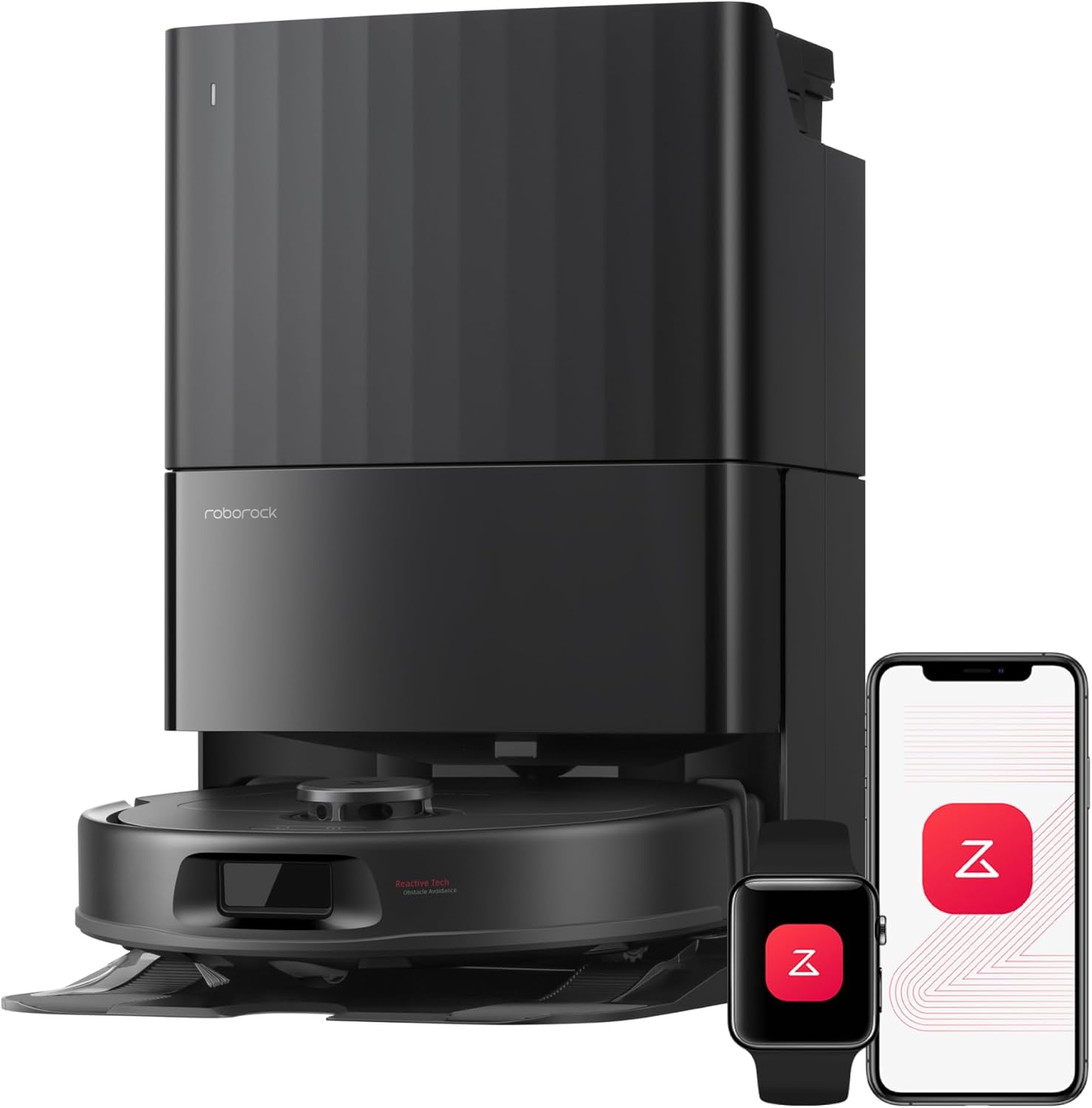
roborock Qrevo S Pro
| Suction | 18,500 Pa |
|---|---|
| Dock capacity | 2.7 liters |
| Battery life | 180 minutes |
| Filter type | Washable |
| Noise level | 60 db |
The roborock Qrevo S Pro combines strong vacuuming and automated mopping into a single hands-free floor-care system. It navigates with PreciSense LiDAR and Reactive Tech obstacle avoidance to map multiple floors, avoid shoes and toys, and cross typical thresholds, while 18,500 Pa suction lifts dust, crumbs, pet hair and debris from hard floors and rugs. The included multifunctional dock handles auto-emptying into a sealed 2.7 L bag, hot mop self-cleaning at 167°F, and warm air drying so the mop modules stay hygienic between runs. Twin liftable spinning mops and adjustable water flow let it tackle light LVP spills and daily stains without soaking floors, and washable filters plus an anti-tangle brush reduce maintenance. Runtime is rated up to 180 minutes for larger homes, and app, voice and button controls support scheduling and no-go zones. Expect a well-rounded, low-maintenance machine for mixed-floor homes, though very heavy soiling or deep-cleaning thick carpets may need occasional spot cleaning or a dedicated upright vacuum.
Best for: Buyers who want a single, low-maintenance robot that reliably vacuums and mops a mix of hard floors and rugs and value automated mop care and smart mapping.
Less Ideal for: Users who need a lightweight, portable cleaning tool for frequent deep carpet shampooing or those who prefer minimal upfront equipment footprint.
- Strong 18,500 Pa suction for lifting dust, crumbs, and pet hair from hard floors and rugs.
- All-in-one dock auto-empties (2.7 L sealed bag) and hot self-cleans plus warm-dries the mop modules.
- LiDAR navigation with obstacle avoidance and multi-floor mapping for reliable, efficient cleaning routes.
- Anti-tangle brush and washable filter reduce hair wrap and simplify maintenance.
- Relatively heavy unit and dock which may be cumbersome to move or store.
- Not intended for intensive deep-cleaning of heavily soiled thick carpets.
Verdict: A balanced, feature-rich robot that delivers strong suction and automated mop self-care, making it a great all-in-one choice for homes with luxury vinyl plank and mixed floors.
roborock Saros 20

| Battery Life | 180 minutes |
|---|---|
| Filter Type | Washable Filter |
| Controller Type | App Control, Remote Control, Voice Control |
| Noise Level | 55 db |
| Power Source | Battery Powered |
The roborock Saros 20 is built for heavy cleaning tasks on hard floors and carpets, using a 36,000 Pa digital motor to pull deep dirt and pet hair out of crevices while a slim 3.13" profile reaches under low furniture. StarSight Autonomous System 2.0 with 3D ToF and an RGB camera maps rooms in real time and recognizes hundreds of obstacles, which reduces interruptions and improves route efficiency. The AdaptiLift chassis lets the robot cross high thresholds and lift for deeper carpet cleaning, and FlexiArm extends brushes and the mop for edge-to-edge coverage. The RockDock base adds hands-free maintenance with hot water mop washing, hot‑air drying, and extended auto dust emptying for long unattended runs. Typical use is scheduled app control and spot cleaning in homes with pets and mixed surfaces, with voice control and smart mapping to fine-tune routines. Trade-offs are size and complexity: the unit and dock are substantial and the many automated features mean occasional maintenance and app setup are required to keep everything running at peak performance.
Best for: Buyers who prioritize raw cleaning performance and reliable hands‑free maintenance for pet hair and heavy soil on luxury vinyl plank and mixed hard floors.
Less Ideal for: People with very small homes or minimal storage who need a compact, simple robot or those who prefer a budget model without advanced docking features.
- Extremely strong 36,000 Pa suction for deep cleaning and pet hair pickup
- Advanced 3D ToF and RGB camera navigation to avoid obstacles and build accurate maps
- AdaptiLift chassis crosses high thresholds and improves carpet cleaning without losing suction
- RockDock automated base handles hot-water mop washing, drying, and extended auto-empty for hands-free upkeep
- Physically large robot and dock require significant floor space for the base
- Complex feature set requires initial app setup and occasional maintenance to keep systems calibrated
Verdict: If you want maximum suction, smart obstacle avoidance, and a largely hands‑free docked cleaning system for LVP and pet messes, the Saros 20 delivers that performance.
ILIFE A30 Pro Robot Vacuum

| Battery Life | 150 minutes |
|---|---|
| Filter Type | Hepa |
| Capacity | 2.5 liters |
| Power Source | Battery Powered |
| Control | App, Remote, Voice Control |
The ILIFE A30 Pro is a LiDAR-guided robot vacuum that combines vacuuming and light mopping with a 60-day self-emptying system and selectable suction levels. It maps rooms using laser localization so it can plan efficient cleaning paths, set no-go zones, and save multi-floor maps through the ILIFEClean app, and it responds to remote or voice commands for daily hands-off use. Practical features include four suction modes up to a stated 10000 Pa for tackling pet hair and debris, a 2-in-1 dustbin/water module for simultaneous vacuum-and-mop passes, and a HEPA filter for finer dust capture. The self-empty base accepts 2.5 L disposable bags (five included) for long stretches between maintenance. Expect strong coverage on hard floors like luxury vinyl plank and occasional carpet transitions, though the small 200 ml water tank limits heavy wet mopping and the very high "Max" suction is likely reserved for short bursts rather than continuous runtime. Setup requires a 2.4 GHz Wi-Fi network for full app features.
Best for: Buyers who prioritize reliable, low-maintenance floor cleaning and systematic coverage for hard floors and mixed surfaces will appreciate the A30 Pro's mapping and self-emptying convenience.
Less Ideal for: If you want prolonged wet mopping or a heavy-duty mopping solution, choose a dedicated mop system instead.
- LiDAR mapping with multi-floor and no-go zone support for efficient coverage
- Self-emptying base with 2.5 L disposable dust bags for extended hands-off cleaning
- Combination vacuum and mop module enables one-pass cleaning of hard floors
- Four suction modes including a high-power setting for pet hair and embedded dirt
- App, remote, and voice control integrate with schedules and room-specific cleaning
- Small water tank limits how much mopping can be done per session
- Very high maximum suction likely reduces runtime when used continuously
Verdict: For practical owners of LVP and mixed-floor homes who want minimal upkeep, the A30 Pro delivers mapped, hands-off cleaning with vacuum-and-mop convenience and a long-interval self-empty base.
Lefant M210 Robot Vacuum

| Battery Life | 120 minutes |
|---|---|
| Capacity | 500 cubic centimeters |
| Filter Type | Cartridge |
| Compatible Devices | Amazon Echo, Google Home, Smartphones |
| Other Special Features of the Product | Anti-Fall, Auto-Docking, Obstacle Avoidance, Pet Hair Pick Up, Scheduling |
The Lefant M210 is a small, app-controlled robot vacuum aimed at regular upkeep on hardwood and other hard floors. Its low 3-inch profile slips under furniture, and a brushless suction port helps pick up pet hair without brush tangles. You can run scheduled cleans, pick from six modes including edge and spot, and control the unit via the Lefant app or Alexa/Google voice commands. The listed 120-minute runtime (quiet mode) covers mid-size rooms on a single charge, and the 500ml dustbin reduces how often you empty it. Navigation relies on infrared anti-collision and anti-drop sensors rather than LIDAR, so it follows zigzag or randomized patterns rather than tightly mapped routes; that makes coverage fine for open hardwood areas but less precise in cluttered rooms. Noise is moderate at about 52 dB and suction is tuned for surface dirt rather than deep carpet extraction. For buyers wanting a straightforward, affordable hardwood-focused cleaner, the M210 delivers solid basic performance, but expect simpler navigation and fewer advanced mapping features than higher-end models.
Best for: Buyers on a tight budget who need a dependable, easy-to-use robot for regular hardwood and low-pile cleaning and value app/voice scheduling over advanced mapping.
Less Ideal for: Homes that require precise room mapping, systematic multi-room navigation, or deep-cleaning on high-pile carpets should consider more advanced models.
- Slim profile fits under low furniture for hidden-dirt pickup
- Brushless suction port reduces hair tangles for pet owners
- App scheduling plus Alexa and Google voice control for hands-free operation
- 500ml dustbin and up to 120 minutes runtime support longer cleaning cycles
- Navigation uses infrared sensors and randomized or zigzag patterns rather than LIDAR mapping, so room coverage can be less efficient in cluttered spaces
- Suction and cleaning are optimized for hard floors and low-pile carpet, not deep-cleaning thick carpet
Verdict: If you want an affordable, compact robot that handles daily hardwood and pet hair cleaning with app and voice scheduling, the Lefant M210 is a practical pick.
Bagotte G6 Robot Vacuum

| Maximum Suction | 6000Pa |
|---|---|
| Battery Life | 120 minutes |
| Filter Type | H13 |
| Capacity | 300 ml |
| Control Method | App, Remote, Voice |
The Bagotte G6 is a robot vacuum and mop hybrid built around 360 degree LiDAR mapping and strong suction for everyday floor care. It maps multiple rooms, supports virtual no-go zones and app/Alexa control so you can schedule targeted runs and keep it away from fragile areas or pet bowls. In use it functions as a sweep, vacuum, and mop system with a 2-in-1 dust and water tank and H13 filtration, making it suitable for low-profile cleaning on hard surfaces like luxury vinyl plank as well as routine carpet touch-ups. The 6000Pa suction rating and 120-minute runtime mean it can handle pet hair and crumbs across medium-size homes before returning to recharge. Expect quieter operation than many budget models but be aware the mop is wet-mopping only and may need manual maintenance on stubborn stains or edges. For reliability-focused buyers the G6's LiDAR navigation and smart mapping reduce missed spots and collisions, while replaceable HEPA filters and included spare brushes make upkeep straightforward.
Best for: Buyers who want a reliable, navigation-first robot that handles regular cleaning on hard floors and light carpets with minimal supervision and predictable coverage.
Less Ideal for: Homes that need heavy-duty deep stain removal or large debris capacity during long uninterrupted runs.
- 360° LiDAR navigation with smart mapping and virtual no-go zones for consistent room coverage
- High maximum suction (6000Pa) effective on pet hair, crumbs, and embedded dirt
- Dual dust-and-water tank plus mop accessories for combined vacuuming and mopping
- 120-minute battery life supports longer cleaning cycles across multiple rooms
- Includes H13 filter and spare brushes for easier maintenance and sustained performance
- Mopping is basic wet-mop style and may not remove stubborn dried spots or clean edges thoroughly
- Unit is relatively low profile which can limit dustbin/mop capacity and require more frequent emptying
Verdict: Choose the Bagotte G6 if you want dependable LiDAR mapping and strong suction for consistent cleaning of luxury vinyl plank and mixed hard-floor homes.
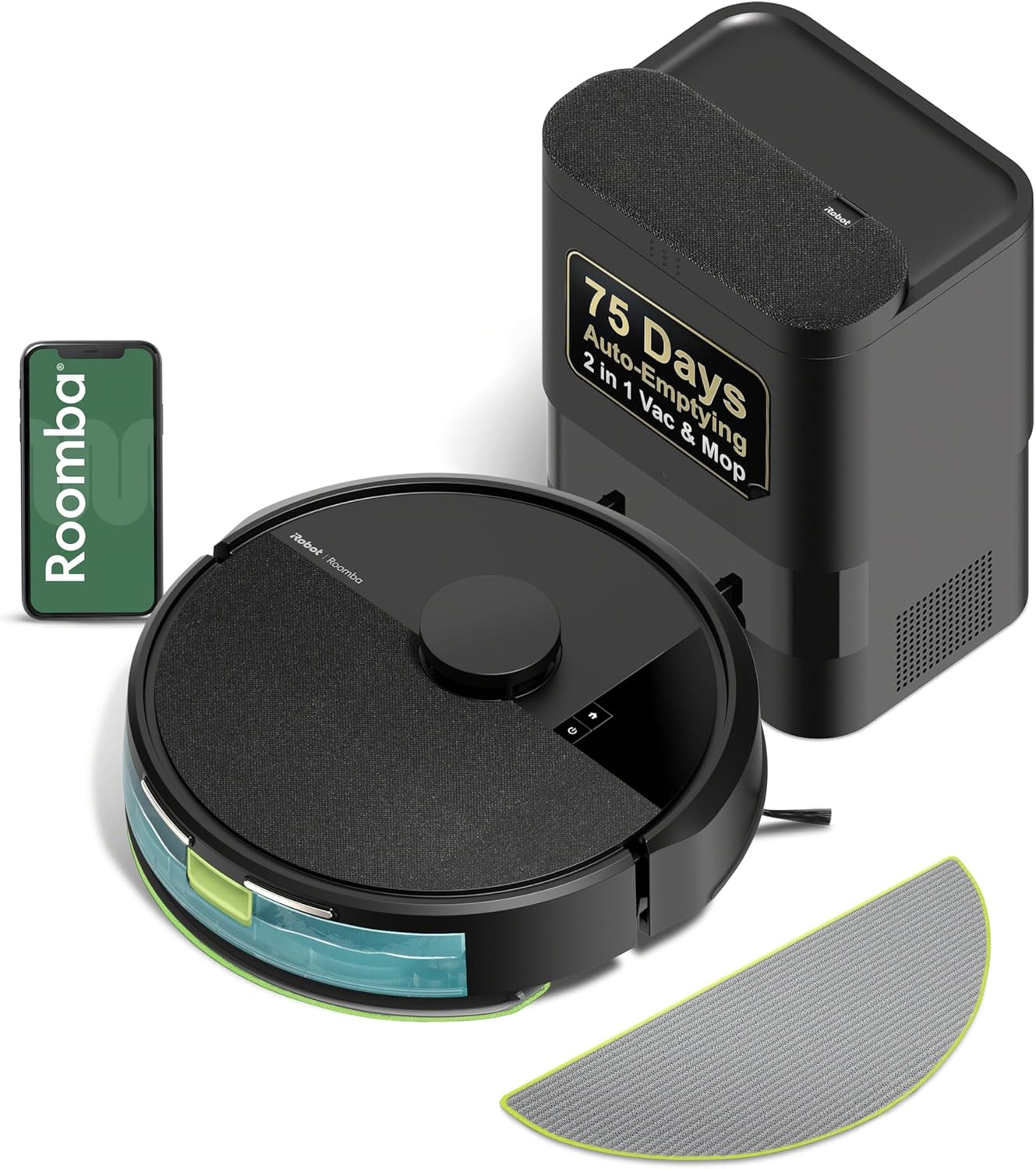
iRobot Roomba 105 Combo
| Surface Recommendation | Carpet & Hard Floor |
|---|---|
| Battery Life | 100 minutes |
| Controller Type | App Control, Button Control, Voice Control |
| Filter Type | Cartridge |
The Roomba 105 Combo is a vacuum-and-mop robot built for regular home cleaning on carpets and hard floors, with ClearView LiDAR mapping, 3 cleaning modes, and a self-emptying AutoEmpty dock. In typical use you pick mop only, vacuum only, or vacuum-and-mop, schedule runs in the iRobot Home app or start with voice commands, and the robot maps rooms to avoid obstacles and stairs. Notable features include a 4-stage cleaning system with power-lifting suction and an edge-sweeping brush for better corner cleaning, a washable microfiber mop pad and a micro-pump that meters cleaning solution for controlled mopping, plus a dock that holds up to 75 days of debris in a disposable bag. Practical benefits for LVP floors are targeted wet cleaning with carpet detection so rugs stay dry, and LiDAR navigation for consistent coverage. Limitations to expect are routine maintenance like filter and brush cleaning, a 100-minute battery life that may need recharges for larger homes, and dependency on the companion app for advanced settings and map customization.
Best for: Buyers who want a mostly hands-off vacuum-and-mop robot that reliably cleans LVP and other hard floors and values documented performance and peer reviews when choosing a dependable, low-maintenance option.
Less Ideal for: People who need the longest possible run time for very large homes, want a mop dock that washes and dries pads, or who prefer fully bagless base stations.
- Self-emptying AutoEmpty dock holds up to 75 days of debris for low-touch maintenance.
- ClearView LiDAR mapping gives reliable room coverage and obstacle avoidance.
- Combined vacuum-and-mop modes with a micro-pump and washable microfiber pad let you control how much liquid is applied to hard floors.
- 70x power-lifting suction and an edge-sweeping brush improve pickup, including pet hair and edge debris.
- App and voice control with scheduling and keep-out zones simplify routine cleaning.
- Battery runtime is 100 minutes which may require mid-run recharges in larger homes.
- AutoEmpty uses disposable bags, adding ongoing consumable cost.
- Does not include heated pad washing or advanced self-washing dock features found on higher-end models.
Verdict: Choose the Roomba 105 Combo if you want a trustworthy LiDAR-mapped vacuum-and-mop with a hands-free AutoEmpty dock that keeps LVP clean with minimal daily effort.
Tikom G8000 Max Robot Vacuum

| Suction | 5000Pa |
|---|---|
| Battery Life | 150 minutes |
| Dustbin Capacity | 450 ml |
| Water Tank | 300 ml |
| Noise Level | 45 db |
The Tikom G8000 Max is a low-profile robot vacuum that combines strong suction with mopping to keep hard floors and low-pile carpets tidy with minimal user effort. In use it maps and navigates with anti-collision and anti-fall sensors, and supports app, remote, voice, and onboard button control so you can schedule cleanings and start runs from a phone or the included remote. Notable features include a 5000Pa suction motor for lifting pet hair and debris, a combined 450 ml dustbin plus 300 ml water tank for simultaneous vacuuming and mopping, and a runtime up to 150 minutes with automatic recharge. Its 3-inch height lets it access under furniture and the Zig-zag cleaning mode improves coverage on open floor areas. Limitations to keep in mind are that higher-pile carpets may not get deep cleaning compared with upright vacuums and mopping is best for maintenance rather than heavy wet cleaning; occasional emptying of the dustbin and refilling the water tank are still required. For routine hardwood maintenance the G8000 Max offers a practical balance of suction, run time, and smart controls.
Best for: Buyers who want a practical, time-saving floor care solution for hardwood and low-pile carpets and prioritize long runtime, reliable navigation, and flexible control options.
Less Ideal for: Households that need deep carpet extraction, heavy wet mopping, or commercial-grade cleaning should consider a dedicated upright or standalone mop system instead.
- Strong 5000Pa suction effective on hard floors and short-pile carpets
- Simultaneous vacuuming and mopping with combined dustbin and water tank saves time
- Long run time up to 150 minutes with auto-recharge for larger homes
- Slim 3-inch profile reaches under low furniture
- Multiple control options including app, remote, voice, and onboard button
- Mopping function is for light maintenance and not heavy wet cleaning
- May be less effective on high-pile carpets compared with full-size vacuums
Verdict: A slim, long-running robot that combines powerful suction and light mopping to keep hardwood floors clean with minimal hands-on work.
Choosing the Right Robot Vacuum for LVP: Key Factors to Consider
Suction Control and Adjustable Power
Suction levels matter because high, constant suction can pull at plank edges or carry abrasive grit that scuffs the surface. Robots that offer multiple suction modes or automatic adjustment based on floor type give you the flexibility to use gentler settings on LVP while still boosting power on carpets.
Look for models that visibly state suction steps or have an automatic floor-detect mode. Adjustable power reduces the risk of edge lifting and keeps textured planks intact over time.
Brush Roll Design and Option to Disable
Brush rolls that are soft, rubberized, or made from non-abrasive materials reduce friction and minimize scratching. Stiff bristle brushes can trap and drag grit across a plank surface, increasing wear. Having the option to switch off the brush roll or swap to a gentle roll for LVP is an important feature for preserving finish.
Consider whether the brush is easy to remove and clean, and whether replacement soft rolls are available. A smooth, non-rotating mode for suction-only cleaning is ideal when you need a gentler approach.
Wheel Material and Suspension
Wheels that are hard plastic can create micro-scratches and leave marks on LVP. Look for rubberized or softer polyurethane wheels that absorb small bumps and reduce pressure points. Good wheel suspension helps the robot maintain even contact without bouncing across seams or edges, which protects plank joints and surface coatings.
Wheel size and tread pattern also affect how the robot climbs thresholds and handles transitions. For LVP, balance between low-profile wheels and adequate shock absorption is key.
Navigation and Coverage Patterns
Robots that rely on methodical mapping cover floors efficiently without repeating passes in the same area. Overlapping, randomized movement can increase wear on spots that get repeatedly scrubbed. Precise navigation with room mapping, virtual boundaries, and path planning prevents unnecessary traffic over delicate areas and ensures complete coverage with fewer abrasive passes.
Also consider how the robot handles corners and edges since some mapping systems leave a narrow strip uncleaned while others repeatedly rub against baseboards.
Dust Bin Capacity and Filtration
Smaller dust bins fill quickly, forcing more frequent emptying and interruptions. For LVP rooms that collect a lot of fine grit, a larger bin reduces maintenance and avoids spillover when the robot returns to its dock. Effective filtration matters too because fine particles trapped in the machine reduce suction efficiency and can abrade surfaces if expelled back onto the floor during cleaning cycles.
Check for easy-to-empty bins and washable filters to keep routine upkeep simple and to sustain consistent performance.
Runtime and Charging Behavior
Battery life determines whether a single charge will complete your LVP areas without stopping mid-job. Robots with longer runtimes or intelligent recharge-and-resume behavior finish large floor plans without repeated manual intervention. Fast recharge times and reliable resume features reduce the number of interrupted cleaning cycles, which can otherwise increase repeated passes on the same areas and contribute to wear.
Consider typical room sizes in your home and whether the robot's stated runtime plus recharge approach fits that footprint.
Why LVP Needs a Different Approach
Luxury vinyl plank has a protective wear layer, but it is still vulnerable to abrasive particles and hard contact. A robot vacuum intended for LVP should minimize friction, avoid hard impacts, and manage suction to remove debris without lifting or scratching planks.
Treatment matters because repeated aggressive cleaning or poor navigation increases the chance of dulling or edge damage over months and years.
- Soft or non-abrasive brush rolls reduce surface friction
- Rubberized wheels prevent scuffs at transition points
- Mapping reduces repeated passes that accelerate wear
Setting Up Your Robot for LVP
Start by selecting a gentle cleaning mode and disabling rigid brush rolls when possible. Place virtual no-go zones near delicate thresholds or high-traffic areas where the robot might repeatedly pass.
Clean the robot's wheels, brushes, and dust bin regularly to avoid transferring grit back onto the floor. Periodic inspection of edge seals and bumper padding prevents unnoticed contact that can leave marks.
- Use low-suction or floor-specific modes for daily maintenance
- Schedule full cleans during low-traffic times to reduce human interruption
- Check for trapped debris in wheels and brush bearings weekly
Maintaining LVP Between Robot Runs
Robots handle daily dust and pet hair, but occasional manual care protects the floor finish. Use a microfiber mop or a damp, manufacturer-approved cleaner on a set schedule to remove residues that vacuums cannot address.
Address spills immediately and avoid harsh cleaners or abrasive pads that can strip the wear layer. A gentle, pH-neutral cleaner and a soft cloth or mop head will maintain the plank appearance without creating a slick surface for the robot to struggle with.
- Follow a combined routine of vacuuming and occasional damp mopping
- Avoid waxes or polish that can interfere with robot sensors
- Treat high-traffic zones with more frequent manual cleaning
Common Missteps to Avoid
Using the highest suction and a stiff brush roll because it feels more thorough can actually accelerate surface wear. Strong suction combined with trapped grit turns the robot into a sanding tool rather than a cleaner.
Ignoring wheel and brush maintenance leads to abrasive particles embedding in components, which the robot then disperses across the floor. Regular checks and gentle settings preserve both finish and machine lifespan.
- Do not let the robot constantly bump into baseboards or furniture edges
- Avoid random-navigation-only robots for large LVP areas
- Replace worn soft parts promptly to prevent indirect abrasion
How We Chose the Best Robot Vacuum for LVP
We filtered candidates for LVP-focused cleaning by prioritizing features that reduce surface wear and improve debris pickup on smooth plank floors. Primary evaluation criteria included suction control and brush design to avoid gouging, wheel and bumper materials to prevent scuffs, mapping and navigation to limit repetitive passes, dust-bin capacity for realistic household pickup, and battery runtime for full-room coverage. We excluded devices with exposed stiff roller brushes, hard plastic wheels, or no ability to lower suction for delicate surfaces. We also excluded units that lack reliable navigation or that depend solely on random bounce-style cleaning, since these patterns can cause unnecessary abrasion on LVP. For each shortlisted vacuum we considered measurable specs and real-world usage signals: adjustable suction steps or modes, presence of soft or rubberized wheels, brush roll type and whether brushes can be disabled, mapping accuracy and no-go zone support, and run-time versus typical room sizes. Quiet operation, ease of maintenance, and filter performance were secondary filters because they affect daily use and lifespan. These criteria guided selection and ranking.
Our full evaluation process is outlined in our review methodology.
FAQ
Can I use a robot vacuum as my only floor cleaner for LVP?
Often you can rely on a robot for daily debris and pet hair removal, but occasional damp mopping and spot-cleaning are still recommended to remove spills and sticky residues that vacuums cannot fully address.
Will a robot vacuum scratch or dull my LVP?
It depends. Robots with soft wheels, rubberized brushes, and adjustable suction are unlikely to scratch when used properly. The risk increases with stiff brushes, hard wheels, or trapped grit, so maintenance and the right settings are important.
How often should I clean the robot's brushes and wheels on LVP?
Usually a weekly check is sufficient for average homes. If you have pets or heavy foot traffic, inspect and clean brushes and wheels two to three times per week to prevent grit buildup that can abrade planks.
Are mopping robot attachments safe for LVP?
Mopping attachments can be safe if they use minimal moisture and a gentle microfiber pad. Avoid soaking the floor or using unapproved cleaners because prolonged moisture can affect some LVP installations.
Should I use virtual boundaries or no-go lines on LVP?
Yes. Virtual boundaries help keep the robot away from areas prone to repeat traffic, delicate thresholds, or zones where it might rub against baseboards, reducing unnecessary wear.
Final Verdict
When choosing a Robot Vacuum for LVP, prioritize adjustable suction, soft brush options, and rubberized wheels to protect the wear layer while still picking up fine debris. Navigation that minimizes repeat passes and a dust bin filter system that traps fine particles will further reduce abrasive contact and maintenance needs. Balance runtime and coverage with maintenance habits: a model that finishes your floor on one charge and is easy to keep clean makes daily LVP care practical. Focus on these tradeoffs to find a robot that preserves plank appearance and simplifies routine floor care.