
Note: This article contains affiliate links. If you click on these links and make a purchase, we may earn a small commission at no extra cost to you. This helps support our research and content. Read our full affiliate disclosure here.
If you live with shedding pets, a self-emptying robot vacuum can cut hours from your weekly cleaning routine. These machines are designed to trap hair, maintain suction over multiple cycles, and dump debris into a base so you do not handle lint-filled bins every few days. Choosing the right robot vacuum matters because hair and dander can clog brushes, reduce performance, and require more frequent maintenance. This guide covers the top shortlisted robot vacuums for pet hair with self-emptying bases. We focused on units that keep suction high around fur, simplify upkeep, and fit into real homes. Below you will find practical buying criteria and decision points used to evaluate each pick before the product list starts.
Top Picks at a Glance
| Best Overall The best all-around choice for most situations | roborock Qrevo S5V |  |
| Best Quality Built to a higher standard if you want something more solid | roborock Saros 20 |  |
| Best Value The sweet spot between price and what you get | ILIFE A30 Pro Robot Vacuum |  |
| Best Budget The cheapest option that still gets the job done reliably | Lefant M2 Plus Robot Vacuum |  |
| Top Rated A top-rated pick with lots of positive feedback | iRobot Roomba 105 Combo |  |
| Most Popular A crowd favorite that many people choose with confidence | Shark AI Ultra AV2501S |  |
| Best Seller A high-volume bestseller chosen again and again | eufy C28 Robot Vacuum |  |
roborock Qrevo S5V

| Suction | 12,000 Pa |
|---|---|
| Battery Life | 180 minutes |
| Dust Capacity | 2.7 liters |
| Filter Type | Washable |
| Control | App, voice, buttons |
The roborock Qrevo S5V combines powerful vacuuming and mopping with a hands-free dock to keep floors clean with minimal intervention. It uses 12,000Pa suction and a zero-tangle brush design to pull pet hair and embedded dirt from carpets and hard floors, while dual spinning mop pads and a FlexiArm reach edges and under furniture. The included multifunctional dock automatically empties dust, self-washes and warm-air dries the mops, and refills the water tank so the robot can cover large areas and multiple floors without frequent user maintenance. Navigation is handled by PreciSense LiDAR plus reactive obstacle sensing, and the app exposes 3D maps, no-go zones, room targeting, and 30-level water flow control. Practical compromises are noise and size: listed noise is about 64 dB and the unit is relatively tall and heavy compared with compact robots, so it may not fit very low-clearance furniture or be the quietest option during operation. For pet owners who want a mostly hands-off solution that mops as well as vacuums, the Qrevo S5V delivers thorough cleaning and low upkeep.
Best for: Buyers who want a low-maintenance, dual vacuum-and-mop robot that reliably manages pet hair and large multi-floor homes with smart mapping and automatic dock care.
Less Ideal for: People who need an ultra-compact or whisper-quiet robot for very low-clearance spaces or those who prefer a simple vacuum-only device without a mop function.
- Strong 12,000Pa suction effective on embedded dirt and pet hair
- Zero-tangle main brush and arc side brush reduce hair wrap
- All-in-one dock auto-empties dust, self-washes and warm-air dries mops
- PreciSense LiDAR and reactive sensors produce accurate maps and reliable obstacle avoidance
- App control with room targeting, multi-floor mapping and adjustable water flow
- Noise level around 64 dB can be noticeable during high-power cleaning
- Relatively large and heavy unit may not clear very low furniture or be ideal for tight storage
Verdict: If you want a mostly hands-off robot that handles pet hair, vacuuming, and mopping while the dock auto-empties and self-washes, the Qrevo S5V is a strong choice.
roborock Saros 20

| Suction | 36,000 Pa |
|---|---|
| Battery Life | 180 minutes |
| Filter Type | Washable Filter |
| Controller Type | App Control, Remote Control, Voice Control |
| Noise Level | 55 db |
The roborock Saros 20 is a performance-focused robot vacuum and mop built to handle pet hair and deep dirt without constant intervention. It combines a 36,000 Pa digital motor and a dual anti-tangle system to pull hair and debris from carpets and gaps while FlexiArm side-brush extension and a slim 3.13-inch profile reach edges and under low furniture. StarSight 3D navigation with an RGB camera and ToF sensors maps rooms in real time and detects hundreds of obstacles for fewer interruptions, and the AdaptiLift chassis raises the body to cross higher thresholds and clean thicker carpets. The RockDock automatic dock adds hot-water washing, hot-air drying, re-wash/re-mop cycles, and up to 65 days of auto dust emptying to minimize maintenance. Expect long runtime and multiple control options via the Roborock app, voice, or remote, but note the advanced dock and high-power motor make this a large, full-featured system that benefits homes needing heavy-duty, low-touch cleaning rather than a minimal, budget setup.
Best for: Buyers who prioritize raw cleaning power and autonomous, low-touch maintenance for homes with pets and heavy soiling and who want advanced navigation to reduce interruptions.
Less Ideal for: Those looking for a compact, inexpensive robot for light daily touch-ups or buyers who need the quietest possible operation should consider simpler alternatives.
- Extremely strong 36,000 Pa suction for deep dirt and pet hair removal
- StarSight 3D navigation and RGB camera detect and avoid 300+ obstacles
- AdaptiLift chassis crosses up to 3.46-inch thresholds and handles deeper carpets
- RockDock provides hot-water wash, hot-air dry, re-wash cycles and long auto-empty intervals
- Slim 3.13-inch profile plus FlexiArm extends reach to clean edges and under furniture
- Large, complex dock and system require more floor space and setup
- High-power performance may produce noticeable noise compared with quieter, lower-suction models
Verdict: If you need a powerhouse robot that tackles pet hair and deep dirt with extensive self-cleaning and auto-emptying, the Saros 20 delivers hands-free performance.
ILIFE A30 Pro Robot Vacuum

| Max Suction Power | 10000 Pa |
|---|---|
| Battery Life | 150 minutes |
| Filter Type | Hepa |
| Capacity | 2.5 liters |
| Power Source | Battery Powered |
The ILIFE A30 Pro is a self-emptying robot vacuum that combines strong suction, LiDAR mapping, and a built-in mop for routine floor care. It navigates your home with precision laser mapping and SLAM to create floor plans, avoid obstacles, and let you set no-go zones and room schedules through the ILIFEClean app or voice/remote control. The included self-empty station uses replaceable 2.5 L dust bags (five supplied) to reduce manual emptying for months, and four suction modes plus a Max 10000Pa setting help lift pet hair from carpets and hard floors. A 2-in-1 dustbin and water tank let the robot vacuum and mop at the same time or be converted to vacuum-only, which shortens overall cleaning cycles. Practical limitations include a relatively small onboard water and dust capacity on the robot itself, reliance on 2.4 GHz Wi-Fi for app features, and potential ongoing cost for replacement disposable dust bags. For everyday removal of pet hair and dirt with low hands-on maintenance, the A30 Pro is an efficient choice.
Best for: Buyers who prioritize a low-maintenance vacuuming routine and want strong suction plus reliable mapping to keep pet hair and everyday dirt under control with minimal hands-on work.
Less Ideal for: People who want a fully bagless system or have only 5 GHz home networks and cannot use 2.4 GHz Wi-Fi should consider alternative models.
- Powerful suction modes up to 10000Pa for lifting pet hair and embedded debris
- LiDAR navigation with SLAM for accurate mapping, object avoidance, and room-by-room cleaning
- Self-emptying dock with 2.5 L replaceable dust bags that extend hands-free operation
- App, remote, and voice control plus scheduling and no-go zones for flexible automation
- Robot uses onboard 200ml dust and 200ml water tanks which limit run-time between servicing
- App requires 2.4 GHz Wi-Fi so advanced features may not work on 5 GHz-only networks
- Uses disposable dust bags which add recurring replacement cost
Verdict: A30 Pro is the practical pick for pet owners who want strong suction and LiDAR-guided self-emptying cleaning with minimal daily upkeep.
Lefant M2 Plus Robot Vacuum

| Suction | 6000Pa |
|---|---|
| Water Tank Capacity | 300ml |
| Dust Bag Capacity (base) | 2.5L |
| Max Runtime | 140 Min |
| Navigation | LiDAR |
The Lefant M2 Plus is a compact robot vacuum and mop that uses LiDAR mapping and PSD obstacle avoidance to clean methodically in mapped rows and resume after interruptions. It is typically used for scheduled whole-home cleaning and spot or zone runs via the app, and it supports voice assistants and dual-band WiFi for remote control. Notable features include a 6000Pa suction motor with a roller brush for picking up pet hair, a self-emptying base that accepts 2.5L dust bags for up to 75 days of unattended collection, a 300ml water tank with three water-flow settings, and carpet detection that auto-boosts suction or avoids mopping on rugs. In practice the M2 Plus is good for multi-surface homes where you want hands-off maintenance: it maps reliably, handles edge cleaning, and reduces how often you touch the dustbin. Trade-offs are its smaller dustbin/dirt capacity in the robot itself and the need to buy replacement sealed dust bags for the self-empty station, plus its run time and water tank sizes make it better suited to regular maintenance than extremely large homes or heavy daily messes.
Best for: Buyers wanting a budget-friendly, low-maintenance robot that handles pet hair and mixed floors with reliable mapping and a self-emptying station to cut down on daily upkeep.
Less Ideal for: Households with very large square footage, heavy daily dirt, or those who want a very large onboard dust or water capacity without buying consumables.
- LiDAR mapping and PSD obstacle avoidance for precise navigation and efficient coverage
- Self-emptying station with 2.5L dust bags reduces manual emptying for weeks
- 6000Pa suction and roller brush designed to pick up pet hair from carpets and floors
- Carpet detection with auto-boost keeps carpets dry when mopping and increases suction on rugs
- Robot dustbin and water tank are relatively small, so the robot relies on the base for longer unattended runs
- Replacement sealed dust bags are required for the self-emptying feature and sold separately
Verdict: A cost-conscious pet-owner pick that combines LiDAR mapping and a self-emptying base to minimize hands-on maintenance while still lifting hair from carpets and hard floors.
iRobot Roomba 105 Combo
| Battery Life | 100 minutes |
|---|---|
| Navigation | ClearView LiDAR |
| Surface Recommendation | Carpet & Hard Floor |
| Other Special Features | Self-Emptying, Simultaneous Vacuuming & Mopping, Obstacle Avoidance |
| Controller Type | App Control, Button Control, Voice Control |
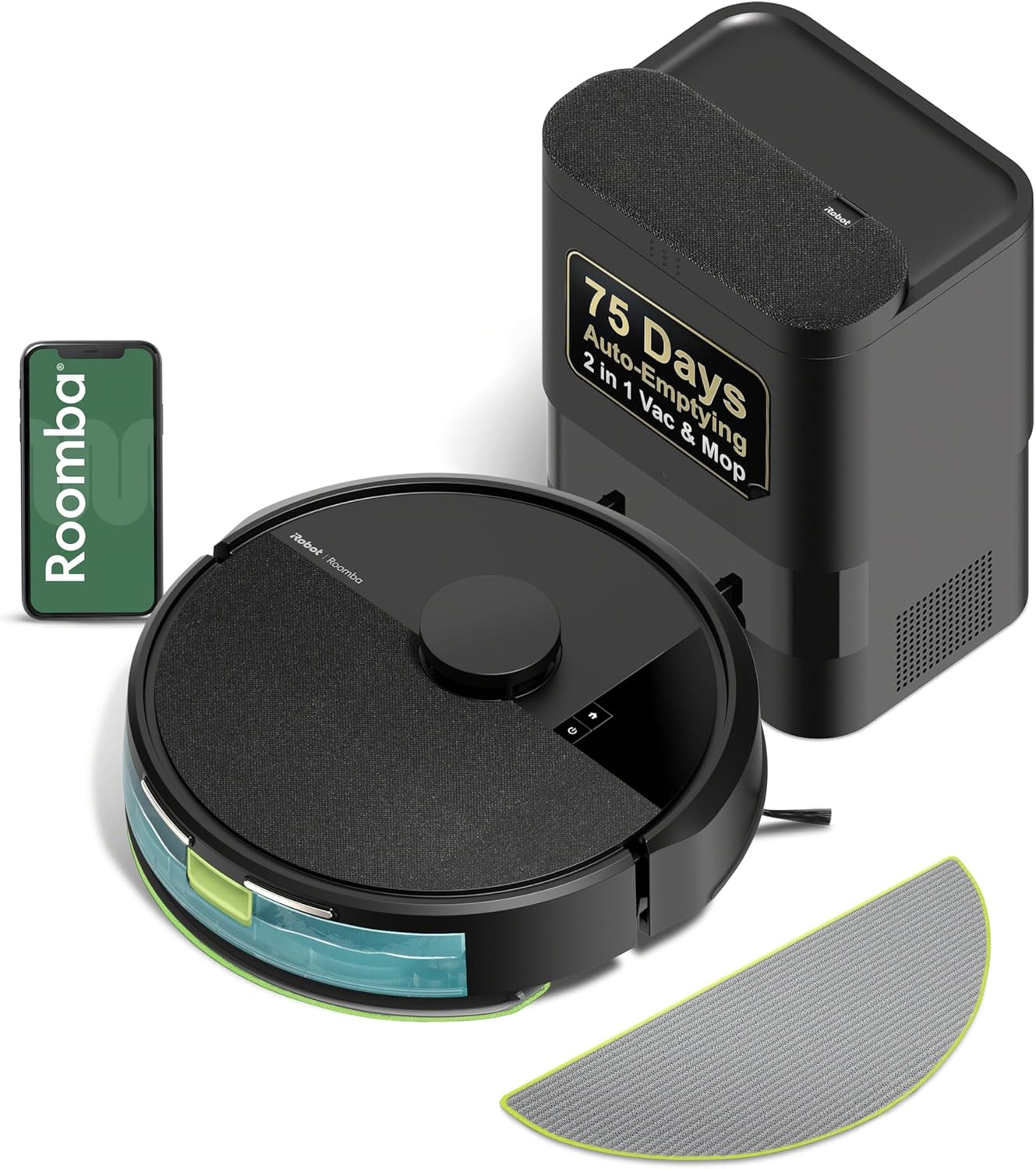
The Roomba 105 Combo pairs a compact disc-shaped robot with an AutoEmpty dock that holds up to 75 days of debris, so you can reduce how often you handle dust and pet hair. It uses ClearView LiDAR to map and navigate reliably around furniture and obstacles, and offers three cleaning modes: vacuum, mop, or vacuum-and-mop together. The machine combines a multi-surface brush and edge-sweeping brush with a microfiber mop pad and a micro-pump to control mopping solution, plus an option called SmartScrub for deeper scrubbing of high-traffic spots. Setup and control are straightforward via the iRobot Home app, voice assistants, or onboard buttons, and the robot detects carpets to avoid wetting rugs while mopping. Practical limits include a 100-minute battery life which may require recharges on larger homes, and regular maintenance such as filter changes and brush cleaning. The bundled AutoEmpty dock simplifies upkeep for pet owners, but replacement bags are an ongoing consumable to consider.
Best for: Buyers who prioritize dependable, low-touch cleaning for homes with pets and want a robot that reliably maps spaces and reduces how often they empty hair and debris.
Less Ideal for: People with very large homes who need all-day runtime or those who want a mop system that is fully maintenance-free without washable pads or consumable bags.
- AutoEmpty dock holds up to 75 days of debris to minimize manual emptying
- ClearView LiDAR mapping for consistent navigation and obstacle avoidance
- Combined vacuum and mop modes with SmartScrub for deeper spot cleaning
- Edge-sweeping and multi-surface brushes designed to pull pet hair from corners
- Multiple control options via app, voice assistants, or onboard buttons
- 100-minute runtime may need mid-clean recharge on larger homes
- Uses disposable dock bags, which are a recurring cost
- Mop function relies on a microfiber pad that requires washing or replacement
Verdict: If you want a reliable pet-hair-focused robot that cuts down on manual emptying, the Roomba 105 Combo with its AutoEmpty dock and LiDAR navigation is a practical pick.
Shark AI Ultra AV2501S
| Battery Life | 120 minutes |
|---|---|
| Filter Type | Foam |
| Control Method | Voice |
| Compatible Devices | Amazon Alexa, Google Home |
| Surface Recommendation | Carpets & Hard Floors |
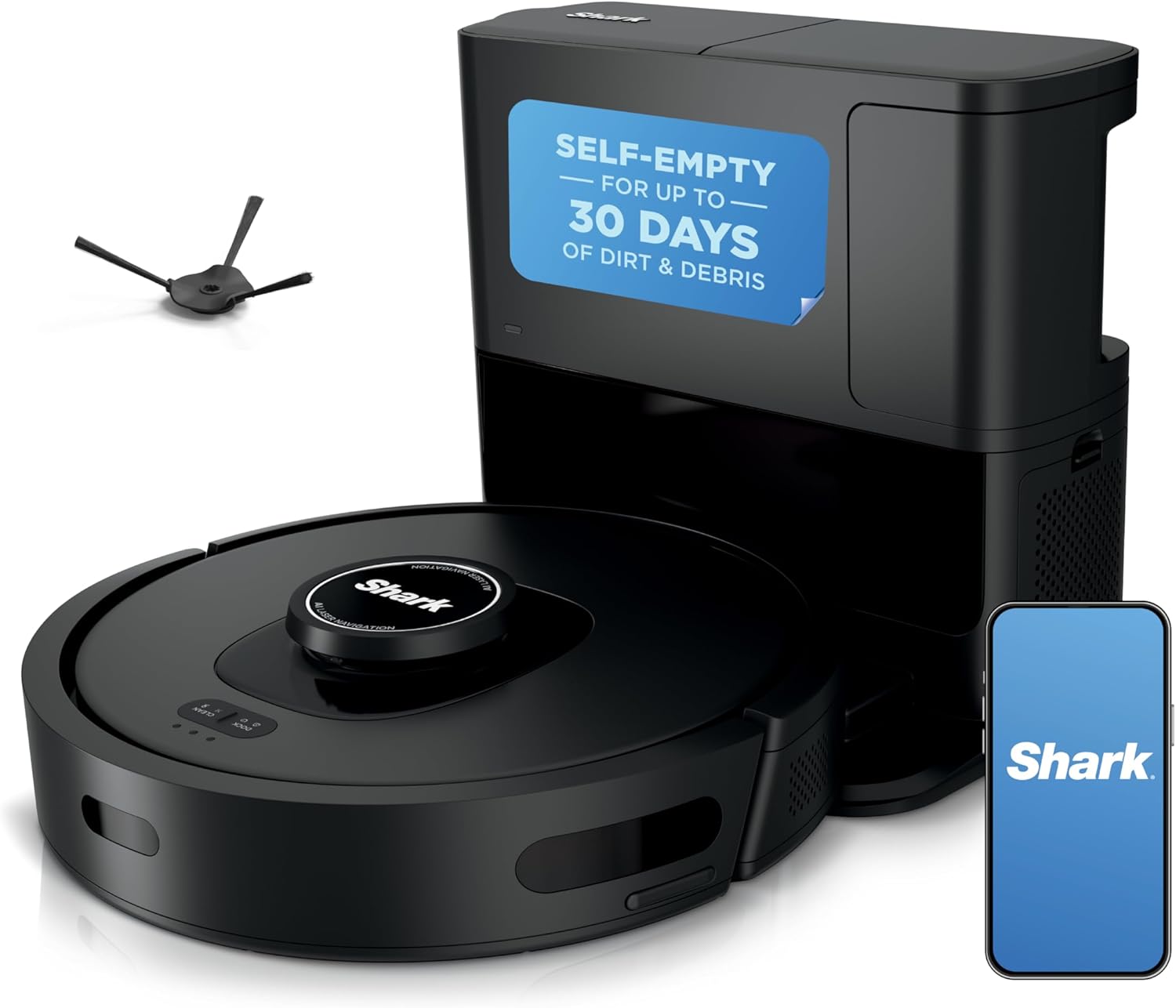
The Shark AI Ultra AV2501S is a self-emptying robot vacuum built to handle pet hair and everyday debris across carpets and hard floors. It uses 360° LiDAR for precise mapping and Matrix Clean navigation to run methodical grid passes, so high-traffic or dirty spots get repeated coverage. The self-cleaning brushroll reduces hair wrap while powerful suction and HEPA filtration trap fine dust and allergens into a 30-day capacity bagless base, cutting down how often you empty the dock. Runtime of up to 120 minutes plus Recharge and Resume helps it cover larger homes without manual intervention. You control scheduling and targeted cleaning through the SharkClean app or voice assistants. Trade-offs include a relatively complex setup for first-time robot users and a larger docking footprint compared with simple docks, and while the foam filter and brushroll reduce maintenance, consumables will still need periodic replacement. For pet households wanting a mostly hands-off, effective cleaning routine, this model balances deep-cleaning features with practical convenience.
Best for: Buyers who prioritize proven performance and social validation and want a low-maintenance robot that reliably captures pet hair and allergens with minimal daily intervention.
Less Ideal for: People who need the smallest-footprint dock or want a no-friction, plug-and-play robot with minimal setup and fewer app features.
- Self-emptying bagless base holds up to 30 days of dirt for less frequent dock maintenance
- 360° LiDAR mapping with Matrix Clean navigation enables systematic, repeat-pass cleaning
- Self-cleaning brushroll designed to reduce hair wrap for better pet hair pickup
- True HEPA filtration captures fine dust and allergens
- Up to 120 minutes runtime with Recharge and Resume for larger coverage
- Dock and robot are relatively large which requires more floor space for the base
- Setup and mapping can be more involved than basic robot models
Verdict: This Shark model is a strong choice for pet households that want mostly hands-off cleaning with reliable mapping, powerful suction, and a 30-day self-emptying base.
eufy C28 Robot Vacuum

| Suction power | 15,000 Pa |
|---|---|
| Capacity | 3 liters |
| Battery life | 140 minutes |
| Filter type | Washable |
| Control method | App, Push Button, Voice |
The eufy C28 is a robot vacuum and mop that focuses on hands-free upkeep for busy households with pets. It cleans hard floors and short-pile carpets using a 15,000 Pa turbo suction and a zero-tangle DuoSpiral roller that resists hair wrap, while the 28 cm HydroJet roller mop spins and self-cleans to remove marks and spills. The included Omni station automates dust emptying into a 3L reservoir, refills/collects mop water, washes and hot-dries the mop, and can hold about 75 days of maintenance between manual tasks. Navigation relies on LiDAR for mapped multi-room runs and it auto-lifts the mop over carpets. Practical benefits include long runtime for multi-room cleaning, reduced brush maintenance thanks to the anti-tangle design, and privacy-safe mapping without cameras. Expect a large footprint and weight from the integrated station and robot, and occasional edge or corner tidying may still be needed where brushes cannot reach. The system is best when you want to minimize daily upkeep rather than eliminate all manual detail cleaning.
Best for: People who prioritize low-maintenance, privacy-conscious pet-hair cleaning and want a system that automates most upkeep so they can set schedules and forget routine maintenance.
Less Ideal for: Buyers who need an ultra-compact setup, those who prefer a minimal standalone robot without a large base, or users who expect perfect corner and crevice cleaning without any manual touch-ups.
- Strong 15,000 Pa suction lifts pet hair and fine debris from floors and short carpets.
- Zero-tangle DuoSpiral roller reduces hair wrapping and brush cleaning frequency.
- Omni station auto-empties dust, auto-washes and hot-dries the mop, and collects wastewater for extended maintenance intervals.
- LiDAR navigation maps rooms and avoids obstacles without using cameras, protecting privacy.
- Long battery runtime supports multi-room cleaning sessions.
- Omni station and robot add bulk and weight compared with dock-only systems.
- Large maintenance station still requires periodic emptying and supplies management (bags/wastewater).
- May miss tightly wedged dirt in corners and edges that require spot cleaning.
Verdict: If you want a pet-focused robot that largely removes daily upkeep with auto-emptying, mop washing, and anti-tangle brushes, the eufy C28 delivers a very hands-off cleaning experience.
Choosing the Right Robot Vacuum for Pet Hair Self Emptying: Key Factors to Consider
Suction Power and Airflow Retention
Stronger suction is the primary factor for lifting pet hair from carpets and upholstery. Look for machines with high airflow ratings and consistent suction across multiple cleaning modes so hair does not remain embedded after a pass.
Airflow retention matters because hair and dust can clog pathways over time. Models that maintain suction as the bin fills will perform better between maintenance intervals, which is crucial when pets shed heavily.
Brush and Roller Design
Brushes and rollers designed to resist tangles make a big difference for pet owners. Combinations of rubberized extractors or proprietary anti-tangle rollers are easier to keep running because hair wraps less tightly and can be removed quickly.
Also consider how accessible the roller area is for cleaning and whether the design requires tools to clear jams. A brushless roller or split roller design reduces time spent on maintenance and keeps the vacuum running longer between interventions.
Self-Emptying Base Capacity and Reliability
A self-emptying base should hold several bins' worth of debris so you are not manually emptying after every cycle. Larger base capacity reduces hands-on maintenance frequency, which is the core benefit for pet households.
Reliability matters too. Check how the base seals debris, whether it uses replaceable liners, and how well it evacuates fine hair versus leaving stray fibers behind. A dependable base that consistently clears the robot bin keeps suction and cleaning performance steady.
Filtration and Allergen Control
Capturing pet dander and fine particles is important for indoor air quality, especially for allergy sufferers. Look for multi-stage filtration with a high-efficiency particle filter to trap fine hair fragments and dander.
A sealed pathway from the brush to the base helps prevent recirculation of allergens. Replacement filter availability and ease of replacement also affect long-term effectiveness.
Battery Life, Runtime, and Coverage
Longer runtime and efficient mapping ensure the robot completes its cleaning route without frequent returns to the base. For large homes or multi-room cleaning, runtime combined with reliable recharge-and-resume behavior is essential.
Consider how runtime is affected by higher-suction modes. A robot that can balance power and battery use will finish jobs in fewer cycles, which means less cumulative clogging and fewer interruptions for emptying.
Maintenance Needs and Ease of Servicing
Even self-emptying systems require periodic upkeep. Evaluate how easy it is to access and clean brushes, filters, and sensors. Quick-release components that do not need tools speed up routine care.
Also check how consumables are replaced, whether the base uses replaceable bags or reusable bins, and how straightforward diagnostic indicators are. Lower maintenance complexity is a major convenience advantage for busy pet owners.
How Self-Emptying Bases Work
Self-emptying bases use a suction mechanism or mechanical agitation to transfer debris from the robot's dustbin into a larger container inside the base. The base either stores debris in a reusable bin or packs it into disposable bags, depending on the system design.
Understanding the mechanism helps set expectations for noise, sealing of allergens, and how often you need to handle the base. Some systems strongly compress or seal debris, reducing odor and dust exposure, while others focus on simple storage capacity.
- Suction-based bases draw debris through a sealing port and into the base container.
- Bag-based bases often provide better long-term containment of fine particles.
- Reusable-bin bases avoid ongoing consumable costs but may require more frequent emptying and cleaning.
Preventing Hair Buildup and Tangling
Regularly scheduled cleaning cycles and targeted cleaning around pet resting spots reduce the chance of large hair clumps forming. Many robots offer zone cleaning or spot modes that let you prioritize areas where pets sleep and shed most.
Beyond software scheduling, brush maintenance is vital. Clear long hairs from the roller ports and trim wrapped fibers to maintain optimal contact with the floor. Some owners find using rubber extractors or silicone-coated rollers significantly reduces the frequency of manual clearing.
- Run the robot daily or every other day in high-shed areas.
- Keep the roller compartment clear by checking it weekly for wrapped hair.
- Use zone scheduling to concentrate cleaning on pet beds and high-traffic zones.
Managing Allergens and Indoor Air Quality
If allergies are a concern, pair a robot vacuum that uses a sealed airflow path with a high-efficiency filter. This combination reduces the amount of dander that escapes into the room during cleaning and when the base is opened.
When emptying the base or replacing filters, do so in a well-ventilated area or outdoors if possible. Replace filters on the schedule recommended by the manufacturer to maintain filtration efficiency and reduce recirculated particles.
- Prefer sealed systems with HEPA or high-efficiency filters.
- Change filters regularly and follow cleaning guidance to avoid performance drops.
- Consider supplemental air filtration in homes with severe allergies.
Noise, Scheduling, and Living with Pets
Robot vacuums and their bases make noise during operation and especially during the self-emptying cycle. Observe how your pets react and schedule runs when animals are less likely to be stressed, such as during walks or when pets are in another room.
Many robots offer quiet modes that extend runtime but reduce suction. If your pet is sensitive to noise, balance quieter settings with occasional high-power cleans to remove stubborn hair and debris.
- Test noise levels at different suction settings to find a balance that your household tolerates.
- Use scheduling to run the self-emptying cycle when it will cause the least disruption.
- Combine daily light cleans with periodic deep cleans for best results.
Consumables and Ongoing Costs
Self-emptying bases may use replaceable bags, filters, or brush parts. Consider the availability and cost of those consumables and whether the base supports reusable containers to avoid recurring purchases.
Factor in how often you will need to replace filters and bags based on your pet's shedding and your cleaning frequency. Easier-to-find and standardized consumables simplify long-term ownership.
- Check whether filter replacements are tool-free and how often they should be swapped.
- Evaluate bagless versus bagged base designs for convenience and cost.
- Keep a small stock of commonly replaced items to avoid downtime.
How We Chose the Best Robot Vacuum for Pet Hair Self Emptying
We prioritized features that directly affect how well a robot vacuum handles pet hair and how little hands-on care it requires. Key evaluation criteria included suction power and airflow retention to see how effectively the machine lifts embedded hair; brush and roller design to judge hair management and tangling resistance; dustbin and base capacity plus the reliability of the self-emptying mechanism to determine how often emptying is actually required; filtration performance to capture dander and reduce airborne particles; and navigation and runtime to ensure consistent coverage in pet-active homes. We excluded models without a true self-emptying base or those lacking purpose-built hair management components. We also filtered out units whose documentation did not include clear specifications on suction or bin capacity. Our approach balanced real-world usability with measurable specs, focusing on features that minimize maintenance and keep floors hair-free across multiple cleaning cycles.
Our full evaluation process is outlined in our review methodology.
FAQ
How often should a self-emptying robot vacuum be emptied when I have multiple shedding pets?
Frequency depends on the base capacity and how much your pets shed. In many homes with moderate shedding, a large-capacity base can go one to four weeks between manual emptying. Heavier shedding or smaller base sizes may require more frequent attention.
Will pet hair clog the brushes and reduce suction quickly?
Hair can wrap around brush components and impede cleaning if not addressed. Machines with anti-tangle rollers or rubber extractors reduce this risk, and routine checks of the roller compartment keep suction consistent. Regularly cleaning the brush area will prevent performance loss.
Are self-emptying bases good for allergy control?
They can help by transferring debris to a larger, often sealed container that reduces the frequency of emptying. For allergies, choose systems with high-efficiency filters and sealed airflow to minimize dander release when the robot or base is opened.
Do self-emptying robots require special maintenance compared with standard robots?
They require similar routine care such as brush and sensor cleaning, plus occasional attention to the base. If the base uses disposable bags or filters, those consumables need periodic replacement. Overall, maintenance frequency is lower but not eliminated.
Can a self-emptying robot handle long pet fur on rugs and furniture?
Many self-emptying robots are designed to pick up long fur from floors and low upholstery, but effectiveness varies by brush design and suction. For heavy fur or deep-pile rugs, expect to supplement with handheld vacuuming occasionally.
Final Verdict
Prioritize suction performance, effective hair-management rollers, and a dependable self-emptying base when choosing a robot vacuum for homes with pets. Filtration and ease of routine maintenance are equally important for controlling dander and keeping the system running well over time. Balance runtime and noise against cleaning power to match your household routine. Focusing on these tradeoffs helps you pick a low-maintenance robot vacuum that minimizes hands-on work while keeping hair under control.