
Note: This article contains affiliate links. If you click on these links and make a purchase, we may earn a small commission at no extra cost to you. This helps support our research and content. Read our full affiliate disclosure here.
If you live with pets, hair and dander can quickly fill up a standard robot vacuum and force frequent emptying. A Self-Emptying Robot Vacuum for Pet Hair reduces hands-on maintenance by dumping debris into a base station and keeping hair out of the dustbin longer. That matters because less emptying means fewer interruptions to cleaning cycles and fewer tangles for brushes and rollers. This guide covers six top self-emptying robot vacuums shortlisted for homes with shedding pets. We focus on real-world decision points like suction and brush design, dust-hold capacity, and how each system handles long hair. Read on to see which features matter most and which models match different pet households.
Top Picks at a Glance
| Best Quality Built to a higher standard if you want something more solid | roborock Saros 20 |  |
| Best Value The sweet spot between price and what you get | Tikom L8000 Plus Robot Vacuum |  |
| Best Budget The cheapest option that still gets the job done reliably | ILIFE A30 Pro |  |
| Top Rated A top-rated pick with lots of positive feedback | WSUANE D15S Max Robot Vacuum |  |
| Most Popular A crowd favorite that many people choose with confidence | iRobot Roomba 105 Combo |  |
| Best Seller A high-volume bestseller chosen again and again | roborock Q10 S5+ |  |
roborock Saros 20

| Suction | 36,000 Pa |
|---|---|
| Battery Life | 180 minutes |
| Filter Type | Washable Filter |
| Noise Level | 55 db |
| Power Source | Battery Powered |
The roborock Saros 20 is a performance-focused robot vacuum and mop built to handle pet hair and mixed floor surfaces. It uses a 36,000 Pa digital motor and a dual anti-tangle system to pull hair and debris from carpets and gaps while StarSight 3D ToF sensors plus an RGB camera map your home and avoid more than 300 obstacles. The AdaptiLift chassis raises the robot to cross multi-layer thresholds and an ultra-slim 3.13 inch profile lets it reach under low furniture. Paired with the RockDock self-maintenance dock, the Saros 20 offers hot-water mop washing, hot-air drying, and up to 65 days of auto dust emptying for extended hands-free operation. Control is via the Roborock app, remote, or voice with smart mapping and learning routines. Expect powerful cleaning and very few missed spots, though the unit is relatively heavy and the advanced dock adds complexity and space needs compared with simpler auto-empty bases.
Best for: Buyers who prioritize powerful, hands-free cleaning for pet hair and want an automated system that minimizes daily maintenance and missed spots.
Less Ideal for: People with very small homes, limited storage space, or those who prefer a simpler, lower-footprint auto-empty base should consider lighter, more compact alternatives.
- Extremely high 36,000 Pa suction for deep extraction of pet hair and embedded debris
- Advanced 3D ToF and RGB camera navigation that detects and avoids 300+ obstacles for complete coverage
- AdaptiLift chassis can cross up to 3.46 in thresholds and clean low-clearance areas down to 3.13 in
- RockDock automated dock provides hot-water mop washing, hot-air drying, and long auto-empty intervals for low maintenance
- Dual anti-tangle system reduces brush clogging from pet hair
- Large and relatively heavy unit that may be harder to move or store
- Advanced dock increases footprint and system complexity compared with basic auto-empty bases
Verdict: If you need a heavy-duty, self-emptying robot that tackles pet hair with extreme suction and true hands-free docked maintenance, the Saros 20 is a top choice.
Tikom L8000 Plus Robot Vacuum

| Suction | 6000 Pa (Max) |
|---|---|
| Dustbin Capacity | 3 liters (self-emptying bag) |
| Navigation | 360° LiDAR mapping |
| Battery Life | 150 minutes |
| Filter Type | HEPA Filter |
The Tikom L8000 Plus is a self-emptying robot vacuum and mop built to handle daily dirt and pet hair without constant supervision. It pairs 6000 Pa peak suction with a 3 liter dustbag in the base so the robot can collect weeks of debris before the bag needs replacing, and LiDAR navigation builds accurate maps and avoids obstacles for efficient coverage. Use the app or voice control to set no-go/no-mop zones, schedule cleanings, and pick from three suction and three water-flow levels to tailor performance for hard floors and carpets. A HEPA filter captures fine dust and pet dander, and the vacuum will boost suction automatically on carpets. Runtime is up to 150 minutes in gentle mode and the unit returns to the base to recharge and resume. Trade-offs include a moderate noise level around 60 dB and the need to manage mop mode carefully to avoid wetting carpets, but the combination of strong suction, self-emptying base, and mapping makes it a practical choice for pet households that want low-effort maintenance.
Best for: Buyers who want a low-maintenance vacuuming solution that efficiently captures pet hair and reduces hands-on emptying while still offering mapping and app control.
Less Ideal for: People who need whisper-quiet operation for night cleaning or those who expect fully unattended wet mopping across mixed carpeted and hard-floor homes.
- 3L self-emptying dustbag reduces how often you manually empty the robot
- 6000 Pa peak suction with automatic carpet boost for strong pet hair pickup
- LiDAR navigation and multi-floor smart mapping for systematic coverage
- App and voice control with no-go and no-mop zone setup for customizable cleaning
- HEPA filter helps trap fine dust and pet dander
- Mop mode requires caution to prevent wetting carpets and may need manual setup adjustments
- Reported noise around 60 dB can be noticeable during high-power cleaning
Verdict: If you need a self-emptying robot that reliably lifts pet hair and minimizes manual emptying, the Tikom L8000 Plus delivers strong suction, LiDAR maps, and a large dustbag for low-effort upkeep.
ILIFE A30 Pro

| Battery Life | 150 minutes |
|---|---|
| Filter Type | Hepa |
| Power Source | Battery Powered |
| Capacity | 2.5 liters |
| Controller Type | App, Remote, Voice Control |
The ILIFE A30 Pro is a budget-minded self-emptying robot that combines vacuuming and mopping with LiDAR mapping to handle daily dirt and pet hair. In normal use it maps rooms with LiDAR, lets you set no-go zones and schedules in the ILIFEClean app, and vacuums plus mops simultaneously using an integrated dustbin and water tank. Notable features include a self-empty dock with replaceable 2.5L dust bags (five bags included), four suction levels up to a 10000Pa Max mode for heavy debris, and a HEPA filter for finer dust. The 150-minute max runtime and app/voice control make it convenient for medium to larger homes, while the rollers and side brush target pet hair on hard floors and low pile carpets. Trade-offs for the price include a relatively small 200ml water tank (limits mop runtime) and reliance on replaceable dust bags, which adds ongoing cost; the very high 10000Pa claim is only on Max mode and may be louder and shorter-lived on one charge. For pet owners seeking an affordable self-emptying option, it covers the essentials without premium extras.
Best for: Shoppers who want a low-cost self-emptying robot that manages pet hair and reduces frequent bin emptying while still offering smart mapping and basic app controls.
Less Ideal for: Households that need extensive wet mopping coverage, prefer bagless systems, or require deep-cleaning on high-pile carpets should consider other options.
- Self-emptying dock with five 2.5L dust bags for long stretches of hands-free cleaning
- LiDAR navigation with mapping, no-go zones, and room scheduling via app
- Four suction levels including a Max mode for heavier debris and pet hair
- Combined vacuum and mop capability lets the robot sweep and damp-mop in one pass
- Small 200ml water tank limits continuous mopping area
- Ongoing cost for replacement dust bags
- Max suction likely increases noise and reduces runtime compared with lower modes
Verdict: If you want an affordable self-emptying robot that reliably picks up pet hair and gives smart LiDAR mapping, the ILIFE A30 Pro delivers core features without the premium price.
WSUANE D15S Max Robot Vacuum

| Suction power | 10000Pa (max) |
|---|---|
| Dustbin capacity | 3.5 liters |
| Navigation | dToF LiDAR |
| Runtime (quiet) | 160 minutes |
| Filter type | Three-layer high-efficiency (washable) + filter cotton |
The WSUANE D15S Max is a self-emptying robot vacuum and mop built for extended hands-off use in homes with pets. It pairs dToF LiDAR navigation and multi-sensor obstacle and drop detection to build accurate maps, set no-go zones, and target high-traffic areas via the app. The unit offers four suction levels up to 10000Pa plus an Auto Boost that raises power automatically on carpets, and a hair-cutting anti-tangle roller that helps prevent brush clogs from pet and human hair. The 3.5 liter dust collection station is sized to hold weeks of debris so you do not need to empty the bin frequently, and app control plus Google Home compatibility make scheduling and spot cleaning straightforward. Battery runtime varies with power mode, with the quiet setting reaching about 160 minutes for large-area runs. Practical limitations include a reported noise level around 70 dB on high power and some required maintenance of filters and the hair-cutting roller; mop performance is useful for light mopping but will not replace a deep wet clean. For pet owners who prioritize reliable, low-touch vacuuming and robust mapping, this model is a solid choice.
Best for: Buyers who want a low-maintenance robot vacuum that handles pet hair and large areas reliably with accurate mapping and long intervals between dustbin emptying.
Less Ideal for: People who need a near-silent machine for noise-sensitive environments or who expect professional-grade wet mopping performance.
- Large 3.5L self-emptying dustbin reduces how often you manually empty the station
- dToF LiDAR navigation with multi-sensor obstacle detection produces precise maps and supports no-go zones
- Up to 10000Pa suction with Auto Boost for stronger cleaning on carpets
- Hair-cutting anti-tangle roller minimizes brush snags from pet and human hair
- Long runtime in quiet mode (up to 160 minutes) suitable for large homes
- Noise level can reach about 70 dB on higher suction settings
- Mop function is intended for light mopping rather than heavy wet cleaning
- Some routine maintenance required for filters, dust bags, and the cutting roller
Verdict: If you want a reliable, low-touch robot vacuum that tackles pet hair and large spaces with strong suction and accurate LiDAR mapping, the D15S Max delivers.
iRobot Roomba 105 Combo
| Battery Life | 100 minutes |
|---|---|
| Surface Recommendation | Carpet & Hard Floor |
| Filter Type | Cartridge |
| Control Method | App, Touch, Voice |
| Other Special Features | Self-Emptying, LiDAR Navigation, Simultaneous Vacuuming & Mopping |
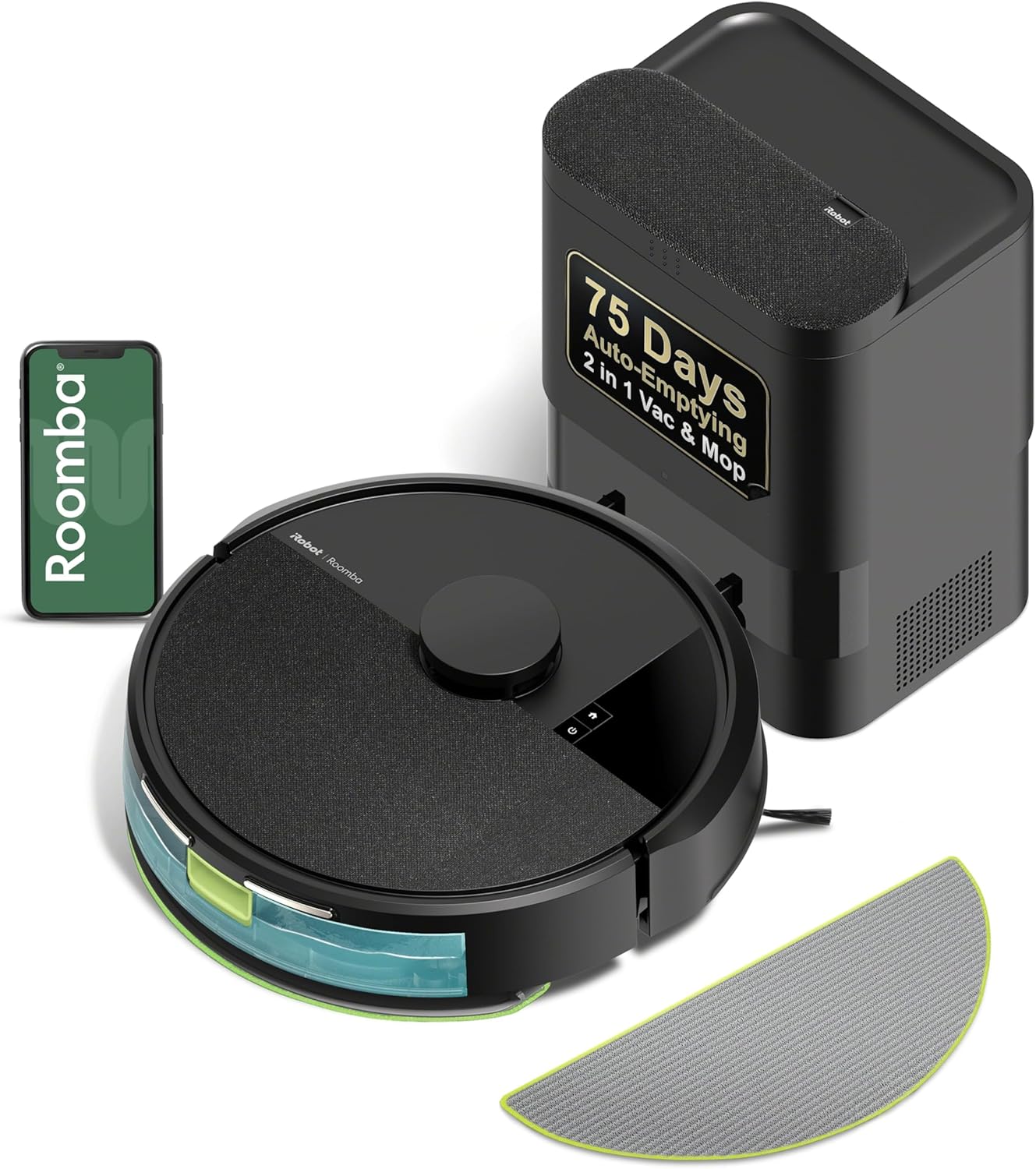
The Roomba 105 Combo pairs a self-emptying AutoEmpty dock with a vacuum-and-mop robot that uses ClearView LiDAR to map rooms and avoid obstacles while cleaning. It offers three cleaning modes—vacuum, mop, or vacuum-and-mop—so you can schedule quick touchups or full wet-and-dry cycles from the iRobot Home app or a voice assistant. The 4-stage system combines intense suction, an edge-sweeping brush and a multi-surface brush to pull pet hair from carpets and reach skirting boards, while a microfiber mop pad and SmartScrub option boost scrubbing on high-traffic hard floors. The AutoEmpty dock keeps dirt contained in a disposable bag for up to 75 days, reducing how often you handle pet hair and dust. Expect routine maintenance like brush cleaning and filter changes every few months, and know the mopping function avoids carpets but is best for light spills rather than heavy soiling or thick set-in stains. Battery runtime is moderate, so very large homes may need multiple runs or recharges to finish a full cleaning cycle.
Best for: Buyers who want hands-off pet-hair management and value a proven self-emptying system with reliable mapping and simple app or voice control.
Less Ideal for: Homes that need heavy-duty mopping, commercial-grade deep cleaning, or single-run coverage of very large floorplans should consider a higher-capacity or specialized model.
- AutoEmpty dock holds up to 75 days of debris, reducing exposure to pet dander when emptying
- LiDAR-based mapping provides precise navigation and room mapping for targeted cleans
- Combined vacuum and mop with SmartScrub for deeper scrubbing on hard floors
- Multi-surface brush and edge-sweeping design improves pet hair pickup along edges and on carpets
- Battery life (~100 minutes) may require recharging for very large homes before finishing a full clean
- Mop function is designed for light mopping and may not replace a manual deep clean for stubborn stains
Verdict: If you want a low-touch robot that reliably collects pet hair and empties itself for weeks, the Roomba 105 Combo delivers practical, easy-to-use cleaning with smart mapping.
roborock Q10 S5+

| Maximum Suction | 10,000 Pa |
|---|---|
| Capacity | 2.7 liters |
| Battery Life | 150 minutes |
| Filter Type | Washable |
| Noise Level | 65 db |
The roborock Q10 S5+ is a hands-off robot vacuum and mop that combines strong suction with multi-surface mapping and a large self-emptying dock to minimize maintenance. In everyday use it navigates with 360-degree LiDAR to build multi-level maps, avoids obstacles with structured-light ReactiveTech, and automatically raises the mop on carpets while boosting suction. The VibraRise 2.0 sonic mopping scrubs stains at high frequency and the dual anti-tangle brush layout reduces hair wrap for easier upkeep in pet homes. App and voice controls let you schedule cleanings, set no-go zones, and choose emptying modes, while the 2.7L dust bag claims up to 70 days between changes. Practical limits include a manufacturer noise level around 65 dB during operation and a relatively large footprint that may be less suited to very tight spaces, and it only supports 2.4 GHz Wi-Fi. For buyers who prioritize low-touch pet hair maintenance and reliable navigation, this model delivers a strong balance of cleaning power and automation.
Best for: Someone who wants a low-maintenance cleaning solution for pet hair and mixed floors and values reliable mapping, automatic emptying, and reduced hands-on upkeep.
Less Ideal for: People who need an ultra-quiet machine for daytime living areas, require 5 GHz Wi-Fi connectivity, or have extremely cramped spaces and low-clearance furniture.
- 10,000 Pa suction for deep cleaning pet hair and embedded dirt
- 2.7 L self-emptying dock designed to reduce dust-bag changes for up to 70 days
- VibraRise 2.0 sonic mopping that scrubs floors and auto-lifts on carpets
- LiDAR mapping and ReactiveTech obstacle avoidance for reliable navigation in cluttered homes
- Dual anti-tangle brush design that minimizes hair wrap and maintenance
- Operational noise is listed around 65 dB, which can be noticeable during cleaning
- Only supports 2.4 GHz Wi-Fi, so it will not connect to 5 GHz networks
- Larger physical footprint may struggle in very tight or low-clearance areas
Verdict: If you want a mostly hands-off robot that handles pet hair with strong suction, reliable LiDAR navigation, and a long-interval self-emptying dock, the Q10 S5+ is a practical pick.
Choosing the Right Self-Emptying Robot Vacuum for Pet Hair: Key Factors to Consider
Suction Strength and Airflow
Suction strength determines how effectively a robot vacuum pulls pet hair out of carpet fibers and off hard floors. Higher measured suction and efficient airflow matter most for embedded hair; on low-pile rugs and hard surfaces, strong suction shortens cleaning cycles and reduces missed strands.
Beware of designs that rely on high suction but poor brush geometry. Without a brushroll that feeds hair into the airflow, even strong motors struggle. For pet homes, balance between suction and brush design usually delivers the best real-world results.
Brushroll Design and Hair Tangle Resistance
Brushroll geometry and materials influence how hair is captured and whether it wraps around axles. Combinations of rubber fins, bristle-less rollers, or hybrid designs tend to resist tangles better than traditional bristled brushes. A brush that actively guides hair into the suction path reduces the need for regular manual cleaning of the roller.
Consider how easy it is to remove and clean the brush. Quick-release brush bars and accessible end caps speed maintenance when hair does accumulate. For multi-pet or long-haired households, prioritize tangle-resistant designs and straightforward access for occasional deep cleaning.
Base Station Capacity and Seal
Self-emptying bases vary in how much debris they hold and how well they seal allergens. Larger dust-hold capacity means fewer trips to the bin, which is a big convenience win in pet households. A tightly sealing container and good filtration limit airborne dander when the base is opened.
Check how full notifications are handled and whether the base uses disposable bags or washable canisters. Bagged bases tend to be tidier to empty, while bagless designs can reduce consumable costs but may require more attention to filter cleaning.
Filtration and Allergy Control
Effective filtration matters if you or family members have allergies to pet dander. High-efficiency filters capture finer particles and keep them trapped during vacuuming and while the base holds debris. Filters that are easy to access and replace help maintain long-term performance and reduce household allergen exposure.
Also consider whether the base station vents near living areas. A well-engineered airflow path that directs exhaust away from breathing zones is preferable in homes with sensitive occupants.
Navigation, Coverage, and Scheduling
Reliable navigation reduces missed spots and prevents the robot from getting stuck on pet beds, food bowls, or cords. Systems that map rooms and allow targeted scheduling let you prioritize high-shedding zones like living rooms or entryways. Good obstacle detection also reduces interruptions from chasing loose toys or drying paw prints.
Look for features that support multi-room mapping, virtual no-go lines, and easy scheduling. For households with variable routines, the ability to set different cleaning intensities for specific rooms helps conserve battery while keeping hair under control where it matters most.
Maintenance Frequency and Ease
Even self-emptying units require periodic upkeep. Consider how often filters need replacement, how frequently brushes require cleaning, and whether the base needs bag swaps or filter cleaning. Lower maintenance frequency is beneficial, but access design matters more: affordable, simple-to-service components reduce the time you spend on upkeep.
Think about replacement part availability and how straightforward routine chores are. Tools that require no special parts or that use common consumables lower long-term hassle for busy pet owners.
How Self-Emptying Bases Work and Why They Matter
A self-emptying base uses a suction or mechanical transfer to pull debris from the robot's onboard bin into a larger container at the dock. For pet owners, this transfer reduces the frequency with which you must handle hair-filled dustbins and snatch out tangles from the robot itself.
Beyond convenience, the base changes the maintenance cadence. Instead of emptying after every run, you can often wait days or weeks depending on the base capacity and pet shedding levels. The base's sealing and filtration also determine how much dander escapes when you finally empty or replace the container.
- Bagged bases minimize contact with dust but require consumables.
- Bagless bases cut consumable cost but need occasional cleaning and filter upkeep.
- Base capacity drives how often you must perform hands-on maintenance.
Best Settings and Routines for Pet Homes
Adjust cleaning frequency and suction settings based on shedding cycles. Increase suction or run more frequent passes in high-traffic areas during heavy shedding seasons. Schedule runs while pets are resting or out of the room to avoid interruptions and accidental chases.
Use virtual boundaries to avoid areas that create frequent tangles, like loose rugs or chew toys. In multi-floor homes, assign higher-intensity runs to the area where pets spend most of their time, and lighter runs elsewhere to conserve battery.
- Daily low-intensity runs can prevent hair buildup on hard floors.
- Weekly high-intensity passes on rugs capture embedded hair.
- Run the robot when pets are calm to reduce collisions and stress.
Managing Long-Haired Pets and Tangles
Long hair is the most common cause of brushroll tangles. Choose a robot with a tangle-resistant brush design or one that offers easy access for cleaning. Even with advanced designs, expect occasional manual removal of hair from end caps or brush bearings.
Keep a small maintenance kit nearby with scissors or a cleaning tool to quickly free wrapped hair. Regularly inspect the brushbar bearings and axle for hair buildup; addressing tangles early prevents increased wear on the motor and maintains cleaning efficiency.
- Inspect the brush bar every 1 to 2 weeks in heavy-shedding homes.
- Use suction-only modes on hard floors to reduce wear on the brushroll.
- Rotate between different cleaning patterns to reduce consistent wear on a single brush area.
Noise and Pet Comfort
Some pets are sensitive to vacuum noise and large base fans during self-emptying cycles. Consider the noise profile both from the robot during operation and from the base while it empties. Scheduling emptying during times when pets are out of the room or asleep can reduce stress for noise-sensitive animals.
Look for bases with quieter motors or night mode features on the robot. Soft-start suction during emptying and isolated base placement in a utility area can help minimize disturbance.
- Place the base in a low-traffic, ventilated area to minimize noise disruption.
- Run louder emptying cycles when pets are outdoors or in another room.
- Check for dedicated quiet modes on the robot and base if noise is a concern.
Consumables and Long-Term Costs
Self-emptying systems introduce consumables such as replacement bags and filters. Factor these into long-term ownership costs and look for bases that accept widely available parts. Even bagless systems rely on replaceable filters that should be swapped periodically to keep filtration performance high.
Some designs bundle higher-capacity bags or reusable components that reduce recurring costs. Balance the convenience of lower-touch maintenance against the ongoing expenses of consumables for a realistic ownership view.
- Check expected bag capacity and filter replacement intervals.
- Prefer reusable filters that can be washed if allergy concerns are manageable.
- Stock spare consumables to avoid downtime when a filter needs replacement.
How We Chose the Best Self-Emptying Robot Vacuum for Pet Hair
We prioritized attributes that directly affect performance and convenience for pet owners. Key evaluation criteria included suction strength under realistic conditions, brush and roller design to resist hair wrap, the base station's dust-hold capacity and seal, navigation and obstacle handling with common pet-related obstacles, and overall upkeep needs such as filter access and brush replacement. We also considered runtime and recharge behavior because longer or interrupted cycles can leave hair behind in larger homes. Products were excluded if they lacked a self-emptying base as standard equipment or if their brush systems were known to require frequent manual detangling. We filtered out models that relied primarily on weak side brushes instead of a central brushroll for hair pickup. The shortlist emphasizes solutions that reduce daily maintenance while still capturing dander and longer hair in mixed-floor homes. Our approach favors objective spec thresholds and real-world usability for pet households over marketing claims.
Our full evaluation process is outlined in our review methodology.
FAQ
How often will I need to empty the base with multiple shedding pets?
Frequency depends on shedding level and base capacity. Homes with heavy shedding may need to change the base bag or empty the container every one to three weeks, while lighter-shedding homes can often wait longer. Larger-capacity bases extend intervals between maintenance.
Do self-emptying bases keep allergens contained?
Many bases use sealed bags or high-efficiency filters that trap dander and reduce airborne allergens. Performance varies by base design, so prioritize models with tight seals and HEPA-grade filtration if allergen containment is important.
Will a self-emptying robot pick up long pet hair without constant tangles?
Some brush systems are specifically designed to resist hair wrapping, using rubber fins or bristle-less rollers. These reduce tangles but do not eliminate them entirely. Regular inspection and occasional manual cleaning are still recommended for long-haired pets.
Can I run the robot while my pets are in the house?
You can, but results depend on your pets' temperament. Some pets ignore the robot, while others may chase or stress over it. Scheduling runs when pets are calm or setting up virtual boundaries can minimize interactions and improve cleaning efficiency.
Are bagged bases better than bagless for pet hair?
Bagged bases reduce direct contact with hair and dust during disposal and often provide better allergen containment. Bagless bases lower consumable costs and can be emptied without replacement parts but may require more careful handling to avoid dust release.
Final Verdict
For pet households, prioritize suction and brush systems that actively prevent hair wrap, along with a base that holds ample debris and seals well. Navigation and scheduling features help target high-shedding areas while minimizing interruptions. Expect some routine upkeep, but by balancing maintenance ease, filtration, and base capacity you can minimize hands-on time and keep floors consistently free of pet hair. Focus on the tradeoffs that matter most to your home: larger base capacity and strong filtration if you want fewer touchpoints and better allergen control, or simpler consumables if you prefer lower recurring costs. With those priorities in mind, you can choose a self-emptying robot vacuum that fits your pet household confidently.