
Note: This article contains affiliate links. If you click on these links and make a purchase, we may earn a small commission at no extra cost to you. This helps support our research and content. Read our full affiliate disclosure here.
If you live where sand is a regular part of daily life, a purpose-built Robot Vacuum for Sand can save you time and reduce dust and grit on floors. The right unit traps fine particles without frequent clogs and holds enough capacity to avoid constant emptying. This guide shortlists the top-performing models for sandy conditions and explains the practical tradeoffs behind each choice. Expect coverage of suction power, filtration, brush design, runtime, and maintenance demands to help you pick a robot that matches your cleaning routine.
Top Picks at a Glance
| Best Overall The best all-around choice for most situations | Shark Matrix Clean AV2511AE |  |
| Best Quality Built to a higher standard if you want something more solid | roborock Saros 10R |  |
| Best Value The sweet spot between price and what you get | roborock Q10 S5+ |  |
| Best Budget The cheapest option that still gets the job done reliably | ILIFE V2 Robot Vacuum |  |
| Top Rated A top-rated pick with lots of positive feedback | WSUANE D15S Max Robot Vacuum |  |
| Most Popular A crowd favorite that many people choose with confidence | iRobot Roomba 105 Combo |  |
| Best Seller A high-volume bestseller chosen again and again | eufy C28 Robot Vacuum |  |
Shark Matrix Clean AV2511AE

| Battery Life | 120 minutes |
|---|---|
| Capacity | 0.27 gallons |
| Controller Type | App Control |
| Filter Type | Cartridge |
| Compatible Devices | Amazon Alexa, Google Assistant |
The Shark Matrix Clean AV2511AE is a robotic vacuum and mop built for hands-off, whole-home cleaning. It uses 360° LiDAR mapping and Matrix Clean's precision grid pattern to systematically cover rooms, while a self-cleaning brushroll and strong suction handle embedded dirt and pet hair on carpets and hard floors. The robot pairs with the SharkClean app and voice assistants for scheduling, room targeting, and mode control, and when full it empties into an XL bagless base rated to hold up to 60 days of debris so you rarely touch dust. Battery management includes automatic return to dock for recharge and resume so long runs can finish larger areas. Practical limitations: it is a multi-surface combo rather than a dedicated sand-specific tool, and its 0.27 gallon onboard capacity means the robot still relies on the base for extended hands-off operation. Expect the usual robotic constraints around tight corners, stairs, and very deep pile carpets. For routine removal of tracked-in sand in high-traffic rooms it offers a strong, low-maintenance option.
Best for: Buyers who want a reliable, low-maintenance robot that cleans both hard floors and carpets regularly and minimizes hands-on emptying while keeping mapped, scheduled cleanings.
Less Ideal for: People who need a dedicated heavy-duty sand cleaner for beaches, heavy tracked-in grit, or industrial debris should consider specialized vacuums instead.
- LiDAR home mapping with systematic Matrix Clean grid coverage for thorough passes
- Self-emptying bagless base holds up to 60 days of debris for low-maintenance operation
- Self-cleaning brushroll and strong suction target pet hair and embedded dirt
- App and voice control let you schedule, target rooms, and customize cleaning without manual intervention
- Not a dedicated sand-specific machine so very fine, heavy sand may require repeated passes
- Onboard dust capacity is modest, relying on the base for long-term storage
Verdict: A practical, low-maintenance robot vacuum and mop that combines LiDAR mapping and a 60-day self-empty base to keep sand and everyday dirt under control with minimal user effort.
roborock Saros 10R

| Suction | 22,000 Pa |
|---|---|
| Battery Life | 180 minutes |
| Filter Type | Washable |
| Noise Level | 65 db |
| Power Source | Battery Powered |
The roborock Saros 10R is a performance-focused robot vacuum and mop built to handle everyday dirt and pet hair on hard floors and low-pile carpets. It pairs powerful 22,000 Pa HyperForce suction with a Zero-Tangling DuoDivide brush and FlexiArm side brush to pick up hair without frequent brush cleaning, while the ultra-slim 3.14-inch body slips under low furniture to reach hidden dust. The multifunctional dock 4.0 automates maintenance with hot-water mop washing, hot-air drying, 60-day dust collection and auto refill features that greatly reduce hands-on upkeep. Navigation relies on the StarSight 2.0 system with 3D sensing and obstacle avoidance, which improves edge and cord handling and supports auto re-wash for high-traffic spots. For hardwood floors the mop functions and automatic mop lift when carpets are detected help avoid over-wetting. Trade-offs are the relatively loud 65 dB reported noise level during operation and a large, heavier docked system footprint, which may be more than needed for small homes.
Best for: Buyers who prioritize strong cleaning performance and low-maintenance operation on hard floors and have pets or long hair that require frequent deep pickup.
Less Ideal for: People living in very small apartments or who need a whisper-quiet machine for nighttime cleaning should consider smaller or quieter alternatives.
- Very strong 22,000 Pa suction for deep pickup on hardwood and low-pile carpets
- Zero-tangling main brush and omnidirectional wheels reduce hair maintenance
- Ultra-slim 3.14-inch profile reaches under low furniture and into tight spots
- Multifunctional dock automates mop washing, drying, and up to 60 days of dust collection
- 3D obstacle detection and advanced mapping improve edge cleaning and cord avoidance
- Noise level around 65 dB may be noticeable during cleaning
- Large multifunctional dock increases system footprint and setup complexity
Verdict: Choose the Saros 10R if you want top-tier suction and a hands-free docked system that keeps hardwood floors and pet hair under control with minimal daily effort.
roborock Q10 S5+

| Maximum Suction | 10,000 Pa |
|---|---|
| Capacity | 2.7 liters |
| Battery Life | 150 minutes |
| Filter Type | Washable |
| Noise Level | 65 db |
The roborock Q10 S5+ combines a 2.7 L self-emptying dock with up to 10,000 Pa suction and VibraRise 2.0 sonic mopping to handle daily debris and ground-in dirt with minimal user intervention. It maps rooms with 360° LiDAR and supports multi-level mapping and no-go zones in the Roborock app, so you can schedule targeted cleaning runs and keep sandy areas contained. ReactiveTech obstacle avoidance and ultrasonic carpet detection let the robot lift the mop and boost suction on rugs, which helps when transitioning between sand-prone entryways and carpeted rooms. The dual anti-tangle brush system reduces hair snags, and the washable filter lowers consumable costs. Battery life is rated to 150 minutes, enough for extended coverage, and the dock's large bag promises long stretches between maintenance. The machine is fairly loud at about 65 dB on max and some advanced features require app setup and 2.4 GHz Wi-Fi, so it is less plug-and-play for nontech users. For sand-heavy homes the combination of high suction, self-emptying capacity, and app control makes routine cleanup much easier, though occasional maintenance of brushes and the mop will still be needed.
Best for: Buyers who want a low-maintenance cleaning solution that reliably removes sand from floors and carpets and prioritize long intervals between hands-on upkeep.
Less Ideal for: People who need a whisper-quiet cleaner for shared spaces or who cannot run devices on a 2.4 GHz Wi-Fi network should consider alternatives.
- Very strong 10,000 Pa suction for lifting sand from floors and carpets
- Large 2.7 L self-emptying dock reduces frequency of emptying (up to 70 days)
- LiDAR mapping and app-configurable no-go zones let you keep sand contained to entry areas
- VibraRise sonic mopping and auto-mop lift protect carpets while scrubbing hard floors
- Dual anti-tangle brush design minimizes hair-related jams around the main brush
- Noise level can reach around 65 dB on higher suction settings
- Some advanced features require 2.4 GHz Wi-Fi and app setup, which may complicate initial use
Verdict: For homes with frequent sand and heavy foot traffic, the Q10 S5+ pairs very strong suction with a large self-emptying dock to minimize hands-on cleaning.
ILIFE V2 Robot Vacuum

| Battery Life | 120 minutes |
|---|---|
| Capacity | 300 ml |
| Filter Type | Sponge |
| Control Method | Remote |
| Noise Level | 69 db |
The ILIFE V2 is an entry-level robot vacuum built to keep hardwood and other hard floors tidy without a lot of fuss. Its 2.99-inch slim body fits under low furniture while a tangle-free suction port and sponge filter make it practical for homes with pet hair. You can run scheduled cleanings, switch between auto, spot and edge modes, or start jobs with the included remote control or the single-button on the unit. A 300 ml dustbin and up to 120 minutes of runtime let it cover medium rooms on one charge, and it will automatically return to the dock when the battery is low. Noise is noticeable at 69 dB and there is only one power level, so it lacks adjustable suction or app-based controls, but for straightforward floor maintenance on hardwood and low-pile carpet the V2 delivers solid value at an affordable price.
Best for: Buyers who want an affordable, no-frills robot to maintain hardwood and low-pile carpet cleanliness with simple controls and scheduled runs.
Less Ideal for: Those who need strong adjustable suction, smart app control, or advanced mapping for large or complex homes should consider higher-end models.
- Slim 2.99-inch profile cleans under low furniture
- Tangle-free suction port suited for pet hair
- 120 minutes runtime with automatic return-to-dock
- Multiple cleaning modes (auto, spot, edge) and simple remote control
- Single power level limits suction control for heavier debris
- No smartphone app or advanced navigation features
Verdict: A low-cost, slim robot vacuum that reliably maintains hardwood floors and handles pet hair for budget-focused buyers.
WSUANE D15S Max Robot Vacuum

| Suction | Up to 10000Pa |
|---|---|
| Dustbin Capacity | 3.5 liters |
| Navigation | dToF LIDAR |
| Battery | 3200mAh (up to 160 min) |
The WSUANE D15S Max is a robot vacuum and mop combo built for long stretches of unattended cleaning. It pairs dToF LIDAR mapping and multi-level sensors to create precise home maps and let you set no-go zones through the app, while a 3.5 liter self-emptying base holds dirt for many weeks so you do not have to empty the bin frequently. The motor supports up to 10000Pa peak suction with multiple power levels and an auto-boost on carpets, and an anti-tangle, blade-equipped roller helps prevent hair from wrapping around the brush. Runtime varies by mode with the longest quoted silent setting around 160 minutes on a full charge, and the machine can return to the dock and resume automatically. For sand-heavy floors it benefits from the high suction and the large collection bin, though noise reaches about 70 dB at higher settings and the included washable and non-washable filters require occasional maintenance. App control and Google Home compatibility make scheduling and targeted cleans straightforward, but expect some work to optimize maps and occasional edge or deep-corner pickup limitations common to round robots.
Best for: Buyers who prioritize a hands-off, reliable cleaning routine and want strong suction plus long interval self-emptying for homes with pets or frequent sand buildup.
Less Ideal for: If you need an ultra-quiet machine for night cleaning or prefer models with fully washable filtration, consider other options.
- Large 3.5L self-emptying dustbin reduces how often you need to handle debris
- High peak suction (up to 10000Pa) and auto-boost for better sand and carpet pickup
- dToF LIDAR navigation creates accurate maps and supports no-go zones
- Anti-tangle blade-equipped roller minimizes hair wrap when cleaning pet hair
- Noise level can be loud around 70 dB at higher suction settings
- Some filters include non-washable elements that need replacement over time
Verdict: Choose the D15S Max when you want a mostly hands-free robot that combines large self-emptying capacity and very strong suction to tackle sand and pet debris reliably.
iRobot Roomba 105 Combo
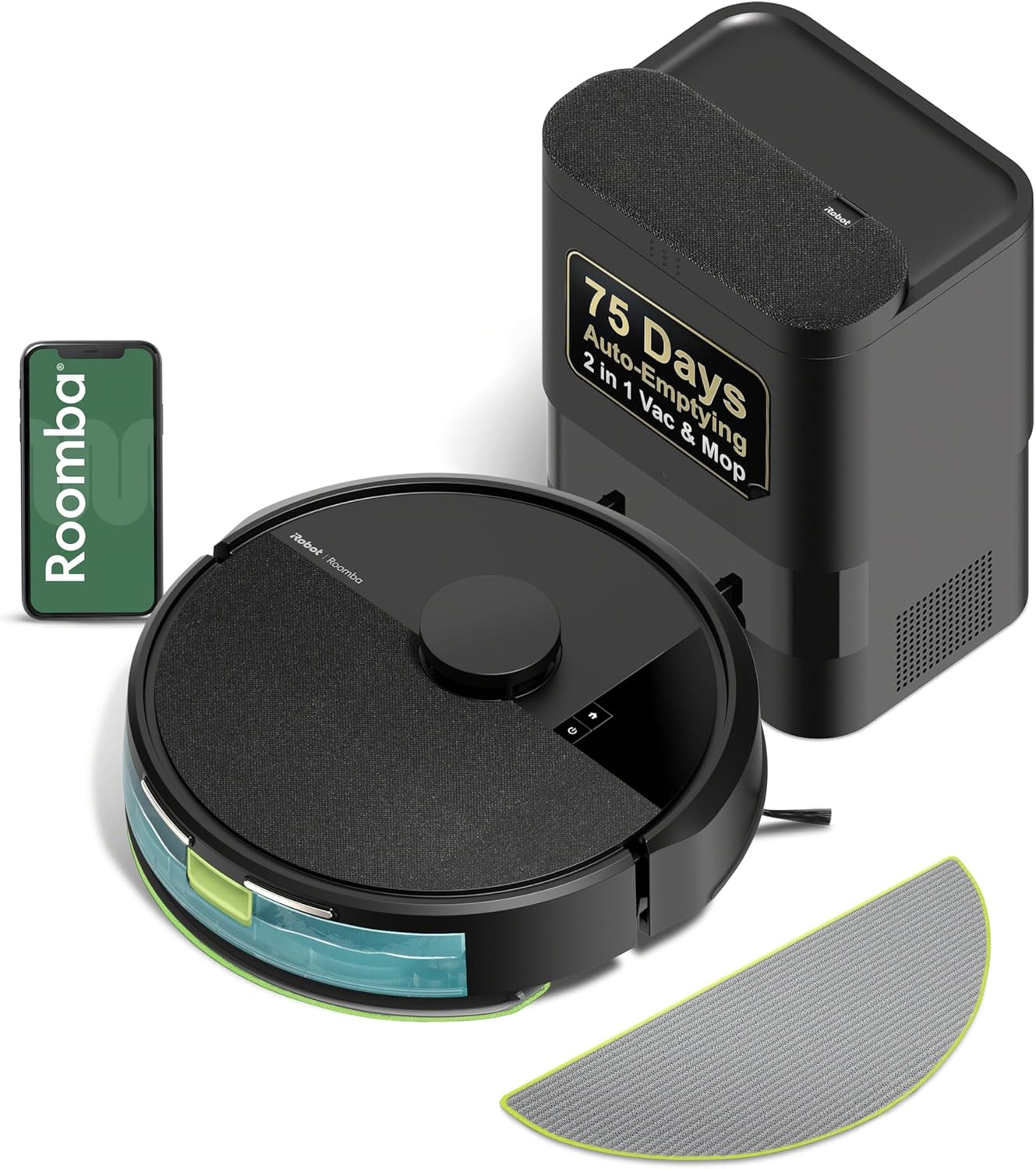
| Surface Recommendation | Carpet & Hard Floor |
|---|---|
| Battery Life | 100 minutes |
| Other Special Features of the Product | LiDAR Navigation, Self-Emptying, Simultaneous Vacuuming & Mopping |
| Controller Type | App Control, Button Control, Voice Control |
| Filter Type | Cartridge |
The Roomba 105 Combo pairs a disc-shaped robot vacuum with a self-emptying AutoEmpty dock to reduce hands-on maintenance for weeks at a time. It uses ClearView LiDAR to map rooms and navigate around obstacles while offering three cleaning modes: vacuum, mop, or vacuum-and-mop together. The cleaning system combines high-suction power with a multi-surface brush and an edge-sweeping brush to pull dirt from corners and lift debris from carpets, while a reusable microfiber pad and micro-pump control mopping liquid for uniform scrubbing on hard floors. Setup and control happen through the Roomba Home app, onboard buttons, or voice assistants, and the dock holds debris in a bag rated for up to 75 days. Practical benefits include strong suction for tracked-in sand, scheduled targeted cleaning, and less frequent emptying thanks to the AutoEmpty dock. Trade-offs are standard for combo units: mopping is designed for surface spills and not heavy scrubbing on textured floors, and you should expect routine maintenance like filter changes and brush cleaning to keep peak performance.
Best for: Buyers who prioritize proven performance and want a low-touch cleaning setup that efficiently removes tracked-in sand while minimizing how often they empty the robot.
Less Ideal for: Homes that need aggressive wet scrubbing on textured floors or users who expect a mop function to replace manual deep-cleaning methods.
- AutoEmpty dock holds debris for up to 75 days, reducing how often you handle dirt
- ClearView LiDAR mapping provides consistent navigation and efficient room coverage
- 70x stronger suction combined with edge-sweeping and multi-surface brushes tackles sand and tracked-in dirt
- Three cleaning modes (vacuum, mop, combo) let you choose targeted cleaning for floors
- Mopping is best for light spills and surface scrubbing rather than heavy-duty deep cleaning
- Requires routine maintenance like filter and brush cleaning to maintain suction performance
Verdict: Choose the Roomba 105 Combo if you want a reliable, low-maintenance robot that uses strong suction and LiDAR navigation to keep sand and tracked-in dirt under control with minimal daily intervention.
eufy C28 Robot Vacuum

| Suction power | 15,000 Pa |
|---|---|
| Run time | 140 minutes |
| Dust capacity (station) | 3 liters |
| Navigation | LiDAR |
The eufy C28 is a self-contained robot vacuum and mop designed for hands-off cleaning of hard floors and short-pile carpets. It uses a HydroJet roller mop that self-cleans and a DuoSpiral roller brush built to resist hair tangles, while LiDAR navigation maps rooms and lifts the mop over carpets. The Omni station stores collected dust in a 3 L container, automatically refills and drains water, and hot-dries the mop to reduce mold risk so you can run longer cleaning cycles without frequent maintenance. With 15,000 Pa turbo suction and a 140-minute runtime, the C28 picks up sand, crumbs, and pet hair across multiroom layouts. The system is privacy-focused because it avoids cameras, and app or voice controls let you schedule targeted cleans. Trade-offs are its large station and overall system size and the premium positioning that may be more than a minimal sand-cleaning solution needs; dense deep-pile carpets are outside the ideal scope. For users who prioritize low-maintenance, thorough hard-floor cleaning, the C28 offers a near fully automated routine.
Best for: Buyers who want a low-maintenance robot that reliably clears sand and debris from hard floors and short-pile carpets while minimizing ongoing chores and intervention.
Less Ideal for: If you need a compact, minimalist vacuum with a small dock or you mainly clean deep-pile carpets, this full-featured stationed system is not the best choice.
- Strong 15,000 Pa suction effective at lifting sand and fine debris from hard floors and short carpets
- HydroJet roller mop with self-wash and hot-air drying reduces manual mop maintenance and mold risk
- All-in-one Omni station auto-empties a 3 L dust bin and manages wastewater for long hands-free intervals
- Zero-tangle DuoSpiral brush handles long pet hair without frequent brush cleaning
- LiDAR navigation and automatic mop lift protect carpets while enabling consistent multiroom cleaning
- Large Omni station increases footprint and may require dedicated floor space
- Not intended for deep-pile or high-pile carpet where sand can embed more deeply
Verdict: If you want automated, low-effort sand cleanup on hard floors with long intervals between maintenance, the eufy C28 delivers the most hands-off solution.
Choosing the Right Robot Vacuum for Sand: Key Factors to Consider
Suction Power and Airflow
Suction power and the vacuum's airflow determine how effectively sand is lifted from carpet fibers and hard floors. Higher suction helps extract heavier grains that tend to embed in textiles, but raw suction numbers do not tell the whole story because intake geometry and brush design influence pickup efficiency.
Consider how manufacturers rate suction and look for evidence of consistent airflow through the intake. For sandy conditions, sustained airflow under load is important so the motor does not stall when the dustbin begins to fill.
Filtration and Dust Containment
Fine sand includes dust-sized particles that can become airborne during cleaning and redistribute in your home. A vacuum with multi-stage filtration or a high-efficiency filter reduces re-releasing those particles back into the room. Filters that are easy to access and replace also matter because sandy use accelerates clogging.
Good containment also reduces the frequency of manual cleaning around the dustbin area. Look for sealed dust pathways and filters rated for fine particles to keep indoor air cleaner over time.
Brush and Intake Design
Brush types and intake geometry have an outsized effect on how sand is collected and whether it packs into the roller or intake. All-floor rubber brush rolls or mixed bristle-and-rubber designs tend to resist wrapping and compacting sand better than long soft bristles. A wide suction channel reduces the number of passes needed to clear sand trails.
Also consider whether the design exposes brush bearings or crevices where sand can accumulate; simpler, serviceable brush assemblies are easier to keep working well in sandy environments.
Dustbin Capacity and Emptying Convenience
Sand can fill a dustbin quickly, increasing the need for frequent emptying. Larger onboard bins reduce interruption but may add weight and bulk. Removable dustbins with wide openings and one-handed release mechanisms streamline cleaning. Self-emptying base compatibility is a plus if you want longer autonomous operation, but check how the base collects and seals sand to avoid creating a dusty emptying chore.
Ease of rinsing or wiping the bin is also important because sand can stick to interior surfaces; look for smooth internal surfaces and accessible filter housings.
Runtime, Recharging, and Coverage
Cleaning sandy areas often takes longer than routine dust pickup because the robot may need multiple passes or slower suction modes. Longer runtime lets the vacuum finish larger areas before recharging. Faster recharge and reliable resume functions reduce downtime during longer cleaning cycles.
Consider how much floor area you need to cover during a typical session and whether the robot can return to finish after charging without losing mapping data or cleaning progress.
Maintenance and Durability
Sand is abrasive and speeds the wear of bearings, brushes, and seals. Choose robots with easily replaced wear parts and accessible service points. Regular maintenance tasks include clearing the brush roll, cleaning filters, and wiping the dustbin seal.
Availability of replacement parts and straightforward disassembly help keep maintenance quick and inexpensive. Also consider warranty terms and documented maintenance intervals in your decision.
Why Sand Challenges Standard Robot Vacuums
Sand is heavier and more abrasive than typical household dust, which changes how a robot vacuum performs. It can pack into brush rolls, abrade seals, and overwhelm small dustbins, causing frequent clogging and reduced suction.
Understanding these mechanics helps explain why features like wide intakes, rubberized brushes, and higher-capacity dustbins matter more for sandy environments than they would for light dust pickup.
- Sand can sink into carpet pile, requiring stronger suction or repeated passes.
- Fine particles can bypass low-grade filters and be redistributed.
- Abrasion from sand shortens brush and seal life without regular maintenance.
Hard Floors Vs Carpet: Different Strategies
Hard floors let robot vacuums clear sand more easily, but fine grit will still scratch surfaces if not captured quickly. For hard floors, prioritize strong suction, a low-profile intake that seals to the floor, and filters that trap dust.
On carpets, especially medium to high pile, pick robots with higher suction and brush designs that dislodge embedded grains without packing them down. You may need to run more than one cleaning pass or use targeted spot cleaning in entryways.
- Use higher suction modes for carpeted zones to lift embedded sand.
- For hard floors, frequent scheduled passes prevent grit accumulation.
Placement and Routine: How to Reduce Sand Buildup
Small changes to your cleaning routine can reduce how much sand enters your living spaces. Place mats and change footwear at entry points, and schedule robot cleanings after high-traffic periods like coming in from the beach or yard work.
Consider configuring no-go zones in high-mess areas where you want to run manual vacuuming first, or set the robot to perform a quick sweep of entryways multiple times per day to prevent sand spread.
- Run quick sweeps of entryways more frequently than full-house cleans.
- Use mapped zones to concentrate suction in trouble spots.
Maintenance Checklist for Sandy Use
Establish a short maintenance routine to keep a robot vacuum reliable in sandy conditions. Check and clean the brush roll after heavy-use days, inspect filter condition weekly, and empty the dustbin before it reaches capacity to avoid suction loss.
Replace wear parts proactively if you notice decreases in performance. Keeping a small toolkit and spare filters on hand reduces downtime and ensures the robot continues to pick up sand effectively.
- Clear brush roll and bearings of sand and hair weekly in heavy-use scenarios.
- Rinse or replace pre-filters regularly to maintain airflow.
Mapping, Multi-Room Coverage, and Edge Cleaning
Accurate mapping helps the robot focus on sandy zones without repeating clean routes unnecessarily. Multi-room coverage and custom routines allow you to prioritize entryways, mudrooms, and other high-sand areas.
Edge cleaning matters because sand often accumulates along baseboards and thresholds. Look for models with side brushes or edge-focused modes that sweep debris into the intake without flinging it back onto floors.
- Use scheduled runs for high-sand rooms and quieter schedules elsewhere.
- Enable edge-clean modes for perimeter sanding buildup.
How We Chose the Best Robot Vacuum for Sand
We prioritized attributes that directly affect how well a robot vacuum handles sand, then filtered out models that lack basic capability for gritty debris. Key evaluation criteria included suction power and airflow, filtration efficiency for fine particles, brush and intake design that resist packing, dustbin capacity and emptying convenience, runtime and battery management for real-world cleaning cycles, and navigation that minimizes repeat passes over heavily soiled zones. We excluded units with minimal suction or no dedicated brush systems, robots with unacceptably small dustbins for sandy environments, and designs that rely solely on edge sweeping without strong central pickup. We also screened for serviceability and available maintenance parts because sand accelerates wear. Our editorial process focused on specs that predict real-world sand pickup and on design features that reduce clogging and maintenance frequency.
Our full evaluation process is outlined in our review methodology.
FAQ
How often should I empty the dustbin when cleaning sand?
It depends on how much sand the robot collects per session, but expect to empty more frequently than with typical dust. For heavy sand zones, empty the bin after every major clean and check filters for early clogging.
Will sand damage the robot vacuum over time?
Sand is abrasive and can accelerate wear on brushes, bearings, and seals. Regular maintenance and replacing worn parts as needed can mitigate long-term damage and keep performance steady.
Are self-emptying bases helpful for sandy environments?
Self-emptying bases extend autonomous run time, but the base must handle fine grit without creating a dusty emptying process. They are useful if the base is designed to contain and seal sand effectively.
Can a robot vacuum pick sand out of deep carpet pile?
Deep pile presents a challenge because sand can settle between fibers. Higher suction and multiple passes help, but very deep carpets may still require occasional manual vacuuming with a powered upright or handheld.
What filter type should I choose for sand?
Choose a multi-stage filter or a high-efficiency particulate filter to trap fine dust and prevent re-release. Regular replacement or cleaning of filters is important because sand accelerates clogging.
Final Verdict
For homes that regularly deal with sand, prioritize a robot vacuum with strong sustained suction, a filtration system that captures fine particles, and brush and intake designs that resist packing. Balance dustbin size and emptying convenience against runtime needs so the robot can finish relevant areas without constant interruption. Finally, plan for a slightly higher maintenance cadence and keep replacement parts accessible. With those tradeoffs in mind, you can select a model that reduces the daily chore of sand removal and keeps floors cleaner between deeper manual cleans.