
Note: This article contains affiliate links. If you click on these links and make a purchase, we may earn a small commission at no extra cost to you. This helps support our research and content. Read our full affiliate disclosure here.
If you live with pets and mostly tiled floors, a purpose-built robot vacuum can dramatically cut down on day-to-day hair and dust. Tile presents different challenges than carpet: hair lies on the surface, grout lines collect debris, and hard flooring reveals streaks when suction or brush design is inadequate. Picking the right robot vacuum means balancing suction, brush system, and dust-bin capacity so the machine actually keeps up with shedding cycles. This guide lists the top shortlisted robot vacuums optimized for tile floors and pet hair. We evaluated models against cleaning performance, maintenance needs, and navigation on hard surfaces so you can quickly find a low-effort solution that fits your home. Read on for the key criteria we used and practical guidance for using one in a pet household.
Top Picks at a Glance
| Best Overall The best all-around choice for most situations | roborock Q10 S5+ |  |
| Best Quality Built to a higher standard if you want something more solid | roborock Saros 20 |  |
| Best Value The sweet spot between price and what you get | Tikom G8000 Max Robot Vacuum |  |
| Best Budget The cheapest option that still gets the job done reliably | ILIFE V2 Robot Vacuum |  |
| Top Rated A top-rated pick with lots of positive feedback | Bagotte G6 Robot Vacuum |  |
| Most Popular A crowd favorite that many people choose with confidence | Shark AI Ultra AV2501S |  |
| Best Seller A high-volume bestseller chosen again and again | eufy 11S Max Robot Vacuum |  |
roborock Q10 S5+

| Maximum Suction | 10,000 Pa |
|---|---|
| Battery Life | 150 minutes |
| Capacity | 2.7 liters |
| Filter Type | Washable |
| Noise Level | 65 db |
The roborock Q10 S5+ is a hybrid robot vacuum and sonic mop designed for frequent floor upkeep, especially in homes with pets. It navigates with 360° LiDAR to build multi-level maps, avoid obstacles, and let you set no-go zones from the app or via voice control. The 10,000 Pa HyperForce suction and smart carpet boost handle embedded pet hair and debris on tile and adjacent carpets, while the VibraRise 2.0 mopping system provides high-frequency scrubbing and automatically lifts the mop over rugs. The included 2.7 liter self-emptying dock stores dust for many weeks, cutting routine maintenance. ReactiveTech obstacle avoidance and dual anti-tangle brush design reduce snags from pet fur and clutter. Battery life and noise are reasonable for its class, and the system relies on the Roborock app for scheduling, suction/mop level control, and emptying modes. Expect a device that excels at hands-free daily cleaning of tile and pet hair, though full deep-clean cycles on heavy-soiled rugs may require supplemental spot cleaning or a more powerful upright vacuum.
Best for: Buyers who want reliable, low-maintenance floor care for tile and mixed-floor homes with pets and who prioritize hands-free scheduling and advanced mapping over manual cleaning time.
Less Ideal for: Households that need extremely quiet operation for nighttime cleaning or those relying on a single machine for very deep carpet shampooing should consider other specialized options.
- Strong 10,000 Pa suction lifts embedded pet hair and debris on tile and low-pile carpet
- 2.7 L self-emptying dock provides up to ~70 days of maintenance-free dust collection
- VibraRise 2.0 sonic mopping with auto-lift prevents wetting carpets while scrubbing tile
- LiDAR multi-level mapping and app controls enable precise room mapping and no-go zones
- Dual anti-tangle brush system reduces hair wrap and maintenance frequency
- Noise level around 65 dB can be noticeable during high-power cleaning
- Max suction and mop system may not replace a full-size vacuum for very deep carpet cleaning
Verdict: If you want an automated, low-touch robot that excels at removing pet hair and keeping tile floors clean, the Q10 S5+ delivers powerful suction, sonic mopping, and a long-running self-empty dock.
roborock Saros 20

| Suction | 36,000 Pa |
|---|---|
| Battery Life | 180 minutes |
| Filter Type | Washable Filter |
| Controller Type | App Control, Remote Control, Voice Control |
| Noise Level | 55 db |
The roborock Saros 20 is built around extreme suction and smart mapping to tackle pet hair and tile floors with minimal intervention. It pairs a 36,000 Pa digital motor with a low 3.13 inch profile so the robot can pull debris from grout lines and reach under low furniture while its AdaptiLift chassis raises the body to cross thresholds and deep carpets. The RGB camera and StarSight 3D sensors create detailed maps and detect hundreds of obstacles to reduce interruptions, and the app-driven SmartPlan learns your home for scheduled, targeted cleanings. For mopping, the RockDock offers hot water washing, hot air drying, auto re-wash and up to 65 days of auto-emptying, which cuts down routine maintenance. Practical limits include a relatively high reported noise level and a large unit weight that may affect portable handling, and advanced features require setup in the Roborock app and a reliable Wi-Fi connection. For performance-focused homes with pets and lots of tile, the Saros 20 delivers powerful, mostly hands-free cleaning.
Best for: Buyers prioritizing raw cleaning power and intelligent navigation for tile floors and heavy pet hair who want a largely automated system that reduces daily maintenance.
Less Ideal for: People who need an ultra-quiet or very lightweight robot for frequent manual relocations should consider other, simpler models.
- Very high suction (36,000 Pa) for pulling pet hair and debris from grout and carpet
- Advanced 3D navigation and RGB camera detect and avoid hundreds of obstacles for more complete coverage
- AdaptiLift chassis crosses tall thresholds and adjusts height for carpets and uneven floors
- Automated RockDock provides hot water wash, hot air dry, auto re-wash and extended auto-emptying for hands-free maintenance
- Reported noise level around 55 dB may be noticeable during use
- Heavier, bulkier unit may be less convenient to move or store
Verdict: If you want top-tier suction and smart, hands-free cleaning for tile and pet hair, the Saros 20 is designed to deliver high-performance, largely automated results.
Tikom G8000 Max Robot Vacuum

| Suction | 5000Pa |
|---|---|
| Battery Life | 150 minutes |
| Dustbin Capacity | 450 ml |
| Water Tank | 300 ml |
| Noise Level | 45 db |
The Tikom G8000 Max is a low-profile robot vacuum that combines strong suction with mopping to keep hard floors and low-pile carpets tidy with minimal user effort. In use it maps and navigates with anti-collision and anti-fall sensors, and supports app, remote, voice, and onboard button control so you can schedule cleanings and start runs from a phone or the included remote. Notable features include a 5000Pa suction motor for lifting pet hair and debris, a combined 450 ml dustbin plus 300 ml water tank for simultaneous vacuuming and mopping, and a runtime up to 150 minutes with automatic recharge. Its 3-inch height lets it access under furniture and the Zig-zag cleaning mode improves coverage on open floor areas. Limitations to keep in mind are that higher-pile carpets may not get deep cleaning compared with upright vacuums and mopping is best for maintenance rather than heavy wet cleaning; occasional emptying of the dustbin and refilling the water tank are still required. For routine hardwood maintenance the G8000 Max offers a practical balance of suction, run time, and smart controls.
Best for: Buyers who want a practical, time-saving floor care solution for hardwood and low-pile carpets and prioritize long runtime, reliable navigation, and flexible control options.
Less Ideal for: Households that need deep carpet extraction, heavy wet mopping, or commercial-grade cleaning should consider a dedicated upright or standalone mop system instead.
- Strong 5000Pa suction effective on hard floors and short-pile carpets
- Simultaneous vacuuming and mopping with combined dustbin and water tank saves time
- Long run time up to 150 minutes with auto-recharge for larger homes
- Slim 3-inch profile reaches under low furniture
- Multiple control options including app, remote, voice, and onboard button
- Mopping function is for light maintenance and not heavy wet cleaning
- May be less effective on high-pile carpets compared with full-size vacuums
Verdict: A slim, long-running robot that combines powerful suction and light mopping to keep hardwood floors clean with minimal hands-on work.
ILIFE V2 Robot Vacuum

| Battery Life | 120 minutes |
|---|---|
| Capacity | 300 ml |
| Filter Type | Sponge |
| Control Method | Remote |
| Noise Level | 69 db |
The ILIFE V2 is an entry-level robot vacuum built to keep hardwood and other hard floors tidy without a lot of fuss. Its 2.99-inch slim body fits under low furniture while a tangle-free suction port and sponge filter make it practical for homes with pet hair. You can run scheduled cleanings, switch between auto, spot and edge modes, or start jobs with the included remote control or the single-button on the unit. A 300 ml dustbin and up to 120 minutes of runtime let it cover medium rooms on one charge, and it will automatically return to the dock when the battery is low. Noise is noticeable at 69 dB and there is only one power level, so it lacks adjustable suction or app-based controls, but for straightforward floor maintenance on hardwood and low-pile carpet the V2 delivers solid value at an affordable price.
Best for: Buyers who want an affordable, no-frills robot to maintain hardwood and low-pile carpet cleanliness with simple controls and scheduled runs.
Less Ideal for: Those who need strong adjustable suction, smart app control, or advanced mapping for large or complex homes should consider higher-end models.
- Slim 2.99-inch profile cleans under low furniture
- Tangle-free suction port suited for pet hair
- 120 minutes runtime with automatic return-to-dock
- Multiple cleaning modes (auto, spot, edge) and simple remote control
- Single power level limits suction control for heavier debris
- No smartphone app or advanced navigation features
Verdict: A low-cost, slim robot vacuum that reliably maintains hardwood floors and handles pet hair for budget-focused buyers.
Bagotte G6 Robot Vacuum

| Maximum Suction | 6000Pa |
|---|---|
| Filter Type | H13 |
| Battery Life | 120 minutes |
| Capacity | 300 ml |
| Control Method | App, Remote, Voice |
The Bagotte G6 is a robot vacuum and mop designed to handle hard floors and carpets using 360° LiDAR mapping and a 2-in-1 dust and water tank. In normal use it maps your home, creates no-go zones in the app, plans efficient cleaning routes, and can sweep, vacuum, roll, and mop in one pass. Notable features include strong suction rated up to 6000Pa, H13 filtration, 120-minute battery runtime, and compatibility with Alexa, Google Home, and the Bagotte app for scheduled or voice-controlled cleaning. The LiDAR navigation yields accurate room maps and predictable navigation, which helps it avoid repeat passes and reduces missed spots on tile and around furniture. Practical benefits are thorough pickup of pet hair and debris on tile and quick transitions between vacuuming and mopping without swapping attachments. Important limitations are that suction and run-time will vary with floor type and settings, the water tank is moderate at 300 ml so frequent refills may be needed for whole-house mopping, and deep-pile carpets may still require a dedicated upright for full deep-cleaning. The G6 is a capable, reliable option for regular maintenance on tile and pet-hair cleanup when you want automated, mapped cleaning.
Best for: Buyers who prioritize consistent, predictable automated cleaning for tile floors and frequent pet-hair pickup and want a mapped, hands-off solution they can schedule and control by app or voice.
Less Ideal for: Homes that need intensive deep-cleaning of high-pile carpet or very large open areas where a larger water tank and commercial-grade suction are required.
- 360° LiDAR mapping for accurate room maps and efficient route planning
- High suction up to 6000Pa for picking up pet hair and debris on hard floors
- H13 filter for finer dust capture
- App, remote, and voice control with virtual no-go zones for easy scheduling and area restriction
- 120-minute battery life for extended cleaning sessions
- 300 ml water tank is relatively small for large homes needing continuous mopping
- May struggle to deep-clean very thick, high-pile carpets compared with a full-size vacuum
Verdict: Choose the Bagotte G6 if you want a reliable, LiDAR-mapped robot that removes pet hair and maintains tile floors with strong suction and smart app control.
Shark AI Ultra AV2501S
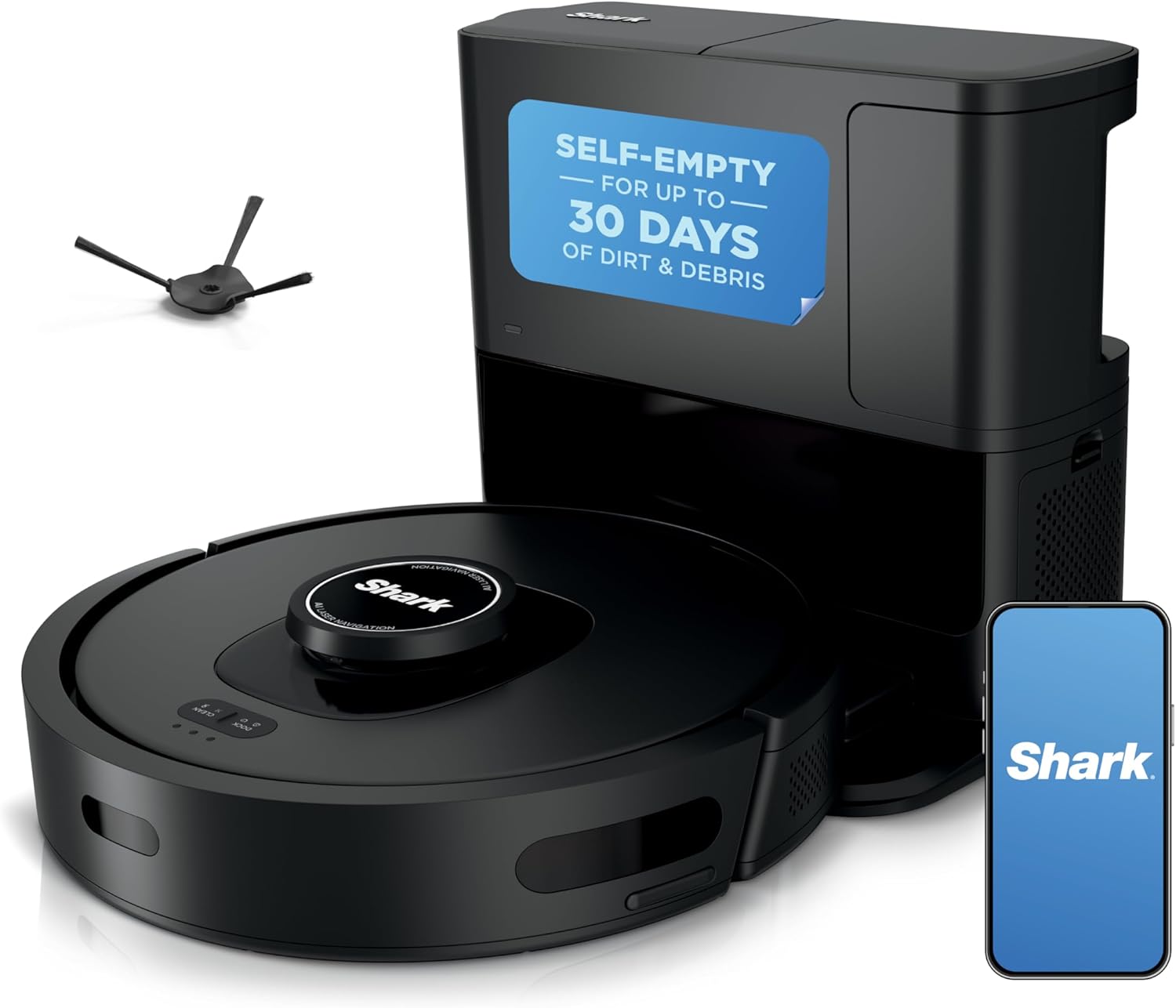
| Battery Life | 120 minutes |
|---|---|
| Filter Type | Foam |
| Power Source | Battery Powered |
| Compatible Devices | Amazon Alexa, Google Home |
| Other Special Features of the Product | Bagless, Pet Hair Pick Up, Self-Cleaning Brushroll, Self-Emptying |
The Shark AI Ultra AV2501S is a LiDAR-guided robot vacuum built for hands-off cleaning in homes with pets and mixed floors. It uses Matrix Clean navigation to sweep rooms in a precise grid and takes extra passes over dirtier areas, while 360° LiDAR mapping learns and adapts to your floorplan for methodical coverage. A self-cleaning brushroll helps reduce hair wrap and the bagless self-empty base stores up to 30 days of debris so you do not open the dustbin frequently, and the HEPA-style filtration captures fine dust and allergens. Runtime is up to 120 minutes with automatic Recharge and Resume for larger homes. The vacuum is controlled via the SharkClean app and works with Alexa and Google Assistant for scheduled or voice-activated cleaning. Trade-offs to consider are its relatively large docking footprint and the usual occasional missed tight spots that affect many round robots, and replacement parts and bags add ongoing costs. For tile floors and heavy pet hair, it focuses on thorough, low-effort maintenance rather than occasional deep cleaning of grout lines or crevices.
Best for: Buyers who want a reliable, low-maintenance robot that handles everyday pet hair and keeps tile and mixed floors consistently clean with minimal intervention and proven navigation.
Less Ideal for: If you need precise deep cleaning of grout, tight corners, or instant spot-cleaning of complex cluttered rooms, a handheld vacuum or dedicated deep-cleaning tool is a better match.
- Matrix Clean grid navigation for systematic coverage and multiple passes over dirty areas
- 360° LiDAR mapping for accurate room mapping and obstacle avoidance, even in low light
- Self-emptying base holds up to 30 days of debris, reducing maintenance frequency
- Self-cleaning brushroll designed to minimize hair wrap, useful for pet households
- Up to 120 minutes runtime with Recharge and Resume for larger cleaning jobs
- Relatively large docking base and overall system footprint that needs floor space
- May miss tight corners and grout lines that require manual attention
- Ongoing cost for replacement bags and consumables
Verdict: Choose the Shark AI Ultra AV2501S when you want a pet-capable, self-emptying robot with precise LiDAR navigation that minimizes hands-on maintenance for tile and mixed floors.
eufy 11S Max Robot Vacuum

| Surface Recommendation | Hard Floor & Tile & Medium carpet |
|---|---|
| Battery Life | 100 minutes |
| Suction Power | 2000 Pa |
| Capacity | 600 ml |
| Noise Level | 55 db |
The eufy 11S Max is a low-profile robot vacuum built to clean hard floors and medium-pile carpets without drawing attention. Its 2.85-inch slim body lets it slide under low furniture while 2000Pa suction and a 12.8-inch cleaning path pick up dust, crumbs, and pet hair. It runs up to 100 minutes on hardwood at a reported low 55 dB, and automatic return-to-base means it tops off battery without user intervention. Controls are simple: the included remote and onboard buttons let you start, stop, and switch modes quickly, though there is no Wi-Fi or app control. Practical touches include washable filters, drop-sensing and anti-collision sensors, and a 600 ml dust capacity that reduces how often you empty the bin. The trade-offs are straightforward: navigation is basic rather than lidar or map-based, so room coverage is more random and may miss tight corners, and the single-side-brush design can be less thorough along edges compared with dual-brush models. For routine, quiet cleaning of hardwood, the 11S Max balances strong suction and a slim profile in a simple, reliable package.
Best for: Buyers who prioritize a quiet, no-frills robot that cleans hardwood reliably and fits under low furniture will appreciate this model for regular maintenance cleaning.
Less Ideal for: If you want mapped cleaning, smartphone scheduling, or the most thorough edge-cleaning for complex floorplans, choose a model with advanced navigation and app control instead.
- Slim 2.85" profile reaches under low furniture
- Up to 100 minutes runtime for extended cleaning sessions
- Powerful 2000Pa suction for effective pickup on hard floors
- Quiet operation at about 55 dB suitable for daytime or evening use
- Large 600 ml dust capacity and washable filter lower maintenance frequency
- Random navigation rather than mapping can lead to uneven coverage
- No Wi‑Fi or smartphone app means limited scheduling and remote control options
Verdict: A slim, quiet robot with strong suction made for routine hardwood maintenance when you want reliable, no-frills cleaning.
Choosing the Right Robot Vacuum for Tile Floors and Pet Hair: Key Factors to Consider
Suction and Airflow
Stronger suction and efficient airflow matter because pet hair and fine dander sit on top of tile rather than embedding into fibers. Higher suction helps lift hair off the surface and forces it into the dust bin rather than pushing it ahead of the robot.
When assessing models, look for stated suction power and whether the design concentrates airflow through a single intake or distributes it across multiple ports. Models that offer a high-suction mode for spot cleaning are useful after active shedding. Keep in mind that suction alone is not enough; it needs to work together with the brush system to dislodge hair from grout lines and edges.
Brush Design and Hair Management
Brushes determine how effectively hair gets collected rather than wrapped around rollers. For tile floors, side brushes sweep hair from edges and grout, while the main brush or rubberized roller should be engineered to resist tangles. Open-ended bristle rollers can trap long strands, increasing maintenance time.
Prefer designs that advertise tangle-resistant rollers, convertible brushless paths, or easily removable brush modules. Simplified brush access reduces the effort of pulling hair out of the assembly and speeds regular upkeep. Also consider whether the brush assembly can be replaced or maintained without tools.
Dust Bin Size and Filtration
Homes with pets produce more loose hair and dander, so dust-bin capacity directly affects runtime before manual emptying. A larger bin reduces interruption for frequent emptying, which is convenient for households with multiple pets or heavy shedders.
HEPA or high-efficiency filters are valuable if allergy control matters, because they capture smaller dander particles that pass through coarse filters. Check how easy filters are to access and wash or replace. Some systems include automatically emptying base stations which reduce hands-on maintenance, but these bases add complexity and require compatible bags or filters.
Navigation on Tile and Edge Cleaning
Tile can create slip or traction differences compared with carpet, and grout lines can trap debris. Good navigation keeps the robot following efficient paths while ensuring edges and corners are reached. Reliable obstacle detection prevents the robot from getting stuck on thresholds or rugs placed over tile.
Map-based navigation and multi-pass cleaning modes help cover hard floors thoroughly. Also consider how the robot handles transitions between rooms and whether it can clean close to baseboards and under low furniture. Robots that can adjust suction or brush speed depending on floor type offer better results on mixed surfaces.
Maintenance Workflow and Accessibility
Frequent upkeep is unavoidable with pets, so maintenance time becomes a critical usability factor. Look for machines with tool-free access to the dust bin and brush modules, clear indicator lights for clogs, and washable filters. These features cut down on the time spent clearing tangles or replacing filters.
Also account for the availability and cost of replacement consumables such as filters and side brushes. A design that minimizes the need for frequent replacements will reduce ongoing chores and increase long-term satisfaction in a busy pet household.
How Tile Flooring Changes Cleaning Strategy
Tile floors reveal hair and dust more readily than carpet, so you will notice missed areas quickly. Because hair sits on the surface, the robot needs to combine direct suction power with aggressive edge sweeping to prevent hair from accumulating along walls and grout.
Also consider how tile grout and uneven joints influence pickup. Robots that run multiple passes or have adjustable brush height can better dislodge hair from shallow grout lines. For homes with textured tile, a slower cleaning pass may improve pickup.
- Look for multi-pass cleaning modes for thorough coverage
- Side brushes that reach deep into corners improve edge pickup
- Adjustable brush height or brushless designs reduce hair wrapping
Managing Pet Hair Between Deep Cleans
Daily light runs focused on high-traffic zones reduce the accumulation of loose hair. Schedule shorter, more frequent cleanings rather than infrequent long cycles to prevent large hair clumps from forming.
Keep a maintenance routine: empty the bin after heavy runs, clean the brush module weekly, and clear sensor areas to maintain navigation accuracy. For multi-pet homes, increase the frequency of runs or consider a model with automatic bin emptying if you prefer less hands-on care.
- Use zoned schedules for entryways and pet beds
- Run the robot during low-activity times to avoid hair displacement
- Perform quick visual checks of the brush after each heavy session
Dealing With Lint, Litter, and Small Debris
Pet households often have a mix of hair, litter, and small debris. The ideal robot handles both lightweight particles and heavier granules without scattering them. A concentrated suction path coupled with small-brush agitation helps pick up grit from grout lines without blowing it outward.
If you use litter boxes on tiled floors, place mats to trap litter before it spreads. The robot should be able to pick up stray granules but not push them along edges where they can accumulate.
- Avoid robots that rely only on side brushes to deliver debris to the main intake
- Choose units with focused suction ports for heavier particles
- Consider a pre-clean sweep for large granules before robot runs
Placement and Home Layout Tips
Arrange furniture and rugs to minimize trap points where a robot can snag hair-filled fringes or fabric edges. Low-clearance furniture that the robot can pass under extends cleaning reach on tile without manual intervention.
Place the docking station on a flat, unobstructed section of tile to ensure reliable returns. Keep thresholds between tile and adjacent floor types manageable so the robot does not repeatedly get stuck or leave debris behind.
- Keep doorways clear of clutter during runs
- Use virtual boundaries or no-go zones to protect problem areas
- Elevate charging docks slightly if floor is uneven
Allergy and Air Quality Considerations
Pet dander on tile still becomes airborne during activity. Better filtration captures more fine particles, reducing airborne allergens after cleaning. If allergies are a concern, prioritize robots with sealed dust-path designs and high-efficiency filters.
Empty bins carefully outdoors or over a trash receptacle to avoid reintroducing dander into the house. Washing washable filters regularly maintains airflow and filter performance over time.
- Choose washable filters to cut replacement frequency
- Look for sealed bin designs to reduce dust escape
- Schedule deeper cleans when pets are out of the room if possible
How We Chose the Best Robot Vacuum for Tile Floors and Pet Hair
We started by filtering for robot vacuums specifically capable of handling hard floors and high pet hair loads. Primary evaluation criteria included suction strength on bare floors, brush and agitator design for hair pickup, dust-bin and filter capacity for frequent debris, and navigation performance on tile and around furniture. We also considered battery life and recharge behavior to ensure the machine can cover typical single-level homes without frequent interruptions. Excluded from consideration were units designed only for light maintenance, models optimized exclusively for carpets, and robots with minimal dust capacity that require near-daily emptying. We prioritized real-world cleaning efficiency over marketing claims, focusing on how well each machine handled long pet hair, scattered litter, and grout-line pick-up. Durability and ease of routine maintenance were also factored in, since owners of pets often face heavier wear and more frequent filter and brush cleaning. Finally, we favored designs with accessible parts and straightforward user controls to reduce the time you spend maintaining the device.
Our full evaluation process is outlined in our review methodology.
FAQ
Will a robot vacuum pick up long pet hair on tile?
Often yes, provided the robot combines strong suction with a brush system designed to resist tangles. Long hair is easier to pick from tile than carpet, but tangled rollers or weak side brushes will reduce effectiveness.
How often should I run a robot vacuum in a household with pets?
It depends on shedding levels, but many pet owners run daily or every-other-day light cycles in high-traffic areas. Frequent short runs prevent hair buildup and reduce the need for manual spot cleaning.
Are auto-emptying base stations worth it for pet owners?
They can be valuable because they reduce hands-on emptying frequency, especially in heavy-shedding homes. However, they add complexity and require their own consumables, so weigh convenience against maintenance routines.
Can a robot vacuum damage tile or grout?
Usually not. Most robots are designed for hard floors and have rubber wheels and gentle brushes. Excessive scrubbing on loose grout or highly textured tile could cause edge wear over long periods, so monitor any sensitive areas.
How do I prevent the robot from scattering litter or debris?
Run a quick manual sweep to remove large granules before robot cycles, use focused suction modes if available, and set virtual no-go zones around litter boxes to control where debris is handled.
Final Verdict
Prioritize suction and a hair-friendly brush system when choosing a robot vacuum for tile floors and pet hair. Dust-bin size, filtration, and maintenance accessibility determine how much time you spend caring for the machine, while navigation and edge cleaning dictate whether hair is actually removed from grout and corners. Balance raw suction with a tangle-resistant brush design and a practical maintenance routine to find a reliable solution. Focusing on these tradeoffs will help you choose a robot that keeps tile floors looking cleaner with less hands-on work.