
Note: This article contains affiliate links. If you click on these links and make a purchase, we may earn a small commission at no extra cost to you. This helps support our research and content. Read our full affiliate disclosure here.
If you live in a two story house, a robot vacuum can take a lot of daily wear off your hands while keeping both floors presentable. The right robot vacuum reduces manual vacuuming, handles stair transitions safely, and remembers room layouts so it cleans efficiently on each level. This guide narrows the field to seven shortlisted robot vacuums that perform well across multiple floors and in typical two-story home layouts. We evaluated suction and navigation, battery life, and practical upkeep to highlight models suited to multi-level living. Read on for the features and tradeoffs that matter when choosing a robot vacuum for a two story house.
Top Picks at a Glance
| Best Overall The best all-around choice for most situations | iRobot Roomba 105 Vac + AutoEmpty |  |
| Best Quality Built to a higher standard if you want something more solid | roborock Saros 20 |  |
| Best Value The sweet spot between price and what you get | Lefant M2 Plus Robot Vacuum |  |
| Best Budget The cheapest option that still gets the job done reliably | ILIFE V2 Robot Vacuum |  |
| Top Rated A top-rated pick with lots of positive feedback | WSUANE D15S Max Robot Vacuum |  |
| Most Popular A crowd favorite that many people choose with confidence | Shark Matrix Clean AV2511AE |  |
| Best Seller A high-volume bestseller chosen again and again | roborock Q10 S5+ |  |
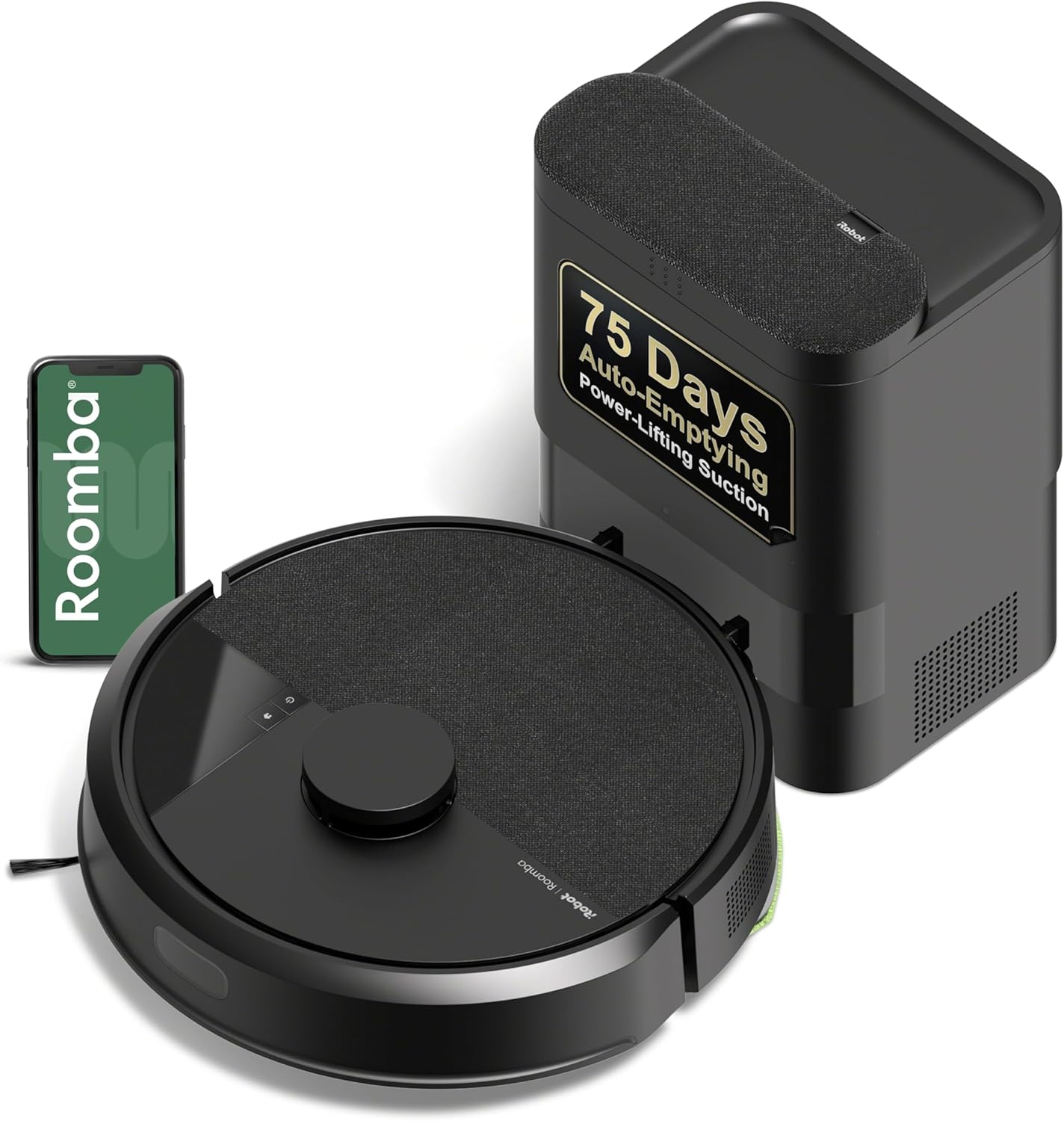
iRobot Roomba 105 Vac + AutoEmpty
| Battery Life | 200 minutes |
|---|---|
| Surface Recommendation | Carpet & Hard Floor |
| Control Method | App, Push Button, Voice |
| Other Special Features of the Product | Anti-Fall, Dirt Detection Sensor, Eco Mode, Edge Cleaning, LiDAR Navigation |
| Capacity | 0.1 gallons |
The Roomba 105 Vac with AutoEmpty dock is a straightforward robot vacuum built for hands-off floor maintenance across carpets and hard floors. It uses ClearView LiDAR to map rooms so it cleans in neat rows and avoids obstacles and drops, and the three-stage cleaning system combines an edge brush and multi-surface brush with notably stronger suction for routine dirt removal. The included AutoEmpty dock holds up to 75 days of debris in a disposable bag, which cuts down on frequent emptying and reduces exposure to dust. You control it from the Roomba Home app, onboard buttons, or voice assistants, and the app supports targeted room scheduling and no-go zones. Practical limits are that it is a vacuum-only model (no mopping) and basic brush/filter maintenance is required periodically, and setup requires a 2.4 GHz Wi-Fi connection. For a two-story home it works well on individual floors when moved between levels, offering reliable mapping and solid suction for everyday upkeep.
Best for: Buyers who want a low-maintenance robot that reliably maps and vacuums whole rooms and prioritize hands-free debris disposal and easy scheduling.
Less Ideal for: Homes that need a combined vacuum-and-mop solution or owners who want an entirely maintenance-free, multi-floor automatic transfer system.
- AutoEmpty dock stores up to 75 days of debris for less frequent bin handling
- ClearView LiDAR mapping enables neat-row cleaning and reliable obstacle avoidance
- 70x stronger power-lifting suction improves pickup on carpets and floors
- Multiple control options: app, onboard buttons, and voice assistant integration
- No mopping function — vacuum-only cleaning
- Requires routine brush and filter maintenance and periodic filter replacement
Verdict: Choose this Roomba if you want dependable LiDAR mapping and a self-emptying dock to minimize daily upkeep while keeping carpets and hard floors clean.
roborock Saros 20

| Suction | 36,000 Pa |
|---|---|
| Battery Life | 180 minutes |
| Obstacle Detection | RGB camera + 3D ToF sensors |
| Dock Features | Hot-water wash, hot-air dry, auto-emptying |
| Noise Level | 55 db |
The roborock Saros 20 is a performance-focused robot vacuum and mop that targets deep cleaning in multiroom homes. It uses StarSight 3D ToF sensors and an RGB camera to map rooms and detect over 300 obstacles, which reduces interruptions and improves coverage across complex floorplans. The AdaptiLift chassis raises the robot to cross double-layer thresholds up to 3.46 inches while its slim 3.13 inch profile lets it clean under low furniture. Powered by a 36,000 Pa digital motor and a dual anti-tangle system, the Saros 20 pulls embedded dust and pet hair from carpets and hard floors and the FlexiArm side brush and mop reach edges and corners. The bundled RockDock provides automated hot-water mop washing, hot-air drying, and extended auto-emptying for lengthy hands-free operation. Expect long runtimes from the 180-minute battery but plan for occasional app setup and maintenance of brushes and filters. The unit is loudest in max suction and its comprehensive dock adds footprint and installation needs, but for large two-story homes that demand powerful, autonomous cleaning the Saros 20 delivers strong, consistent results.
Best for: Buyers who prioritize raw cleaning performance and autonomous maintenance for larger multiroom or two-story homes and want a robot that handles pet hair, carpets, and uneven thresholds with minimal intervention.
Less Ideal for: People who need the quietest possible nightly cleaning or those with very tight budgets and limited space for an automated dock should consider simpler, smaller systems.
- Very high suction power (36,000 Pa) for deep cleaning carpets and gaps
- Advanced 3D ToF navigation plus RGB camera for accurate mapping and obstacle avoidance
- AdaptiLift chassis crosses tall thresholds and slim profile cleans under low furniture
- RockDock automates mop washing, hot-air drying, and long auto-empty periods
- Long 180-minute battery life for extended coverage on large homes
- Dock and self-maintenance system increase installation footprint and complexity
- High suction modes produce noticeable noise compared with quieter models
Verdict: If you want maximum cleaning power and a largely hands-free maintenance system for a large two-story home, the Saros 20 is built for that job.
Lefant M2 Plus Robot Vacuum

| Suction power | 6000Pa |
|---|---|
| Navigation | LiDAR, dToF, 190° PSD obstacle avoidance |
| Run time | 140 Min |
| Water tank capacity | 300ml |
| Control | App, Voice, Remote, Touch |
The Lefant M2 Plus is a self‑emptying robot vacuum and mop designed to map and clean multiroom homes reliably. It uses 360° LiDAR mapping and dToF/PSD obstacle avoidance to build accurate maps and run straight, efficient passes, while the app supports zone, no‑go areas, and scheduled cleaning. In daily use the unit vacuums with a 6000Pa motor and a roller brush, and offers carpet detection plus automatic suction boost when the mop is removed so it adapts between hard floors and rugs. The included self‑empty station holds two 2.5L bags for long stretches between maintenance, and dual‑band Wi‑Fi plus voice control make remote operation simple. Practical limits to note are the modest dustbin and water tank capacities on the robot itself, which rely on the base for extended autonomy, and the unit's performance depends on occasional bag and filter replacements. For a two‑story house it handles mapping and targeted cleaning well but you will need to move the robot or set up separate maps per level.
Best for: Buyers who value time savings and a practical, automated cleaning routine for multiroom homes and want a robot that adapts between hard floors and carpets with minimal daily intervention.
Less Ideal for: Homes that need fully independent multi‑level mapping without moving the base or users who prefer completely bagless systems should consider other options.
- Accurate LiDAR mapping and obstacle avoidance for efficient room coverage
- Self‑emptying base with large dust bag capacity reduces manual emptying
- Carpet detection and automatic suction boost for mixed floors
- App control with zone/no‑go setup plus dual‑band Wi‑Fi and voice assistant support
- Roller brush and 6000Pa suction handle pet hair and embedded debris
- Robot’s onboard dustbin and water tank are small and rely on the base for longer runs
- Requires periodic replacement of disposable bags and filters to maintain performance
Verdict: If you want a time‑saving, self‑emptying robot that reliably maps and switches between mopping and vacuuming across mixed floors, the Lefant M2 Plus is a practical choice.
ILIFE V2 Robot Vacuum

| Battery Life | 120 minutes |
|---|---|
| Capacity | 300 ml |
| Filter Type | Sponge |
| Control Method | Remote |
| Noise Level | 69 db |
The ILIFE V2 is an entry-level robot vacuum built to keep hardwood and other hard floors tidy without a lot of fuss. Its 2.99-inch slim body fits under low furniture while a tangle-free suction port and sponge filter make it practical for homes with pet hair. You can run scheduled cleanings, switch between auto, spot and edge modes, or start jobs with the included remote control or the single-button on the unit. A 300 ml dustbin and up to 120 minutes of runtime let it cover medium rooms on one charge, and it will automatically return to the dock when the battery is low. Noise is noticeable at 69 dB and there is only one power level, so it lacks adjustable suction or app-based controls, but for straightforward floor maintenance on hardwood and low-pile carpet the V2 delivers solid value at an affordable price.
Best for: Buyers who want an affordable, no-frills robot to maintain hardwood and low-pile carpet cleanliness with simple controls and scheduled runs.
Less Ideal for: Those who need strong adjustable suction, smart app control, or advanced mapping for large or complex homes should consider higher-end models.
- Slim 2.99-inch profile cleans under low furniture
- Tangle-free suction port suited for pet hair
- 120 minutes runtime with automatic return-to-dock
- Multiple cleaning modes (auto, spot, edge) and simple remote control
- Single power level limits suction control for heavier debris
- No smartphone app or advanced navigation features
Verdict: A low-cost, slim robot vacuum that reliably maintains hardwood floors and handles pet hair for budget-focused buyers.
WSUANE D15S Max Robot Vacuum

| Suction | 10000Pa |
|---|---|
| Dustbin Capacity | 3.5 liters |
| Navigation | dToF LiDAR |
| Filter Type | Three-layer high-efficiency (washable) + filter cotton (not washable) |
| Runtime (silent) | 160 minutes |
The WSUANE D15S Max is a mapping robot vacuum and mop designed to run long stretches between maintenance thanks to its 3.5L self-emptying dustbin and app-controlled smart maps. It uses dToF LiDAR and multiple sensors to build accurate multi-level maps, let you set no-go zones, and target high-traffic areas, which makes scheduling and repeatable cleaning straightforward for multiroom or multifloor homes. Suction tops out at 10,000Pa with an auto-boost feature that increases power on carpets, and a hair-cutting anti-tangle roller helps reduce brush clogs in pet households. Runtime varies by mode with a quoted silent run up to 160 minutes and automatic return-to-dock charging once battery runs low. Practical limits include a fairly loud peak noise level around 70 dB and a mixture of washable and non-washable filters that require attention; while mapping is robust, mopping is described as a combo tank rather than a fully independent mop system. For two-story homes this model is useful for dependable scheduled cleans and low-touch maintenance, though you will still need periodic filter and brush care and to move the dock between floors if you want coverage on both levels.
Best for: Buyers who prioritize reliable, low-touch cleaning cycles and precise mapping for multiroom or multilevel homes and want a model that reduces daily maintenance effort.
Less Ideal for: Households that need a whisper-quiet machine for nighttime cleaning or those that expect a fully independent, heavy-duty mopping system will want to consider other options.
- Large 3.5L self-emptying dustbin reduces how often you manually empty dirt
- dToF LiDAR with multiple sensors enables accurate mapping and no-go zone setup
- High peak suction (10,000Pa) with auto-boost for deeper carpet cleaning
- Hair-cutting anti-tangle roller helps prevent brush clogs from pet and human hair
- Peak noise level around 70 dB can be noticeable during max-power runs
- Some filtration components are not washable, requiring replacement or careful handling
Verdict: Choose the D15S Max if you want a mapping robot that minimizes hands-on emptying and reliably handles scheduled cleaning across a large two-story home.
Shark Matrix Clean AV2511AE

| Battery Life | 120 minutes |
|---|---|
| Capacity | 0.27 gallons |
| Power Source | Battery Powered |
| Filter Type | Cartridge |
| Compatible Devices | Amazon Alexa, Google Assistant |
The Shark Matrix Clean AV2511AE is a robot vacuum and mop built for hands-off maintenance in larger homes. It uses LiDAR home mapping and a precision Matrix Clean grid pattern to deliver multiple passes over messes, while a self-cleaning brushroll and strong suction handle pet hair and embedded debris on both carpets and hard floors. The XL bagless base collects up to 60 days of dirt so you do not need frequent emptying, and app and voice control let you schedule targeted room cleanings and run routines remotely. Recharge-and-resume lets the robot return to the dock, recharge, and pick up where it left off for long runs across multi-room layouts. Practical limits include reliance on app mapping for room targeting and the typical clearance constraints of robot form factors, so it may miss spots under very low furniture or require initial setup to avoid stairs on a multi-level home. For two-story houses you will still need to move the dock between floors or rely on scheduled runs per level for full coverage.
Best for: Buyers who want a largely hands-off cleaning solution for larger homes and prioritize proven features like LiDAR mapping, long self-empty intervals, and pet-hair performance backed by broad user adoption.
Less Ideal for: Households wanting a single-setup robot that autonomously services multiple floors without relocating the base should consider alternatives with multi-floor docking solutions or plan to move the unit between levels.
- LiDAR-based home mapping for accurate navigation and room targeting
- Matrix Clean grid pattern that takes multiple passes for more complete coverage
- 60-day bagless self-empty base reduces the need for frequent maintenance
- Self-cleaning brushroll and strong suction designed to handle pet hair
- App and voice control with scheduling and targeted room cleanings
- Requires moving the dock or separate docks per floor to service multiple stories effectively
- May struggle in tight low-clearance areas or under very low furniture
Verdict: If you need a self-emptying robot that maps reliably and handles pet hair across carpets and hard floors, this Shark offers strong hands-off cleaning for larger single-level runs.
roborock Q10 S5+

| Maximum Suction | 10,000 Pa |
|---|---|
| Capacity | 2.7 liters |
| Battery Life | 150 minutes |
| Filter Type | Washable |
The roborock Q10 S5+ is a robot vacuum and mop that combines 10,000 Pa suction, a VibraRise 2.0 sonic mopping module, and a 2.7 L self-emptying dock to minimize hands-on maintenance. It maps homes with 360° LiDAR for precise multi-level mapping and uses ReactiveTech structured light for obstacle avoidance, so it can plan routes and avoid clutter on stair-adjacent two-story layouts when moved between floors. The dual anti-tangle brush design and ultrasonic carpet detection reduce hair wrap and automatically lift or boost suction at carpets, while the app and voice controls let you schedule cleaning, set smart no-go zones, and choose emptying modes. Battery life is rated at 150 minutes, which supports longer runs before recharge, and the washable filter eases upkeep. Limitations include a fairly loud reported noise level and some advanced sensing that may require occasional boundary adjustments; it also only supports 2.4 GHz Wi-Fi which matters if your home network is 5 GHz–only. For cautious buyers who value reliable navigation and low-maintenance cleaning across levels, this unit delivers a practical mix of automation and power.
Best for: Buyers who want dependable, low-maintenance floor cleaning across multiple levels and who prioritize accurate mapping, strong suction, and hands-off emptying.
Less Ideal for: Homes that rely exclusively on 5 GHz Wi-Fi or buyers who need near-silent operation for daytime cleaning in noise-sensitive environments.
- Large 2.7 L self-emptying dock reduces how often you need to empty dust
- Powerful 10,000 Pa suction handles embedded dirt and pet hair
- LiDAR multi-level mapping provides precise navigation for multi-story homes
- Dual anti-tangle brush and ultrasonic carpet detection reduce hair wrap and protect carpets
- Sonic VibraRise mopping scrubs floors and auto-lifts on carpets for combined vacuuming and mopping
- Only supports 2.4 GHz Wi-Fi, not 5 GHz networks
- Reported noise level is relatively high during operation
- Advanced obstacle avoidance and mapping may need occasional user fine-tuning
Verdict: Choose the Q10 S5+ if you want a powerful, LiDAR-mapped robot that minimizes hands-on upkeep with a 2.7 L self-emptying dock and strong suction for multi-level homes.
Choosing the Right Robot Vacuum for Two Story House: Key Factors to Consider
Navigation and Mapping Intelligence
Good navigation matters more in a two story house than in a single-level home because the robot must learn and follow multiple room layouts. Reliable mapping reduces missed spots and prevents the robot from getting stuck in complex furniture arrangements.
Look for systems that create accurate maps, let you name or divide rooms, and support virtual no-go zones. When a robot can save multiple floor maps or quickly switch between saved maps, you avoid re-teaching the layout each time you move it between stories.
Suction Power and Floor-Type Performance
Suction strength determines how well the robot removes dirt from carpets, area rugs, and hard floors common in multi-level homes. Carpeted stairs and upstairs bedrooms often need higher suction or specialized brush action to lift embedded debris.
Consider adjustable suction modes and sensors that detect carpeted areas to increase power where needed. Consistent pickup across different floor types reduces the need for follow-up cleaning when moving between floors.
Battery Life and Recharge Behavior
Battery life affects whether a single cleaning cycle can cover an entire floor or both floors when carried between levels. Robots that return to their base, recharge, and resume from where they left off are particularly useful for larger two story houses.
Also evaluate real-world runtime in active cleaning modes, recharge speed, and whether the robot reliably finds its dock from different rooms. Longer runtime and good recharge behavior lower the chance you will need to intervene mid-clean.
Multi-Floor Map Handling
A robot that supports multi-floor maps saves time and reduces frustration. Without map memory, you must re-run mapping routines each time you move the robot between stories, which is inconvenient in busy households.
Assess whether the robot can store and automatically recognize multiple floor maps, and whether the app or controls let you switch maps easily. Good multi-floor support also includes keeping room names, scheduled cleanings per floor, and separate no-go zones for each level.
Edge, Corner, and Stair Safety
Edge and corner cleaning influences how clean baseboards and room perimeters stay, while stair detection prevents falls. In a multi-level home, safe operation across thresholds and stairs is essential to avoid damage and interruptions.
Look for reliable cliff sensors, bump sensors that avoid entrapment, and low-profile designs that reach under furniture. Also consider how well the robot handles thresholds between rooms and floor-level changes common in two-story floor plans.
Maintenance and Consumable Access
Maintenance overhead affects long-term ownership satisfaction. Easy-access dustbins, washable filters, and brush assemblies that are straightforward to remove and clean save time when you maintain robots on two floors.
Factor in how frequently brushes and filters need replacing, whether parts are easy to snap back in place, and whether the design keeps hair from tangling the main brush. Lower maintenance effort is especially valuable when you move the robot frequently between floors.
Preparing Your Home for Multi-Floor Robot Use
Before deploying a robot vacuum between floors, clear common obstructions and mark any areas you want it to avoid. Remove cables, small objects, and low rugs that can snag brushes, and use furniture protectors where the robot often brushes against legs.
Create an easy path to the dock location on each floor if you plan to station separate docks. If you will carry a single robot between levels, create a manual routine for transferring saved maps or ensure the robot can quickly relearn the layout without repeated manual intervention.
- Secure loose cords and small toys off the floor.
- Use rugs with thin edges or anti-slip backing to avoid trips.
- Place charging docks in open areas with a clear runway for return.
Where to Put the Charging Dock(s)
Dock placement strongly influences how reliably a robot finds the charger and completes full cleaning runs. On larger two story homes, consider keeping a dock on each level or choosing a central location on the most-used floor.
If you opt for a single dock, place it near a frequent use area and ensure there is a clear path from typical cleaning routes. Avoid placing the dock in tight corners, behind furniture, or below stairs where the robot might struggle to align.
- Allow at least 1 meter of clear space on either side of the dock when possible.
- Avoid placing docks near stairs or in crowded entryways.
- Keep the dock on a hard, level surface for consistent charging.
Scheduling Cleanings Across Two Floors
Use scheduled cleanings to reduce the need to move the robot manually between floors. If your chosen robot supports multiple maps and per-room scheduling, set different routines for upstairs and downstairs to match traffic patterns and cleaning needs.
For homes without multi-map support, consider scheduling a daily run on the busiest floor and a less frequent run on the secondary floor. Factor in times when occupants are away or bedrooms are empty to avoid interruptions during cleaning cycles.
- Schedule high-traffic common areas more often than guest rooms.
- Run deep cleans at night or when the home is empty to avoid interference.
- Stagger cleaning times if you have one robot and multiple docks to minimize hand-offs.
Handling Stairs and Thresholds Safely
Robots cannot climb stairs, so plan for supervised transfers. Use stair gates or keep the robot away from open stair openings during unsupervised runs. Reliable cliff sensors are essential to prevent accidental falls.
Check how the robot handles thresholds between rooms and floor transitions. Low-clearance thresholds are easier to cross, while high ridges can trap the robot and interrupt cleaning. Place temporary ramps or modify thresholds where feasible to improve passability.
- Supervise transfers between floors to avoid drops.
- Use sensors and app alerts to detect repeated threshold failures.
- Consider portable ramps for tricky door sills to allow smoother transit.
Integrating with Home Automation
Many robot vacuums work with voice assistants and home automation hubs to trigger cleanings based on routines. In two story houses, integrate cleaning schedules with occupancy sensors or smart locks to run when rooms are empty.
Automation can also help manage multi-floor needs, such as starting an upstairs clean after a downstairs run finishes, or turning off certain no-go zones at set times for temporary access.
- Use routines to avoid scheduling conflicts between floors.
- Link cleaning to home presence for minimal disruption.
- Test automations in small steps to ensure they behave as expected.
How We Chose the Best Robot Vacuum for Two Story House
We focused on features that directly affect performance across two levels of a home and excluded robots that lack multi-floor usability. Primary evaluation criteria included navigation and mapping intelligence, suction and cleaning performance on common floor types, battery life and recharge behavior, multi-floor map handling, and maintenance overhead such as filter and brush access. We prioritized robots that offer reliable stair detection and drop protection, allow saving multiple floor maps or switching cleaning zones quickly, and sustain effective suction for both carpeted and hard floors. Models that required extensive manual intervention between floors, lacked map memory, or had limited runtime were excluded. We also checked practical durability factors like brush and filter replacement accessibility and user-facing software options that simplify multi-level scheduling. The resulting shortlist emphasizes solutions that minimize hands-on management while delivering consistent cleaning across both stories.
Our full evaluation process is outlined in our review methodology.
FAQ
Can a robot vacuum learn and store maps for multiple floors?
Many modern robots support storing multiple floor maps, but support varies. Check that the model specifically lists multi-floor map storage and easy map switching rather than relying on a single reusable map.
Is it better to have a dock on each floor?
Having a dock on each floor reduces the need to carry the robot and ensures faster resume behavior, but it requires more setup space and power outlets. If you prefer a single dock, pick a central location and expect occasional manual transfers.
How do robot vacuums avoid falling down stairs?
Robots use cliff sensors to detect drop-offs and automatically steer away from stairs. Reliable detection is essential in multi-level homes, so verify the robot has proven cliff-sensing and bump avoidance features.
Will a robot vacuum clean carpets and hard floors equally well?
Performance depends on suction, brush design, and sensor tuning. Look for robots with adjustable suction modes or carpet boost features to handle both surfaces effectively rather than assuming uniform performance across floor types.
How often will I need to perform maintenance on a robot used across two floors?
Maintenance frequency depends on traffic, pet hair, and floor types. Expect to empty the dustbin after several runs in high-traffic homes, clean brushes weekly in hairy households, and replace filters and main brushes periodically based on manufacturer guidance.
Final Verdict
Choosing a robot vacuum for a two story house requires balancing powerful, reliable suction with mapping intelligence and practical maintenance. Prioritize models that support multi-floor maps, offer long real-world runtimes with dependable recharge behavior, and make upkeep straightforward. Expect to trade off a bit of convenience for stronger performance or better map features depending on your layout and cleaning habits. With the right focus on navigation, multi-floor handling, and maintenance ease, you can pick a robot that minimizes hands-on effort and keeps both stories clean consistently.