
Note: This article contains affiliate links. If you click on these links and make a purchase, we may earn a small commission at no extra cost to you. This helps support our research and content. Read our full affiliate disclosure here.
Uneven tile surfaces and deep grout lines create unique challenges for automated floor cleaning. You need a robot vacuum that can bridge small height changes, avoid getting stuck on raised edges, and still pull debris from textured grout without scattering it. This guide shortlists the top robot vacuums for uneven tile floors and explains the tradeoffs between suction, wheel and brush design, and navigation logic. Below you'll find our top picks for different use cases, plus clear criteria we used to evaluate each option so you can match features to your home. Read on to see which designs handle uneven tile best and why those characteristics matter in daily use.
Top Picks at a Glance
| Best Overall The best all-around choice for most situations | roborock Q7 M5+ |  |
| Best Quality Built to a higher standard if you want something more solid | roborock Saros 20 |  |
| Best Value The sweet spot between price and what you get | Tikom G8000 Max Robot Vacuum |  |
| Best Budget The cheapest option that still gets the job done reliably | ILIFE V2 Robot Vacuum |  |
| Top Rated A top-rated pick with lots of positive feedback | WSUANE D15S Max Robot Vacuum |  |
| Most Popular A crowd favorite that many people choose with confidence | eufy E25 Robot Vacuum |  |
| Best Seller A high-volume bestseller chosen again and again | eufy 11S Max Robot Vacuum |  |
roborock Q7 M5+
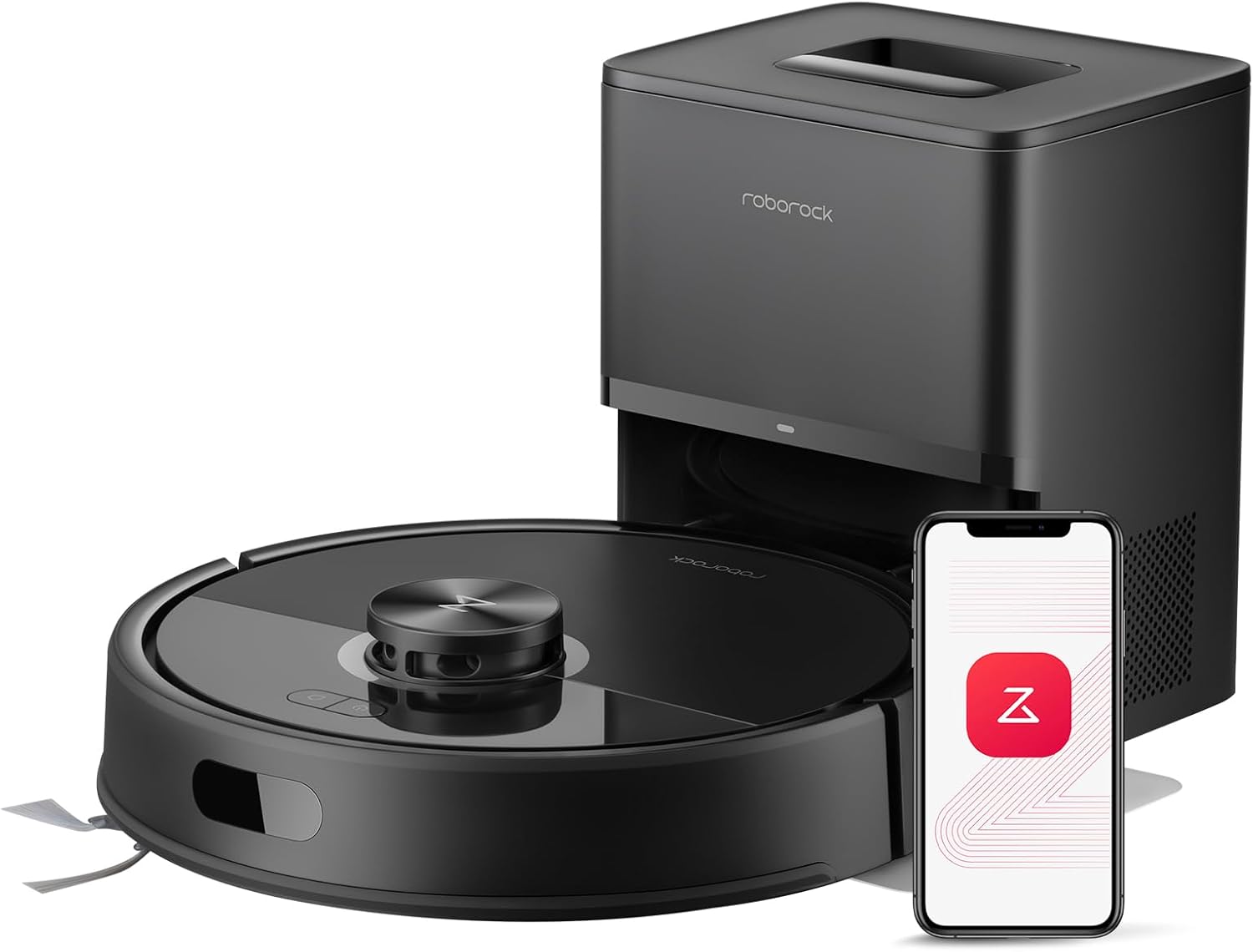
| Suction | 10000Pa |
|---|---|
| Dust bag capacity | 2.7 liters |
| Battery life | 150 minutes |
| Noise level | 65 db |
| Navigation | PreciSense LiDAR |
The roborock Q7 M5+ pairs precise LiDAR mapping with a 10000 Pa HyperForce motor and a 2.7 L auto-empty dock to deliver long stretches of unattended cleaning, which is useful on multiroom layouts and uneven tile surfaces. It navigates with PreciSense LiDAR and multi-level mapping so it plans efficient paths and avoids repeating areas, while the VibraRise 2.0 electronic mop and three water flow settings let it vacuum and damp-mop in one pass. The dual anti-tangle system and jaw-scraper brush reduce hair wrap, so pet hair is less likely to clog the roller. In practice you can schedule cleanings, set no-go zones, and monitor runs from the Roborock app, and the large sealed dust bag means weeks between emptying for most homes. Expect typical robot limits: it still needs help with very high thresholds, tight corners, and some stair edges, and the unit produces moderate noise around 65 dB during operation.
Best for: Buyers who want a mostly hands-off vacuuming and mopping setup for homes with pets and uneven tile that need powerful suction and reliable mapping to minimize manual maintenance.
Less Ideal for: Homes that require frequent deep corner cleaning, have many steep thresholds, or need an ultra-quiet unit for night-time runs should consider other specialized options.
- Very strong 10000 Pa suction for deep cleaning on tile and carpet transitions
- PreciSense LiDAR and multi-level mapping for reliable navigation on uneven floors
- Large 2.7 L sealed dust bag in the dock for up to 7-9 weeks hands-free emptying
- Dual anti-tangle brush and jaw-scrapers reduce hair wrap from pets
- Electronic mopping with adjustable water flow for combined vacuum-and-mop cycles
- May struggle with very high thresholds or narrow gaps where clearance is limited
- Operational noise around 65 dB can be noticeable during high-suction runs
Verdict: Powerful suction, LiDAR navigation, and a large self-empty dock make this a low-maintenance choice for pet households with uneven tile floors.
roborock Saros 20

| Suction | 36,000 Pa |
|---|---|
| Battery Life | 180 minutes |
| Filter Type | Washable Filter |
| Control Type | App, Remote, Voice |
| Noise Level | 55 db |
The roborock Saros 20 is built for heavy-duty cleaning on mixed and uneven floors, combining a 36,000 Pa digital motor, adaptable lift chassis, and advanced 3D sensing to handle thresholds and obstacles with fewer interruptions. In daily use it vacuums and mops automatically under furniture as low as 3.13 inches and climbs double-layer thresholds up to 3.46 inches without losing suction, making it practical for homes with uneven tile and raised transitions. The StarSight navigation and RGB camera recognize hundreds of obstacles so the robot follows efficient routes and reduces missed spots, while FlexiArm extends brushes and mop reach for edge-to-edge cleaning. The RockDock auto‑dock adds 212°F hot water washing, hot air drying, and long auto‑empty intervals to reduce manual upkeep. Trade-offs are size and complexity: the unit includes a full dock system and multiple smart features that require setup and occasional maintenance, and the powerful motor may be louder on boost modes, but it delivers strong, consistent cleaning on challenging floor layouts.
Best for: Buyers who prioritize raw cleaning performance on mixed and uneven floors and want a robot that reliably crosses thresholds and handles pet hair with minimal daily intervention.
Less Ideal for: People who need the simplest, quietest robot or who prefer a compact, minimal docked system without advanced app setup.
- 36,000 Pa motor provides very strong suction for deep debris and pet hair removal
- AdaptiLift Chassis climbs up to 3.46 in double‑layer thresholds and adjusts for uneven floors
- StarSight 3D navigation and RGB camera detect 300+ obstacles for fewer missed areas
- Slim 3.13 in profile reaches under low furniture to remove hidden dust
- RockDock auto‑dock offers hot water wash, hot air dry, and extended auto‑empty capability for low maintenance
- Large dock and advanced systems increase setup complexity and require periodic maintenance
- High suction and boost modes can produce noticeable noise compared with quieter models
Verdict: If you need a high‑power robot that can climb uneven thresholds and deliver deep cleaning on tile and mixed floors, the Saros 20 is engineered for that job.
Tikom G8000 Max Robot Vacuum

| Suction | 5000Pa |
|---|---|
| Battery Life | 150 minutes |
| Dustbin Capacity | 450 ml |
| Water Tank | 300 ml |
| Noise Level | 45 db |
The Tikom G8000 Max is a low-profile robot vacuum that combines strong suction with mopping to keep hard floors and low-pile carpets tidy with minimal user effort. In use it maps and navigates with anti-collision and anti-fall sensors, and supports app, remote, voice, and onboard button control so you can schedule cleanings and start runs from a phone or the included remote. Notable features include a 5000Pa suction motor for lifting pet hair and debris, a combined 450 ml dustbin plus 300 ml water tank for simultaneous vacuuming and mopping, and a runtime up to 150 minutes with automatic recharge. Its 3-inch height lets it access under furniture and the Zig-zag cleaning mode improves coverage on open floor areas. Limitations to keep in mind are that higher-pile carpets may not get deep cleaning compared with upright vacuums and mopping is best for maintenance rather than heavy wet cleaning; occasional emptying of the dustbin and refilling the water tank are still required. For routine hardwood maintenance the G8000 Max offers a practical balance of suction, run time, and smart controls.
Best for: Buyers who want a practical, time-saving floor care solution for hardwood and low-pile carpets and prioritize long runtime, reliable navigation, and flexible control options.
Less Ideal for: Households that need deep carpet extraction, heavy wet mopping, or commercial-grade cleaning should consider a dedicated upright or standalone mop system instead.
- Strong 5000Pa suction effective on hard floors and short-pile carpets
- Simultaneous vacuuming and mopping with combined dustbin and water tank saves time
- Long run time up to 150 minutes with auto-recharge for larger homes
- Slim 3-inch profile reaches under low furniture
- Multiple control options including app, remote, voice, and onboard button
- Mopping function is for light maintenance and not heavy wet cleaning
- May be less effective on high-pile carpets compared with full-size vacuums
Verdict: A slim, long-running robot that combines powerful suction and light mopping to keep hardwood floors clean with minimal hands-on work.
ILIFE V2 Robot Vacuum

| Battery Life | 120 minutes |
|---|---|
| Capacity | 300 ml |
| Filter Type | Sponge |
| Control Method | Remote |
| Noise Level | 69 db |
The ILIFE V2 is an entry-level robot vacuum built to keep hardwood and other hard floors tidy without a lot of fuss. Its 2.99-inch slim body fits under low furniture while a tangle-free suction port and sponge filter make it practical for homes with pet hair. You can run scheduled cleanings, switch between auto, spot and edge modes, or start jobs with the included remote control or the single-button on the unit. A 300 ml dustbin and up to 120 minutes of runtime let it cover medium rooms on one charge, and it will automatically return to the dock when the battery is low. Noise is noticeable at 69 dB and there is only one power level, so it lacks adjustable suction or app-based controls, but for straightforward floor maintenance on hardwood and low-pile carpet the V2 delivers solid value at an affordable price.
Best for: Buyers who want an affordable, no-frills robot to maintain hardwood and low-pile carpet cleanliness with simple controls and scheduled runs.
Less Ideal for: Those who need strong adjustable suction, smart app control, or advanced mapping for large or complex homes should consider higher-end models.
- Slim 2.99-inch profile cleans under low furniture
- Tangle-free suction port suited for pet hair
- 120 minutes runtime with automatic return-to-dock
- Multiple cleaning modes (auto, spot, edge) and simple remote control
- Single power level limits suction control for heavier debris
- No smartphone app or advanced navigation features
Verdict: A low-cost, slim robot vacuum that reliably maintains hardwood floors and handles pet hair for budget-focused buyers.
WSUANE D15S Max Robot Vacuum

| Suction | 10000Pa max |
|---|---|
| Dustbin capacity | 3.5 liters |
| Navigation | dToF LiDAR |
| Filter type | Three-layer high-efficiency (washable) + filter cotton (not washable) |
| Battery runtime | Up to 160 minutes (quiet mode) |
The WSUANE D15S Max is a self-emptying robot vacuum and mop designed to run long cleaning cycles with minimal intervention. It uses dToF LiDAR to build precise maps and lets you set no-go zones from the app, which helps it navigate uneven tile and complex room shapes. Suction tops out at 10000Pa with several stepped modes and an Auto Boost for carpets, while a hair-cutting anti-tangle roller and high-speed side brushes help manage pet hair. The included 3.5L dust collection station is sized for long gaps between maintenance sessions and the washable multilayer filter helps keep exhaust air cleaner. Battery endurance supports extended runs with up to roughly 160 minutes in the quiet setting and automatic return-to-dock charging. Trade-offs include a reported noise level around 70 dB at higher power and a relatively tall base station footprint; you should also expect to replace non-washable filter cotton over time. For uneven tile floors the precise mapping and strong suction make it effective at edge and grout cleaning, but noisy max modes and routine consumable replacement are practical considerations.
Best for: Buyers who prioritize a reliable, low-touch cleaning system for tiled homes and want accurate mapping plus long intervals between dustbin maintenance.
Less Ideal for: Those who need near-silent operation or who prefer the lowest possible running noise during daytime use.
- Large 3.5L self-emptying dustbin reduces how often you handle dirt
- dToF LiDAR mapping with no-go zone control for precise navigation on uneven tile
- High maximum suction up to 10000Pa with Auto Boost for carpets and grout
- Hair-cutting anti-tangle roller reduces brush blockage from pet and human hair
- App control plus Google Home compatibility for scheduled and remote runs
- Noise can reach about 70 dB at higher power levels
- Filter cotton component is not washable and will need periodic replacement
Verdict: If you want a mostly hands-off vacuuming solution for uneven tile that combines precise LiDAR mapping with very large self-emptying capacity, this model delivers.
eufy E25 Robot Vacuum

| Maximum Suction | 20,000 Pa |
|---|---|
| Capacity | 2.5 liters |
| Noise Level | 57 db |
| Battery Type | Lithium Ion |
| Runtime | 125 mins |
The eufy E25 is a hybrid robot vacuum and mop built to clean hard floors, tile, wood and short carpet with minimal intervention. It pairs a 11.4-inch HydroJet roller mop that refreshes and self-washes in real time with 20,000 Pa suction for lifting embedded dirt and pet hair, while the CornerRover arm and extendable side brush help reach edges and corners. The all-in-one station auto-empties dust, refills water, and hot-dries the mop so daily maintenance is largely hands-off, and the app, voice assistants, and multi-level mapping let you schedule targeted runs and store up to five floor plans. Laser-guided navigation and obstacle avoidance keep the robot on-track across thresholds and uneven tile up to typical low heights, and the anti-tangle brush cuts down on hair clogs. Expect quieter operation in standard mode and about 125 minutes runtime for full hard-floor sessions, but plan for the station footprint and occasional firmware or app setup steps. For homes with pets and mixed hard surfaces the E25 delivers strong cleaning with a high degree of automation.
Best for: Buyers who prioritize proven cleaning performance and want a mostly hands-off robot that manages mopping and vacuuming across tile and mixed hard floors, with smart mapping and pet-friendly brush design.
Less Ideal for: People with very tall thresholds, thick high-pile rugs, or who need a compact station footprint for tight storage spaces should consider different form factors.
- HydroJet self-cleaning roller mop refreshes continuously to avoid cross-contamination
- All-in-one station automates dust emptying, mop washing, hot drying and water refilling
- 20,000 Pa suction combined with anti-tangle DuoSpiral brushes handles pet hair and embedded dirt
- Laser navigation with obstacle avoidance and multi-level mapping remembers up to five floor plans
- CornerRover arm and extendable side brush improve edge and corner cleaning
- Station and robot together occupy significant floor space compared with standalone units
- Requires 2.4 GHz Wi-Fi for smart features and does not support 5 GHz networks
Verdict: If you want a largely hands-free robot that reliably vacuums and deep-mops uneven tile and mixed hard floors while minimizing manual maintenance, the eufy E25 is a strong choice.
eufy 11S Max Robot Vacuum
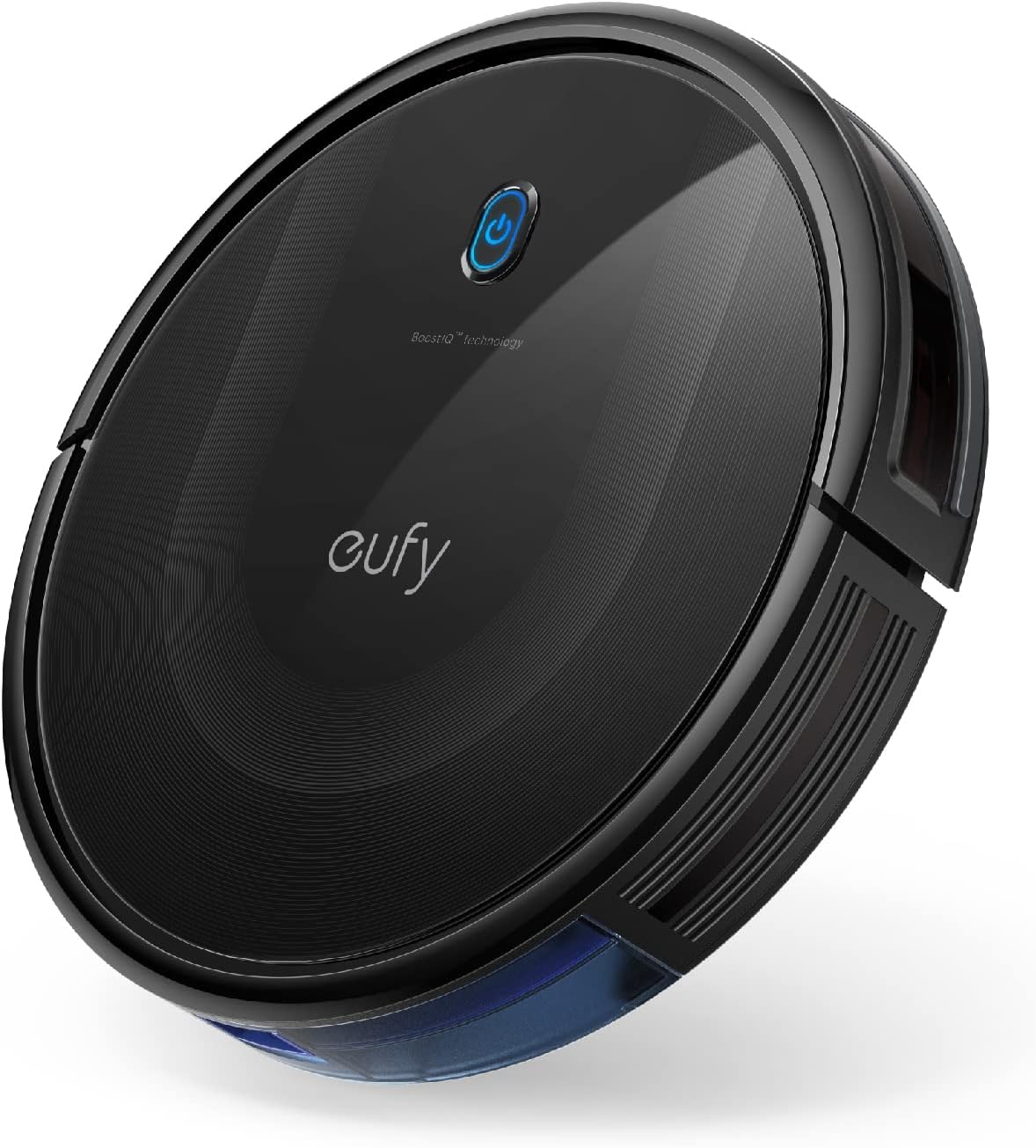
| Surface Recommendation | Hard Floor & Tile & Medium carpet |
|---|---|
| Battery Life | 100 minutes |
| Suction Power | 2000 Pa |
| Capacity | 600 ml |
| Noise Level | 55 db |
The eufy 11S Max is a low-profile robot vacuum built to clean hard floors and medium-pile carpets without drawing attention. Its 2.85-inch slim body lets it slide under low furniture while 2000Pa suction and a 12.8-inch cleaning path pick up dust, crumbs, and pet hair. It runs up to 100 minutes on hardwood at a reported low 55 dB, and automatic return-to-base means it tops off battery without user intervention. Controls are simple: the included remote and onboard buttons let you start, stop, and switch modes quickly, though there is no Wi-Fi or app control. Practical touches include washable filters, drop-sensing and anti-collision sensors, and a 600 ml dust capacity that reduces how often you empty the bin. The trade-offs are straightforward: navigation is basic rather than lidar or map-based, so room coverage is more random and may miss tight corners, and the single-side-brush design can be less thorough along edges compared with dual-brush models. For routine, quiet cleaning of hardwood, the 11S Max balances strong suction and a slim profile in a simple, reliable package.
Best for: Buyers who prioritize a quiet, no-frills robot that cleans hardwood reliably and fits under low furniture will appreciate this model for regular maintenance cleaning.
Less Ideal for: If you want mapped cleaning, smartphone scheduling, or the most thorough edge-cleaning for complex floorplans, choose a model with advanced navigation and app control instead.
- Slim 2.85" profile reaches under low furniture
- Up to 100 minutes runtime for extended cleaning sessions
- Powerful 2000Pa suction for effective pickup on hard floors
- Quiet operation at about 55 dB suitable for daytime or evening use
- Large 600 ml dust capacity and washable filter lower maintenance frequency
- Random navigation rather than mapping can lead to uneven coverage
- No Wi‑Fi or smartphone app means limited scheduling and remote control options
Verdict: A slim, quiet robot with strong suction made for routine hardwood maintenance when you want reliable, no-frills cleaning.
Choosing the Right Robot Vacuum for Uneven Tile Floors: Key Factors to Consider
Threshold Climbing and Ground Clearance
How much small height change a robot can negotiate matters when tile has raised edges or differing grout levels. Look for robots with compliance in the wheel mount or a modest suspension system so the unit can climb over thresholds of several millimeters without stalling. Higher clearance helps with clearing grout ridges but too much clearance can reduce brush contact with the floor.
Also consider the geometry of the front bumper and wheel wells. A wheelbase that keeps wheels engaged on both sides while the center still contacts the tile reduces the chance of the vacuum getting stuck on uneven seams.
Navigation and Mapping on Uneven Surfaces
Navigation systems that rely solely on optical floor sensors can be confused by shadows and tile patterning. Robots with multi-sensor navigation, including inertial measurement or lidar-style distance sensing, tend to maintain steadier paths across irregular tiles and are better at avoiding repeated passes or missed spots. Mapping features that allow custom no-go zones or perimeter adjustments help avoid areas where tile transitions are extreme.
A robot that adapts its path planning to account for repeated obstacle encounters will spend less time fighting the same seam and more time cleaning open areas efficiently.
Suction Control and Airflow Management
Stronger suction is useful for pulling grit from grout, but uncontrolled peak suction can blow debris sideways or scatter dust into grout crevices. Choose a robot that offers variable power modes or intelligent suction ramping tied to floor detection. This lets the unit dial up force where needed and conserve battery where tile is smooth.
Airflow design and the sealing between brush chamber and intake determine how efficiently the machine transports loosened dirt into the dustbin rather than leaving it behind on textured tile.
Brush and Roller Design
Brush geometry matters more on uneven tile than on carpet. A flexible brush or hybrid roller that maintains contact with irregular surfaces will sweep grit from grout without snagging on raised edges. Stiff bristle brushes can catch on grout lines or wrap long fibers from rugs, so anti-tangle features and replaceable brush components are valuable.
Check whether the design isolates the main brush from side-sweeping debris that might be pushed into grout. Brushes that lift slightly on bumps tend to avoid jamming while still agitating dirt efficiently.
Edge and Grout Cleaning Capability
Robots clear edges differently depending on side brush length and suction placement. For uneven tile, short, stiff side brushes can help sweep surface dirt from grout without slipping into tight seams where the main roller cannot reach. The placement of the intake relative to the roller determines whether dislodged debris gets captured or pushed ahead.
Consider whether an included edge-cleaning mode or manual spot options let you target grout lines more thoroughly during routine maintenance.
Battery Life Relative to Floor Area
Uneven tile often causes longer clean times because the robot may slow or repeat passes. Battery runtime should be evaluated in the context of your floor area and typical cleaning mode. Longer runtimes matter for larger tiled homes or multi-room coverage, and efficient power modes help balance suction needs with runtime.
Also note how the robot handles mid-clean recharging and resume behavior. A machine that reliably returns to a charge base and resumes where it left off reduces the risk of partial cleans in tiled layouts with many thresholds.
How Tile Type Affects Robot Performance
Not all tiles are equal. Large-format smooth tiles behave differently from small textured tiles with deep grout. Textured finishes create more surface friction and can trap abrasive grit that dulls brushes and wears wheels faster.
Porcelain and ceramic tiles are usually durable for robot traffic, but the layout and grout width influence how the robot should be set up. Narrow grout lines may be cleaned effectively by suction alone, while wider or recessed grout often requires stronger agitation or a robot configured to make additional passes.
- Smooth large tiles: fewer navigation interruptions, lower brush wear.
- Textured or tumbled tiles: need more suction and resilient brushes.
- Wide grout joints: benefit from repeated passes or spot cleaning.
Preparing Uneven Tile for Routine Robot Cleaning
Small setup changes make a big difference. Remove loose obstacles, secure or replace displaced tiles, and patch large grout gaps that could trap brush parts. Keep thresholds and transition strips low and even where the robot passes frequently.
Use temporary boundary markers or mapping no-go zones around areas with excessive elevation change. Scheduling shorter, more frequent cleans reduces buildup in grout and lessens the demand on the robot during each run.
- Patch or fill deep grout before automated cleans.
- Set mapping boundaries around problem transitions.
- Run shorter cleaning cycles more often to prevent heavy buildup.
Maintenance Tips to Keep Robots Working on Tile
Inspect and clean the main brush and side brushes regularly to prevent tangles from worsened interactions with grout. Worn wheels or brushes reduce the robot's ability to climb small thresholds and to maintain traction on textured tile. Replace rollers or bristles per the maintenance schedule and keep the dustbin and filters emptied after heavy grout cleaning sessions.
Check wheel wells and caster assemblies for embedded grit. Grit can bind bearings and reduce steering responsiveness. Lubricate or free up moving parts as recommended by the manufacturer to preserve adaptive suspension performance.
- Clean brushes and remove trapped grit after each heavy use.
- Empty dustbin and check filters to maintain suction efficiency.
- Inspect wheels and casters for embedded debris and wear.
When to Use Spot or Edge Modes
Spot and edge modes are useful when grout lines or corners need extra attention. Use spot mode over a stained or gritty seam to let the robot focus suction and agitation there rather than running a whole-room cycle. Edge mode helps with perimeter grout but may require manual follow-up for recessed joints.
Reserve deep grout cleaning for when debris is visibly embedded. Frequent light cleaning is more effective at preventing grout buildup than occasional heavy cleans, and a combination of scheduled light runs plus targeted spot cleaning yields the best day-to-day results.
- Use spot mode for targeted grout cleaning.
- Run edge mode for perimeter grout, then inspect for missed debris.
- Combine frequent light cleans with occasional deeper passes.
Accessories and Add-Ons That Help on Tile
Certain accessories can improve grout performance. Extra side brushes with stiffer bristles, replacement hybrid rollers designed for hard floors, and high-efficiency filters that capture fine dust can all make a measurable difference. Some robots offer optional brush guards or low-profile bumpers to reduce snag risk.
Consider replacement wheel kits or soft-grade wheels if your robot supports them. These can improve traction on slick or highly textured tiles without increasing the risk of snagging on grout.
- Stiffer side brushes for better edge sweep.
- Hybrid rollers optimized for hard floors and grout.
- Replacement wheels to improve traction on textured tile.
How We Chose the Best Robot Vacuum for Uneven Tile Floors
We focused on real-world handling of uneven tile surfaces and grout rather than general vacuum specs. Our selection filters prioritized models with proven floor-adaptive navigation, flexible drive systems that can climb small thresholds, and brush or roller designs that resist snagging on grout. We also looked for strong yet controllable suction systems that can dislodge dirt from textured grout without blowing debris across the floor. Concrete evaluation dimensions included ride height tolerance, obstacle-climbing capability, navigation mapping and path planning on irregular surfaces, suction power and airflow management for tile textures, and brush/roller geometry that reduces tangles and snagging. Battery runtime was considered relative to typical tiled home footprints, and filter performance was checked for capturing fine dust kicked from grout lines. We excluded units designed exclusively for smooth hard floors or low-pile carpets, and we excluded models without any form of adaptive suspension or drive flex. The result is a shortlist of machines that balance traction, clearance, and dirt removal on uneven tile rather than focusing solely on carpet performance or raw suction numbers.
Our full evaluation process is outlined in our review methodology.
FAQ
Can a robot vacuum damage uneven tile or grout?
Usually not. Most robot vacuums are lightweight and designed for hard floors. However, abrasive grit caught under wheels or in brush bearings can scratch tile over time, and repeated impact on loose tiles or fragile grout may worsen existing damage. Regular maintenance and addressing loose tiles reduces risk.
How do robots handle raised grout lines?
Robots with flexible wheel mounts and modest clearance can climb shallow raised grout lines of a few millimeters. Very high or jagged grout may cause the robot to slow or bypass the area. Using spot cleaning and adjusting mapping to avoid extreme transitions is often necessary.
Is higher suction always better for grout?
Not always. Higher suction helps lift embedded grit, but without appropriate brush contact and airflow control it can blow debris around. Variable suction modes or intelligent ramping tied to surface detection are preferable for balancing cleaning power and control.
Do side brushes help clean grout?
Side brushes can sweep surface dirt from grout lines into the main intake, but very recessed grout may remain out of reach. Shorter, stiffer side brushes tend to perform better on uneven tile because they are less likely to fold into seams and get stuck.
How often should I run a robot on uneven tile?
Frequent short runs are better than infrequent long sessions for grout maintenance. Running daily or every other day prevents buildup and reduces the need for aggressive deep cleans that stress the robot on uneven surfaces.
Final Verdict
Prioritize machines that balance threshold climbing, adaptive navigation, and brush geometry when choosing a robot vacuum for uneven tile floors. Tradeoffs are inevitable: greater clearance improves obstacle negotiation but can reduce brush contact, while higher suction helps with grout but must be managed to avoid scattering debris. Match features to your tile type, floor area, and how often you can do maintenance. Focus on navigation reliability, anti-snag brush designs, and battery life sufficient for your home. With those priorities in mind, you can select a robot that consistently cleans uneven tile without frequent interventions.