
Note: This article contains affiliate links. If you click on these links and make a purchase, we may earn a small commission at no extra cost to you. This helps support our research and content. Read our full affiliate disclosure here.
Hardwood floors need regular, gentle care to stay clean without getting scratched or dull. A self-emptying robot vacuum can dramatically reduce the time you spend sweeping while keeping abrasive dust and grit off finished wood. In this guide we shortlisted the top options built for hardwood-floor performance with self-emptying bases and evaluated them on suction, floor-safe cleaning, runtime, and maintenance needs. Whether you want near-daily automatic pickup or periodic deep cleans, the picks here focus on minimizing hands-on upkeep while protecting your wood surfaces. Read on to find which features matter most and which models match different household routines.
Top Picks at a Glance
| Best Overall The best all-around choice for most situations | roborock Q10 S5+ |  |
| Best Quality Built to a higher standard if you want something more solid | roborock Saros 20 |  |
| Best Value The sweet spot between price and what you get | Tikom L8000 Plus Robot Vacuum |  |
| Best Budget The cheapest option that still gets the job done reliably | ILIFE V2 Robot Vacuum |  |
| Top Rated A top-rated pick with lots of positive feedback | iRobot Roomba 105 Combo |  |
| Most Popular A crowd favorite that many people choose with confidence | Shark AI Ultra AV2501S |  |
| Best Seller A high-volume bestseller chosen again and again | eufy C28 Robot Vacuum & Mop |  |
roborock Q10 S5+

| Battery Life | 150 minutes |
|---|---|
| Capacity | 2.7 liters |
| Maximum Suction | 10,000Pa |
| Filter Type | Washable |
| Control Method | App, Voice |
The roborock Q10 S5+ is a robot vacuum and mop combo built around a 2.7L self-emptying dock and a high 10,000 Pa suction motor to handle pet hair, crumbs, and embedded dirt on hard floors and carpets. It uses LiDAR mapping and multi-level maps so it navigates methodically across rooms and supports no-go zones and scheduled cleaning through the Roborock app or voice assistants. The VibraRise 2.0 sonic mopping module scrubs floors with fast vibrations and automatically lifts when carpets are detected, while the dual anti-tangle brush system reduces hair clogs. ReactiveTech obstacle avoidance helps it move around clutter, and a washable filter and app controls make ongoing use simpler. Practical limits include a reported noise level around 65 dB during operation and the requirement of 2.4 GHz Wi‑Fi for smart features, plus its size means it may not access very low-clearance furniture. For buyers seeking a mostly hands-off solution for hardwood and mixed-floor homes, the Q10 S5+ combines powerful suction and effective mopping with a long empty interval to cut down maintenance time.
Best for: Buyers who want a balanced, low-maintenance robot that cleans hardwood and mixed floors reliably without constant intervention and value strong suction plus app-based mapping and scheduling.
Less Ideal for: People needing an ultra-quiet machine for overnight cleaning or homes with very low-clearance furniture where the robot cannot pass under surfaces.
- Large 2.7L auto-empty dust bag provides up to 70 days of hands-free emptying
- 10,000 Pa suction lifts embedded dirt and pet hair from hard floors and carpets
- LiDAR navigation with multi-level mapping and configurable no-go zones for precise cleaning
- VibraRise 2.0 sonic mopping that lifts on carpets for safe wet/dry transitions
- Dual anti-tangle brush design reduces hair buildup and maintenance frequency
- Operates at around 65 dB which can be noticeable during runs
- Smart features require 2.4 GHz Wi‑Fi so some networks may be incompatible
Verdict: If you want a mostly hands-free robot that pairs powerful suction with a capable sonic mop and a large self-empty dock for hardwood and mixed floors, the Q10 S5+ is a strong all-around choice.
roborock Saros 20

| Suction | 36,000 Pa |
|---|---|
| Battery life | 180 minutes |
| Noise level | 55 db |
| Filter type | Washable Filter |
| Power source | Battery Powered |
The roborock Saros 20 is a performance-focused robot vacuum designed to clean hardwood and mixed floors with minimal intervention. It pairs a very powerful 36,000 Pa digital motor with an ultra-slim 3.13-inch profile so it can pull deep debris from gaps and reach under low furniture while still climbing double-layer thresholds up to 3.46 inches. StarSight 3D navigation and an RGB camera map rooms in real time and avoid hundreds of obstacles, which reduces stalls and missed spots. The RockDock auto-dock provides hot-water mop washing, hot-air drying, and up to about 65 days of auto dust emptying for hands-free maintenance, and the dual anti-tangle system plus adaptive mopping pressure tailor behavior for pet hair and carpets. Battery runtime is listed at 180 minutes for large-area runs, and the Roborock app adds smart scheduling, mapping, and voice control. Trade-offs are the unit weight and complexity of the docked system, which may require occasional maintenance and space for the dock; noise around 55 dB at typical operation can be noticeable in quiet rooms.
Best for: Buyers who prioritize raw cleaning performance and automated, hands-free maintenance for hardwood and mixed-floor homes and want advanced navigation to minimize interruptions.
Less Ideal for: People who need an ultra-quiet, lightweight device or who have very limited floor space for a large auto-dock should consider simpler, smaller models instead.
- Extremely strong 36,000 Pa suction for deep debris pickup
- StarSight 3D navigation and RGB camera minimize missed spots and obstacle collisions
- RockDock offers hot-water mop washing, hot-air drying, and long auto-empty intervals for low-maintenance care
- Slim 3.13-inch profile reaches under low furniture and the AdaptiLift chassis crosses high thresholds
- Long 180-minute battery life suits whole-home cleaning sessions
- Docked cleaning system and dock footprint add complexity and require periodic maintenance
- Unit is relatively heavy, which may make manual repositioning or storage less convenient
Verdict: If you want top-tier suction, advanced obstacle-aware navigation, and a mostly hands-free docked cleaning system for hardwood and mixed floors, the Saros 20 delivers performance-first, low-maintenance cleaning.
Tikom L8000 Plus Robot Vacuum

| Suction | 6000 Pa |
|---|---|
| Dustbin Capacity | 3 liters |
| Battery Life | 150 minutes |
| Navigation | 360° LiDAR |
The Tikom L8000 Plus combines a 3 liter self-emptying base with strong suction and LiDAR mapping to reduce routine maintenance and improve coverage on hard floors. It scans your home in 360 degrees, saves up to five floor maps, and supports app and voice control so you can set no-go and no-mop zones, schedule room cleaning, and adjust suction and water flow from your phone. In use it offers three suction levels and three water-flow settings, a mop mode (with instructions to avoid carpets), and up to 150 minutes run time in gentle mode with auto-recharge and resume for long jobs. Practical benefits include fewer trips to the trash thanks to the large dustbag, targeted cleaning for pet hair and debris, and reliable navigation that avoids stairs and obstacles. Important limits are the need to manage mop-holder behavior near rugs and that performance depends on selecting the right suction and water settings for mixed floors; the unit is optimized for hard floors rather than heavy deep-cleaning on very thick carpets.
Best for: Buyers who prioritize low-maintenance, reliable automated cleaning for mostly hard-floor homes and want strong suction plus smart mapping to minimize hands-on work.
Less Ideal for: Users who need aggressive deep-cleaning on thick, high-pile carpets or who expect silent operation for overnight cleaning should consider other options.
- Large 3L self-emptying dustbag reduces how often you empty debris
- 6000 Pa maximum suction for lifting pet hair and embedded dirt
- 360° LiDAR mapping with up to five saved floor maps for accurate navigation
- App and voice control with no-go/no-mop zones and room scheduling
- Mopping requires care to avoid dirtying carpets and may need frequent mode adjustments
- Noise reported around 60 dB which can be noticeable during operation
Verdict: If you want a low-maintenance robot that excels on hard floors with strong suction and smart mapping, the Tikom L8000 Plus delivers hands-off cleaning with a large self-emptying base.
ILIFE V2 Robot Vacuum

| Battery Life | 120 minutes |
|---|---|
| Capacity | 300 ml |
| Filter Type | Sponge |
| Control Method | Remote |
| Noise Level | 69 db |
The ILIFE V2 is an entry-level robot vacuum built to keep hardwood and other hard floors tidy without a lot of fuss. Its 2.99-inch slim body fits under low furniture while a tangle-free suction port and sponge filter make it practical for homes with pet hair. You can run scheduled cleanings, switch between auto, spot and edge modes, or start jobs with the included remote control or the single-button on the unit. A 300 ml dustbin and up to 120 minutes of runtime let it cover medium rooms on one charge, and it will automatically return to the dock when the battery is low. Noise is noticeable at 69 dB and there is only one power level, so it lacks adjustable suction or app-based controls, but for straightforward floor maintenance on hardwood and low-pile carpet the V2 delivers solid value at an affordable price.
Best for: Buyers who want an affordable, no-frills robot to maintain hardwood and low-pile carpet cleanliness with simple controls and scheduled runs.
Less Ideal for: Those who need strong adjustable suction, smart app control, or advanced mapping for large or complex homes should consider higher-end models.
- Slim 2.99-inch profile cleans under low furniture
- Tangle-free suction port suited for pet hair
- 120 minutes runtime with automatic return-to-dock
- Multiple cleaning modes (auto, spot, edge) and simple remote control
- Single power level limits suction control for heavier debris
- No smartphone app or advanced navigation features
Verdict: A low-cost, slim robot vacuum that reliably maintains hardwood floors and handles pet hair for budget-focused buyers.
iRobot Roomba 105 Combo
| Battery Life | 100 minutes |
|---|---|
| Surface Recommendation | Carpet & Hard Floor |
| Filter Type | Cartridge |
| Control Method | App, Touch, Voice |
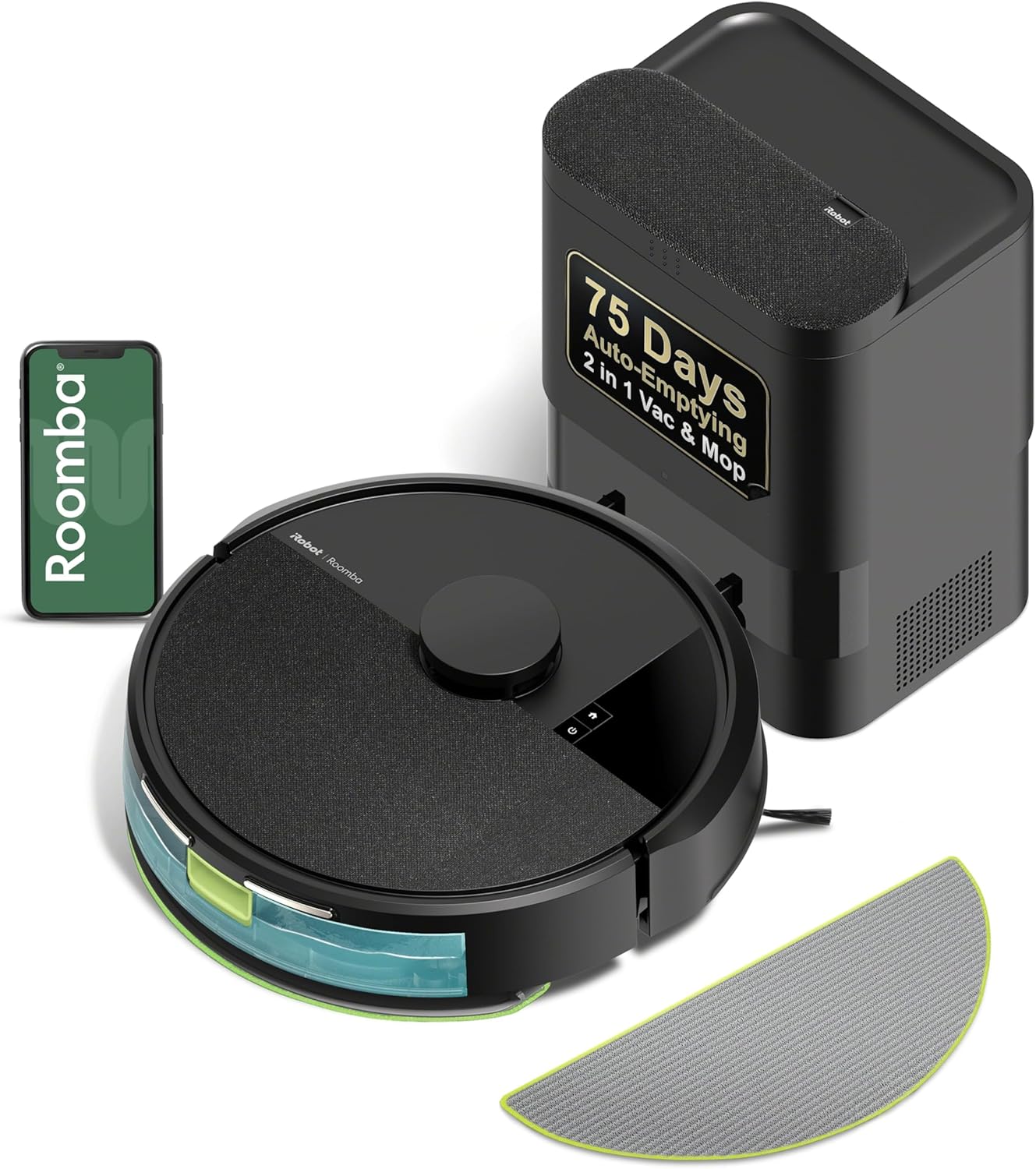
The Roomba 105 Combo pairs vacuuming and mopping with a hands-free AutoEmpty dock to reduce maintenance for weeks at a time. It scans and maps rooms with ClearView LiDAR so it navigates reliably around furniture and stairs, and offers three modes: vacuum, mop, or vacuum-and-mop together. For hardwood floors the microfiber mop pad and micro-pump deliver controlled water flow and SmartScrub for deeper scrubbing of high-traffic spots while sensors detect carpets and avoid them when mopping. The 4-stage cleaning system combines intense suction with an edge-sweeping brush and a multi-surface brush to lift dirt from edges and floorboards. You control cleaning schedules and keep-out zones in the iRobot Home app or with voice assistants, and the dock's bag traps allergens when emptied. Battery runtime is listed at about 100 minutes, so very large homes may need multiple runs or recharges. The unit requires basic periodic maintenance like filter and brush care, and mop pads are reusable but need cleaning. For hardwood owners wanting a low-touch, dependable combo that protects rugs while mopping, this is a strong practical choice.
Best for: Buyers who prioritize a dependable, low-maintenance cleaning setup for hard floors and want a robot that reliably avoids rugs while mopping.
Less Ideal for: People with very large single-level homes who need uninterrupted long-run cleaning or users who want a model with heated pad drying and advanced pad-wash features.
- AutoEmpty dock holds up to 75 days of debris for low-maintenance operation.
- ClearView LiDAR mapping provides consistent navigation and obstacle avoidance.
- Vacuum-and-mop combo with micro-pump and SmartScrub for deeper cleaning on hard floors.
- Edge-sweeping brush and multi-surface brush improve pickup along baseboards and corners.
- Battery life around 100 minutes may require recharges for very large homes.
- Mop pads and brushes need regular cleaning and filter replacement to maintain performance.
Verdict: Choose the Roomba 105 Combo if you want a reliable self-emptying robot that mops hardwoods effectively while minimizing hands-on upkeep.
Shark AI Ultra AV2501S
| Battery Life | 120 minutes |
|---|---|
| Filter Type | Foam |
| Control Type | App Control |
| Compatible Devices | Amazon Alexa, Google Home |
| Other Special Features | Self-Cleaning Brushroll, Self-Emptying |
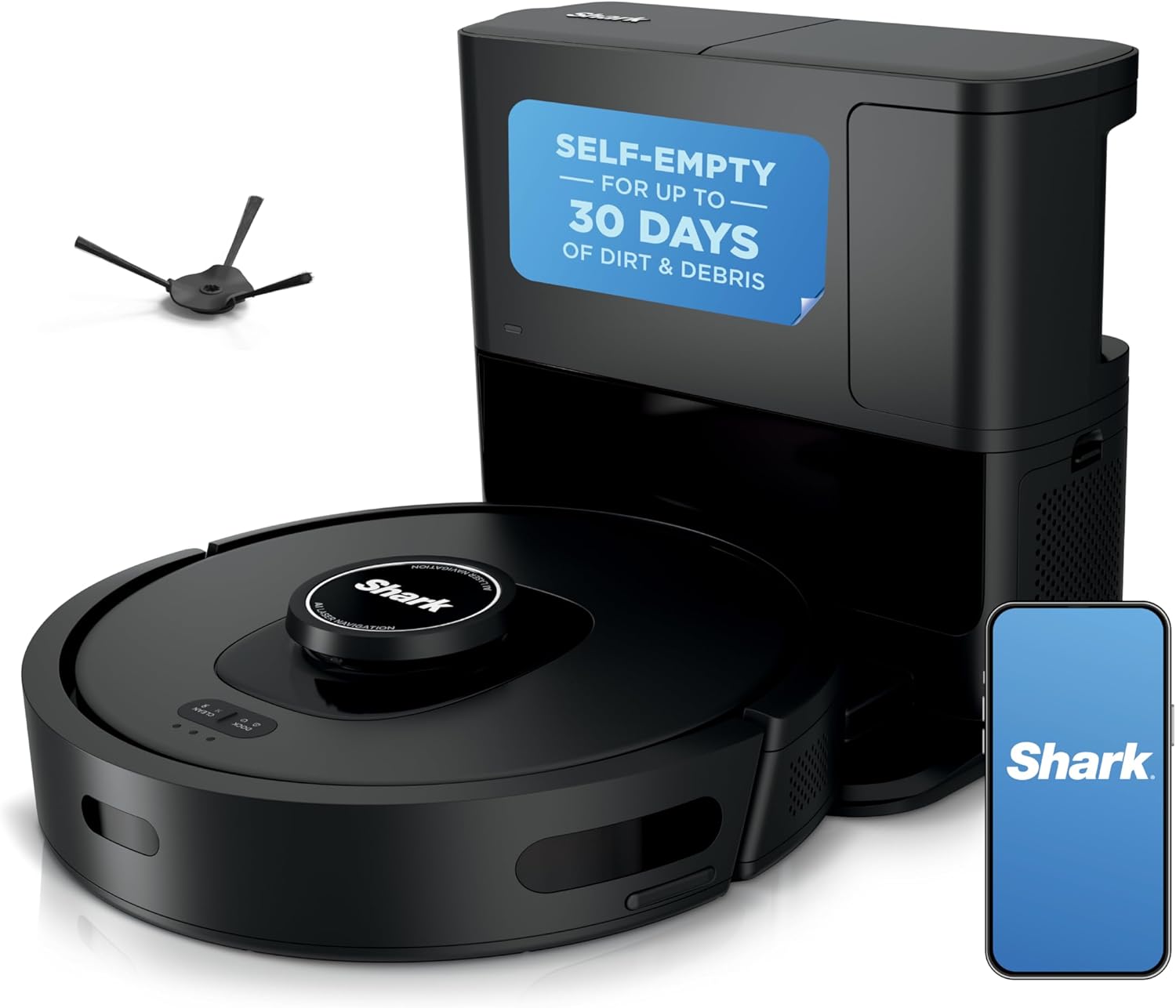
The Shark AI Ultra AV2501S is a LiDAR‑guided robot vacuum that combines precise mapping, a self-emptying base, and a self-cleaning brushroll to reduce hands-on upkeep. It uses Matrix Clean navigation to move in a grid and make multiple passes over soiled areas, while 360° LiDAR builds an accurate home map for methodical coverage and obstacle avoidance day or night. The bagless base holds up to 30 days of dirt for less frequent emptying, and HEPA filtration helps capture fine dust and allergens. With up to 120 minutes runtime plus recharge-and-resume, the robot can cover larger areas and continue after recharging. The anti-hair-wrap brushroll and pet-focused suction make it effective on hardwood and carpet transitions, though the unit is a midweight robot and may require occasional edge or corner touch-ups. App control and voice integration let you schedule, set boundaries, and start spot cleans without physical interaction. For buyers prioritizing low-maintenance, scheduled whole‑home cleaning on mixed hard floors and carpets, this model delivers strong real-world convenience and pet-hair performance.
Best for: Buyers who want a low‑maintenance, app‑driven robot that reliably covers hardwood and carpeted areas with minimal intervention and strong pet‑hair pickup.
Less Ideal for: People who need a robot that mops wet floors, is optimized for outdoor/garage use, or who prefer a simpler low‑cost model without mapping features.
- Accurate 360° LiDAR mapping for methodical, repeatable cleaning paths
- Matrix Clean grid navigation that makes multiple passes over dirty areas
- 30‑day capacity self-emptying base reduces how often you handle debris
- Self-cleaning brushroll and pet-focused suction minimize hair tangles
- HEPA filtration captures fine dust and allergens
- Relies on grid navigation so tight cluttered spaces may need manual tidying first
- Not designed for outdoor use or wet mopping functions
Verdict: Choose the Shark AI Ultra AV2501S if you want a self-emptying, LiDAR-mapped robot that minimizes hands-on maintenance while delivering thorough cleaning on hardwood and carpets.
eufy C28 Robot Vacuum & Mop

| Suction power | 15,000 Pa |
|---|---|
| Battery life | 140 minutes |
| Dust station capacity | 3 liters |
| Navigation | LiDAR |
The eufy C28 is a robot vacuum and mop built around a hands-off all-in-one station that handles dust emptying, mop washing, hot-air drying, and wastewater collection for long stretches between maintenance. It uses LiDAR navigation for privacy-safe mapping and obstacle avoidance, and combines a 15,000 Pa turbo suction system with a 28cm HydroJet roller mop that self-cleans while mopping. In real-world use the C28 is well suited to hardwood and other hard floors where the roller mop removes marks and pet paw prints and the strong suction picks up kibble and fine dust; it also raises the mop automatically when crossing short carpets. The included station claims up to 75 days of auto-emptying and delivers hot drying to reduce mold risk. Limitations: the unit and station are sizable and require floor space, and some users may find the 15,000 Pa level louder than smaller models during turbo cycles; mop consumables and the large station add to long-term upkeep. For buyers who value low-maintenance whole-floor cleaning, the C28 reduces hands-on chores significantly.
Best for: Buyers who prioritize a low-maintenance cleaning routine for hardwood and other hard floors and want a robot that mostly runs without daily intervention.
Less Ideal for: People with very tight floor space or minimal storage for a large charging/maintenance station or those who prefer the absolute quietest vacuum operation.
- All-in-one station automates dust emptying, mop washing, hot drying, and wastewater collection
- 15,000 Pa suction for strong pickup on hard floors and carpets
- HydroJet self-cleaning roller mop removes marks and reduces residue while mopping
- LiDAR navigation provides accurate mapping and avoids obstacles without using cameras
- Zero-tangle duo-spiral brush handles long pet hair without wrapping
- All-in-one station and robot occupy significant floor space
- Large station and mop system increase long-term consumable needs and maintenance costs
- Turbo suction can be noticeably louder than low-power modes
Verdict: If you want a mostly hands-free robot that vacuums and mops hardwood floors and handles most maintenance automatically, the eufy C28 is built to minimize day-to-day upkeep.
Choosing the Right Robot Vacuum for Hardwood Floors Self Empty: Key Factors to Consider
Suction Power and Floor Pickup
Strong, controllable suction is essential for removing fine dust and larger debris from hardwood without relying on abrasive brush action. A vacuum that offers multiple suction modes lets you reduce power for delicate finishes and increase it for gritty entryways.
Pay attention to how suction pairs with the dustpath design. A focused dustpath that avoids excessive brush contact will pick up particles more efficiently and reduce the chance of scattering debris across the floor.
Brush and Wheel Design
Brush types and wheel materials determine whether a robot will protect your finish or leave micro-scratches over time. Soft, non-abrasive main rollers or rubberized brush bars are preferable for hardwood because they dislodge dirt without scraping the surface.
Wheels should be smooth, wide, and made from a non-marking material. Suspension and clearance matter as well; too much drop can trap debris under the robot, while too little clearance can bump into thresholds and edges.
Self-Emptying Bin Capacity and Sealing
A self-emptying base should hold several cleaning cycles of collected debris and seal well to keep dust and fine particles contained. Larger capacity reduces the frequency of hand-emptying, which is a primary convenience benefit.
Also consider how the base seals against the bin during emptying. Poor seals allow fine dust to escape back into the room. Check whether the system uses replaceable liners or sealed dust bags, as both affect long-term upkeep and allergen containment.
Navigation, Mapping, and Software Controls
Accurate navigation reduces repeated passes and missed spots, making cleaning more efficient and gentler on the floor. Look for mapping features that let you set no-go zones and virtual boundaries to protect delicate areas or rugs.
App controls and scheduling are part of this factor. Reliable software that remembers floor plans and resumes after interruption keeps cleaning consistent without manual intervention.
Runtime, Recharge Behavior, and Coverage
Battery life determines how much continuous area a robot can clean before returning to base. For larger open hardwood plans, prioritize longer runtimes and intelligent recharge-and-resume behavior so the robot can finish jobs without manual restarts.
Also consider how long the robot takes to recharge and whether the base location allows unobstructed returns. Shorter recharge times and efficient coverage algorithms produce faster overall cleaning cycles.
Filters, Maintenance Access, and Consumables
Filters trap fine dust and allergens; higher-efficiency filters reduce airborne particles returned to your room. Choose systems with accessible filter bays and easy-replace parts to keep maintenance simple.
Consider availability and cost of consumables such as sealed bags, filters, and brush replacements. Systems that minimize fiddly disassembly and keep consumables standardized will lower the long-term upkeep burden.
How Self-Emptying Works and Why It Matters for Hardwood
Self-emptying robot vacuums use a docking base with a pump or suction mechanism that transfers collected debris from the robot bin into a larger container. For hardwood floors, that means less frequent handling of gritty dust that can scratch finishes when manually emptied. It also reduces the number of times you need to access the robot, which lowers the chance of accidentally dragging particles across the wood during maintenance.
Not all self-emptying designs are equal. The best setups create a sealed transfer to prevent dust escape, and they incorporate filters in the base to trap fine particulates. When evaluating options, consider how the base contains dust and how easy it is to replace or clean the base filter without dispersing trapped debris.
- Sealed transfer reduces airborne dust
- Larger capacity base minimizes emptying frequency
- Base filters help trap fine particulates
Protecting Finish: Practical Tips for Everyday Use
Use lower-suction modes for routine upkeep and reserve stronger modes for entryways and high-traffic spills. Running high suction constantly risks increased brush contact and may accelerate wear on softer finishes over many months.
Position the base on a stable, level surface away from direct sunlight and heavy foot traffic. Remove abrasive grit from thresholds and use occasional manual sweeps in problem zones to keep large stones from getting into the robot path and scratching the floor.
- Set scheduled daily runs to avoid buildup
- Pre-sweep high-grit areas to protect the robot and floor
- Check wheels and rollers monthly for trapped debris
Allergen Control and Dust Containment
For households with allergies, sealed self-emptying bases with HEPA-style filtration reduce the chance of allergens re-entering the room during disposal. Pay attention to filter ratings and whether the base uses a sealed bag system, which tends to be cleaner for disposing of fine dust.
If allergen containment is important, factor in the ease and frequency of filter replacement and whether the base vents outward. A well-designed ventilation path keeps expelled air filtered rather than pushing dust back into living spaces.
- Sealed-bag systems are typically cleaner to empty
- Replace base filters per manufacturer guidance to maintain containment
- Consider filter quality if anyone in the home has respiratory sensitivities
Installing and Positioning the Base
Place the base against a wall with clear space on both sides and enough room in front for the robot to dock and undock easily. Avoid placing the base in direct sunlight, on carpet that traps dust, or in a cramped closet where the robot might fail to align.
Consider power access and how the base location affects coverage. Placing the base in a central area of the hardwood floor plan shortens travel time and reduces the risk of missed zones. If the layout is multiroom, pick a spot with direct access to the largest open area.
- Leave recommended clearance on both sides of the base
- Avoid carpeted base locations to reduce reintroduced debris
- Choose a central docking spot to maximize coverage efficiency
When to Run Deep Cleans Vs Daily Maintenance
Daily or near-daily short runs handle fine dust and pet hair before it becomes abrasive. Set short scheduled cleans for high-traffic rooms and use higher-power modes weekly for deeper pickup of trapped grit. Deep cleaning cycles should focus on edges and corners where the robot might miss during routine runs.
Rotate through more intensive maintenance tasks on a monthly schedule: check wheel treads, remove hair from brush rolls, and replace filters as needed. This blended approach preserves finish quality while leveraging the convenience of the self-emptying base.
- Short daily runs prevent grit buildup
- Weekly high-suction passes tackle embedded debris
- Monthly maintenance prolongs robot and floor lifespan
How We Chose the Best Robot Vacuum for Hardwood Floors Self Empty
We prioritized candidates that combine effective hardwood cleaning with reliable self-emptying systems and low ongoing maintenance. Key evaluation criteria included suction and agitation settings optimized for hard floors, brush and wheel designs that minimize scratching, the capacity and sealing of the self-emptying bin, and runtime plus recharge behavior for uninterrupted cleaning cycles. We also reviewed navigation and mapping accuracy because predictable routing reduces repeated passes that could scatter grit, and we checked filter type and access for regular upkeep. Excluded were robots that rely solely on spinning brushes designed for heavy carpet agitation, self-emptying bases with unclear dust containment, or models lacking clear maintenance access. Our shortlisting emphasized real-world durability and user convenience over novelty features. The result is a set of options that score well across the dimensions that matter most for hardwood-floor owners who want a low-touch, effective vacuuming routine.
Our full evaluation process is outlined in our review methodology.
FAQ
Will a robot vacuum with a self-emptying base scratch my hardwood floors?
Most modern robots designed for hard floors use soft rollers and non-marking wheels to prevent scratches. Regularly check wheels and brush bars for trapped debris and run lower-suction modes for everyday cleaning to minimize contact risk.
How often do I need to empty the self-emptying base?
Frequency depends on base capacity and household dirt levels. For moderate traffic, a larger sealed base often lasts several weeks between manual emptying. Homes with pets or heavy foot traffic will require more frequent attention.
Do self-emptying systems prevent allergens from escaping back into the room?
Many bases include filters that capture fine dust, and sealed-bag designs offer better containment. However, filter quality and maintenance frequency determine real-world allergen control, so regular filter replacement is important.
Can a robot vacuum transition across thresholds between rooms on hardwood floors?
Most robots manage low thresholds and transitions between similar floor heights. If you have higher thresholds, check clearance specs and adopt ramp-style thresholds or remove obstacles to ensure reliable passage.
How do I maintain the robot and base to protect my hardwood finish long-term?
Perform monthly inspections of wheels and brush rollers, clean the dust path and docking contacts, and replace filters per guidance. Removing grit from thresholds and scheduling regular short runs will also reduce abrasive wear on the finish.
Final Verdict
Choosing the right self-emptying robot for hardwood floors comes down to balancing suction, gentle contact with the finish, and a dust-containment system you can maintain easily. Prioritize soft brush or roller designs, a sealed transfer system in the base, and reliable navigation to minimize repeated passes and reduce the chance of scattering grit. Accept some tradeoffs: larger bases reduce emptying frequency but add footprint, and stronger suction improves pickup but may require more brush maintenance. Focus on the criteria that match your home routine and traffic levels to pick an option that keeps your floors cleaner with minimal hands-on work.