
Note: This article contains affiliate links. If you click on these links and make a purchase, we may earn a small commission at no extra cost to you. This helps support our research and content. Read our full affiliate disclosure here.
A pressure cooker can be one of the most time-saving tools in your kitchen, but safety should be the first priority when you pick one. With different lock systems, pressure-release designs, and build grades of stainless steel, choosing the right unit affects how confidently you can use it every day. This guide lists the top shortlisted safe stainless steel pressure cookers suited for typical stovetop use and varied household needs. We evaluated models for safety engineering, material quality, ease of use, and maintenance. Read on to see the features we focused on and to find a pressure cooker that matches your routine and safety expectations.
Top Picks at a Glance
| Best Overall The best all-around choice for most situations | T-fal Clipso 6.3 Quart Pressure Cooker |  |
| Best Quality Built to a higher standard if you want something more solid | Fissler Vitavit Premium 6.3 Qt |  |
| Best Value The sweet spot between price and what you get | Prestige Alpha Deluxe 4L Pressure Cooker |  |
| Best Budget The cheapest option that still gets the job done reliably | Hawkins B60 3L Pressure Cooker |  |
| Top Rated A top-rated pick with lots of positive feedback | Cosori Pressure Cooker 6QT |  |
| Most Popular A crowd favorite that many people choose with confidence | Instant Pot Duo 6-Quart |  |
| Best Seller A high-volume bestseller chosen again and again | Presto 6-Quart Stainless Steel Pressure Cooker |  |
T-fal Clipso 6.3 Quart Pressure Cooker

| Capacity | 6.3 quarts |
|---|---|
| Material | Stainless steel |
| Pressure settings | Adjustable steam-release valve |
| Cooktop compatibility | All stovetops including induction |
| Special features | Dishwasher safe |
The T-fal Clipso 6.3 Qt is a traditional stovetop pressure cooker built from brushed stainless steel for everyday family cooking. It speeds up braises, stews, beans, and one-pot meals by trapping steam under adjustable pressure and includes a steam basket for multi-level steaming. Notable design points are the one-hand easy-open lid and a secure locking system that prevents opening under pressure, plus a variable steam-release valve for controlled depressurization. The encapsulated base is compatible with all cooktops including induction and promotes even heat distribution, and the pot itself is dishwasher-safe for simpler cleanup. For home cooks it delivers durable construction and practical safety features, but it is a manual cooker so you still manage heat on the stove and remove the gasket and valve before dishwashing; it also weighs more than lightweight aluminum models. The included recipe booklet and solid handles make it suited to regular family use when you want faster, nutrient-preserving meals.
Best for: Home cooks who want a durable, safe stainless-steel pressure cooker for regular family meals and value induction compatibility and straightforward mechanical controls.
Less Ideal for: Users who prefer electric, programmable pressure cookers with automatic programs or very lightweight cookware for frequent handling should consider alternatives.
- Stainless steel construction with encapsulated base for even heating and induction compatibility
- One-hand easy-open lid and secure locking system improve safety during use
- Adjustable steam-release valve provides control for different recipes
- Includes steam basket and recipe booklet for multi-level cooking and guidance
- Dishwasher-safe pot simplifies cleanup (remove gasket and valve first)
- Manual stovetop operation requires active heat management rather than push-button presets
- Heavier than aluminum pressure cookers, which may be less convenient for frequent lifting
Verdict: Choose the T-fal Clipso 6.3 Qt for a safe, sturdy stainless-steel pressure cooker that handles family-sized meals and works on all cooktops including induction.
Fissler Vitavit Premium 6.3 Qt
| Capacity | 6 liters |
|---|---|
| Material | Stainless steel |
| Special Features | Induction compatible base |
| Control Method | Touch |
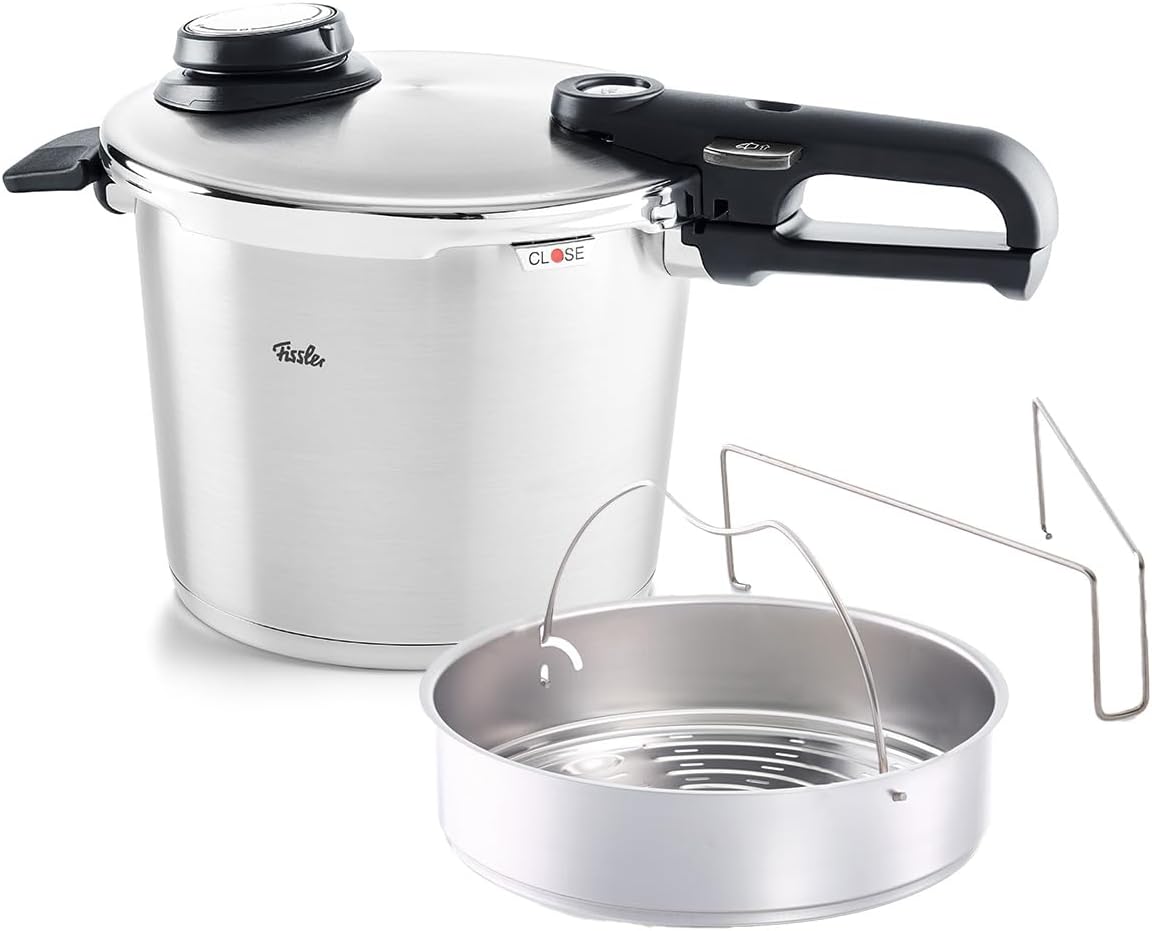
The Fissler Vitavit Premium is a performance-focused stovetop pressure cooker built from 18/10 stainless steel and designed to speed up home cooking while preserving flavor and nutrients. It offers four cooking modes — three pressure levels plus pressure-free steaming — so you can handle delicate fish and vegetables as well as tougher cuts of meat without switching pots. The included steamer insert and tripod enable multi-level cooking to prepare sides and mains at once, and interior measurement markings simplify batch and recipe work. Safety features include a secure locking lid, a color-coded pressure indicator, and a controlled steam-release mechanism that reduce the chance of user error. Its rivet-free interior and removable parts make cleaning easier and the Cookstar base promotes even heat distribution on gas, electric, and induction cooktops. The Vitavit Premium leans toward cooks who prioritize speed, control, and durability, but the premium German construction and advanced controls come with a higher price and a learning curve compared with basic models.
Best for: Buyers who value fast, precise stovetop pressure cooking and want a durable, safety-focused stainless steel cooker for frequent use and entertaining.
Less Ideal for: People looking for the cheapest or simplest pressure cooker for occasional use should consider more basic models instead.
- Four cooking modes (3 pressure levels plus pressure-free steam) for versatile results
- Steamer insert and tripod support multi-level cooking to save time and dishes
- Three-level safety system with color indicator and locking lid for confident operation
- Durable 18/10 stainless steel construction with Cookstar base for even heat distribution
- Higher price point compared with basic stovetop pressure cookers
- Touch-style controls and features may require a short learning curve for first-time users
Verdict: Choose the Vitavit Premium if you want a high-performance, safety-minded stainless steel stovetop pressure cooker that speeds cooking and handles a wide range of recipes reliably.
Prestige Alpha Deluxe 4L Pressure Cooker

| Capacity | 4 liters |
|---|---|
| Material | Stainless steel |
| Wattage | 1000 watts |
| Included Components | Sealing Ring, Regulator |
The Prestige Alpha Deluxe is a 4.0-liter stainless steel pressure cooker designed for everyday stovetop use. It uses a unique Alpha base for even heat distribution and includes a visible pressure indicator and a controlled gasket-release system for safer venting. Comfortable handles and an outer lid closure make it simple to operate by hand control, and the cooker comes with a replacement sealing ring and regulator. With a 1000-watt listed wattage and manual touch control, it suits traditional pressure-cooking tasks like braising, stewing, and one-pot rice or legume dishes. The stainless construction is durable and easy to maintain, but its manual operation means you need to monitor heat and pressure yourself rather than relying on electronic programs. The 4-liter capacity fits small families or meal prep for two to three people, while the controlled-release feature reduces steam surprises. If you want a straightforward, factory-quality stainless pressure cooker that prioritizes safety and even cooking, this model delivers practical performance without electronic complexity.
Best for: Buyers who want a reliable, safety-minded stainless steel stovetop cooker for everyday meals and who prefer straightforward manual controls over electronic programs.
Less Ideal for: People who prefer programmable or electric multi-function cookers with automated presets and larger-capacity models for feeding bigger households.
- Alpha base promotes even heat distribution across the cooking surface
- Visible pressure indicator and controlled gasket-release system enhance user safety
- Stainless steel construction is durable and easy to clean
- Includes spare sealing ring and regulator for maintenance
- Manual operation requires active monitoring of stovetop heat and pressure
- 4-liter capacity may be small for larger families or big batch cooking
Verdict: A practical, safety-focused stainless steel stovetop pressure cooker that delivers even cooking and simple manual control for everyday meal prep.
Hawkins B60 3L Pressure Cooker

| Capacity | 3 liters |
|---|---|
| Material | Stainless steel |
| Included Components | Pressure Cooker, Whistle, Gasket |
The Hawkins B60 is a compact 3‑liter stainless steel pressure cooker built for everyday stovetop cooking. It uses a traditional whistling valve and manual hand control for pressure release, and the pressure-locked lid design helps keep lid seals secure during cooking. The cooker is dishwasher safe and comes with a gasket and whistle, making it straightforward to use for soups, stews, beans, and quick braises for small households. The flat, relatively thick base improves heat distribution on most burners and the stainless construction resists pitting and corrosion, so it stays hygienic and easy to clean. Expect familiar, simple operation rather than electronic controls or multi-mode automation. Its 3 L capacity suits families of two to four but may be small for batch cooking. Overall it is a simple, durable stainless steel option if you want a reliable, no-frills pressure cooker that focuses on safe, fast stovetop performance.
Best for: Buyers looking for a low-cost, durable stainless steel stovetop pressure cooker for everyday family meals who prefer simple, proven mechanical controls over electronic features.
Less Ideal for: People who need large-capacity cookware for entertaining or those who want fully automated electric pressure-cooking controls.
- 100% stainless steel body and lid resist pitting and are easy to clean
- Pressure-locked lid with whistling valve provides a simple, visible safety cue
- Compact 3 L capacity fits everyday family meals for 2–4 people
- Dishwasher safe components and included gasket and whistle simplify maintenance
- Manual control and a basic whistling valve lack modern electronic safety feedback
- 3-liter capacity may be too small for large families or batch cooking
Verdict: A straightforward, budget-friendly stainless steel pressure cooker that delivers reliable, safe stovetop performance for small households.
Cosori Pressure Cooker 6QT
| Capacity | 6 quarts |
|---|---|
| Wattage | 1100 watts |
| Control Method | Touch |
| Material | Stainless steel |
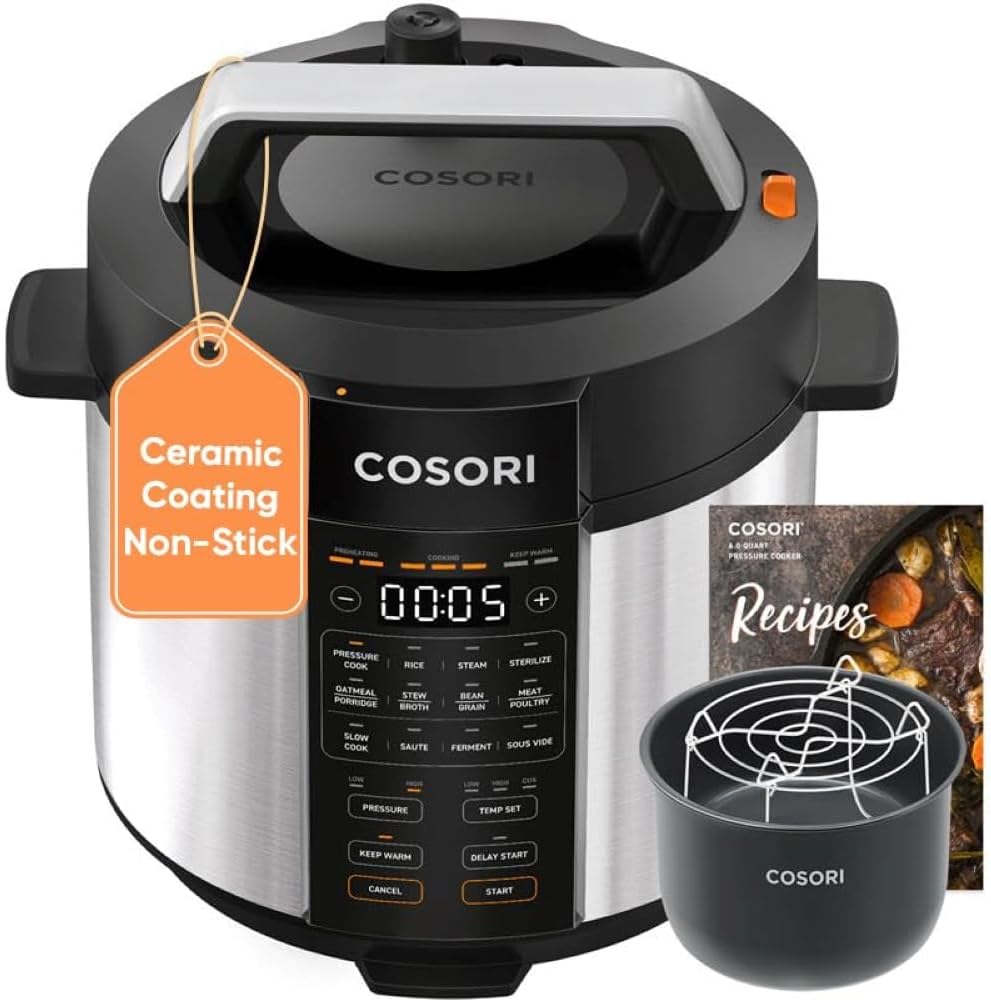
The Cosori 6QT Pressure Cooker is a full-featured electric multi-cooker designed to replace several countertop appliances. It functions as a pressure cooker, rice cooker, slow cooker, sous vide, sauté pan and more via 9 cooking functions and 13 presets, and it runs on 1100 watts with touch controls for straightforward operation. Notable items include a BPA-free nonstick ceramic inner pot that is dishwasher-safe, a hinged outer lid with an easy-align locking marker, and a venting design that positions the seal/vent button away from the steam release for safer depressurizing. In practice it speeds common tasks like rice, stews, and braised meats while keeping cleanup simple thanks to the widened pot gap and removable parts. The cooker also emphasizes safety with multiple protections including overheat prevention and a double-layer anti-scald lid. The unit is a solid option for cooks who want a reliable, multiuse stainless-steel-bodied cooker, though buyers who need very compact storage or a different capacity should compare sizes before purchasing.
Best for: Home cooks who prioritize a dependable, safety-minded multi-cooker that handles everyday meals and reduces cleanup effort.
Less Ideal for: Those who need an ultra-compact or very lightweight cooker for limited counter or storage space.
- Multi-function: 9 cooking functions and 13 presets cover pressure cooking, rice, sous vide, slow cook and more
- Safety-focused venting and lid design that keeps the seal/vent control away from the steam release
- Ceramic nonstick inner pot that is BPA-free and dishwasher-safe for easier cleaning
- Stainless steel housing with user-friendly touch controls and a simple lid lock alignment
- Relatively heavy for countertop appliances which may limit portability
Verdict: Choose this Cosori 6QT if you want a safety-focused, reliable stainless steel multi-cooker that replaces several appliances while keeping cleanup simple.
Instant Pot Duo 6-Quart

| Capacity | 5.68 liters |
|---|---|
| Wattage | 1000 watts |
| Control Method | Touch |
| Material | Stainless steel |
| Voltage | 120 V |
The Instant Pot Duo is a versatile, family-sized multicooker that replaces several countertop appliances with one programmable unit. Users pick from 13 one-touch programs to pressure cook, slow cook, steam, sauté, make rice or yogurt, and keep food warm, and the 1000-watt heater cuts cooking time compared with traditional slow methods. The inner stainless steel pot with a tri-ply bottom supports searing before pressure cooking for better flavor, while the Easy-Release steam switch and multiple built-in safety mechanisms simplify pressure release and reduce risk during use. Practical touches include a dishwasher-safe inner pot and lid for easier cleanup and a stainless steel steamer rack for layered cooking. Limitations are that the control is push-button touch with limited manual customization compared with more advanced pro models, and the 6-quart size may be more than needed for singles or too small for very large gatherings. For buyers focused on safe, reliable everyday cooking, the Instant Pot Duo offers strong utility in a compact footprint.
Best for: Buyers who prioritize a proven, safe all-in-one cooker for everyday family meals and want strong social proof that the product is reliable and widely adopted.
Less Ideal for: If you need highly granular manual control or routinely cook for very large crowds, consider a more advanced professional unit or a larger-capacity cooker.
- Multi-function 7-in-1 cooking replaces several appliances and saves counter space
- Stainless steel inner pot with tri-ply bottom allows searing and even heat distribution
- Easy-Release steam switch and multiple safety mechanisms reduce user risk during pressure cooking
- Dishwasher-safe parts and included steamer rack make cleanup and meal prep simpler
- Limited manual controls compared with higher-end or pro-series models
- 6-quart capacity may be oversized for solo cooks and undersized for very large batches
Verdict: A dependable, safety-focused multicooker that delivers broad everyday functionality in a factory-quality stainless steel 6-quart package.
Presto 6-Quart Stainless Steel Pressure Cooker
| Capacity | 6 quarts |
|---|---|
| Material | Stainless Steel |
| Special Features | Dishwasher Safe, Induction Compatible Base, Locking Lid |
| Wattage | 1000 watts |
| Voltage | 220 volts |
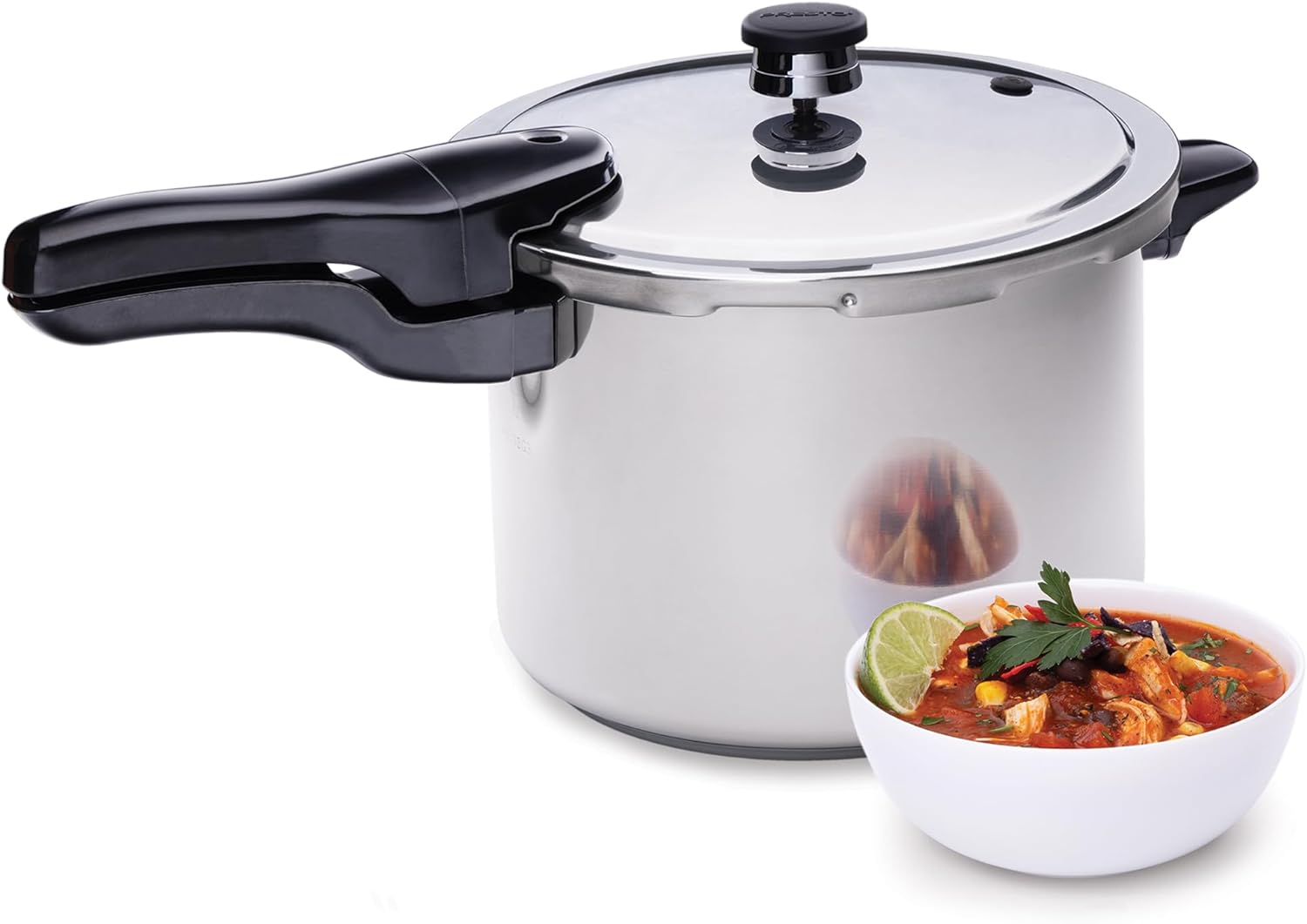
The Presto 6-quart stainless steel pressure cooker is a traditional stovetop model built for fast, reliable meal prep. It uses a pressure regulator and locking cover to maintain cooking pressure automatically and prevent the lid from opening while pressurized, plus an overpressure plug for added safety. The tri-clad base (aluminum core between stainless layers) promotes even heating on gas, electric, smooth-top and induction ranges, and the included rack lets you cook multiple foods without flavor transfer. Control is simple and manual with a pop-up pressure indicator and steam release; many parts are removable for cleaning and the pot is dishwasher-safe after removing the sealing ring and overpressure plug. Practical trade-offs are its manual venting compared with modern electric programmable units and the need to learn timing and safe release techniques, but for cooks who want a sturdy, long-lived stovetop cooker this model delivers dependable performance and clear safety features backed by a long warranty.
Best for: Buyers who prioritize proven mechanical safety features and a durable, factory-quality stovetop pressure cooker for regular home cooking will appreciate this model.
Less Ideal for: If you want a fully automatic, set-and-forget electric pressure cooker with digital controls and preset programs, this manual stovetop unit is not the best fit.
- Automatic pressure regulator and locking lid that prevent accidental opening while pressurized
- Tri-clad base for quick, even heat on gas, electric, smooth-top and induction ranges
- Removable safety parts and dishwasher-safe body for easier cleaning
- Includes cooking rack and a 64-page instruction/recipe booklet to help with recipes and safe use
- Manual steam release and timing require some learning compared with programmable electric cookers
- Sealing ring and overpressure plug must be removed and hand-washed separately
Verdict: Choose this Presto if you want a safety-focused, heavy-duty stainless steel stovetop pressure cooker that delivers fast, even cooking and long-term reliability.
Choosing the Right Safe Stainless Steel Pressure Cooker: Key Factors to Consider
Safety Mechanisms and Redundancy
Pressure cookers should have multiple, independent safety features so a single failure does not create a hazardous situation. Look for units with a primary pressure regulator plus at least one secondary relief valve and a mechanical fail-safe that prevents opening while pressurized. Clear pressure indicators that are easy to see from above the stove reduce the chance of accidental lid removal. These redundancies lower user risk during everyday cooking and if a single component becomes clogged or worn.
Redundant systems also reduce maintenance urgency. If a relief path is blocked, a secondary mechanism can provide temporary protection until a service or seal replacement is performed. When assessing safety, consider inspectability and whether cushions, gaskets, and valves are user-replaceable to keep safety performance consistent over time.
Lid Locking and Seal Design
A reliable lid lock prevents the cooker from being opened until internal pressure is safe. The best designs provide tactile or audible feedback that the lid is fully engaged and a visual indicator that the pot remains pressurized. A well-designed gasket or sealing ring made from durable, heat-resistant material keeps the unit airtight without excessive wear or deformation.
Consider how the lid seats and whether the locking mechanism requires complex alignment. Simpler, foolproof lid interfaces reduce the chance of operator error. Also check how easy it is to remove and inspect the sealing ring since routine cleaning and occasional replacement are normal parts of ownership.
Stainless Steel Quality and Construction
Not all stainless steel is equal for pressure cookers. Thicker gauge metals and higher-grade alloys offer better durability and more even heat distribution, which lowers the risk of hot spots that can stress components. A flat, thick base is important for stovetop stability and efficient heat transfer across gas, induction, and electric cooktops that support stainless cookware.
Weld quality, handle attachment method, and the presence of a bonded base or aluminum core are construction details that affect longevity and thermal performance. Robust riveted or welded handles and reinforced lids help the cooker withstand repeated thermal cycling and heavy use.
Ease of Use and Everyday Handling
A safe cooker also needs to be intuitive to operate. Controls for pressure release and regulators should be reachable and operable with a single hand while wearing an oven mitt. Clear markings for pressure settings and quick visual cues for pressure status reduce mistakes during use. A cooker that is easy to open, close, and clean encourages correct maintenance and reduces the likelihood of user error.
Ergonomics matter for heavier multi-liter units: balanced handles and a manageable lid weight make routine operation less strenuous, which in turn supports safe handling when dealing with hot contents.
Maintenance, Parts Availability, and Serviceability
Even the safest pressure cooker needs periodic maintenance. Check whether the manufacturer provides replacement gaskets, valves, and other wear parts, and whether these parts are straightforward to swap without special tools. Designs that allow for easy disassembly and cleaning of pressure channels reduce the risk of blocked vents and degraded safety performance.
Documentation and clear user guides that explain inspection intervals and simple troubleshooting steps help owners maintain safe operation. Consider whether spare parts are standardized or proprietary, as availability affects long-term ownership and safety upkeep.
Compatibility With Your Cooktop
Ensure the pressure cooker base is compatible with your specific stovetop type. A flat, thick base is needed for stable contact on electric and induction cooktops, while gas users should look for a design that resists warping under open flames. Mismatched bases can cause uneven heating and excessive stress on seals and fasteners, indirectly impacting safety.
Also consider the unit height and handle width in relation to burner grate layouts so handles do not contact adjacent burners or knobs during use. Proper fit and stable seating on the cooktop reduces the chance of tipping or accidental contact that could lead to burns or spillage.
How Pressure Safety Systems Work
Modern pressure cookers combine mechanical and passive features to manage internal pressure. Primary regulators maintain a target cooking pressure by releasing steam at a set threshold. Secondary relief valves provide backup protection if the primary regulator fails or is obstructed.
A positive-lock lid coupled with a visible pressure indicator prevents opening while pressurized. Some designs channel steam away from user-facing areas to reduce burn risk during venting. Understanding these elements helps you evaluate whether a particular unit's safety approach matches your comfort level.
- Primary regulator controls normal pressure
- Secondary relief valve serves as an emergency path
- Mechanical lid lock prevents premature opening
- Pressure indicator shows when it is safe to open
Routine Inspection and Simple Maintenance
Regular inspection keeps safety features functioning. Check the sealing ring for cracks or hardening, test the pressure indicator, and verify that vent channels are free of food debris. Replace gaskets and perform a visual inspection of valves at the intervals recommended in the manual.
Cleaning the lid and venting parts thoroughly after use prevents clogging and ensures valves operate correctly. If a pressure path becomes blocked, do not force the lid open; follow the manufacturer-recommended venting procedure and wait for full depressurization before inspecting.
- Inspect gasket condition monthly with frequent use
- Run hot water through vent channels to clear residues
- Keep spare sealing rings on hand for quick replacement
Choosing the Right Capacity and Configuration
Capacity should match typical meal sizes. Small households often benefit from 3 to 4.5 liter units while larger families may need 6 liters or more. Overfilling a pressure cooker increases the chance of food blocking vents and triggering safety events, so choose a capacity that leaves recommended headspace for expansion.
Also consider additional accessories such as steaming racks or trivets. These accessories make the cooker more versatile while reducing the risk of food burning to the bottom, which can impair venting and safety mechanisms over time.
- Avoid filling past two-thirds full for most foods
- Large-capacity units need correspondingly robust handles and lids
- Accessories help keep food off the base and prevent scorching
What to Expect From Different Lid Designs
Lid designs vary from simple threaded or twist-lock systems to more complex cam-locks that provide clearer engagement feedback. Evaluate how the lid aligns and whether it requires precise positioning; less fussy lids reduce user error. Some lids have integrated valve housings that make cleaning easier by limiting small crevices.
A lid that disassembles without tools is preferable for deeper cleaning and for replacing worn parts. Avoid lids with complicated assemblies that trap food residues in hard-to-reach places, as these are the most common source of vent obstructions.
- Cam-lock lids offer tactile engagement
- Integrated valve housings simplify cleaning
- Tool-free disassembly is ideal for maintenance
Storing and Caring for Sealing Rings
Sealing rings are wear items and their condition directly affects both performance and safety. After cleaning, dry rings thoroughly and store them away from heat and direct sunlight. Some owners rotate rings between units or keep a dedicated storage container to prevent dust and deformation.
Replace rings per the manufacturer's schedule or sooner if you notice cracking, loss of elasticity, or unusual steam leaks. Proper ring care preserves a tight seal and reduces the chance of pressure-related malfunctions.
- Dry gasket fully before long-term storage
- Avoid stretching rings when removing or fitting
- Keep at least one spare gasket on hand
How We Chose the Best Safe Stainless Steel Pressure Cooker
We focused exclusively on stainless steel pressure cookers designed for stovetop use and prioritized engineering features that directly affect user safety and long-term reliability. Selection criteria emphasized verified mechanical safety features such as positive-lock lids, redundant pressure-release valves, and overpressure prevention. We also evaluated stainless steel construction quality, including alloy grade and thickness, which influence durability and heat distribution. Usability factors were considered, including lid locking feedback, pressure indicator clarity, and the ergonomics of handles and release controls. Maintenance and serviceability mattered too; units with accessible seals and straightforward disassembly scored higher. Exclusions: we did not consider non-stainless cookware, electric-only units, or products lacking clear safety documentation from manufacturers. In short, we filtered for robust safety systems, solid stainless construction, practical daily usability, and reasonable long-term maintainability.
Our full evaluation process is outlined in our review methodology.
FAQ
How often should I replace the sealing ring?
Sealing rings typically need replacing every 12 to 36 months depending on use and care. Inspect the ring regularly for cracking, hardening, or loss of elasticity and replace it sooner if any damage appears.
Can food clog the pressure release valve?
Yes, starchy or foamy foods can obstruct vents if not used with adequate headspace or if the cooker is overfilled. Routine cleaning of vent channels and using recommended liquid and fill levels reduces the risk of clogging.
Is it safe to leave a pressure cooker unattended on the stove?
It is best to monitor the cooker during the initial pressurization and when pressure adjustments are made. Once stable pressure is reached, many units can be left unattended for the cooking period, but periodic checks are wise to ensure correct regulator function and that vents remain clear.
What should I do if the lid seems stuck after cooking?
Do not force the lid. First confirm the pressure indicator shows zero pressure, then use the recommended venting method if any residual pressure is present. If the indicator reads zero and the lid still will not open, consult the manual for safe troubleshooting steps or remove and inspect the gasket and valve areas.
Are thicker stainless steel bases safer than thin ones?
Thicker bases improve heat distribution and reduce warping, which in turn protects seals and attachment points. While base thickness does not replace proper safety valves, it contributes to overall durability and consistent performance under repeated heating cycles.
Final Verdict
Prioritize pressure cookers that combine robust mechanical safety systems with durable stainless steel construction. Focus on models that offer redundant relief paths, a clear and reliable lid lock, and easy access to wear parts like sealing rings. Balance capacity and ergonomics with the strength of the safety features so the unit fits your typical cooking habits. By emphasizing safety mechanisms, build quality, and serviceability, you will choose a pressure cooker that performs reliably and minimizes risk over many years of use.