
Note: This article contains affiliate links. If you click on these links and make a purchase, we may earn a small commission at no extra cost to you. This helps support our research and content. Read our full affiliate disclosure here.
If you regularly cook meat for one to three people, a small pressure cooker can cut braising and stewing times while locking in juices. The right small pressure cooker for meat helps you get tender roasts, shredded pork, and quick weeknight stews without a long watch or big energy use. This guide covers the top shortlisted small pressure cookers for meat and explains the practical tradeoffs that matter for home cooks. We focus on cooking performance, safety, cleanup, and real-world usability so you can choose the model that fits your kitchen and routine. Read on for concise, buyer-focused guidance before the product list.
Top Picks at a Glance
| Best Overall The best all-around choice for most situations | Ninja HyperHeat Pressure Cooker PC201SP |  |
| Best Quality Built to a higher standard if you want something more solid | CHEF iQ Smart Cooker 6-Quart |  |
| Best Value The sweet spot between price and what you get | Presto 6-Quart Aluminum Pressure Cooker |  |
| Best Budget The cheapest option that still gets the job done reliably | Hawkins Classic Pressure Cooker 4L |  |
| Top Rated A top-rated pick with lots of positive feedback | Cosori 6‑Quart Pressure Cooker |  |
| Most Popular A crowd favorite that many people choose with confidence | Instant Pot Duo 6-Quart |  |
| Best Seller A high-volume bestseller chosen again and again | Instant Pot RIO Mini 4-Quart |  |
Ninja HyperHeat Pressure Cooker PC201SP
| Wattage | 1200 watts |
|---|---|
| Capacity | 6 quarts |
| Operation Mode | Both Manual and Automatic |
| Control Method | Push Button |
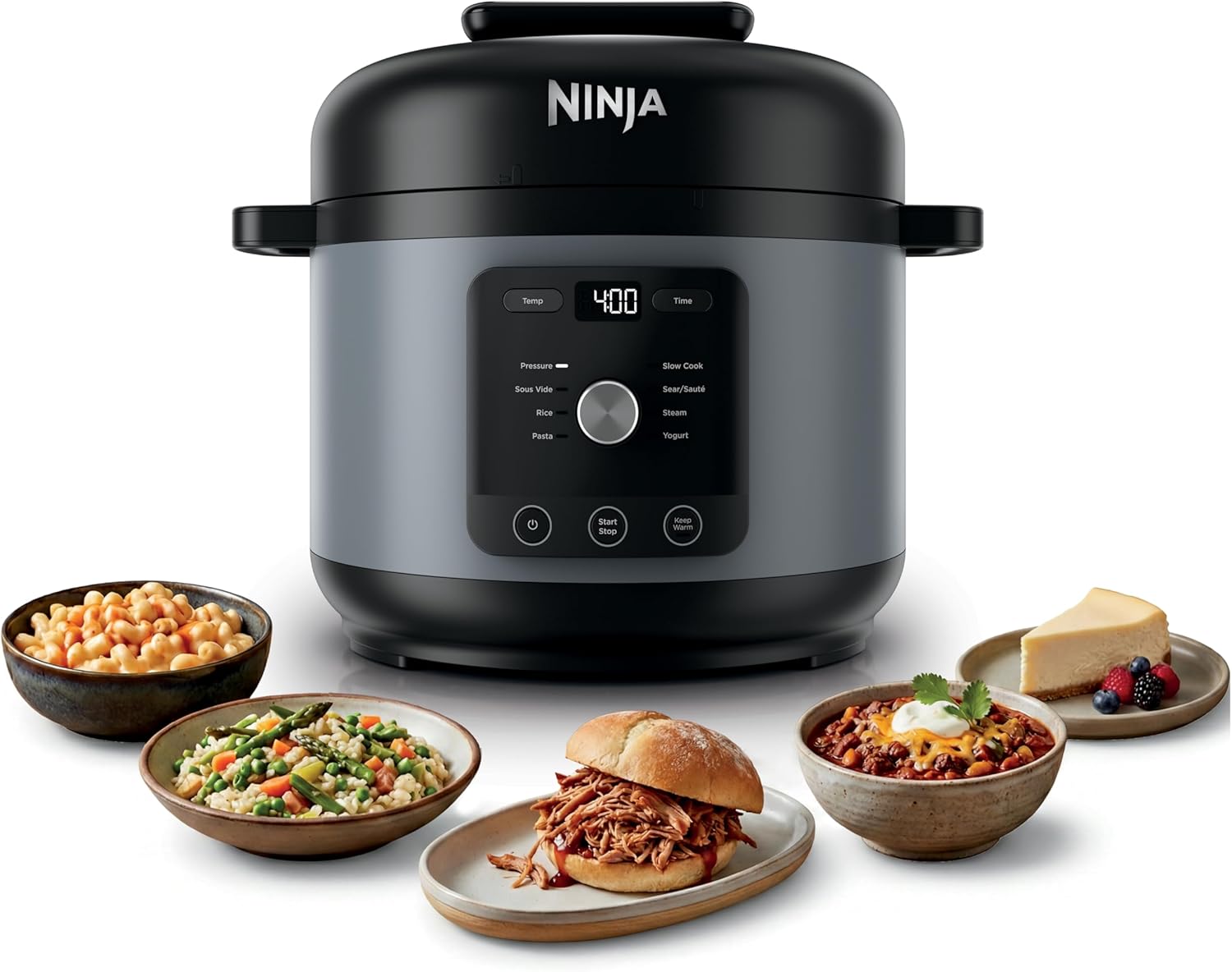
The Ninja HyperHeat is a roomy 6.5-qt multi cooker built to replace several appliances for meat-focused home cooking. Its 1200-watt HyperHeat system builds pressure quickly, cutting traditional cooking time and letting you pressure cook roasts or whole chickens faster than slow methods. The wide 9.5-inch cooking surface makes searing and sautéing in the same pot practical, so you can brown meat for better flavor without moving to another pan. The removable SimpliServe pot is convenient for serving or meal prep, and the ceramic PFAS-free nonstick finish simplifies cleanup after braises or stews. Built-in programs cover pressure cook, slow cook, rice, steam, sous vide, yogurt, sear/sauté and keep warm, so you can handle everything from pulled pork to sous vide steaks in one machine. Trade-offs include a relatively large footprint for a 6.5-qt unit and a heavier base that may take up counter space, and complex multi-function menus that have a short learning curve for users new to electric multi cookers.
Best for: Home cooks who want a single, versatile cooker that handles searing and pressure-cooking meats efficiently and values easy serving and cleanup.
Less Ideal for: Buyers who need an ultra-compact, lightweight unit for tight counters or who prefer a very simple one-button pressure cooker with minimal programming.
- Powerful 1200W HyperHeat system that builds pressure quickly for faster cooking
- Large 9.5-inch cooking surface that allows searing and sautéing directly in the pot
- Removable SimpliServe pot for serving and easier meal prep
- PFAS-free ceramic nonstick pot for easier cleanup after fatty or sticky meat dishes
- Larger footprint and heavier unit compared with some small pressure cookers
- Multiple functions and controls may take time to learn for first-time users
Verdict: Choose this Ninja if you want a powerful, multi-function 6.5-qt cooker that sears and pressure-cooks meats quickly and doubles as a serving pot.
CHEF iQ Smart Cooker 6-Quart

| Wattage | 1000 watts |
|---|---|
| Control Method | App |
| Operation Mode | Automatic |
| Capacity | 6 quarts |
| Controller Type | Android, Vera, iOS |
The CHEF iQ Smart Cooker is a connected 6‑quart multicooker aimed at cooks who want precision and tech-driven convenience. It functions as a pressure cooker, slow cooker, rice cooker and more, and pairs with the CHEF iQ app to push guided recipes and exact time/temperature settings to the pot. The standout is the built-in scale and four sensors that let you add and weigh ingredients directly in the pot, which simplifies prep for weight-based recipes and helps yield consistent results for meats. The cooker offers 300+ presets, wireless firmware updates, and an automatic three-method pressure release that selects rapid, pulse, or natural release based on the program for safer, hands-off pressure cooking. At 1000 watts it brings reasonable heat-up speed for braises and stews, and included steam rack and basket add versatility. Trade-offs include reliance on the app for the best guided experience and modest 6‑quart capacity that may limit large roasts or batch cooking for big groups.
Best for: Buyers who prioritize precise, repeatable meat cooking and like following guided, tech-driven recipes will appreciate this cooker for weeknight braises, shredded meat, and timed sous‑style results.
Less Ideal for: Those who regularly cook very large roasts for big gatherings or who prefer a purely offline, manual-only cooker should consider larger or simpler alternatives.
- Built-in scale enables cooking by weight for precise, repeatable results
- Wi‑Fi and app integration with guided recipes and wireless firmware updates
- Automatic 3-method pressure release improves safety and convenience
- 300+ presets and multiple cooking functions cover a wide range of meat preparations
- 6‑quart capacity limits very large roasts or batch cooking
- Best user experience depends on using the CHEF iQ app rather than standalone controls
Verdict: For cooks focused on precise, repeatable meat results, the CHEF iQ Smart Cooker pairs a built-in scale with app-driven guided recipes to make consistent pressure‑cooked meals simple and reliable.
Presto 6-Quart Aluminum Pressure Cooker

| Capacity | 6 quarts |
|---|---|
| Material | Aluminum |
| Special Features | Microwave Safe |
| Operation Mode | Automatic |
The Presto 6-Quart Aluminum Pressure Cooker is a straightforward stovetop cooker that speeds up braises, stews, and other meat dishes while preserving flavor and nutrients. Made from heavy-gauge aluminum it heats quickly and evenly on regular and smooth-top ranges, and the included rack lets you cook multiple items without flavor transfer. Safety features include a cover lock indicator, pressure regulator that holds the correct pressure automatically, and an overpressure plug for added protection. The lid components are removable for cleaning and the pot is fully immersible with the sealing ring removed, though the exterior needs gentle cleaners to maintain its polished finish. This model is practical for weeknight meals and for tenderizing economical cuts of beef or pork, and it ships with a recipe booklet to help new users get started. It is not electric and requires stove space and basic familiarity with stovetop pressure cooking procedures.
Best for: Buyers seeking a reliable, no-frills stovetop pressure cooker to speed up weeknight meat dinners and get more tender results from cheaper cuts.
Less Ideal for: Those who want plug-and-play electric pressure cooking with digital controls or portable countertop convenience should consider an electric model instead.
- Heavy-gauge aluminum for quick, even heating that helps cook meats faster
- Automatic pressure regulator and cover lock indicator for safer stovetop operation
- Includes rack and recipe booklet to support multi-item cooking and beginner use
- Fully immersible design with removable lid parts for easier cleaning
- Aluminum exterior requires nonabrasive cleaners and occasional polishing to retain appearance
- Not an electric appliance, so it needs a compatible stovetop and manual monitoring
Verdict: A sturdy, no-nonsense stovetop pressure cooker that reliably speeds up and tenderizes meat for practical weeknight cooking.
Hawkins Classic Pressure Cooker 4L

| Capacity | 4 liters |
|---|---|
| Material | Aluminum |
| Included Components | valve |
| Finish Type | Matte |
The Hawkins Classic 4L is a straightforward stovetop pressure cooker built from aluminum for quick heat-up and fast cooking, suitable for small households preparing meat dishes for four to six people. It uses an inner-and-outer lid closure with a pressure regulator that keeps pressure in a narrower range to reduce frothing and improve cooking consistency, and the safety valve is positioned to deflect steam downward. The cooker has stay-cool handles with a sturdy pivot for durability and is recommended for gas stoves but also works on electric, ceramic, and halogen cooktops. Practical benefits include rapid braising of tougher cuts, fuel savings from the improved regulator, and a gasket design intended to last longer. Limitations are the aluminum construction, which can dent and react with acidic foods over time, and the lack of electric or digital controls for precise timing compared with electric pressure cookers.
Best for: Home cooks on a budget who want a compact, fast stovetop pressure cooker for regular meat braising and stews and who prioritize fuel efficiency and simple, reliable operation.
Less Ideal for: Anyone seeking an electric pressure cooker with programmable settings, or buyers who prefer stainless steel cookware that does not react with acidic foods.
- Fast heat-up and cooking thanks to aluminum construction and solid base thickness
- Improved pressure regulator that reduces frothing and maintains steady pressure
- Safety valve positioned under handle bar to direct steam downward
- Durable stay-cool handles with a fixed metal pivot
- Aluminum body can dent and may react with acidic ingredients over long term
- No electronic controls or timers for automated cooking
Verdict: A budget-friendly 4L stovetop pressure cooker that delivers fast, fuel-efficient cooking for small meat meals.
Cosori 6‑Quart Pressure Cooker
| Capacity | 6 quarts |
|---|---|
| Wattage | 1100 watts |
| Control Method | Touch |
| Inner pot coating | Non‑stick ceramic |
| Voltage | 120 volts |
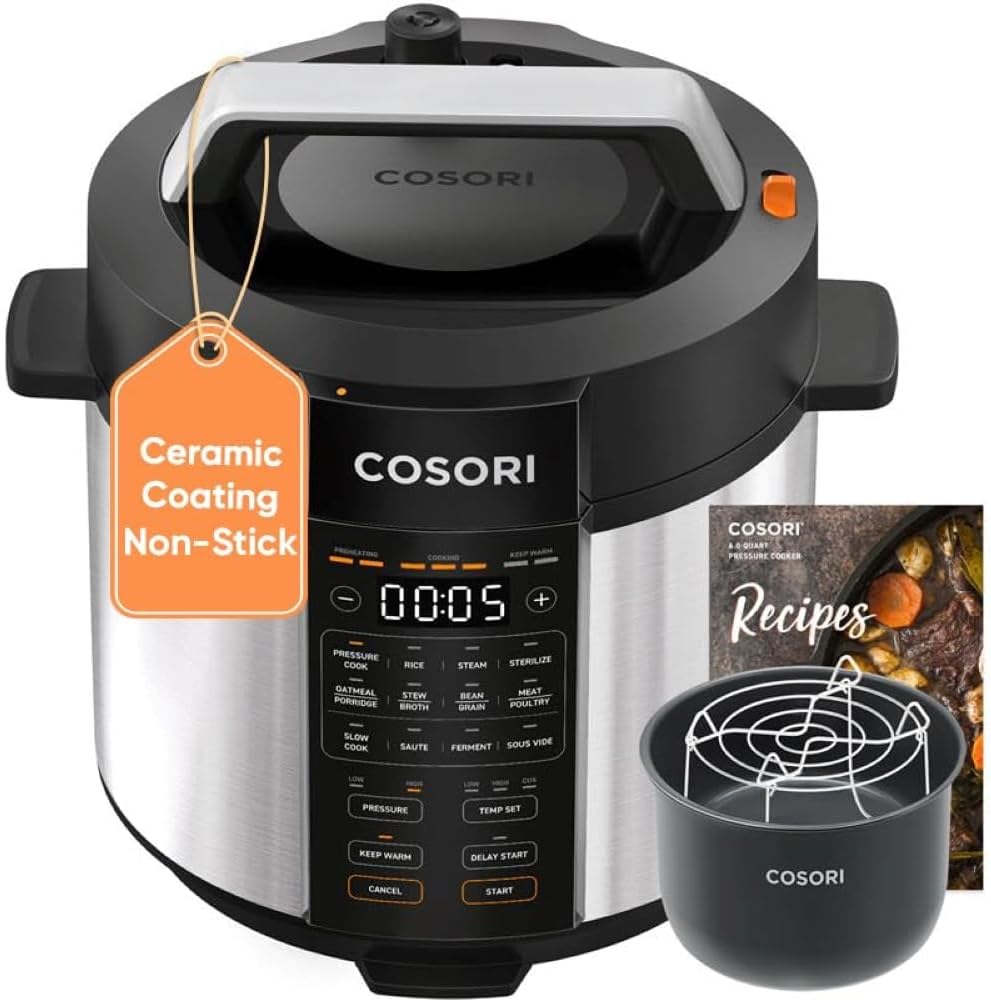
The Cosori 6‑quart pressure cooker is a versatile countertop multi‑cooker designed for faster, hands‑off meals. It offers pressure cook, rice, steam, slow cook, sous vide, sauté and other preset programs that let you cook meats, beans and grains with minimal monitoring. The 1100W heater brings the pot up to pressure quickly and the ceramic nonstick inner pot simplifies browning and cleanup while being dishwasher safe. Safety features such as a rear‑angled steam release, a separate seal/vent button and multiple built‑in protections make pressure release and operation more secure. Practical extras include a steam rack, a recipe book and touch controls with manual physical buttons for straightforward use. Limitations are typical for a 6‑quart unit: it handles family meals but is not ideal for very large roasts, and the stainless steel exterior and overall weight make it less portable than lightweight plastic models. For cooks focused on simple, repeatable meat dishes, it speeds braises, stews and shredded meats without a steep learning curve.
Best for: Buyers who want a dependable, safety‑minded multi‑cooker to speed braises, stews and other meat dishes while minimizing fiddly setup and cleanup.
Less Ideal for: Those who regularly cook very large roasts or need an ultra‑light, highly portable cooker for travel should consider larger or lighter alternatives.
- Multiple preset functions cover pressure cook, slow cook, sous vide and sauté in one unit
- Ceramic nonstick inner pot that is dishwasher safe for easier cleanup
- 1100W power that brings the cooker to pressure relatively quickly
- Built‑in safety features including a safer venting design and multiple protections
- Includes useful accessories and a recipe book to get started cooking meat dishes
- 6‑quart capacity limits batch size for large roasts or big family meals
- Heavier stainless steel housing reduces portability compared with lighter models
Verdict: A safety‑focused 6‑quart multi‑cooker that reliably speeds up meat braises and stews while keeping cleanup simple.
Instant Pot Duo 6-Quart

| Capacity | 5.68 liters |
|---|---|
| Wattage | 1000 watts |
| Control Method | Touch |
| Voltage | 120 |
The Instant Pot Duo is a versatile 7-in-1 electric cooker built to speed up everyday cooking while replacing several countertop appliances. You use it for fast pressure-cooked stews and braises, slow-cooked roasts, searing on the sauté setting, steaming vegetables, and even making yogurt, with 13 one-touch smart programs handling common recipes. The stainless steel inner pot with a tri-ply bottom supports high-heat searing before pressure cooking, and the easy-release steam switch and multiple built-in safety mechanisms make pressure cooking straightforward and safe. It heats quickly with 1000 watts and the dishwasher-safe inner pot and lid simplify cleanup after cooking meat or batch meals. Limitations include a learning curve for exact timing on tougher cuts of meat and the unit size and weight that can be bulky for small kitchens, and the control panel is basic compared with models that offer app or Bluetooth controls.
Best for: Buyers who prioritize proven performance and broad user feedback and want a single reliable cooker for meats, stews, and batch meal prep with straightforward controls and strong safety features.
Less Ideal for: If you need remote app control, a very compact ultra-light unit, or plan to cook only single servings every day, consider smaller or smart-enabled alternatives.
- Multiple cooking functions replace several appliances for braising, steaming, and slow cooking
- Stainless steel inner pot with tri-ply bottom supports searing and even heat
- 13 one-touch programs simplify common meat and batch-cooking recipes
- Easy-release steam switch and many safety features reduce user risk during pressure release
- Dishwasher-safe inner pot and lid make cleanup easier after cooking fatty meats
- No integrated Wi‑Fi or app control for remote monitoring
- Physical footprint and weight can be cumbersome in very small kitchens
Verdict: Choose the Instant Pot Duo if you want a well-established, safety-minded multi-cooker that reliably handles meat recipes and replaces several appliances in one unit.
Instant Pot RIO Mini 4-Quart

| Capacity | 4 quarts |
|---|---|
| Wattage | 800 watts |
| Control Method | Touch |
| Operation Mode | Automatic |
| Voltage | 120 volts |
The Instant Pot RIO Mini is a 4-quart multi-cooker designed for small households that want the speed of pressure cooking without a large footprint. It offers seven functions—pressure cook, slow cook, sauté, steam, rice, yogurt, and keep-warm—so you can brown, finish, or fully cook small roasts, stews, and shredded-meat recipes in one pot. The unit uses an 800-watt heater, a stainless steel inner pot, and an outer locking lid with safety features and an easy-to-read progress indicator for risk-averse cooks. Its compact size is convenient for countertops, dorms, or kitchens with limited storage, and dishwasher-safe components simplify cleanup after messy braises. Limits include the 4-quart capacity, which fits up to about four servings but restricts larger roasts or batch cooking, and the lower wattage compared with larger models which can slightly extend high-pressure cook times. For small portions of meat the RIO Mini delivers consistent, hands-off results and simple controls that reduce the chance of user error.
Best for: Buyers who prioritize a compact, easy-to-use pressure cooker for reliable small-batch meat meals and who prefer clear indicators and built-in safety for worry-free cooking.
Less Ideal for: Anyone who regularly cooks large roasts, big family portions, or wants faster heavy-duty pressure cooking should choose a larger, higher-power model instead.
- Seven cooking modes cover pressure cooking plus slow cook, sauté, steam, rice, yogurt, and keep-warm.
- Stainless steel inner pot and dishwasher-safe parts make cleanup straightforward.
- Compact 4-quart size saves counter space and is suitable for singles or small families.
- Progress indicator and built-in safety features reduce user uncertainty during pressure cooking.
- 4-quart capacity limits large cuts of meat and bulk batch cooking.
- 800-watt power may produce slightly longer pressure build and cook times than higher-watt models.
Verdict: If you want a small, safe, and simple pressure cooker for reliable small-meal meat cooking, the Instant Pot RIO Mini 4‑quart is a dependable choice.
Choosing the Right Small Pressure Cooker for Meat: Key Factors to Consider
Capacity and Batch Size
Capacity affects how well a small pressure cooker handles whole cuts versus shredded or diced meat. A unit labeled small usually fits 2 to 4 servings comfortably; plan for the largest roast or bone-in piece you expect to cook and allow room for liquid and steam circulation.
Too-small capacity forces overcrowding, which lengthens cook times and may yield uneven results. Too-large a pot loses the efficiency gains of a compact cooker and can be harder to manage when searing first or finishing sauces.
Pressure Control and Settings
Precise pressure control matters for different meat textures. Lean cuts often need short, high-pressure bursts to avoid drying, while tougher cuts benefit from longer, steady pressure to break down collagen.
Look for multiple pressure levels or manual pressure-adjust options. Programmable meat or stew settings are useful but should allow manual adjustments. Clear indicators for reaching and maintaining pressure help you time finishes and quick releases reliably.
Inner Pot Material and Durability
Inner pot material affects searing, sticking, and long-term wear. Stainless steel interiors stand up to deglazing and vigorous stirring without scratching, while nonstick coatings make cleanup easier but can wear over time with metal utensils.
For frequent meat cooking that starts with a sear, a durable surface that tolerates higher-heat browning is important. Also consider whether the inner pot is oven-safe or removable for countertop finishing and storage.
Safety Features and Venting Options
Cooking meat under pressure requires reliable safety systems. A good small pressure cooker should have redundant pressure-release paths, a lock that prevents opening under pressure, and clear venting instructions to avoid accidental burns.
Multiple release modes, including a quick-release and a controlled venting option, give you flexibility when finishing delicate cuts versus dense roasts. Safety features reduce the risk of steam accidents during busy meal prep.
Cleaning and Maintenance
Meat sauces, fats, and browned bits increase cleaning needs. Removable lids, dishwasher-safe pots, and gaskets that are easy to inspect and replace make regular care less of a chore.
Consider how easily the valve and sealing ring can be removed for washing. Models that trap grease in hard-to-reach crevices require more effort and can lead to lingering odors if not cleaned thoroughly.
Control Interface and Presets
User controls affect how often you will rely on presets versus manual adjustments. Simple, tactile controls speed up routine cooking and are less frustrating when your hands are busy handling meat. Digital displays and audible signals can help monitor progress, but they should be intuitive and not require frequent consulting of a manual.
Presets for common meat types can save time, but the ability to adjust pressure, time, and finish modes ensures the cooker adapts to recipes and personal texture preferences.
How Pressure Affects Meat Texture
Pressure changes the chemistry of meat by forcing moisture into fibers and accelerating collagen breakdown. For tough, connective cuts a longer, steady pressure cycle converts collagen to gelatin, producing tender, forkable meat. For lean cuts, shorter high-pressure cycles reduce cooking time without extracting too much moisture.
Understanding how different pressure levels translate into texture helps you choose a small pressure cooker with the right controls. If you prefer shreddable results from tougher cuts, prioritize consistent pressure delivery and the option to extend time in small increments.
- Short, high-pressure for lean cuts to avoid dryness
- Longer, moderate pressure for collagen breakdown in tough cuts
- Controlled release prevents muscle fibers from contracting and drying
Searing Before Pressurizing
Searing meat in the cooker before closing the lid builds flavor through the Maillard reaction and reduces final cooking time by starting with browned surfaces. Many small pressure cookers support stovetop or high-heat sear modes that make it easier to finish the entire recipe in one pot.
If you frequently sear, choose a model with a sturdy bottom and a cooking surface that tolerates higher temperatures. A removable inner pot simplifies transferring to a cutting board or finishing in the oven if a recipe calls for it.
- Brown meat in batches to avoid steam buildup
- Deglaze the pot before sealing to preserve flavor and prevent burning
- Use oil with a high smoke point for best searing results
Managing Liquid and Sauce Concentration
Small pressure cookers need far less liquid than traditional braises because pressure traps steam and prevents evaporation. Start with recommended minimums for your cooker and add liquid gradually if needed. For rich sauces, finish with a quick release and simmer to reduce and concentrate flavors on the cooktop or with a sauté function.
Pay attention to salt and acidic ingredients, which concentrate under pressure and can change the flavor balance. Taste and adjust after pressure cooking rather than before sealing the pot.
- Use the minimum safe liquid listed in the manual
- Deglaze to incorporate browned bits into the sauce
- Reduce sauces after release for thicker consistency
Routine Care After Cooking Meat
Proper cleanup extends the life of seals and vents. Remove and wash the sealing ring and vent components after cooking fatty or strongly flavored dishes to prevent odor transfer. Inspect gaskets regularly and replace them if they show warping or persistent stains.
Wipe the exterior and control panel carefully to avoid moisture damage. If the unit has dishwasher-safe parts, load them in the top rack and avoid abrasive cleaners that can damage finishes.
- Soak stubborn stuck-on sauces to ease washing
- Air-dry gaskets to prevent mold or odors
- Check vents for blockages after heavy use
Accessories That Improve Meat Cooking
A few simple accessories can expand what you do with a small pressure cooker. A trivet or steam rack lets you roast or steam pieces above liquid, keeping them from boiling and preserving texture. A small heatproof insert or secondary pan enables layered cooking or simultaneous sides.
A dedicated sealing ring for savory dishes can prevent flavor transfer from strong-smelling recipes. Consider a silicone spatula and a wooden spoon to protect nonstick surfaces when deglazing or stirring.
- Use a trivet for roasting or steaming meat
- Keep a spare sealing ring to avoid flavor cross-contamination
- Nonmetal utensils protect inner pot finishes
How We Chose the Best Small Pressure Cooker for Meat
We screened small pressure cookers for meat using several objective, cook-centered filters to find models that work well for small batches. First, we required reliable pressure delivery and control so cooking times can be shortened without overcooking lean cuts. Second, we prioritized sturdy inner pot materials and sealing systems that maintain steam and resist staining from sauces. Third, we looked for clear, repeatable cook programs and pressure settings that support common meat preparations like braising, shredding, and bone-in roasts. Fourth, safety features and simple pressure-release options were essential for cooks who need predictable operation. Fifth, we considered cleanup and maintenance: removable lids, dishwasher-safe interiors, and accessible gaskets matter when you cook meat frequently. We excluded bulky multicookers that exceed the small-capacity scope and models that lack basic pressure-control or safety features. The final selections favor short cook times, dependable seals, and user-friendly controls that matter most when preparing meat in small portions.
Our full evaluation process is outlined in our review methodology.
FAQ
How much liquid do I need when pressure cooking meat in a small cooker?
Most small pressure cookers require a minimum of about 1 to 1.5 cups of liquid to generate sufficient steam. Check your manual for the exact minimum, and add more only if a recipe calls for a braising liquid that will become a sauce.
Can I sear meat directly in a small pressure cooker?
Often yes. Many small pressure cookers offer a sear or sauté function or a sturdy inner pot that can be used on high heat. Sear in batches to avoid steam accumulation and deglaze the pot before sealing to incorporate browned bits into the sauce.
Is quick release safe for large cuts of meat?
Quick release is safe but can make very tender cuts firmer if released too abruptly. For large roasts or bone-in pieces, a natural or controlled release often preserves juiciness and results in more consistent slicing.
How do I prevent my sealing ring from smelling like meat?
Wash the sealing ring after use and air-dry it fully. If odors persist, soak it in a baking soda and water solution or run it through the top rack of the dishwasher if the manual permits. Keeping a spare ring for strongly scented dishes reduces flavor transfer.
Will pressure cooking shrink meat more than traditional braising?
Pressure cooking can compress meat fibers slightly, but it usually yields more tender results in less time. Proper timing and using sufficient liquid help maintain moisture and reduce noticeable shrinkage compared with overcooking on the stovetop.
Final Verdict
Small pressure cookers for meat make weekday cooking faster and can produce tender, flavorful results with less hands-on time. Prioritize consistent pressure control, a durable inner pot for searing, and simple cleaning features when choosing. Balance capacity with typical batch sizes and favor safety and venting options that match your comfort level. With the right small cooker and a few technique adjustments, you can reliably cook succulent meats without a large appliance footprint.