
Note: This article contains affiliate links. If you click on these links and make a purchase, we may earn a small commission at no extra cost to you. This helps support our research and content. Read our full affiliate disclosure here.
If you live with pets, hair buildup can quickly degrade indoor air quality and make floors look unkempt. A self-cleaning robot vacuum for pet hair reduces the daily upkeep by combining automatic cleaning cycles with a hands-free auto-empty dock, so you spend less time clearing clogs and more time enjoying the home. This guide covers our shortlist of the top self-cleaning robot vacuums for pet hair. We shortlisted models that prioritize suction, brush design, and debris containment and evaluated them across real-world maintenance and cleaning metrics. Read on to see which features matter most and which vacuums fit different household routines.
Top Picks at a Glance
| Best Overall The best all-around choice for most situations | Shark AI Ultra AV2501S |  |
| Best Quality Built to a higher standard if you want something more solid | roborock Saros 20 |  |
| Best Value The sweet spot between price and what you get | Tikom L8000 Plus Robot Vacuum |  |
| Best Budget The cheapest option that still gets the job done reliably | ILIFE A30 Pro Robot Vacuum |  |
| Top Rated A top-rated pick with lots of positive feedback | MAMNV D13S MAX Robot Vacuum |  |
| Most Popular A crowd favorite that many people choose with confidence | iRobot Roomba 105 Combo |  |
| Best Seller A high-volume bestseller chosen again and again | eufy C28 Robot Vacuum |  |
Shark AI Ultra AV2501S
| Battery Life | 120 minutes |
|---|---|
| Form Factor | Robotic |
| Filter Type | Foam |
| Control Method | Voice |
| Compatible Devices | Amazon Alexa, Google Home |
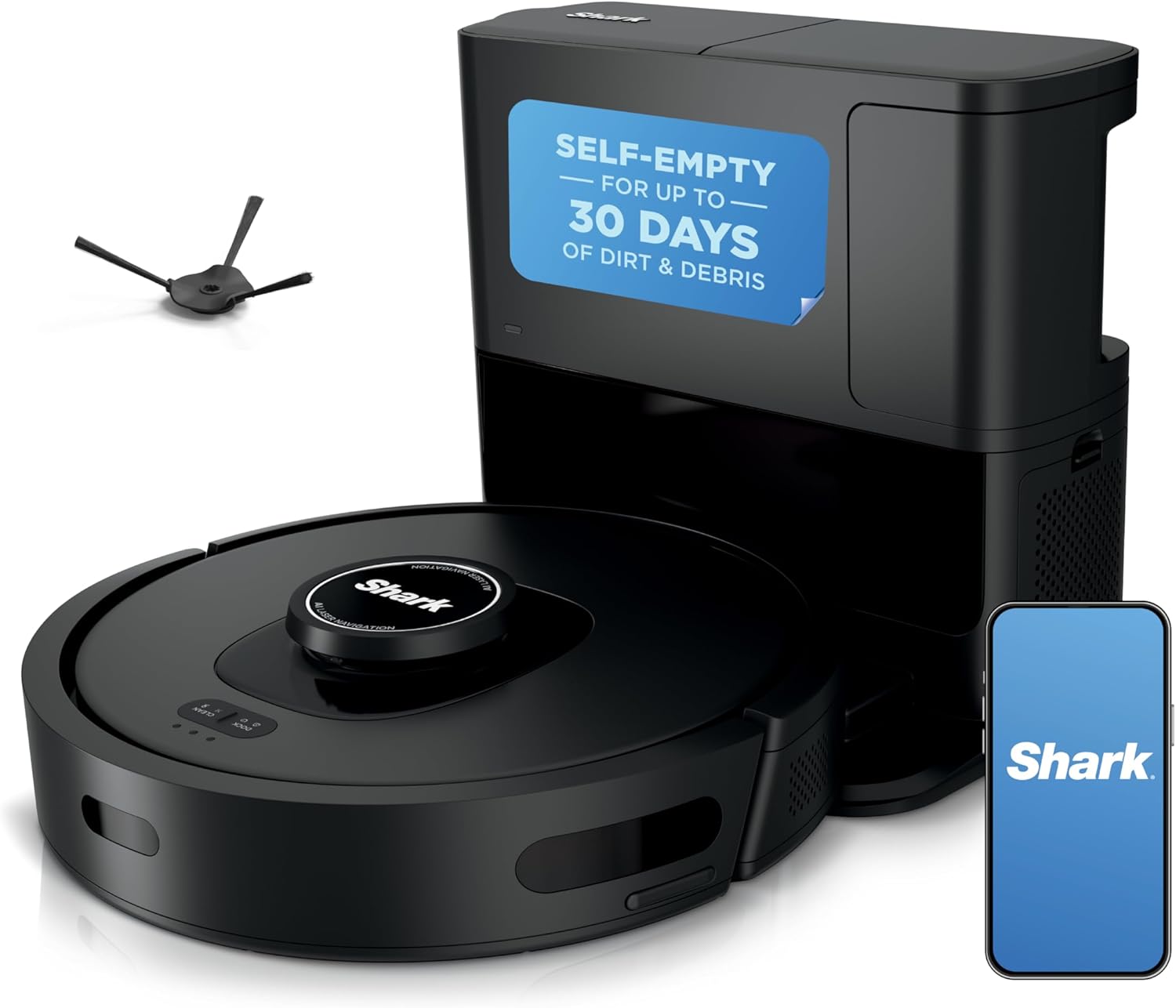
The Shark AI Ultra AV2501S is a self-emptying robot vacuum built to handle pet hair and everyday messes across carpets and hard floors. It maps your home with 360° LiDAR and uses Matrix Clean navigation to run in a precise grid, taking extra passes over dirty areas for more thorough coverage. The unit pairs a self-cleaning brushroll that resists hair wrap with strong suction and HEPA filtration, and the bagless self-empty base stores up to 30 days of dirt to reduce maintenance. Runtime is up to 120 minutes with recharge-and-resume support for larger homes, and the SharkClean app plus Alexa and Google voice control make scheduling and targeted cleans straightforward. Practical limitations include a single speed setting and a foam filter rather than a multi-stage sealed system, so very fine allergen control may not match dedicated HEPA-sealed designs, and the 30-day capacity will vary by household. For a balanced, pet-focused pick the AV2501S streamlines daily upkeep while keeping cleaning performance reliable.
Best for: Buyers who want reliable, low-maintenance daily cleaning that reduces hands-on upkeep and prioritizes consistent pet hair pickup across mixed floor types.
Less Ideal for: People who need the absolute quietest robot or a fully sealed medical-grade allergen filtration system should consider other specialized models.
- Self-emptying bagless base holds up to 30 days of dirt for less frequent emptying
- 360° LiDAR mapping with Matrix Clean grid navigation for methodical coverage
- Self-cleaning brushroll reduces hair wrap and keeps suction consistent
- Up to 120 minutes runtime with recharge and resume for larger cleaning jobs
- App control plus Alexa and Google Assistant voice control for easy scheduling and spot cleans
- Single speed setting limits tuning for delicate surfaces or quiet operation
- Filter is listed as foam rather than a fully sealed multi-stage HEPA system
Verdict: A practical, pet-focused self-emptying robot that cuts down upkeep while delivering methodical, effective hair and debris pickup.
roborock Saros 20

| Battery Life | 180 minutes |
|---|---|
| Filter Type | Washable Filter |
| Noise Level | 55 db |
| Controller Type | App Control, Remote Control, Voice Control |
| Power Source | Battery Powered |
The roborock Saros 20 is a performance‑focused robot vacuum and mop designed to handle pet hair and full‑home cleaning with minimal intervention. It uses StarSight 3D navigation and an RGB camera to map rooms and avoid more than 300 obstacles while adapting routes for complete coverage. The AdaptiLift chassis raises the robot to cross tall thresholds and the slim 3.13 in profile lets it reach under low furniture. At the heart is a 36,000 Pa digital motor and a dual anti‑tangle system that pull deep debris and reduce brush clogs, which is especially useful for pet owners. The RockDock base provides hot water mop washing, hot air drying, automated rewash and up to weeks of auto dust emptying to keep the robot ready without daily maintenance. Practical limits include a relatively loud 55 dB spec at times and a heavy unit and dock that require space, and sophisticated features rely on app setup and Wi‑Fi. For buyers who prioritize suction, autonomous maintenance, and thorough pet‑hair cleanup, this model delivers strong real‑world performance.
Best for: Buyers who prioritize raw suction, automated maintenance, and thorough pet‑hair cleaning without daily hands‑on upkeep.
Less Ideal for: People with very small homes or those who want a compact, no‑app basic robot should consider simpler, smaller models instead.
- Very high suction power (36,000 Pa) for deep pickup of pet hair and embedded debris
- Advanced 3D navigation and RGB camera to avoid obstacles and improve coverage
- AdaptiLift chassis crosses tall thresholds and a slim profile reaches under low furniture
- RockDock self‑cleaning dock with hot water wash, hot air dry, and long auto‑empty intervals
- Dual anti‑tangle system reduces manual brush maintenance for pet owners
- Unit and dock are physically large and require dedicated floor space
- Full feature set depends on app and Wi‑Fi setup which can add complexity
Verdict: If you want a hands‑free, high‑suction robot that tackles pet hair and largely maintains itself, the Saros 20 is a top choice.
Tikom L8000 Plus Robot Vacuum

| Suction | 6000 Pa |
|---|---|
| Dustbin Capacity | 3 liters |
| Battery Life | 150 minutes |
| Navigation | 360° LiDAR |
| Filter Type | Hepa Filter |
The Tikom L8000 Plus is a self-emptying robot vacuum and mop built for low-maintenance cleaning in homes with pets. It navigates using 360° LiDAR to build maps and avoid obstacles, supports multi-floor mapping, and offers app and voice control for scheduling, virtual walls, and room-specific cleans. The 3 liter self-emptying dustbin reduces how often you touch dust and hair, while up to 6000 Pa suction and selectable suction/water levels let you boost power on carpets or dial back for quiet floor cleaning. In practice it handles pet hair and daily debris well on hard floors and medium-pile carpets, and the mop mode is useful for light wet cleaning when you set no-mop zones to protect rugs. Limitations include noticeable noise at higher power and a need to manage mop mode around carpeting to avoid soiling; users who expect deep steam-style mopping or whisper-quiet operation should look elsewhere. For a pet-focused self-emptying robot, it balances strong suction, reliable mapping, and long runtimes in a practical package.
Best for: Buyers who prioritize low-maintenance, hands-off cleaning for homes with shedding pets and want reliable mapping and adjustable suction to handle both hard floors and carpets.
Less Ideal for: People who need very quiet operation or deep wet mopping performance should consider alternatives focused specifically on silent running or advanced mopping.
- 3L self-emptying dustbag lets the robot hold weeks of pet hair and debris between maintenance
- 6000 Pa peak suction with three power levels for stronger carpet pickup
- 360° LiDAR navigation and multi-floor mapping for efficient, reliable coverage
- Up to 150 minutes run time with auto-recharge and resume for larger homes
- Noise level can be noticeable at higher suction settings
- Mop mode requires careful use around carpets and setting no-mop zones to avoid soiling
Verdict: If you want a practical, hands-off robot that keeps up with pet hair through powerful suction and a large self-emptying dustbag, the Tikom L8000 Plus delivers reliable day-to-day cleaning.
ILIFE A30 Pro Robot Vacuum

| Max Suction | 10000 Pa |
|---|---|
| Battery Life | 150 minutes |
| Dust Bag Capacity | 2.5 liters |
| Filter Type | Hepa |
| Control | App, Voice, Remote |
The ILIFE A30 Pro is a self-emptying robot vacuum that combines strong suction, LiDAR mapping, and a vacuum-plus-mop workflow to handle everyday dirt and pet hair on hard floors and carpets. It uses precision LiDAR navigation to map rooms, avoid objects, and create no-go zones through the ILIFEClean app or voice commands, while offering four suction levels including a Max mode rated at 10000Pa for stubborn debris. The included self-empty station accepts 2.5L disposable bags (five provided), which extend hands-free operation for months between full maintenance. A 2-in-1 internal tank lets the robot vacuum and mop simultaneously, and runtime is rated up to 150 minutes for larger coverage per charge. Practical limitations include reliance on disposable bags for the self-empty system and a relatively small onboard water/dust tank for long wet-mopping sessions, and the mop function can be removed when not needed. For pet owners the strong suction and roller brush help lift hair, but expect periodic brush and filter cleaning for best results.
Best for: A budget-minded pet owner looking for a mostly hands-off cleaning routine who values strong suction and automated dust disposal to reduce daily maintenance.
Less Ideal for: People who want a reusable, bagless base or who need large-capacity wet mopping for extensive hard-floor only homes should consider alternate systems.
- Very strong Max suction mode for picking up pet hair and embedded debris
- LiDAR mapping with no-go zones and scheduled room cleaning via app
- Self-empty station with 2.5L disposable bags reduces how often you handle dust
- Vacuum and mop simultaneously to cut overall cleaning time
- Long runtime up to 150 minutes for larger homes or multiple rooms
- Self-empty system depends on disposable bags which are consumables
- Integrated water tank is modest in capacity for extended mopping sessions
- Max suction may be louder and reduce runtime compared with lower modes
Verdict: If you want a budget-friendly self-emptying robot that tackles pet hair with powerful suction and LiDAR mapping, the ILIFE A30 Pro is a practical hands-off choice.
MAMNV D13S MAX Robot Vacuum

| Max Suction Power | 11500Pa |
|---|---|
| Runtime | 160 mins |
| Capacity | 3.5 liters |
| Battery Type | Lithium Ion |
| Control Method | App, Push Button, Voice |
The MAMNV D13S MAX is a self-emptying robot vacuum that vacuums, sweeps, and mops in a single run using LiDAR mapping and app/voice controls. It uses precision laser navigation to build multi-floor maps, lets you set no-go zones and room schedules, and will auto-boost suction on carpets. The included dust collection station accepts large dust bags for up to roughly 90 days of hands-off emptying, while a 230ml water tank and washable mop pad handle light mopping tasks. In practice it is aimed at daily maintenance: the 11500Pa suction pulls pet hair and debris from hard floors and carpets, the side and rolling brushes reach edges, and the app gives targeted zone and routine control. Expect about 160 minutes runtime per charge and routine auto-recharge between runs. Trade-offs are typical for combo machines: the mop is for maintenance rather than heavy-duty wet cleaning, noise is reported around 70 dB, and occasional edge or threshold challenges may require minor intervention. For pet households this model reduces day-to-day upkeep and minimizes how often you touch the dust bin.
Best for: Buyers who prioritize a dependable, low-maintenance cleaning routine for pet hair in multi-room homes and want precise mapping and extended hands-off operation.
Less Ideal for: Homes that need intensive wet mopping or users seeking an ultra-quiet robot should consider alternatives tailored specifically to those needs.
- LiDAR-based mapping with multi-floor maps and no-go zone setup
- Powerful suction (11500Pa) with carpet auto-boost for pet hair
- Self-emptying base with large dust-bag capacity for extended hands-free use
- App, Alexa and voice control plus scheduling and targeted zone cleaning
- Long runtime up to 160 minutes for broad home coverage
- Mopping component is a light maintenance mop rather than a heavy wet-cleaning system
- Noise level is relatively high around 70 dB compared with quieter models
- Dust bag and consumables will require periodic replacement despite long intervals
Verdict: Choose the D13S MAX if you want a reliable, high-suction self-emptying robot that minimizes hands-on maintenance for pet hair and whole-home upkeep.
iRobot Roomba 105 Combo
| Surface Recommendation | Carpet & Hard Floor |
|---|---|
| Battery Life | 100 minutes |
| Controller Type | App Control, Button Control, Voice Control |
| Filter Type | Cartridge |
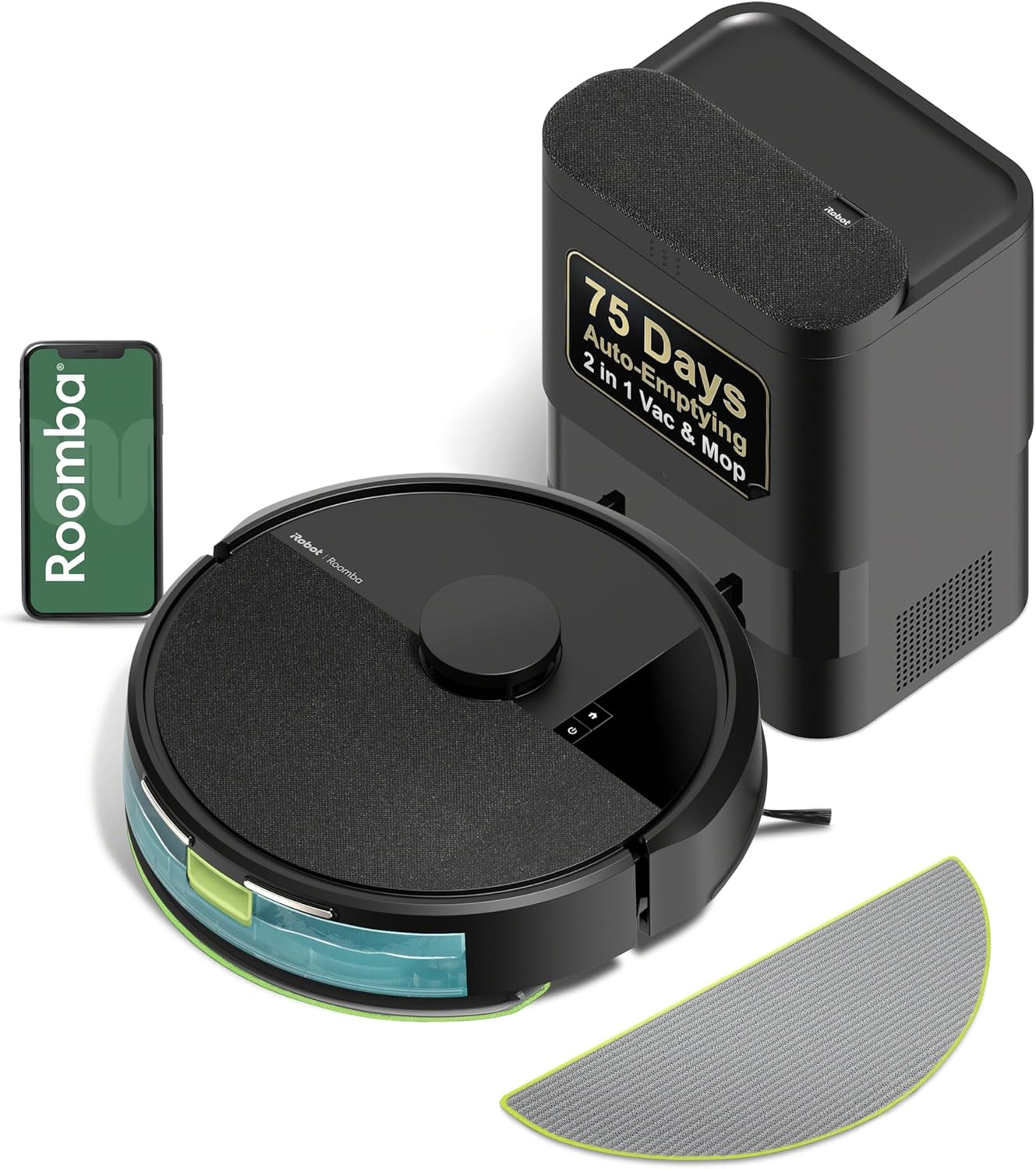
The Roomba 105 Combo is a hands-off floor-care robot designed to vacuum and mop hard floors while avoiding carpets. It uses ClearView LiDAR to map rooms and navigate around obstacles, and the included AutoEmpty dock captures debris in a bag that the manufacturer says lasts up to 75 days. The 4-stage cleaning system combines intense suction, an edge-sweeping brush and a multi-surface brush to pull up dirt and pet hair, while a washable microfiber pad and micro-pump control mopping liquid for light spills and scrubbing. You control it with the iRobot Home app, voice assistants, or onboard buttons and you can schedule room-targeted cleans and set keep-out zones. Practical limits: battery runtime is listed at about 100 minutes so very large homes may need multiple runs or recharges, and the mop is best for surface spills rather than heavy scrubbing on soiled floors. Maintenance still requires occasional brush and filter care and replacing AutoEmpty bags when full.
Best for: Buyers who want a low-maintenance robot that automates most pet-hair cleanup and reduces how often you empty the bin, while relying on reliable navigation and app control.
Less Ideal for: Not the best choice for homes needing long single-run battery life or for users who want heavy-duty steam or aggressive wet-scrubbing mopping performance.
- Self-emptying AutoEmpty dock holds debris in a disposable bag for up to 75 days, reducing hands-on maintenance.
- ClearView LiDAR mapping enables reliable navigation and room-customized cleaning.
- Combined vacuum-and-mop modes let you choose vacuum only, mop only, or simultaneous vacuum-and-mop cleaning.
- 70x stronger power-lifting suction and multi-surface brushes target pet hair and dirt along edges and corners.
- 100-minute battery life may require multiple runs in larger homes.
- Mopping uses a microfiber pad and is suited to light spills and routine maintenance rather than heavy-duty floor restoration.
Verdict: If you want a pet-hair focused robot that mostly runs itself, the Roomba 105 Combo pairs strong suction and LiDAR navigation with a 75-day self-emptying dock to minimize hands-on cleaning.
eufy C28 Robot Vacuum

| Suction Power | 15,000 Pa |
|---|---|
| Capacity | 3 liters |
| Battery Life | 140 minutes |
| Filter Type | Washable |
| Control Method | App, Push Button, Voice |
The eufy C28 is a robot vacuum and mop designed to handle pet hair and regular floor mopping with minimal hands-on upkeep. It uses a DuoSpiral anti-tangle brush and 15,000 Pa turbo suction to pull hair, kibble, and dust from hard floors and short-pile carpets, while a 28 cm HydroJet roller mop spins and self-cleans during mopping. LiDAR-based navigation maps rooms, avoids small obstacles without using cameras, and raises the mop automatically when crossing short carpets. The included Omni station auto-empties dust into a 3 L bag, refills and washes the mop, dries it with hot air, and collects wastewater so routine maintenance is largely automatic for up to about 75 days. Battery runtime and a washable filter make it practical for multi-room cleaning. Trade-offs are its size and weight with the station included, and the system is designed primarily for indoor hard floors and short carpets rather than deep-pile rugs or outdoor use.
Best for: Buyers who want a mostly hands-off cleaning solution that reliably manages pet hair and frequent mopping while minimizing maintenance tasks and privacy concerns.
Less Ideal for: Those needing a compact system for very small living spaces or households with deep-pile carpets and rugs where aggressive pile cleaning is required.
- Strong 15,000 Pa suction for lifting pet hair and debris
- DuoSpiral zero-tangle brush that reduces hair wrap maintenance
- HydroJet roller mop with self-washing and hot-air drying to prevent mildew
- Omni all-in-one station auto-empties, refills, washes, and dries for lengthy hands-free operation
- LiDAR navigation that maps rooms and avoids small obstacles without a camera
- Large base and robot footprint increases floor space needed for the station
- Optimized for hard floors and short carpets rather than deep-pile rugs
Verdict: If you want a privacy-friendly, maintenance-light robot that removes pet hair and handles real mopping with long auto-clean intervals, the eufy C28 is a top practical choice.
Choosing the Right Self-Cleaning Robot Vacuum for Pet Hair: Key Factors to Consider
Suction Power and Airflow
Suction power determines how effectively a robot vacuum lifts embedded pet hair from carpet and upholstery. Higher airflow paired with efficient nozzle geometry is often more important than peak motor wattage because hair removal depends on continuous suction to break free strands from fibers.
When evaluating suction, consider how power holds up on thick pile carpet versus hard floors. Strong suction is also necessary to transport loose hair through the vacuum path into the bin or dock without clogging the intake.
Brush and Agitator Design
Brushes that combine rubber flaps or tangle-resistant rollers with a secondary agitator tend to perform best on pet hair. Open, easily removable brush modules simplify hair removal and reduce the need for scissors or tools to clear embedded strands.
Look for brush geometries that minimize wrap points and for materials that resist static cling. Brush height adjustment or flexible skirts can help maintain contact with uneven floors and prevent hair from bypassing the cleaning head.
Auto-Empty Dock Capacity and Reliability
The auto-empty dock is the feature that makes a self-cleaning robot vacuum significantly lower maintenance for pet owners. Capacity matters because a small dock bag or container will still require frequent emptying when pets shed heavily.
Also consider how reliably the dock extracts debris from the robot bin. Partial transfer or frequent clogs in the dock vacuum path negates the hands-free advantage. Durable seals and simple bagless or bagged collection systems vary in ongoing upkeep and replacement frequency.
Filtration and Allergen Containment
Pets shed dander as well as hair, so filtration quality affects indoor air and allergy symptoms. HEPA-grade filters or multi-stage systems capture fine particles; when paired with a sealed dust pathway, they prevent allergens from escaping back into the room during emptying or operation.
Filter maintenance is also a factor. Washable pre-filters reduce replacement costs but should be easy to access. Consider how filter replacement frequency and cost fit your household budget and allergy sensitivity.
Navigation, Mapping, and Coverage
Reliable navigation ensures the robot covers all pet-frequent areas without repeated passes that redistribute hair. Mapping features let you schedule targeted cleanings in high-shed zones and avoid pet bowls or cords that can trap hair.
Robust obstacle detection and climb capabilities are important in homes with throw rugs, pet beds, and uneven thresholds. Consistent room coverage reduces the need for manual intervention and helps maintain a hair-free floor surface.
Maintenance Ease and Long-Term Durability
Even self-cleaning robots require periodic upkeep. Components that need regular attention include the main roller, side brushes, filters, and the robot bin. Designs that allow tool-free access and quick part swaps save time.
Durability of seals, bearings, and the docking mechanism affects long-term reliability. For pet-heavy homes, choose units with replaceable wear parts and clear maintenance instructions to keep performance steady over years of use.
How Auto-Empty Docks Work
Auto-empty docks use a stronger suction system inside the dock to evacuate the robot bin into a larger container automatically. When the robot returns to recharge, the dock engages a brief extraction cycle that pulls collected debris through a seal into a bag or canister inside the dock.
Understanding the extraction process helps you troubleshoot common issues like partial transfers or clogs. Look for docks with straightforward access to the collection chamber and a visible indicator of fill level so you know when servicing is required.
- Dock extraction should be quick and complete to preserve the hands-free benefit
- Bagged docks typically contain odors better but have ongoing replacement costs
- Bagless docks reduce consumables but may expose dust during emptying
Managing Tangled Brushes and Pet Fur
Pet fur tends to wrap around axles and brush bars, degrading performance. Choose robots with tangle-resistant rollers or rubberized brush designs that prevent long hair from wrapping tightly. Removable brush cassettes that open easily make the infrequent manual removal task faster and safer.
You can extend the interval between manual de-tangling by running the robot on higher suction modes and scheduling more frequent short cleaning cycles during heavy shed seasons. Keep a small cleaning tool kit near the dock to speed routine maintenance.
- Inspect brush ends and axles monthly in multi-pet homes
- Use scheduled short runs rather than infrequent long cleans to reduce wrap
- Keep replacement brushes on hand for quick swaps
Optimizing Floor Prep for Better Hair Pickup
Small obstacles like loose toys, blankets, and pet beds can trap hair and prevent full suction. Quick floor prep before a scheduled run—picking up cords and lifting small rugs—improves coverage and reduces missed spots. For high-pile areas, pulling rugs slightly to expose edges helps avoid edge clumping.
Placing the dock in a central, unobstructed location reduces transit time and increases the number of cleaning cycles per battery charge. Avoid placing the dock behind low furniture that might block return paths when the robot is heavily laden with debris.
- Clear small items from floor before runs
- Position the dock in a wide-open spot for reliable returns
- Consider routine rug rotation to distribute wear and hair accumulation
Maintaining Filters and Managing Allergens
Regular filter maintenance keeps suction consistent and reduces allergen recirculation. Clean pre-filters often and replace HEPA or fine filters per the manufacturer's interval. If you have allergy sufferers at home, prioritize sealed systems where all airflow passes through a final high-efficiency filter.
When emptying the dock or changing filters, do so in a ventilated area to avoid stirring up trapped dander. Some docks offer one-way valves or bag designs that limit dust exposure during disposal; these features can be decisive for allergy-sensitive households.
- Establish a filter cleaning schedule based on shedding levels
- Use masks or gloves if you are highly sensitive when servicing the dock
- Store replacement filters in a clean, dry place to preserve effectiveness
Scheduling and Zone Cleaning Strategies
Scheduling frequent, targeted cleaning in areas where pets spend the most time reduces overall hair accumulation. Use zone or room scheduling to run short sessions in living rooms and pet beds rather than whole-house deep cleans every day.
Take advantage of virtual no-go lines to protect pet feeding areas and water bowls, and set high-priority zones for heavy-shed spots. This approach conserves battery and reduces wear on the machine while keeping visible surfaces tidy.
- Schedule short midday runs in pet high-traffic zones
- Use zone cleaning to focus on couches and entryways
- Avoid scheduling during pet feeding or play times to prevent interference
How We Chose the Best Self-Cleaning Robot Vacuum for Pet Hair
We focused on features that directly affect how well a self-cleaning robot vacuum handles pet hair and how little effort it requires from owners. Primary evaluation criteria included suction strength and airflow, brush and agitator design for hair management, effectiveness of the auto-empty docking system, and runtime paired with recharge behavior for reliable whole-room cleaning. We also assessed navigation and mapping accuracy because consistent coverage reduces repeat runs that redistribute hair, and we considered filtration and containment to limit allergen escape. Excluded from our list were units without an auto-empty dock or models that rely solely on manual bin emptying, since the core benefit sought is reduced hands-on maintenance. We also deprioritized designs with known brush-tangling issues and docks with small-capacity bags that require frequent servicing. In short, products made the list by combining strong hair-specific cleaning performance with durable, low-maintenance systems that keep pet hair contained between visits.
Our full evaluation process is outlined in our review methodology.
FAQ
How often should I empty the dock if I have multiple shedding pets?
Frequency depends on the dock capacity and amount of shedding, but with multiple heavy shedders you may need to empty or replace the dock bag every one to three weeks. Larger-capacity docks extend the hands-free interval; monitor fill-level indicators to set your routine.
Will a self-cleaning robot vacuum remove hair from high-pile carpet?
Many models can lift surface hair from medium to high-pile carpet, but deep-embedded strands may require an occasional manual vacuum or a machine with higher suction and effective brush contact. Consistent, frequent runs improve results on thicker carpets.
Can pets damage the robot or interfere with cleaning cycles?
Curious pets may bat at or sit on the robot, which can interrupt cycles or trigger obstacle avoidance. Placing the dock in a quiet corner and using scheduled runs when pets are less active reduces interference. Most robots resume cleaning after brief obstructions.
How do I reduce brush tangles between cleanings?
Run the robot more frequently on shorter cycles, choose a cleaning mode with higher suction, and keep hair-prone areas tidy. Regularly remove loose hair from brush ends and replace worn brushes to limit tangles and maintain efficiency.
Are bagged docks better for controlling pet odors?
Bagged docks generally contain odors and dander more effectively than open canisters because they seal collected debris. However, they require bag replacements. If odor control is a priority, look for docks with tight seals and odor-absorbing materials.
Final Verdict
When choosing a self-cleaning robot vacuum for pet hair, prioritize suction and a brush system designed to resist tangling. An auto-empty dock with adequate capacity and reliable transfer is key to reducing hands-on maintenance, and good filtration helps control dander and allergens. Balance navigation accuracy and maintenance ease against your home layout and shedding level. For multi-pet households, lean toward larger dock capacity and straightforward brush access so the system stays effective with minimal effort over time.