
Note: This article contains affiliate links. If you click on these links and make a purchase, we may earn a small commission at no extra cost to you. This helps support our research and content. Read our full affiliate disclosure here.
If you want the convenience of a robot that empties itself without a high price tag, you need a clear idea of which features actually matter. A budget self-emptying robot vacuum can save daily sweeping time while keeping upkeep low—if you pick one with reliable suction, a well-designed base station, and simple maintenance. This guide shortlists the top affordable self-emptying robot vacuums and explains the practical tradeoffs behind each pick. We evaluated models for suction consistency, docking and emptying reliability, navigation basics, and the recurring maintenance they require. Read on for the options that balance cost and hands-off cleaning, and for the buyer factors that make the biggest difference at lower price points.
Top Picks at a Glance
| Best Value The sweet spot between price and what you get | MONSGA MR7 Pro Robot Vacuum |  |
| Best Budget The cheapest option that still gets the job done reliably | Lefant M2 Plus Robot Vacuum |  |
| Top Rated A top-rated pick with lots of positive feedback | Bagotte M6 Pro Robot Vacuum |  |
| Most Popular A crowd favorite that many people choose with confidence | ILIFE A30 Pro |  |
| Best Seller A high-volume bestseller chosen again and again | iRobot Roomba 105 Vac |  |
MONSGA MR7 Pro Robot Vacuum

| Filter Type | HEPA |
|---|---|
| Battery Life | 160 minutes |
| Capacity | 4 liters |
| Controller Type | App, Remote, Button, Voice |
| Form Factor | round |
The MONSGA MR7 Pro combines vacuuming and mopping with a 4L auto‑empty station to reduce upkeep for busy households. It uses LiDAR mapping and a 5‑map memory to plan row‑by‑row cleans and supports virtual no‑go zones via the app or voice assistants, while carpet boost raises suction automatically on rugs. The dual anti‑tangle brush layout and rubber main roller help keep pet hair from wrapping, and an advertised 8000Pa max suction with a HEPA filter targets embedded debris. A 3200mAh battery supports up to 160 minutes of runtime and the robot can smartly recharge and resume to finish large areas. Practical details like a protective plate to limit mop moisture on wood floors, a 460ml water tank for longer mopping runs, and included spare brushes and filters reduce maintenance chores. Expect a moderately tall round robot that performs best on mixed hard floors and carpets; as with many budget self‑emptying systems, real‑world suction will vary by debris type and the unit requires occasional base dust bag changes and filter cleaning.
Best for: Buyers who want a low‑maintenance, budget-friendly self‑emptying robot that covers large or multi‑level homes and prioritizes automated, scheduled cleaning over hands‑on upkeep.
Less Ideal for: Households needing industrial‑grade suction for heavy debris or users who prefer fully wet mopping systems and manual, deep cleaning methods.
- Large 4L auto‑empty dust bag reduces how often you touch debris
- LiDAR navigation with 5‑map memory and smart no‑go zones for systematic cleaning
- Dual anti‑tangle brushes and rubber roller help prevent hair wrap from pets
- Long 160‑minute runtime with smart recharge and resume for large homes
- Vacuum and mop combo with a protective plate and 460ml water tank for extended mopping
- Manufacturer lists 8000Pa as max suction but real suction varies with surface and debris
- Self‑empty feature still requires periodic dust bag and filter replacement
- Water tank capacity and mop protection reduce but do not eliminate risk on sensitive wood floors
Verdict: If you want a budget self‑emptying robot that reliably maps multiple floors and minimizes daily upkeep, the MONSGA MR7 Pro is a strong practical choice.
Lefant M2 Plus Robot Vacuum

| Suction power | 6000Pa |
|---|---|
| Water tank capacity | 300ml |
| Navigation | LiDAR |
| Control method | App, Push Button, Remote, Touch |
| Compatible devices | Amazon Echo |
The Lefant M2 Plus is a budget-focused self-emptying robot that combines LiDAR mapping, obstacle avoidance, and a mop option in a small footprint. It maps rooms precisely and cleans in neat rows, supports zone and scheduled cleaning from the app, and resumes after interruptions so it finishes larger jobs without supervision. The included self-emptying station holds two 2.5L bags for extended hands-off operation, and the roller brush plus 6000Pa suction handles pet hair and debris on carpets and hard floors. Carpet detection and auto-boost raise suction when needed and the mop holder is automatically avoided to keep carpets dry. Dual-band WiFi, voice assistant support, and multiple control methods make setup and daily use flexible. Expect a modest dustbin and water tank capacity compared with higher-end models, and long-term cost depends on replacing sealed dust bags. For buyers who want a capable LiDAR-guided cleaner with real self-empty convenience at a lower price point, the M2 Plus delivers a strong feature set for routine home cleaning.
Best for: Buyers looking to minimize daily maintenance and still get LiDAR navigation and vacuum-plus-mop performance on a tighter budget, prioritizing hands-off cleaning and app control.
Less Ideal for: Users who want the largest dustbin and water tanks or zero ongoing consumable costs should consider larger premium models instead.
- LiDAR mapping and 360° scanning for accurate navigation and neat row cleaning
- Self-emptying station with 2×2.5L bag capacity for extended hands-off operation
- 6000Pa suction with roller brush and carpet auto-boost for better debris pickup
- App control, dual-band WiFi, and voice assistant support for flexible operation
- Smaller onboard dustbin and water tank mean reliance on replacement bags and more frequent refills than larger premium models
- Long-term running cost includes purchasing sealed dust bags separately
Verdict: If you want true self-empty convenience with LiDAR navigation and solid suction without paying premium prices, the Lefant M2 Plus is a practical budget pick.
Bagotte M6 Pro Robot Vacuum
| Battery Life | 120 minutes |
|---|---|
| Other Special Features of the Product | Self-Emptying |
| Controller Type | App Control, Button Control |
| Filter Type | Sponge |
| Surface Recommendation | Carpet |
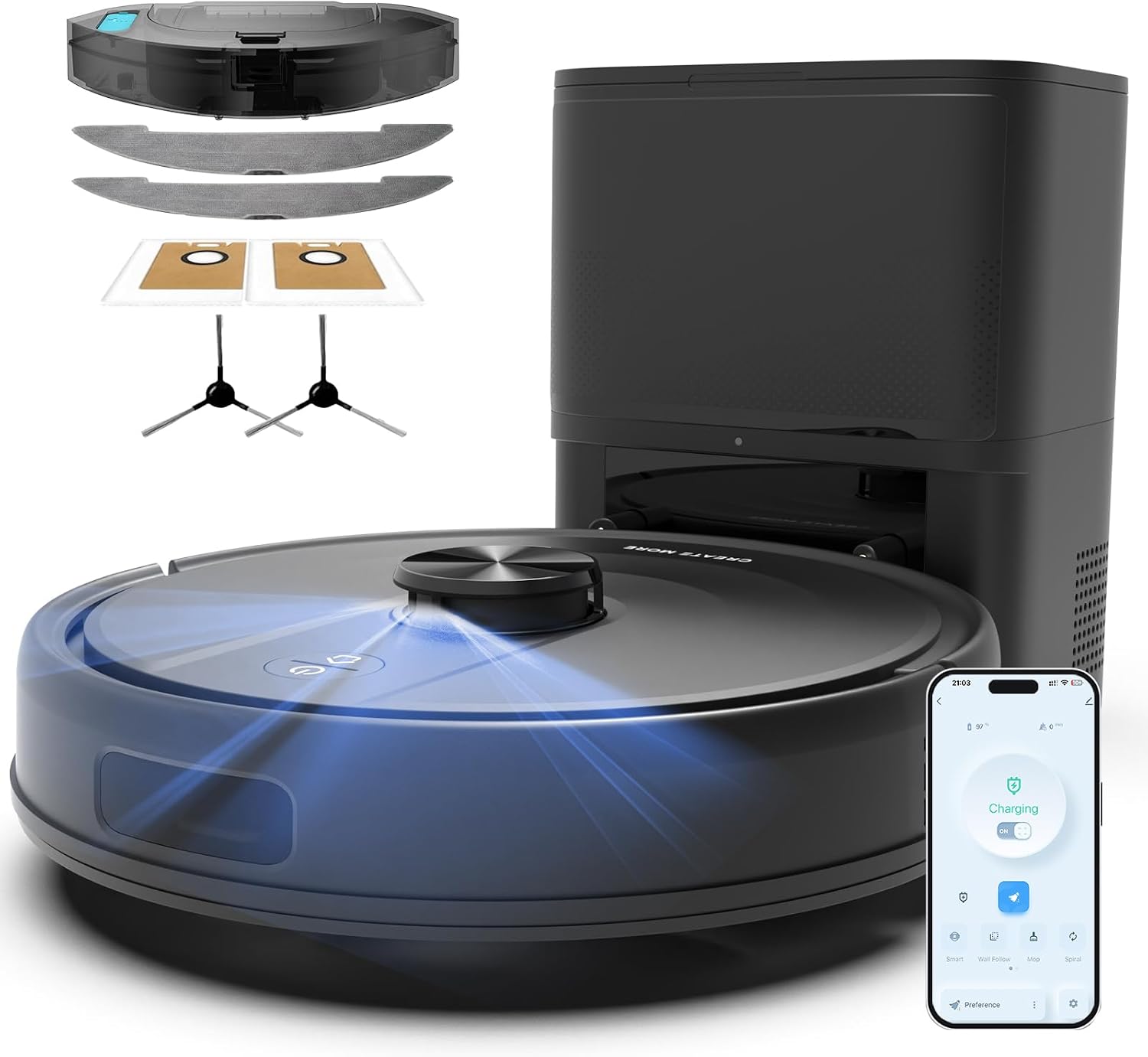
The Bagotte M6 Pro is a self-emptying robot vacuum and mop designed for hands-off, scheduled cleaning. It navigates with 360° LiDAR to build precise maps and follow efficient routes, and the app lets you create cleaning schedules, set no-go zones, and adjust suction power for different floor types. The unit combines sweeping, vacuuming, mopping, and automatic dustbin dumping into the base for roughly 90 days of hands-free operation between bag changes. Bagotte rates maximum suction up to 6000Pa and specifies about 120 minutes of battery runtime, which helps tackle pet hair and embedded dirt on both hard floors and carpets during a single run. Practical benefits include automated emptying to reduce maintenance, flexible app control, and multiple cleaning modes. Important limitations are that mop performance depends on water tank size and pad design and that real-world suction and runtime will vary with floor type, layout, and how many obstacles the robot encounters.
Best for: Buyers who prioritize dependable, low-maintenance cleaning on a budget and want reliable mapping and long unattended runs to reduce hands-on chores.
Less Ideal for: Users who need industry-leading mop performance, exacted spot-cleaning in very tight spaces, or a vacuum specified for very large homes where runtime under load could be insufficient.
- Self-emptying base for extended hands-free operation
- 360° LiDAR mapping for accurate navigation and room mapping
- App control with scheduling, adjustable suction, and virtual no-go zones
- Combined vacuum and mop functionality for one-pass cleaning
- High advertised suction (6000Pa) and long battery runtime (120 minutes)
- Actual suction and runtime depend on home layout and floor type and may be lower than advertised
- Mopping effectiveness and water capacity details are not fully specified
- Rectangular form factor may limit access to very tight corners compared with round robots
Verdict: If you want an affordable self-emptying robot that offers LiDAR mapping and long runtime to minimize upkeep, the Bagotte M6 Pro is a strong budget choice.
ILIFE A30 Pro

| Max suction | 10000 Pa |
|---|---|
| Battery life | 150 minutes |
| Filter type | Hepa |
| Capacity | 2.5 liters |
The ILIFE A30 Pro is a budget-focused self-emptying robot that combines strong suction with LiDAR mapping and a built-in mop for routine floor care. It uses precision LiDAR navigation and the SLAM algorithm to create maps, set no-go zones, and run targeted room cleanings through the ILIFEClean app or voice/remote control. The included self-empty base uses 2.5 L disposable dust bags (five provided) to extend hands-free intervals up to several months, and four selectable suction levels let you choose quieter or more powerful cleaning when needed. A 200 ml integrated dustbin and 200 ml water tank enable simultaneous vacuuming and mopping, which reduces total cleaning time but means mop use is limited by a relatively small water reservoir. Battery runtime is rated up to 150 minutes, which should cover most single-floor cleaning sessions but may require a recharge for very large homes. For its price point the A30 Pro delivers solid mapping, strong suction for pet hair and debris, and low-maintenance emptying, while buyers should expect periodic bag replacements and modest mopping capacity compared with larger combos.
Best for: Buyers who want a low-cost robot that minimizes daily maintenance and offers reliable mapping and strong suction backed by many user reviews.
Less Ideal for: Homes needing extensive continuous mopping coverage or buyers who prefer a reusable dust bin instead of disposable bags.
- Self-emptying base with 2.5 L disposable dust bags extends hands-free operation
- LiDAR navigation and SLAM mapping enable accurate room mapping and no-go zones
- Multiple suction modes up to 10000 Pa accommodate quiet or heavy-duty cleaning
- App, remote, and voice control support scheduled and room-specific cleaning
- Small 200 ml water tank limits sustained mopping coverage between refills
- Relies on disposable dust bags, which add ongoing replacement cost
Verdict: A30 Pro is a budget-friendly self-emptying robot that delivers strong suction and dependable LiDAR mapping for low-maintenance everyday cleaning.
iRobot Roomba 105 Vac
| Battery Life | 200 minutes |
|---|---|
| Filter Type | Cartridge |
| Cleaning Path Width | 5.8 inches |
| Capacity | 0.1 gallons |
| Controller Type | App Control, Button Control, Voice Control |
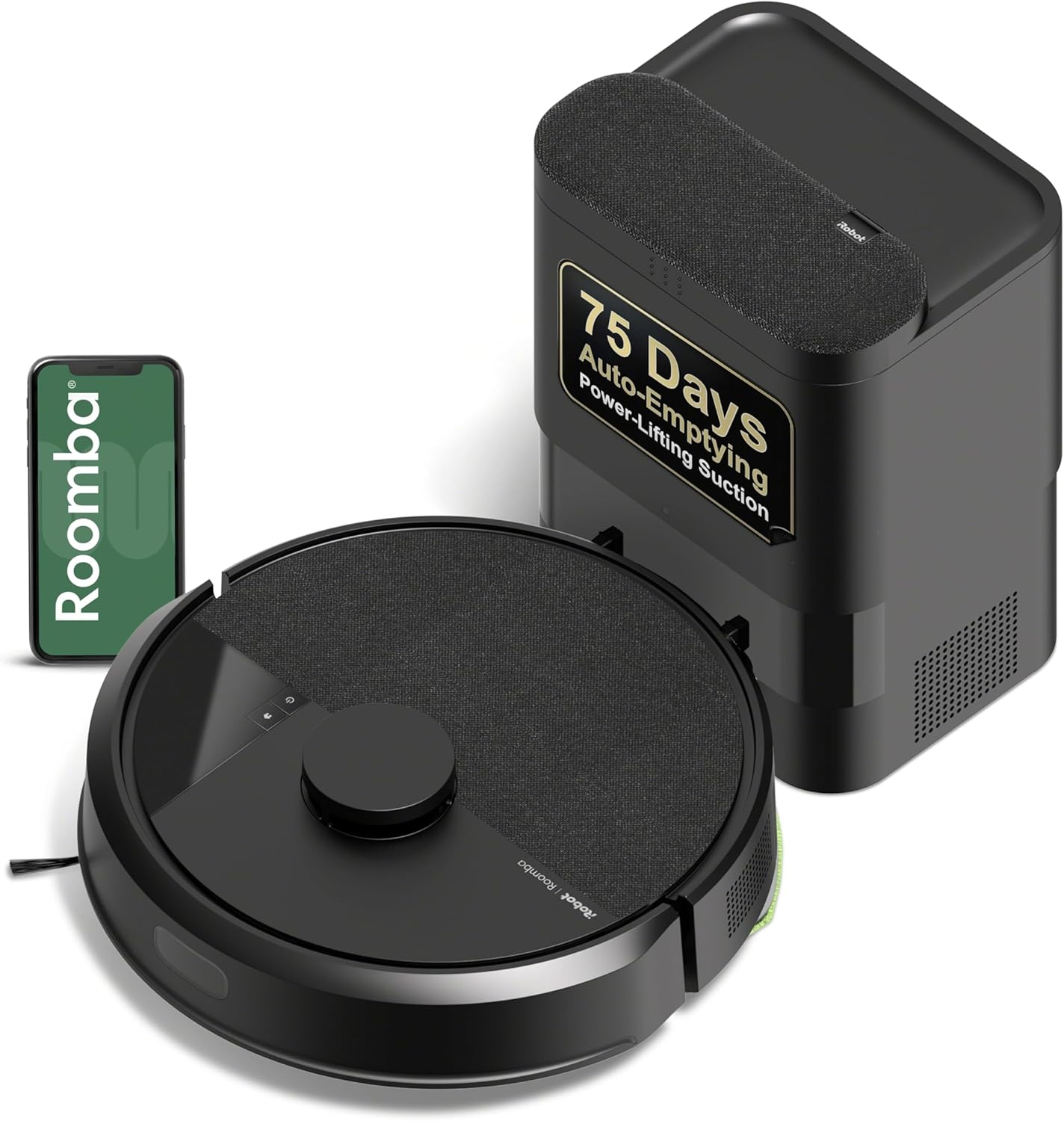
The Roomba 105 Vac pairs a compact robot vacuum with an AutoEmpty dock that holds up to 75 days of dirt, letting you skip frequent bin emptying. It uses ClearView LiDAR to map rooms for systematic, neat-row cleaning and can be controlled from the iRobot Home app, voice assistants, or the onboard buttons. The 3-stage cleaning system combines intense power-lifting suction with a multi-surface brush and edge sweeper to handle both carpets and hard floors, and the cartridge filter helps capture fine dust. Typical use is hands-off: set schedules and keep-out zones in the app, let the robot run, and only perform occasional maintenance like brush clearing and filter changes. Important limits for budget-conscious buyers are that this model focuses on vacuuming only (no mopping) and relies on a 2.4 GHz Wi-Fi setup for app features, so some smart functions may be limited in complex networks. You should also plan for periodic filter and brush maintenance and eventual replacement of the dock bag after months of use.
Best for: Buyers who want a low-intervention, dependable robot that reduces how often you empty the dustbin and prefer straightforward app or voice control over premium extras.
Less Ideal for: People who need integrated mopping, advanced obstacle recognition beyond LiDAR mapping, or who plan to run the robot on more complex Wi-Fi setups without a stable 2.4 GHz network.
- AutoEmpty dock holds up to 75 days of debris for extended hands-free operation
- ClearView LiDAR mapping enables systematic, neat-row coverage and obstacle avoidance
- 70x more intense power-lifting suction combined with multi-surface and edge brushes for effective pickup on carpets and hard floors
- Multiple control options including app, voice assistants, and onboard buttons for convenient use
- No mopping capability — vacuum-only model
- Requires 2.4 GHz Wi-Fi for setup and smart features, which can limit connectivity in some networks
Verdict: A practical, hands-off robot vacuum with a long-capacity self-emptying dock and reliable LiDAR navigation that suits cautious buyers seeking low-maintenance floor cleaning on a budget.
Choosing the Right Self-Emptying Robot Vacuum on a Budget: Key Factors to Consider
Suction Power and Real-World Pickup
Suction matters because a self-emptying base only helps if the robot actually collects dirt during each pass. On budget models peak suction numbers can be modest, so focus on consistent pickup across floor types rather than headline watts or pascals. Look for evidence of stable suction over a full cleaning run, since some low-cost units throttle power as the battery drains.
Pay attention to brush design and airflow pathways. Roller brushes that resist hair tangles and an unobstructed airway to the dustbin improve daily performance. For mixed floors, a model that maintains reasonable suction on both carpet and hard floors will reduce the need for manual touch-ups.
Docking Accuracy and Auto-Empty Effectiveness
A reliable dock and consistent auto-empty cycle are essential for true hands-off operation. Budget vacuums can vary in alignment precision, so consider how forgiving the dock is if the vacuum approaches at a slight angle. The emptying mechanism should clear the robot bin thoroughly to avoid repeated manual cleaning of the dustbin between cycles.
Also consider the base-station dust containment method. Some systems use disposable bags while others use reusable reservoirs. Bagged systems can be cleaner and require less frequent contact with dust, while bagless bases cut ongoing supply costs but may need more frequent emptying and washing.
Navigation and Mapping Basics
Mapping and obstacle handling determine how much supervision you will need. On a budget, full-featured LIDAR mapping may be uncommon, so evaluate whether the robot uses a reliable alternative such as gyroscopic sensors and camera-assisted pathing. The key is predictable, repeatable coverage rather than advanced smart-home routing.
Good obstacle detection minimizes jams and prevents the robot from getting stuck under low furniture. If the vacuum returns to the dock consistently and resumes after charging, you will get the most out of scheduled cleaning even without premium mapping features.
Maintenance Frequency and Ease
Maintenance habits affect the real cost and convenience of owning a self-emptying robot. Filters, brushes, and the robot dustbin all need periodic attention. Budget models that prioritize easy access to filters and tool-free brush removal reduce the time spent on upkeep.
Also consider how often base-station bags or reservoirs require service. Frequent, fiddly maintenance erodes the hands-off value of self-emptying systems. Look for straightforward replacement parts and clear maintenance steps that do not require special tools.
Battery Capacity and Real-World Runtime
Battery runtime sets what portion of your home the robot can cover per session. A higher-capacity battery helps the vacuum finish larger homes or denser cleaning tasks without multiple interruptions. On budget models, expect moderate runtimes; prioritize models that return to the dock reliably and resume cleaning after charging so coverage is eventually complete.
Also factor in charge time. Faster recharge cycles reduce downtime between runs and help keep scheduled cleaning consistent. If you have multiple floors, or a particularly large open layout, battery behavior is a key determinant of whether an affordable self-emptying robot will meet your needs.
Budget Tradeoffs: What You Lose and What You Keep
Lower-cost self-emptying robots make different engineering tradeoffs than premium models. You may sacrifice advanced mapping, very high suction peaks, or ultra-quiet motors, but you can retain the core conveniences: automated emptying, scheduled cleaning, and basic obstacle avoidance.
Understanding which features are essential for your home helps you accept reasonable compromises. For many households the convenience of less frequent dustbin handling outweighs a few small performance sacrifices.
- Expect simpler mapping and more conservative navigation speeds
- Prioritize docking reliability over advanced app features
- Look for durable brushes and accessible filters to reduce upkeep time
Reducing Recurring Costs: Bags, Filters, and Parts
Owning a self-emptying system introduces ongoing costs for replacement bags and filters in some designs. Bagged base stations are cleaner but mean you will buy consumables over the life of the device; bagless bases avoid that expense but may require more frequent handling and occasional reservoir cleaning.
Check filter availability and pricing before committing, and prefer widely used filter sizes that are easy to source. Also confirm whether replacement brush rollers and side brushes are simple to swap out without technical skill.
- Bagged base stations reduce dust exposure
- Bagless reservoirs save on consumables but need more manual emptying
- Keep spare filters and brush parts on hand for uninterrupted use
Maintenance Routine: A Practical Schedule
Establish a weekly and monthly maintenance routine to keep a budget self-emptying robot working reliably. Weekly checks typically include clearing hair from the main roller, emptying the robot dustbin if the base did not fully purge it, and inspecting side brushes. Monthly tasks include washing reusable filters and inspecting the base station for clogs.
Following a simple schedule prevents performance degradation and extends the useful life of consumables. Write down a short checklist and tuck replacement parts into an accessible spot so upkeep is quick and painless.
- Weekly: check brushes, clear rollers, empty robot bin if needed
- Monthly: wash reusable filters and inspect base station
- Quarterly: replace disposable filters or bags as recommended
Optimizing Placement and Layout for Better Performance
Where you place the dock and how you manage floor clutter have a strong effect on cleaning consistency. Position the base station against a wall with clear space on both sides so the robot can approach and align easily. Keep cables, rugs with high fringes, and low-clearance furniture away from typical travel routes.
If you have areas with many obstacles, consider using simple boundary markers or physical gating to keep the robot on predictable paths. Proper placement reduces failed docking attempts and missed coverage areas.
- Allow clear approach space around the dock
- Use simple barriers to protect problem zones
- Store small items off the floor before scheduled runs
When Auto-Emptying Won't Solve Everything
Auto-emptying reduces hands-on dustbin handling but does not eliminate the need for routine care. Fine dust can still accumulate in filters, allergens can collect in base station reservoirs, and hair can tangle around rollers requiring manual intervention. Recognize the limits so you can plan periodic deep cleaning.
Also, auto-emptying does not compensate for poor navigation. If a robot consistently misses corners or gets stuck, the base station will fill without delivering a better-cleaned home. Balance expectations accordingly.
- Schedule occasional deep cleans even with auto-empty
- Monitor filter condition to maintain airflow
- Address navigation issues through layout adjustments
How We Chose the Best Self-Emptying Robot Vacuum on a Budget
We focused on practical performance and long-term ownership costs to compile this list of affordable self-emptying robot vacuums. Our editorial filters emphasized reliable suction in real-world home conditions, consistent docking and auto-empty cycles, simple maintenance requirements, and navigation that prevents frequent manual intervention. Battery life and recharge behavior were measured for typical apartment and house layouts to ensure each pick can complete routine sessions without constant supervision. We also evaluated base-station design for dust containment and bagless vs bagged emptying methods as they affect sanitary handling and replacement needs. Excluded from consideration were premium models whose core features exceed the intended budget scope, specialty units designed solely for pet hair in professional settings, and devices that rely heavily on subscription services for basic functionality. The final selections prioritize systems that minimize daily cleaning effort while keeping recurring costs and routine maintenance manageable.
Our full evaluation process is outlined in our review methodology.
FAQ
How often will I need to replace bags or clean the base reservoir?
Frequency depends on household debris levels and whether the base uses bags. In average homes, bagged bases may need replacement every 1 to 3 months, while bagless reservoirs often require emptying or rinsing every few weeks. Heavy pet hair or dense carpeting increases service frequency.
Can a budget self-emptying robot handle pet hair?
Many budget self-emptying robots pick up pet hair adequately, but performance varies. Look for robust brush designs and strong airflow paths. Frequent maintenance to clear hair from rollers and filters helps maintain performance over time.
Will the auto-empty station make my home dust-free?
Auto-emptying reduces the frequency you touch the dustbin but does not eliminate dust or allergens entirely. Filters and the base reservoir still capture fine particles and require periodic cleaning or replacement to control airborne dust.
Is app mapping necessary for reliable cleaning?
App-based mapping can improve efficiency, but budget models often rely on simpler navigation and still provide reliable coverage if your layout is uncomplicated. For complex multi-room homes, mapping is more beneficial but not always required for good results.
How noisy are self-emptying stations compared with the robot running?
Emptying cycles are usually louder than the robot in standard cleaning mode because the base uses a strong suction burst to clear the bin. Noise duration is short, and many people schedule empty cycles during the day to avoid disturbance.
Final Verdict
On a budget, prioritize reliable suction consistency, a docking system that aligns and empties without fuss, and straightforward maintenance. Those three factors deliver the most hands-off value and reduce the time you spend babysitting the device. Accept tradeoffs in advanced mapping or peak suction to stay within a constrained budget, and focus instead on systems with easy-to-service brushes and accessible filters. With the right priorities you can get most of the benefits of auto-emptying technology without stretching to premium-priced models.