
Note: This article contains affiliate links. If you click on these links and make a purchase, we may earn a small commission at no extra cost to you. This helps support our research and content. Read our full affiliate disclosure here.
Black Friday is a smart time to lock in a self-emptying robot vacuum that reduces daily chores and keeps floors consistently clean. Choosing the right unit matters because capacity, run time, and dustbin handling determine how hands-off the system will be in a real home. This guide shortlists six top options for Black Friday deals and evaluates each for performance, convenience, and how little maintenance they demand. Read on to understand the practical tradeoffs—battery life, dust-holding capacity, suction and brush design, and app or voice controls—that separate a genuinely low-maintenance pick from one that still needs frequent attention.
Top Picks at a Glance
| Best Overall The best all-around choice for most situations | iRobot Roomba 105 Vac + AutoEmpty |  |
| Best Quality Built to a higher standard if you want something more solid | roborock Qrevo Curv 2 Flow |  |
| Best Value The sweet spot between price and what you get | ILIFE A30 Pro Robot Vacuum |  |
| Top Rated A top-rated pick with lots of positive feedback | WSUANE D15S Max Robot Vacuum |  |
| Most Popular A crowd favorite that many people choose with confidence | roborock Q10 S5+ |  |
| Best Seller A high-volume bestseller chosen again and again | eufy C28 Robot Vacuum |  |
iRobot Roomba 105 Vac + AutoEmpty
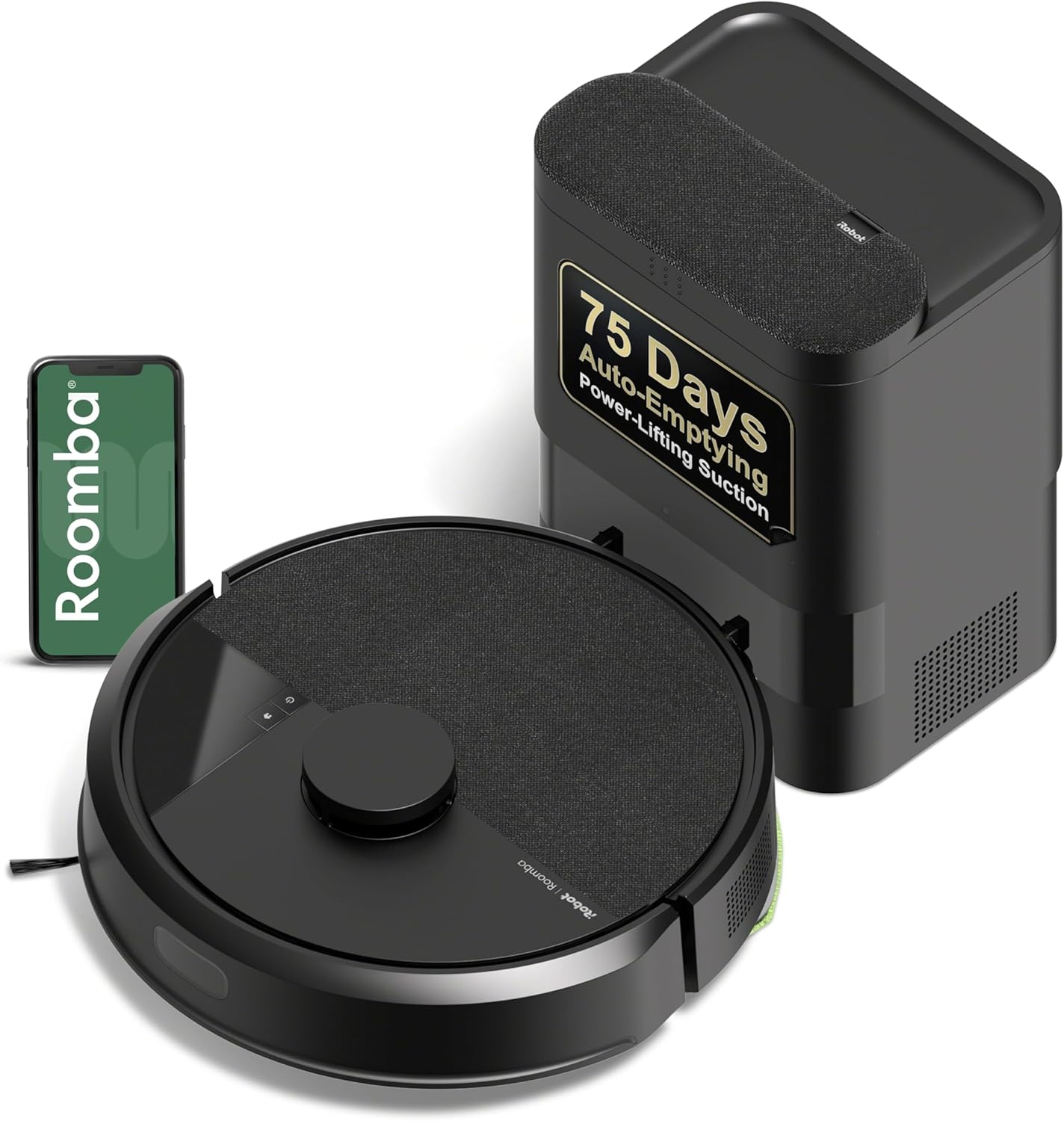
| Battery Life | 200 minutes |
|---|---|
| Surface Recommendation | Carpet & Hard Floor |
| AutoEmpty Capacity | Up to 75 days |
| Cleaning Path Width | 5.8 inches |
| Control Method | App, Push Button, Voice |
The Roomba 105 Vac with AutoEmpty dock is a straightforward self-emptying robot designed for routine cleaning of carpets and hard floors. It uses ClearView LiDAR to map rooms for systematic passes and avoid obstacles, while a 3-stage cleaning system combines a multi-surface brush, edge-sweeping brush, and intensified suction to lift dirt from edges and carpets. The included AutoEmpty dock holds up to 75 days of debris in a disposable bag, reducing how often you touch dust. You can start and schedule cleans from the Roomba Home app, push the onboard button, or use voice assistants for quick control. Run time and mapping are practical for most homes thanks to a long battery life and customizable room targeting, though setup requires a 2.4 GHz network. Maintenance is typical for robot vacuums: emptying the robot bin as needed, occasional brush cleaning, and periodic filter changes. This model focuses on reliable, hands-off floor cleaning rather than advanced mopping or premium obstacle recognition features found in higher-tier combos.
Best for: Buyers who want a low-maintenance, reliable robot that handles daily vacuuming with strong suction and automated debris disposal and prefer simple app and voice controls.
Less Ideal for: Shoppers who need an all-in-one vacuum and mop solution or who require advanced obstacle recognition and 3D mapping features for complex homes should consider other models.
- AutoEmpty dock holds up to 75 days of debris for minimal dust handling
- ClearView LiDAR mapping enables orderly, efficient coverage and obstacle avoidance
- 70x enhanced suction and multi-surface brush system for improved pickup on carpets and hard floors
- Multiple control methods: app scheduling, onboard buttons, and voice assistant compatibility
- Requires a 2.4 GHz Wi-Fi network for setup and operation
- Does not include mopping functionality or heated pad washing found on combo units
Verdict: Choose this Roomba if you want a dependable self-emptying vacuum that reduces hands-on maintenance while delivering strong, mapped cleaning across carpets and hard floors.
roborock Qrevo Curv 2 Flow

| Battery Life | 242 minutes |
|---|---|
| Filter Type | Washable Filter |
| Power Source | Battery Powered |
| Controller Type | App Control, Button Control, Voice Control |
| Surface Recommendation | Wood, Tile, Carpet |
The roborock Qrevo Curv 2 Flow is a self-emptying robot vacuum and mop built for thorough, automated floor care. It uses PreciSense LiDAR and structured light sensors to map multiple floors and recognize common obstacles, while an AI DirTect system adapts suction and mop behavior for different messes. In daily use it vacuums hard floors and carpets, boosts suction on carpets, and raises or lifts the mop when needed to avoid wetting rugs. The SpiraFlow real-time mop refreshes and the multifunctional dock high-temperature washes and hot-air dries the mop plus auto-refills the water and handles dust emptying for low-maintenance operation. Notable practical benefits include a dual zero-tangle roller design that reduces hair wrap for pet homes, 20,000 Pa suction for deeper carpet cleaning, and app and voice control for scheduling and no-go zones. Trade-offs to consider are the sizeable unit weight and dimensions that reflect a robust dock and cleaning systems, and likely higher cost and maintenance complexity compared with simpler robot vacuums.
Best for: Buyers prioritizing peak cleaning performance who want a largely hands-off robot that handles heavy pet hair, multi-floor mapping, and aggressive suction while automating mop care.
Less Ideal for: People with very small living spaces, tight budgets, or those who prefer a simpler, lighter robot without an advanced docking system.
- Strong 20,000 Pa HyperForce suction for deep pickup on carpets and hard floors
- Real-time self-cleaning SpiraFlow mop with high-temperature wash and hot-air drying at the dock
- PreciSense LiDAR and AI obstacle recognition for reliable multi-level mapping and routing
- Dual Zero-Tangle roller and hair-management design reduces brush entanglement in pet or long-hair homes
- Multifunctional dock that handles auto dust emptying and water refills to reduce manual upkeep
- Large, heavier package that may be overkill for small apartments
- Advanced dock and cleaning systems add complexity and more parts to maintain
Verdict: Buy this if you want a high-performance, self-emptying robot that combines powerful suction, AI mapping, and an automated self-washing dock to minimize hands-on cleaning.
ILIFE A30 Pro Robot Vacuum

| Battery Life | 150 minutes |
|---|---|
| Filter Type | Hepa |
| Capacity | 2.5 liters |
| Power Source | Battery Powered |
| Controller Type | App, Remote, Voice Control |
The ILIFE A30 Pro is a midrange self-emptying robot that combines vacuuming and mopping with LiDAR mapping for predictable, room-by-room cleaning. It uses a 2-in-1 on-board dustbin and water tank to run vacuum and mop simultaneously, and the included self-emptying base holds five 2.5L dust bags so the system can go for months without you emptying it. LiDAR navigation and multi-floor mapping create accurate maps and let you set no-go zones, schedules, and spot cleaning from the ILIFEClean app or via voice assistants. Suction modes range from quiet to a claimed 10000Pa max for heavier debris, and a HEPA filter helps capture fine dust. Practical limitations: the mop water capacity is modest, the 200ml tank means heavier mopping jobs need refills, and the app requires a 2.4GHz Wi-Fi network only. While performance on low-pile carpet and hard floors should be solid, very dense rugs or large homes may need multiple runs or manual touch-ups.
Best for: Buyers who want a low-maintenance cleaning routine and prioritize automated, scheduled whole-home cleaning with reliable mapping and occasional mopping included.
Less Ideal for: Homes that need heavy-duty mopping or very deep-cleaning of dense high-pile carpets should consider a dedicated wet-cleaner or a more powerful upright for spot jobs.
- Self-emptying base with five 2.5L dust bags for extended hands-free operation
- LiDAR navigation with multi-floor mapping and no-go zones for consistent coverage
- Vacuum and mop simultaneously with selectable suction and water levels
- HEPA filter and multiple suction modes for better dust and pet hair pickup
- Small onboard water tank limits continuous mopping time
- Max suction value is claimed and real-world results can vary
Verdict: If you want long stretches of hands-off floor care with reliable LiDAR mapping and a bagged self-emptying base, the A30 Pro delivers practical automation."}
WSUANE D15S Max Robot Vacuum

| Capacity | 3.5 liters |
|---|---|
| Suction Power | 10000Pa (max) |
| Filter Type | Three-layer high-efficiency (washable) + filter cotton |
| Battery Type | Lithium Ion |
| Compatible Devices | Google Home, Smartphones |
The WSUANE D15S Max is a self-emptying robot vacuum and mop designed to minimize hands-on upkeep for busy homes and pet owners. It uses dToF LiDAR mapping and multiple sensors to build accurate maps, let you set no-go zones, and avoid obstacles while it vacuums and mops. The big selling point is the 3.5L dust collection station that the brand says can hold roughly 90 days of debris, which pairs with a brushless motor offering up to 10,000Pa peak suction and automatic boost on carpets. Practical touches include a hair-cutting anti-tangle roller brush that reduces clogs from pet hair and several suction modes to balance runtime and performance. Battery endurance supports long runs (up to about 160 minutes in quiet mode) and the app plus Google Home compatibility makes scheduling and spot cleaning straightforward. Trade-offs to expect are a reported noise level around 70 dB at higher power and the base station takes floor space, but for buyers who prioritize low-maintenance, thorough cleaning across hard floors and carpet, this model delivers useful automation and strong suction.
Best for: Buyers who want a low-touch, reliably automated cleaning routine—especially households with pets or busy schedules that value extended intervals between maintenance.
Less Ideal for: People who need an ultra-quiet machine for shared living spaces or those with very tight floor space where a self-emptying base cannot fit.
- Large 3.5L self-emptying dustbin reduces how often you need to empty the base
- dToF LiDAR navigation creates precise maps and supports custom no-go zones
- Up to 10,000Pa peak suction with auto-boost for deeper carpet cleaning
- Anti-tangle roller brush that cuts hair to prevent brush clogs
- App control and Google Home compatibility for scheduled and remote operation
- Higher noise level (around 70 dB) at stronger suction settings
- Self-emptying base requires dedicated floor space and periodic dust bag replacement
Verdict: Choose the D15S Max if you want a strong-suction, lidar-mapped robot that significantly reduces how often you need to empty or tend to your vacuum.
roborock Q10 S5+

| Maximum Suction | 10,000Pa |
|---|---|
| Capacity | 2.7 liters |
| Battery Life | 150 minutes |
| Filter Type | Washable |
| Control Method | App, Voice |
The roborock Q10 S5+ is a robot vacuum and mop designed for long stretches of hands-free floor care. It navigates with 360° LiDAR and builds multi-level maps so it can follow efficient routes and respect no-go zones you set in the app, while ReactiveTech obstacle avoidance reduces collisions in cluttered rooms. For suction it uses a 10,000 Pa HyperForce motor that lifts embedded dirt and pet hair, and the VibraRise 2.0 mopping module provides sonic scrubbing and an auto-lift that raises the mop for carpets. The included 2.7 L self-empty dock holds dust for up to about 70 days between bag changes, which cuts routine maintenance. App and voice controls let you schedule cleanings, change suction or mopping modes, and enable carpet boost with ultrasonic detection. Trade-offs are typical for a feature-packed unit: reported noise around 65 dB at operation and the product only supports 2.4 GHz Wi‑Fi, so modern 5 GHz-only networks need adjustment. Overall it suits households that want strong suction, reliable mapping, and minimal daily upkeep from a robot vacuum-mop combo.
Best for: Buyers seeking a low-touch cleaning solution who rely on crowd-validated performance and want a unit that handles pet hair and multi-level homes with strong navigation and a long auto-empty interval.
Less Ideal for: People who require silent operation for night use or who only have 5 GHz Wi‑Fi without the ability to add 2.4 GHz connectivity should consider alternatives.
- Large 2.7 L auto-empty dust bag provides long intervals between maintenance
- High 10,000 Pa suction for lifting embedded dirt and pet hair
- LiDAR-based multi-level mapping with configurable no-go zones for precise navigation
- VibraRise 2.0 sonic mopping with auto-lift protects carpets
- App and voice control with scheduling and carpet-boost automation
- Only supports 2.4 GHz Wi‑Fi, not 5 GHz networks
- Operating noise can reach about 65 dB during cleaning
Verdict: If you want a long-interval, full-featured robot vacuum-mop that combines very strong suction with LiDAR mapping and a 2.7 L self-empty dock, the Q10 S5+ is a compelling hands-free choice.
eufy C28 Robot Vacuum

| Suction Power | 15,000 Pa |
|---|---|
| All-in-One Station Capacity | 3 liters dust bag |
| Battery Life | 140 minutes |
| Navigation | LiDAR |
| Filter Type | Washable |
The eufy C28 combines a 15,000 Pa suction robot with a HydroJet roller mop and an Omni all-in-one station that handles dust emptying, mop washing, hot-air drying, and wastewater collection. You set cleaning schedules in the app or by voice and the robot maps rooms with LiDAR navigation while avoiding obstacles without using cameras, which helps protect privacy. The roller mop is self-cleaning and the DuoSpiral brush aims to prevent hair tangles so it is easier to maintain in homes with shedding pets. The station claims up to 75 days of hands-free maintenance by holding dust in a 3L bag and refilling the robot's tank automatically, which reduces frequent trips to the bin and mop care. Expect long runs per charge for multi-room jobs but keep in mind the unit and station are relatively large and the system focuses on indoor hard floors and short-pile carpets; very deep-pile rugs or heavy cluttered spaces may limit performance. Overall it is a high-automation option for buyers who want minimal day-to-day upkeep from a vacuum-mop combo.
Best for: Buyers who prioritize hands-free cleaning and strong automation—especially households with pets—who want a privacy-conscious navigation system and low daily maintenance.
Less Ideal for: People living in very small apartments with limited storage for a large base or those whose homes are dominated by deep-pile rugs and high-threshold clutter.
- Powerful 15,000 Pa suction for lifting pet hair and debris
- All-in-one station auto-empties dust into a 3L bag and auto-washes and hot-dries the mop
- HydroJet roller mop with scraper provides continuous self-cleaning while mopping
- LiDAR navigation maps rooms and avoids obstacles without a camera for privacy
- Washable filters and app/voice control simplify maintenance and scheduling
- Large station and robot add footprint that may not fit small homes or tight storage
- Designed primarily for hard floors and short-pile carpets so thick rugs may not get optimal cleaning
Verdict: If you want near hands-free floor care with strong suction and automated mop washing and drying, the eufy C28 delivers high automation and low upkeep.
Choosing the Right Self-Emptying Robot Vacuum Black Friday Deals: Key Factors to Consider
Dustbin Capacity and Base Station Size
A larger dustbin in the robot and a roomy base station mean fewer manual empties between cleanings. If you plan to run nightly or multiroom cycles, capacity becomes a primary convenience factor because it determines how long the system remains truly hands-off.
Also consider how the base station collects and seals debris. A well-designed seal and bag or bin arrangement keeps dust contained during disposal and reduces exposure for allergy sufferers. Think about how often you are willing to change bags or empty a canister when estimating long-term upkeep.
Battery Life and Recharge Behavior
Battery runtime drives how much area a single cleaning cycle can cover. Longer runtimes let the robot finish larger homes without stopping mid-run, while quick recharge or resume capabilities let it return to finished work more reliably.
Pay attention to whether the robot supports return-to-base mid-cycle to recharge and resume. That behavior affects total cleaning time for big areas and determines whether you need multiple cycles to keep floors fully covered.
Navigation, Mapping, and Zone Control
Accurate mapping and reliable navigation reduce redundant passes and missed spots. Good mapping features let you set keep-out zones, room schedules, and targeted spot cleans, which improves efficiency and lowers runtime and wear.
Advanced navigation matters more in cluttered or multiroom layouts. If you have many furniture obstacles, stairs, or narrow transitions, prioritize systems with robust sensors and repeatable mapping so the robot spends more time cleaning and less time getting stuck.
Suction, Brush Design, and Pet Hair Handling
Suction strength and the design of the main brush affect how well the robot handles different debris types. Soft brush rollers are better on hard floors and fine dust, while combination rolls or tangle-resistant designs perform better with pet hair.
Look for brush systems that minimize tangles and are easy to remove for cleaning. Strong suction is valuable, but it must pair with a brush system that lifts trapped debris from carpet fibers to be effective.
Maintenance and Filter Access
Even self-emptying systems need routine maintenance. Filters, brush rolls, and sensors require periodic cleaning to maintain suction and navigation accuracy. How easy these parts are to access and service affects long-term ownership satisfaction.
Consider whether replacement filters and brushes are simple to swap and whether the robot offers on-screen or app-based maintenance reminders. Units that make routine upkeep straightforward will stay reliable with less effort.
Understanding Self-Emptying Technology
Self-emptying robot vacuums pair an autonomous floor-cleaning unit with a larger dock that pulls debris from the robot's dustbin into a base container. The dock can use sealed bags or a reusable bin and typically increases the interval between manual disposal from days to weeks. For buyers, the main tradeoff is convenience versus footprint because a larger base station claims more floor or wall space near a recharge point.
- Base styles: disposable bag versus reusable bin
- How seals and one-way valves reduce dust exposure
- Typical base station footprint and placement tips
How Run Modes Affect Everyday Use
Robots usually offer several run modes such as single-room, full-home, spot clean, and scheduled cycles. Choosing the right default mode changes how often the system runs and how much capacity you need. For example, a home that uses nightly quick cycles can get by with a smaller base if each run picks up light debris, whereas weekly deep-clean cycles demand larger capacity and stronger suction.
- Nightly quick cleans versus weekly deep cleans
- Mapping-based scheduled cleaning for high-traffic rooms
- When to use spot clean for targeted messes
Placement and Setup Tips for Best Performance
Placement of the base station impacts navigation and recharge reliability. Place the dock against a wall in an open area with clear approach paths on both sides so the robot can dock from multiple angles. Avoid corners or tight spaces that force the robot to align precisely every time. Also evaluate where typical debris accumulates. If most dirt collects in an entryway or kitchen, consider scheduling more frequent cleans for those rooms or adjusting map-based room priorities so the robot spends more time in key areas.
- Leave 1 to 1.5 meters of clear space on either side of the dock when possible
- Avoid direct sunlight or very dark floors at the dock that can confuse sensors
- Place the dock on the primary floor level to minimize multi-floor interruptions
Managing Consumables and Ongoing Costs
Even when the robot empties itself, consumables still matter. Disposable bags, replacement filters, and brush rolls represent ongoing costs that differ by system. Estimate monthly consumption based on your cleaning frequency and factor that into the long-term cost of ownership. Some base stations use reusable bins that require regular emptying and cleaning but avoid recurring bag purchases. Consider which model of consumable fits your preference for minimal waste versus minimal hands-on maintenance.
- Estimate bag change frequency based on household size and pet hair
- Check filter replacement intervals and whether HEPA-rated filters are available
- Plan for occasional deep cleaning of the robot's internals to prevent dust buildup
Noise and Household Disruption
Self-emptying docks introduce occasional loud clearing cycles when the base pulls debris from the robot. Depending on where the dock sits and when the system empties, this can be disruptive. Look for units that allow you to schedule base empties at specific times or that advertise quieter operation if household noise is a concern. Also consider nighttime cleaning. If you plan to run the robot while family members sleep, choose quieter run modes or schedule empties during daytime hours to minimize disturbance.
- Schedule base empties during daytime to avoid nighttime noise
- Use quieter run modes for late-evening cycles
- Place dock on softer flooring to dampen vibration noise
How We Chose the Best Self-Emptying Robot Vacuum Black Friday Deals
Our selection focused on real-world factors that affect how hands-free a self-emptying robot vacuum is in everyday use. We prioritized large dustbin and base station capacity so the unit can go longer between manual empties. Battery runtime and recharge behavior were evaluated because run time determines how much area a robot can reliably cover on a single cycle. Navigation and mapping capabilities were assessed to estimate cleaning efficiency in multiroom homes and complex floorplans. Suction and brush design were considered with an eye toward common debris types and pet hair pickup without frequent tangles. Noise and floor-surface adaptability were reviewed to judge suitability for homes with hard floors and area rugs. We excluded units that rely on proprietary consumables with unusually high ongoing costs or poorly documented support. We also filtered out models lacking reliable mapping or that require constant manual intervention to finish typical cleaning routes. Our final shortlist balances convenience, capacity, and dependable cleaning behavior to highlight options that actually reduce routine effort.
Our full evaluation process is outlined in our review methodology.
FAQ
How often will I need to change the base station bag or empty the reusable bin?
Frequency depends on debris load and cleaning schedule. In many homes a base bag lasts several weeks; high-traffic or pet homes will need more frequent changes. Reusable bins still need periodic emptying and cleaning on a similar cadence.
Can a self-emptying robot finish cleaning a large house on one battery charge?
That depends on battery runtime and whether the robot supports recharge-and-resume. Many models will recharge mid-cycle and finish, while smaller batteries may require manual restarts or multiple scheduled runs to cover large floor areas.
Will self-emptying systems reduce allergy exposure?
They can lower direct contact with dust by sealing debris in the base station, especially when the base uses sealed disposable bags and HEPA-style filters. Proper disposal and filter maintenance are still important to minimize exposure.
Do self-emptying robots require more maintenance than standard robots?
They reduce the frequency of hand-emptying but still need routine care. Brushes, filters, and sensors require periodic cleaning, and base stations need occasional bag changes or emptying. Overall hands-on time tends to be lower, not zero.
Are there placement restrictions for the base station?
Yes. The base needs clear approach space and a stable floor surface. Place it against a wall in an open area to improve docking success. Avoid tight corners, slippery surfaces, or locations with strong direct sunlight on sensor areas.
Final Verdict
When evaluating self-emptying robot vacuums during Black Friday deals, prioritize the features that match how you plan to use the system. If minimizing hands-on effort is the primary goal, dustbin and base station capacity, reliable mapping, and maintenance accessibility should carry the most weight. If you have a larger home, battery runtime and recharge-and-resume behavior become more important. Weigh long-term consumable costs against the convenience of sealed disposable systems. Focus on the tradeoffs between footprint, noise, and true hands-off operation to choose the option that best reduces daily cleaning chores.