
Note: This article contains affiliate links. If you click on these links and make a purchase, we may earn a small commission at no extra cost to you. This helps support our research and content. Read our full affiliate disclosure here.
Picking the right semi-automatic espresso machine under $1,000 matters because small differences in boiler design, temperature control, and steam power change how your shots taste and how easy it is to texture milk. If you care about consistent extraction, a good steam wand, and a machine that fits your kitchen routine, the right choice makes daily espresso easier and more satisfying. This guide shortlists the top six semi-automatic espresso machines in this price bracket and explains the practical tradeoffs between temperature stability, build quality, and user controls. Read on to see the evaluation criteria we used and which features matter most when you brew at home.
Top Picks at a Glance
| Best Quality Built to a higher standard if you want something more solid | Breville Barista Touch BES880BSS |  |
| Best Value The sweet spot between price and what you get | Neretva Retro Espresso Machine |  |
| Best Budget The cheapest option that still gets the job done reliably | Gevi 20 Bar Espresso Machine ECMG0 | 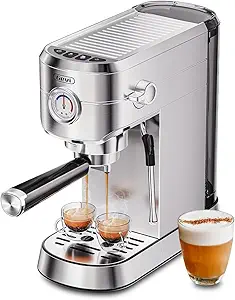 |
| Top Rated A top-rated pick with lots of positive feedback | Breville Barista Express BES870 |  |
| Most Popular A crowd favorite that many people choose with confidence | De'Longhi ECP3420 Espresso Machine |  |
| Best Seller A high-volume bestseller chosen again and again | CASABREWS CM5418 Espresso Machine |  |
Breville Barista Touch BES880BSS

| Operation Mode | Fully Automatic |
|---|---|
| Wattage | 1680 watts |
| Human Interface Input | Touchscreen |
| Coffee Input Type | whole_beans |
| Filter Type | Reusable |
The Breville Barista Touch combines a built-in conical burr grinder, touchscreen programming, and an automatic steam wand to make café-style espressos, lattes, and cappuccinos at home. You grind whole beans directly into the portafilter with 30 grind settings and automatic dose control, then use the touchscreen to pick a recipe or adjust strength, milk texture, and temperature. The ThermoJet heating system brings the machine to extraction temperature quickly and a 9-bar pump with low-pressure pre-infusion helps produce a fuller espresso extraction. Hands-free milk texturing creates consistent microfoam suitable for latte art while the included stainless milk jug and dosing tool help streamline prep. Practical limitations are the learning curve for dialing in grind and dose to your beans and the machine's size and weight, which require a dedicated counter space; maintenance tasks like regular cleaning of the steam wand, grinder, and water filter are also necessary to keep performance consistent. For buyers focused on espresso quality and convenience, it offers many pro-level features in a single package.
Best for: Buyers who prioritize high-quality espresso and cappuccino results at home and want a machine that streamlines grinding, dosing, and milk texturing for consistent, repeatable drinks.
Less Ideal for: People who need a compact, lightweight machine for small kitchens or those who prefer a completely manual workflow without automated milk or dosing features.
- Integrated conical burr grinder with 30 grind settings and dose control for consistent extraction
- Touchscreen with programmable recipes for quick, repeatable drinks
- Auto steam wand delivers consistent milk texture suitable for latte art
- Fast ThermoJet heating system reduces wait time to first shot
- Includes useful accessories like stainless milk jug and razor dosing tool
- Requires regular cleaning and maintenance to preserve grinder and steam performance
- Relatively large and heavy, needs dedicated counter space
Verdict: For home baristas seeking pro-level extraction and one-touch milk drinks under $1,000, the Barista Touch packs grinder, dosing, and auto-texturing into a single, convenient machine.
Neretva Retro Espresso Machine
| Operation Mode | Semi-Automatic |
|---|---|
| Wattage | 1450 watts |
| Output Pressure | 1500000 pascal |
| Coffee Input Type | Ground |
| Filter Type | Non-Pressurized |
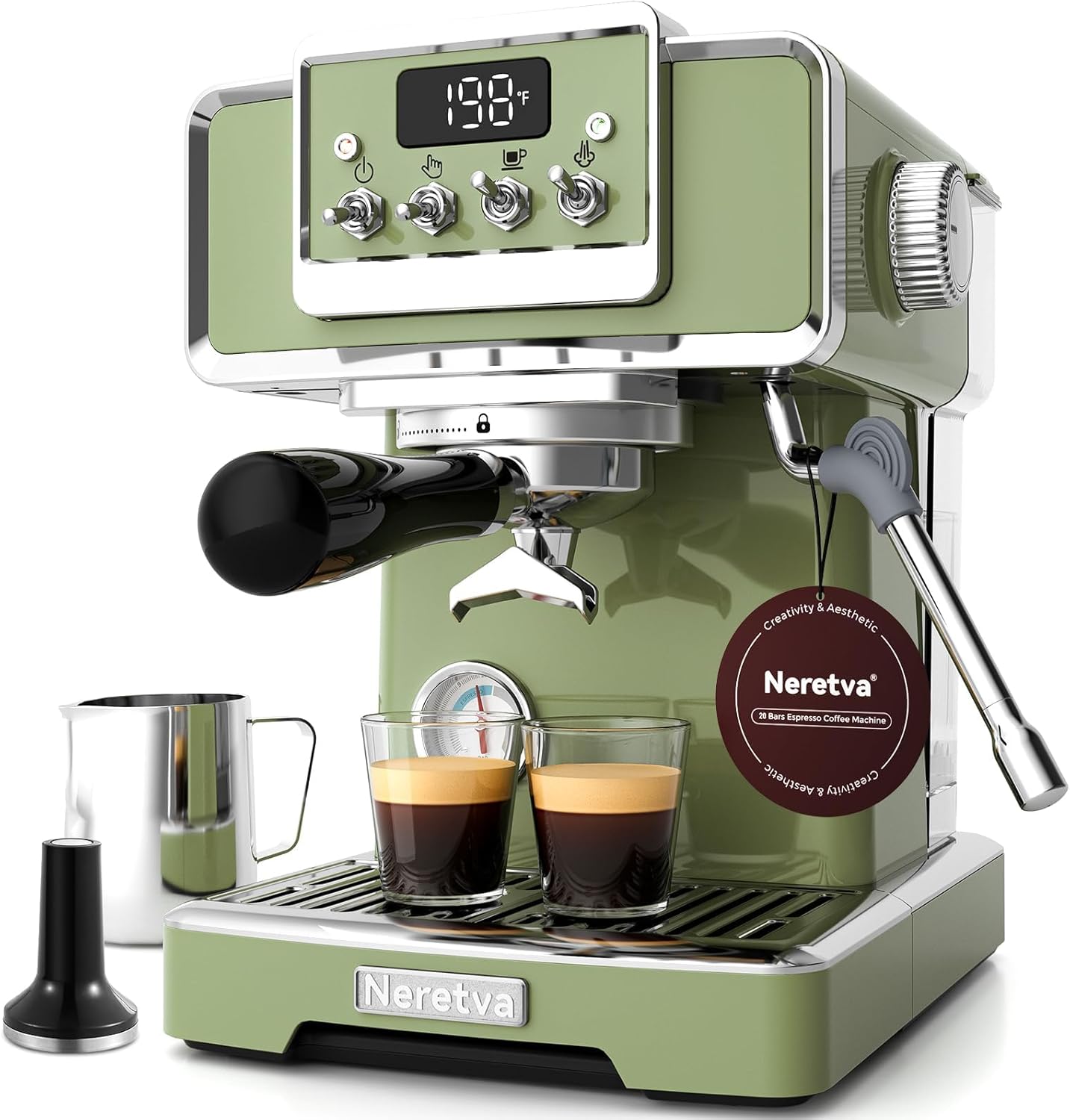
The Neretva Retro Espresso Machine is a compact semi-automatic unit aimed at home baristas who want hands-on control without complex setup. It uses a 15-bar pump, 198°F temperature control and pre-infusion to pull espresso, and the visible pressure gauge and temperature display make it easy to monitor extraction. The powerful steam wand produces dense microfoam for lattes and cappuccinos, and the instant-heating boiler shortens warm-up time. Included accessories like a 51mm portafilter, single/double filters, tamper and dosing funnel let you start experimenting with grind, dose and tamp right away. Expect solid performance for everyday espresso drinks, though getting consistent crema will depend on proper grind and tamp technique. The machine is mostly metal with a retro aesthetic and a mid-size 1.8 L capacity suitable for household use, but it is not a commercial-grade unit and users should be prepared to tweak grind size and dosing to achieve the best shots.
Best for: Buyers who want a hands-on, budget-conscious home espresso setup that emphasizes control and measurable feedback while keeping operation straightforward.
Less Ideal for: People seeking a fully automatic, hands-off machine or a commercial-grade unit for heavy daily cafe-level use should look elsewhere.
- 15-bar pump with precise temperature control and pre-infusion for fuller extraction
- Visible pressure gauge and temperature display for real-time brewing feedback
- Powerful steam wand capable of producing microfoam for latte art
- Comes with essential accessories including portafilter, tamper and dosing funnel
- Requires user tuning of grind, dose and tamp to achieve consistent crema
- Not intended for commercial or high-volume use
Verdict: A practical, feature-focused semi-automatic espresso machine that gives home baristas real control and visible brewing feedback without a premium price.
Gevi 20 Bar Espresso Machine ECMG0
| Output Pressure | 20 bar |
|---|---|
| Wattage | 1350 watts |
| Power Source | AC adapter |
| Coffee Input Type | ground_coffee |
| Capacity | 1 liters |
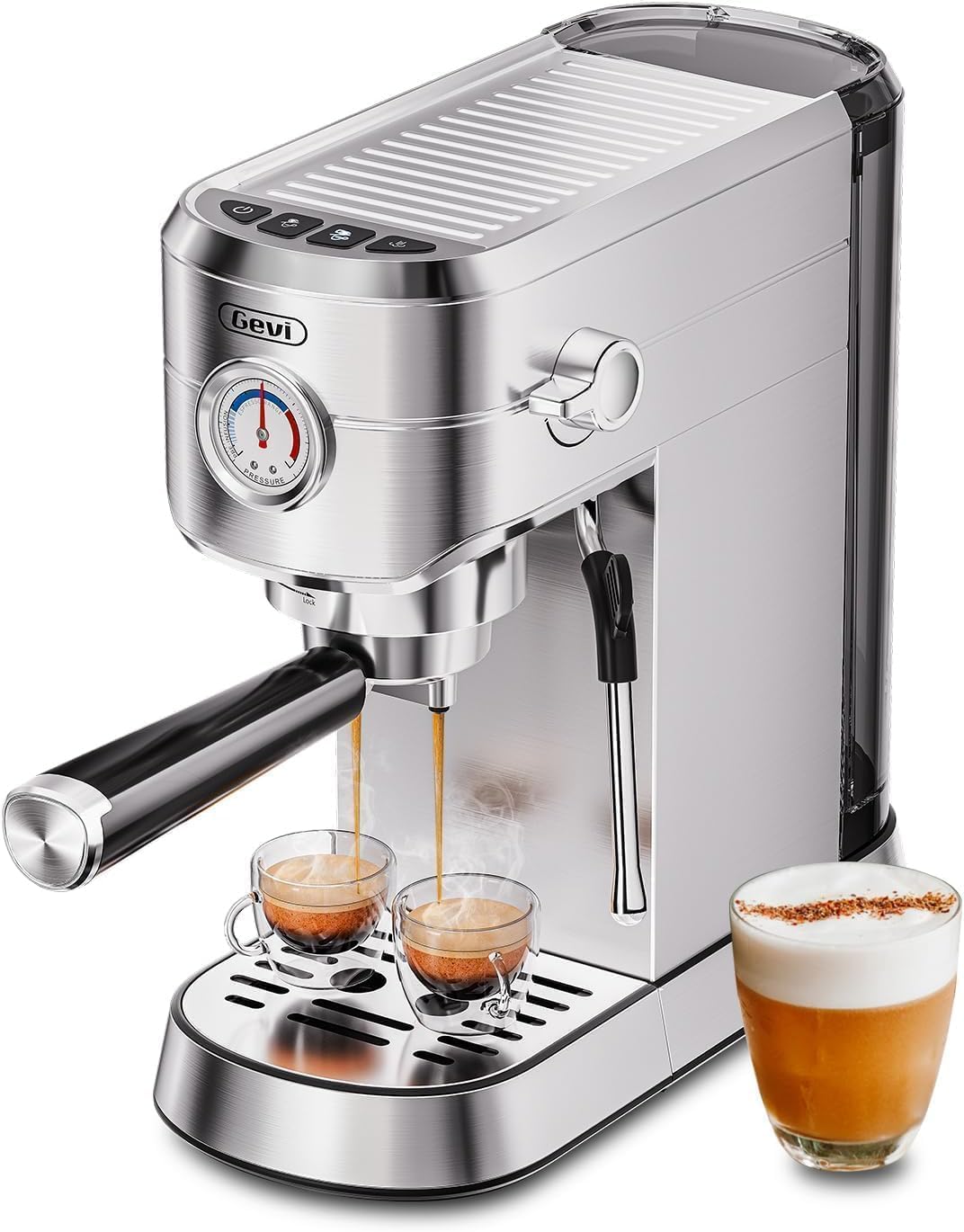
The Gevi 20 Bar Espresso Machine is a countertop semi-automatic unit aimed at delivering espresso and milk-based drinks without a steep learning curve. It uses a 20‑bar pump, NTC temperature control and pre-infusion to help produce fuller extraction, and includes a pressure gauge and adjustable shot volume so you can tune each pull. The machine has a powerful steam wand plus an automatic milk frother nozzle for cappuccinos and lattes, and a removable 34 oz water tank and drip tray for easier filling and cleaning. Built from stainless steel with a cup warmer on top, it fits small kitchens while still offering several barista-style controls like a 51 mm portafilter and reusable filter baskets. Trade-offs are minor vibration and pump noise during operation and the lack of an integrated grinder, so you must buy or use a separate grinder and fresh grounds for best results. For its size and features it is a practical entry-level machine that balances capability and countertop footprint for buyers who want better espresso than pod or capsule options.
Best for: Home users on a budget who want a true semi-automatic espresso experience and basic milk steaming without a large commercial machine, and who prioritize extraction control over integrated grinding.
Less Ideal for: Buyers who want an all-in-one grinder-plus-machine, near-silent operation, or a heavy-duty commercial unit for high-volume café use should look elsewhere.
- 20‑bar pump with pressure gauge and pre-infusion for more consistent extraction
- Powerful steam wand and frother nozzle that produce microfoam for milk drinks
- Compact stainless steel build with removable water tank and drip tray for easy cleaning
- Adjustable shot volume and reusable filter baskets give basic customization without extra parts
- No built-in grinder so you need a separate grinder for best results
- Can be noticeably noisy and vibrate during pump operation
Verdict: A compact, feature-rich semi-automatic espresso machine that gives budget-minded buyers real extraction and milk-steaming control without a built-in grinder.
Breville Barista Express BES870

| Wattage | 1600 watts |
|---|---|
| Voltage | 120 volts |
| Operation Mode | Semi-Automatic |
| Coffee Input Type | whole_beans |
| Filter Type | Reusable |
The Breville Barista Express BES870 combines an integrated conical burr grinder with a manual espresso workflow so you can go from whole beans to espresso shots without separate equipment. Its grinder offers 16 grind settings and dose control that feeds grounds directly into a 54mm portafilter, while the thermocoil PID temperature control helps deliver consistent extraction. Low-pressure pre-infusion and a reusable 1 and 2-cup filter setup let you dial shots for balanced flavor, and the steam wand produces microfoam suitable for lattes and cappuccinos. Typical use involves grinding, tamping, and manually managing extraction and steaming, so it rewards users willing to learn basic barista technique. The machine is powerful and fast thanks to a 1600W heater, but it is semi-automatic rather than fully automatic, so it requires hands-on preparation and regular cleaning. For buyers who want a single compact unit that handles grinding and steaming with solid temperature control, this is a practical step-up from capsule or pump machines, though it is less convenient than machines with automated dosing or hands-free milk systems.
Best for: Buyers who prioritize a reliable, all-in-one semi-automatic machine that delivers consistent temperature and fresh grinding for daily café-style espresso and milk drinks and are willing to learn basic barista technique.
Less Ideal for: People who want fully automated, push-button espresso with no hands-on prep or those who prefer a maintenance-free capsule system.
- Built-in conical burr grinder with 16 grind settings for fresh dosing
- PID thermocoil temperature control for more consistent extraction
- 54mm portafilter and dual/single-wall filter baskets for flexible shot preparation
- Powerful steam wand capable of producing microfoam for latte art
- Reusable filter and included accessories reduce need for add-ons
- Requires manual tamping and hands-on control so there is a learning curve
- Regular cleaning and maintenance needed to keep grinder and group components performing well
Verdict: Choose the Barista Express if you want a dependable single machine that grinds, brews, and textures milk with precise temperature control for consistent café-style results.
De'Longhi ECP3420 Espresso Machine

| Output Pressure | 15 bar |
|---|---|
| Wattage | 1100 watts |
| Operation Mode | Fully Automatic |
| Coffee Input Type | ground, pod |
| Filter Type | Reusable |
The De'Longhi ECP3420 is a compact semi-automatic espresso machine designed for home baristas who want espresso, cappuccino, and lattes without a large footprint. It uses a 15-bar pump to deliver consistent extraction and includes a three-in-one filter holder for single, double shots, or easy-serve pods, so you can switch between grounds and pods quickly. The Advanced Cappuccino System is a manual frother that blends steam and milk to create creamy foam, and the removable water tank and drip tray make filling and cleanup straightforward. Practical touches like an adjustable bottom tray for taller cups and visible water level simplify daily use. Limits include a manual frother rather than an automatic milk system and a primarily plastic construction that is less premium-feeling than higher-end machines, so it requires some technique to get café-level microfoam. For buyers focused on budget and proven performance, this machine offers reliable features in a small package.
Best for: Buyers who want a compact, proven semi-automatic machine that delivers espresso and milk drinks on a budget and value community-tested reliability over luxury finishes.
Less Ideal for: Those seeking an all-in-one automatic milk system or a heavy-duty metal commercial-style machine for high daily volume should consider different models.
- 15-bar pump provides strong, consistent extraction for espresso
- Three-in-one filter accepts single, double shots and espresso pods
- Removable water tank and drip tray make filling and cleaning easy
- Adjustable bottom tray accommodates taller cups
- Manual frother requires practice to produce cafe-quality microfoam
- Mostly plastic construction feels less durable than metal-bodied machines
Verdict: A compact, reliable semi-automatic espresso machine that delivers solid espresso and frothing capability for buyers prioritizing proven performance on a budget.
CASABREWS CM5418 Espresso Machine
| Wattage | 1350 watts |
|---|---|
| Voltage | 120 volts AC |
| Output Pressure | 20 bar |
| Coffee Input Type | ground_coffee |
| Filter Type | Reusable |
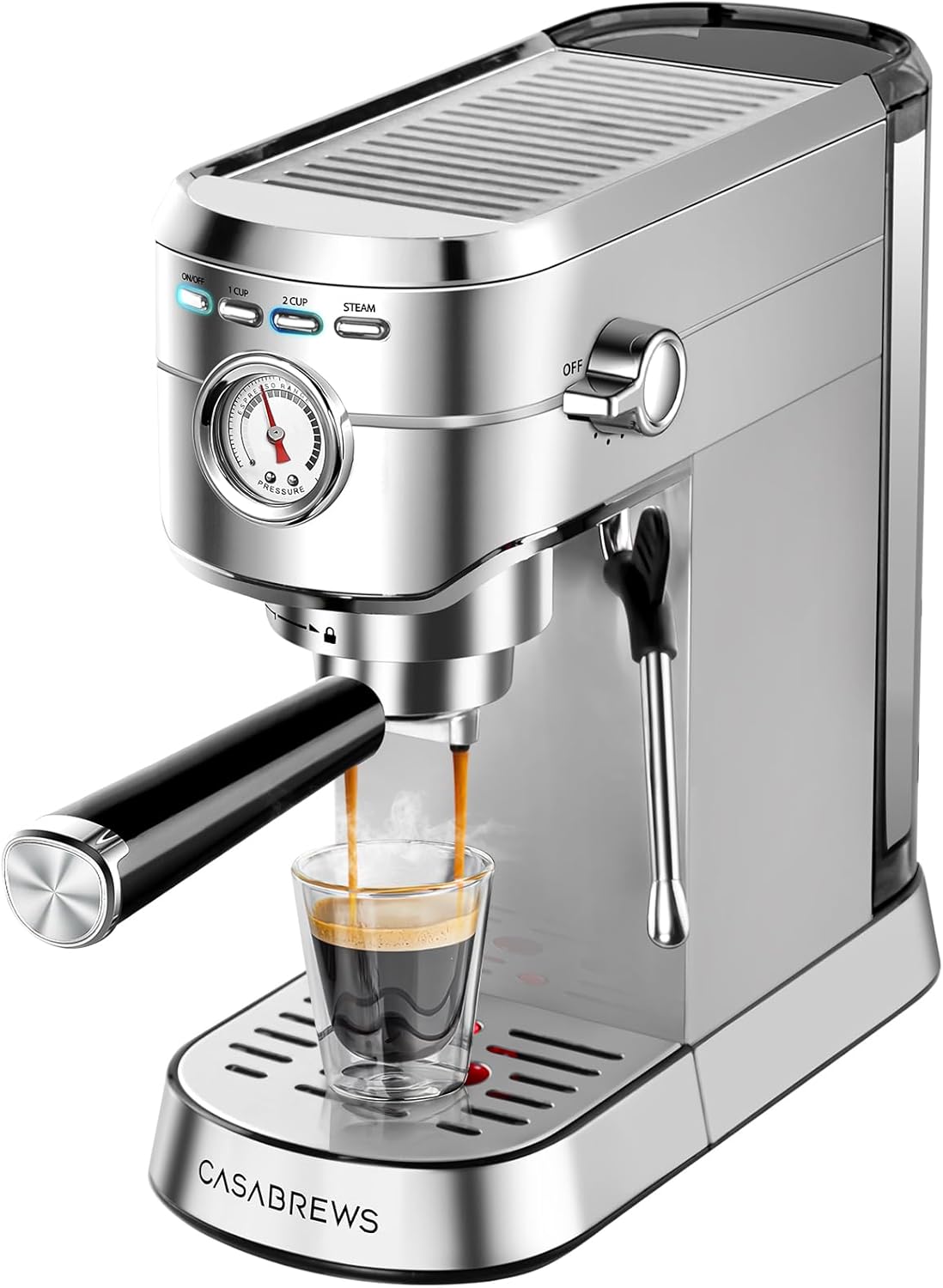
The CASABREWS CM5418 is a compact semi-automatic espresso machine aimed at home users who want café-style drinks without a large countertop footprint. It uses a 20-bar Italian pump with a built-in pressure gauge and gentle pre-infusion to help produce a crema-rich shot, and the 51mm portafilter accepts single or double filter baskets included in the box. The powerful steam wand textures milk into microfoam suitable for lattes and cappuccinos, and a removable 34 oz water tank makes multiple cups before refilling. A top cup warmer and removable drip tray for taller cups add practical convenience, and the machine runs from standard 120V household power. Expect a short warm-up time and occasional need to follow cool-down steps after steaming milk to avoid the machine's over-temperature protection. Because it is a single-boiler design, rapid back-to-back steaming and brewing may require brief waits. For buyers who prefer a straightforward, button-controlled interface with a solid set of barista features in a small package, this is a capable choice under typical home-use budgets.
Best for: Buyers seeking a reliable, beginner-friendly home espresso machine that offers visible pressure control and a good steam wand without taking up much counter space.
Less Ideal for: Users who need true commercial throughput or want simultaneous brewing and steaming for high-volume service should consider dual-boiler or prosumer alternatives.
- 20-bar Italian pump with built-in pressure gauge for visible extraction control
- Pre-infusion and adjustable shot volume for more balanced espresso
- Powerful steam wand able to produce microfoam for latte and cappuccino
- Detachable 34 oz water tank and removable drip tray for easy refilling and cleaning
- Compact stainless steel body with a cup-warming tray saves counter space
- Single-boiler design means you may need to wait between steaming and brewing for best results
- Machine can enter over-temperature protection if you try to brew immediately after steaming
Verdict: A compact, user-friendly semi-automatic that brings pressure feedback and a capable steam wand to home baristas looking for café-style drinks under $1,000.
Choosing the Right Semi-Automatic Espresso Machine: Key Factors to Consider
Temperature Control
Accurate and stable brew temperature directly affects extraction balance and crema. Variations of even a few degrees can shift flavor toward sourness or bitterness.
For home semi-automatic machines, look for PID control or well-engineered thermostatic systems that hold temperature under load. Good temperature control reduces guesswork and shortens the time you spend dialing in grind and dose.
Steam Wand Performance
Steam power determines how quickly you can texture milk and the range of textures you can achieve. A wand with strong pressure and good tip design will produce microfoam for cappuccinos and silky milk for lattes.
Ergonomics matter too: an articulating wand and a comfortable steam trigger let you maintain steady technique. If you plan to make multiple milk drinks in succession, prioritize machines with faster recovery and consistent steam pressure.
Boiler Type and Recovery
Boiler size and configuration influence simultaneous brewing and steaming as well as recovery time between drinks. Single-boiler machines are simpler and often heat up faster but can slow down if you need to steam right after pulling a shot.
Heat-exchange or dual-boiler designs offer better simultaneous performance but can add complexity. For a home setting under $1,000, consider whether the typical drink volume in your household requires quicker recovery or if occasional waits are acceptable.
Portafilter and Grouphead Quality
A well-machined grouphead and a properly fitting portafilter are essential for a stable seal and even extraction. Poor tolerances lead to channeling and inconsistent shots, making it harder to dial in your grind.
Look for machines with commercial-style portafilters and standard 58 mm or commonly supported sizes, as they provide better aftermarket accessory options and more reliable baskets than proprietary alternatives.
Ergonomics and Daily Usability
Controls, drip tray layout, and cup clearance affect how pleasant the machine is to use every day. Intuitive buttons, clear pressure or temperature readouts, and an accessible water reservoir reduce friction in routines.
Also consider how easy the machine is to clean and maintain. Removable drip trays, accessible shower screens, and clear descaling procedures keep maintenance straightforward and extend the machine's useful life.
Size and Counter Fit
Physical dimensions and water-reservoir placement determine whether a machine fits your kitchen and workflow. Taller groupheads may limit cup clearance, while wide machines can crowd small counters.
Measure available space and consider how you will access the reservoir and portafilter. A machine that is awkward to position will add time and annoyance to daily use even if its espresso quality is good.
Dialing In Shots at Home
Dialing in a semi-automatic machine is an iterative process of adjusting grind, dose, and extraction time. Start with a standard dose and aim for an extraction time range appropriate for your basket size, then change one variable at a time to isolate effects on flavor.
Pay attention to puck preparation and distribution to minimize channeling. Consistent tamp pressure and a level puck matter more than exotic tampers when you are learning. Keep a simple log of grind settings and times so you can reproduce preferred shots later.
- Start with a medium-fine grind and 18–20 grams for double baskets as a baseline.
- Adjust grind coarser if extraction is slow and bitter; finer if sour and fast.
- Observe color and flow: a steady honey-like stream usually indicates even extraction.
Steaming Milk Efficiently
Efficient steaming is about technique as much as raw steam power. Purge the wand first to remove condensation, position the tip near the surface to introduce air, then lower the pitcher to submerge the tip for texturing. Practice will improve timing and texture.
If you plan to make multiple drinks, give the boiler a short recovery interval between steams to restore pressure. Wipe and purge the wand after each use to prevent milk buildup and maintain hygiene.
- Use a chilled milk pitcher and whole milk for faster microfoam development.
- Texture milk until it reaches between 140 and 150°F for latte-service.
- Clean immediately after steaming to avoid dried milk in the wand.
Maintenance That Keeps Performance Consistent
Regular maintenance preserves extraction quality and steam reliability. Backflushing with an appropriate detergent, descaling when local water requires it, and replacing shower screens and gaskets as they age will sustain consistent shots.
Establish a simple weekly and monthly routine: quick wipe and purge after daily use, backflush weekly for machines with three-way solenoids, and check seals and water filters monthly. These small tasks prevent performance drift and costly repairs.
- Backflush weekly if your machine supports it; otherwise, clean grouphead and portafilter regularly.
- Use a water filter if your unit supports one to reduce scale buildup.
- Schedule gasket or shower-screen replacement as leakage or uneven extraction appears.
Space and Workflow Considerations
Think about where the machine will live and how you execute your morning routine. If you need to grind, tamp, brew, and steam in quick succession, leave enough counter space for the grinder and a milk pitcher beside the machine.
Also consider electrical requirements and ventilation. Most home semi-automatic machines run on standard circuits, but check power needs and leave room for steam wand movement and portafilter clearance.
- Leave an extra 6–8 inches of counter space around the machine for tools and cups.
- Place grinder within reach to speed up workflow.
- Consider water access and whether the reservoir is removable for easy refilling.
Common Mistakes New Users Make
Beginners often blame the machine for inconsistent shots when the issue is grind or tamp technique. Invest time learning a consistent tamp and dialing in a reliable grind setting before judging the machine.
Other frequent errors include neglecting maintenance, steaming milk at the wrong temperature, and using stale beans. Address these human factors first to get the most from any machine under $1,000.
- Avoid changing multiple variables at once while dialing in shots.
- Purge and wipe the steam wand after every use to prevent buildup.
- Use freshly roasted beans and grind immediately before brewing for best results.
How We Chose the Best Semi-Automatic Espresso Machine
We prioritized features and performance that directly affect shot quality and daily use. Temperature stability was a top filter because consistent brew temperature correlates with repeatable extraction and crema. Steam power and wand control were required criteria, since milk texture is a primary reason buyers choose semi-automatic machines. Build and serviceability were also weighted to favor machines with durable materials and user-replaceable parts. Control layout and interface were considered to ensure machines offer sensible dosing and shot control for home baristas. We also evaluated water system design, including boiler type and capacity, because those specs determine recovery time and simultaneous brewing and steaming ability. We excluded machines with insufficient steam pressure, tiny boilers that prevent practical milk workflows, and models lacking basic temperature control or manual dosing options. Models designed only for pod use or that lack a commercial-style portafilter were not considered. The final picks balance real-world shot repeatability, steam performance, and day-to-day usability for home espresso makers under the stated budget.
Our full evaluation process is outlined in our review methodology.
FAQ
Do semi-automatic machines under $1,000 need PID controllers?
PID controllers help hold brew temperature steady and make dialing in easier, but they are not strictly required. Many thermostatic designs perform well once you learn temperature surfing; PID is a convenience and performance booster for consistent shots.
Can I steam multiple milk drinks quickly with a single-boiler model?
Single-boiler machines often require a short wait between steaming and brewing because the boiler must reheat. If you frequently make several milk drinks in a row, prioritize machines with faster recovery or heat-exchange features to reduce downtime.
How often should I descale and backflush a home machine?
Frequency depends on water hardness and usage. Backflushing weekly is typical for machines with a three-way valve; descaling may be needed every few months if you have hard water. Using a water filter can extend service intervals.
Is a 58 mm portafilter important for home use?
A 58 mm portafilter often means greater accessory availability and more consistent baskets, which can help with repeatable extraction. It is a common size among higher-end home machines and simplifies upgrading tampers and baskets.
What maintenance tasks most affect shot consistency?
Cleaning the grouphead, replacing worn gaskets, and keeping the shower screen free of oils and residue have the biggest impact on consistency. Regular backflushing and timely part replacement prevent leaks and uneven extraction.
Final Verdict
When choosing a semi-automatic espresso machine under $1,000, prioritize temperature stability and steam performance because those specs most directly affect shot quality and milk texture. Balance boiler design against your typical drink volume to decide if faster recovery or simpler operation is the better tradeoff. Focus on machines that are easy to maintain and offer solid ergonomics for daily use. If you emphasize repeatable shots and comfortable steaming, you will have a reliable home setup that rewards practice and grows with your skills.